

The history of the Loewe brand – from a Madrid workshop to a global luxury icon
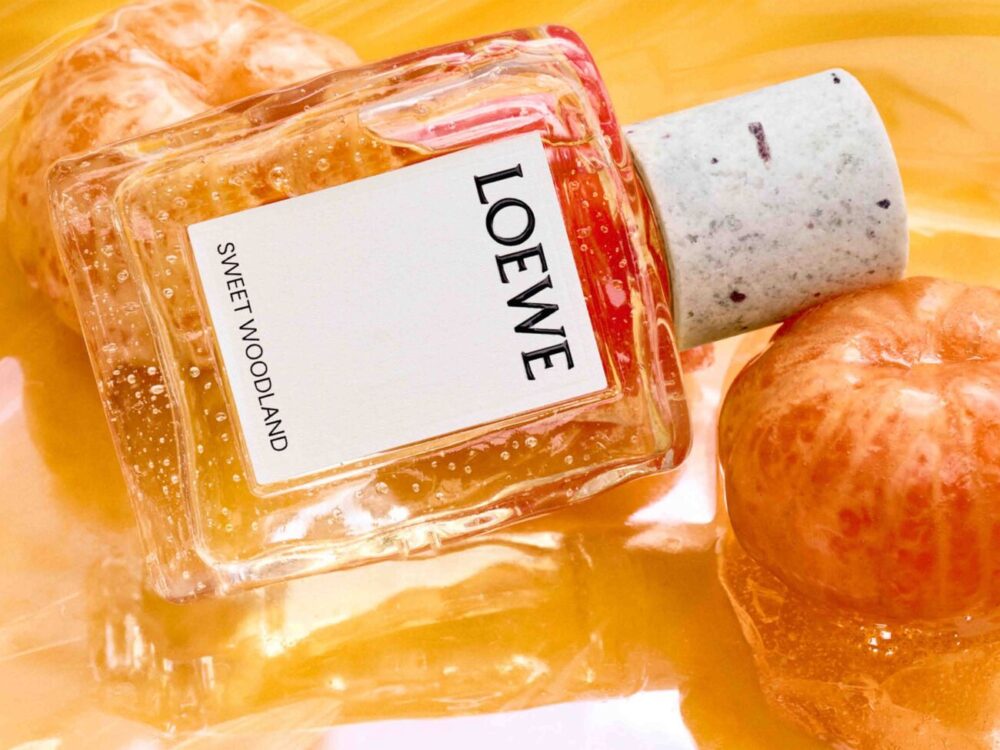
The second oldest active luxury fashion house in the world. It’s not Chanel, not Dior. It’s Loewe, a brand that in 2026 will celebrate 180 years since its founding in Madrid. And there’s something symbolic about the fact that right now, as the luxury industry desperately seeks authenticity, it’s this Spanish company rooted in leather craftsmanship that is experiencing a renaissance.
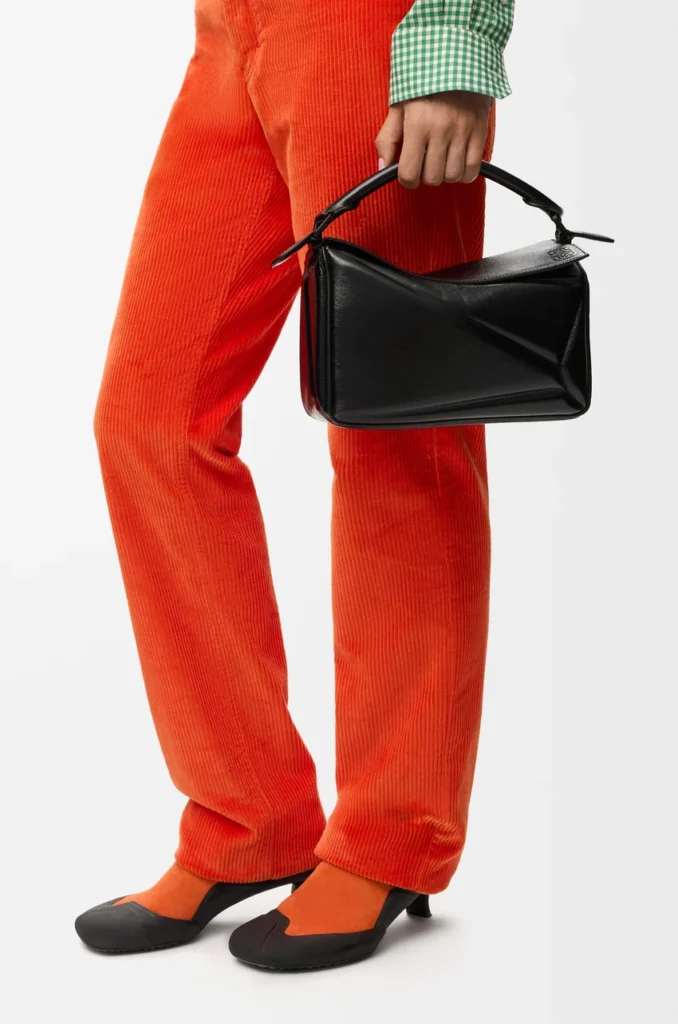
Since 1996, Loewe has been part of LVMH, the world’s largest luxury conglomerate. But unlike its French counterparts in the group, Loewe has always focused on something different: craftsmanship instead of flashy logos, understated elegance instead of the season’s trends. The Puzzle bag from 2015 became an icon not because every influencer wore it, but because it was simply brilliantly designed. In March 2025, the brand announced new creative directors (the duo McCollough and Hernandez), marking the beginning of a new chapter.
The history of Loewe is a story of how to survive nearly two centuries, preserve one’s identity, and not get lost in the global race. From a leather workshop in Madrid to Casa Loewe and annual revenues of 885 million euros, this story illustrates an evolution worth a closer look.
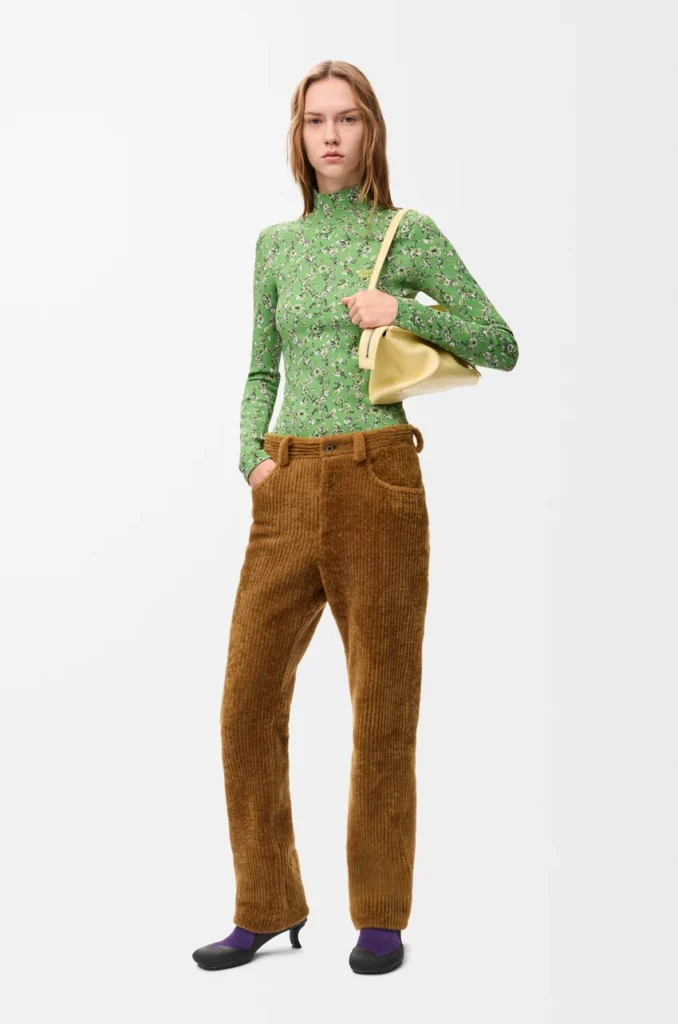
Roots and early development
In 1846, a group of Spanish craftsmen established a small workshop on Calle Lobo in Madrid (today known as Echegaray Street). They produced wallets, belts, cases—small but sturdy items. For several years, the company operated without much publicity, until in 1872 Enrique Loewe Roessberg appeared, a young German with commercial and organizational talents. He took over the shares, changed the name to “E. Loewe,” and in 1892 moved the workshop to an elegant location at Calle Príncipe 39. This was the first step towards turning the manufactory into something bigger.
In 1905, Alfonso XIII granted the company the title of Supplier to the Spanish Court, which opened the doors to aristocratic salons. Loewe began opening boutiques in Barcelona (1910s), and in 1939, despite the civil war, launched its flagship store on Gran Vía in Madrid. J osé Pérez de Rozas (from 1938 to the 1970s) developed an internal school of craftsmanship and manufacturing, ensuring that the leather was always perfect.
Anagram, Amazona and the birth of icons
The 1960s and 1970s marked a turning point. In 1963, Loewe presented its first ready-to-wear collection and opened a boutique in London. In 1970, Vicente Vela designed the Anagram, four interlocking “L”s, now one of the most recognizable logos in the industry. Two years later, in 1972, the first women’s fragrance was launched. And then came the handbags: the Amazona in 1975 and the Flamenco at the end of the decade. These two models have survived to this day, with only minor changes. It was at this time that Loewe ceased to be exclusively a Spanish house and began to think globally, although the true transformation would come a few years later, after a corporate takeover.
Transformation under LVMH and current direction
1984 was the moment when Loewe ceased to be just a family business. The majority stake was acquired by Enrique Loewe Knappe and Enrique Várela Urvois-Spinola, but the real turning point came two years later. In 1986, the distribution rights were purchased by the LVMH group, and a decade later, in 1996 (exactly on the brand’s 150th anniversary), LVMH took over Loewe entirely. That was when the era of systematically building a global position began.
Creative eras
Narciso Rodríguez (1997-2000) gave the brand a modern minimalism, but didn’t stay long. José Enrique Oña Selfa (2000-2007) continued the lines, though without much fanfare. Stuart Vevers (2008-2013) tried to steer Loewe towards British elegance, but the real revolution was led by Jonathan Anderson. From 2013 to March 2025, he created the Puzzle icon (2015), launched Casa Loewe (from 2016, spaces combining a store with a gallery), and the Loewe Foundation Craft Prize (2016, an award for artisans). Collaborations? Studio Ghibli, Paula’s Ibiza, a series of “capsules” highlighting culture and craftsmanship.
On March 24, 2025, Jack McCollough and Lazaro Hernandez (known from Proenza Schouler) took the helm. They are set to combine Spanish craftsmanship with New York energy, and their first collection, Amazona 180 (2026), references the 180th anniversary of the brand. Continuity that knows how to reinvent itself. It will be interesting to see how this works out in practice.
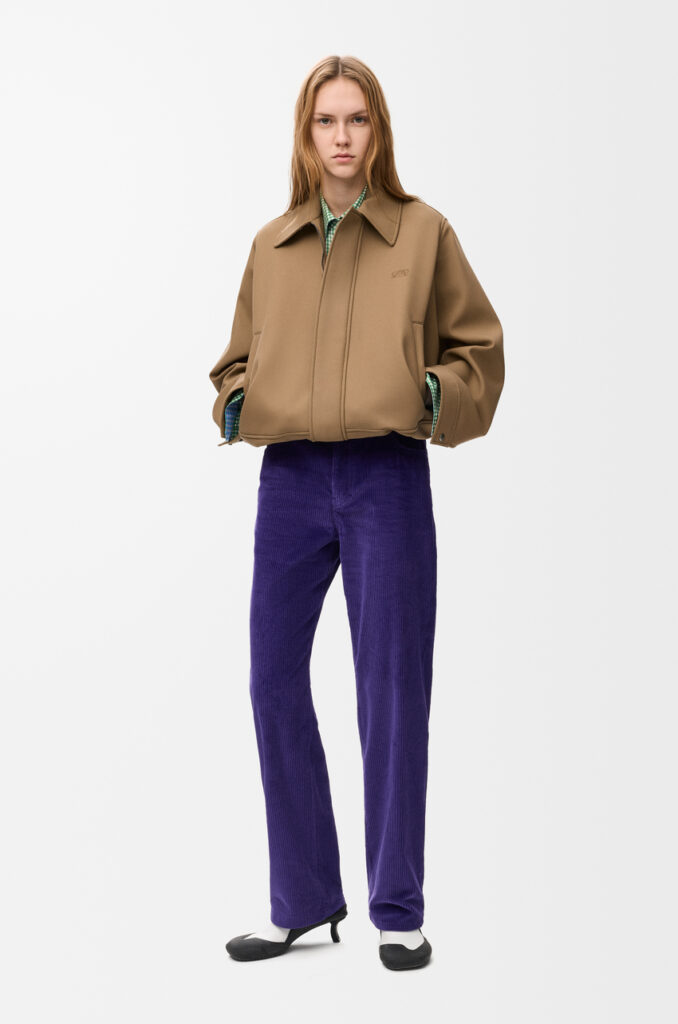
History of the Loewe brand
Each Loewe bag is a bit like a craftsman’s fingerprint. Because here, handcraftsmanship still sets the standard, even as the competition shifts to industrial production lines.
Materials and techniques that define Loewe
Spanish and European leathers, nappa about 0.7 mm thick, anagram embossing ( four “L”s arranged in a square), leather inlays reminiscent of mosaic. It sounds technical, but these are the details that make the bag look anything but “machine-made.” In Madrid, the Escuela Loewe operates, where artisans are trained in decades-old techniques, combining them with modern construction solutions.
Icons
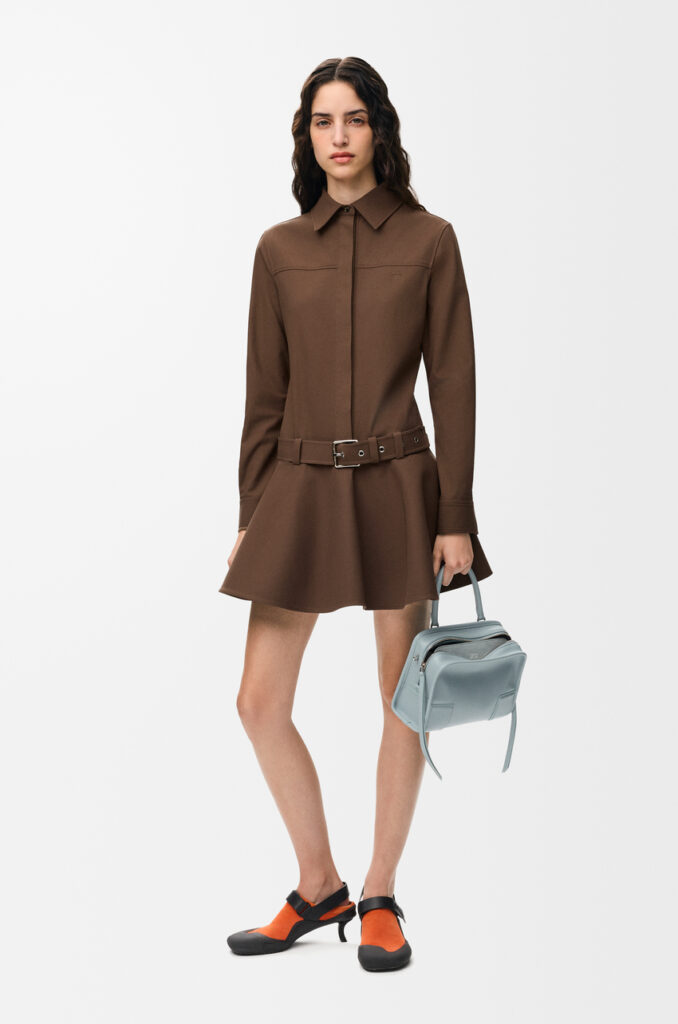
Amazona (1975) is a modern form inspired by a doctor’s bag, rigid, geometric, with a distinctive lock. The Flamenco from the 70s is the opposite: a soft pouch with an adjustable drawstring that adapts to its contents. And then there’s the Puzzle (2015), pure engineering:
| Parameter | Value |
|---|---|
| Leather panels | ~41-75 (depending on size) |
| Execution time | 40+ hours per piece |
| Feature | Folds flat without damage |
Geometric precision Puzzle shows that luxury is not just about aesthetics, but the mathematics of material.
Surplus Project uses surplus leather, repair studios in boutiques extend the life of products, and the “Botanical Rainbow” fragrance line uses recycled bottles. Durability as an element of luxury, not just seasonal fashion.
Foundation, culture, and contentious moments: influence beyond fashion
The brand has always aspired to be more than just a fashion house. This led to the idea of the Loewe Foundation, established in 1988. From the very beginning, it has focused on culture and craftsmanship, as if to remind the world that fashion is also art. The Poetry Prize was launched that same year, and since 2016, it’s been time for the Craft Prize, with a €50,000 award for a single creator. Thousands of artists apply each year, and the finalists have the opportunity to exhibit in truly prestigious venues.
Loewe Foundation
Collaboration with Museo del Prado resulted in the “Writing the Prado” project, and involvement in dance and photography demonstrates that Sheila Loewe, the foundation’s chairwoman, takes this mission personally. In 2024, the brand sponsored the “Sleeping Beauties” exhibition at the Metropolitan Museum of Art and launched “Crafted World” in Shanghai. This is not just PR; it is a consistent effort to build the image of a brand that elevates craftsmanship to the level of contemporary art.
When fashion meets public debate
But not everything went smoothly. In 2017-2018, Loewe ran into turbulence due to the use of Andean motifs from the Otavaleña and Salasaka cultures, with people accusing the brand of cultural appropriation. The result? The removal of controversial images and a rethink of internal processes. A year later, it was time for the striped collection, which some members of the public associated with concentration camp uniforms. The brand quickly apologized and withdrew the designs. Recently, in 2025, the European Commission imposed a fine of around €18 million for maintaining resale prices between 2015 and 2023. Loewe acknowledged the practice and ceased it, which can be seen as a turning point in its approach to corporate responsibility.
A legacy that keeps evolving
History Loewe is not a portrait of a single era frozen in time, but a continuous dialogue between the tradition of craftsmanship and contemporary aesthetic sensibility. The brand has transformed from a Madrid leather workshop into a fashion house capable of interpreting the changing needs of its clients without losing its identity. It is precisely this flexibility, while maintaining the fundamental values of quality and craftsmanship, that has allowed it to endure for over 175 years.
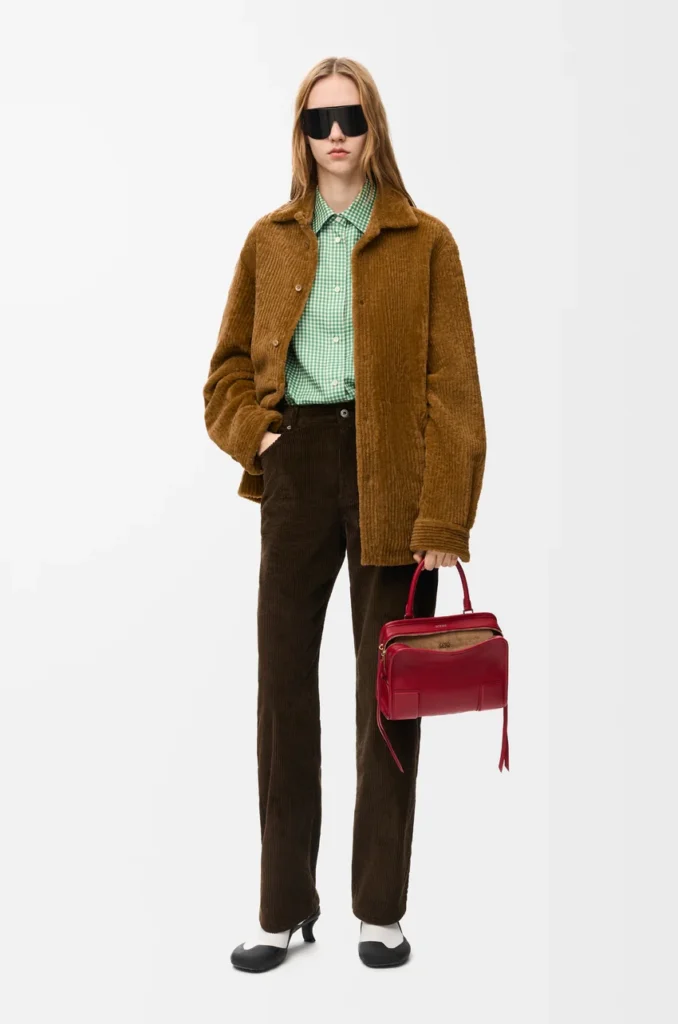
Heritage does not mean being locked away in a museum display case. It means a living memory of what matters and the courage to reinterpret it for new generations.
Loewe remains proof that luxury does not have to choose between history and modernity. You just need to know how to weave them together.
Natti 77
editorial fashion & lifestyle
Luxury Blog


Leave a Comment