

Carrara marble – features, varieties, and what truly sets it apart
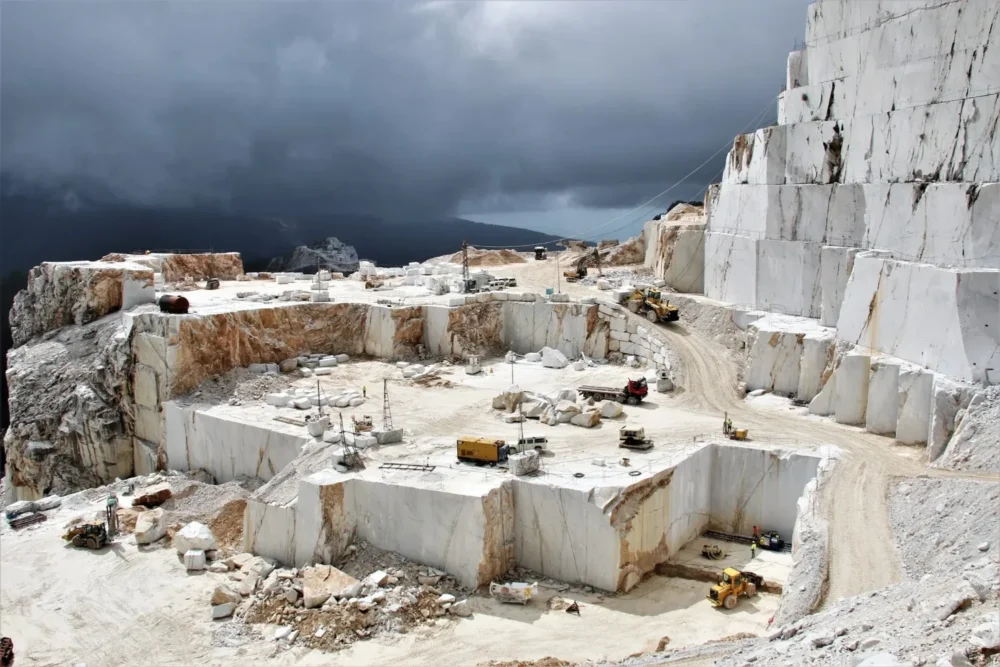
White Carrara marble is actually not just white. This type of rock, quarried in the Apuan Alps in Tuscany (around Carrara and Massa-Carrara), ranges in shade from milky white to blue-gray. You may also come across the names Carrara marble, Kararyjski, or simply Karar — all refer to the same material.
The prestige of Carrara stone dates back to ancient Rome, where it was known as “marmor lunense.” Michelangelo personally selected blocks from the local quarries. The Renaissance master knew what he was doing, as this marble can be sculpted with precision and reflects light beautifully.
Why is Carrara once again the talk of the world?
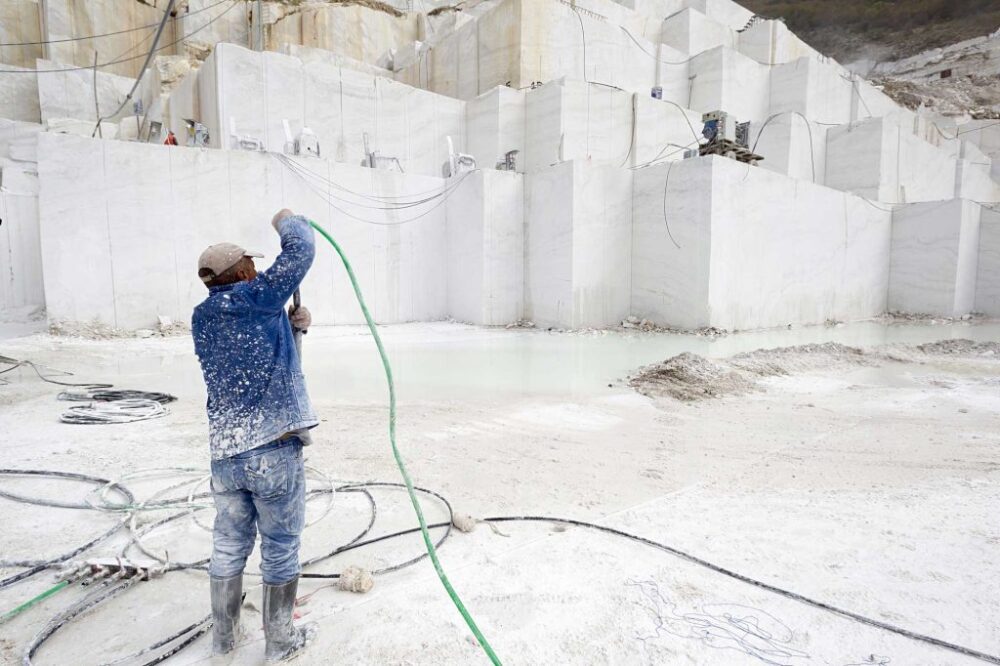
Block production dropped to around 600,000 tons in 2025. This is a record low since the 1970s. At the same time, certification of “Marmo di Carrara” is underway (the agreement is valid from 2026 to 2028), and the industry is discussing the concept of “filiera corta,” meaning a short supply chain without intermediaries. The material has become more exclusive than ever before.
In the following sections, you will see how to identify genuine karar by its structure and appearance, how the most important commercial varieties differ, and why technical parameters matter when making your choice.
How to recognize it?
Carrara marble was formed from Jurassic limestone, which underwent a profound metamorphosis during the Tertiary period under the influence of temperature and pressure. This process caused the original limestone deposits to recrystallize almost completely, creating one of the purest marbles in the world. Its composition is dominated by calcite (up to 90%), and the magnesium oxide content is truly minimal. It is this chemical purity that determines its exceptional visual qualities.
Appearance and translucency
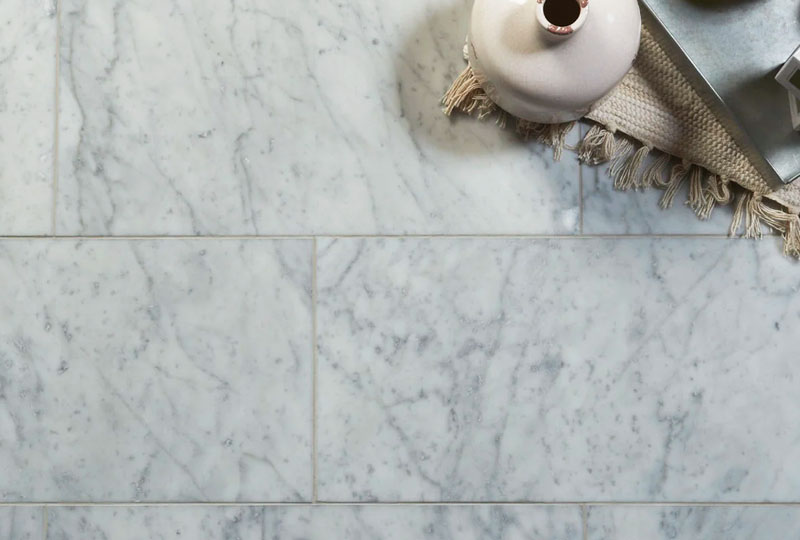
You can recognize Carrara by its pearly white, sometimes slightly creamy background, traversed by delicate gray or bluish veins. In some varieties, you may also find golden, greenish, or violet streaks, although these are rare. Interestingly, the purest sections can transmit light to a depth of up to 1.5 cm. It is this translucency that makes the stone appear to glow from within after polishing.
Properties in numbers
| Parameter | Value |
|---|---|
| Density | 2.6–2.8 g/cm³ |
| Compressive strength | 50-100 MPa |
| Hardness (Mohs scale) | 3-4 |
| Porosity after polishing | low |
Marble tolerates heat quite well, but acids (even lemon juice) leave dull marks, known as etching. Without regular sealing, it easily absorbs stains. On the other hand, it beautifully reflects light and visually enlarges interiors. With heavy foot traffic, it quickly wears down, so it’s not suitable for every space.
Carrara varieties and practical applications
Carrara is not just one type of stone. Depending on the extraction site and veining pattern, there are several main varieties, each with its own value and area of application.
Most popular varieties
Bianco Carrara C and CD – these are the most commonly found types. The C version features a lighter, milky-white background with subtle grey veining. CD has a more white-grey background, and the veins can be slightly more pronounced. The C/CD grades are based on the appearance of the background and veining, and do not have a strict technical standard.
Statuario (Statuario Venato) – the purest white, very subtle veining, rarity and prestige in one. Statuario accounts for less than 5% of Carrara’s production, which explains its highest value. It was from this marble that Michelangelo sculpted the “David” and the “Vatican Pietà.”
Bianco Venatino – a more regular vein pattern on a light gray background. Perfect for cladding when you want a more pronounced design.
Bardiglio – a gray, fine-grained variety. Ideal for floors and walls with a modern character.
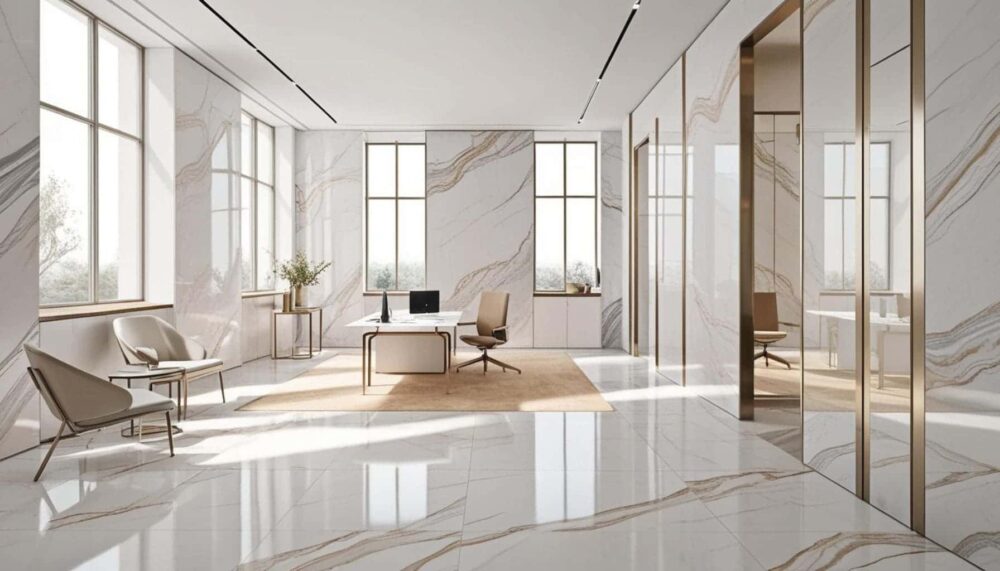
Calacatta (e.g., Calacatta Gold) – broad, contrasting veins on a white background. It is often mistaken for Carrara, but it is a separate stone from the same region.
It is worth mentioning other names: Arabescato, Nuvolato, Brouillé, Cipollino, all of which are varieties from Carrara with distinctive patterns.
Where does Carrara work best?
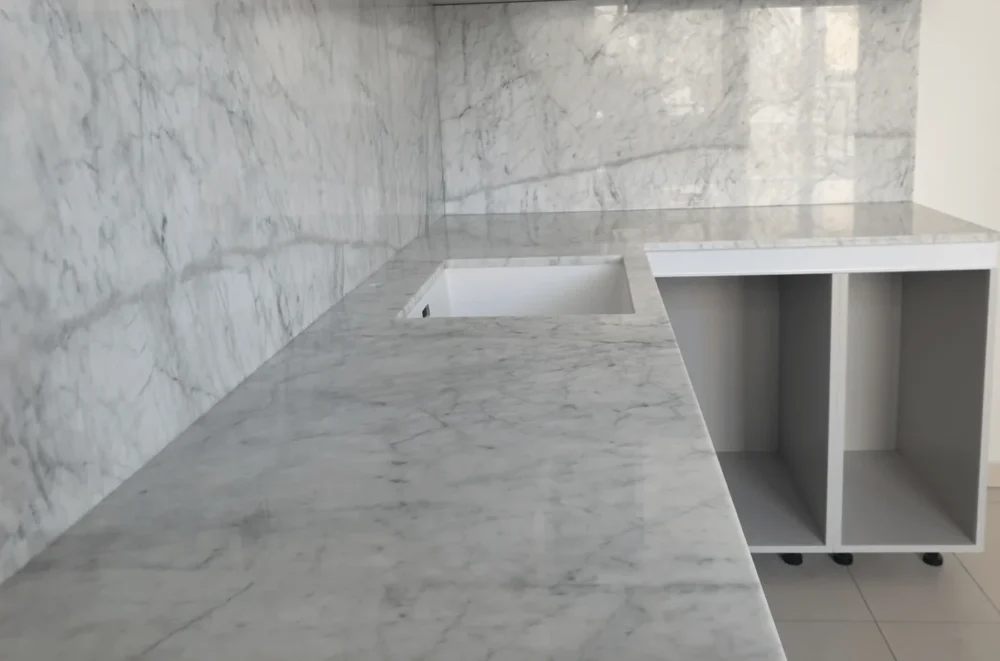
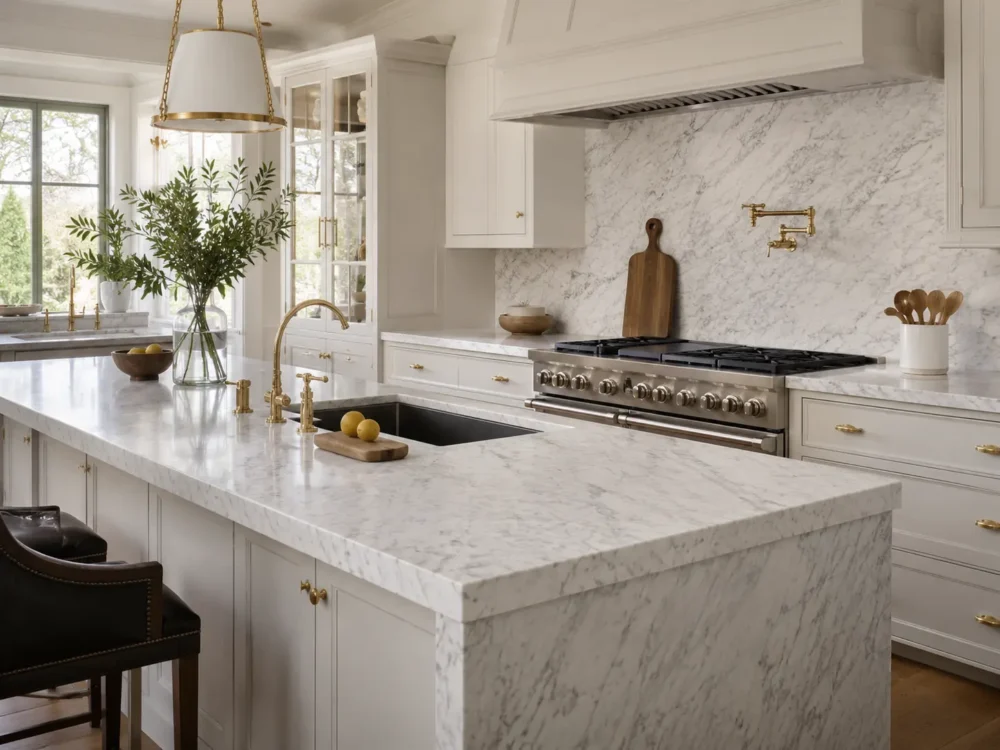
Sculpture remains the royal domain of Statuario. In architecture, we have the Pantheon (historically), and in modern times the Sheikh Zayed Grand Mosque, the Oslo Opera House, Harvard Medical School, and the Aon Center. Indoors, Carrara looks great as kitchen countertops, but it requires sealing and caution with acids.
Timeless material that makes a statement
Carrara marble is more than just a stone. It’s a choice that defines the entire interior and sets a certain standard. When someone opts for this material, they know that everything around it must meet the right level, because this white stone does not tolerate tacky solutions or random accessories.
Maybe that’s exactly why it has survived for so many centuries. Not because it’s fashionable, but because it demands attention to detail and respect for the material. It’s a commitment that begins in the quarry and lasts throughout years of use. And that’s precisely what sets it apart from ordinary decorative stones.
Maxym
Luxury Blog editorial team




Leave a Comment