

The most expensive champagnes in the world – top 5 brands
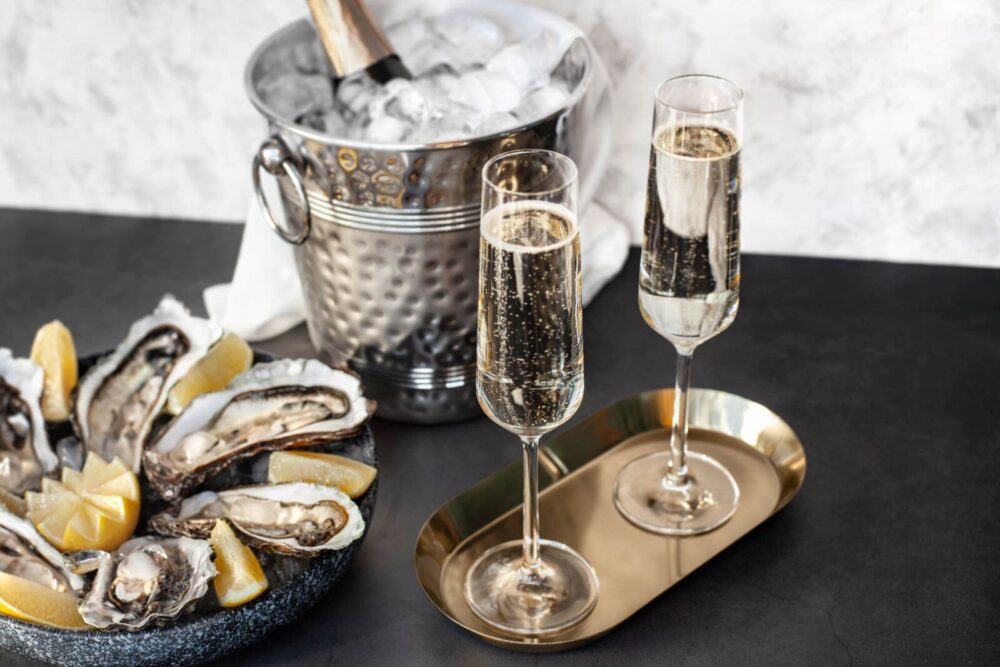
The December 2022 auction evening brought a record that electrified collectors: a magnum of Champagne Avenue Foch 2017 was sold for $2.5 million. It wasn’t just about the contents of the bottle, but also the package with a Bored Ape Yacht Club NFT, luxurious packaging, and prestige that cannot be valued by a simple price-per-liter calculation.
” The most expensive champagne ” is a term that has no single definition. It refers both to regular sales from champagne houses (Krug, Dom Pérignon in limited editions) and to unique auction pieces from decades past that fetch staggering sums on the secondary market. It always refers, however, to true Champagne—that is, sparkling wine from the Champagne region (AOC), produced using the traditional method from Chardonnay, Pinot Noir, or Pinot Meunier. This official name, legally protected and with limited production, already puts prices above the competition from the very start.
The most expensive champagnes in the world
Why is the topic gaining momentum right now? Collectors have discovered champagne as an investment asset, and champagne houses are responding with spectacular formats ( Melchizedek, Salmanazar) and presentations worthy of works of art. Auctions are breaking records more and more often, and the media are abuzz with stories about bottles fetching hundreds of thousands.

In this article, you’ll discover the top five brands that consistently achieve the highest prices, learn about headline-making auction hits, and find out what really makes one champagne cost as much as a new BMW, while another is priced like a house near Warsaw.
What makes champagne “the most expensive”
The foundation, of course, is the AOC Champagne itself. Only wine from this specific region, made from three varieties (Chardonnay, Pinot Noir, Pinot Meunier), produced using the traditional method, can be called champagne at all. Long bottle fermentation, aging on the lees for at least 15 months (often much longer) — all of this comes at a cost. Time is money, quite literally. Prestigious houses keep vintage cuvées on the lees for 7, 10, even 15 years. Capital locked away in the cellar? Enormous.
What really drives prices up?
Now specifically, what makes some bottles exceed the threshold of decency:
- Rarity – single, enclosed vineyards (so-called clos), micro-production, old vintages from limited stocks
- Provenance – bottles from shipwrecks, historic lots from auctions
- Craftsmanship and the prestige of the house – a multi-generational reputation, unique know-how
- Packaging – gold, Swarovski crystals, diamonds, sometimes even NFT (seriously)
- Format – large Midas-type bottles (30 liters) multiply the price disproportionately
When it comes to actual price ranges: standard prestigious cuvées like Cristal or Dom Pérignon Vintage are usually €100–500. Gems such as Krug Clos d’Ambonnay start at $3,000–4,000+ for 750 ml. Dom Pérignon P3 Plénitude? Easily $4,700–5,200. And then things get truly wild: decorated rarities range from $10,000 up to over $2.5 million (Avenue Foch 2017 went for exactly that).
In this article, we will distinguish between two categories: prestigious brands and their flagship cuvées versus one-off, decorated collector’s items. Because these are two completely different games.
Top 5 brands
When we talk about the most expensive champagnes, we’re really talking about a handful of brands that have held their place at the very top for decades. It’s not just about the price, but about consistent quality and extremely limited availability. Here are five houses that truly set the rules in this world.
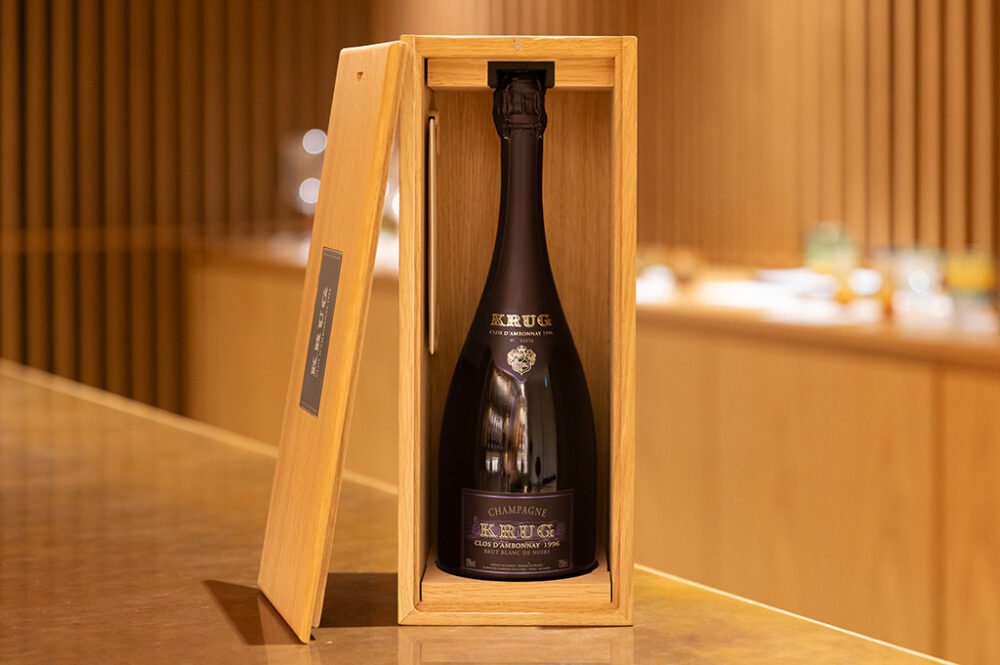
Krug – Clos d’Ambonnay
This is an absolute extreme rarity. The vineyard covers only about 0.68 hectares, and Krug produces a Blanc de Noirs from it made with 100% Pinot Noir. The style? Powerful, precise, and completely unique. The approximate price ranges from $3,000 to $4,000+ per bottle, sometimes more, depending on the vintage. Most collectors have never even had the chance to try it.
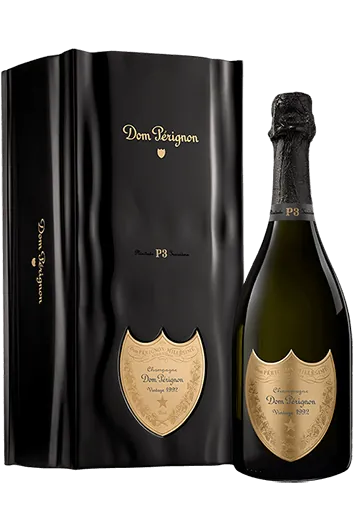
Dom Pérignon – P3 Plénitude
Dom Pérignon has its plénitude philosophy, meaning three peak moments of maturation for the same wine. P3 is the third stage, after 25 to 35+ years of aging. We’re talking about approximately $4,700 to $5,200 per bottle, though some vintages go significantly higher. The philosophy behind this is fascinating, but the price mainly reflects patience and perfectionism.
Cristal, Ace of Spades and Boërl & Kroff
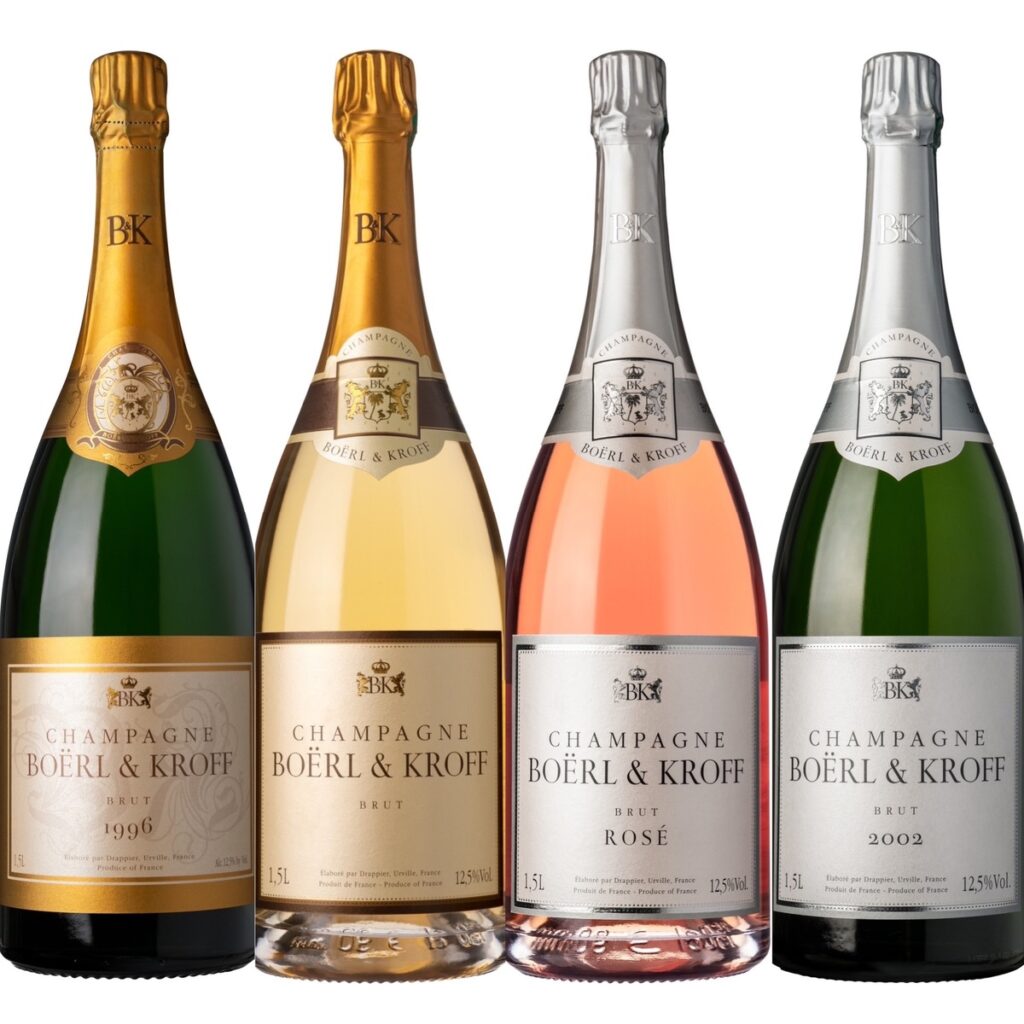
Louis Roederer created Cristal for Tsar Alexander II in the 19th century (around 1876), and today rare vintages and large formats of Cristal Rosé fetch astronomical sums. Armand de Brignac, the famous Ace of Spades, is all about recognition plus handcrafted finishing; the “Midas” format (30 liters) costs from $100,000 up to even $275,000. Boërl & Kroff is an extremely niche producer from Aube, magnums at around 4,600+ euros, with production that is microscopically small.
Records and curiosities
In 2022, a magnum bottle of Avenue Foch 2017 sold for $2.5 million. The champagne itself? Probably excellent, but the real trick was elsewhere, an NFT linked to Bored Ape Yacht Club. You buy the alcohol, you get a digital ape. Absurd? Maybe. But it shows just how far we’ve come in the game of attention and status.
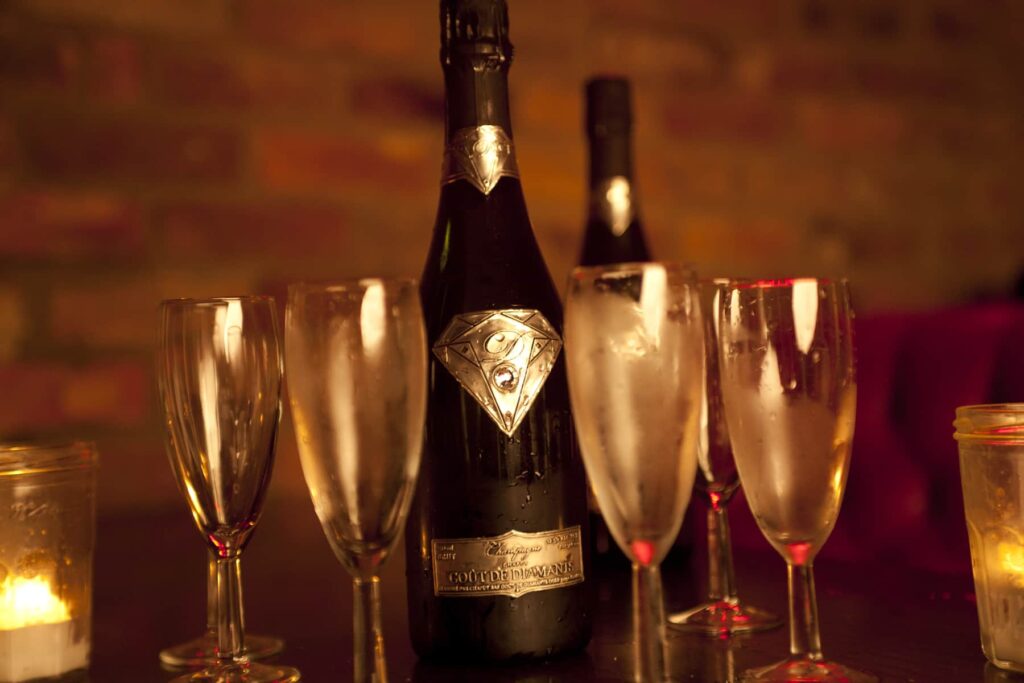
Even more extravagant is Goût de Diamants by Alexander Amosu. A label with a 19-carat diamond, a bottle covered in 18-carat gold, priced somewhere between 1.5 and 2.0 million euros. The question is: how much of that amount is for the wine, and how much for the jewel? Probably 90% is jewelry. But hey, someone is buying it.
Bottles from underwater
History delivers record valuations even without gold. Heidsieck Monopole 1907, recovered from the wreck of the “Jönköping” sunk in 1916, has fetched prices around 275,000 dollars per bottle. Veuve Clicquot from 1841? Around 30,000 euros. Juglar from a similar period? Over 24,000.
The narrative “lay for 100 years at the bottom of the sea” sells better than any tasting notes. It’s pure emotion.
Gigantic formats: a show that costs
Armand de Brignac 30 liters, or “Midas.” It costs from $100,000 up to even $275,000. Let’s be honest, no one buys this for the taste. It’s a showpiece at a party, Instagram content, a statement of “I can afford it.” Form wins over substance.
And that’s basically what these records are all about. It stops mattering what you drink. What matters is the story you can tell.
How to buy (or invest) wisely
Entering the collectors’ market, you may come across bargains or… very expensive disappointments. We’re no longer talking about small amounts here, so a few basic rules really do make sense.

Sources and provenance
Buy from reputable auction houses (Sotheby’s, Christie’s) or from specialists with a documented history. What should you always receive? Check this short list:
- Invoice with bottle details
- Provenance card (ownership history, storage conditions)
- Compliance with AOC, serial numbers on the labels
- Condition photos (wine level, cork, capsule)
In the case of digital editions (yes, it already happens), an NFT or blockchain certificate can confirm provenance. Without these documents, with the most expensive champagnes, you risk more than it’s worth.
Bottle condition, format, and risk
You look primarily at the cork (whether it leaks), the level of wine in the bottle, and whether it has been exposed to light or heat. All of this affects not only the taste but also the value.
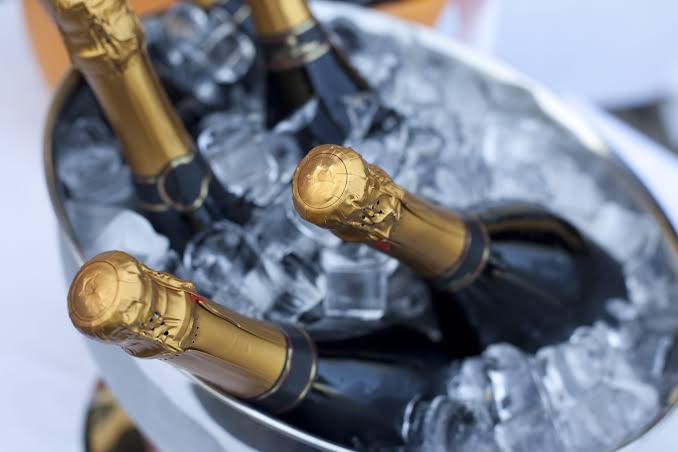
Format matters more than you think. Magnum or a 30-liter “Midas ” can double the price or more, simply because collectors like them. Extended aging (e.g., “Plénitude” P3) and single-vineyard (e.g., clos) wines often fetch higher prices on the secondary market. But beware, this is no guarantee—just a trend. Risk remains risk.
At the intersection of craftsmanship, history, and spectacle
The most expensive champagnes are more than just alcohol in a bottle. It’s a world where winemaking craftsmanship meets haute couture-level marketing, and the history of individual champagne houses becomes a bargaining chip worth millions. The prices we’ve seen in this ranking are the result of years of brand building, limited editions, and the fact that someone is actually willing to pay that much.

Because, fundamentally, we’re not just paying for the taste (although that certainly matters). We’re paying for prestige, for the ability to say “I have it,” for being part of an exclusive club of connoisseurs. And as absurd as it may sound to most of us, the luxury market operates precisely according to these rules.
Is it worth it? That depends on how much value you place on the very experience of owning something unique. For some, it’s an investment and a collector’s passion. For others, it’s a completely incomprehensible whim.
KI status
lifestyle editorial team
Luxury Blob





Leave a Comment