

What is MISBHV? – Polish luxury with club DNA
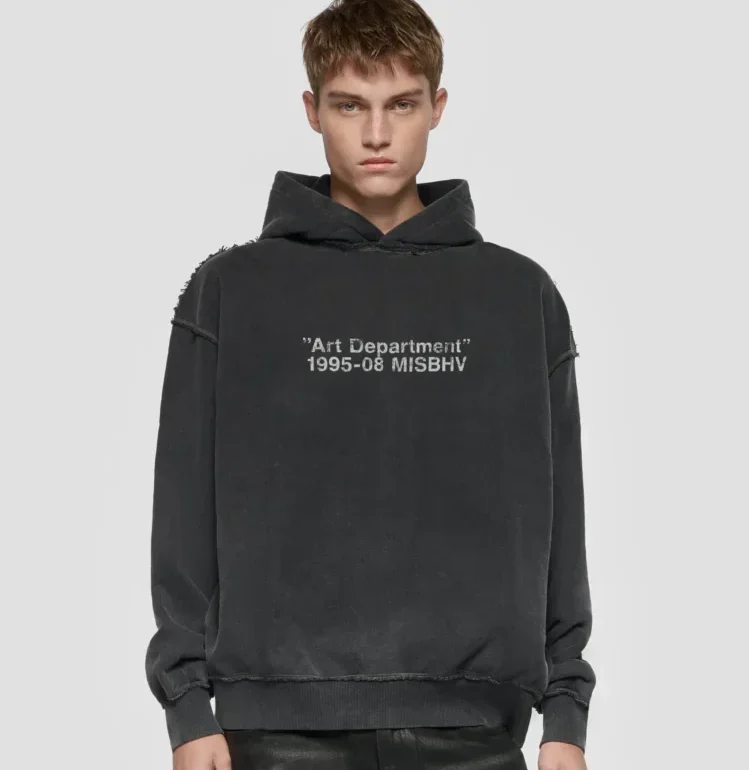
MISBHV (pronounced “misbehave”) is probably the only Polish brand whose logos are worn by a rapper from Atlanta and skaters from Tokyo. Created in Warsaw by Tomasz Wirski and Natalia Maczek, today it plays in the league of global luxury, though it still manufactures in Poland.
What connects them? The rave energy of the ’90s, nostalgia for club culture, and the precision of high fashion. It’s not just clothing—it’s a community of people who recognize themselves in the same DNA. The aesthetic oscillates between brutalism, hard bass, and minimalist luxury. Materials? European fabrics (Italian, Portuguese), sewn in Polish workshops.
The brand operates globally through around 90 retailers, from Dover Street Market to Selfridges, plus its own online store misbhv.com with seasonal drops. The headquarters is located in Kraków’s Zabłocie district, in the former Telpod factory. In 2020, MISBHV became the first fashion brand to appear in Grand Theft Auto, which demonstrates the scale of its recognition.
Below you’ll find specifics: the exact aesthetic DNA, the brand’s history step by step, the collection offer, and figures from international markets.
Aesthetic DNA and brand positioning
MISBHV looks as if someone took 90s club culture, post-socialist aesthetics, and Matrix-era futurism, then wrapped it all up in a luxury package. And that’s exactly the point.
Visual codes
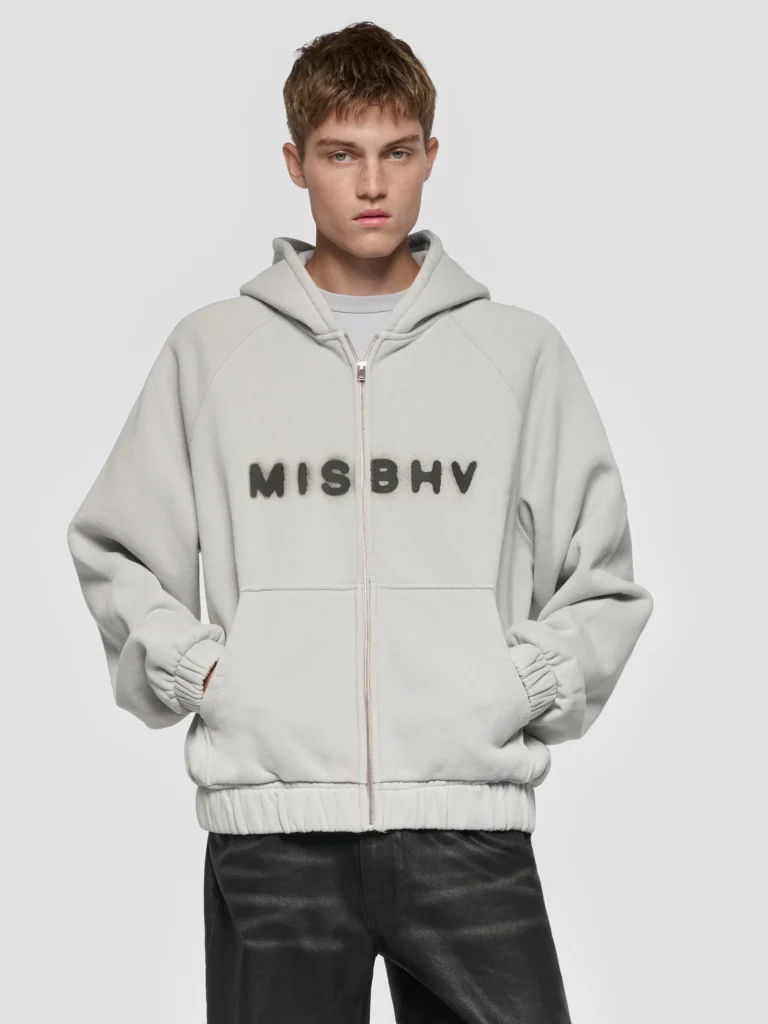
The brand draws from several sources at once, which may sound chaotic, but it works. The Warsaw techno-punk scene, hip-hop, club culture, even motorcycle motifs and that specific nostalgia for post-Soviet Poland. All of this blends with references to high culture: camouflage prints inspired by the works of Jean Arp, graphics referencing Andy Warhol, color palettes straight from Paul Cézanne. This signals that MISBHV is not just “streetwear from Poland,” but a brand conscious of its cultural heritage.
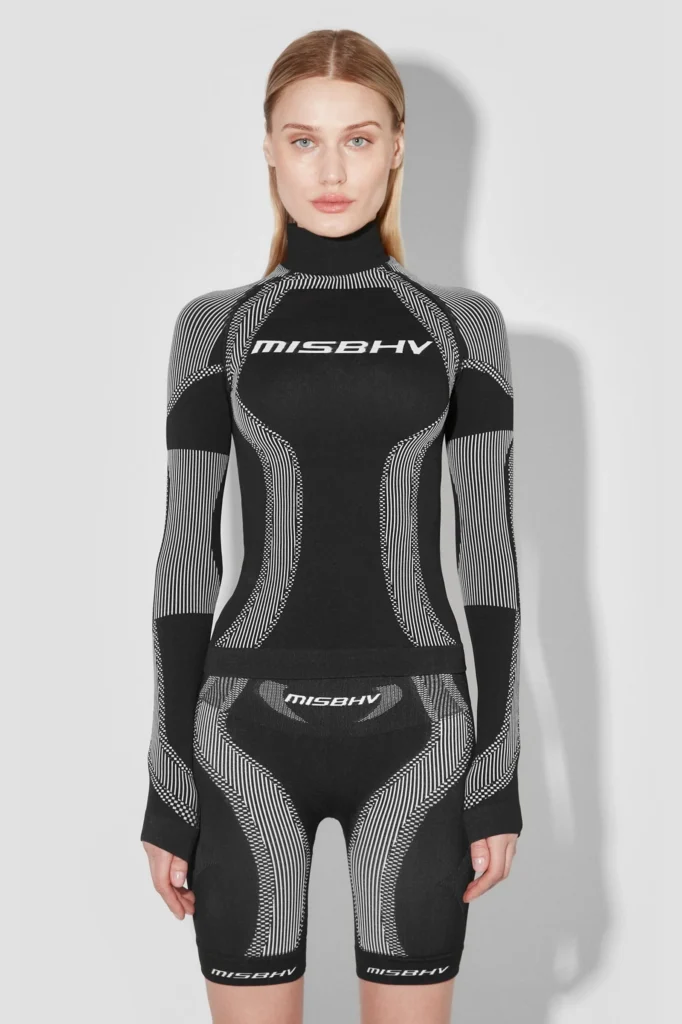
You’ll recognize them instantly by their look. The “M” monogram, graphics full of irony and pop culture, deconstructed cuts, engineered knits. Vegan leather tailoring and silk shirts. Extravagance straight out of a club, but finished with a touch of luxury.
Why does MISBHV talk about itself?
Positioning? Luxury streetwear produced in Poland, but the communication goes further. The brand is building a community around itself of artists, DJs, and models, instead of a classic advertising campaign. They design unisex, gender-fluid pieces for people who want to stand out, not blend in.
Honestly, it works. MISBHV doesn’t try to be for everyone, and that’s exactly why it has its own audience.
History, breakthroughs, and brand image
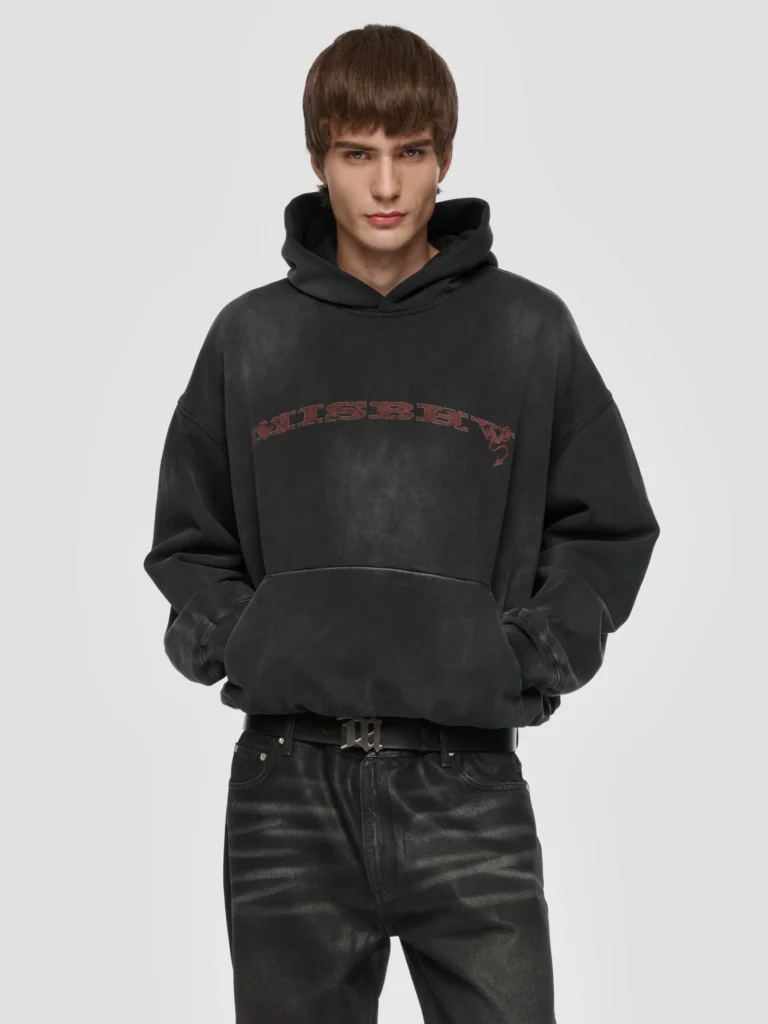
MISBHV started out very modestly. Kraków, 2007, Natalia Maczek is studying law at UJ and begins printing T-shirts. Not some big business plan, more of a passion project with Katarzyna Kotnowska. The breakthrough? 2013, when Tomasz Wirski, a DJ with a Warsaw club background, joins as creative director. And that’s where recognition begins, because the viral ” Team Paris ” hits the mark.
In 2015, the Paris showroom arrives along with the first major buyers: Margiela, GR8, Antonioli, and London’s Browns. A year later, in 2016, Rihanna puts on the iconic black jacket and suddenly everyone is looking at Poland. NYFW SS17 pays tribute to David Bowie, and the SS19 “Polish Jazz” season at PKiN is something more—a collaboration with Rosław Szayba and a reference to the classic 1966 poster. Expansion into Asia begins around 2019 (Shanghai), followed by Chengdu in 2023.
After 2020, the brand enters places no one expected: GTA Online as the first fashion brand in the game. They release their own vinyl records (DJ Hell, Wolfram). In 2024, they open a concept store in Warsaw’s Vitkac together with New Tendency.
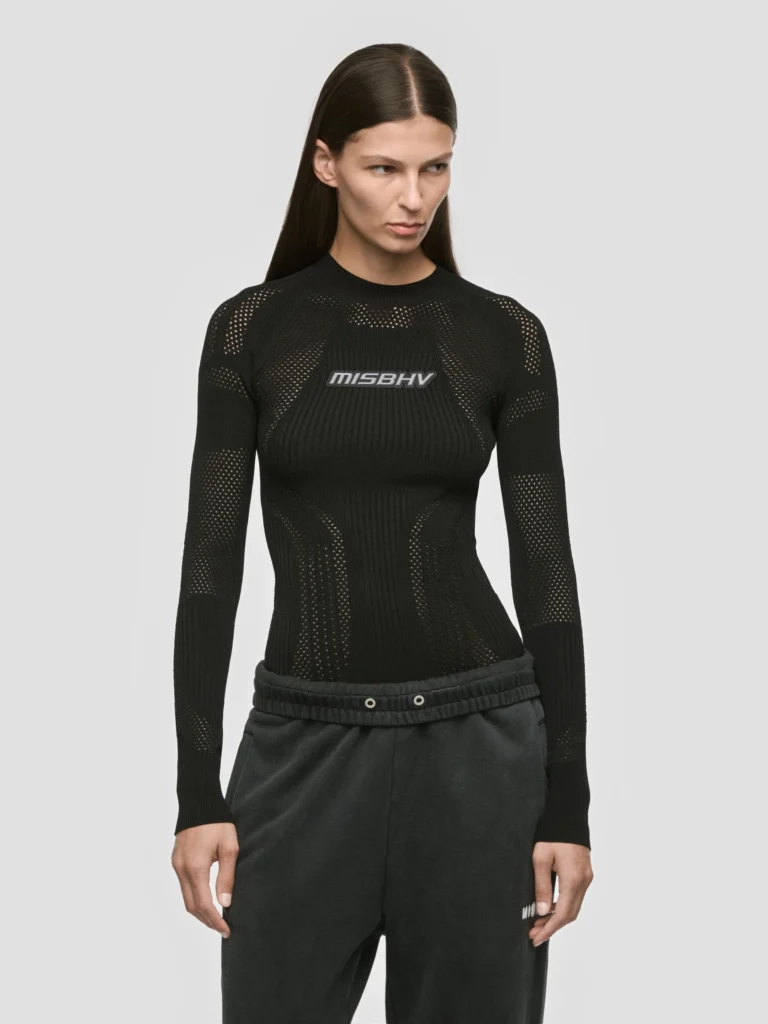
Image shaped by music and media
Musical DNA is not just about aesthetics; it’s literally the foundation. Wirski brought genuine club authenticity, not just a stylized version of it. That’s why there are vinyls, that’s why the shows feel more like parties than traditional runway events.
But there were also disputes. Controversies over copyright (2018-2020) involved Sleep Chamber (“Motel Mirage”), Whitesnake (“Lovehunter”, 1979), Hqeivy’s 2020 photograph used on vouchers, and the similarity of the logo to Aphex Twin. The creative director responded publicly, and the brand explained its inspirations. Did it cause harm? It’s hard to say definitively, but it certainly added context to the discussion about where tribute ends and borrowing begins. Image? Still shaped by music, provocation, and unpredictability.
Product range and production quality
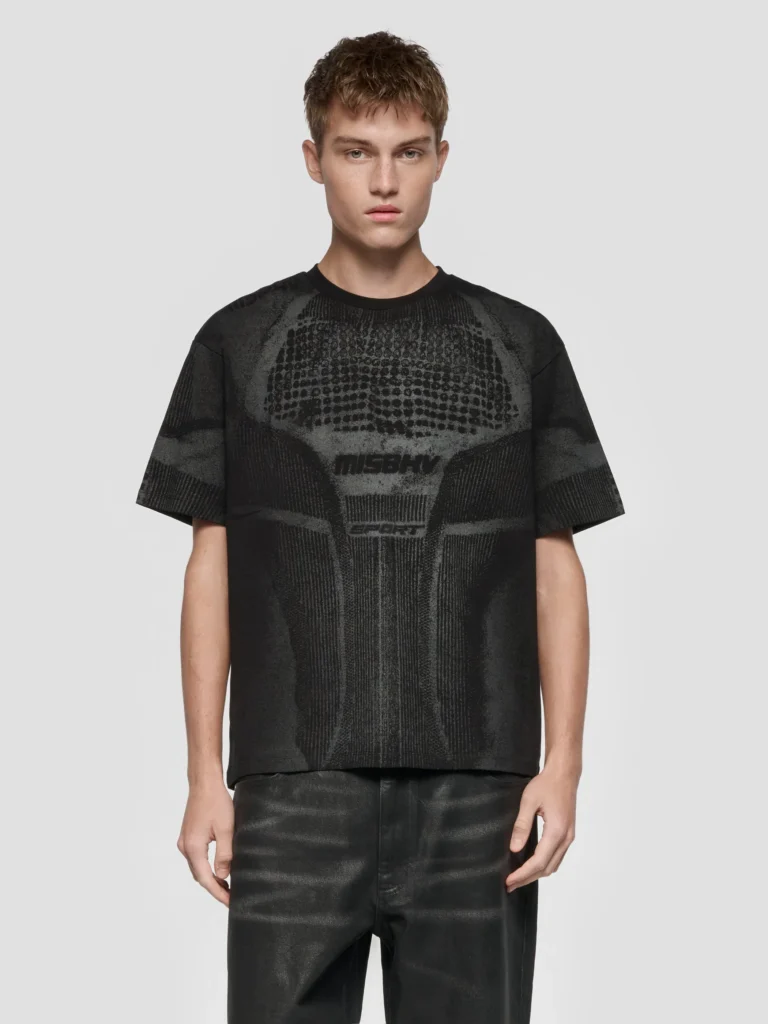
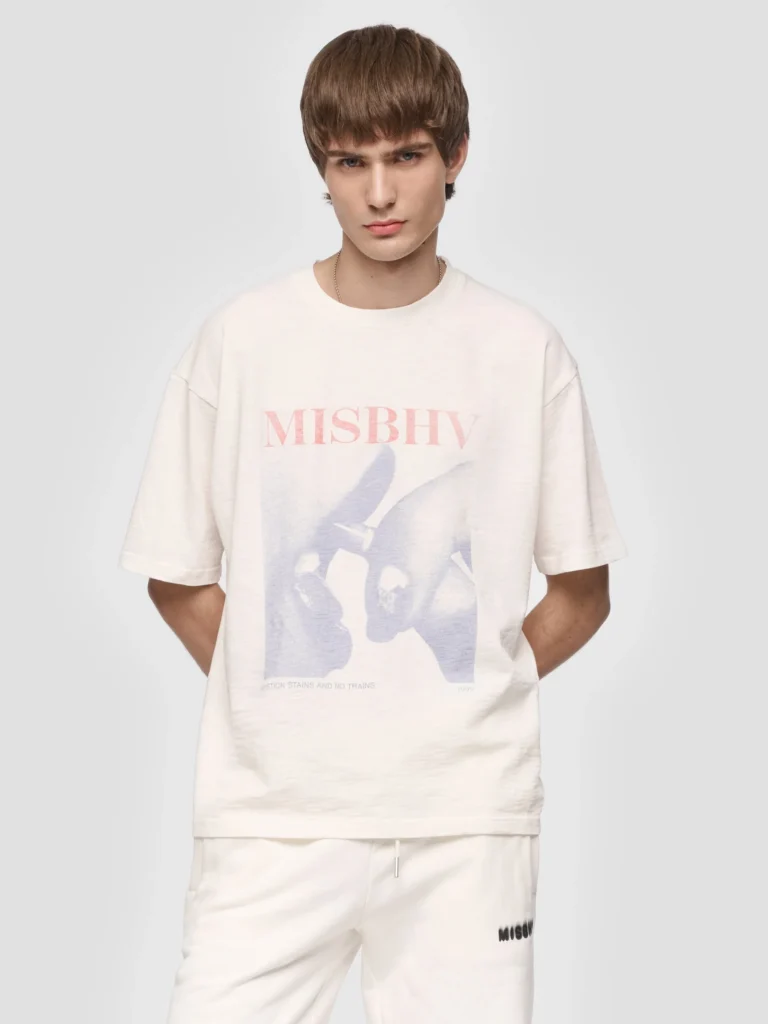
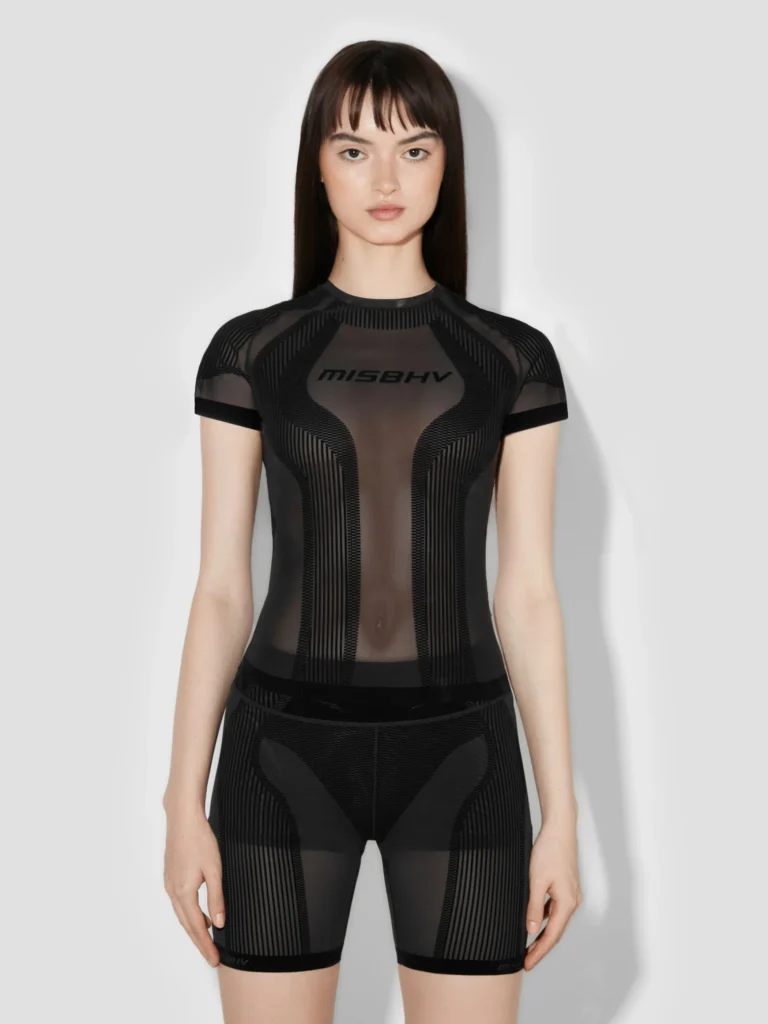
MISBHV is above all about unisex collections, often in oversized cuts, where the line between menswear and womenswear is consciously blurred. Here you’ll find T-shirts with graphic prints referencing pop culture or featuring ironic motifs, denim, knitwear, leather jackets, as well as accessories such as bags, jewelry, and caps. The brand also releases swimwear lines, activewear, and lifestyle pieces.
Signature motifs? Monogram “M”, which appears on many products, screen prints, deconstruction and reconstruction of cuts, engineered knits. Plus silk shirts, vegan suiting, and industrial bags with a pronounced material grain. This isn’t minimalism for minimalism’s sake, but a thoughtful play with form and detail.
Material, construction, and quality
Here, MISBHV never goes below premium. Italian lambskin, Portuguese wool, silk, mohair blends — that’s what the material sheets look like. Final assembly takes place in Poland, the entire supply chain remains within Europe, which ensures control over every stage. From the beginning, the brand has financed its growth without external loans, so production had to pay off both in terms of quality and cost.
In terms of price, T-shirts start at around 100-250+ USD, while denim and outerwear range from 300-800+ USD. It’s not cheap, but the construction and fabrics justify it. This is positioning between streetwear and high-end fashion, where you’re paying for genuinely better materials and cuts, not just for the logo.
Distribution, markets, and figures
The brand distributes its collections through around 90 carefully selected points worldwide. This is truly a selective network, with no mass rollout. In Europe, you can find MISBHV at Browns, END, Flannels, or Antonioli. Asia is currently the most important direction for expansion: HBX, Lane Crawford, SKP/Blue Dot, stores in Seoul, Tokyo, Singapore, Bangkok, Chengdu, and Shanghai. In North America, the brand has reached Kith, SSENSE, The Webster, and HBX NYC.
Own e-commerce at misbhv.com is the main direct-to-consumer channel, where seasonal drops and sales take place. The SS26 collection introduced denim, monograms, swim and activewear with graphics. In 2024, a store-in-store was launched at Warsaw’s Vitkac together with New Tendency, as a showcase concept. The High Summer 2025 campaign from Ibiz a (featuring model Andrés García-Carro “The Spanish King”) signals a lighter, summer narrative alongside the brand’s club DNA.
Numbers and business model
MISBHV operates as MISBHV Sp. z o.o., KRS 0000843876, registered in June 2020 in Krakow. The team consists of about 11-50 people, which is really small given its global reach. Revenue from Polish reports shows an increase from around PLN 12.7 million in 2020 to about PLN 50 million in 2023, although there were fluctuations in later years. The numbers are not spectacular compared to giants, but for a niche brand with club roots, it’s a solid scale. Asia remains a strategic direction, with the greatest growth potential seen there.
Between a club and a lounge
MISBHV today is a brand that has stopped choosing between its underground DNA and global luxury, simply merging one with the other. Warsaw roots, club aesthetics, and relentless quality create a formula that works globally precisely because it is authentically Polish. It doesn’t try to imitate a Parisian maison or New York streetwear; it simply develops its own identity somewhere in between.
This selective sales presence, limited collections, and music‑community character make MISBHV a brand for insiders. Not for everyone, not everywhere, not always available. And that’s exactly what defines it.
This is not a brand that wants to conquer the whole world; it builds its own world and invites only those who understand it.
YouTube mom
editorial staff


Leave a Comment