

The history of Wimbledon – grass, tradition, and great names
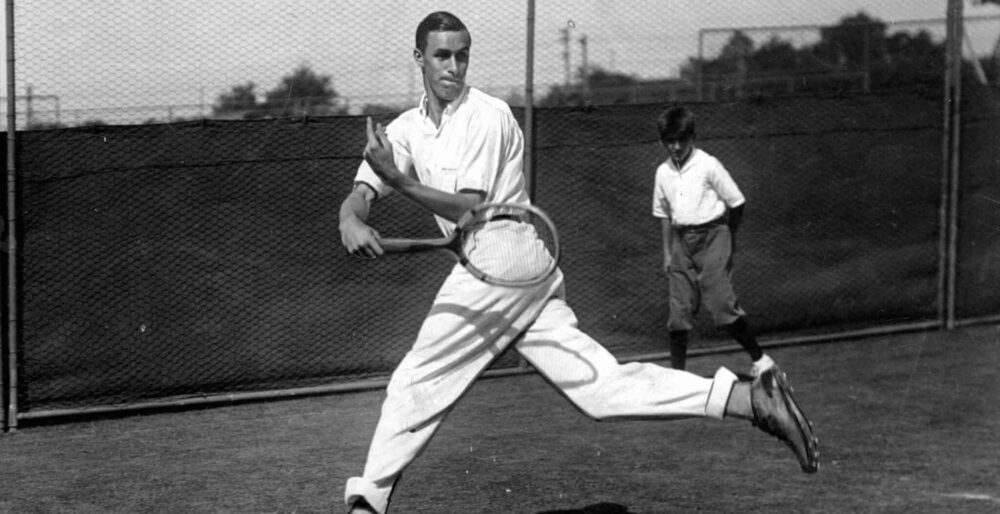
Every year, half a million people squeeze through the gates of the All England Club. 548,770 spectators in 2024, if you want specifics. And that’s only those who managed to get tickets.
What makes the history of Wimbledon more than just tennis matches? Above all, the grass. The only Grand Slam played on natural turf, where the ball bounces differently—faster, more unpredictably. Then there’s the whole atmosphere: the mandatory white attire on the courts, the royal box, not a single screaming advertisement on the banners. Here, you don’t advertise. You’re either here, or you’re not.
And that’s exactly why Wimbledon stirs up emotions. It combines something from the 19th century (the tournament itself began in 1877) with today’s professionalism. It’s not a museum, but it guards its traditions like the apple of its eye.
Where did it all come from? Why grass and white, specifically? Which names have become forever part of this legend? And what is changing now, as the sport balances between heritage and modernity? That’s exactly what you’ll read about next.
History of Wimbledon
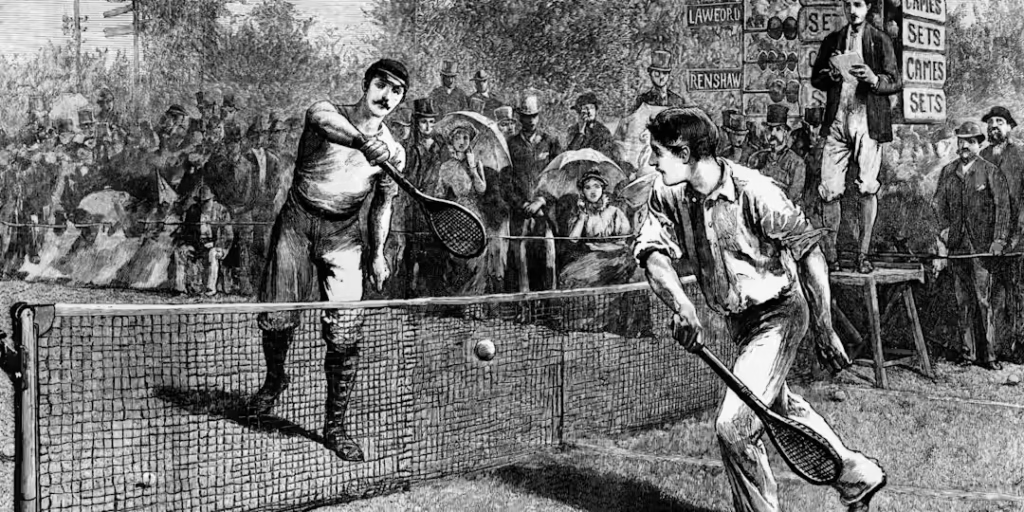
It all began more modestly than one might think. The All England Croquet Club was founded in 1868 on Worple Road in Wimbledon, and lawn tennis was only added in 1876. The organizers wanted to raise money to repair a lawn mower (really!), so they came up with the idea of a tournament. On July 9, 1877, 22 participants lined up and about 200 spectators attended. Spencer Gore defeated William Marshall 6-1, 6-2, 6-4 and received a trophy worth 25 guineas from “The Field” magazine. Simple. No fanfare.
Expansion and relocation (1884-1922)
In 1884, women got their chance, with Maud Watson winning the first ladies’ singles. That year, men’s doubles was also added. Mixed doubles and women’s doubles appeared only in 1913.
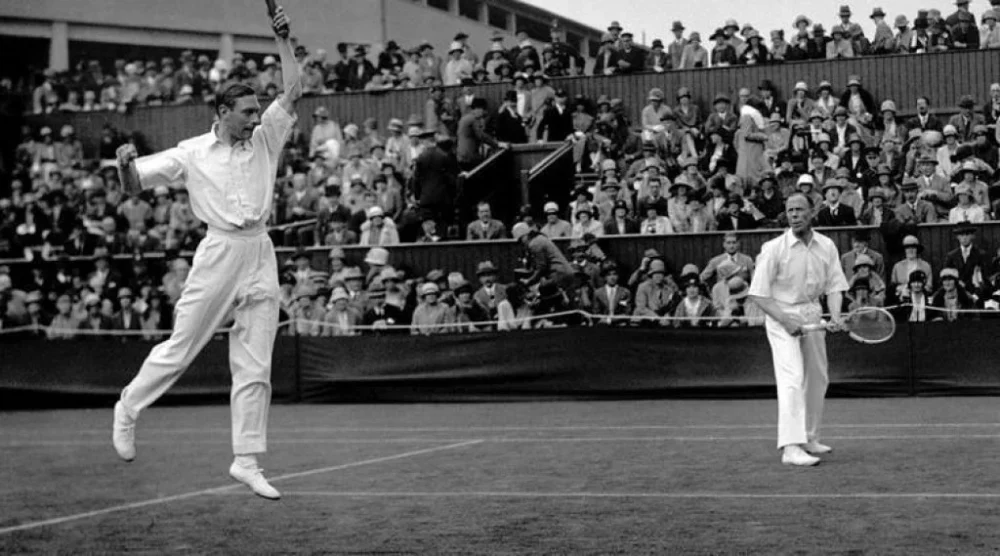
Until 1922, a strange Challenge Round system was in place: the defending champion waited in the final for the winner of the rest of the field. Convenient for the champion, boring for the fans. Fortunately, this was abolished when the tournament moved to Church Road in 1922, where it is still played today.
From Television to the Open Era (1937-1968)
In 1937, the BBC broadcast the first television transmission. Then came the war, Centre Court was bombed in 1940, and the tournament did not return until 1946.
The real revolution came in 1968, when professionals were allowed to compete. The Open Era transformed Wimbledon from a club event into a global phenomenon. And it was this decision that made us refer to it today as the greatest tournament in the world.
Traditions, etiquette, and grass
Wimbledon is not just a tournament; it’s a whole world of traditions that have endured through the ages. Some may seem eccentric today, but they are precisely what create this unique atmosphere. And honestly, without them, it would just be another Slam.
White as a trademark
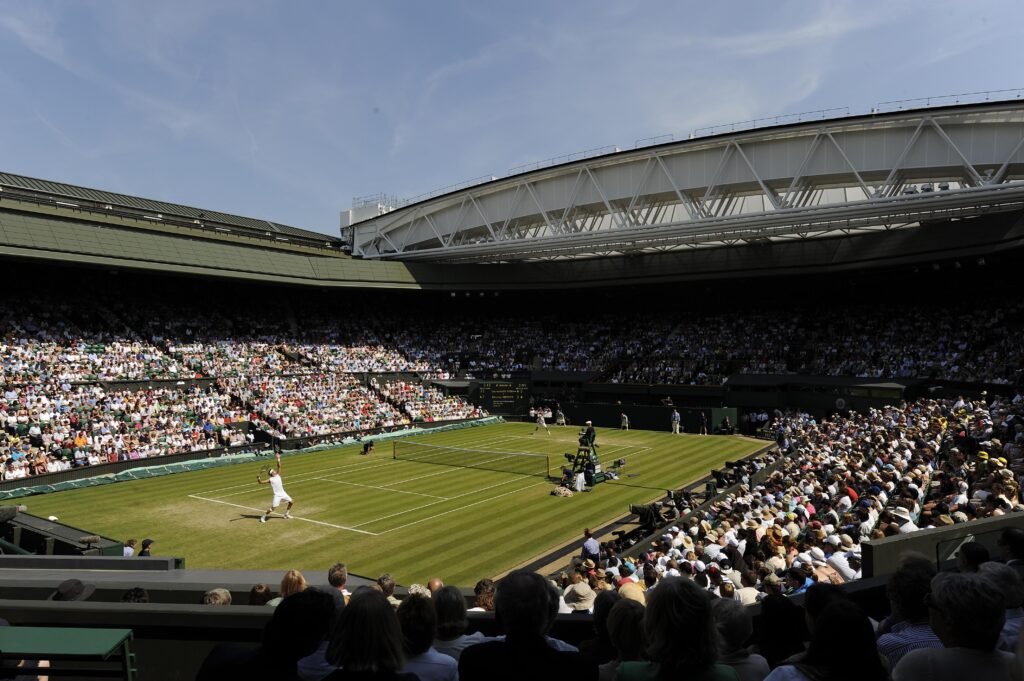
The dress code is truly strict. Players must compete in almost entirely white attire, with colored details allowed to be no more than 1 cm wide. This rule originates from Victorian etiquette, when white was meant to conceal sweat stains (which sounds rather amusing, doesn’t it?). Recently, some flexibility has been introduced, as women are now allowed to wear dark shorts under their skirts, something that was previously unthinkable.
Flavors and symbols of summer in SW19
The Royal Box and royal patronage emphasize the prestige of the tournament. The names “Gentlemen’s Singles” and “Ladies’ Singles” are also no coincidence. It’s a matter of tradition. You won’t see any advertisements on the courts, which creates that visually “pure” image.
But the real symbol is strawberries with cream. Every year, over 55 tons of fruit and around 13,000 liters of cream are consumed here, in about 250,000 servings. The “Wimbledon effect” on strawberry sales in the UK is measurable. And the queue? That’s a culture of its own. People wait all night just to get onto the court.
Grass that shapes tennis
The grass at Wimbledon is perennial ryegrass, mowed to a low height. The ball bounces low and fast, which used to force a serve-and-volley style. Today, the style has changed, with powerful baseline play dominating, as the courts are slower than they used to be. But this surface still requires a different strategy than clay or hard courts.
Contemporary Wimbledon 2025-2026
Last year’s tournament made history with several breakthroughs. Jannik Sinner defeated Carlos Alcaraz in the final and became the first Italian to win Wimbledon in the Open Era. Iga Świątek? The first Polish woman with this title, which in itself sounds incredible. In men’s doubles, Julian Cash and Lloyd Glasspool took the victory; in women’s doubles, it was Veronika Kudermetova and Elise Mertens, while the mixed doubles were dominated by Sem Verbeek and Kateřina Siniaková.
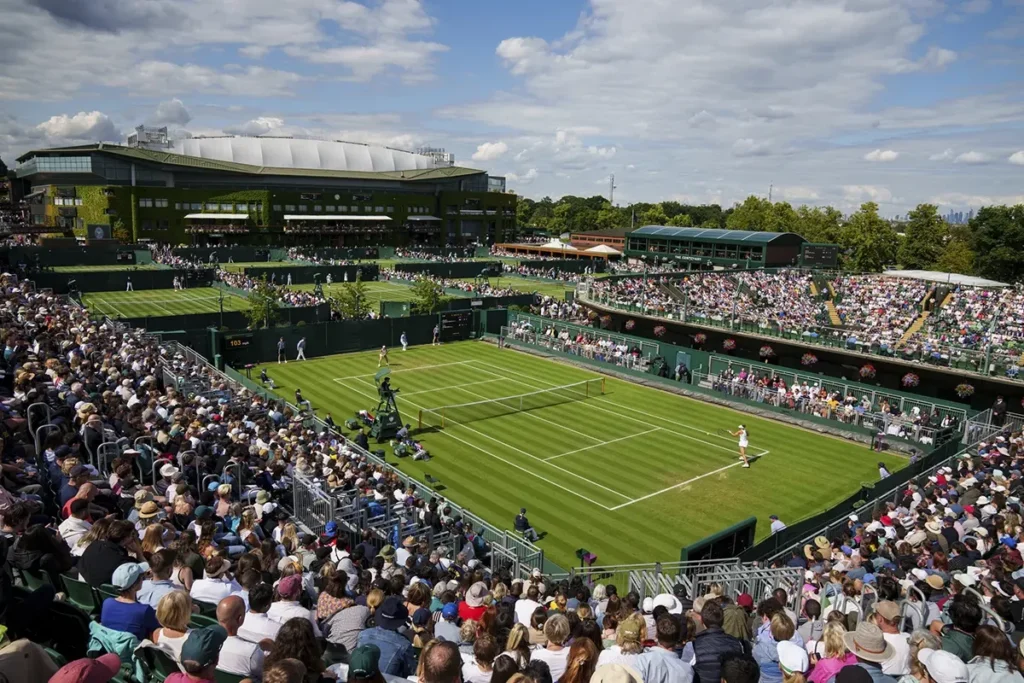
The numbers speak for themselves. 548,770 spectators attended the courts, and over 4 billion impressions were generated on social media. Four billion, take it easy.
Prize pool 2026 and the dispute over distribution
This year, the All England Club put a record £64.2 million on the table. The singles champions will each take home £3.6 million, and even losing in the first round guarantees more than £80,000. Sounds great, right? Well, that’s exactly the issue—players have a problem with it. The dispute concerns the fact that players receive about 15% of the tournament’s total revenue, while they are demanding at least 16% plus funds for player welfare. The topic comes up before every edition.
Technology and expansion
Since last year, electronic systems have been calling outs automatically, which has sent some line judges into early retirement. The 2026 tournament will take place between June 29 and July 12, with a curfew at 11:00 PM BST on all courts. Centre Court and No. 1 Court, of course, have roofs.
Interestingly, the Wimbledon Park Project is underway. More than 38 new courts and the Parkland Show Court for around 8,000 spectators, also with a roof. In the future, the qualifiers could take place on site, probably sometime in the 2030s. Ambitious, but the All England Club has accustomed us to thinking decades ahead.
Records, legends, and moments that defined Wimbledon
Wimbledon is not just a tournament; it’s a collection of extraordinary achievements that will likely never be repeated. Some records are simply impressive.
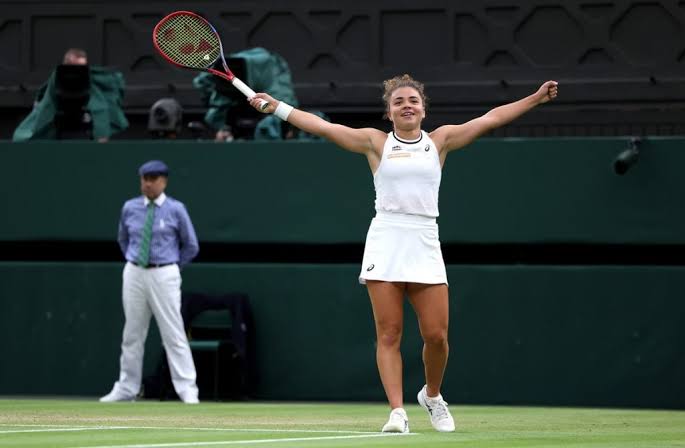
The reign of masters
Roger Federer has amassed 8 men’s singles titles, which sounds abstract until you realize that’s nearly a decade of dominance on the same grass. Martina Navrátilová went one step further: 9 women’s singles victories. But the real story unfolds in doubles.
Todd Woodbridge won 9 men’s doubles titles (mainly with Mark Woodforde), while Elizabeth Ryan collected 12 women’s doubles titles, a record that remains unmatched to this day. In fact, Ryan never won a singles title at Wimbledon, which only highlights how unique the art of doubles play is.
Isner-Mahut Marathon (2010)
The longest match in tennis history? Of course, at Wimbledon. John Isner versus Nicolas Mahut in 2010: 11 hours and 5 minutes, stretched over 3 days. The fifth set alone ended with a score of 70-68 (183 games in total in the match). The scoreboard practically caught fire.
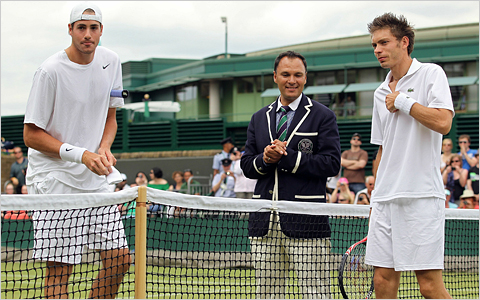
Today, something like this can’t happen again—Wimbledon has introduced tie-breaks in deciding sets. It’s a bit of a loss of magic, but also a bit of relief for the players.
British breakthroughs
Fred Perry (1936) was the last Briton to win singles… for 77 years. Virginia Wade broke the curse for women in 1977, right during the Queen’s Silver Jubilee. And then Andy Murray came along in 2013 and the whole country practically came to a standstill. These victories are more than just sport. They are a national catharsis.
Records say a lot, but emotions say everything.
A legend that grows with every ball
Wimbledon is not just a tournament. It’s a living story, rewritten every season, with each legend adding a new chapter. Federer with his eight titles, Serena with her dominance, Borg with his icy composure—all these stories intertwine into something greater than sport. That’s why people return here year after year, not just to see the best tennis, but to be part of something enduring.
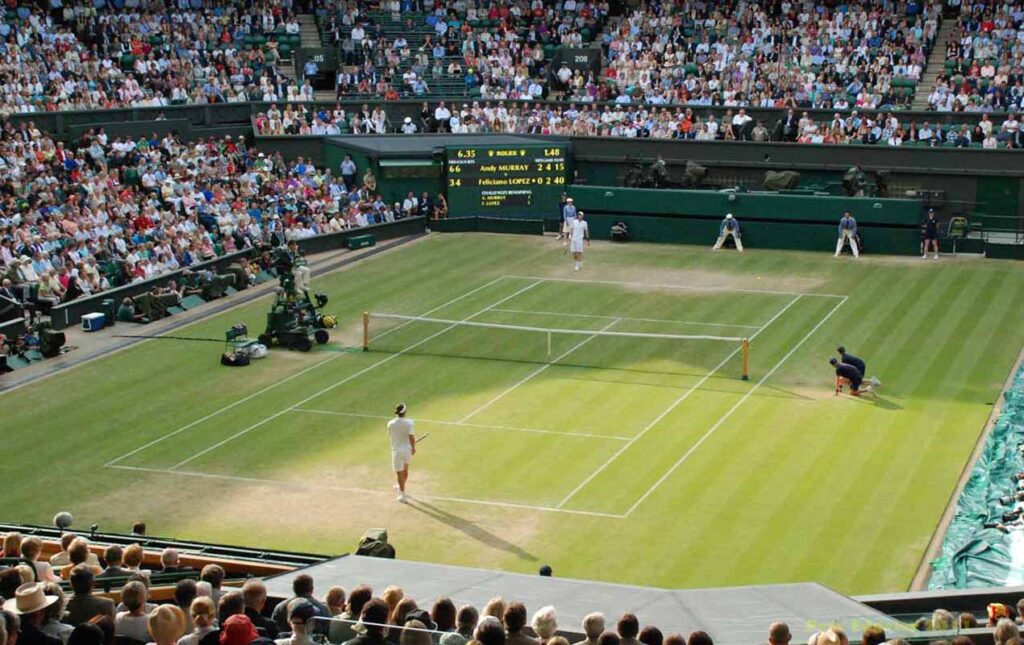
And that’s the whole point. Tradition here is not a dead ritual, but a living organism. The grass, the white outfits, the strawberries with cream—all of it remains because it matters. Because it connects generations of fans and players.
That’s exactly why Wimbledon remains unique. Because it manages to be both the past and the present at the same time.
Samm
sports & lifestyle editorial team
Luxury Blog




Leave a Comment