

Ranking of copper pots – top European premium brands
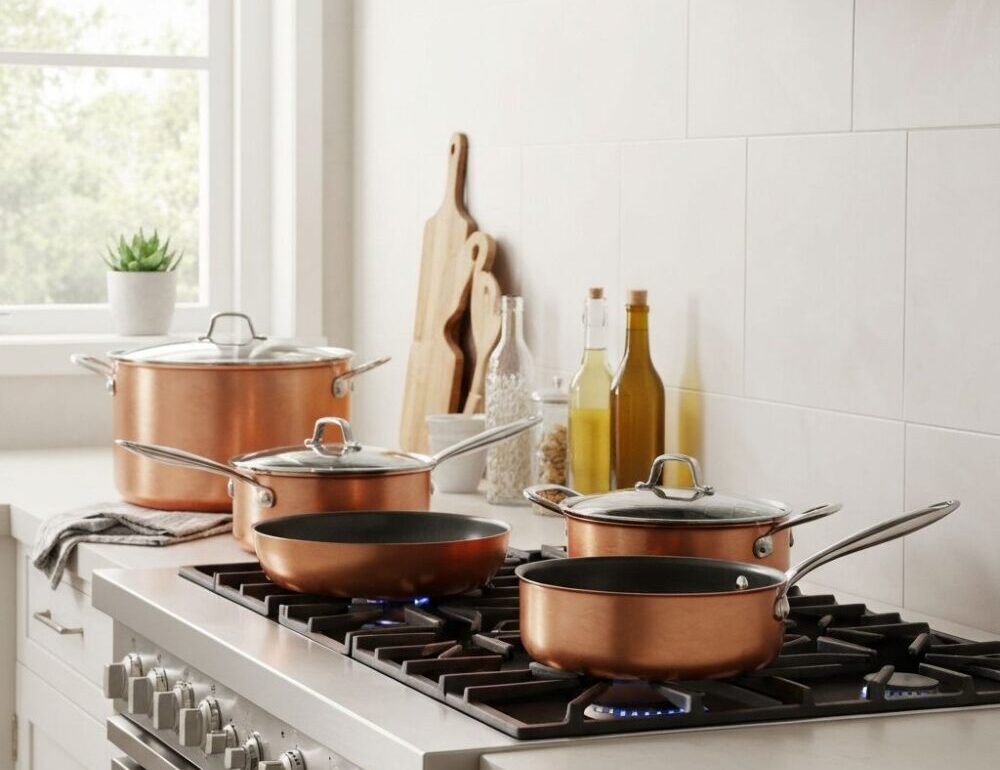
Copper conducts heat at a rate of 401 W/m·K, while stainless steel barely reaches ~16. That’s a 25-fold difference, which in the kitchen means something very tangible: the pot responds to changes in flame temperature within seconds, not minutes. For a chef finishing a bearnaise sauce, it’s the difference between a silky emulsion and scrambled eggs.
Where does copper reveal its true value?
Wine reductions, sugar caramelization, risotto that requires constant stirring, delicate creams and jams—these are tasks where aluminum and steel simply fall short. Copper distributes heat so evenly that it eliminates hot spots, those pesky areas where food sticks and burns even though the rest of the pan is fine. Professional copper pots are 2–2.5 mm thick, providing thermal mass without excessive weight.
European copper craftsmanship (France, Italy, Belgium, especially the tradition of Villedieu-les-Poêles) is not just heritage. These are pots that look so beautiful they hang in restaurant kitchens as decoration, yet are used every day. The patina gains character over years of use.
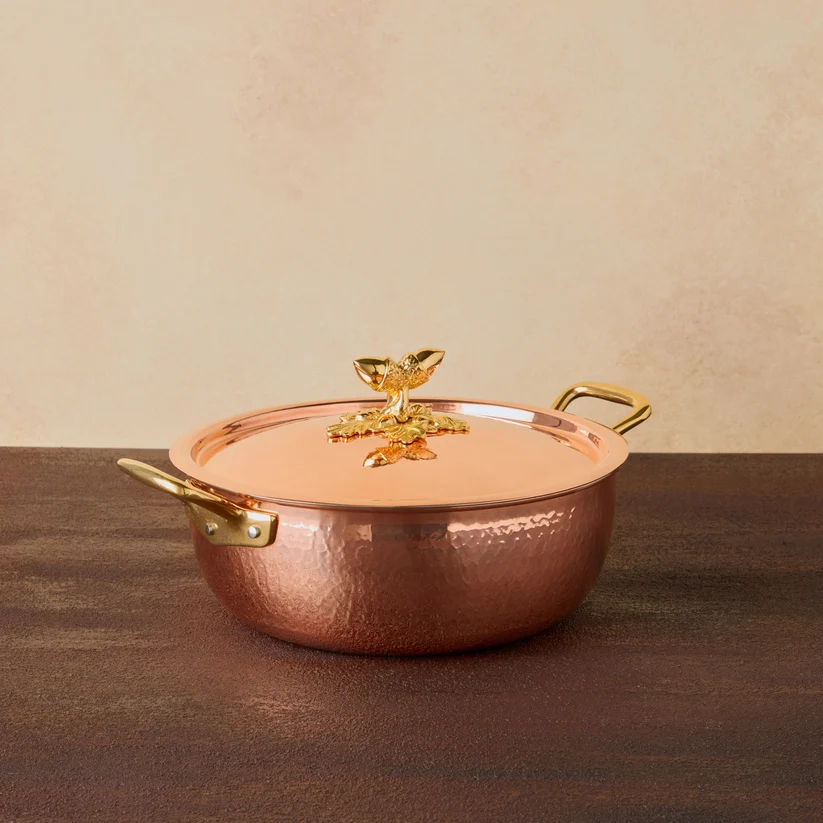
Below you’ll find a ranking of brands available in Poland, a comparison of specifications, real prices, and tips on how to care for copper so it lasts for decades. No marketing nonsense, just the facts.
How to evaluate copper pots?
Before you look at the price or the manufacturer’s name, check a few things that distinguish a real copper pot from a nice kitchen decoration. Because the difference can be significant.
Thickness and construction of the vessel
Professional thickness starts at 2 mm, with the gold standard being 2-2.5 mm. Anything below 1.5 mm? That’s more of a decoration than a working tool. Thick copper responds to temperature changes instantly, yet it doesn’t cause trouble when heated rapidly.
Beware of marketing tricks: “copper look” or a thin copper plating on aluminum is not the same as a solid construction. It’s worth asking directly about the wall thickness, specifically in millimeters.
Lining
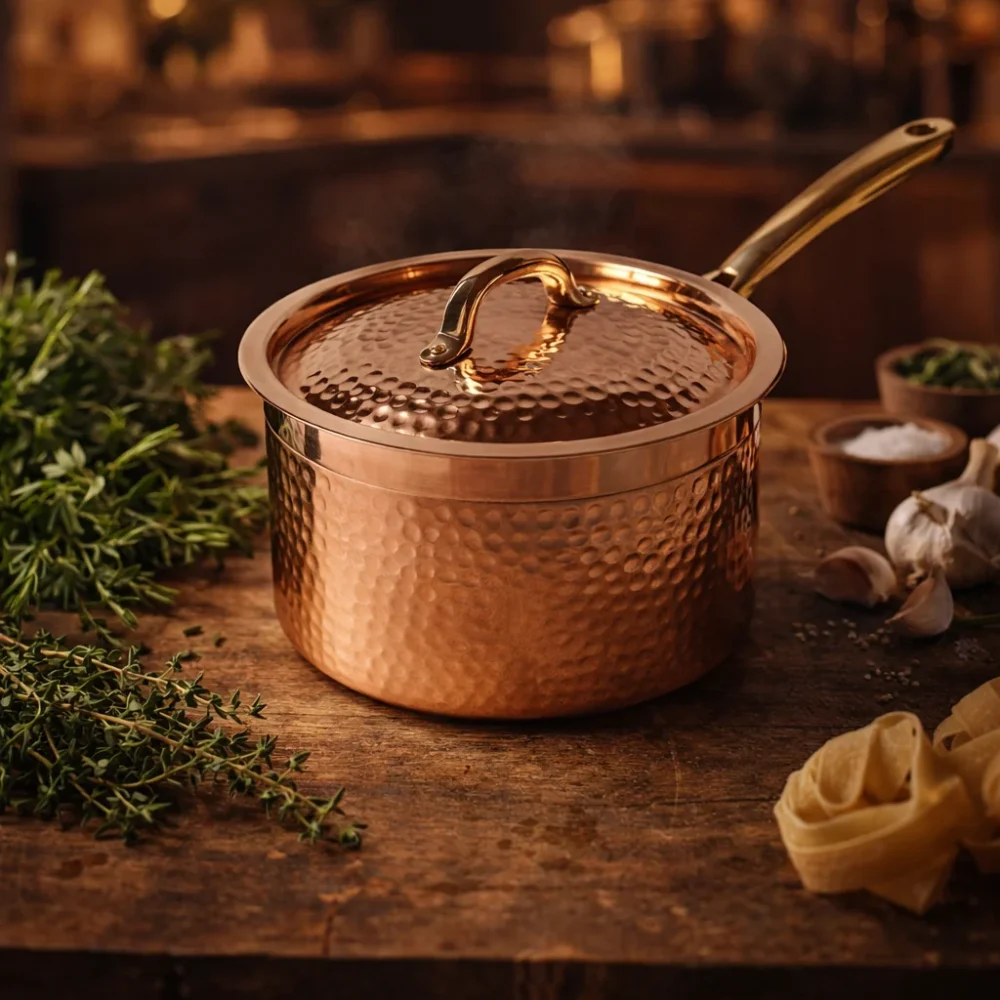
This is where the fun with compromises begins. Tin is traditional, naturally non-stick, but it melts at around 232°C and requires retinning every 10–20 years of intensive use. Stainless steel? Durable, hygienic, can handle the oven without worry, and is practically maintenance-free.
You’ll rarely find silver ( expensive, but beautiful). A modern solution is bimetal: thick copper on the outside, a thin layer of steel inside—patented in the 1980s—combining the advantages of both worlds.
Ergonomics, finishes, and compatibility
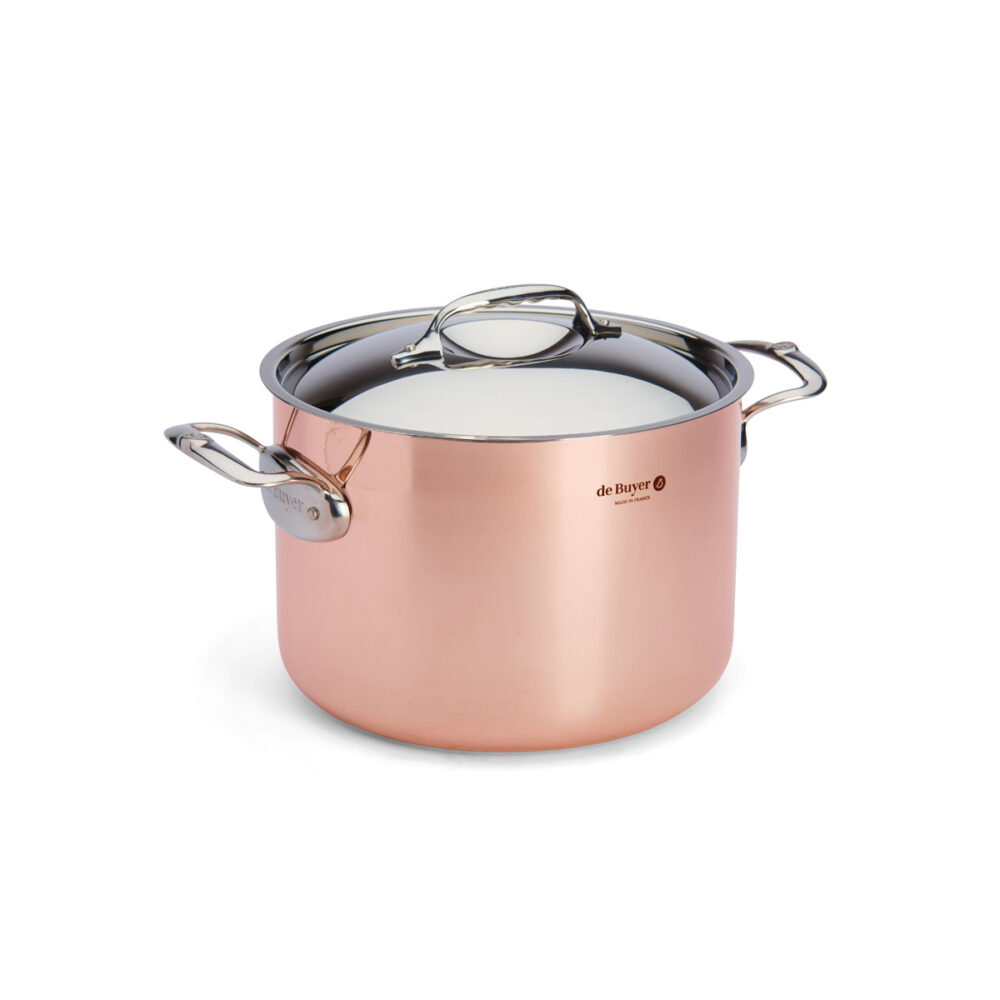
Cast iron, brass, or bronze handles withstand high temperatures and fit comfortably in the hand; the surface reflects light differently and hides minor scratches better than satin or polished finishes. Hammered finish is not just about aesthetics.
Oven: usually up to around 232°C (depends on the lining). Induction is an issue—traditional copper doesn’t work unless you have a magnetic base or a special line (some manufacturers offer dedicated solutions). Copper is excellent for sauces, reductions, gently heating chocolate—anywhere precision matters.
Premium brand ranking
I’ve compiled five brands that truly maintain high standards when it comes to specifications. Thickness of 2.5 mm, solid padding, and a verifiable production history.
1. Mauviel 1830 (France, Villedieu-les-Poêles)
The M’Heritage and M’250B series are classics, 2.5 mm copper, lined with either tin or stainless steel. Hammered finish, handcrafted, a manufacturer with almost two centuries of tradition. Lifetime warranty on materials.
2. Falk Culinair (Belgium, 1958)
Copper+stainless steel bimetal in a patent from the mid-80s. Brushed finish, 2.5 mm, works perfectly on induction. The company offers a 30-year warranty—they truly stand behind their product.
3. Ruffoni (Italy, 1962)
The Historia line features tin, hand-hammered finishes, and decorative brass knobs, while Opus Cupra is already steel. Lots of artisanal details, smaller production runs.
4. de Buyer (France, 1830)
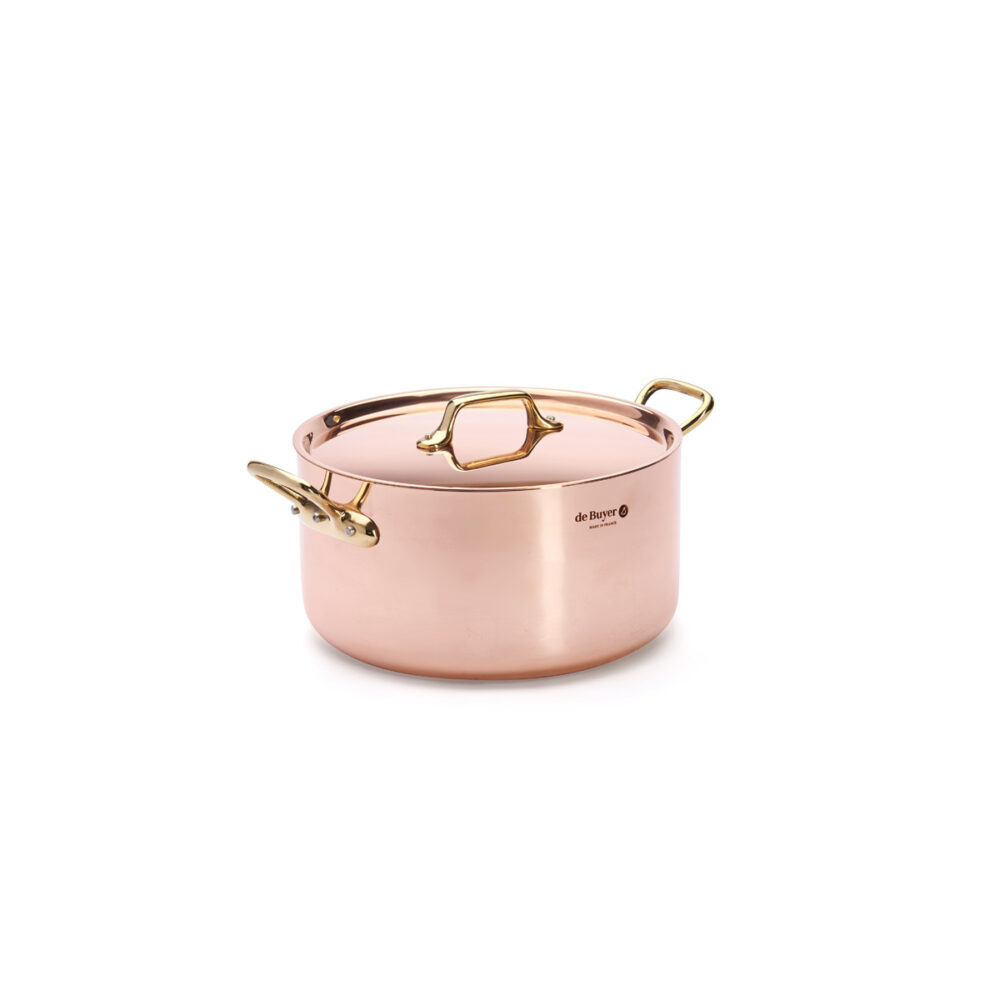
Inocuivre (90% Cu, 10% steel) and Prima Matera with a magnetic base for induction. Thickness 2-2.5 mm, more professional than home-oriented.
5. Matfer Bourgeat (France)
Steel lining, about 2.5 mm, focused on the food service sector. Good quality, a bit less decorative than Ruffoni or Mauviel.
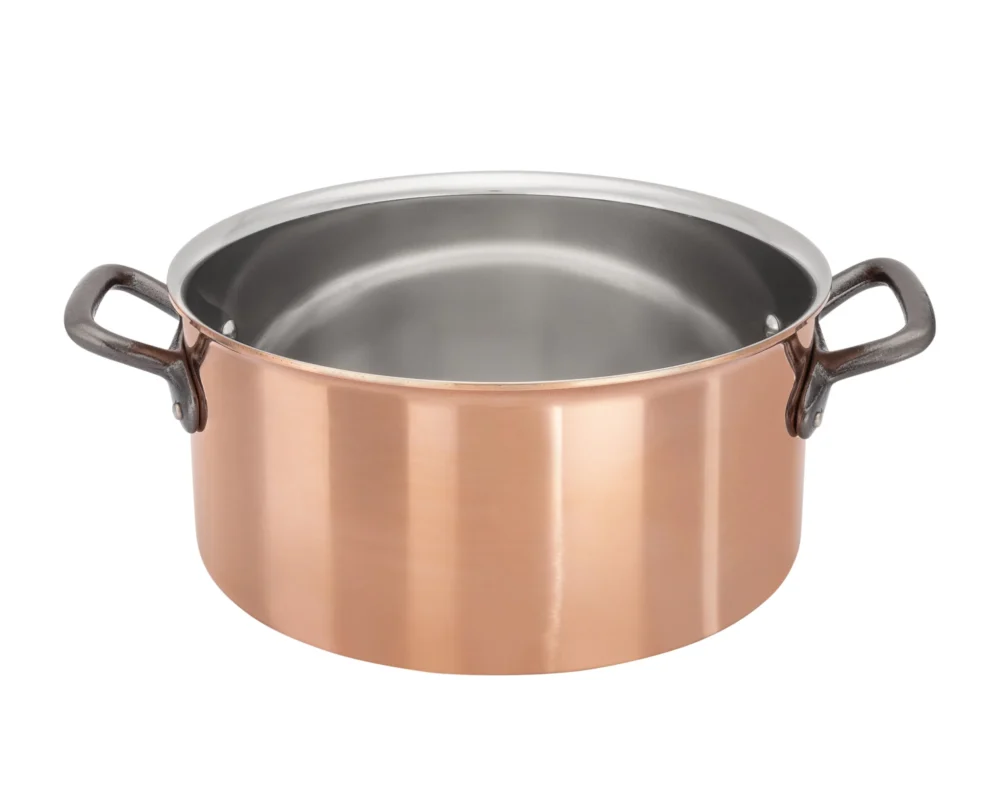
Quick specification comparison
| Brand | Country | Key series | Thickness | Lining | Induction | Warranty |
|---|---|---|---|---|---|---|
| Mauviel 1830 | France | M’Heritage, M’250B | 2.5 mm | cyan/steel | steel yes, tin no | lifetime |
| Falk Culinair | Belgium | bimetal | 2.5 mm | steel | yes | 30 years |
| Ruffoni | Italy | History, Opus Cupra | 2-2.5 mm | cyan/steel | Opus Cupra yes | variously (verify) |
| de Buyer | France | Inocuivre, Prima Matera | 2-2.5 mm | steel | Prima Matera yes | lifetime |
| Matfer Bourgeat | France | standard pro | ~2.5 mm | steel | yes | standard |
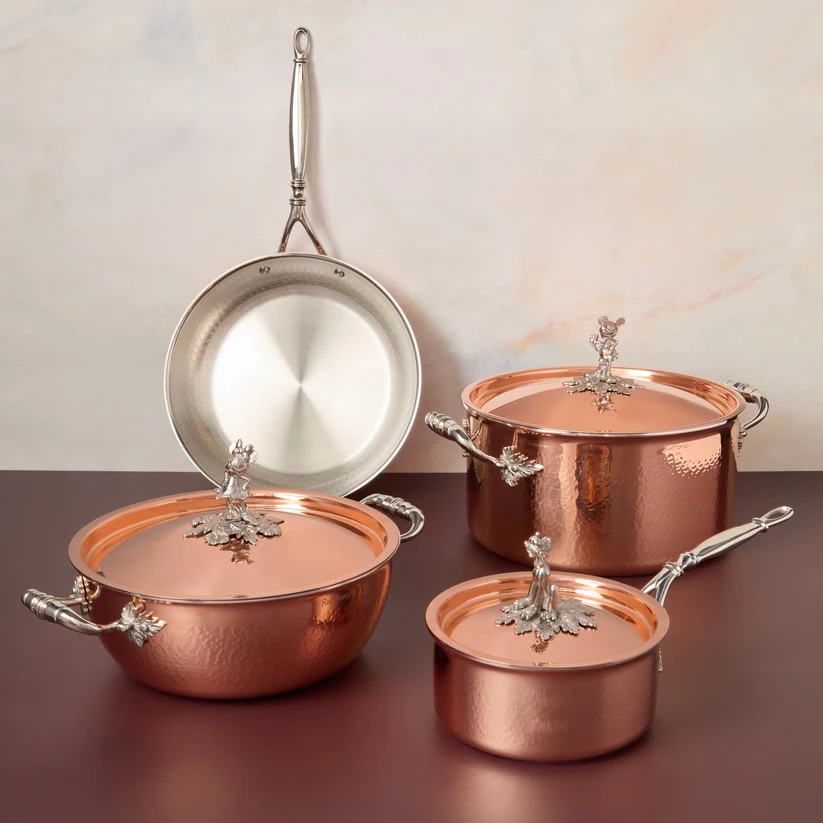
Mentions: Cu Artigiana (Italy, 1983) makes hand-hammered pots with tin lining and brass handles, niche, small batches. The list here is intentionally focused on thick premium copper, omitting thinner lines like Lagostina.
What to watch out for
The market is full of pitfalls. Confirm:
- Thickness: minimum 2 mm, ideally 2-2.5 mm (if the description does not specify the thickness, it’s suspicious).
- Lining: tin (traditional, requires retinning) or stainless steel (practical, durable).
- Origin: France, Italy, Belgium – countries with a reputation.
- Warranty: the manufacturer should stand by their name.
Beware of terms like “copper look” or “copper finish” – these are often just regular steel or aluminum with a copper coating. European consumer rankings often lump together Cookini, Berlinger Haus, Eva Solo. These are multilayer options (aluminum/steel core plus a thin layer of copper). Nothing wrong with that, but it’s not the full, thick premium copper we’re talking about here. The difference in price and performance is huge.
Care and durability
Premium copper cookware is a long-term investment, but it requires a bit more care than standard pots and pans. It’s worth knowing how to look after it daily and what to avoid so it truly lasts for years.
Daily care and polishing
First of all, hand washing. The dishwasher is the fastest way to lose the shine, especially with classic finishes. Warm water, a gentle detergent, and a soft sponge will do the trick. As for polishing, you have a few options. Copper polish works great, but a homemade method works just as well: lemon with salt or a bit of vinegar. Apply, rub gently, rinse, and polish dry. Copper regains that characteristic shine quite quickly, though some people prefer the natural patina.
Temperature and oven
Tinned pots require caution. Tin melts at around 232°C, so the oven is not their natural environment (unless at lower temperatures). Steel can withstand much more, which is why many manufacturers declare safety up to 232°C specifically because of the handles or other components. A steel lining offers more flexibility, but still, do not overheat the pots unnecessarily.
Retination and inheritance
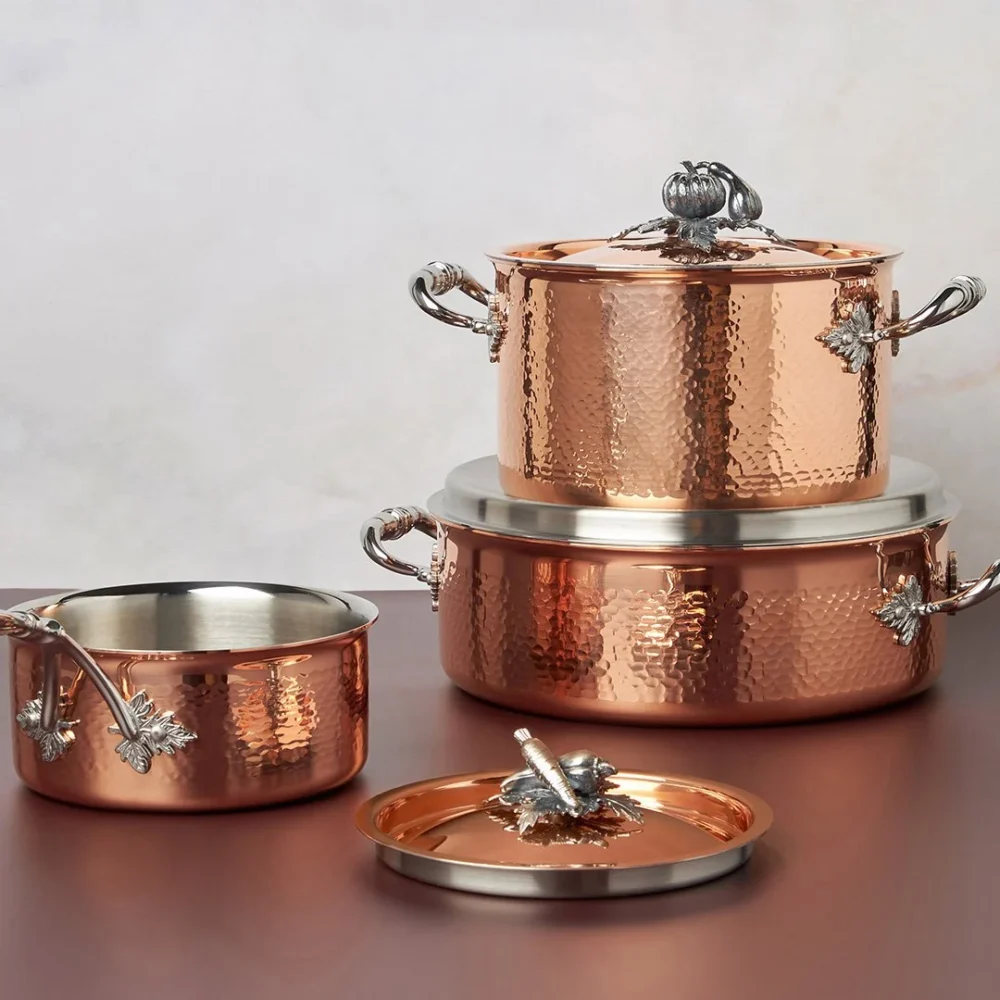
Tinned cookware needs to be retinned every 10–20 years with intensive use (sooner if you notice wear). The service isn’t widely available everywhere, but specialized companies working with copper can restore the lining to factory condition. Copper itself is virtually indestructible, which is why there are so many stories of pots being passed down through generations. The only downside? No induction compatibility without a magnetic base. The weight isn’t for everyone either, but that’s the mark of thick, quality copper.
Copper for generations
A copper pot is not just a purchase; it’s an investment in the future of your kitchen. By choosing a renowned European brand, you are opting for quality that will withstand decades of everyday use. The patina that develops over time doesn’t ruin the cookware—it adds character and history. This is what sets real copper apart from cheap imitations.
Think about how many steel or aluminum pots have ended up in the trash over the past few years. Copper has something unique about it; it matures with you while retaining full functionality. Careful attention to the interior finish (tin or stainless steel) ensures that your cookware will serve not only you, but possibly the next generation as well.
Choosing a copper pot is a conscious decision you’ll appreciate every time you stand by the stove. This is cookware for those who understand the difference between just another purchase and true value.
Mui L.
Luxury Blog editorial team




Leave a Comment