Epigenetic aging tests – how they work and what they reveal about health
photo: longevity.technology
You may be 35 years old on paper, but your body tells a different story. Biological age is that very difference you feel, but until recently it was hard to measure. DNA methylation changes predictably with age and responds to everything: diet, exercise, stress, sleep, smoking, alcohol, even air pollution.
Why does biological age matter today?
Because epigenetic clocks correlate better with disease risk and mortality than traditional tests. Cholesterol, blood pressure, blood count? Important, of course. But methylation shows how fast you’re really aging, not just what’s happening right now. It’s like looking under the hood to see if the engine is running properly or already struggling.
Epigenetic clocks predict disease risk better than most traditional health markers.
photo: jinfiniti.com
Different tests look at various aspects of this relationship (some measure pace better, others assess the risk of specific conditions), but all are based on the same foundation. In a moment, you’ll see how it works technically, what types of clocks exist, where to take the test, and what to watch out for when interpreting the results.
What is an epigenetic clock and how does it work?
The epigenetic clock is essentially an algorithm that analyzes DNA methylation patterns at specific sites in the genome ( called CpG sites) and, based on this, estimates your biological age or the rate at which you are aging. It compares the detected patterns to a vast reference database and says: “Your cells look X years old,” regardless of how many candles you blew out on your last birthday cake.
From sample to result
The entire process takes place in several steps:
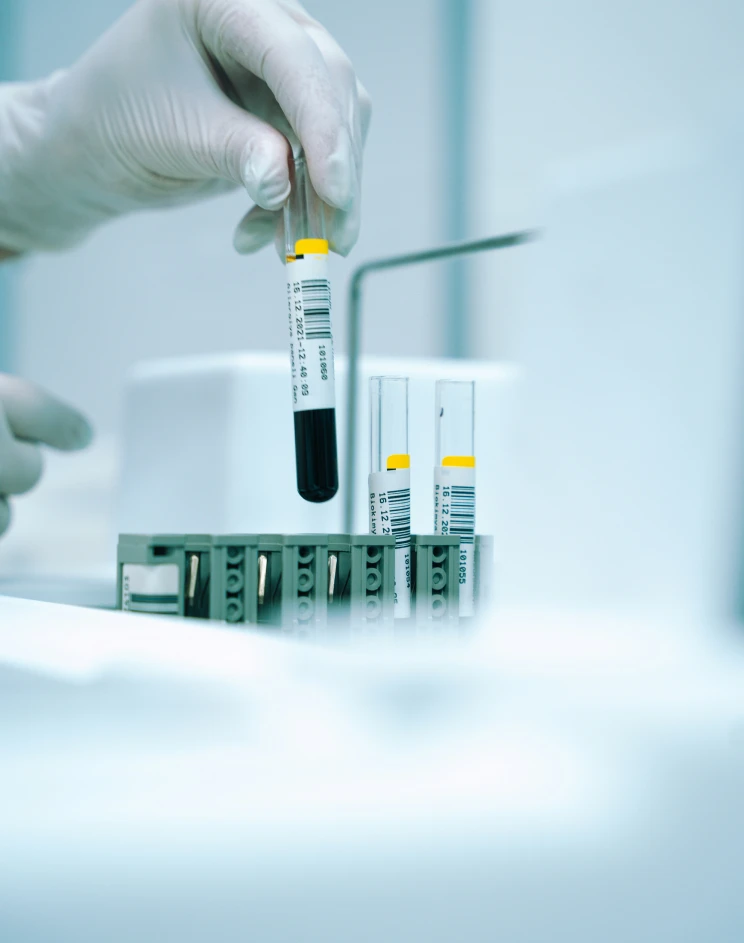
Sample collection – most often blood (whole or a few capillary drops), saliva, cheek swab, sometimes urine. It depends on the type of test.
Isolation and preparation of DNA – the laboratory extracts DNA and treats it with bisulfite, which modifies unmethylated cytosines but leaves methylated ones untouched.
Methylation measurement – this is where Illumina microarrays come in (e.g., the EPIC array analyzing over 850,000 CpG sites) or bisulfite sequencing, which precisely determines which CpG sites are methylated and which are not.
Calculating the result – the algorithm (often elastic net regression or another machine learning model) compares your methylation profile with data from thousands of people and calculates your biological age as well as “age acceleration” (the acceleration or deceleration of aging).
photo: activemotif.com
What exactly are these results?
Biological age is an estimate of how old your cells “appear” in terms of aging processes; it can be lower or higher than your chronological age (your actual age). Age acceleration shows the difference: if you are 40 years old chronologically but 35 biologically, your acceleration is minus 5 years. And vice versa. The models are trained on massive cohorts, allowing them to capture patterns linking methylation with age, diseases, and even mortality.
Types of clocks
Over the past decade, several dozen epigenetic clocks have been developed, each with a different purpose. Some focus on accurately determining chronological age, while others predict the risk of death or disease. It is worth knowing the main families.
First generation
Horvath (2013) is a pioneer. He analyzes 353 CpG sites across multiple tissues (the so-called pan-tissue clock) and estimates biological age with a median error of about 3.6 years. Hannum (the same year) works only on blood, but is similarly effective in determining chronological age. Both clocks can tell you how old you are, but they are poorly correlated with mortality or specific diseases. In practice, this tool is more academic than clinical.
Second generation
PhenoAge (Levine) and GrimAge (Lu/Horvath) go further. PhenoAge takes into account biochemical markers and correlates better with organ function. GrimAge usually outperforms in predicting mortality, even surpassing telomere length measurement in many analyses. This is the clock most commonly used in commercial health tests.
Third generation and beyond
DunedinPACE measures the pace of aging, not age itself. A value of 1.0 represents the average pace, above 1.2 indicates acceleration. It is sensitive to lifestyle changes, making it excellent for monitoring interventions.
Among the new developments, it’s worth knowing SYMPHONYAge (breaks down the result into 11 organ systems), CheekAge (cheek swab, mortality prediction), and pan-mammalian clocks (~185 mammal species, used in comparative aging research).
photo: mapmygenome.ai
Clock
Year
What does it measure
Key data
Horvath
2013
Metric age
353 CpG, error ~3.6 years
Hannum
2013
Age (blood)
Calendar age
PhenoAge
2018
Health/mortality
Biochemical markers
GrimAge
2019
Mortality
The best predictor of death
DunedinPACE
2022
Aging rate
1.0 = normal; >1.2 = faster
The choice of clock depends on your goal: if you want to know how quickly you are aging, choose DunedinPACE. If you are interested in overall health risk, GrimAge will be more accurate.
How to read the report?
When you finally hold the test report in your hand, you look at the numbers and… what do they actually mean? Don’t worry, it’s simpler than it seems.
Age acceleration
The most important metric is ” age acceleration “, which is the difference between your biological age and your chronological age. If you are 40 years old and the test shows a biological age of 44, you have +4 years of acceleration, meaning you are aging faster than the population average. On the other hand, a result of 37 years gives you -3, which means a slowdown. This delta is what tells you the most about how your lifestyle affects your body.
Tempo DunedinPACE in practice
DunedinPACE is a slightly different approach, because instead of “how old are you,” it measures “how fast you are aging.” A value of 1.0 is the average pace. A result of 1.2 or higher? You are aging 20% faster than the typical person. Below 1.0 means slower. This number responds to lifestyle changes quite quickly, so it’s useful for tracking progress.
What else can be found in the report?
A typical document contains:
comparison of biological and chronological age
risk indicators for diseases or mortality (especially in GrimAge)
health prediction over the years
sometimes even recommendations regarding diet or activity
Just remember that different clocks measure slightly different aspects of biology. One may show “younger,” another “older.” That’s normal, because each looks at different markers.
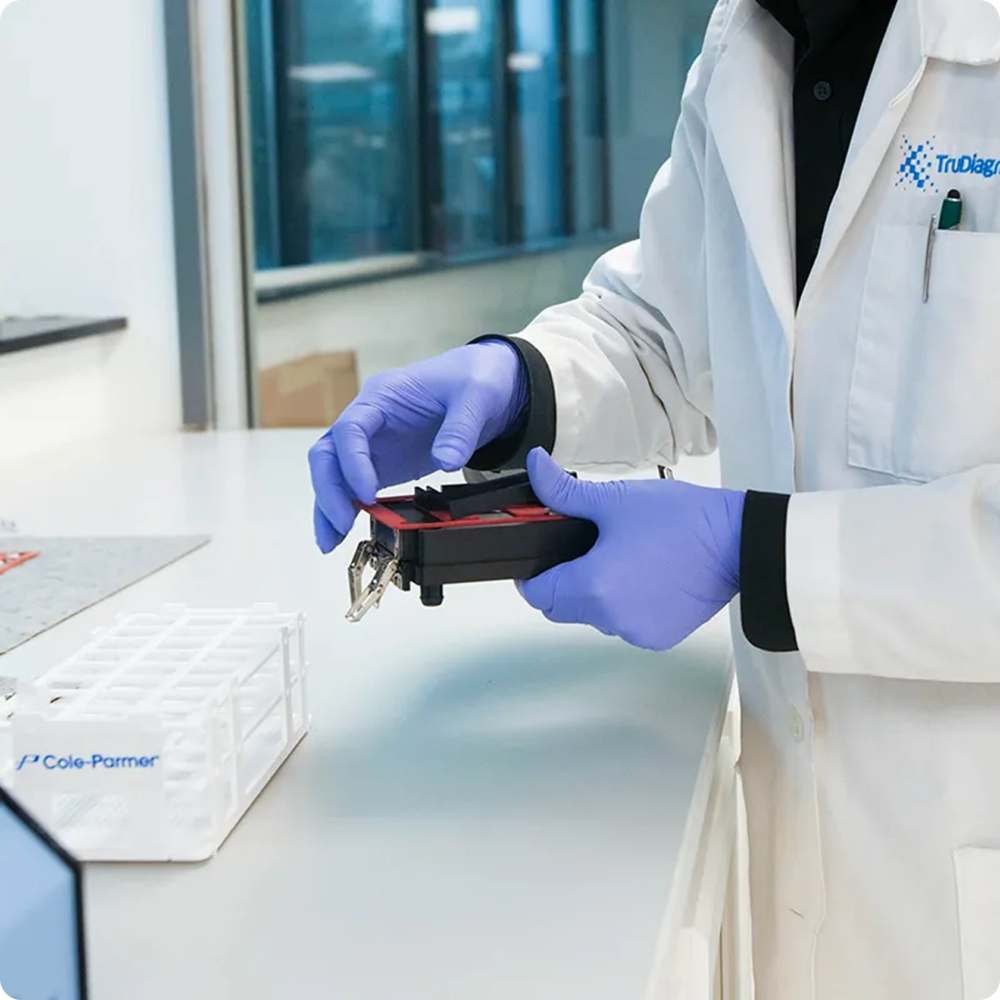
photo: trudiagnostic.com
Practical applications
Epigenetic clocks are no longer just laboratory tools. Today, they serve as sensitive endpoints in interventional studies, support longevity clinics in personalizing therapies, and help investigators determine age from DNA samples.
Research
In clinical trials, it’s difficult to wait decades to see whether a particular diet or supplement extends lifespan. That’s why researchers use clocks as surrogate endpoints. DunedinPACE and GrimAge have proven to be particularly sensitive: epigenetic acceleration has been correlated with obesity, HIV, Alzheimer’s, and smoking. In many analyses, lifestyle interventions (Mediterranean diet, regular physical activity) slowed the clocks by several biological months over the course of a year.
Precision longevity in practice
Clinics and wellness programs use tests to build personalized plans: a diet tailored to the methylation profile, sleep protocols, supplementation. After six months, the patient takes a follow-up test to see if the intervention is working. It’s a bit like fitness tracking, but on the level of epigenetics. Longevity packages often combine clocks with metabolic and microbiome panels.
Forensic medicine: age from DNA
EU projects (VISAGE, ForMAT) are developing age prediction algorithms from DNA for investigations. In Poland, participants include, among others, PUM Szczecin, Jagiellonian University, and CLKP. From a blood or saliva sample, it is possible to estimate the donor’s age with an accuracy of ±3-5 years, which can be crucial in identifying victims or suspects.
Adoption is growing in all three areas, although science still outpaces commercial applications.
Availability, samples, time
Epigenetic aging tests can now be ordered online, mainly in a direct-to-consumer (DTC) model, meaning they are delivered straight to your home. Several laboratories in the USA are CLIA-certified, while in Europe there are local partners or companies that send kits by mail. The sample? Most often, it’s a finger-prick blood spot on filter paper (dried blood spot), a cheek swab or saliva. It’s actually simple, although you do need to follow the instructions carefully to ensure high-quality DNA.
How much does it cost and how long does it take?
The waiting time for the report is usually 3–6 weeks from the moment the laboratory receives the sample. Prices start at around 200 EUR and go up to 500+ USD for comprehensive panels. It’s an investment, no doubt about it. In most countries, the cost is borne by the patient, as insurers and public health systems do not reimburse such tests (at least for now).
Most popular providers
Several brands dominate the global market. TruDiagnostic offers the TruAge kit, DunedinPACE, and SYMPHONYAge in the $299–499 range. NOVOS Age combines DunedinPACE with telomere measurement and a facial scanner. Tally Health sells TallyAge and CheekAge, based on a cheek swab. Elysium Index uses saliva, as does myDNAge (based on the Horvath clock). There is also GlycanAge, which measures age through the N-glycosylation profile of proteins.
Supplier
Clock/range
Sample
Indicative price
Notes
TruDiagnostic
TruAge, DunedinPACE, SYMPHONYAge
blood (DBS)
299-499 USD
CLIA, USA
NOVOS Age
DunedinPACE + telomeres + face
blood
~399 USD
comprehensive panel
Tally Health
TallyAge, CheekAge
cheek swab
~229 USD
easy sample
Elysium Index
Index
saliva
~299 USD
convenient logistics
epiAge
epigenetic age
saliva
~199 EUR
EU, EU delivery
photo: healthscreen.com.au
Options in Europe
There are partnership offers emerging in Europe (Longevity+, Diagnostyka) that collaborate with foreign laboratories. epiAge is a European player, offering a saliva-based test for around 199 EUR. Longevity packages sometimes include epigenetics together with other biomarkers.
Strengths vs. limitations: what we know and what we don’t yet
Before you decide to take the test, it’s worth knowing what it can really do and where it might let you down. This isn’t about scaring you, but about having realistic expectations.
What these tests do really well
At the population level, they work excellently. GrimAge predicts mortality better than telomere measurement or traditional biochemical markers. There are clear links to the risk of heart disease, Alzheimer’s, and diabetes. In scientific research, it is a reliable tool for assessing aging biomarkers and testing interventions. If you want to check whether a particular lifestyle affects the rate of aging, epigenetic metrics offer an advantage over classic blood analyses.
Where they can fail and why
Now the drawbacks. Technical noise can be a real headache: two samples taken on the same day can show a difference of several up to nine years between replicates. Different clocks measure different things ( Horvath vs. Hannum vs. GrimAge) and don’t always agree. Most clocks were trained mainly on European populations, so they may be less accurate for other ethnic groups. And a key issue: not all clocks respond consistently to interventions. More randomized studies and methodological standardization are needed.
How to use them wisely today?
Treat the result as a guideline, not a verdict. Valuable for monitoring trends (such as whether lifestyle changes are working), but be cautious with individual decisions. The risk of anxiety or overinterpretation is real. The test does not replace a medical diagnosis. If the result concerns you, talk to your doctor, not just to a PDF report.
From breakthrough to present day
It all really began in 2011, when Horvath extracted the first biological age signal from saliva. Sounds trivial? Maybe now, but back then it was a breakthrough. Two years later, in 2013, the same researcher published his pan-tissue clock in Genome Biology, based on 353 CpG sites. Median error? Just under 3.6 years. That was the moment the industry realized: it is possible to measure age at the molecular level, in different tissues, with real precision.
The second and third wave of innovation
After Horvath, an avalanche followed. In 2018, PhenoAge (Morgan Levine) appeared, and a year later GrimAge (Lu and Horvath). The latter proved particularly powerful in predicting mortality and disease risk. Around 2020-2022, the Dunedin Study brought another breakthrough: DunedinPACE, a clock that measures the pace of aging, not just age itself. The difference is subtle, but significant in clinical practice.
The era of multi-omics and standardization
Since 2023, we have seen an explosion of tools: pan-mammalian clocks covering ~ 185 species, clocks specific to individual cells and tissues. In 2024, CheekAge debuted (cheek swab, mortality prediction), and for 2025- 2026 there are plans for multicenter studies on reliability and unified reporting protocols. It is clear that we are moving from the exploration phase into the standardization phase. The pace is truly impressive.
What’s next?
Epigenetic aging clocks are no longer just a research tool. Within the next few years, we may see them in doctors’ offices, not just in laboratories. The question is: in what form and how soon?
photo: novalabcorp.com
From the laboratory to the clinic
The greatest potential lies in using clocks as surrogate endpoints, that is, substitute endpoints in clinical trials. Instead of waiting decades for lifespan data, it is possible to measure whether an intervention (diet, drug, supplementation) slows biological aging. Some companies are already testing this model as part of precision longevity medicine.
The second direction is standardization. Today, different laboratories use different clocks and reporting methods, which makes comparisons difficult. Work is underway to unify protocols and improve reproducibility so that a result from laboratory A means the same as from laboratory B.
AI, multi-omics and mini-clocks
Technology is moving in two directions at once. On one hand, we have increasingly advanced models like OMICmAge (multi‑omic), which combines DNA methylation with transcriptomics and metabolomics, providing a more complete picture. On the other hand, simplified mini CpG panels are being developed (about 8 markers instead of hundreds), which are cheaper and faster.
Non-invasive sampling methods are also developing: a cheek swab or skin tape-stripping can replace blood in certain applications.
Regulations and adoption by 2030+
So far, no test has medical certification or reimbursement. But if the clinical evidence is confirmed, we can expect the first regulatory frameworks before 2030. Forecasts indicate broader use in healthcare as part of preventive diagnostics, although initially probably for privately paying individuals.
How to choose a test and avoid marketing traps
Not every epigenetic test measures the same thing, so the key question is: what exactly do you want to know? If you’re interested in determining your biological age, the classic Horvath clocks will work well. Want to see the pace of aging and whether your health interventions are effective? DunedinPACE is a better choice (where 1.0 indicates the average pace). GrimAge, on the other hand, focuses on predicting mortality risk. Matching the clock to the question is half the battle.
Check out science and the laboratory
A reliable test is built on solid scientific foundations. Look for publications in peer-reviewed journals, validation independent of the manufacturer, and academic partnerships. TruDiagnostic collaborates with Harvard and Yale, which is an example of the standard worth referencing. The laboratory should have quality certifications such as CLIA (in the USA) or European equivalents, plus transparent control of measurement repeatability. No company can be verified 100%, but questions about these elements quickly weed out unserious players.
Avoid marketing mirages
Red flags are usually obvious. “Selfie clocks” or survey-based algorithms without DNA analysis? Avoid them. Undisclosed methods, no access to raw data, promises like “rejuvenate by 10 years in 30 days”? Major caution. Serious tests always provide confidence intervals and honestly communicate limitations. If something sounds like a supplement store product, it probably is. Transparency of methods and published data is your line of defense against marketing noise.
Wiser than your age
Epigenetic tests are a tool, not a verdict. They show the direction your body is heading, but they don’t determine where you’ll ultimately end up. It’s a bit like navigation that warns you about a traffic jam 10 kilometers ahead, giving you time to take an alternative route. The test result is a starting point for a conversation with yourself about what can still be improved.
photo: mapmygenome.ai
Interestingly, the greatest value of these tests is not the number itself. It’s the awareness that your choices from yesterday matter today, and today’s choices will matter in a few years. And that biology doesn’t have to be just a fate written in your genes.
It may sound like a truism, but it’s worth repeating: biological age is not fixed. It changes in response to how you live. And that’s exactly what makes it more than just a scientific curiosity.














Leave a Comment