

Blanc de Blancs vs Blanc de Noirs – differences, taste, choice
Champagne is one of the most strictly regulated wine regions in the world. In 2024, around 266.1 million bottles were shipped from here, generating revenues of approximately 5.7 billion euros. And despite this scale, something that was still a niche just a decade ago is appearing more and more often on labels: the designations Blanc de Blancs and Blanc de Noirs.
These two styles are no longer the exclusive domain of sommeliers. Consumers are seeking purity of expression and precision, not universality. Blanc de Blancs, made only from Chardonnay, is a completely different world than Blanc de Noirs from red grape varieties (Pinot Noir, Pinot Meunier). One is associated with elegance and minerality, the other with power and structure. This is a difference you can truly sense in the glass.
In this article, we show how these styles differ in winemaking, how terroir influences flavor, and why in 2026 -2027 it’s worth knowing them. You’ll also find practical pairing suggestions and market context. Because choosing a bottle is no longer just a matter of brand.
What are Blanc de Blancs and Blanc de Noirs
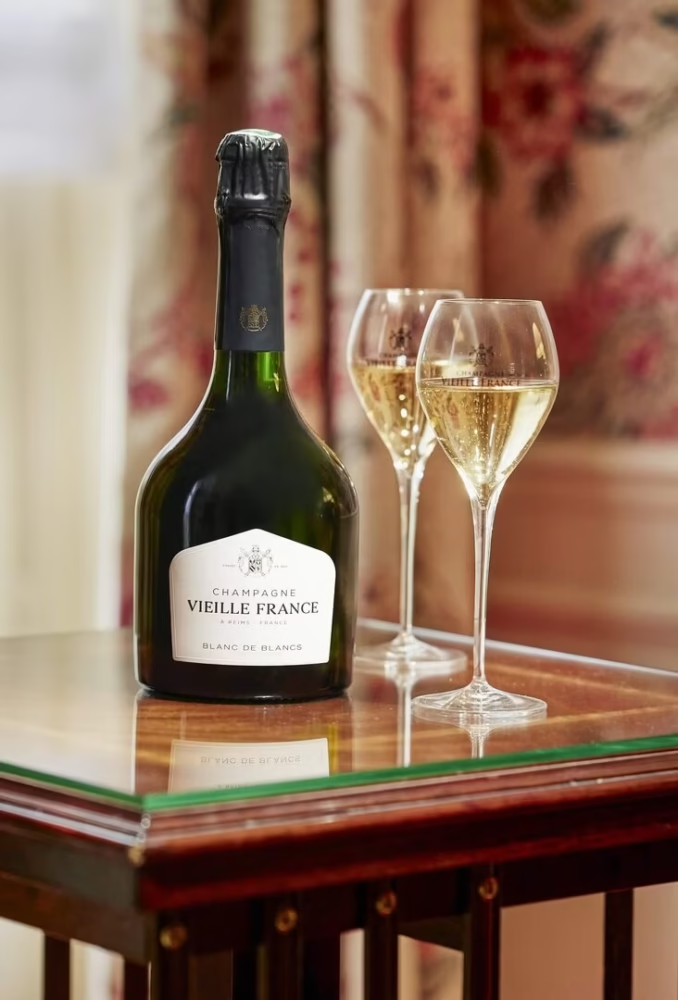
The inscriptions “Blanc de Blancs” and “Blanc de Noirs” on the label primarily indicate which grapes the wine is made from. In Champagne, Blanc de Blancs is almost always 100% Chardonnay, although the regulations allow for a few rare white varieties. These include Arbane, Petit Meslier, Pinot Blanc, and Pinot Gris, but their plantings are so limited that you’re unlikely to encounter them in practice.
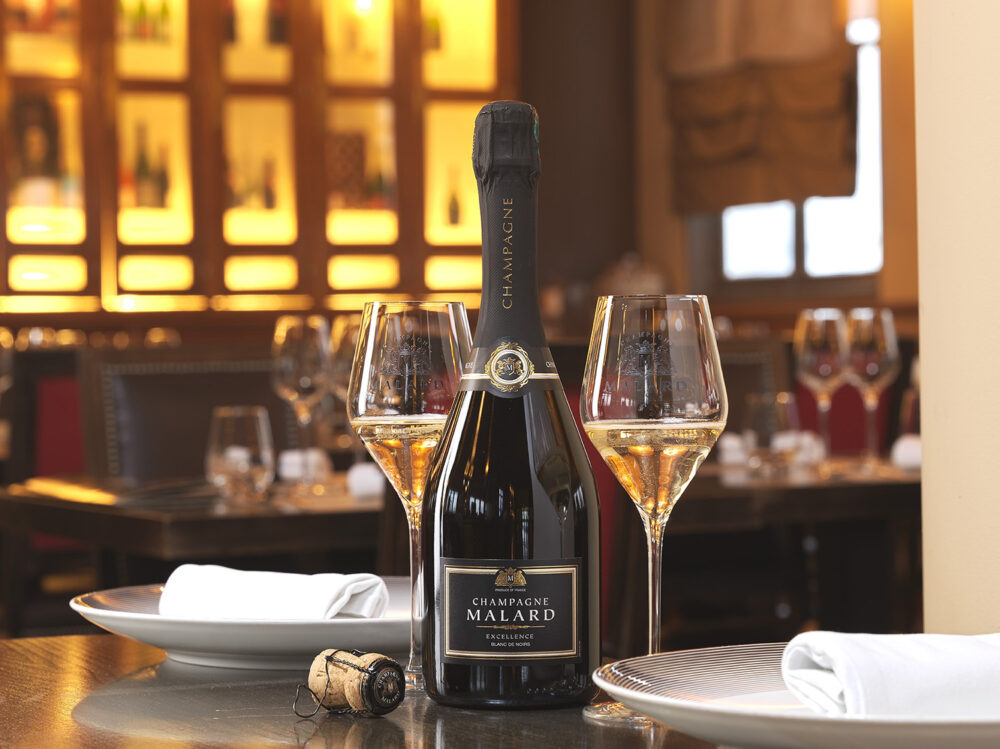
Blanc de Noirs, on the other hand, uses only dark grape varieties: Pinot Noir, Meunier, or their blends. The juice from these grapes is naturally light; the color comes from the skins, so the whole trick is to press them very gently. The juice must be separated from the skins quickly, before it has a chance to take on color.
Important note: these terms describe the origin of the grapes and the stylistic intention, but they do not guarantee high quality. Most champagnes are actually blends of all three main varieties ( Chardonnay + Pinot Noir + Meunier), so the producer must be committed to choosing just one “family.”
Vinification that shapes the style
The mere use of white or dark grapes is just the beginning. Further decisions in the cellar can blur the differences between styles or emphasize them. Take the press fractions: cuvée juice (the first, most delicate fraction) is completely different from taille (the final, stronger, more extractive part). The producer may choose to ferment in barrels, carry out (or block) malolactic fermentation, decide on the time spent on the lees, and the dosage.
For this reason, Blanc de Noirs with short aging and low MLF can be fresh and delicate, while barrel-aged and matured Blanc de Blancs may appear powerful. The term “Blanc de Noirs” is not strictly defined by appellation regulations, although case law in France is clear: the use of this term must not mislead the consumer.
Where do they come from and what do they taste like?
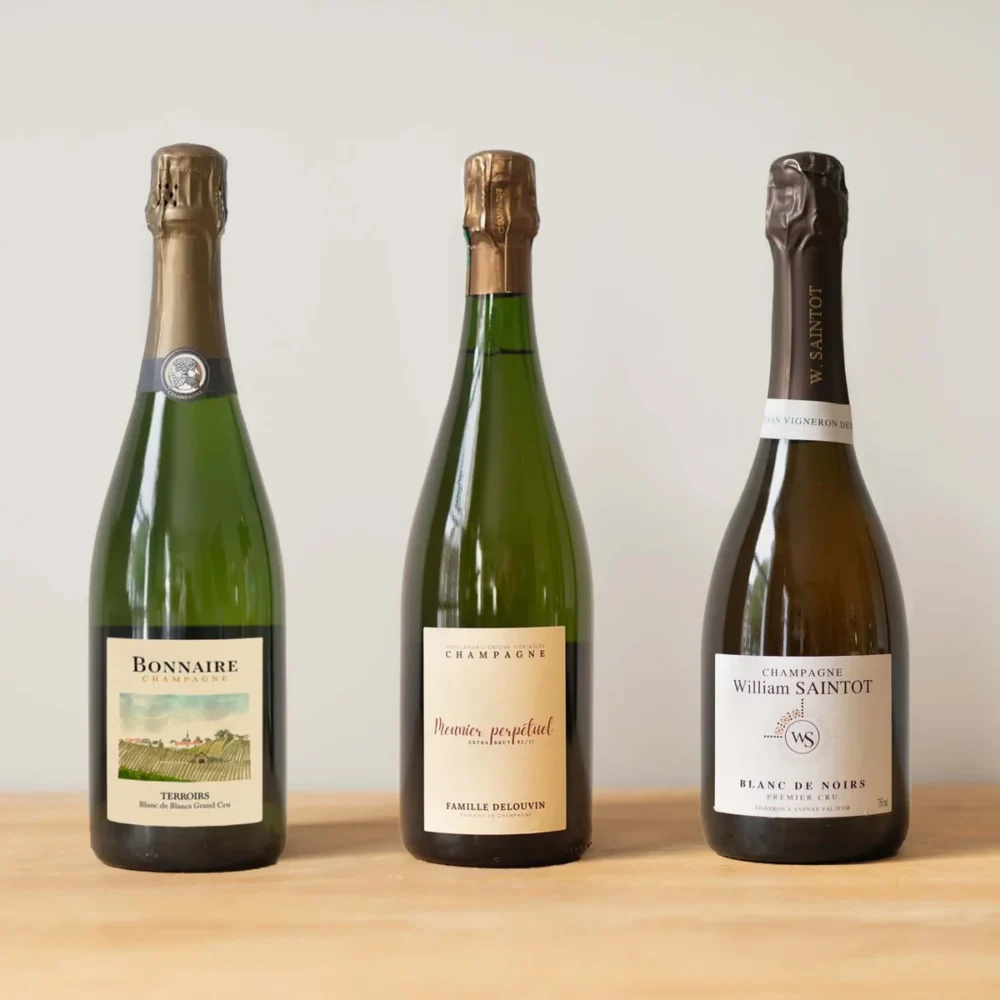
Blanc de Blancs is born mainly in the Côte des Blancs, where the chalky slopes of Avize, Cramant, and Le Mesnil-sur-Oger are a true kingdom of Chardonnay (~96% of the area). The chalk in the soil gives BdB its characteristic, mineral character.
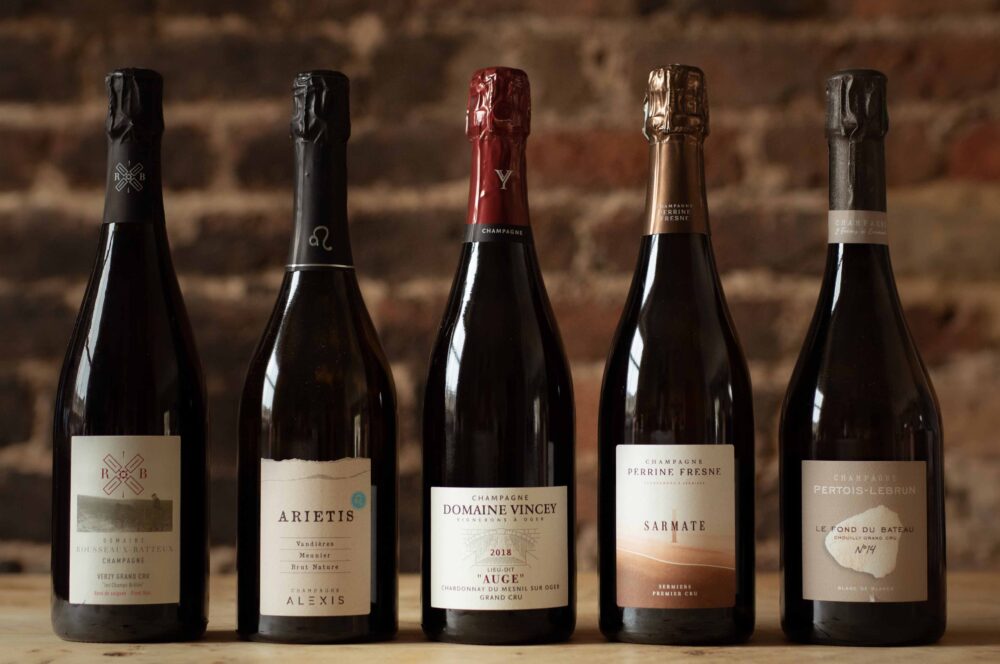
Blanc de Noirs comes from completely different places: Montagne de Reims ( Ambonnay, Verzenay are the classics), Côte des Bar in Aube, and the Marne Valley, where Meunier dominates. The soils there are heavier, more clayey, sometimes with limestone, but with a completely different structure than in Côte des Blancs.
What does it smell and taste like?
You can already see the difference in the glass. BdB has a pale golden color with slightly greenish reflections, the bubbles are very fine and persistent. BdN has a deeper gold, sometimes with coppery hints, and the foam is denser, more creamy.
Young BdB smells of citrus, green apple, pear, and white flowers. On the palate, you can sense chalk, sometimes even oyster shells. With age, it becomes more intriguing: brioche, hazelnut, honey, almond. BdN is a different story: strawberries, raspberries, red apple, sometimes yellow plum, light spices. After years, dried fruit, leather, truffle, and gingerbread appear.
| Style | Heart | Color | Young aromas | Acidity | Maturing |
|---|---|---|---|---|---|
| Blanc de Blancs | Côte des Blancs | pale gold, green | citrus, chalk, apple | high, linear | the longest |
| Blanc de Noirs | Montagne de Reims | deeper gold, copper | strawberry, spices | average, rounded | previously submitted |
BdB is a soprano: light, linear, with a spark of acidity that allows it to age for decades. BdN is a baritone: fuller, more vinous body, lower acidity, but it reveals its complexity earlier. Both categories age beautifully, just in different ways.
When and what to drink it with?
Where did this division between aperitif and main course even come from? Well, Chardonnay and Pinot are completely different flavor profiles, and on top of that, everyone reacts differently to what ends up on their plate.
Blanc de Blancs at the table
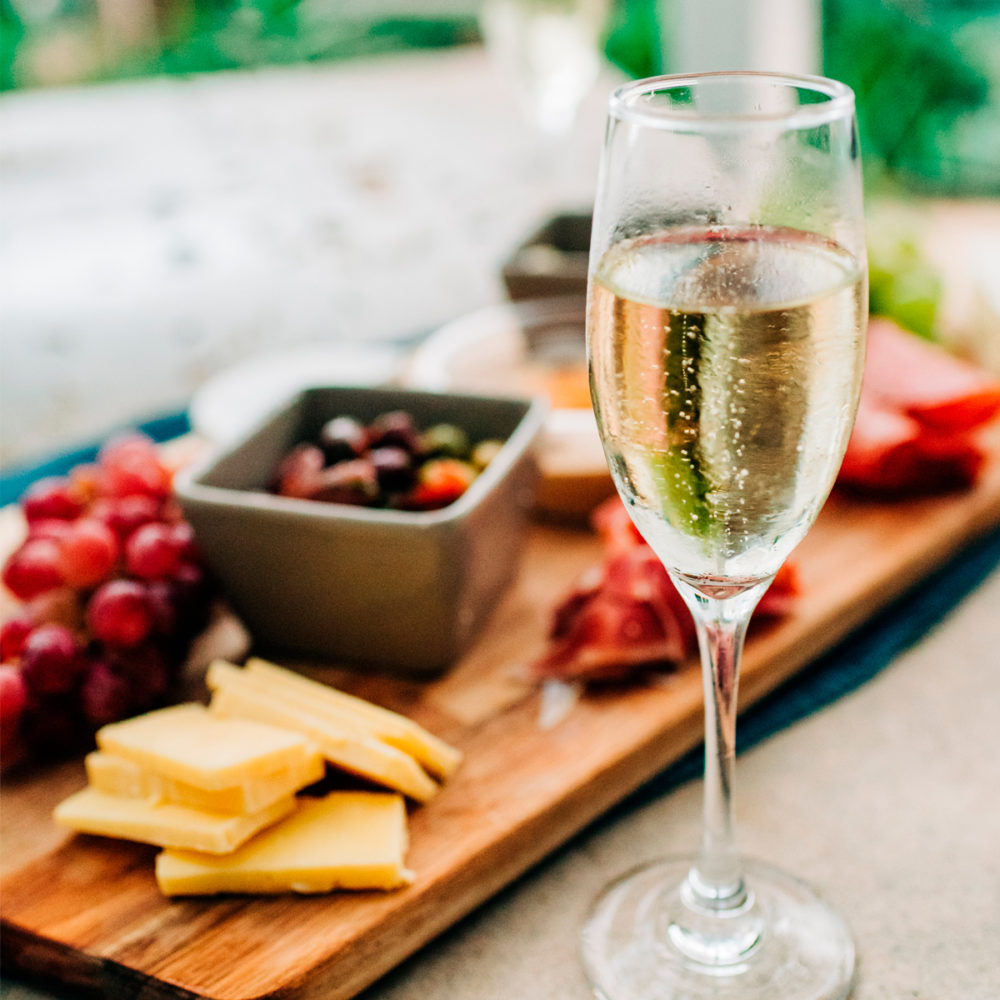
BdB is your natural choice when something is fresh, salty, and delicate. Young bottles pair perfectly with:
- with oysters and shellfish (a classic for a reason),
- with caviar – here, the wine’s minerality is simply begging for it,
- cod carpaccio or tartare,
- white asparagus with lemon sauce.

Acidity cuts through saltiness and richness, so the more buttery the sauce, the better. As BdB ages, it develops brioche and nutty notes, that’s when you should reach for complex fish dishes (turbot in noisette butter) or even goat’s milk cheeses with honey.
Blanc de Noirs for rich dishes
BdN likes texture and “umami.” Younger versions pair well with:
- roast chicken with skin,
- cold cuts and charcuterie (cured ham, pâtés),
- aged cheeses (comté, gruyère),
- forest mushrooms in butter.
These wines have body, making them perfect for cooler evenings when you’re in the mood for something more substantial. Older vintages with dried fruit, leather, and truffle notes? Veal, wild poultry, dishes with truffle mushrooms.
Important point: the winemaking style can change everything. Barrel-aged BdB can be more gastronomic than a fresh BdN from a steel tank. Always read the label, and of course, taste for yourself.
From Salon to Clos d’Ambonnay
Blanc de Blancs is the idea of Eugène-Aimé Salon, who in 1905 created the first wine made exclusively from Chardonnay. Initially for himself, it wasn’t until 1921 that he released the first edition to the public. It took a long time, but we know the result. Meanwhile, the term “Blanc de Noirs” officially appeared on the Palmer & Co. label in 1957, although red varieties had been used since the very beginning of Champagne. Bollinger went further, releasing Vieilles Vignes Françaises in 1969 (ungrafted Pinot Noir). Krug Clos d’Ambonnay debuted with the 1995 vintage, although it only reached the market around 2007. The real turning point came in the 1990s with the vigneron movement, led by Egly-Ouriet, who showed that Pinot Noir is capable of much more than just supporting blends.
Market and trends 2025-2026
Champagne today covers about 34,200 ha of AOC and produces 266.1 million bottles annually. France consumes around 114 million (42.9%), while exports take the rest, 152 million bottles (57.1%). The USA leads with 26.5 million, the UK with 22.7 million, and Japan with 13.3 million. The total generates about €5.7 billion in revenue. Plantings? Pinot Noir still dominates, at around 38%, Chardonnay 31-32%, Meunier 30-31%, rare varieties below 0.4%. It’s interesting how BdB is growing in the premium segment: forecasts predict a jump from about USD 0.64 billion (2025) to USD 1.13 billion (2034), with a CAGR of 6.55%. BdN is also on the rise, from USD 0.68 billion (2025) to USD 1.04 billion (2032), CAGR 6.25%. The 2025 harvest limit has been set at 9,000 kg/ha, and over 70% of houses are certified sustainable. Premium is on the rise, that’s clear.
Two paths of one legend
Blanc de Blancs and Blanc de Noirs are not just two styles of champagne; they are two taste philosophies that say something about you. Choosing between delicacy and power, freshness and depth, is essentially an answer to the question of what you are looking for at a given moment. And it’s not about one being better, because it isn’t.
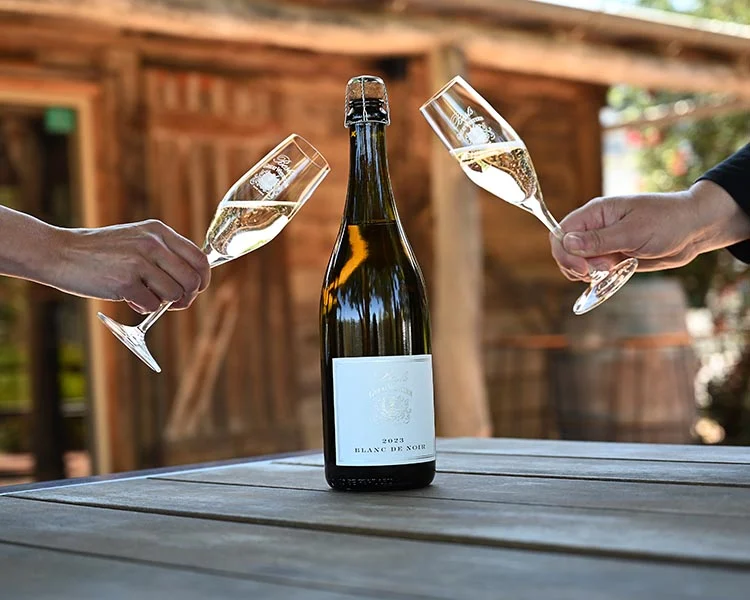
The truth is, making an informed choice makes a difference. When you know what to expect from pure Chardonnay and what from Pinot, you stop buying blindly. You start to understand labels, you match the wine to the occasion, not the other way around.
The rest is just a matter of experimenting. Sometimes you’ll go for elegance, sometimes for a bit of attitude. And that’s exactly the point.
Mark I.
Luxury Blog editorial team





Leave a Comment