

What kind of wine is Chateau Margaux?
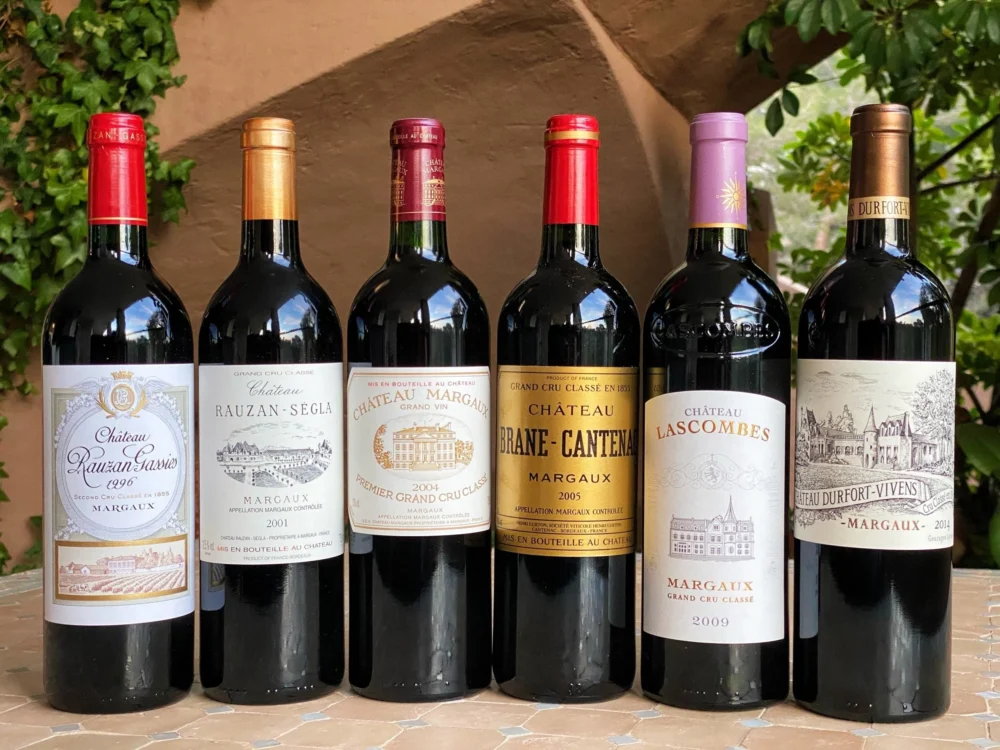
Château Margaux is one of only five estates in Bordeaux to hold the title of Premier Cru Classé in the 1855 classification. And it is precisely this word “only” that explains why bottles of Grand Vin from this château can cost over $1,000, and the name Margaux electrifies collectors around the world.
What kind of wine is Chateau Margaux?
The Château Margaux style is something you recognize from the very first sip. Elegance instead of power, finesse instead of throat-gripping tannins. This wine can age for decades, evolving in the bottle like a living organism. And it is precisely this balance between strength and delicacy that makes sommeliers speak of “silk in a steel glove.”
Since 1977, the estate has been managed by the Mentzelopoulos family. Under their leadership, Margaux has regained its prestige, and the latest vintages (2015, 2016, 2019) are receiving top marks from critics. In 2023, Alexis Leven-Mentzelopoulos took the helm, making the topic more relevant than ever.
In the following part of the article, you will learn how terroir influences flavor, which labels make up the château’s portfolio, and which vintages are worth keeping an eye on. No rush, step by step.
Château Margaux in the Bordeaux hierarchy – pedigree and status
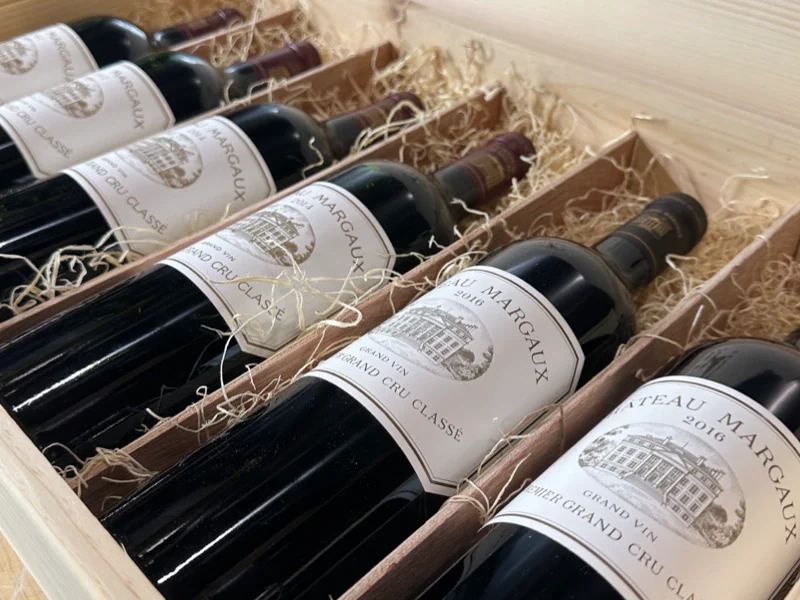
Château Margaux is one of the five Premier Cru Classé in the legendary 1855 classification. Sounds impressive, but what does it actually mean? Well, during the Paris World’s Fair, Napoleon III requested a ranking of the best Bordeaux vineyards. The result? Only five estates received the title of “first class”: Lafite, Latour, Haut-Brion, Margaux, and (later) Mouton Rothschild. And it has remained that way to this day.
Geographically, the estate is located in Margaux-Cantenac, on the left bank of Médoc, in the AOC Margaux appellation. This location defines its identity, although we will discuss the taste and gravels later. Here, it’s about the prestige embedded in the system.
Milestones: from La Mothe to the 21st century
The history of this place is a series of transformations:
- 12th century – beginnings as the estate of La Mothe de Margaux
- 16th century – expansion under Pierre de Lestonnac, who consolidated the vineyards
- Late 17th/18th century – a breakthrough during the time of François Berlon, who built the wine’s reputation
- 1771 – the first listing of “claret” from Margaux in the Christie’s auction catalog
- 1787 – Thomas Jefferson lists Margaux among the “four vineyards of first quality”
- Ca. 1812 – construction of a neoclassical château (design by Louis Combes for the Marquis de la Colonilla)
- 1977 – purchase by André Mentzelopoulos, who revolutionized the estate
- 2015 – new cellars designed by Norman Foster
- 2023 – Alexis Leven-Mentzelopoulos takes over as CEO
Why prestige has withstood the storms of history
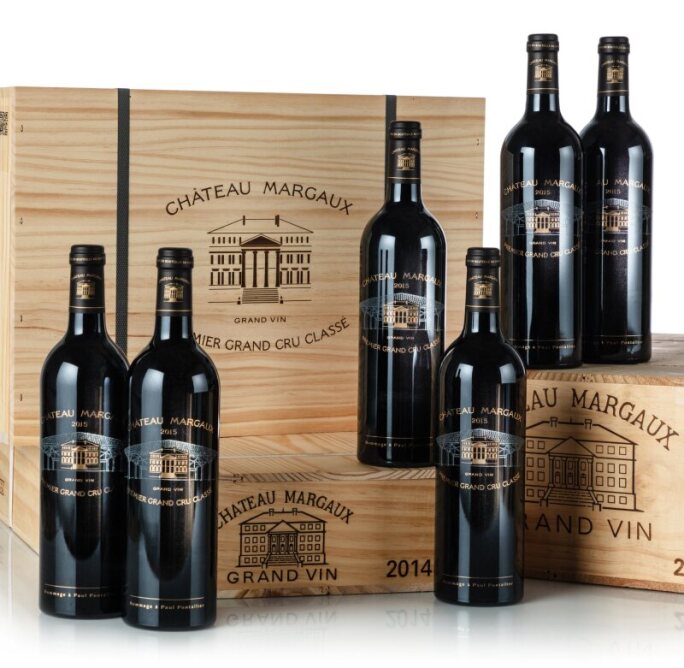
Wars, phylloxera, financial crises. Everything has passed, yet Margaux still stands at the top. Why? Because every generation of owners has treated the Premier Cru title as a commitment, not just an ornament. The continuity of investment, even in difficult times, has ensured the name never faded. Prestige is not a piece of paper from 1855; it is hundreds of decisions made every day for nearly two centuries.
Aromas, structure, and aging potential
When you pour Grand Vin into a glass, you immediately know it’s something more than just an ordinary Bordeaux. Cabernet Sauvignon dominates the blend (usually 85-90%), which results in a distinctive profile: elegant, yet with a pronounced backbone.
Aromas and texture: the essence of Margaux
The first notes are a classic of the Left Bank, but delivered with finesse:
- Blackcurrant (cassis) and ripe dark fruits
- Violets and fresh floral notes
- Tobacco, cedar, delicate earthiness
- In older vintages: truffle, leather, damp leaves
Tannins? Silky, dense, but never aggressive. This is not a wine that grabs you by the throat. The balance between power and elegance makes the finish last for minutes, leaving an impression of lightness despite its concentration. Tension and length are the hallmarks of Margaux.
A long journey in the bottle: 20–60+ years of aging
Top vintages (1990, 2000, 2015, 2018, 2019, all rated 100 points) can age for half a century or more. For the first 10 years, fruit dominates, then the real magic begins: tertiary bouquet, notes of mushrooms, humus, exquisite complexity. Young Margaux can be closed, so patience pays off.
Briefly about the service
Roast lamb, game, steaks with delicate fat—classic pairings. Decanting? Definitely for young vintages (under 10 years). For older ones, careful pouring is enough. Temperature 16–18°C and give it time in the glass. It’s worth it.
How is Margaux elegance created?
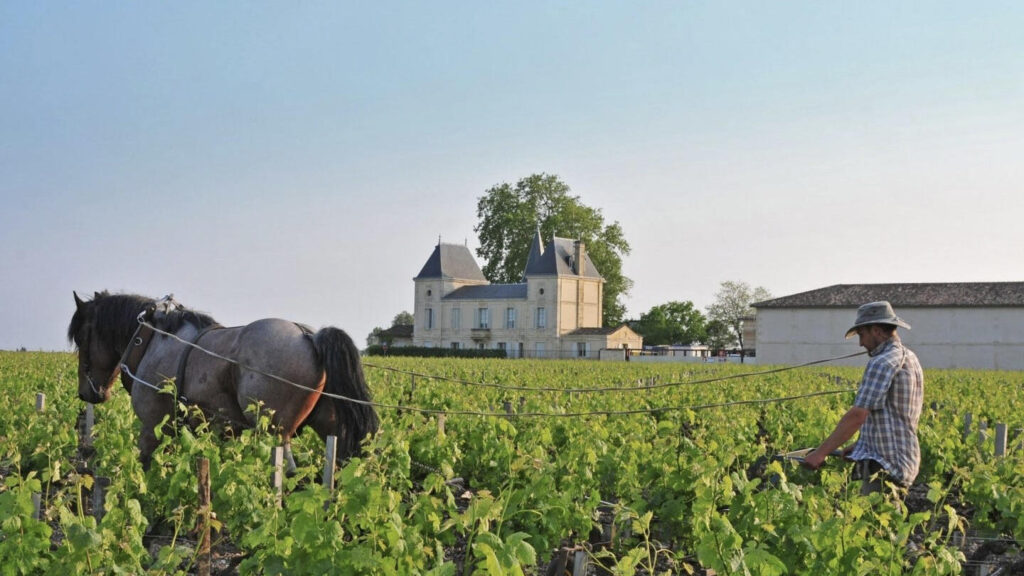
Gravelly hills on the left bank may sound generic, but in Margaux, it’s a very specific thing. These deep layers of fine stones over clay and sand, excellent drainage, warmth retained in the soil, roots reaching deep down. The heart of the estate is the Enclos, 25 hectares enclosed by a wall, where the core of the blend for the great wine is grown.
Mosaic of plots and varieties
The entire estate covers 262 hectares, but within AOC Margaux there are 87 ha. Of this, red varieties occupy about 80-82 ha:
- Cabernet Sauvignon – approximately 75% of plantings
- Merlot – about 20%
- Cabernet Franc and Petit Verdot – 2-3% each
White means 11-12 hectares of pure Sauvignon Blanc, planted in cooler, more calcareous locations. Low yields (22-46 hl/ha) require patience, but result in concentration.
From grape to barrel
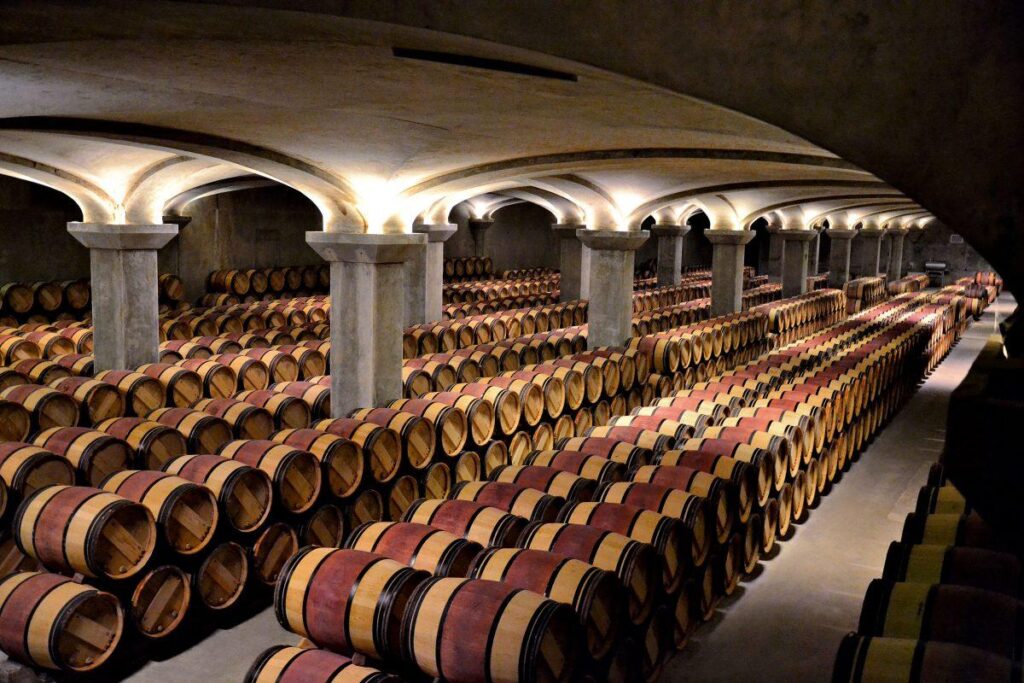
Hand harvesting, selection on sorting tables, then parcel-based vinification (since 2009, lots of small vats to treat each plot separately). Fermentation in oak or steel, malolactic usually already in vats. Reds mature for 18-24 months in 100% new barrels from their own cooperage, clarified with egg white. Whites for a shorter period, 6-8 months in oak.
Precision and balance
Since 2015, the new cellar designed by Norman Foster, gravity instead of pumps, delicacy at every stage. In 2017, they switched to organic practices and are also experimenting with elements of biodynamics. The R&D department has been operating since 1999 (water stress, climate adaptation, reduction of chemicals). This is not industrial production, but rather a continuous fine-tuning of details.
Bottles bearing the name Margaux – portfolio and vintages
The Château Margaux portfolio is more than just a single great Grand Vin. Here, every label has its place in the hierarchy, and production is so strictly controlled that sometimes only 28% of the harvest makes it into the flagship wine. It’s worth knowing what actually comes from the estate and what you can expect from the latest vintages.
Red and white: label hierarchy
Red wines come in four levels of selection:
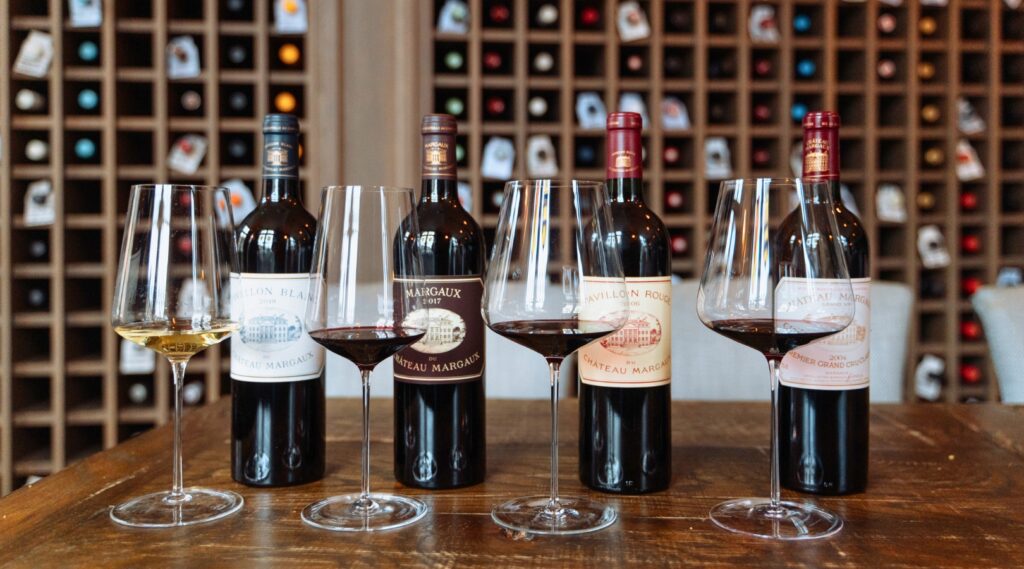
- Château Margaux (Grand Vin) – flagship bottle, 120,000–150,000 annually
- Pavillon Rouge – second wine, 100,000–200,000 bottles
- Margaux de Château Margaux – third, around 60,000 bottles
- Fourth red – since 2009 sold in bulk, without commercial bottling
The whites are two Sauvignons:
- Pavillon Blanc du Château Margaux – 100% Sauvignon Blanc (AOC Bordeaux), 10,000–35,000 bottles
- Pavillon Blanc Second Vin – new from 2024, around 8,000 bottles
Each category has its own character, but all share the Margaux style.
What do the 2024 and 2025 yearbooks say
The 2024 vintage has been praised for its finesse and freshness. The tannins are elegant, and the whole maintains a classic structure without excess. Meanwhile, 2025, which you will see offered en primeur in 2026, is a true marvel for Margaux. Despite variable rainfall and small berries, many speak of a ” miraculous quality ” in this appellation. If the patterns hold, this will be a vintage to watch.
Either way, the rigorous selection ensures that even in more challenging years, the standard is maintained. Because when less than 30% of the grapes make it into the Grand Vin, quality simply has to be there.
The essence of Château Margaux
Château Margaux is, at its core, a story of balance. Finesse meets depth here, elegance meets aging potential, and tradition meets the courage to experiment. This is not a wine that shouts; it is a wine that whispers, but does so with such intensity that it is hard to stop listening. That is precisely why collectors wait decades for the right moment, and sommeliers treat every bottle as an event in itself.
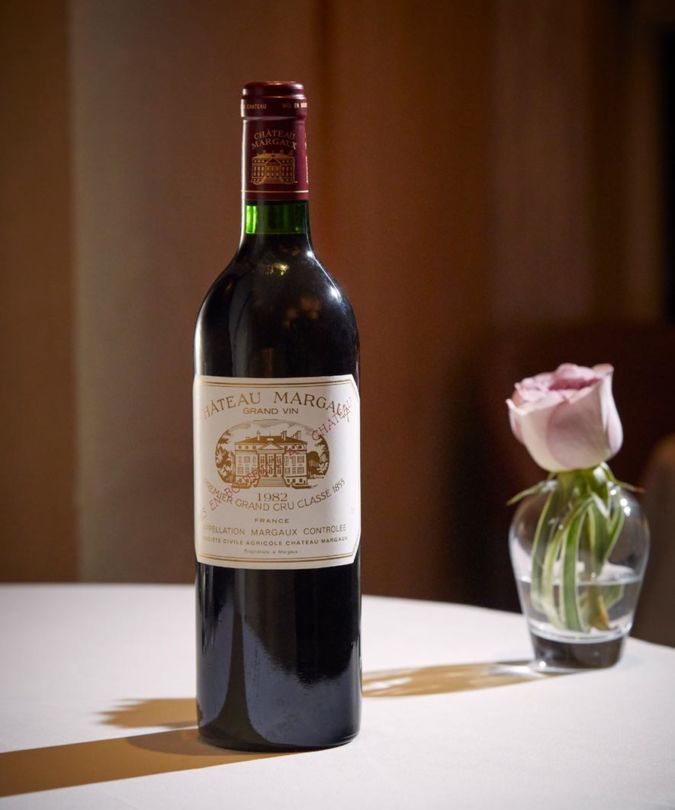
Left Bank legend? Absolutely. But above all, it’s proof that a great wine doesn’t have to be aggressive to be unforgettable. Château Margaux has been demonstrating this for nearly four centuries and, honestly, there’s no sign of that changing.
Siin
lifestyle editorial team

Leave a Comment