

Who is Stella McCartney? – Luxury fashion without cruelty

Stella McCartney is 54 years old and has just received the Legion of Honour. Not for being the daughter of a Beatle, but for something that sounds almost too ambitious: convincing the world of luxury fashion that it is possible to do without leather and fur.
Why now?
Because from 2025 her brand is fully independent. No big corporations that could dilute the manifesto. And the manifesto is simple:
“We never use leather, fur, feathers, or animal-based glues.”
Stella Nina McCartney, born September 13, 1971 in London, was a vegetarian before it became fashionable. Her mother Linda, a photographer and animal rights activist (who passed away in 1998), instilled in her values that most of the industry considered impossible to reconcile with high fashion. Her father Paul gave her recognition, but Stella had to prove that it was not just about the name.
Today, her boutiques operate from London to New York to Tokyo. In March 2026, France awarded her the title of Chevalier de la Légion d’Honneur, recognizing her impact on redefining the meaning of luxury. Conscious luxury has ceased to be an oxymoron and has become a market category. And yes, this is largely thanks to her.

Who is Stella McCartney? Discover her path to the top
Stella’s career essentially began at birth, but real work came in the 1980s. Internships with Christian Lacroix (haute couture, around 1986-1988) and Edward Sexton on Savile Row showed her two worlds: Parisian extravagance and British precise tailoring.
Sustainable innovation: materials, technologies, and impact
Since 2001, Stella McCartney has adhered to one iron rule: zero leather, fur, feathers, or animal glues in production. In 2010, the company added a ban on PVC. Does it sound like a limitation? In fact, it became a driving force for innovation.
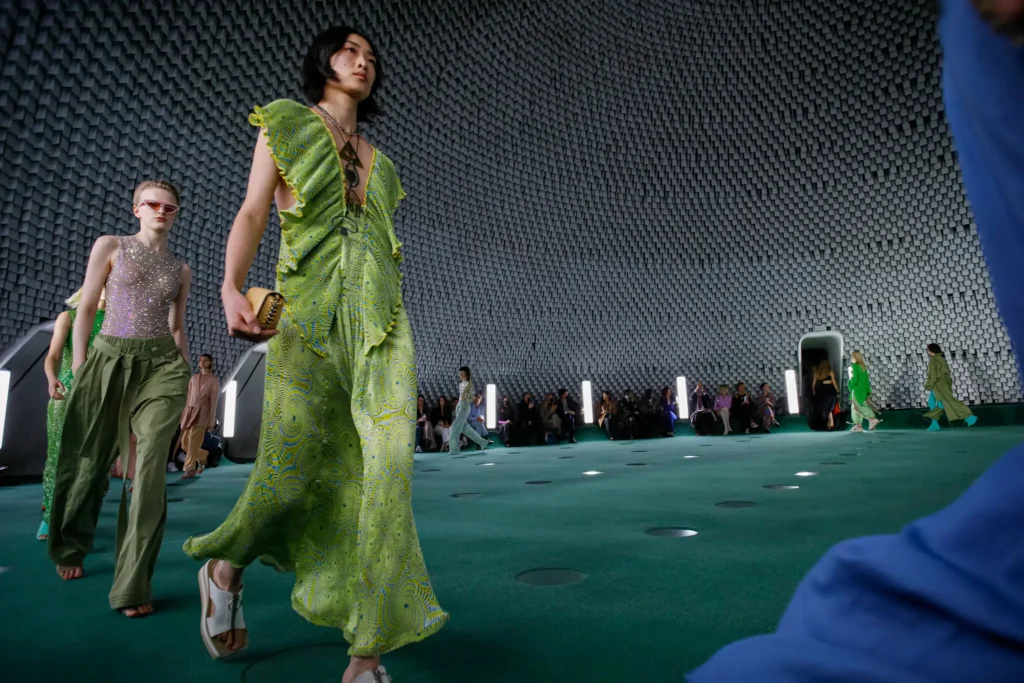
Key milestones 2001-2026
| Year | Innovation |
|---|---|
| 2012 | Bio-acetate eyewear, recycled polyester, biodegradable soles |
| 2016 | Giving up cashmere from new sources, forest-friendly viscose |
| 2017-2022 | Mylo™ (mushroom leather → commercial bag 2022), grape leather, Loop sneaker |
| 2019 | NuCycl, KOBA Fur Free Fur |
| 2023 | BioSequins, 100% regenerative cotton, MIRUM, Kelsun |
| 2024 | Biological clothing recycling, Airlite |
| 2025 | Sequinova, YATAY M |
| 2026 | Brewed Protein™, RCO100 denim (100% recycled), LUNAFORM |
Impact and limitations
In the latest collections, 93% of materials meet sustainability criteria. In 2023, the company launched the first fully regenerative cotton T-shirt in the luxury segment. The numbers are impressive, but there is another side to the coin. Critics point to microplastics from synthetics, although the brand responds with the development of biomaterials and circularity. The debate continues, as do concrete solutions.
Here and now: brand scale, finances, and collaborations 2026
Stella McCartney today is a complete ecosystem of luxury fashion. The range includes women’s, men’s, and children’s collections, the iconic Falabella bag, lingerie, swimwear, and even STELLA perfumes and vegan skincare (over 99% natural ingredients). Plus eyewear and a performance line with Adidas.
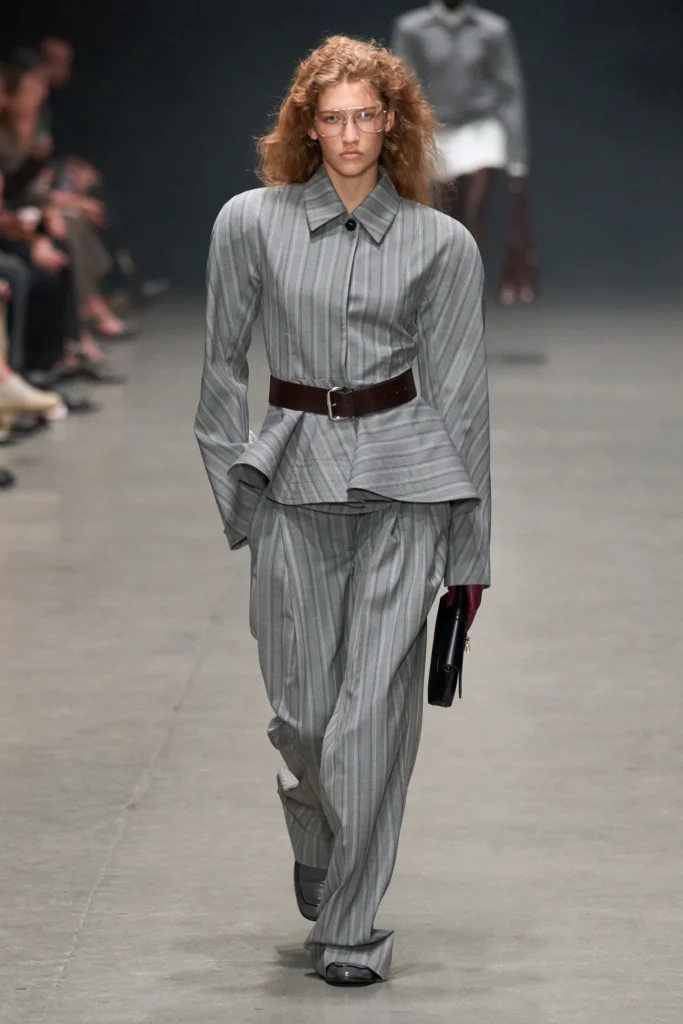
Scale? 48 own boutiques plus 21 franchise stores, a total of 863 points of sale in 77 countries, shipping to 100. The team consists of about 685 people (as of 2026).
Finance 2024 and collaborations 2026
Now for the specific numbers. In 2024, revenues reached £16 million (a 27% year-on-year decrease), with a pre-tax loss of £33.6 million and an operating loss of £29.6 million. There has been no profit since 2017. Royalties account for 46% of revenues, while stores contribute 34%. The company warns that without financing, cash will run out by 2028.
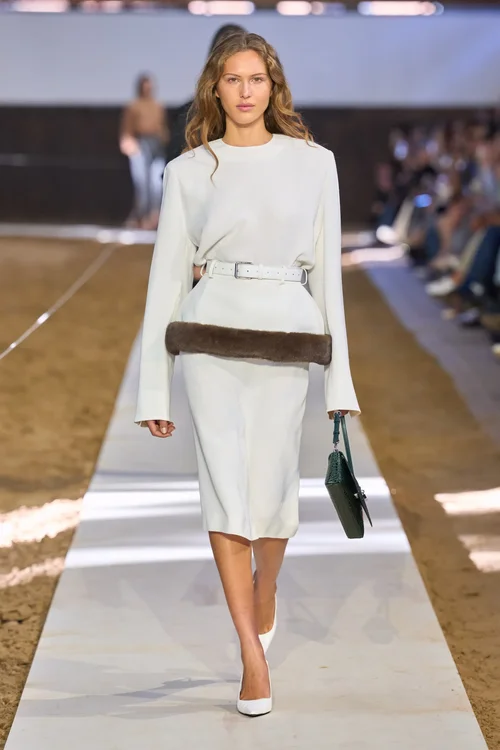
May 2026 marks the debut of &Stella × H&M, featuring 61 looks made from recycled and organic materials. And this is where the debate begins: accusations of greenwashing from critics versus McCartney’s narrative of ” infiltrating the mass market from within.” The winter 2026 accessories collection also focuses on recycled and bio-based materials. That same year: TIME Earth Award.
“I want to change fast fashion from the inside, not just sit in a luxury niche.”
Paradox? Maybe. But it’s precisely this controversy that keeps the brand at the center of the conversation.
A footprint that changes luxury
Stella McCartney has proven that ethics and luxury can coexist, not as a compromise, but as a natural whole. Her brand, although small compared to industry giants, has changed the way the entire industry thinks about production. It was the prestige of her name that gave credibility to an idea previously regarded as a hobby for idealists.
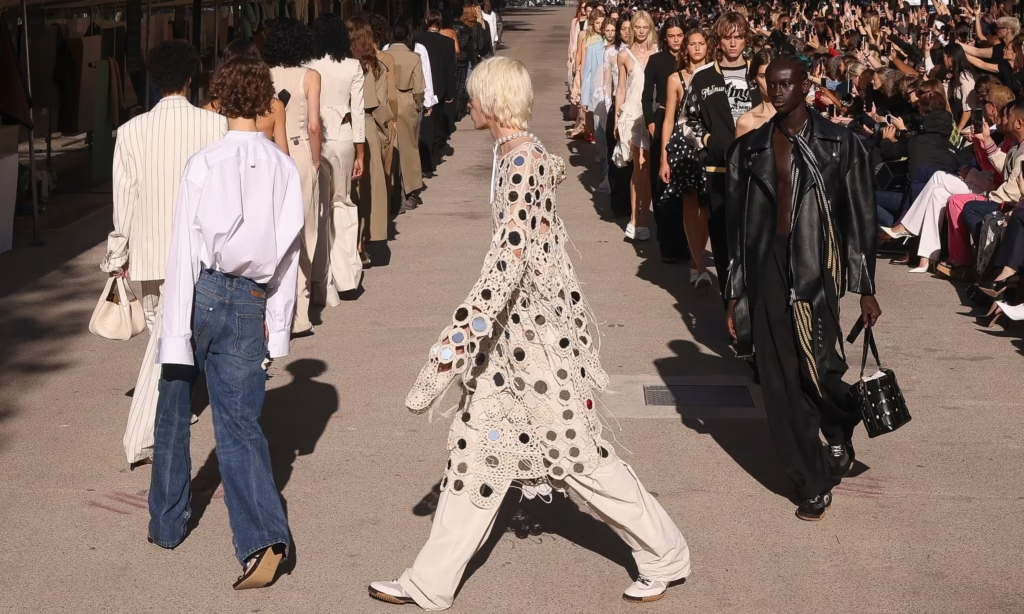
Today, we can see the effects of this change in the collections of fashion houses that, just ten years ago, would not have considered alternatives to leather or fur. McCartney demonstrated that it is possible to build a desirable brand without moral compromises. And although the path to truly sustainable luxury fashion is still long, someone has finally paved the way.
Zan
editor



Leave a Comment