

What do the heads in Sicily mean?
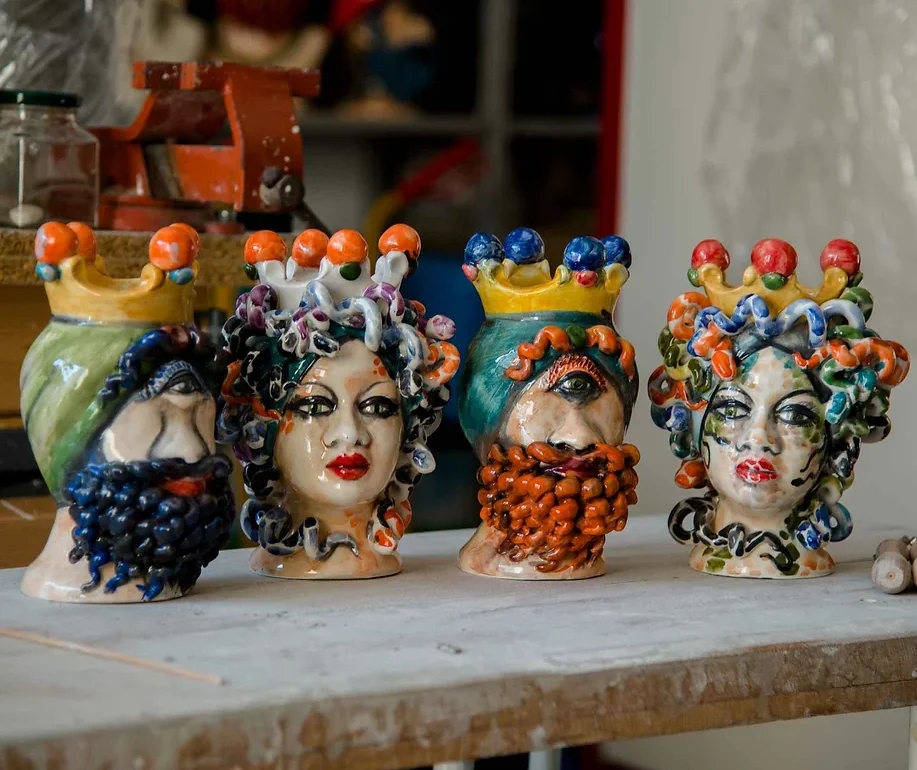
Le teste di Moro—literally, the Moor’s Heads—are today the most recognizable symbol of Sicily. All over the streets of this sun-drenched Italian island, you’ll spot pots or vases depicting a man’s head at every turn. They’ve become an increasingly popular gift or holiday souvenir. Yet behind these ceramic decorations, often intricately crafted in traditional workshops, lies a fascinating and bloody legend. Their hand-painted designs are truly captivating. What do the heads mean in Sicily and why have they become the signature emblem of this extraordinary place?
What is the symbol of Sicily?
Sicily, the largest island in the Mediterranean Sea, is a place full of contrasts and magic. It lies at the “toe of Italy’s boot,” separated from the mainland by the narrow Strait of Messina. Known for its breathtaking landscapes, turquoise coves, picturesque hills, and the majestic Etna—the largest active volcano in Europe—Sicily is a paradise for lovers of nature and history. Iconic scenes from The Godfather were filmed here, contributing to its somewhat dark image as the heart of the Italian mafia. Yet the island offers far more than mafia legends. It is a true treasure trove of history, dating back to the times of the ancient Greeks, Romans, Arabs, and Normans. Every era has left its mark here, from the ancient temples in Agrigento to the Baroque gems of Noto.
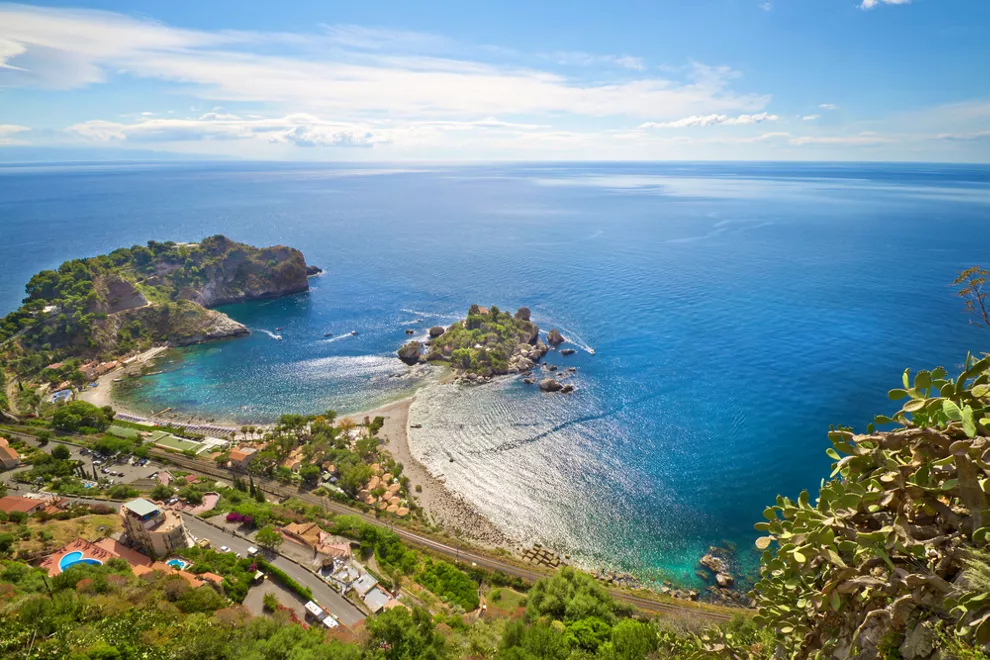
Sicily has its own unique symbols. They reflect the rich culture and traditions of the Italian island. One of them is the triskelion, known as the Trinacria. The island’s symbol depicts the head of Medusa surrounded by three bent legs, referring to the triangular shape of Sicily. Another emblem is the Moor’s head ( Testa di Moro), which adorns much of the local ceramics. Legend has it that it commemorates a dramatic story of love and revenge. Sicilian pine cones, found on balconies and in gardens, symbolize fertility, abundance, and renewal.
Exploring Sicily is a journey through millennia—from mythical beginnings, through Greek and Roman rule, to the Arab and Norman eras. It’s an island bursting with flavors, from aromatic arancini to sweet cassata, and breathtaking views. Sicily is like wine: the more you know about it, the more you appreciate its depth. There’s no doubt it’s worth discovering the meaning behind the heads in Sicily!
Legend and history – what do the heads in Sicily mean?
Ceramic heads, known as Teste di Moro, are not only beautiful decorations for balconies and gardens in Sicily, but also carry one of the island’s most intriguing legends. The story dates back to the 11th century, when Sicily was under Moorish rule. According to the tale, a beautiful Sicilian woman fell in love with a young Moor, who returned her feelings. Sadly, their love was doomed—he had a wife and children in his homeland. When the girl discovered the truth, she killed him in an act of revenge. She turned his head into a basil pot. The plant, a symbol of royal power, flourished, watered by the girl’s tears. The neighbors, impressed by the sight, ordered similar pots modeled after the man’s head.
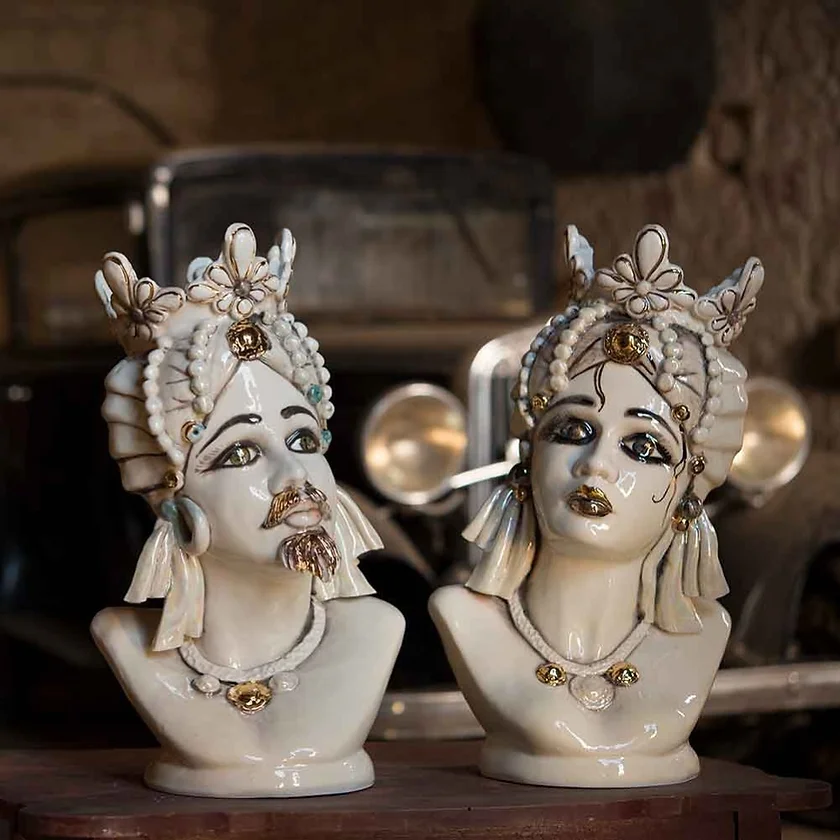
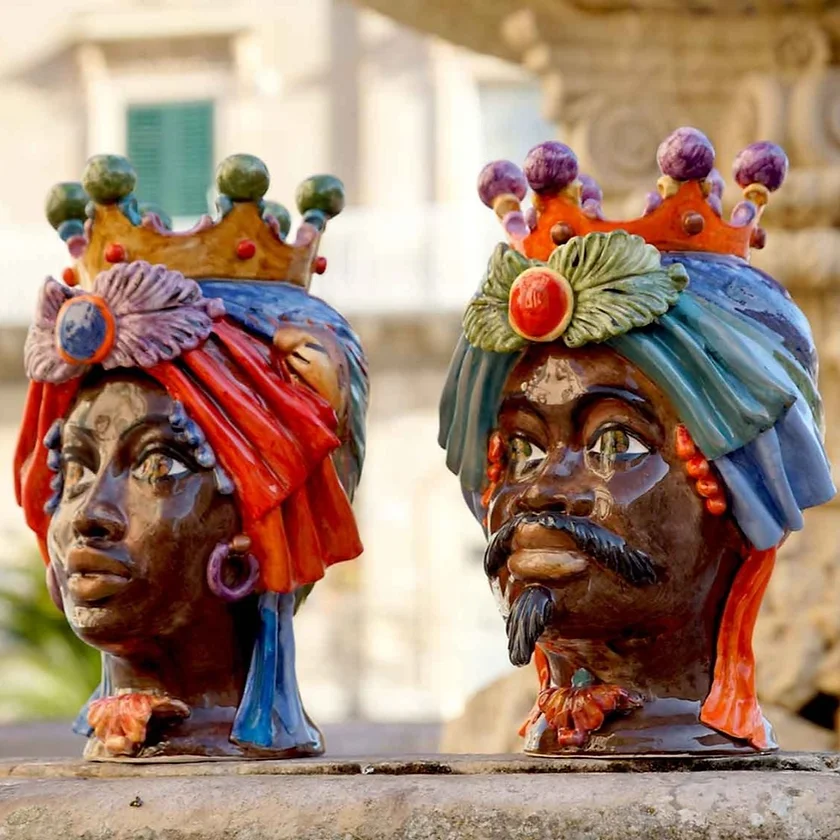
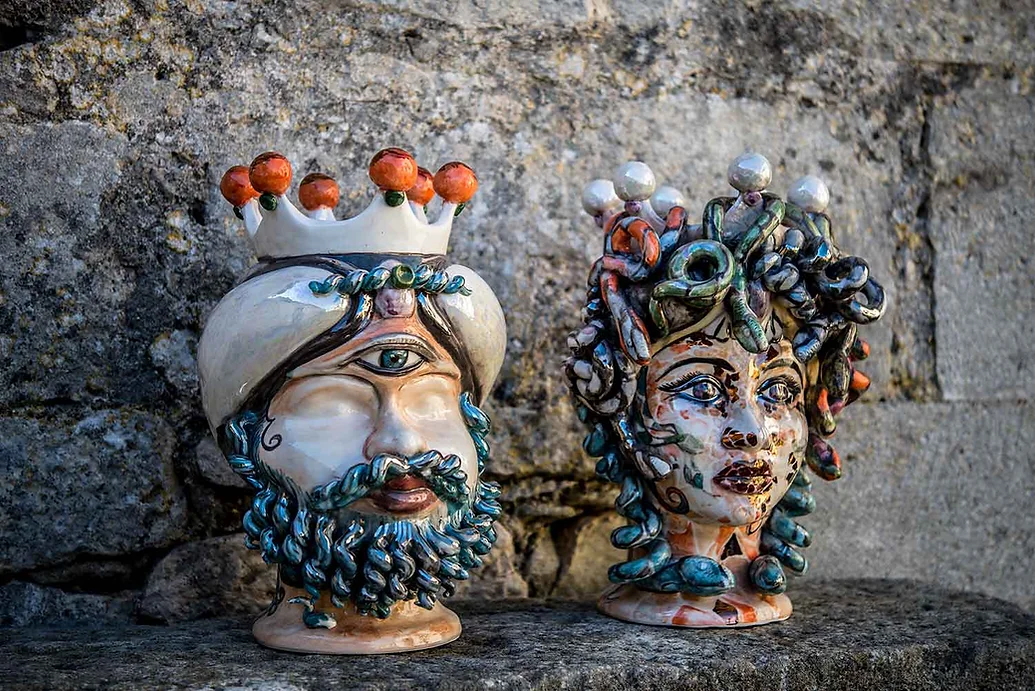
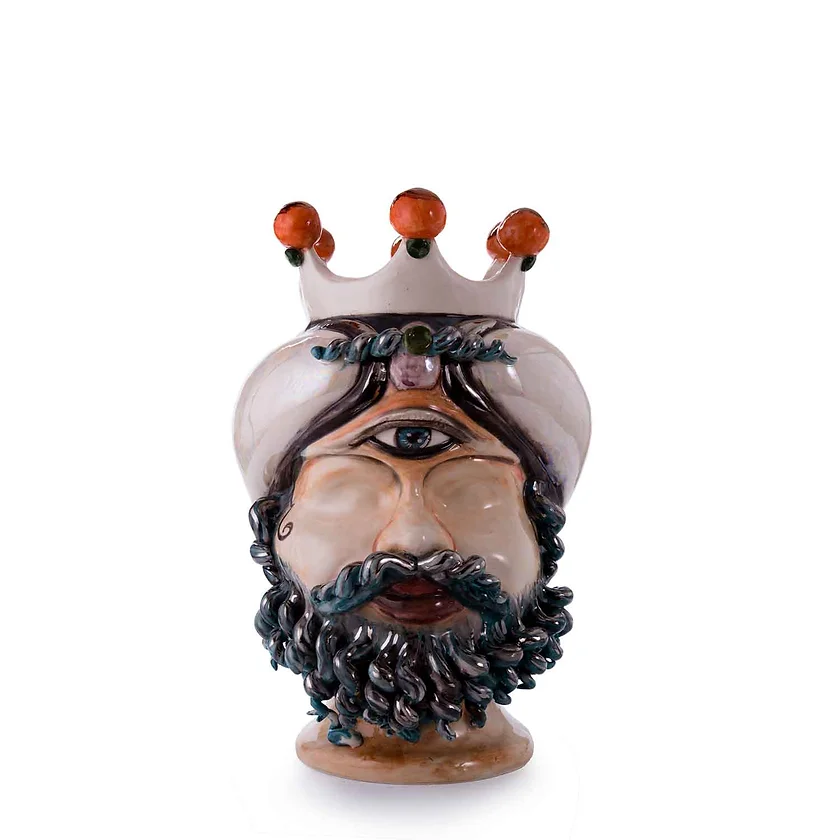
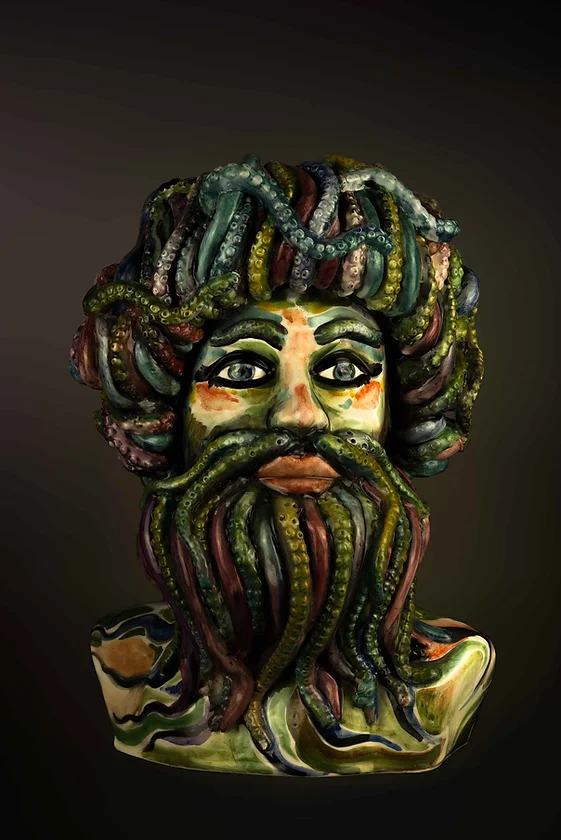
photo: italia.it
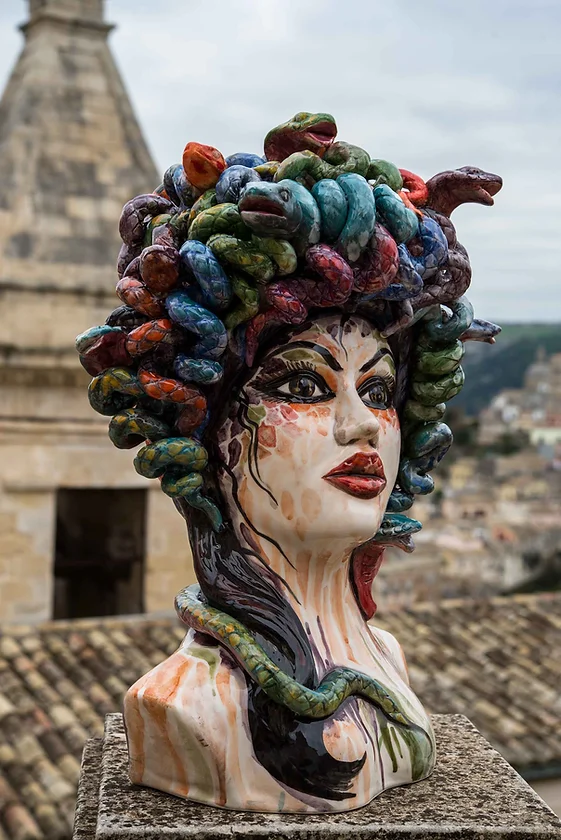
Today, these hand-painted ceramic heads, often depicting a man in a turban and a woman wearing a crown, are highly sought after.
How are the heads made in Sicily?
Ceramic Teste di Moro are not just decorations, but true works of art. They are crafted with passion and attention to detail in small, family-run workshops like ArteFiceAtelier. Their creation process is rooted in centuries-old tradition, blending art with craftsmanship. It all begins with raw clay, which is hand-shaped into the form of a head—sometimes a Moor, sometimes his beloved, and sometimes other Sicilian symbols, such as mythical medusas.
Next, every detail—from turbans to crowns—is meticulously sculpted and hand-painted, often using vibrant colors and intricate patterns. The result is a unique piece that can serve as a vase, lamp, or dynamic sculpture. This is a decorative and design-forward proposition that brings a touch of Sicilian magic into modern interiors. Teste di Moro from ArteFiceAtelier is a perfect gift idea that not only delights but also highlights the individual style of any home.
Le Teste di Moro – is the Moor’s Head a good souvenir from Sicily?
Is there anything more unique you can bring back from sunny Sicily than a hand-painted Testa di Moro? These ceramic masterpieces are not just beautiful decorations—they also carry the legends and culture of the island. Each head, adorned with an intricately decorated turban and vibrant colors, holds a story of love, passion, and history. They add character to any interior, serving as a reminder of unforgettable moments spent in Sicily. So instead of a fridge magnet, why not choose something that truly stands out and has a soul?
Sicily has many faces – alternative symbols of Palermo and the sun-kissed island
Sicily is an island full of mysteries, colors, and symbols that remain forever in the memory of those who have visited it. Its history is so rich and multilayered that every corner has its own story to tell. In addition to the famous Teste di Moro, the island also hides other extraordinary symbols that testify to its uniqueness.
- Medusa – a mythological symbol linked to sea legends and tales of monsters. Frequently featured on Sicilian mosaics and ceramics, it serves as a reminder of ancient culture and traditions.
- Pine cones – a distinctive motif that adorns not only gardens but also the island’s architecture. It symbolizes longevity and prosperity.
- The Godfather and the Sicilian Mafia – the cinematic and literary legend of Sicily is impossible to forget. The Mafia, though controversial, has become a part of pop culture, forever linked to this region.
- Sicilian oranges – a symbol of sweetness and the island’s fertile soil, their fragrance lingers in the air at every turn during the summer months.
- Trinacria – the Medusa on the Sicilian flag with three legs
What does the pine cone symbol mean in Sicily?
Sicily is an island full of surprises—it’s not just associated with the mafia, Moorish heads, or juicy oranges. A common but lesser-known symbol is the pine cone, which can be found on Sicilian streets, in gardens, and in art. They’re so distinctive that they’re often depicted as a ceramic figurine.
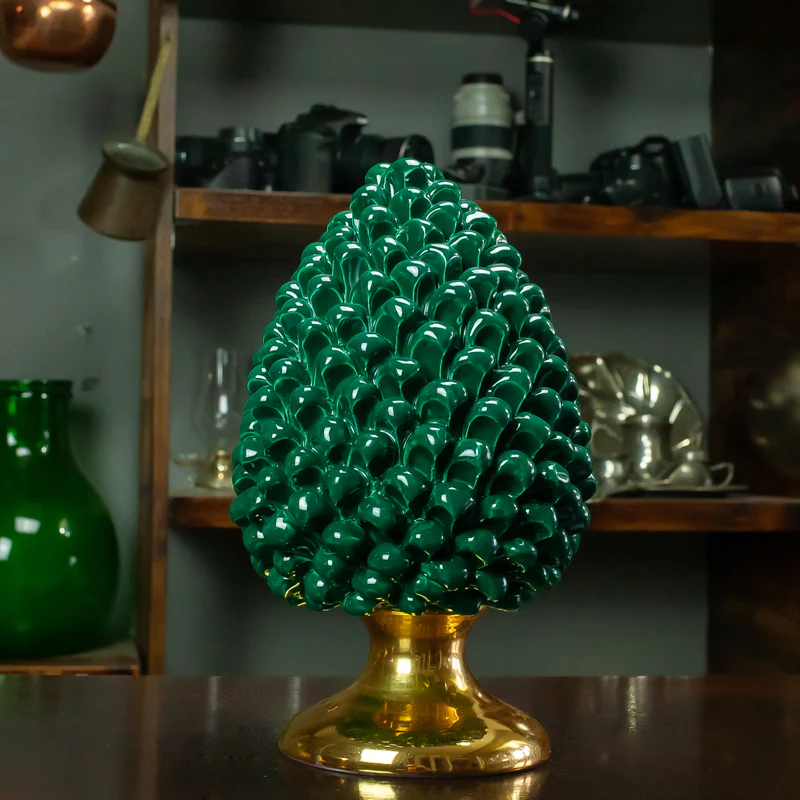
The pine cone in Sicily is a symbol of longevity, stability, and prosperity. It also pays tribute to nature, which blesses this island with such an extraordinary climate. Pine cones are also part of the legend of the long-lived coniferous trees stretching along the coast. These trees are not only part of the landscape but also witnesses to the island’s history. So, now that we know what the heads in Sicily mean, perhaps it’s time to discover another of this Mediterranean island?
What does a jellyfish mean in Sicily?
Medusa is another fascinating symbol of Sicily, often seen on the island, especially in art and ceramics. It represents not only beauty but also danger. In Italian tradition, Medusa is often associated with protection against evil, and her image is believed to act as an amulet. In Greek mythology, Medusa was one of the three Gorgons, and her gaze had the power to turn people to stone.
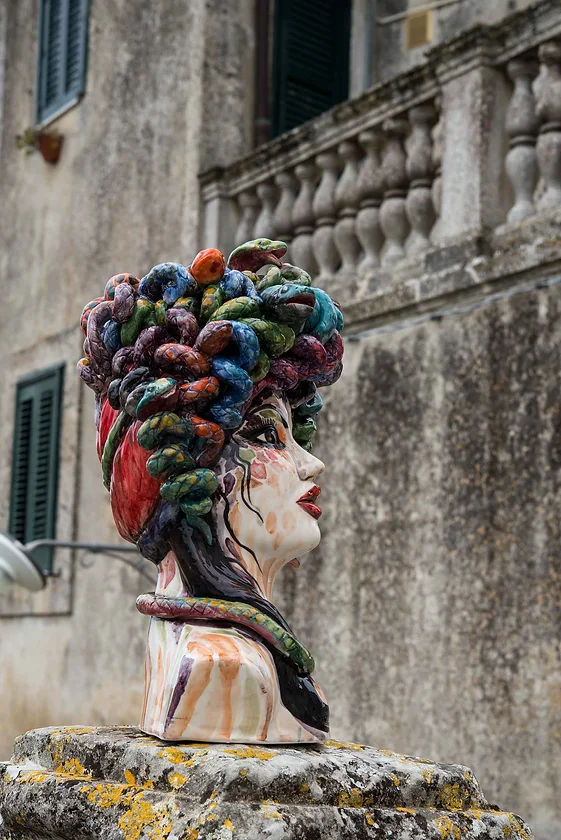
In Sicily, however, it is seen in a more positive light—as a symbol of power and protection. So perhaps, when you look at the Medusa, you no longer see just danger, but also the magic that protects this beautiful island?
What do the heads in Sicily mean? Discovering the trail of Sicilian manufactories
Sicilian workshops are true treasure troves of tradition, where artisans have been crafting unique terracotta masterpieces for generations. Moorish heads, pine cones, medusas, and other ceramic wonders are created through a process that blends ancient knowledge with precision and artistic flair. Hand shaping, intricately painted details, and kiln firing are rituals that give each piece its distinctive character. These works are more than just decorations—they are symbols rich with history and meaning. What do the heads represent in Sicily? They tell stories of love, betrayal, and the cultural heritage of an island passionately devoted to its artisanal traditions. Is there a more beautiful way to hold a piece of Sicily in your hands?




Leave a Comment