

New Audi Q7 – the third generation of versatility and technology
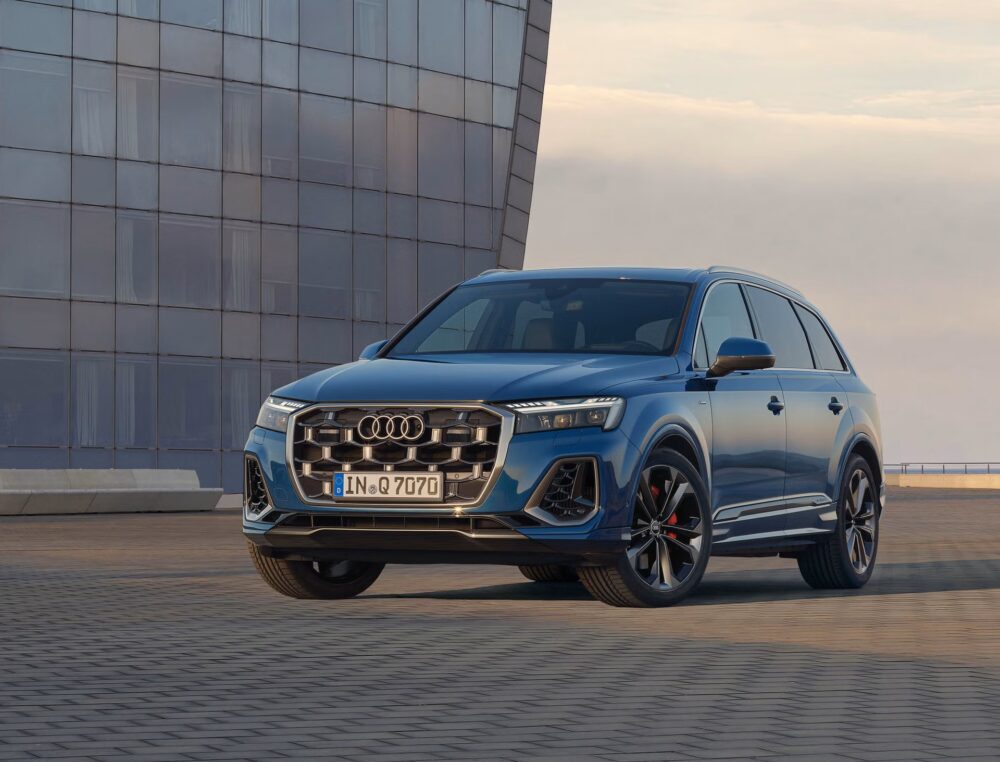
The third generation of the Audi Q7 was unveiled on June 9, 2026, marking the end of the previous model’s (4M, which debuted in 2015) more than 11-year lifecycle. This is a long period for the premium SUV segment, so the new Q7 brings a lot of freshness to Audi’s lineup.
The new Q7 is built on the Premium Platform Combustion (PPC), designed to offer greater versatility. The car is available in 5, 6, or 7-seat configurations, so it should meet a variety of family needs. Audi combines its quattro tradition here with new technologies such as digital lighting (OLED 2.0) and AI-supported systems. It sounds like a natural evolution, not a revolution.
Market entry schedule:
- Orders in Europe: June 2026
- Deliveries to customers: September 2026
- USA (model year MY 2026/2027): Q4 2026
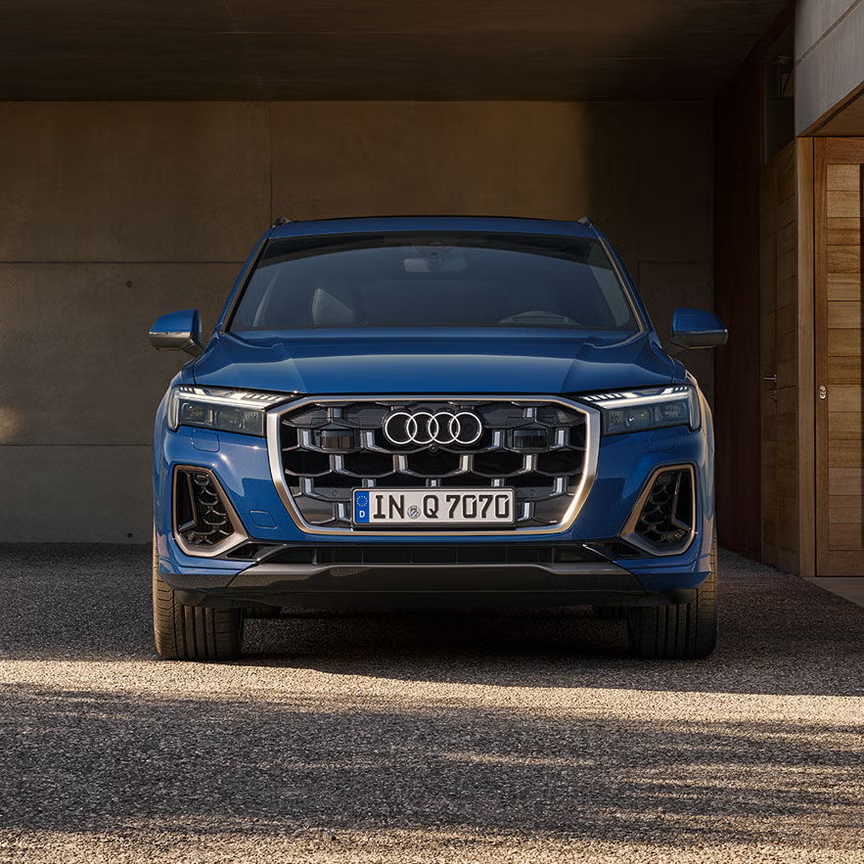
It is worth mentioning that production still takes place in Bratislava (Volkswagen Slovakia), which ensures continuity and proven quality. The model is set to maintain its position as the flagship combustion SUV in the Audi lineup, while the Q6 e-tron follows the electric path.
Platform, drivetrain, and suspension
The new Q7 is built on the Premium Platform Combustion (PPC), which Audi designed for combustion engines, mild-hybrid (MHEV) systems, and plug-in hybrid (PHEV) setups. The same architecture is used in the A5, A6, and Q5, allowing for shared solutions and flexible powertrain selection. PPC provides the Q7 with a rigid foundation, while also making it easy to adapt various systems: from lighter engines to more powerful versions with electric assistance.
Quattro and suspension
Under the hood, a 8-speed Tiptronic automatic transmission works in tandem with quattro all-wheel drive featuring a new central limited-slip differential (so-called preload). This mechanism improves traction when starting off and during sharper turns, as it actively distributes torque before a wheel begins to slip. You can especially feel this on wet surfaces or light off-road terrain—the car responds with greater confidence.
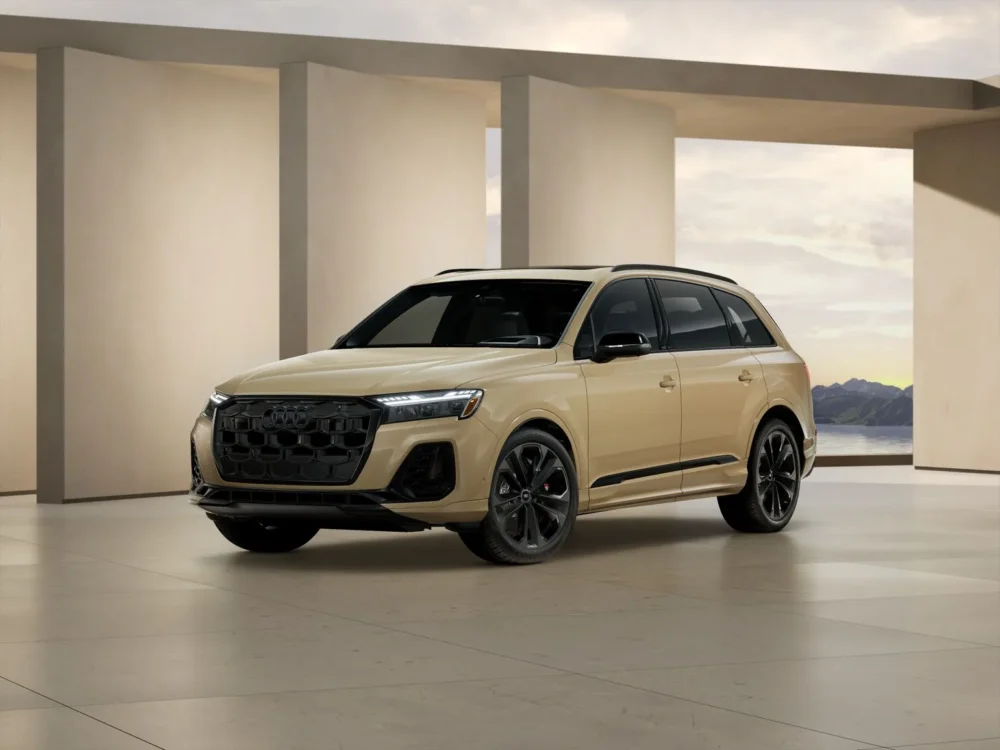
Standard, the Q7 comes with steel springs, but the optional adaptive air suspension adds comfort and versatility. The air system can raise the body on uneven terrain or lower it on the highway for better aerodynamics. There’s also a sport version, lowered by 30 mm. In the USA, higher trim levels include air suspension as standard, which shows how Audi prioritizes long-distance comfort.
The result? The Q7 performs well on asphalt (stable, quiet), on light off-road terrain (nothing extreme, but it handles it), and during long trips with the family. This versatility is its greatest asset. And the interior and digital cockpit are a story of their own.
Interior and technology
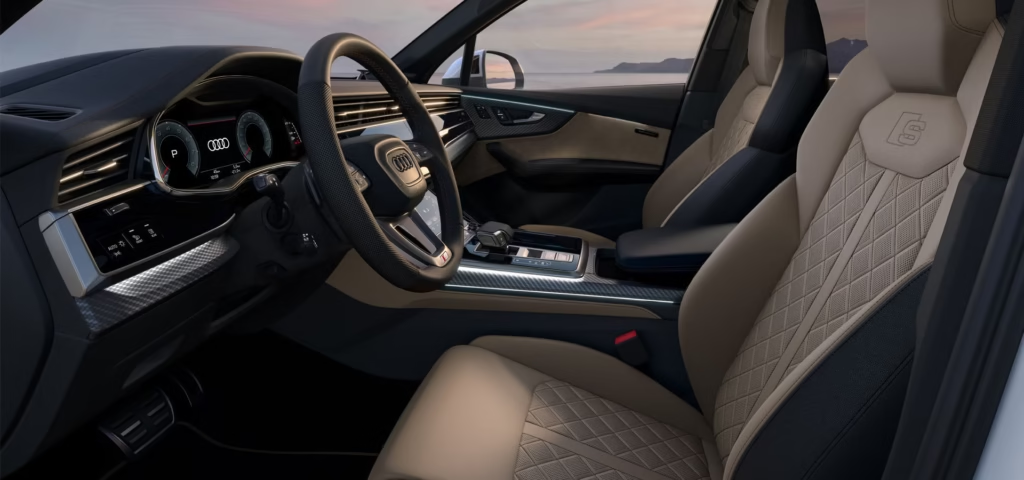
The cabin of the new Q7 is that moment when you step inside and immediately feel that technology has truly advanced. The centerpiece is the curved panoramic MMI OLED display, stretching out before the eyes of both the driver and the passenger, and for those who love gadgets, there’s an additional screen available for the front passenger. ChatGPT has jumped into the voice assistant, so now you can ask it weird questions on the road (and actually get sensible answers). The Bang & Olufsen audio sounds outstanding, and Audi connect ensures the car stays connected to the world.
Places, materials, and trunk
This is where the fun part of configuration begins. You have three options: the classic 5 seats, 6 (a new feature with captain’s chairs in the second row, truly comfortable), or a full 7-person setup. Premium materials inside include alpaca + leather, soft to the touch and elegant.
Trunk? In the 5-seater version:
- 806 l with the seats in place
- up to 2,075 l after folding
In the 7-seater version:
- 722 l
- up to 1,980 L
The electric tailgate opens with a foot gesture, which you’ll appreciate when your hands are full of shopping.
Lights and assistants
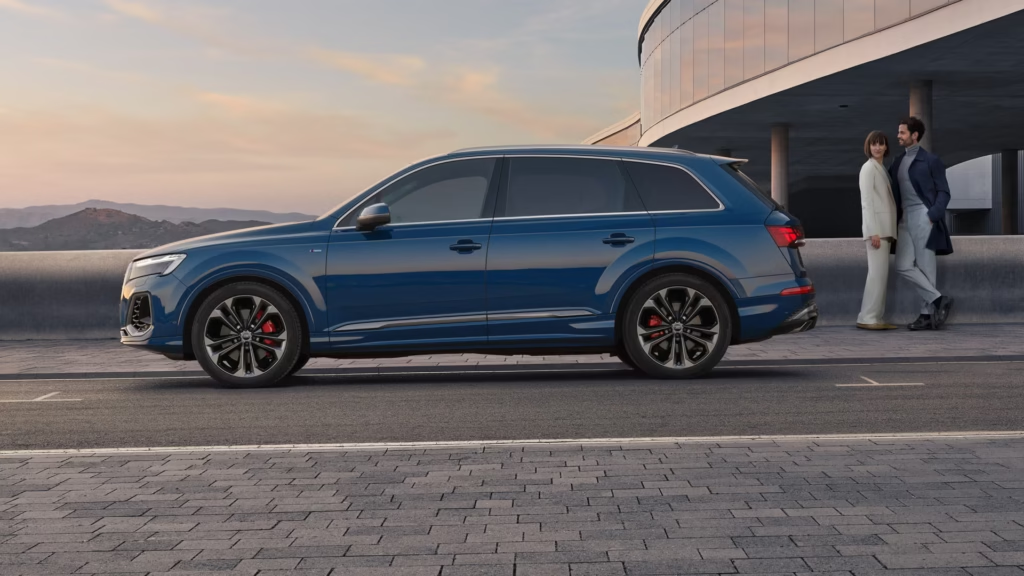
Digital Matrix LED (micro-LED) lights shine as bright as day, while third-generation rear OLEDs feature communication lighting and dynamic turn signals that project arrows onto the asphalt, creating a striking effect. Optionally, you can add laser + night vision in the Vision package. From the assistants, you’ll get adaptive driving assistant plus, trained parking, reverse assist, and remote park assist plus. The panoramic roof with adjustable transparency adds space and ambiance.
New Audi Q7, check out the engines and performance
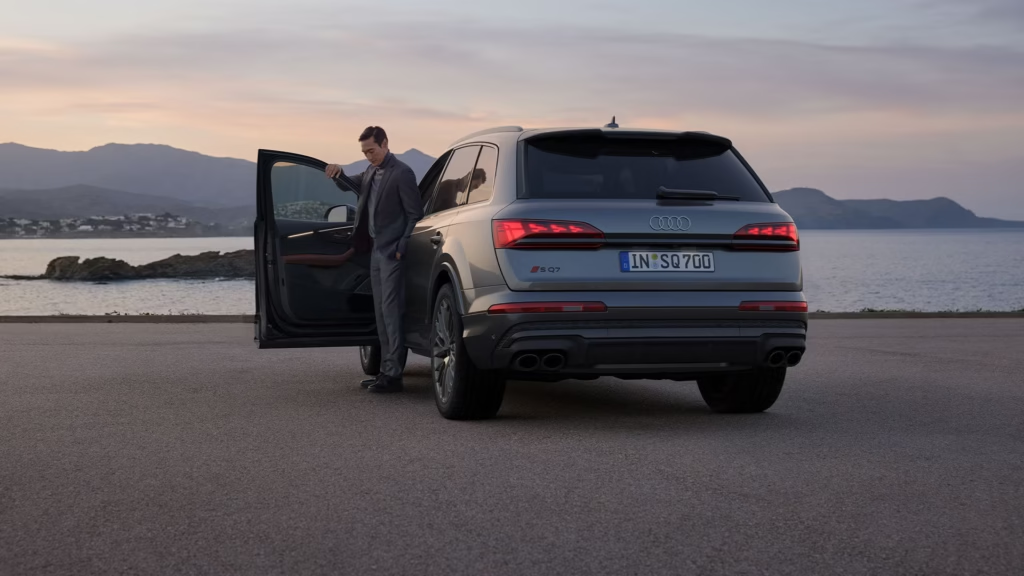
On the old continent, Audi relies exclusively on diesel, specifically the 3.0 V6 TDI MHEV Plus 48 V. There are two variants: the base version with 245 hp and 500 Nm of torque (0-100 km/h sprint in about 7.2 s) and the more powerful 299 hp / 630 Nm, which, thanks to electric assistance, gains an additional 24 hp and 370 Nm ( acceleration drops to around 6.0 s). Both work with an 8-speed Tiptronic transmission and quattro drive. Fuel consumption? Officially 7.1-8.0 l/100 km, emissions 186-209 g CO₂/km (class G). Interestingly, the engines tolerate HVO (hydrotreated vegetable oil), which theoretically reduces the carbon footprint by up to 95%. Sounds promising, although in practice the availability of this fuel remains an open question.
USA
On the other side of the Atlantic, the situation is completely different. You won’t find a diesel here; instead, you get a 2.9 V6 twin-turbo gasoline engine (429 hp / 442 lb-ft, 0-60 mph in 4.8 s). And if that’s not enough, the SQ7 offers a 4.0 V8 twin-turbo: 591 hp, 590 lb-ft, and a sprint to 60 mph in just 3.7 seconds. Most versions come standard with adaptive air suspension. The differences between markets stem from customer preferences, and, of course, emission regulations. Europeans want efficiency and range, while Americans prefer power and acceleration.
| Market | Engine | Power | Moment | 0-100/0-60 | Fuel |
|---|---|---|---|---|---|
| EU | 3.0 V6 TDI MHEV | 245-299 HP | 500-630 Nm | 6.0–7.2 s | Diesel/HVO |
| USA | 2.9/4.0 V6/V8 turbo | 429-591 hp | 442-590 lb-ft | 3.7–4.8 s | Gasoline |
Market position
The new Q7 is being produced in Bratislava, at the Volkswagen Slovakia factory. In Europe, orders will begin in June 2026, and the first units will reach customers in September. As for the USA, the car will arrive there in the fourth quarter of 2026 as a 2026/2027 model year.
Price lists? In Germany, the base version with 245 HP starts at €87,900, while the more powerful 299 HP model costs from €90,500. Americans will pay from around $62,000 to $70,900, depending on the chosen version and packages.
Competition and what next
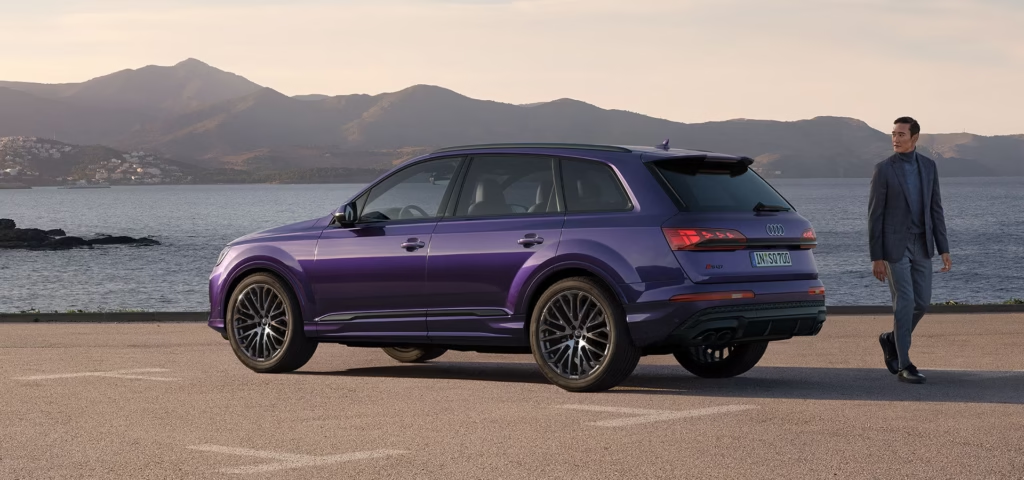
Audi faces competition from the BMW X5 and X7, Mercedes GLE and GLS, Volvo XC90, as well as Genesis and Lexus. The competition is strong, so the brand is preparing its next moves. In 2027, a PHEV version and a V6 petrol engine are set to appear (mainly planned for Europe). The SQ7 is confirmed for the USA, while the decision for Europe has not yet been made. At the same time, the larger Q9, sharing the same platform and technologies, is debuting (or will debut soon after the Q7).
Fun fact: Q7 sales in the United States peaked in 2017 at 38,346 units, in 2025 it’s only about 18,242, and in the first half of 2026 just 7,683. A decline before the launch of the new generation, which will probably change now.
On the essence of the Q7 in 2026/2027
The new Q7 is proof that large SUVs no longer have to choose between comfort and technology, because in 2026 you can have both. Audi has shown that it understands the needs of people looking for a family car that doesn’t look like a minivan or drive like a truck. Electrification, intelligent safety systems, and a refreshed design come together to create an offering that truly makes sense.
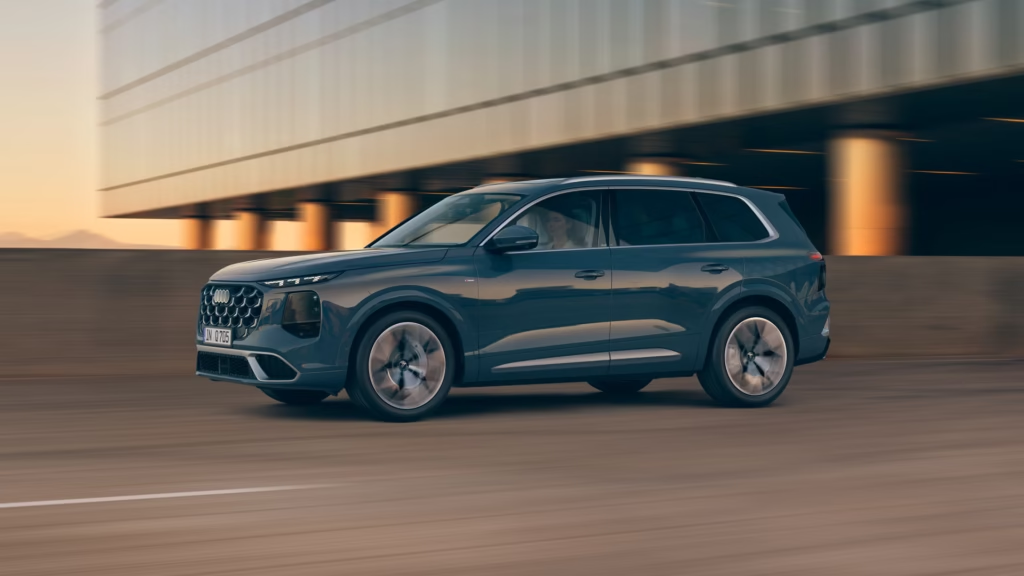
For someone looking for a spacious premium car with a long-term perspective in mind, the third generation Q7 performs really solidly. It may not revolutionize the segment, but no one really expected it to.
Eryk
moto & premium editorial team
Luxury Blog





Leave a Comment