

What are the 10 best cosmetic brands?
There is no single, universal list of ” 10 best cosmetics brands ” because the results depend entirely on what we measure. Sales? Brand value? Social media engagement? Each criterion will produce a completely different top ten.
An example of contrast? L’Oréal dominates global sales rankings with revenues of around 47-49.7 billion USD (2024 data), but Chanel regularly tops brand value rankings at 24-27 billion USD. These are completely different lists, even though we consider both brands to be “the best.”
The sources of rankings also differ in their methodology. WWD and Beauty Inc count sales in dollars. Brand Finance assesses the intangible value of a brand (similar to a stock market valuation). Cosmetify analyzes social buzz, meaning what people are talking about. Local research firms like Kantar or Blix focus on their own markets, so the Polish top ten may look completely different from the French one.
In the following sections, you will see the leaders according to different criteria and markets, so you can create your own “top 10” list. Because it is your priorities that determine which brand deserves a spot on the podium.
What are the top 10 cosmetic brands?
Okay, so when you see “the best cosmetics brand,” the first question should be: best according to what? Because rankings use completely different metrics, and each one shows a different piece of reality.
What do rankings really measure?
The most common criteria are:
- Sales (WWD, Beauty Inc) – solid revenue in dollars. An example? L’Oréal Group reached around 47–49.7 billion USD in 2024. That’s a sales giant.
- Brand value (Brand Finance) – the capital of the brand as an intangible asset. The total value of the top 50 beauty brands amounts to approximately 160 billion USD, with Chanel alone estimated at 24–27 billion USD.
- Popularity (Cosmetify, Kantar, Blix) – buzz on social media, Google searches, engagement on TikTok. This measures what people are talking about, not how much they buy.
And this is exactly where the difference begins. A brand can have gigantic sales but zero online buzz. Or the opposite—everyone is talking about it, but the revenues are meager.
Segment, category and region
You can’t compare pharmacy brand La Roche-Posay with luxury brand Dior. These are different segments (dermocosmetics vs. prestige), different prices, different distribution. The global ranking may look great, but in Europe, availability and price make all the difference, so local rankings promote completely different names.
Plus categories: makeup is not skincare. And remember, results are dynamic — for example, TikTok in 2025 can skyrocket a small brand within a month, so rankings from 2024 and 2026 may differ significantly.
Global giants
When we talk about the best cosmetic brands, it’s worth taking a step back and looking at who really stands behind all those bottles on the shelves. Because it’s fun to chat about your favorite pencil or cream, but the real power in the beauty world lies elsewhere, at the level of giant corporations.
Top beauty corporations 2024-2026
Here is a list of companies that truly rule this world:
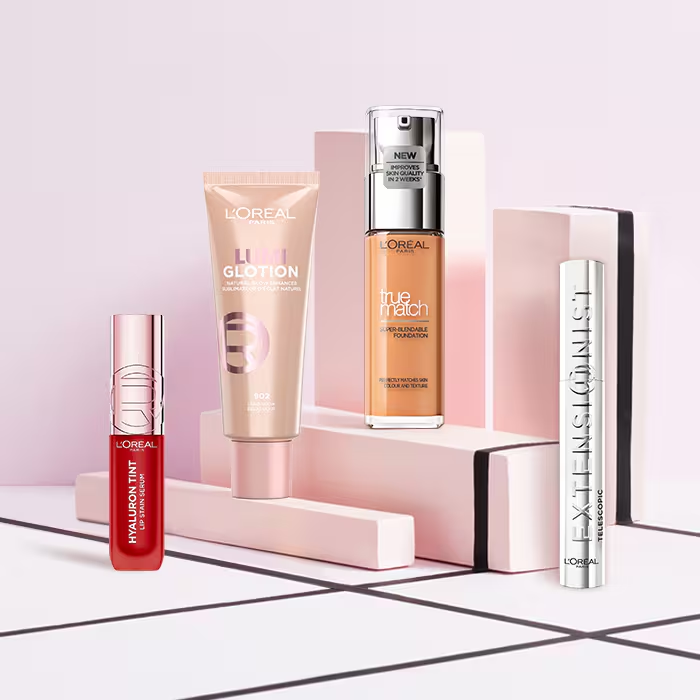
- L’Oréal (approx. 47-49.7 billion USD) – an absolute powerhouse. Its portfolio includes L’Oréal Paris, Lancôme, Garnier, Maybelline, La Roche-Posay, CeraVe, and about twenty other brands you probably have in your bathroom.
- Unilever (~$26.6 billion) – Dove, Vaseline, lots of hair care. Huge scale, more mass market.
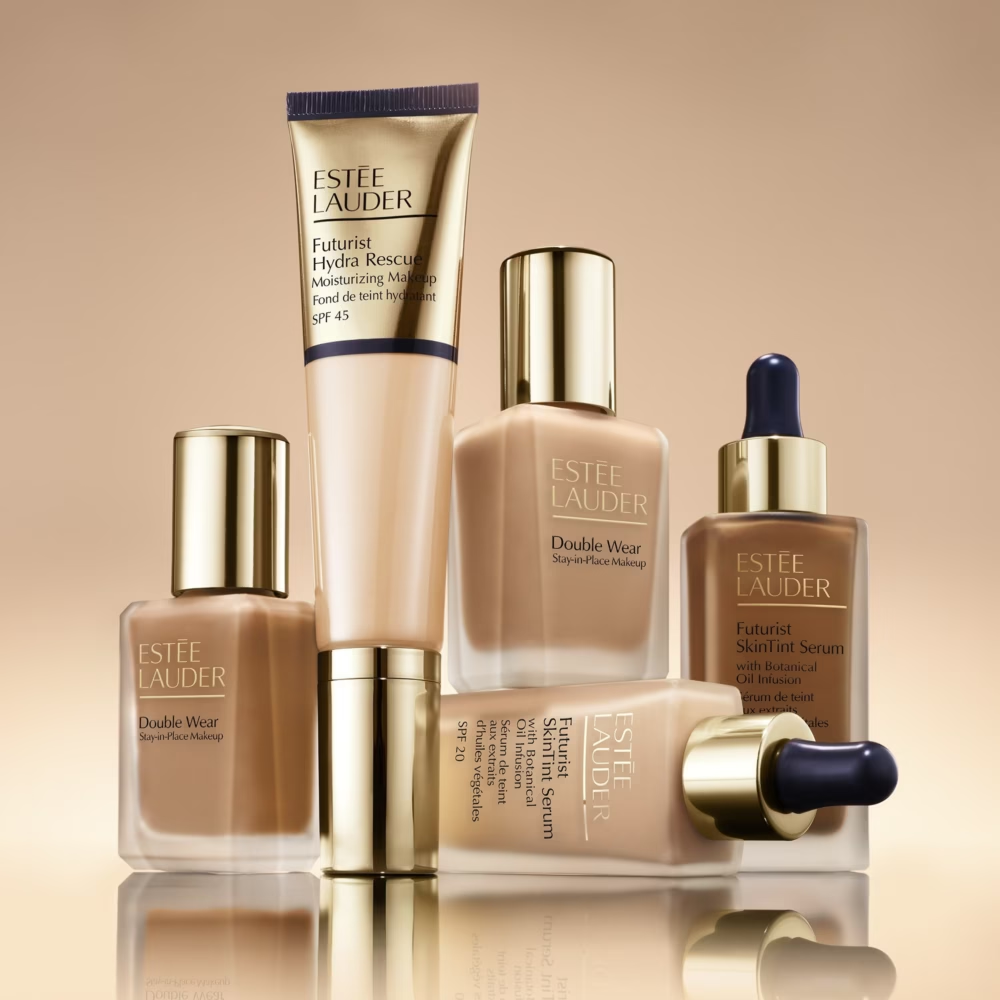
- Estée Lauder Cos. (~$15.2 billion) – Estée Lauder itself, plus Clinique, MAC, La Mer, Aveda. Prestige across the board.
- P&G – Olay, Pantene, SK-II. Maybe not as much as L’Oréal, but still powerful.
- LVMH Perfumes & Cosmetics (8.17-9.22 billion EUR) – Dior, Guerlain, Fenty Beauty. Luxury league.
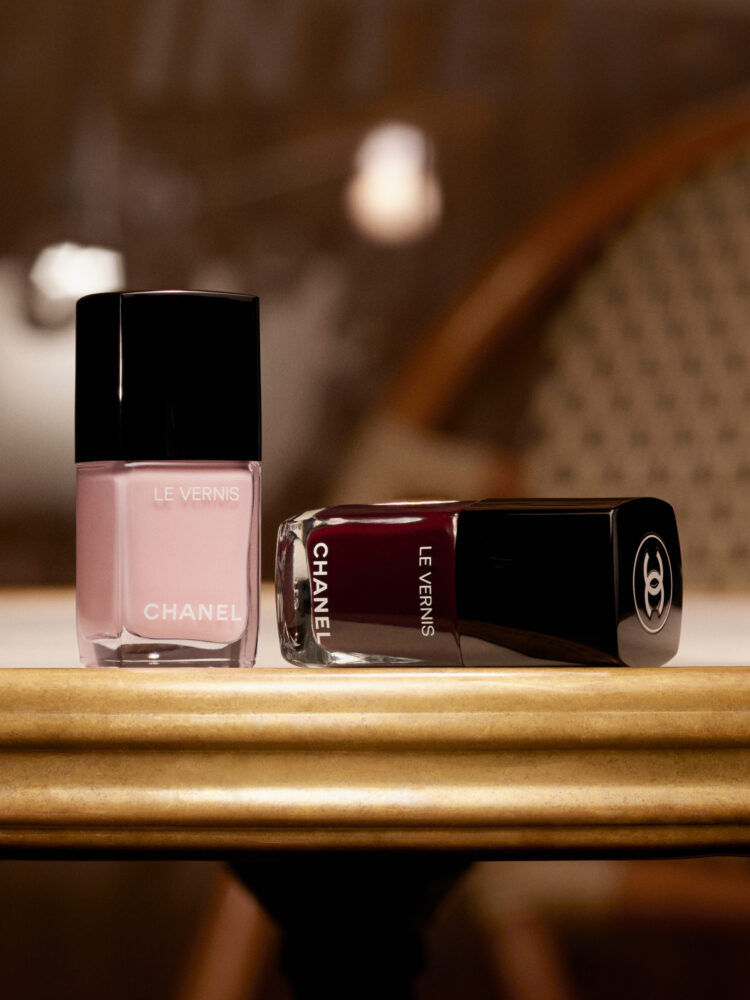
- Chanel (brand value ~24-27 billion USD) – one name, immense power.
- Beiersdorf (Nivea, Eucerin), Shiseido, Coty, Puig – all are in the global top 10–15.
Amorepacific is rapidly growing from Asia, and Chinese C-beauty brands (e.g., Proya) are already competing for a spot in the top 30.
Sales versus brand value
And here’s a fun fact: L’Oréal wins in terms of sales (dozens of brands = big money), but Chanel has a higher, because it’s a single prestigious name with an incredible legacy. These are two different measures of power.
It’s also worth mentioning acquisitions — for example, L’Oréal recently took a license for Miu Miu, and LVMH is developing Fenty with Rihanna. Portfolios are blending, boundaries are fading.
The hottest brands of 2026
On social media and in search results, it’s no longer companies -corporations that rule, but specific brands. The ones that appear in photos, feature in tutorials, and have cult products. The lists change every month, but a few names keep coming back like a boomerang.
Makeup
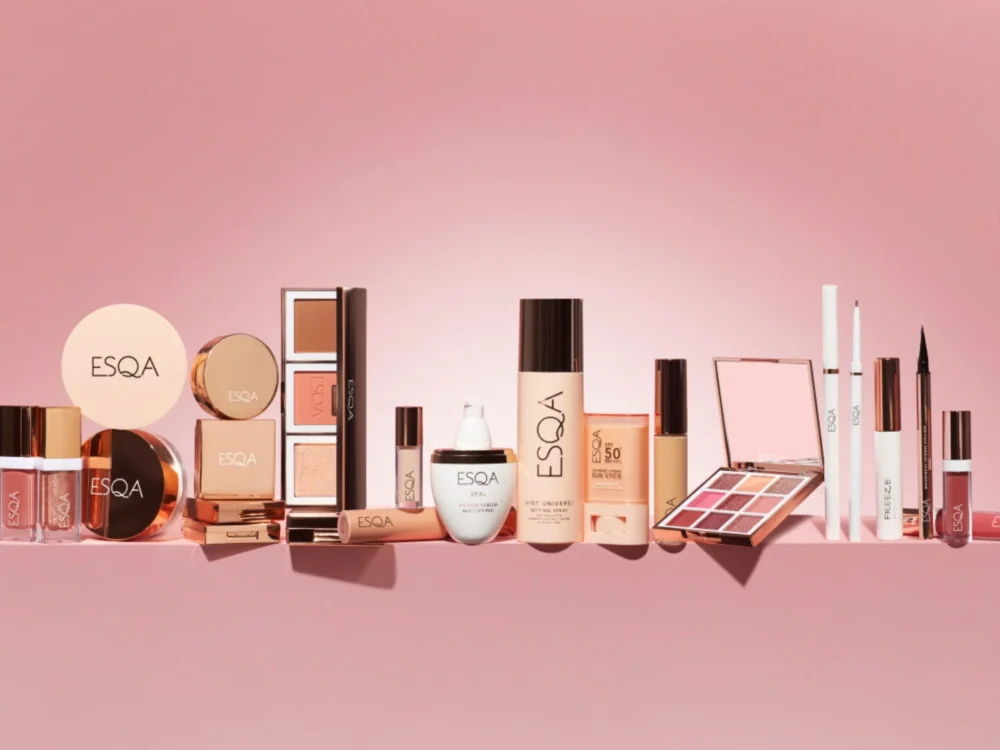
Charlotte Tilbury is still going strong thanks to “Pillow Talk” (that lipstick is already legendary), Fenty Beauty by Rihanna continues to set the standard for a wide range of shades. Rare Beauty by Selena Gomez is not just celebrity branding, but genuine inclusivity and formulas that really work. Huda Beauty reigns in tutorials, MAC isn’t backing down, Dior maintains its prestige. NYX, Maybelline, and L’Oréal Paris are shelf classics that never stop trending. Kylie Cosmetics, e.l.f., YSL Beauty, Kiko Milano, Rhode, also regularly appear among the top viral picks.
Skincare
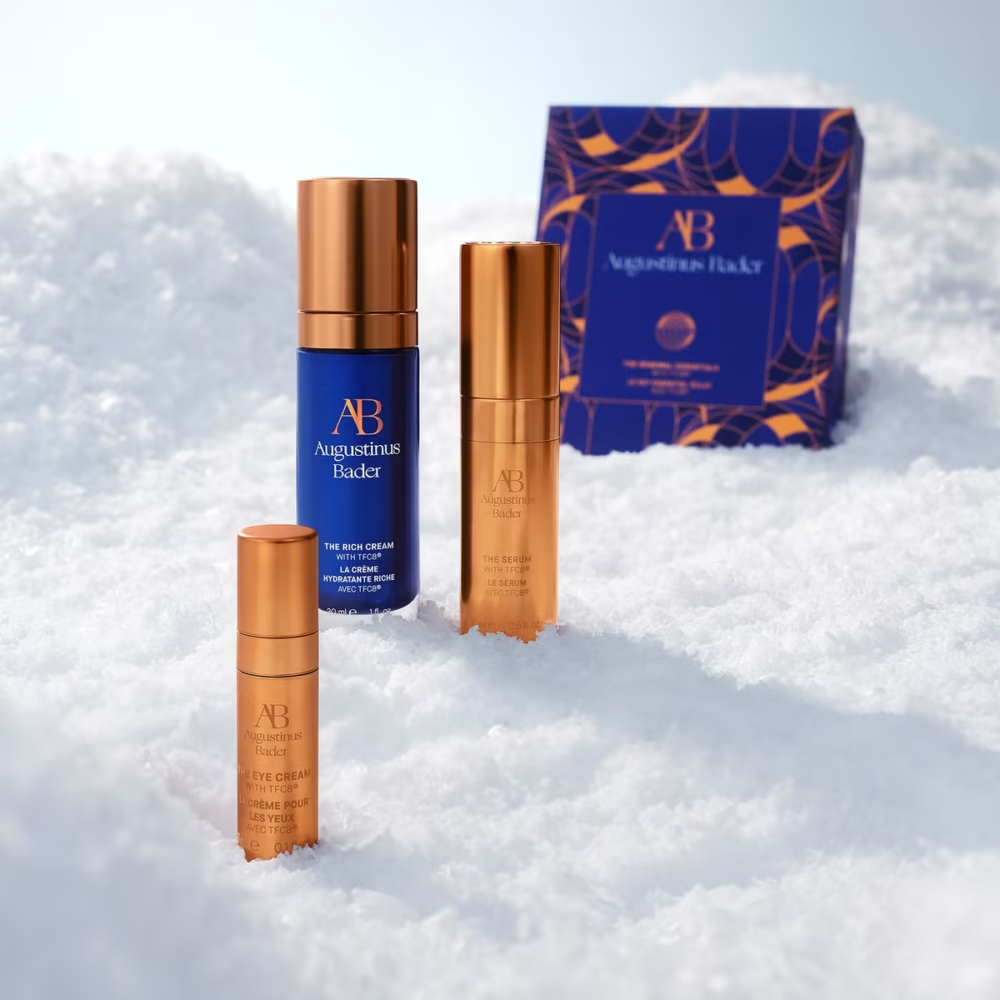
Here, clinical credibility meets affordability. CeraVe exploded on TikTok, La Roche-Posay holds the status of a trustworthy dermocosmetic, The Ordinary offers active ingredients without the luxury price tag. Augustinus Bader is a premium choice for those who can afford it, Rhode (another celebrity brand, this time Hailey Bieber) is a fresh face with growing popularity. Sol de Janeiro? It’s not just about the scents—people are also buying the textures.
Each source (Cosmetify, Statista, influencers) arranges these lists differently, sometimes changing them every quarter. But these brands appear most often because they have more than just a product: they have buzz.
Your top 10
The truth is, searching for the “top ten brands” is essentially looking for an answer to what you really need. Your skin, your budget, your beliefs about ingredients or production ethics—all of this creates a completely individual frame of reference. The list you create for yourself might have nothing in common with what someone else would recommend, and that’s perfectly fine.
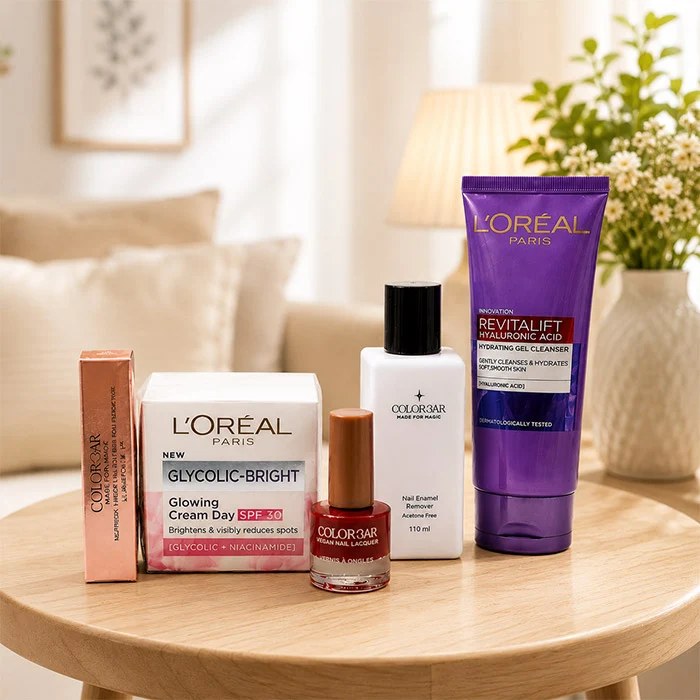
It’s worth treating cosmetics as an adventure of trial and error, where every discovery (or disappointment) teaches you something new. Sometimes the best brand is the one no one talks about, but that simply works for your skin.
And that’s exactly the point—to approach the subject consciously, rather than blindly copying someone else’s choices.
Maya 99
lifestyle & beauty editorial team
Luxury Blog





Leave a Comment