

The best SUP boards 2026 – how to choose and which models to buy
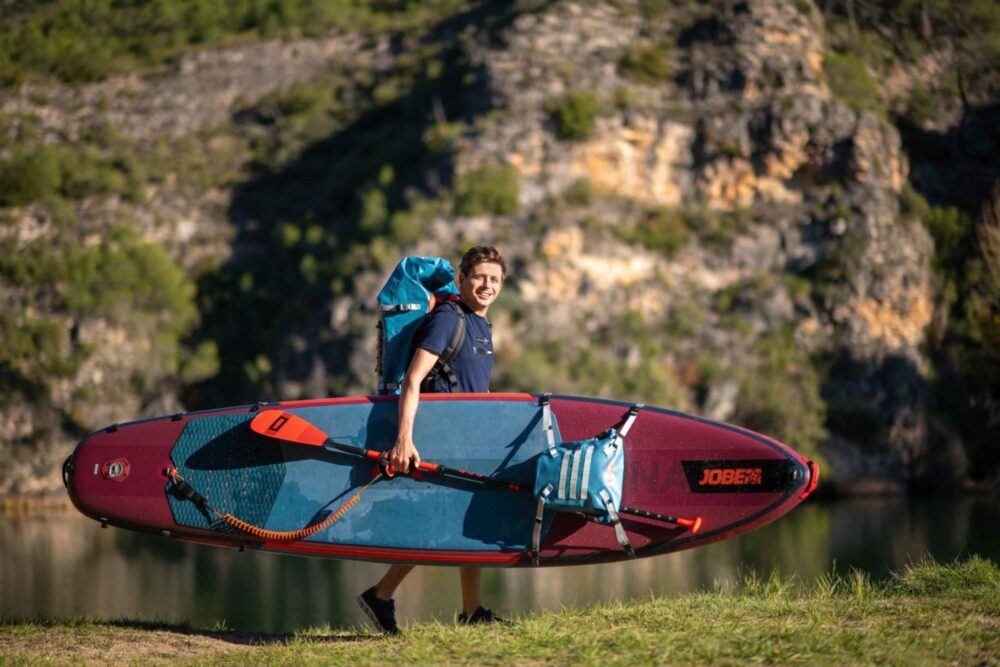
Stand-up paddleboarding originated in 1940s Hawaii, but it only exploded in Europe after 2020. The pandemic closed gyms and swimming pools, so people headed to the water. And it turned out that SUP is a sport most beginners can master in 15 minutes. You don’t need a course, equipment costing thousands, or any special fitness level.
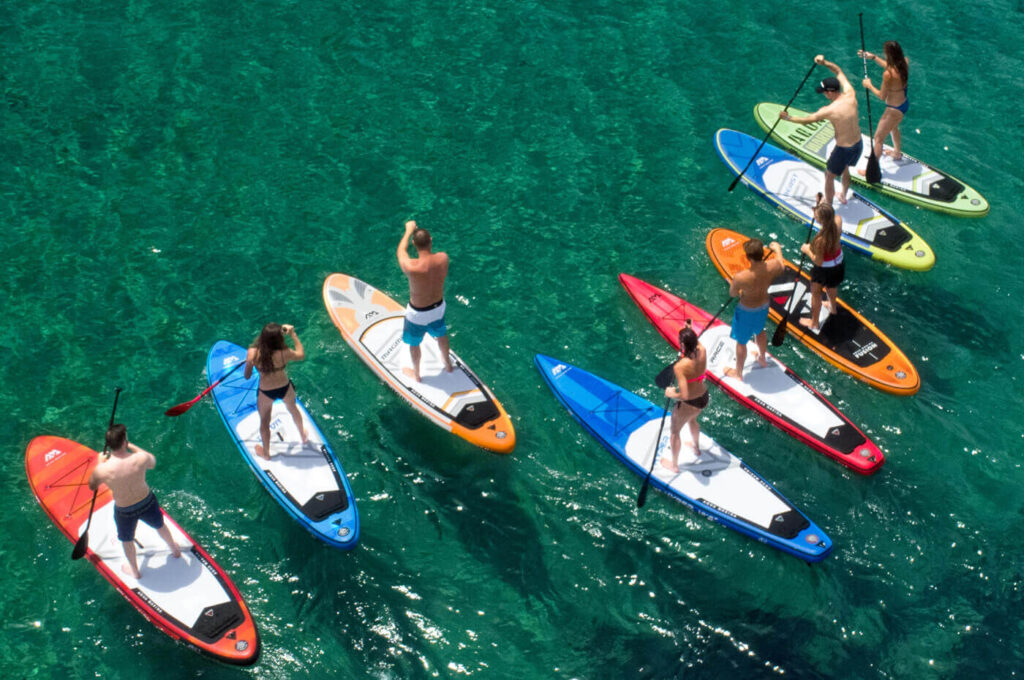
Interestingly, in Europe, inflatable boards (iSUP) dominate. They account for about 90-95% of recreational sales. Why? Because you can fit them in a backpack, toss them in the trunk, and you don’t need a garage. Plus, they’re really durable, so you don’t have to panic every time there’s a rock under the water.
But here’s the problem: the “best” board is a meaningless concept without context. It depends on whether you weigh 60 or 95 kg, whether you’re riding on a lake or on the sea in chop, and how much you want to spend. There’s no universal winner. But there is a board that’s best for you, so that’s exactly what this guide is about.
Type of board and swimming style
Most of us will buy an iSUP, and that’s a good decision. But sometimes it’s worth knowing what you lose and what you gain.
iSUP or hardboard?
Inflatable boards (iSUP) are made of drop-stitch PVC, most often single or double layer in the 1000D-2000D range, inflated to 15-20+ PSI. You pack them into a backpack, toss them in the car, store them in a closet. Hit a rock? A scratch, rarely anything more. Glide is about 2-5% worse than on a hard board, but honestly, most people won’t notice.
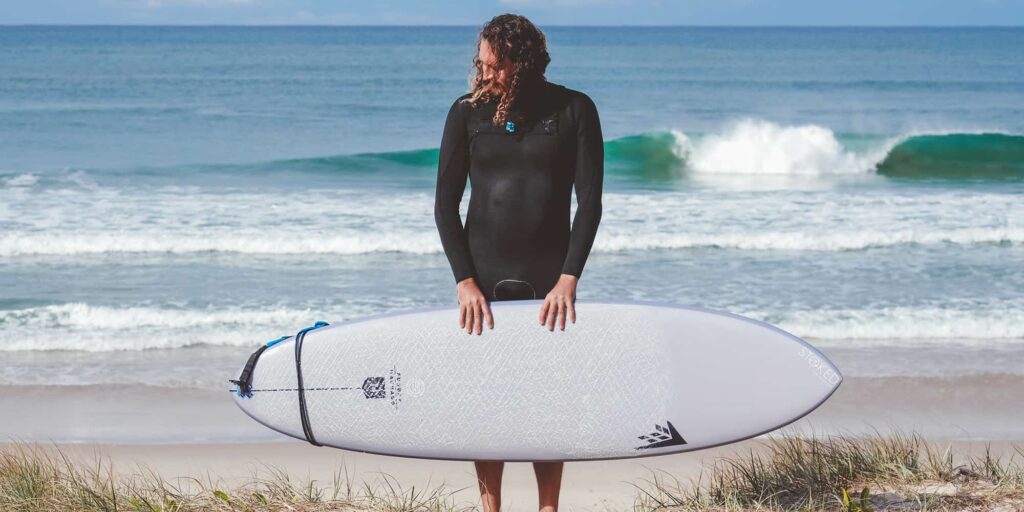
Hard boards (epoxy, composite) are more responsive, glide better over distance and in surf conditions. The downside: you need space, roof rack transport, and caution with every impact. A crack means a repair job, not just a quick patch.
| Feature | iSUP | Hard |
|---|---|---|
| Transport | backpack, trunk, even airplane | roof rack, protection |
| Storage | wardrobe, balcony | garage, hanger, space |
| Durability | impact-resistant | sensitive, requires care |
| Performance | very good, slightly slower | the best |
| For whom | 90-95% of users | ambitious routes, races, surf |
Planing, displacement, hybrid
Planing hull (flat bottom, rounded nose) means stability and maneuverability. Perfect for recreation, yoga, whitewater, and waves. Displacement (bow, slender line) cuts through the water instead of gliding on it—more efficient over distance, better pace for touring and racing. Hybrids combine both worlds, versatile but not perfect anywhere.
In short: if you paddle for fun, sometimes with your dog or children, then only planing. If you’re planning long distances, races, or want speed, then displacement or hybrid. And if you’re considering a hard board, you probably already know why.
Size, buoyancy, and stability
When choosing a SUP board, numbers really matter. It’s not about abstract parameters, but about your safety and comfort on the water. Too little volume? The nose will dip with every movement, and keeping a straight course will turn into a struggle.
The rule of doubling plus margin
The basic formula is simple: you need a board with a volume at least twice your weight in kilograms, expressed in liters. But that’s the absolute minimum. In practice, add another 30-80 liters for extra margin, especially if you’re just starting your SUP adventure or plan to bring additional gear on board. Do you weigh 80 kg? Aim for a board with 190-240 liters, and you’ll notice the difference in stability.
| User weight | Recommended volume |
|---|---|
| 70 kg | 170-220 l |
| 85 kg | 200-250 l |
Thickness of about 6 inches (approximately 15 cm) is the standard for inflatable boards, providing both rigidity and buoyancy. Width also matters: 33-34 inches offer greater stability, which you’ll appreciate during yoga on the board or in the first months of learning.
Specific dimensions for the scale
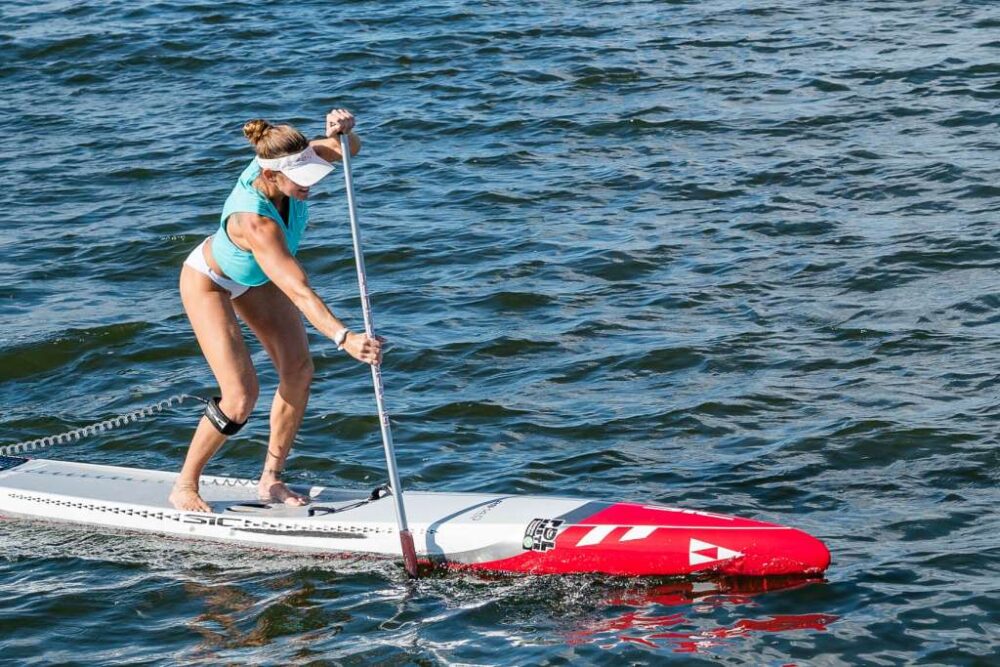
Allrounders are usually 10’6″-11’2″ long and 32-34″ wide. A person weighing 75 kg will feel comfortable on a 10’6″-11′ board with a volume of 250-300 l. For 90 kg, it’s worth considering an 11′-11’2″ (300-350 l) board or, if you prefer trips, a touring 12’+ board, which will be narrower but longer for better efficiency.
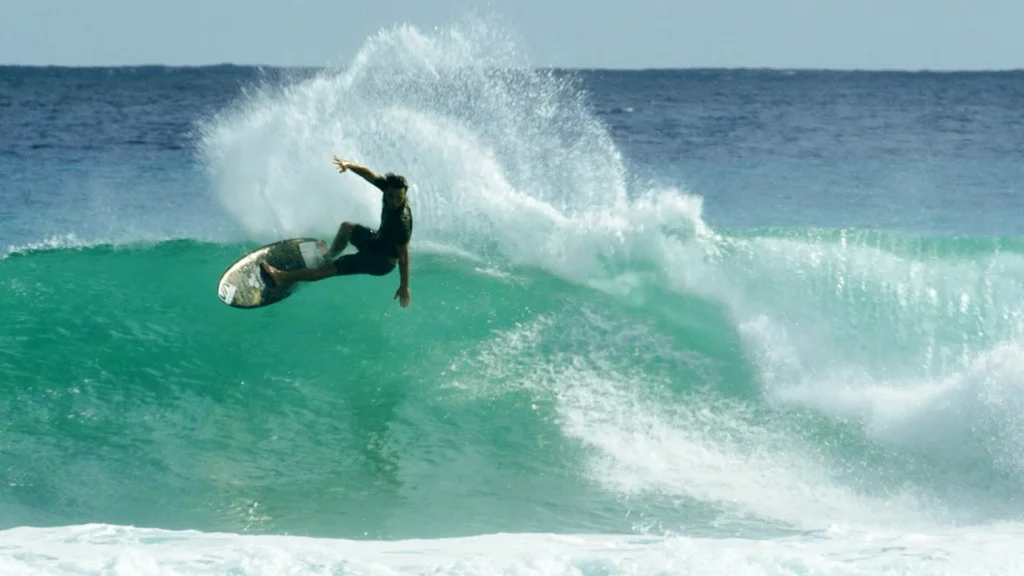
Boards under 10 feet? That’s already surfing territory, requiring skill. Touring boards, on the other hand, start at 12 feet and up, offering speed at the expense of initial stability.
The best SUP boards
Model names sound nice in catalogs, but in practice, what really matters is how you’ll actually use the board. Below are a few categories with specific examples available in Polish stores.
Allround
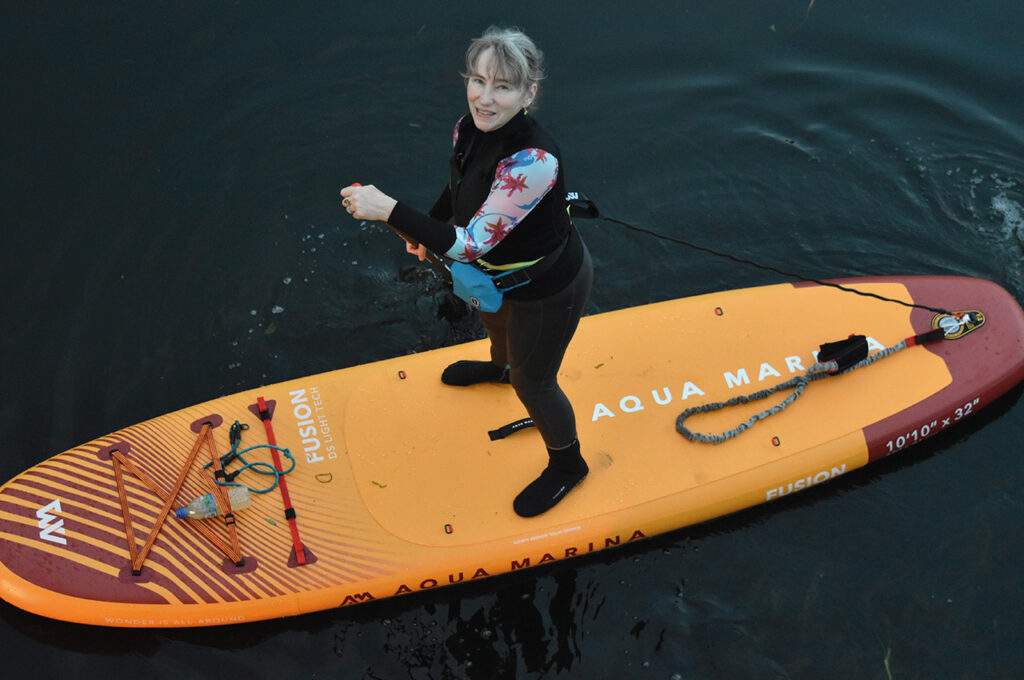
If you’re not sure where you’ll be paddling most often, choose an all-round board in the 10’6″-11’2″ range and 32-34″ wide. Proven models include Aqua Marina Fusion 10’10”, Gladiator Pro 10’6″ and Origin 10’8″, AQUASTIC Perth Pro 11’2″ or Perth 10’8″, Aqua Marina Vapor 10’4″ and Beast 10’6″. Among affordable entry-level options, Itiwit from Decathlon works well. These boards perform well both on lakes and in light waves, so it’s hard to go wrong.
Touring
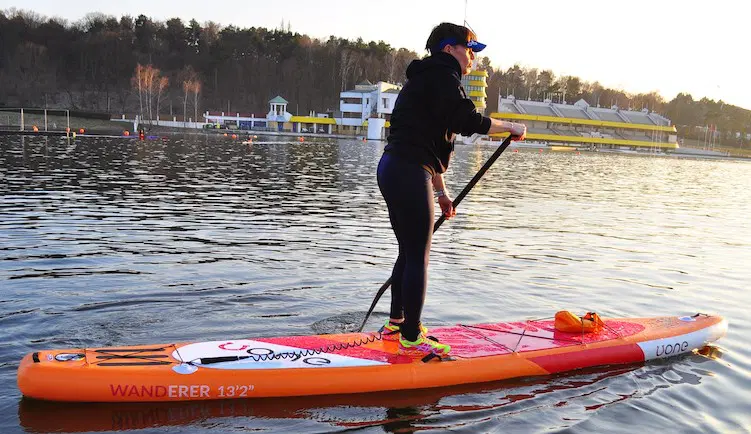
Planning longer trips on the river or want to maintain your pace? Look for boards 12’+, preferably narrow (about 30-32″). Uone Wanderer 13’2″, Voyager 12’6″, or Traveller 11’6″ are great for covering distance. It’s also worth checking out the AQUASTIC Touring 12’6″/Tourer 12’0″, Gladiator One 12’6″, or Aqua Marina Super Trip Tandem 14’0″ (for two people). Length really makes a difference in the wind.
Budget and premium:
The cheapest boards (TSUNAMI, Bestway Hydro-Force, Spinera Supventure, Uone SUPer) are priced below 1,500 PLN, but quality can vary. Reliable iSUPs can be found in the 1,500–3,000 PLN range, depending on the brand and technology. Premium options include Red Paddle Co (Ride 10’6″/10’8″, Voyager), Starboard, Fanatic Fly Air, and JP Australia, where you get higher stiffness, better seams, and warranties up to 5 years (e.g., Jobe, Starboard). However, warranties of 1–3 years are more common.
Sets and accessories
When purchasing a SUP board, you usually get a complete set, but it’s worth knowing what actually matters in it and where it might be worth paying extra. Most sets include a basic package, although the quality of individual components can vary.
Must-have
The standard set usually includes:
✓ Paddle (aluminum or composite/carbon – weight and stiffness make a difference on longer trips)
✓ Pump (double-action hand pump, inflation takes about 5–15+ min depending on board volume)
✓ Leash (ankle or coil leash – on rivers, always use a breakaway!)
✓ Transport backpack
✓ Fin (typically US Box, easy to replace)
✓ Repair kit
Safety: a leash is mandatory, and a personal flotation device (PFD) is also required, especially on open water or rivers.
Note: On rivers, always use a breakaway leash only. A regular one can be dangerous if it gets caught.
Amenities and hybrids
Many sets include D-rings for mounting a kayak seat, which works great on longer trips. An electric pump ( approx. 50 euros extra) significantly speeds up preparation and is quieter than you might think. Inflate to the PSI specified by the manufacturer—this is crucial for rigidity.
It’s worth considering a better carbon paddle—your arms will definitely feel less fatigue after an hour. The rest? Paddle and fin covers, but that really depends on how often you plan your trips.
Smooth water and a confident choice
Choosing a SUP board is a bit like looking for the perfect pair of running shoes. There isn’t one best model for everyone, but there is a model that’s best for you. It all comes down to where you’ll be paddling, how often, and what you expect from your gear. Someone looking for a stable board for a calm lake needs something completely different from someone who wants to surf waves or cover long distances.
The truth is that the current market offers really solid options in every price category. Most brands have genuinely improved their quality in recent years, so the risk of buying a complete flop is now much lower than it used to be. What matters most is choosing what suits your own needs, not chasing after the most expensive model with the most gadgets.
If you have already chosen the type of board and know your priorities, the rest is just a matter of checking reviews and comparing a few specific models. Ultimately, the best board is the one you will actually ride.
Miki
Luxury Blog editorial team




Leave a Comment