
What is the difference between Parmigiano Reggiano and regular “parmesan”?
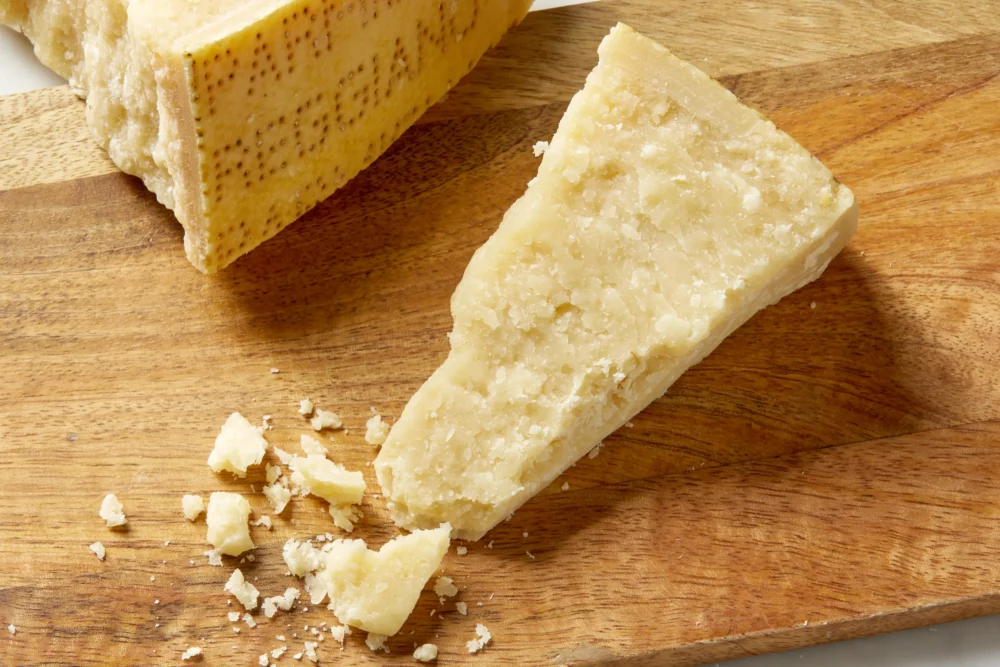
A surprising fact: “Fake” products imitating Parmigiano Reggiano generate losses estimated at over €2 billion annually outside the European Union. And that’s just the tip of the iceberg. In European stores, you can find “parmesan” at almost every turn, in various packages, at different prices, and most importantly, of varying quality. Sometimes it’s genuine Parmigiano Reggiano from Italy. Sometimes it’s a hard cheese that looks similar but is produced elsewhere, from different ingredients.
The problem is that in the Union, the name Parmigiano Reggiano is legally protected (PDO system). Outside the EU? It’s often treated as a generic term for a type of cheese.
This article will present specific distinguishing criteria. Where and how the original is produced, what determines its flavor, and why the aging period matters. And most importantly: how to tell the real product from an imitation in the store. Because contrary to appearances, it’s not just about snobbery, but about a real difference in quality.
Origin and law
Parmigiano Reggiano isn’t just the name of a fancy cheese. It’s a protected designation of origin (PDO/DOP), which means in practice, only producers from a strictly defined area can make it, following specific rules. And that’s just a small slice of Italy, about 10,000 km²:
- Parma (entire province)
- Reggio Emilia (entire province)
- Modena (entire province)
- Bologna (only areas west of the Reno River)
- Mantua (only the eastern part, across the Po River)
Why there, exactly? Because it matters. The cows eat feed from meadows along the Po and Rhine rivers, and the local microflora gives the milk a unique profile. It sounds poetic, but it really affects the flavor.
Why in the EU “Parmesan” = Parmigiano Reggiano
In 2008, the Court of Justice of the EU ruled on a case that changed everything. It decided that “parmesan” in the Union is an evocation of a protected name, so you cannot label just any hard cheese that way. Even if someone does not write the full name, any attempt to reference the original is illegal.
So in stores in Poland or Germany, “Parmesan” should mean genuine Parmigiano Reggiano. Theoretically.
Outside the EU, it’s a different story. In the USA, “parmesan” has become a generic name—anyone can produce it however they want. There’s zero legal protection. That’s why you see those famous green containers of grated “parmesan” with questionable ingredients. Italians grit their teeth, but American law doesn’t care.
What is the difference between Parmigiano Reggiano and regular “parmesan”?
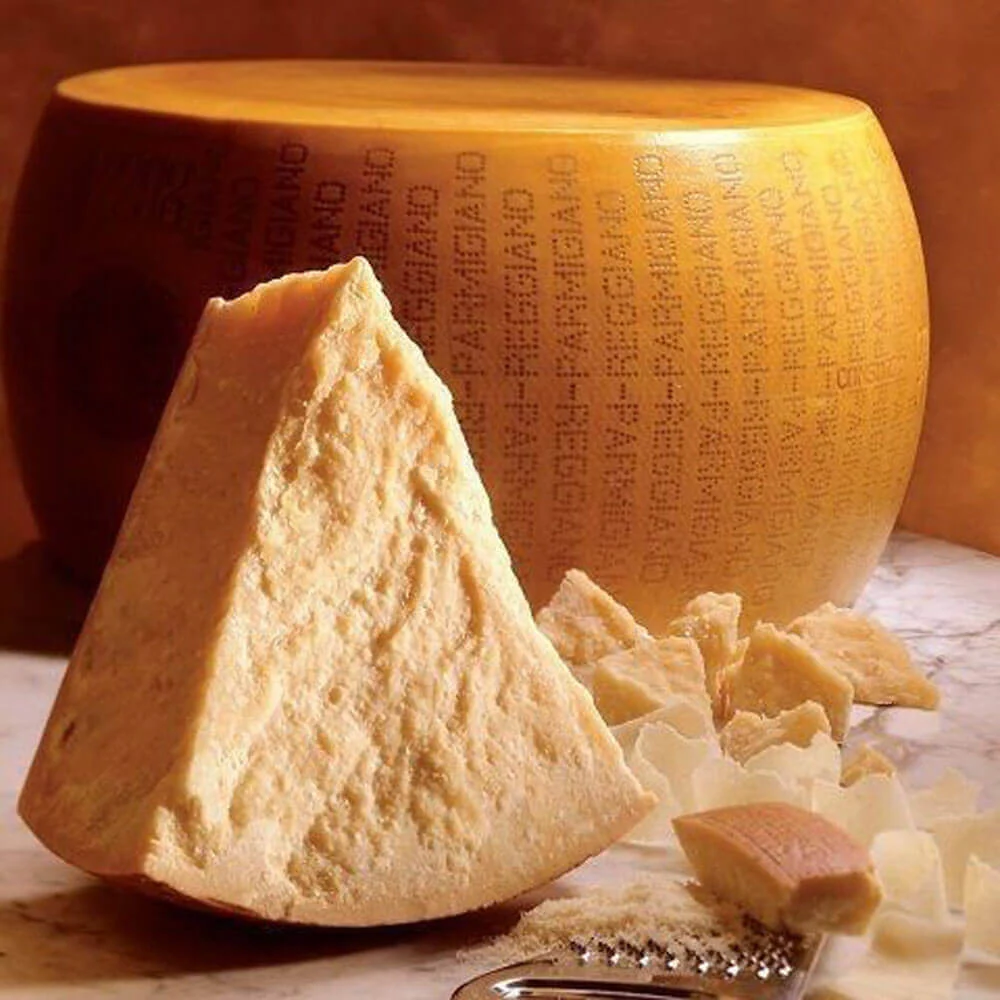
The difference starts with the cows. Parmigiano Reggiano is made exclusively from the milk of cows fed local fodder, with a complete ban on silage. It is silage that introduces bacteria into the milk, which could spoil the cheese during long aging. So no, this is not just excessive formality.
Three ingredients and zero additives
The PR ingredient list is the absolute minimum: raw partially skimmed cow’s milk (through natural creaming), sea salt, and calf rennet. Period. Zero starter cultures, preservatives, colorants, or stabilizers. In “parmesan” produced, for example, in the USA? The standards are more relaxed:
- pasteurized or even reconstituted milk
- cellulose as an anti-caking agent
- potassium sorbate (preservative)
- shorter maturation period (approx. 10 months vs a minimum of 12 for PR)
You can see the difference, right?
Maturation and quality control
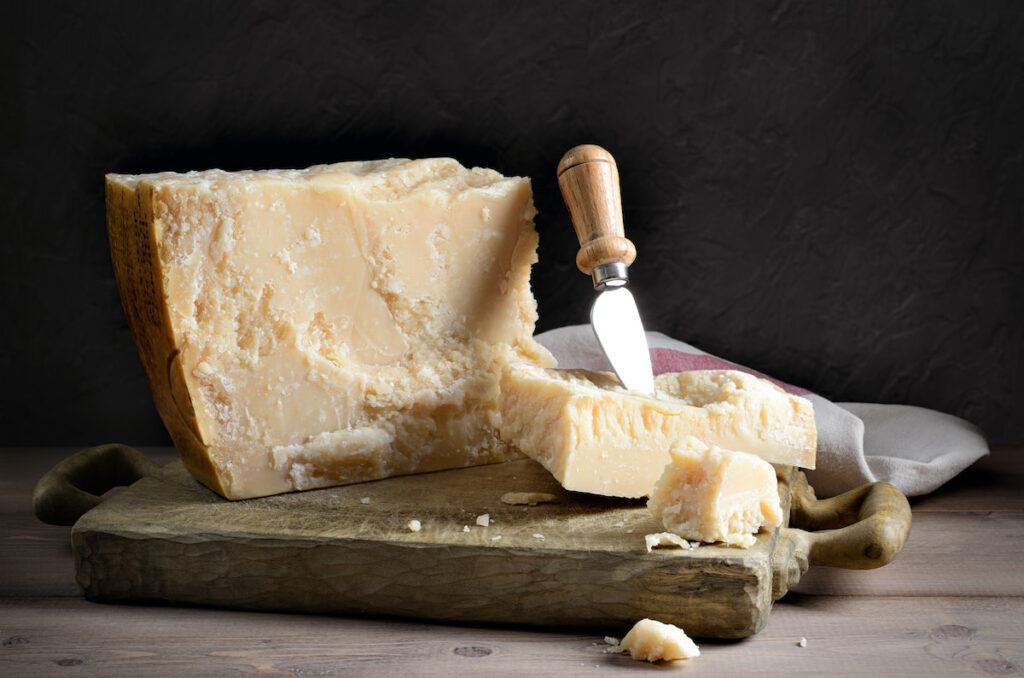
After shaping, the PR wheel goes into brine for about 20 days, then matures for at least 12 months. But most wheels are aged for 24 months or longer. Each wheel is inspected by the Consorzio, which assesses the structure and quality by tapping it with a special hammer. Defective wheels lose their PDO designation and are sold as a lower-grade cheese.
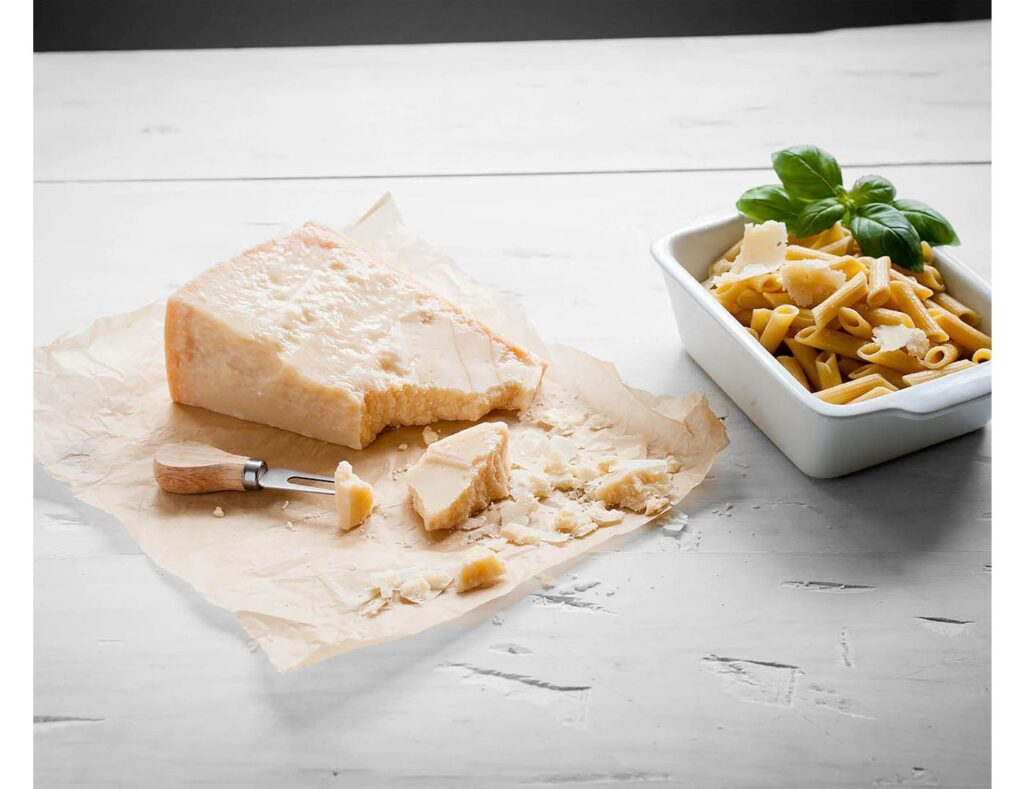
In generic “parmesan,” this oversight simply doesn’t exist. Shorter aging, pasteurized milk, and additives speed up production and lower costs. But the taste and texture? That’s a different story, which we’ll tell in a moment.
Taste and texture
When you open a piece of Parmigiano Reggiano, the first question should be: how many months has it aged? Because it’s the age that determines whether you’ll get a delicate, milky cheese perfect for casseroles, or an intense, spicy crumb full of crunch, enjoyed on its own with a glass of wine.
What age says about taste
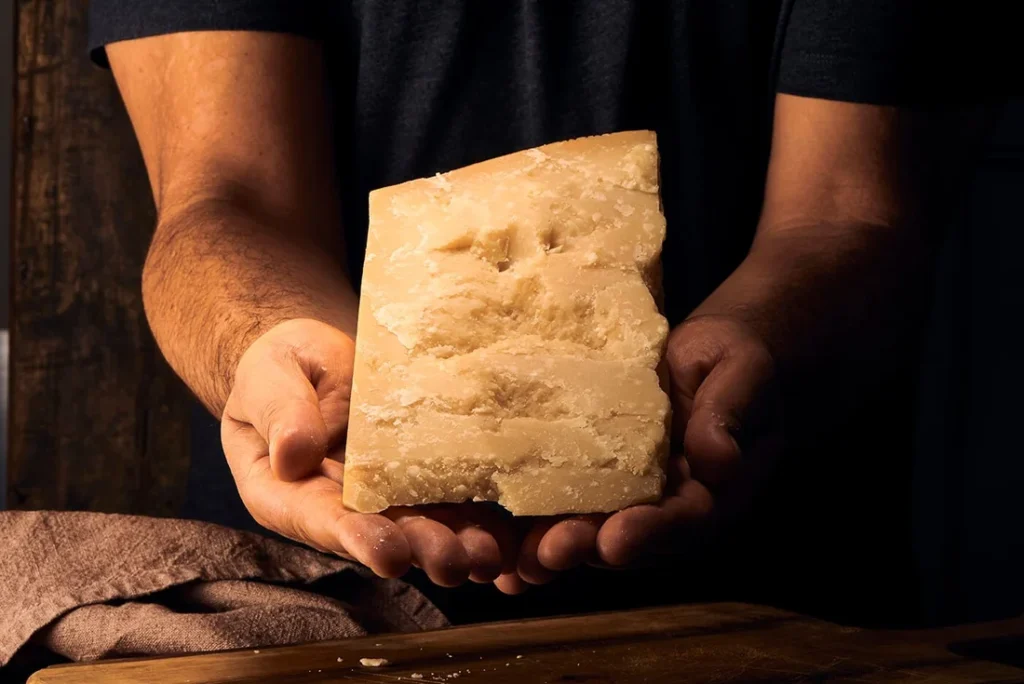
Young Parmigiano (12-18 months) is mild, milky, with a subtle hint of nut. The texture is smooth, pliable, almost without crystals. It melts perfectly in sauces and casseroles.
Around 24-30 months is the golden mean: the cheese develops a distinct nutty aroma, fruity notes emerge, and the umami flavor becomes more pronounced. The texture is more crumbly, with occasional white crystals appearing. Versatile use, from grating over pasta to cheese boards.
After 36 months and beyond? The intensity increases. Spiciness, depth, complexity of flavor. More tyrosine crystals, that characteristic “crunch” under your teeth. This is now a cheese for tasting in pieces, not for cooking.
Crystals and texture in practice
These white specks and crunchiness? That’s tyrosine, an amino acid released during long proteolysis. The longer the cheese ages, the more of these natural crystals appear. Don’t confuse them with salt—tyrosine has a distinctive, delicate crunch.
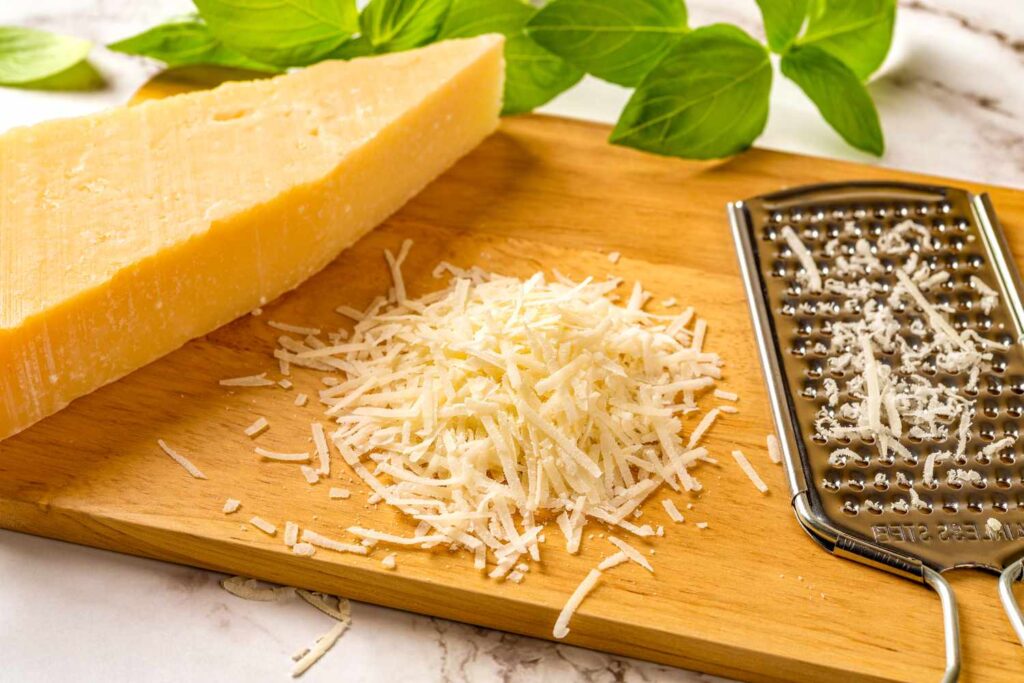
Generic “Parmesan”? Often milder, saltier than the complex one. Smoother, more rubbery texture, with few or no crystals. The taste is usually one-dimensional, lacking the depth and sharpness of real Parmigiano Reggiano. I’m not saying it’s bad, just different.
How to recognize the original and not get fooled?
The truth is, with about fifty “parmesans” on the store shelf, spotting real Parmigiano takes a trained eye. But don’t worry, just a few simple checks are enough.
What must be on an authentic product
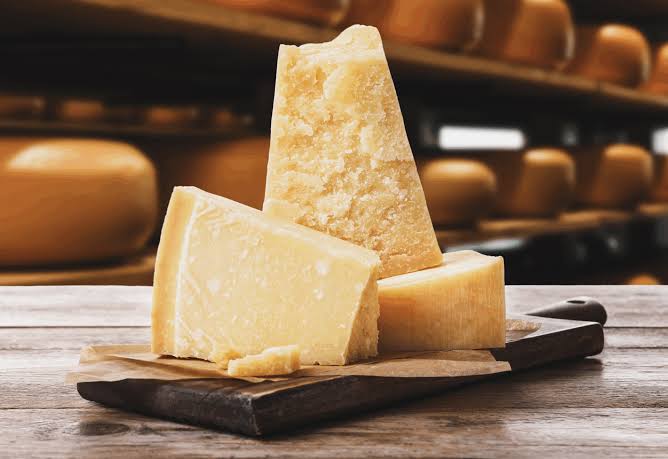
The rind (if you’re buying a piece) is your main point of reference. Look for:
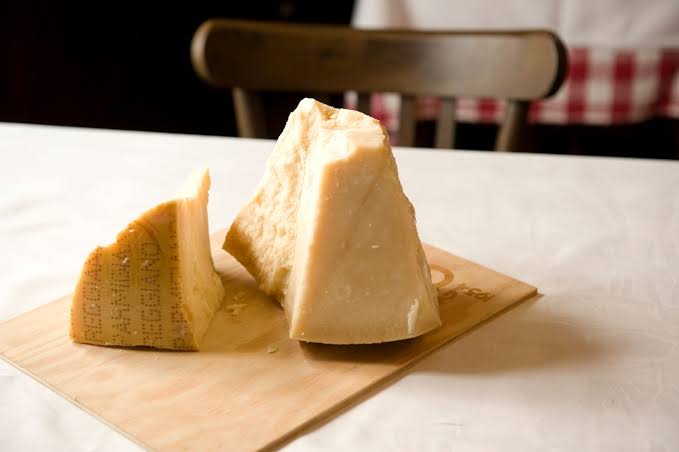
- The dotted inscription “Parmigiano Reggiano” arranged around the entire wheel
- Dairy number and month and year of production
- Casein tags or the distinctive Consorzio mark
- DOP (Denominazione di Origine Protetta) or its EU equivalent PDO
- The “Made in Italy” annotation
The minimum age is always 12 months. For grated cheese, the producer must process it in the PDO area, so check the label carefully.
Attention to names outside the Union
In the EU, the matter is simple: since the 2008 ruling, the term “Parmesan” refers exclusively to Parmigiano Reggiano. But outside the Community? The name “parmesan” alone guarantees nothing. In the USA or Canada, this label can mean anything from quality hard cheeses to powder of questionable origin.
The difference you can truly feel
The real Parmigiano Reggiano and regular parmesan are actually two completely different worlds. One gives you depth of flavor, that characteristic crystalline texture, and an aroma that fills the entire dish. The other is simply… salted cheese. The difference isn’t about snobbery, but something you can truly feel on your tongue.
Of course, not every dish requires original Parmigiano. But once you try it on good pasta or with a piece of cheese on a board, you’ll understand why Italians defend this name as if it were sacred. It’s a matter of respect for a craft that has remained unchanged for centuries.
And that’s basically it. Now that you know, you can consciously choose what ends up on your plate.
Adam Maestrto 99 – editorial team Luxury Blog




Leave a Comment