

Hvar – why does the Croatian island attract the wealthiest investors?
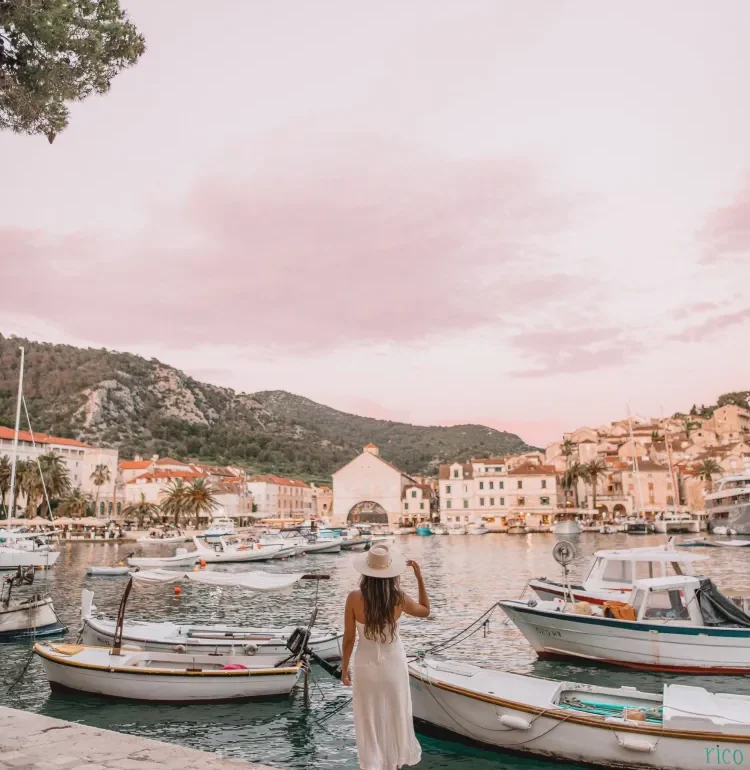
Hvar enjoys around 2,724 hours of sunshine per year. That’s more than most resorts in the Mediterranean basin and a compelling argument for investors seeking not just property, but a premium lifestyle for seven or eight months each year. While Western Europe is shrouded in gray, here you can still have breakfast on the terrace overlooking azure waters.
But it’s not just about the atmosphere. Hvar combines something you won’t find in either Monaco or Saint-Tropez: glamour and authenticity. Stone houses nestled among olive groves, fields of lavender, vineyards on steep slopes, coves accessible only by boat. Here, you can disappear, even though the summer season attracts yachts and celebrities. Privacy is a currency that Hvar offers naturally, without concrete or barriers.
It’s not without reason that the island is called the “Queen of the Adriatic” or the ” new Monaco of the Adriatic.” But this is a Monaco with soul, where luxury doesn’t shout, it whispers.
Below you’ll find hard numbers: prices, returns, regulations. The point here was for you to understand why Hvar in particular.
Hvar – why does the Croatian island attract the wealthiest investors?
Hvar operates on four pillars that together create something rare: a place where luxury has not displaced authenticity, and demand exceeds what geography even allows to be built.
Limited supply and heritage protection
The island is about 68 km long, but most of its area is under strict conservation protection. New developments? Possible, but only within the framework of stringent building regulations that safeguard the landscape and historical architecture. This is not a place where three new apartment complexes will spring up next year. The point is that the supply of premium real estate is both physically and legally limited, which stabilizes the value of what already exists. Add to this six UNESCO listings (from Starog Grad to intangible heritage) and you have proof that we’re talking about a place with documented class.
Yachting and dining infrastructure
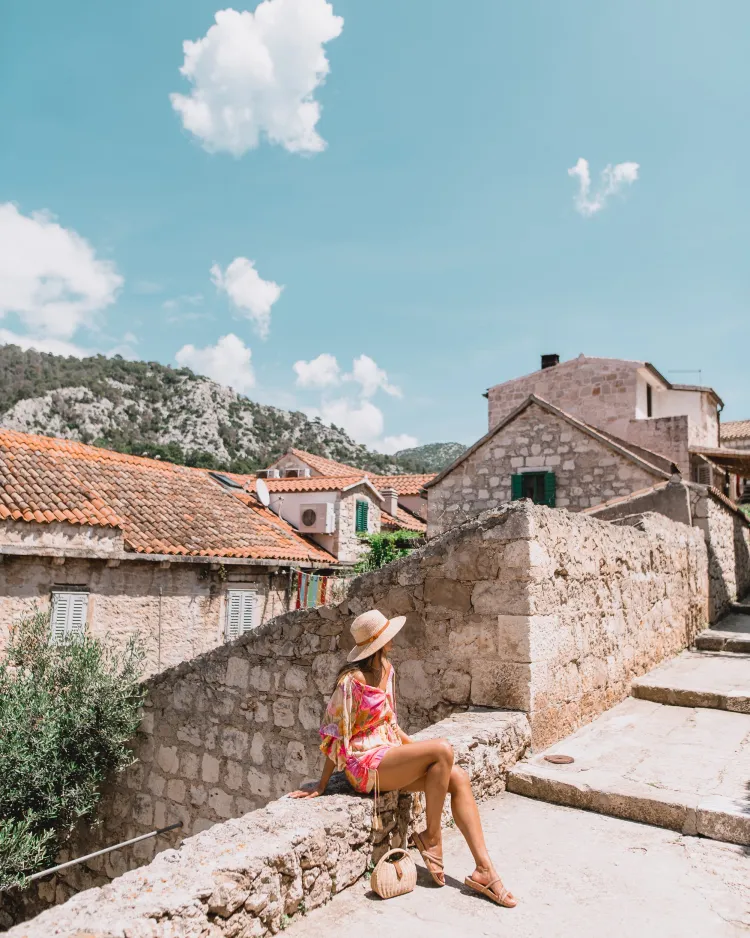
Hvar offers what the HNWI segment expects: ACI marinas adapted for superyachts, restaurants with Michelin stars, boutique hotels, and private coves accessible only from the sea. Discretion, seclusion, and a level of service comparable to the French Riviera, but without the crowds of Cannes or Nice. The island is visited by over 500,000 people annually, but the premium infrastructure has been designed to separate the elite from mass tourism.
Globally, Hvar regularly appears in rankings of the world’s most beautiful islands. At the same time, it remains more authentic than Dubrovnik (overrun by tourism) and more understated than Monaco. It’s an alternative for those seeking a brand without ostentation.
From Fara to superyachts
Hvar is not just another little island that suddenly became fashionable. The premium history of this island actually spans several thousand years, though each era understood luxury a little differently.
Ager and UNESCO heritage as the foundation of authenticity
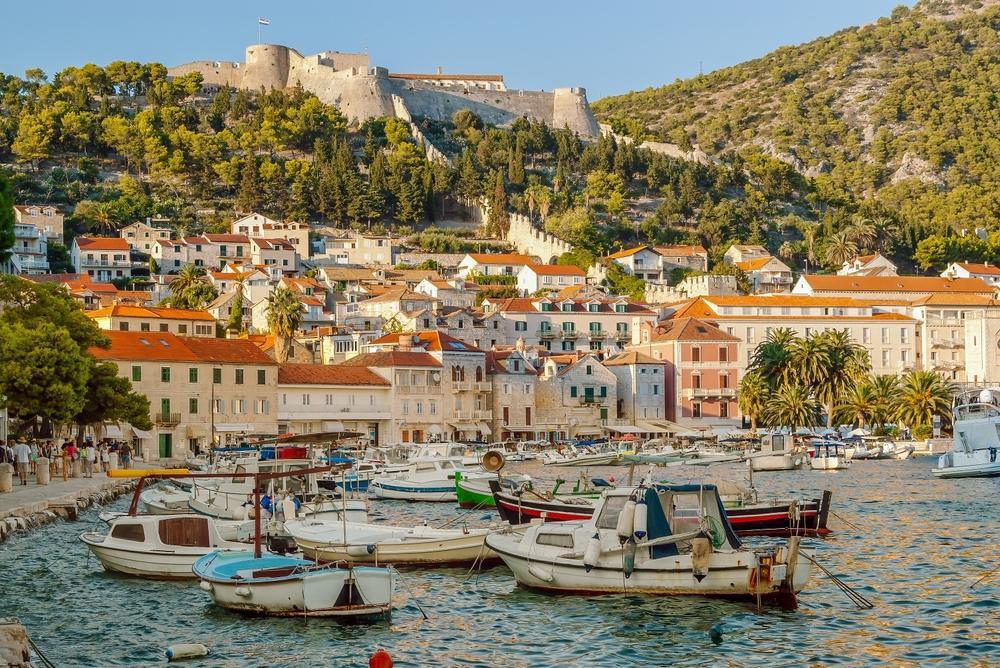
The Hvar culture (around 3500–2500 BC) left traces of Neolithic settlements, then came the Illyrians. But the real game changer? The year 385–384 BC, when the Greeks founded Pharos (today’s Stari Grad). They also created the Stari Grad Plain, known as Ager. A geometric layout of plots measuring 180×190 meters, which has survived to this day. In 2008, UNESCO inscribed it on the World Heritage List, as it is the oldest almost unchanged agricultural landscape in the Mediterranean region. The Romans took control in 219 BC, the Venetians left their mark on the architecture, and the Austrians… well, they were the ones who launched tourism.
The birth of professional tourism
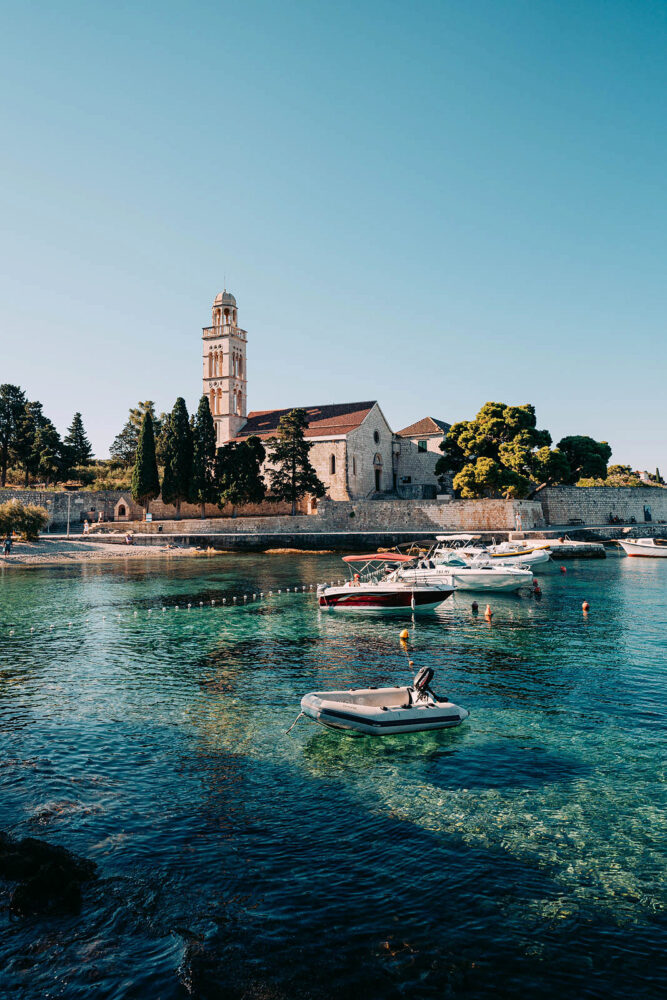
In 1868, the Hvar Hygienic Society was established, the first tourist association in Europe. The Austrians promoted the island as the “second Madeira” thanks to its climate and therapeutic qualities. This was no coincidence: as early as 1858, the oldest Croatian meteorological station was launched here. The years 1950-1980 saw mass tourism in a socialist style, but after 1991, there was a shift towards luxury. The decade 2010-2020 attracted HNWI and celebrities, who discovered that history and authenticity are more than just a marketing ploy.
Real estate market 2026
Property prices on the island currently range between €3,600 and €4,600+ per m², with the municipality of Hvar itself averaging around €4,575 per m² in mid-2026. This represents an increase of roughly 7% year-on-year, based on selected data from recent quarters. However, location is key here.
Price range and sea premium
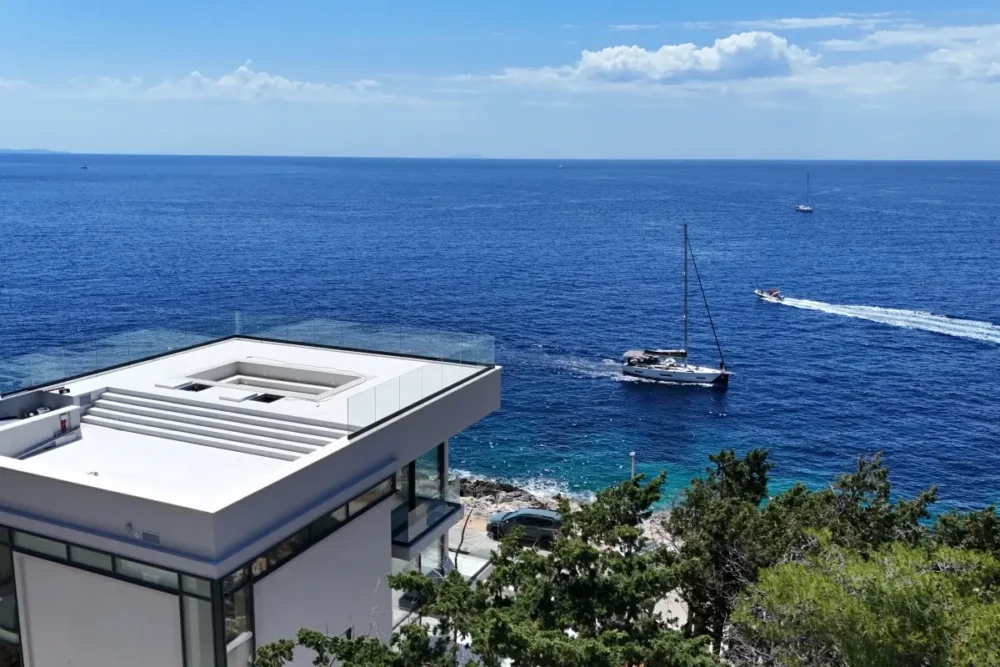
Premium real estate with a sea view or those in the first row? Here, we’re talking about €4,000–8,000+ per m², and often even more when it comes to high-end villas priced at €1.5–5+ million. Interestingly, proximity to the shore alone can increase the price by as much as 30% for properties located within a maximum of 100 meters from the shoreline. This premium comes as no surprise, considering how limited the supply of such plots is.
Lease and potential ROI
Now the part that interests people the most: return on investment. Premium properties with a view reach occupancy rates of up to 90% during peak season and its shoulder months (June–September). Daily rates at the peak? Easily €1,000–3,000+ for a top-tier villa. With good management and professional service, you can realistically expect a net ROI of 7%+, which is actually a solid result for the European market.
Who buys?
Demand is coming mainly from the UK, Scandinavia, Germany, the Middle East, and the USA. Recently, more and more digital nomads are extending the season beyond the traditional summer months, renting for longer stays. This stabilizes revenue and reduces the risk of seasonality.
New projects, major players, and regulators
The Hvar market is changing under the pressure of big money and new regulations. As the island’s largest hotel portfolio passes into the hands of an Emirati giant and local authorities start saying “enough” to party tourism, it’s worth taking a closer look at who is now shaping the island’s future and on what terms.
Eagle Hills and the Sunčani Hvar portfolio
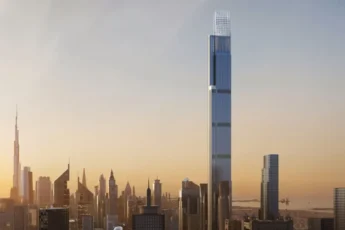
Eagle Hills, a company founded by Mohamed Ali Rashed Alabbar (yes, the one behind Burj Khalifa), finalized the acquisition of Sunčani Hvar in 2023. The value? Around 200-220 million euros. The package includes ten hotels, giving control over roughly 80% of all rooms on Hvar. The Croatian antitrust agency AZTN granted conditional approval at the beginning of 2025: Eagle Hills must invest 20-30 million euros within five years, modernizing, among others, Sirena and Amfora. Sirena Resort 4* is set to reopen after renovation as early as 2026. Additionally, the company also controls Bluesun on neighboring Brač.
The Adriatic coast combines the authenticity of Mediterranean tradition with the potential to satisfy the sophisticated guest seeking discreet luxury in harmony with nature.
New villas and residences
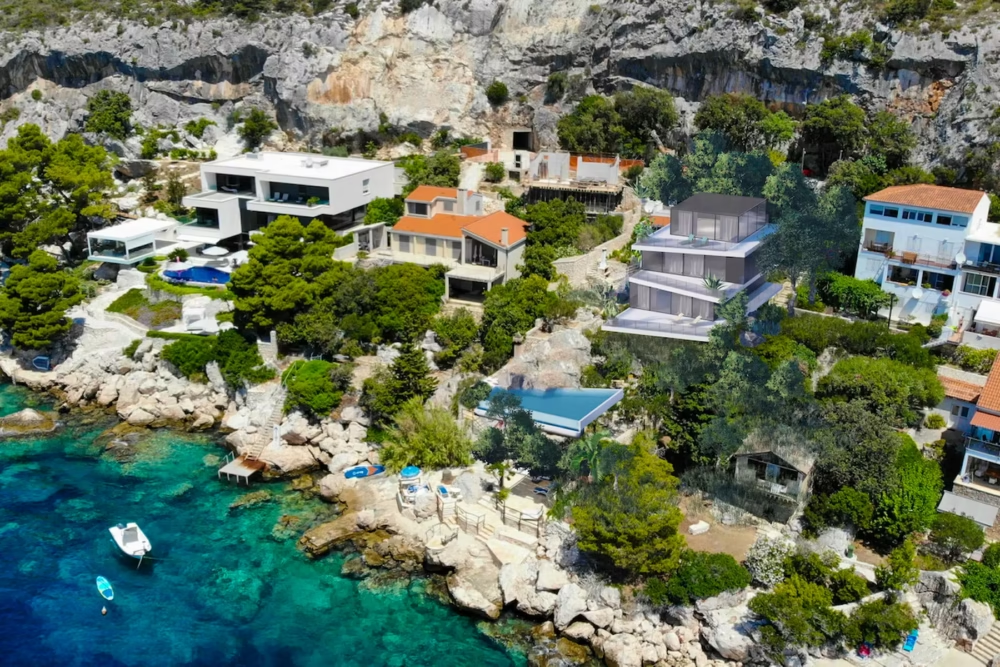
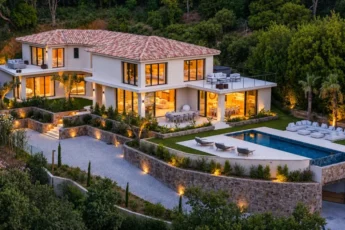
Apart from the hotel industry, the villa market is also growing. Maslina Resort is expanding its portfolio of residences priced at 1.1–3.9 million euros each. Zori Timeless Residences on Pakleni targets a similar segment. The projects focus on blending into the landscape, using local stone and suhozid walls. This is a response to clients who do not want a mass resort, but rather their own base with a view and yacht access.
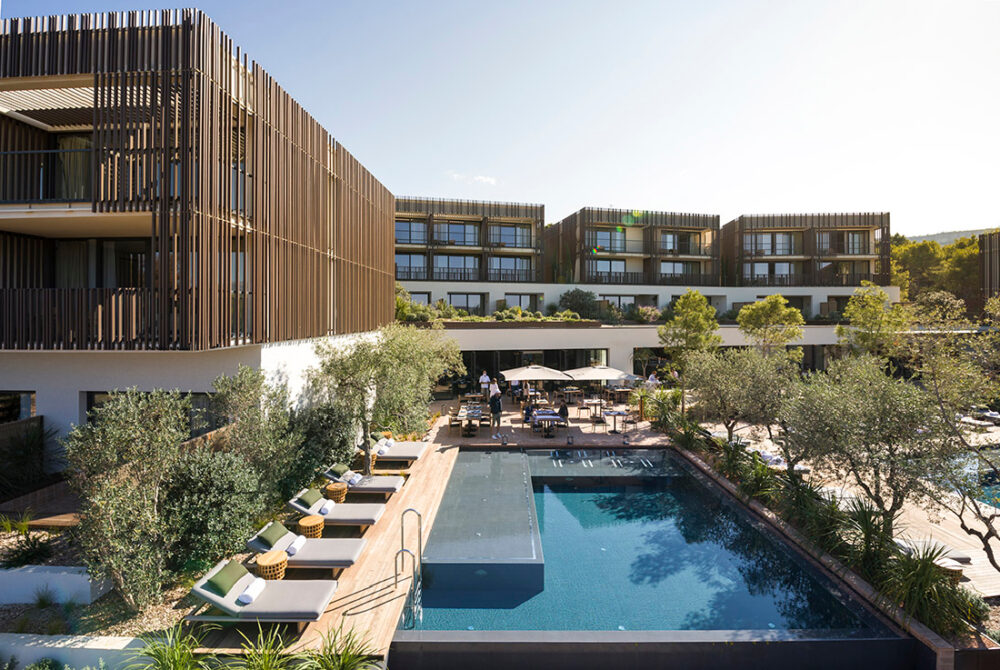
Quality regulations and sustainability
Since 2024, Hvar has officially distanced itself from the image of a “party island.” New noise limits (around 65 dB in city centers), club inspections, and a focus on gastronomy, culture, and wellness. The authorities want quality, not quantity. The question is how long this policy will withstand economic pressure. There are also controversies: organizations such as Eco Hvar are raising alarms about pesticide overuse in vineyards, and some construction work in protected areas ends in legal disputes (cases from 2026). The tension between development and environmental protection remains unresolved.
The island that chooses quality
Hvar operates by its own rules. You won’t find mass tourism or gigantic all-inclusive hotels here, as the island has deliberately chosen a different path. For years, local authorities have consistently refused permits for the construction of large complexes, focusing instead on small, exclusive projects.
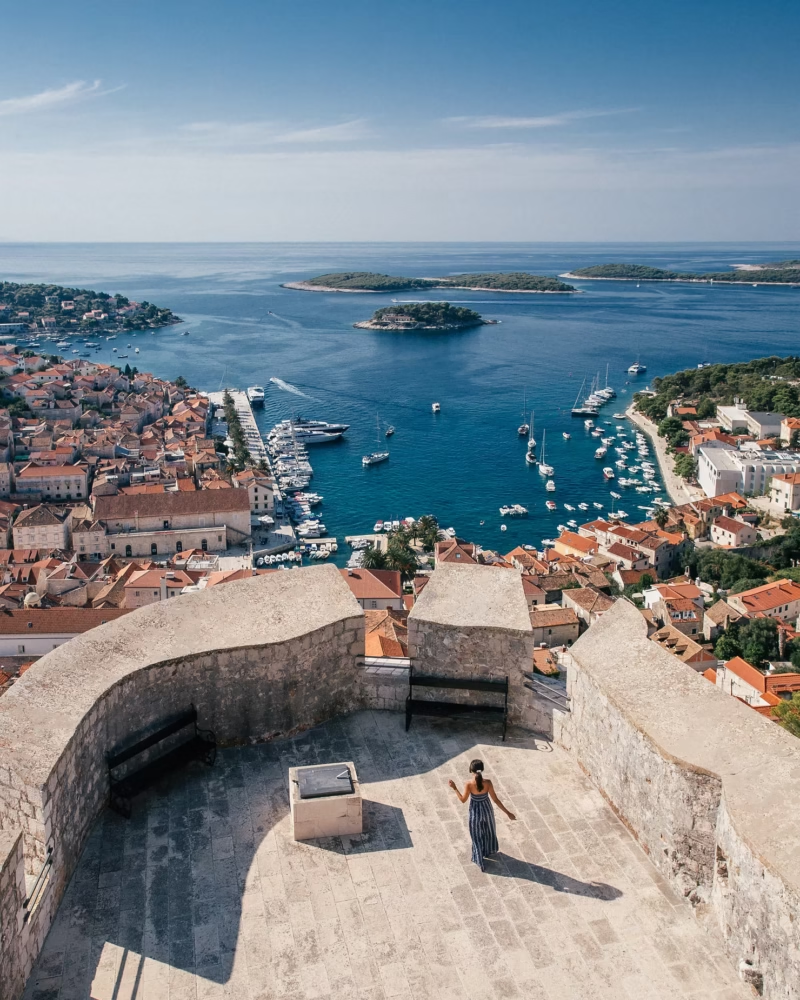
This strategy is delivering results. Investors who come to Hvar are looking for more than just a return on capital. They want to be part of a place that preserves its character and does not bow to the pressure of quick profit. The island has become a kind of filter, allowing through only those who understand the long-term value of quality.
And that’s precisely why every new villa or boutique hotel is an event, not an everyday occurrence. Hvar doesn’t compete on price, because it doesn’t have to.
Edi
redk
Leave a Comment