

Dubai 2026 – real estate market after the boom: selective growth
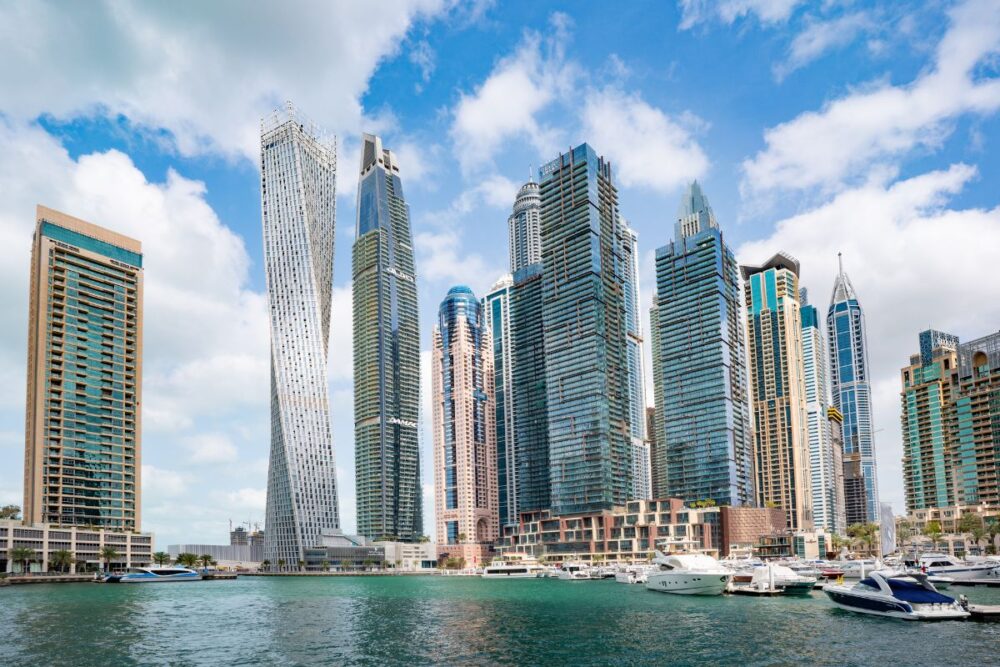
The year 2025 went down in Dubai’s history with a record that until recently seemed unattainable.
Real estate transactions in Dubai surpassed approximately AED 917 billion in 2025, marking a historic peak for the entire emirate.
Why is 2026 a breakthrough year?
So what now? The first half of 2026 brought a clear cooling of the dynamics, but it’s not the crash that skeptics were whispering about. The market is simply maturing. Buyers are becoming more selective, and the speculative frenzy is giving way to demand from end users who are looking for real housing options. Prices are rising more slowly, sometimes not at all, and in some segments they’re simply stabilizing.
This change means one thing: anyone entering the market now must think in terms of fundamentals, not quick flipping. Location, developer quality, real rental potential. The market’s resilience has proven stronger than forecasts, but opportunities must be identified with precision.
In the following sections, you will see specific figures from the first half of 2026, price scenarios for the coming quarters, demand and supply factors, and most importantly, which segments and districts still have potential and which are better to avoid altogether.
Dubai 2026 – real estate market
The first half of 2026 closed with figures that show a slowdown, but still solid activity. Around 79,000-80,000 residential transactions with a total value of ~AED 221 billion. That’s a lot, although clearly less than the record-breaking 2025 (when there were about 195,000 transactions annually).
Transactions and values in H1 2026
A few key indicators from the first half of the year:
- Volume: ~79,000-80,000 residential transactions
- Value: ~AED 221 billion (about PLN 240 billion)
- Structure: off-plan still dominates, with approximately 60-75% market share
- Master projects: high activity, especially in Emirates Hills and Dubai South
Off-plan remains the driving force of the market, which we have been observing for several years now. Developers are launching new investments, and buyers are still eager to choose projects before completion.
Prices
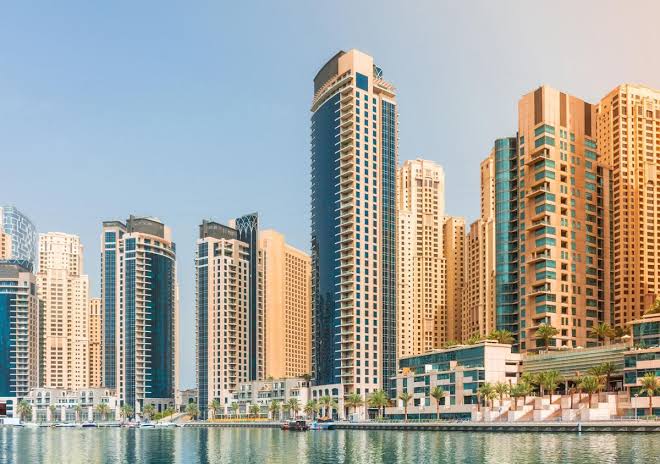
Prices increased year-on-year (y/y) by about 5-9% depending on the segment, but April and May saw slight month-on-month (m/m) declines of around -1-2%. Villas performed better than apartments, which is especially evident in premium locations.
In March, there was temporary volatility related to geopolitical tensions, volumes briefly dropped, but nothing dramatic. The market quickly returned to normal. Overall? Moderate growth with local corrections, nothing more.
Scenarios and forecasts for 2026
The pace after 2024 is clearly slowing down, but most local analysts are quick to calm any panic: a broad crash is not the base scenario. In 2026, the market will already be operating in a distinctly two-speed mode. Villas and mature locations will be in a different world than apartments in areas flooded with new supply.
Baseline scenario
The most common forecast for the entire city is precisely this range. Moderate growth, nothing spectacular. Betterhomes and ValuStrat are fairly consistent on this point. This is a normalization after the boom, not a disaster. Demand is still there (especially from Asia and Europe), but buyers have become more selective. They no longer take anything that moves.
Upside potential
The optimistic scenario assumes that selected premium enclaves and villas could appreciate by as much as +10% annually, and some industry reports mention ranges of +5-17.7% for the villa segment in good locations. If infrastructure continues to develop and expat professionals keep arriving steadily, prime property may hold its value quite strongly. The problem is that these increases will be truly selective, not citywide.
Risks and the cautious option
Fitch in May 2025 warned of possible corrections of 10-15% in 2025-2026, especially for apartments in high-supply zones. This is a real risk. Some extreme banks even estimate around -7% per year in 2026-2028 in their pessimistic scenario. It sounds alarming, but it mainly concerns apartments in oversupplied districts, not the entire market. However, the consensus is clear: this will be a selective correction, not a crash. A two-speed market, exactly.
Supply and demand forces in 2026
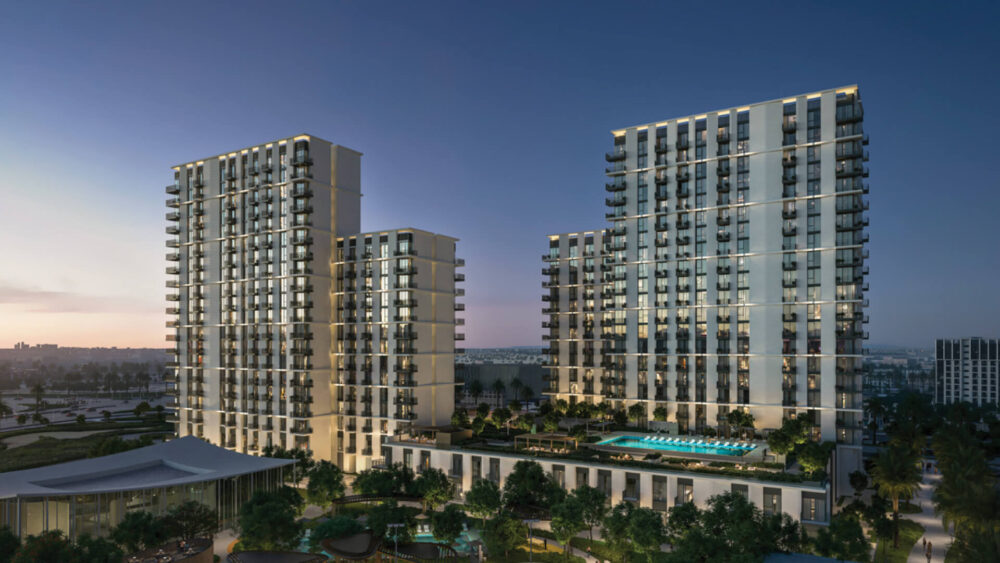
Price numbers don’t come out of nowhere. Behind every scenario, there are specific forces that either push the market forward or hold it back. It’s worth knowing what’s really going on under the hood.
A wave of new deliveries in 2026
Dubai is preparing between 120,000 and even over 131,000 units for this year (according to estimates by Fitch and ValuStrat). The breakdown? Around 80% are apartments, with the rest being villas and townhouses. The largest concentrations are emerging in Business Bay, JVC, Dubai South, and Dubai Hills Estate. The problem is that delivery delays have become the norm. Developers announce dates that are later postponed, so the actual number of keys handed over during the year will likely be lower. This somewhat eases the pressure, but we’re still seeing the highest supply in years.
Demographics and end-user demand
The population of Dubai now hovers around 4.0 to 4.5 million residents and is growing by 2 to 3% annually. Long-term projections indicate 5.8 million by 2040. This growth is driven mainly by long-term visas, the Golden Visa, and a generally business-friendly environment (low taxes, stability). The D33 plan aims to further accelerate economic development, which boosts demand for both residential and office spaces.
Policies and risk factors
The Real Estate Sector Strategy 2033 aims to increase the market value to around 1 trillion dirhams and boost the number of transactions by 70%. It sounds ambitious, but it works: limited new office supply + a strong hospitality sector are maintaining momentum. On the other hand, geopolitics can cause disruptions. In March 2026, transaction volume temporarily dropped (Reuters confirmed this), although capital did not flee. Segments with excessive supply (mainly more affordable apartments) remain sensitive to further shocks.
Segments and locations 2026
The market is clearly splitting into two speeds. Villas and premium communities are holding up better than average apartments in areas where supply is growing faster than the number of prospective tenants.
Villas and premium communities
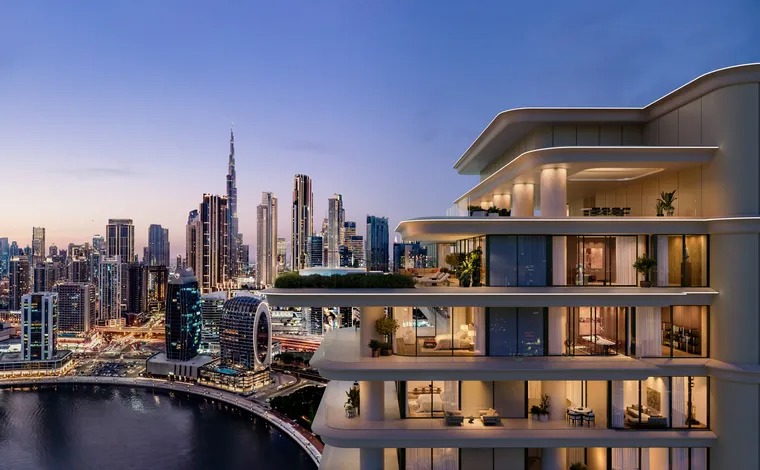
Dubai Hills, Palm Jumeirah, Emirates Hills. These names come up when discussing relative resilience. Why? Limited supply of quality land and stable demand from families and HNW clients. Villas in established communities do not compete with hundreds of new apartments, as this is a completely different buyer segment. Yields tend to be lower (often 4-6%), but prices remain stable.
Areas with high housing supply
JVC, parts of Dubai South, sections of IMPZ. Here, off-plan dominates, and phased deliveries mean a constant influx of new units. Competition for tenants is increasing, and rental rates may soften. This does not spell disaster, but you should expect greater price pressure and longer vacancy periods, especially with average-quality finishes.
| Segment | Typical features | Immunity 2026 |
|---|---|---|
| Premium villas | Limited land, HNW/family demand | High |
| New apartment supply | Off-plan dominance, phased deliveries | Moderate/low |
| Central entrenched | Variation depends on the project | Medium-high |
Project quality and the role of the developer
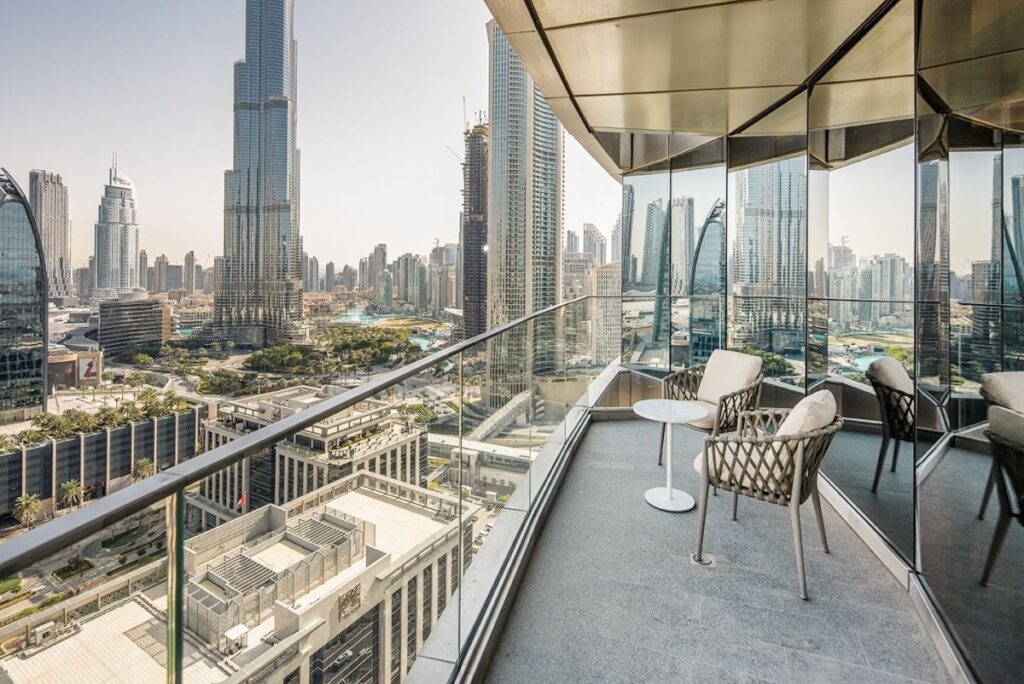
Downtown Dubai, Dubai Marina, Business Bay. Established infrastructure does not guarantee success automatically. What matters is the specific project and developer. Emaar, DAMAC, Nakheel, Sobha, Meraas, Ellington outperform smaller players like Aziz and Danube or Binghatti, who often target the budget segment. Rental yields in prime locations range from 5-8%+, but the quality of finishing and the reputation of the building management make a real difference in practice.
Selective immunity market
Dubai in 2026 will be neither a disaster nor a continuation of the frenzy of recent years. The market is entering a phase that simply requires more insightful thinking. Developers are focusing on premium locations and projects with real added value, while investors are learning to distinguish information noise from genuine market signals. Every transaction now requires more homework than ever before.
Actually, this is good news for those who take real estate seriously. The speculative market has dried up; what remains is the real market. Prices in prime locations remain strong, mid-quality projects have to negotiate, and everything in between depends on dozens of variables that, just a year ago, hardly mattered.
Simply put: Dubai 2026 rewards preparation and punishes haste. Exactly as a mature market should operate.
Matt C/R/E
real estate editorial team
Luxury Blog


Leave a Comment