

Atelier Vierkant planters – sculpture, nature, and architecture
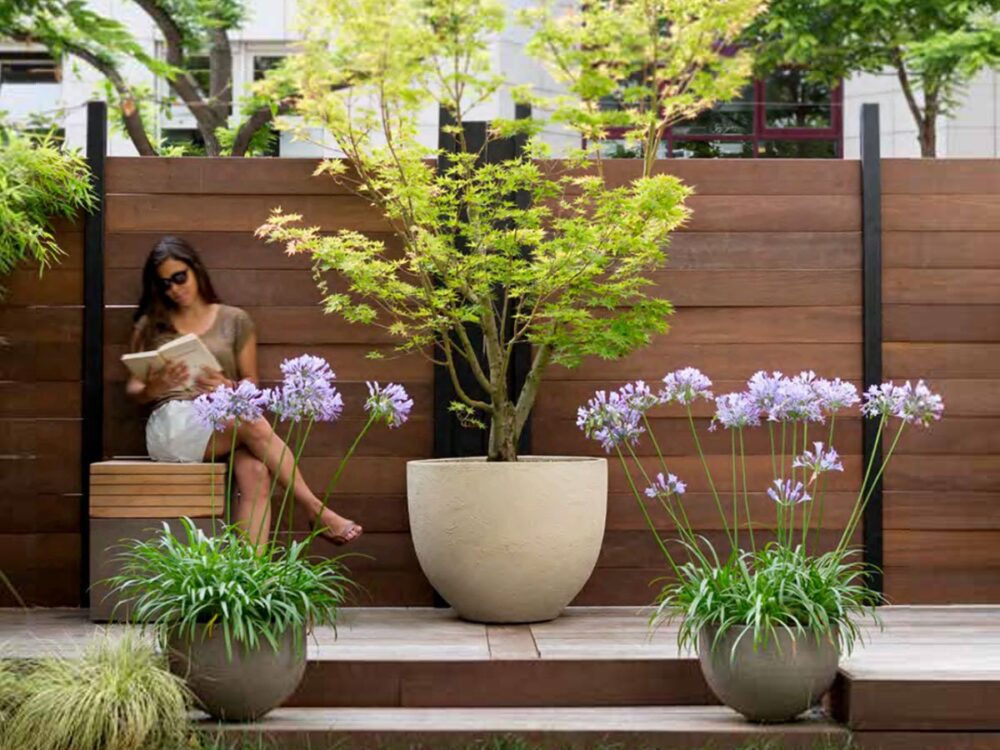
70 tons of clay per week, firing at 1,200°C, and no two pieces look exactly the same. Atelier Vierkant is a Dutch manufactory that has been sculpting ceramic pots and furniture for decades, blending nature with architecture. We’re not talking about standard store-bought pots here, but about objects that would look just as good in a contemporary art gallery.
Each planter is handmade, giving it a unique character. It’s said that even two from the same series differ in the details of their texture, the shade of the clay, or the way light falls on their edges. This is the result of craftsmanship on a scale that still remains untouched by machines.
Atelier Vierkant pots are clay, craftsmanship, and architecture
The brand strongly emphasizes durability and what they call “generational products.” At a time when we talk about sustainable design, this really hits the mark. They recently unveiled their 2024-2026 collections, which will be showcased at, among others, Maison&Objet (15-19.01.2026) and during Milan Design Week (07-13.04.2025).
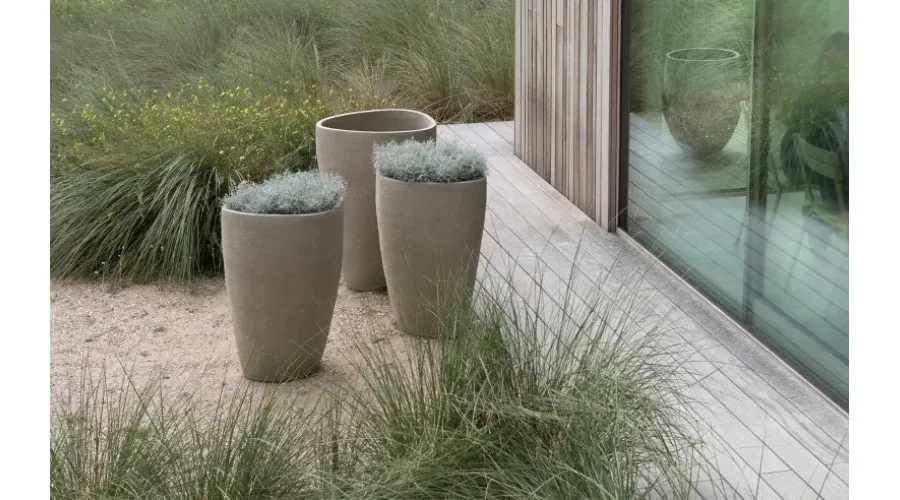
In this article, we will explore the philosophy of the brand and its history, the technical aspects of production and the durability of ceramics, an overview of the collections and their uses, and finally practical matters: budget and availability in Europe. Let’s start from the beginning, that is, how Atelier Vierkant came to be.
History and philosophy: from terracotta frustration (1992) to “The Vasologue”
Willy Janssens had a problem. His house couldn’t tolerate traditional Tuscan pots; they would crack after a few seasons, and the colors looked dull. It was sometime in the early 1990s when he decided to take matters into his own hands and start experimenting with high-temperature clay. Back then, no one talked about pots as sculptures, but he was already thinking differently. Collaboration with Annette Janssens (Lantsoght) marked the beginning of what we now know as Atelier Vierkant, although the first forms were quite modest.
From “Flemish Sewing pot” to a showroom in San Francisco
Early designs, such as the iconic “Flemish Sewing pot”, were still simple, utilitarian shapes. But they quickly began to evolve towards forms inspired by modernism and brutalism. Key points:
- 1992: production begins, five original clay colors
- 2013/2014: opening of the showroom in San Francisco, entry into the US market
- 2023: publication of “The Vasologue” for the 30th anniversary, a summary of three decades
- Today: a network of over 3,000 architects and designers, three production workshops
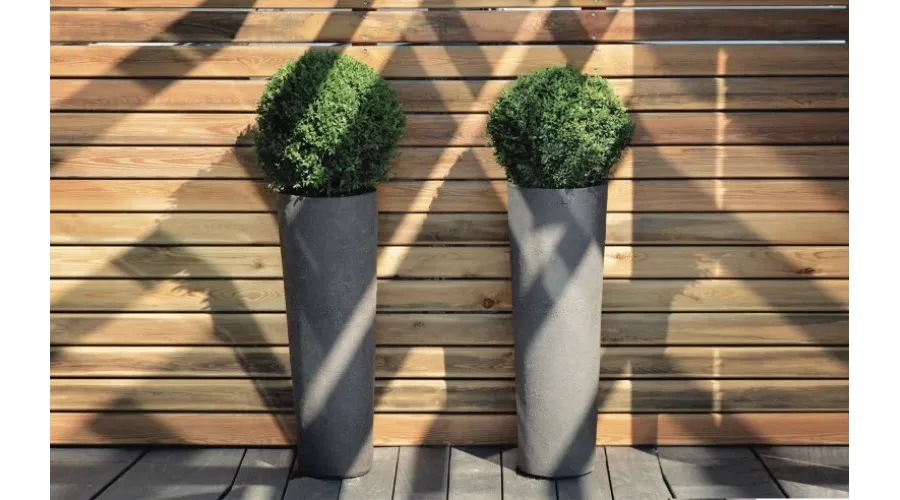
The philosophy of clay: a primal material
Janssens refers to clay as the “universal prime material,” which may sound lofty, but it makes sense. It’s about the continuity between ancient amphorae, Chinese porcelain, and contemporary landscape architecture. Clay bridges eras, and in the hands of Atelier Vierkant, it becomes a medium for low maintenance, biodiversity, and harmony with the surroundings. These are not just pots; they are elements of space. And it is precisely this philosophy, not just technical parameters, that sets the brand apart.
Materials and workmanship: technical specifications, durability, personalization
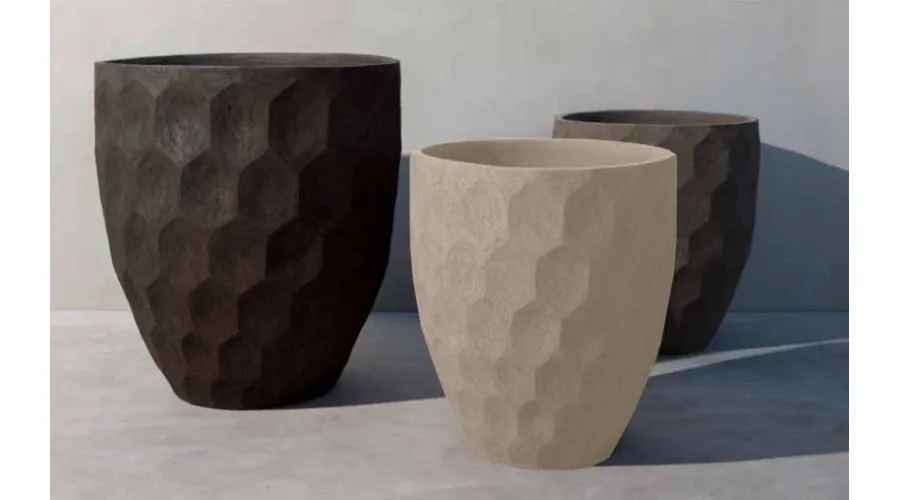
You can have the most beautiful design in the world, but if the material doesn’t withstand the winter or fades after one season, you’ll simply lose your money. Atelier Vierkant knows this perfectly well, which is why they choose Western European clays, often German, that truly endure our conditions. Each planter is a piece of craftsmanship, from shaping to firing.
What are planters made of?
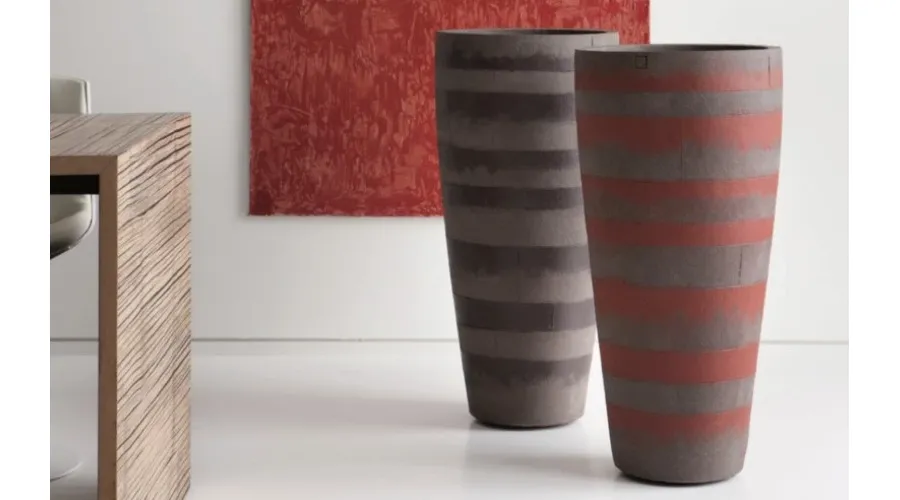
The base is clay colored with metal oxides and engobes, resulting in a natural color palette without artificial coatings. In the catalog, you’ll find 5 to 8 base colors, but if you want something extra, you have 22 engobes to choose from (since 2018). This isn’t paint — it’s the integral color of the material, which doesn’t wear off or fade easily.
How they’re made: from clay to 1,200°C
Here, there’s no mass production. Each piece is shaped or pressed by hand, then air-dried for several days. Next comes texturing, sometimes a drawing, further drying, and finally firing at a temperature of 1,200°C. This high temperature causes the material to vitrify and become frost-resistant. Every pot turns out a little different, with its own unique nuances.
Parameters and personalization options
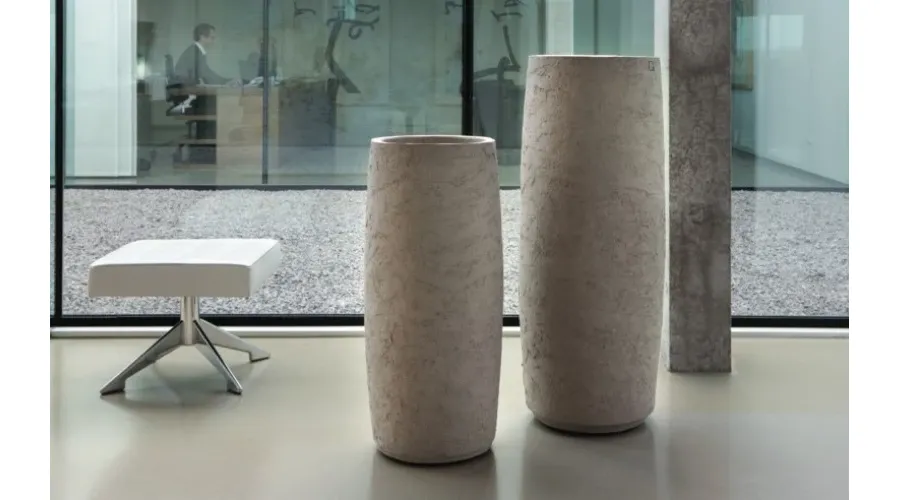
Frost resistance, heat, rain, cold—they withstand it all without any problem. The porous structure allows roots to breathe, so they work well both indoors and outdoors. Customization? Sizes, shapes, 16+ textures, bases, trays. If you’re getting into furniture collections, you can add brass or iroko wood legs to benches.
| Parameter | Value |
|---|---|
| Material | Western European clay, oxides/engobes |
| Firing | 1 200°C |
| Base colors | 5-8 |
| Engobes | 22 (since 2018) |
| Invoices | 16+ |
| Immunity | Frost, heat, external conditions |
| Application | Indoor/outdoor |
| Personalization | Sizes, shapes, finishes, accessories |
When you know the parameters, it’s easier to match the pot to a specific project or garden.
Portfolio and applications: collections 2012-2026 and selection for architecture
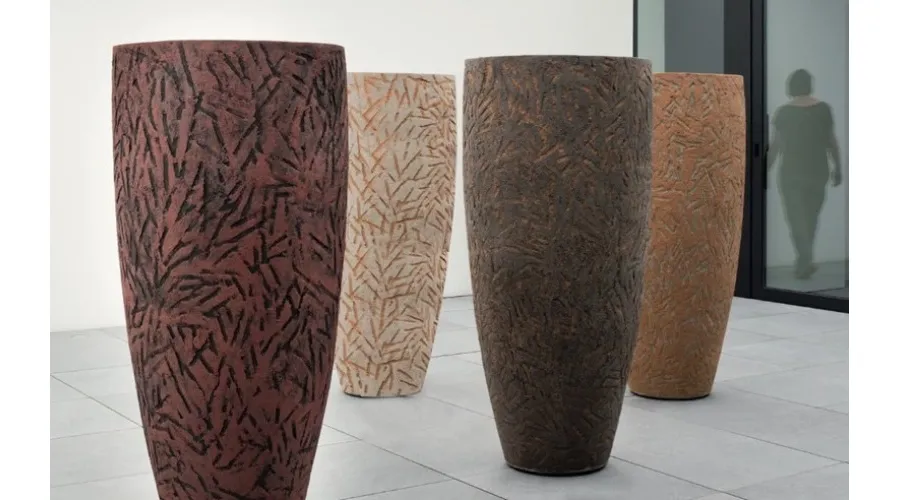
The Atelier Vierkant portfolio has grown rapidly since the first ” pebbles ” (2012) – small, pebble-like forms – to large-scale planters, benches, tables, and furniture elements. In fact, almost every series is a response to a specific designer need: sometimes you need a vase for a lobby, and sometimes a U-shaped seat that divides space in an open office. Clay Table (2022) marks a clear shift towards outdoor furniture.
Collections and forms (2012-2026)
The year 2024 brought five series: Mira, Taalo, Torsa, Cube‑S, and Amphora – each with a different play on proportions, from slender cylinders to sharp edges. In 2025, another six were added: LEDA, KORIL, KALIS, SEMINA, ARON, and IRIS. Some of the forms are quite heavy (for example, the SP50, measuring 45.5 cm in height and 31.5 cm in diameter, weighs around 45 kg), which immediately shows the scale – these are not windowsill pots. At the Maison&Objet fair in Paris (15-19.01.2026), Willy announced a new bench in a brutalist style, so it’s likely to be something heavy and angular.
Where they work best
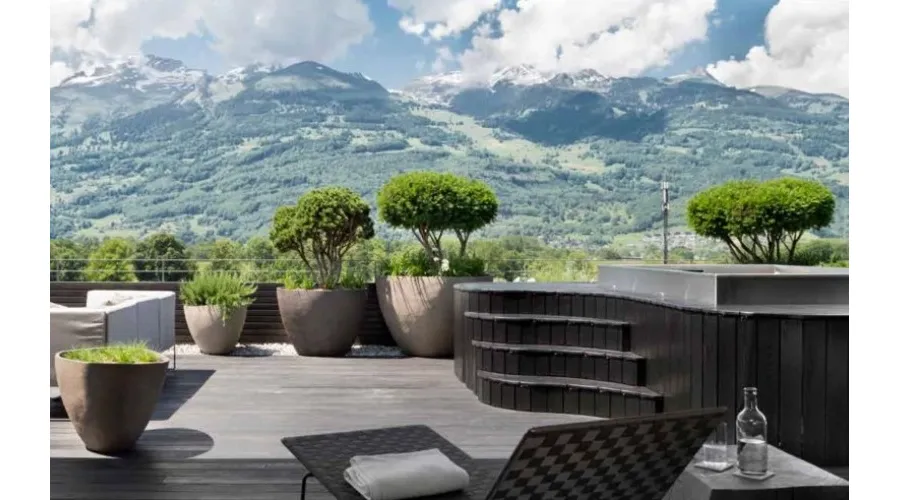
Luxury hotels in Barcelona, Singapore office buildings, villas in southern Europe — that’s where you most often see these planters. Around the world, they appear in city gardens and on prestigious terraces. Museums and galleries also eagerly choose larger forms to arrange their courtyards.
How to choose the size and plants?
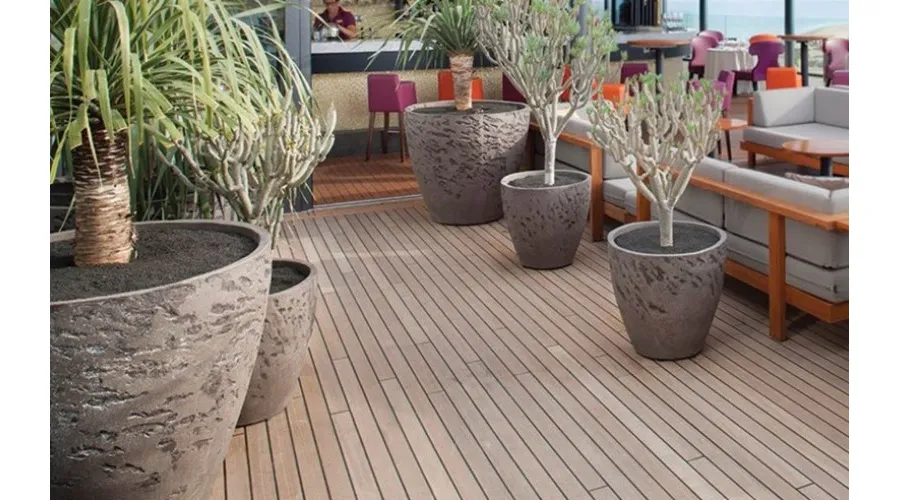
Key principle: proportions relative to the façade and the floor. A small pot next to a tall window looks completely lost. Remember about sight lines and plant species (ornamental grasses, young trees). Willy says directly: Pots provide half the effect; the rest is integration and planting. Otherwise, you just have a big pot, not an arrangement. A good choice of greenery can do the trick, a bad one will ruin everything.
Budget and availability
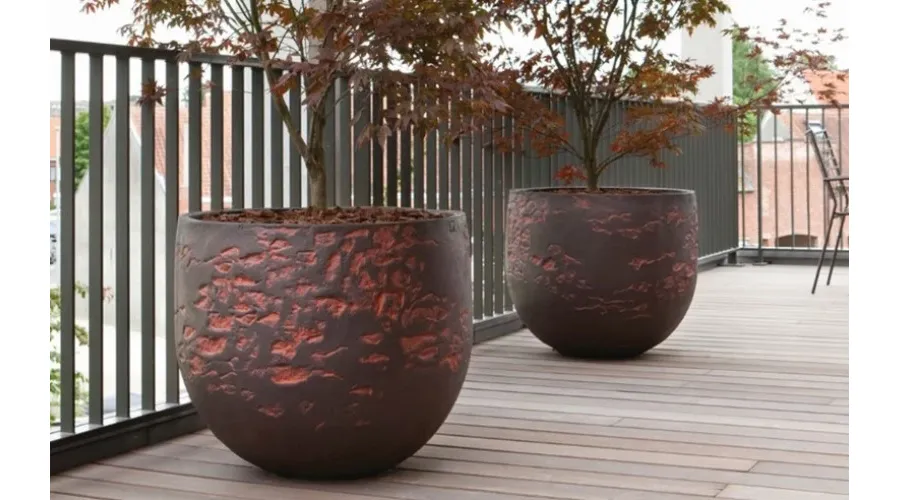
Prices start at around 150 euros for smaller models and go up to 10,000 euros or more for large, complex forms with custom finishes. That’s quite a range, so it all depends on the size, shape, and whether you need special customization. An important perspective: you’re buying something that will last for generations. This isn’t a pot for just one season, but a lasting investment in your space.
Where to buy?
You can find Atelier Vierkant planters online mainly through specialist stores, such as Luxury Products ( www.myluxuryproducts.com )
Delivery and installation: what to remember
Personalization requires specifying all parameters, so it’s better to plan ahead. The weight can be significant ( e.g., the SP50 model weighs around 45 kg), which means you need to consider transport and installation. If you’re ordering several large components, it’s worth discussing logistics with the distributor right away. Most often, they’ll anticipate everything for you, but it’s good to know what you’re getting into.
At the intersection of nature and modernism – why do these planters last for generations?
Atelier Vierkant planters combine what is most difficult to achieve in public spaces: material durability, precision of form, and naturalness in any environment. This is the result of conscious design, where concrete does not dominate but harmonizes with greenery and architecture. Here, craftsmanship meets thoughtful aesthetics, creating elements that age with dignity, gaining character rather than losing it.
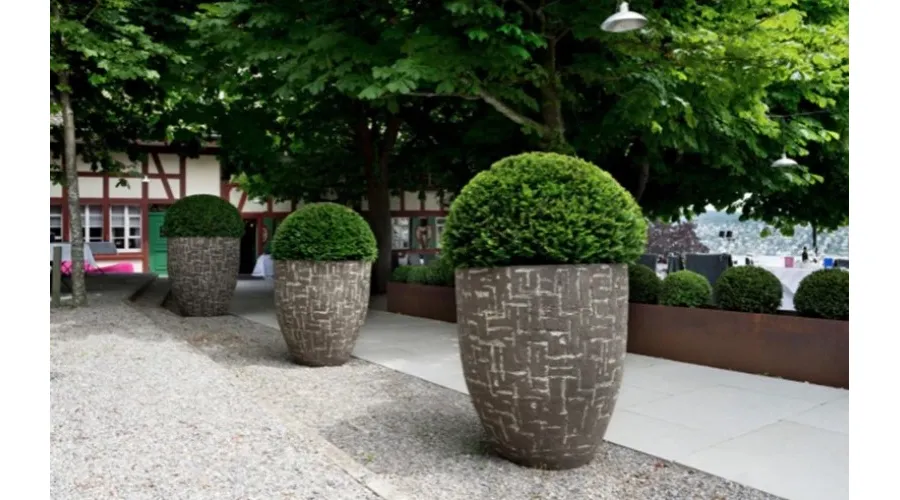
That’s exactly why these forms remain relevant for decades. They don’t follow fleeting trends, but respond to the universal needs of a space. Buildings change, greenery grows, and the planters remain a stable point of the composition.
Ultimately, integration matters, not contrast. When form serves both function and surroundings, something more than just urban furniture is created. An element of the landscape emerges—one that simply fits.
Emmi
lifestyle editorial team
Luxury Blog




Leave a Comment