
The most luxurious ski resorts in France – a guide
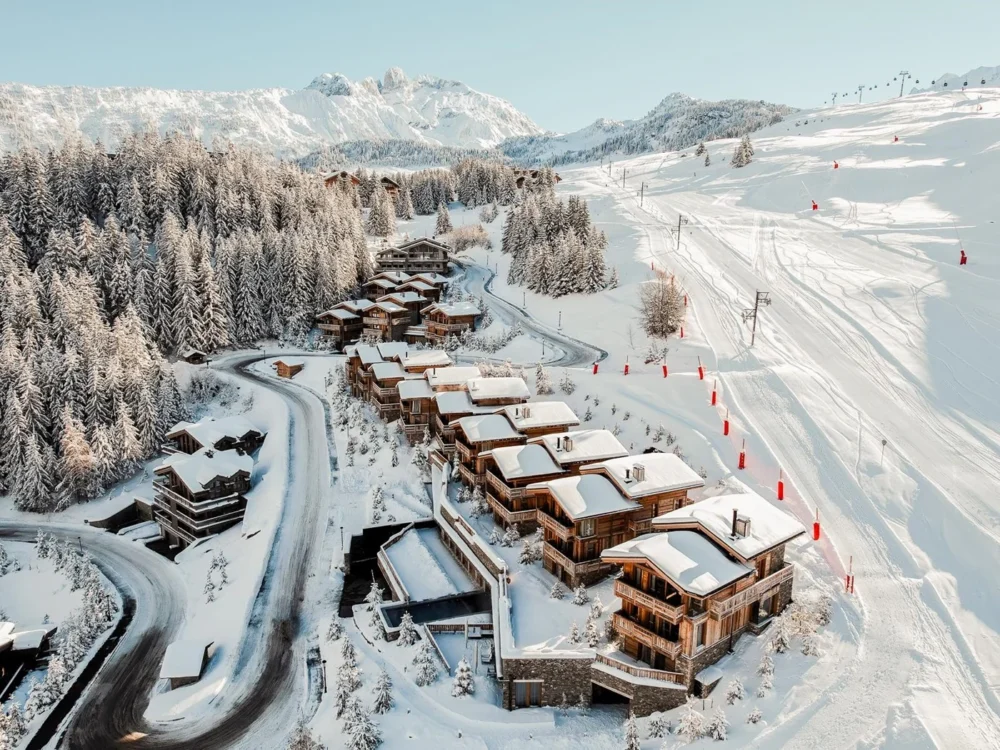
Courchevel 1850 is not just a resort. It’s a place where, within a few hundred meters, you’ll find more Palace and 5★ hotels than in entire mountain regions of other Alpine countries. Trois Vallées, which includes Courchevel, concentrates over one third of all 5★ properties in the French Alps, meaning around 30 top-tier hotels in a single ski area. And it’s this density of luxury that sets France apart.
The French standard of luxury on the slope
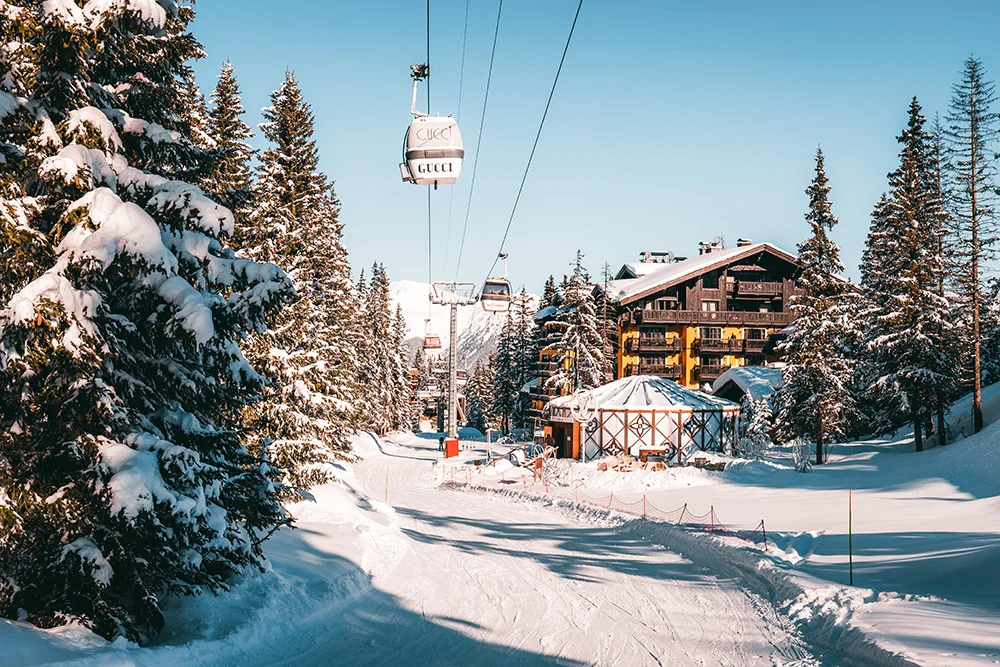
What does “luxury” mean here? It’s not just about hotel stars. It’s an entire ecosystem: ski-in/ski-out (literally from bed to the slope), Michelin-starred tables on every corner, private altiports for helicopters, Hermès and Louis Vuitton boutiques along the promenade. In Courchevel, you can land by helicopter in the morning, have a Michelin-starred lunch at 1:00 p.m., and after an afternoon run, return to your suite at a Palace hotel without ever needing a car.
Recent years have brought a wave of renovations and new openings, especially as the region hosted the 2023 World Championships and is preparing for the 2030 Olympics. In the following sections, you’ll see specific criteria that show what sets truly luxurious resorts apart from those that are simply good.
How to measure luxury at a resort?
You compare resorts and then what? The photos look great, all of them promise luxury. But where do you actually get that level, and where are you mostly paying for the name? Let’s look at measurable things that marketing photos can’t hide.
5★ Hotels and Palaces
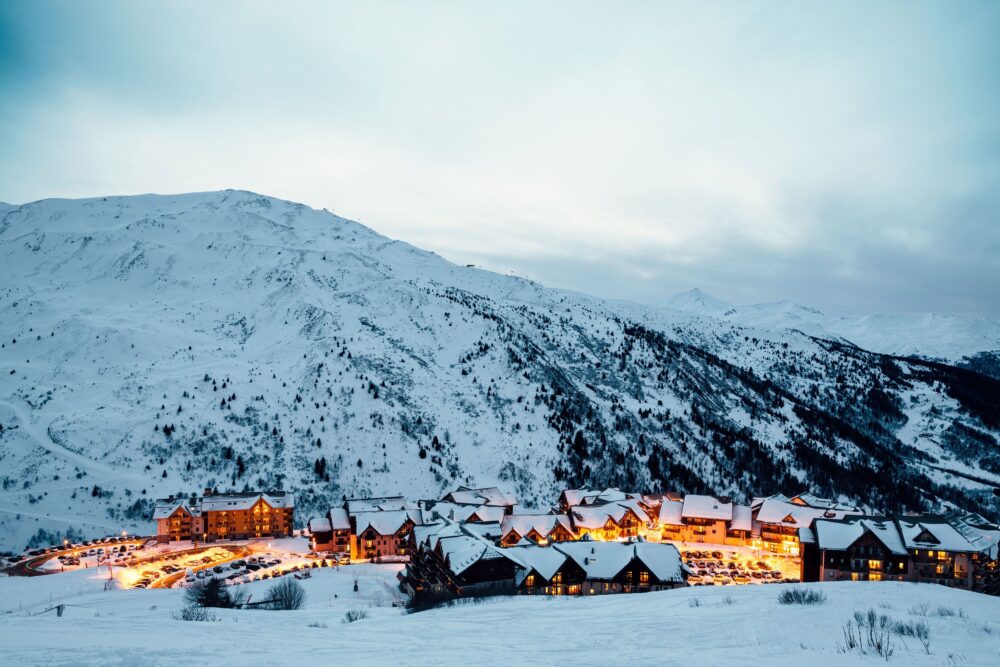
In the French Alps, there are about 70-79 five-star hotels (as of 2026), with Trois Vallées accounting for 34% to over half of that number. That already says a lot. But the “Palace” category (awarded by Atout France above the 5★ standard) is the true pinnacle. Courchevel has the most of them in a single ski resort anywhere in the world. Four Seasons Megève received Palace status in 2026, showing that Megève is vying for a spot on the podium.
Check the density of 5★ per square kilometer. The higher it is, the greater the competition for guests, so standards go up.
Michelin stars and premium services
Gastronomy? Courchevel has around 7 Michelin stars scattered among its mountain restaurants, an absolute record for concentration in resorts. Megève boasts Flocons de Sel (3★ Michelin), so it’s not far behind. Count the stars per thousand permanent residents and you’ll get an absurd number—but in the best possible way.
Other ultra-luxe indicators:
- altiport (airstrip, e.g., Courchevel has its own)
- helicopter transfers as a standard option
- drivers available at the resort (not just from the airport)
- designer boutiques: Hermès, Louis Vuitton in the town
- ski-in/ski-out at the hotel (in this segment, it’s a minimum requirement, not a bonus)
- spa over 1000 m² with Valmont or La Prairie treatment rooms
Compare the numbers, not the promises. Then you’ll see which resort truly plays in the top league and which one is just pretending.
The most luxurious ski resorts in France
French luxury is not a single formula. Each of the top resorts creates its own atmosphere, ranging from ostentatious elegance to discreet alpine prestige.
Courchevel 1850
This is the epicenter. Around 24-25 five-star hotels, including several Palaces: Cheval Blanc, Les Airelles, L’Apogée, K2. About 7 Michelin stars scattered among the restaurants. Altiport receives helicopters and private jets, and haute couture boutiques line the promenade. If you’re looking for a place where luxury is meant to be displayed, not hidden, Courchevel delivers it in spades.
Megève and Val d’Isère
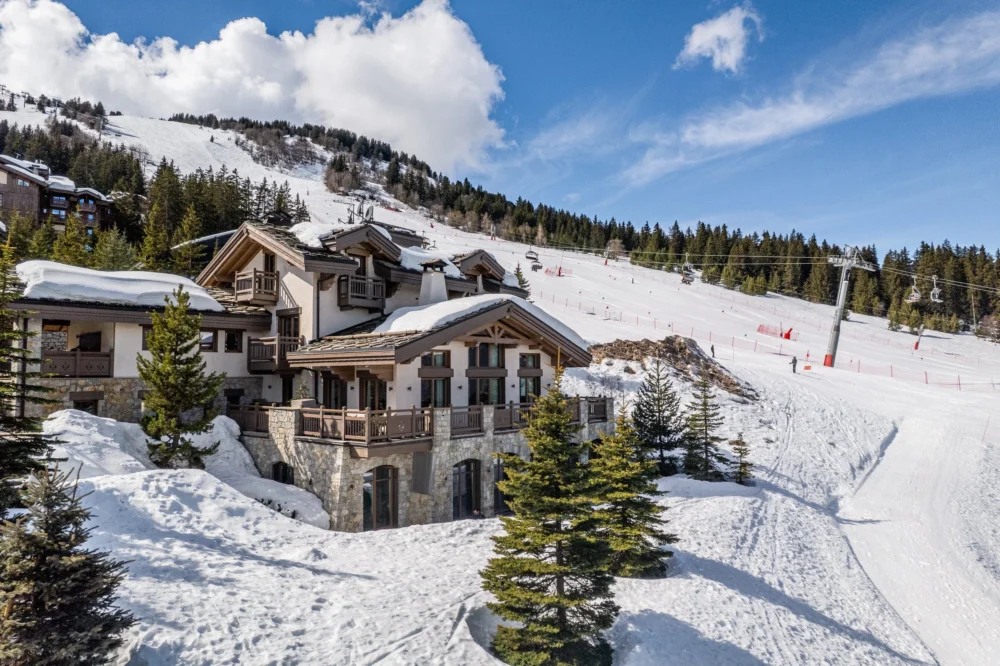
Megève breathes the tradition of the Rothschilds and old money. Around 10-14 five-star hotels, including Four Seasons Megève, which will have Palace status from 2026. Flocons de Sel holds 3 Michelin stars. The atmosphere is family-friendly, intimate, and unpretentious.
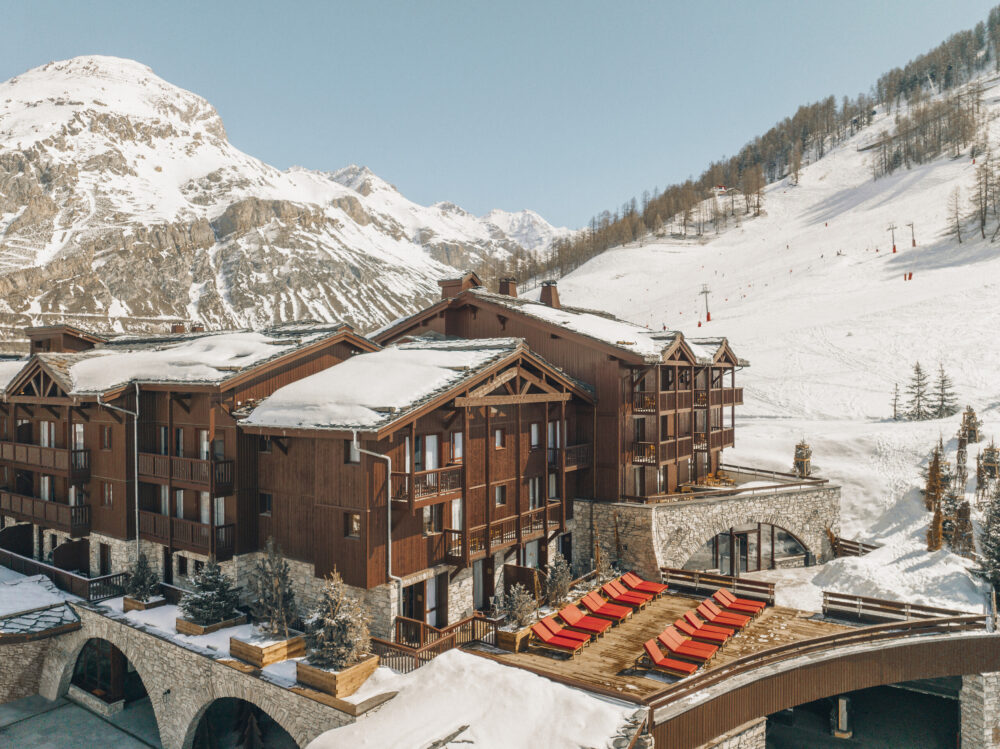
Val d’Isère, on the other hand, combines hardcore skiing ( Espace Killy offers around 300 km of slopes, with a glacier guaranteeing snow) with modern luxury. Hotels like Airelles Val d’Isère provide top-notch standards, but the atmosphere remains more sporty than lounge-like.
Méribel and Chamonix
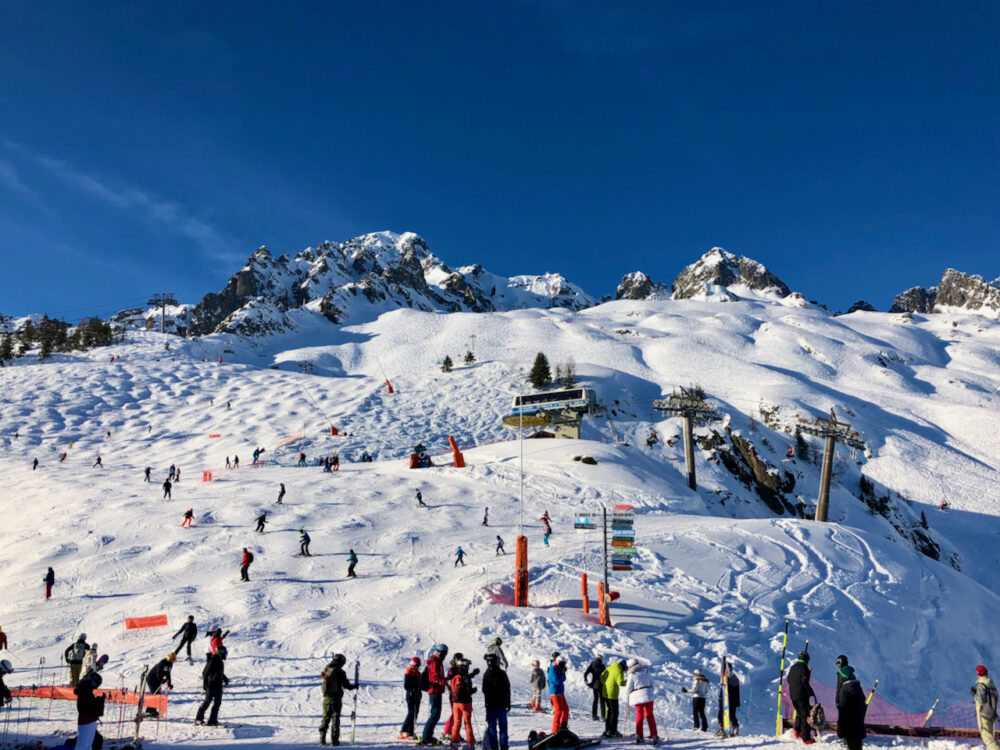
Méribel is the heart of Trois Vallées, with Savoyard architecture, chalets over hotels, and an atmosphere of classy family relaxation. Chamonix, on the other hand, is the heritage of mountaineering at the foot of Mont Blanc. The grand hotel tradition blends here with modern design, and the destination operates year-round. The choice depends on whether you prefer an evening by the fireplace with your children or a view of the Aiguille du Midi before your adventure.
From the Rothschilds to palaces
Luxury on the French slopes did not appear overnight. It is the result of nearly a century of evolution, from the visions of aristocrats to today’s Palace-category hotels. Each of the great resorts has its own origin story, and most of them are the result of specific plans by specific people.
Megève and the birth of French elegance
It all began with Baroness Noémie de Rothschild, who disliked the German atmosphere of St. Moritz. In 1921, she opened the ” Hôtel du Mont d’Arbois ” in Megève and created an alternative: luxury in the style of an alpine village, without concrete blocks. Megève has retained this charm to this day, even though hundreds of guesthouses and roads full of SUVs have sprung up around it.
Méribel and Courchevel
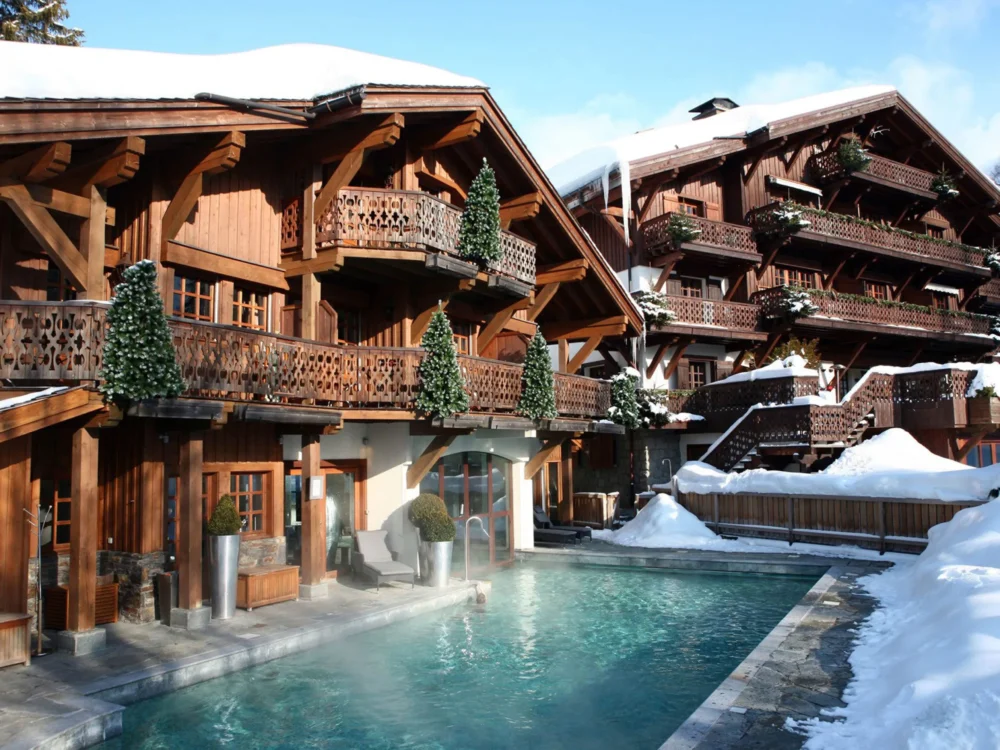
In 1938, Colonel Peter Lindsay founded Méribel, imposing strict architectural rules (Savoyarde style, wood, stone). The war interrupted development, but after 1945, work resumed. At the same time, Laurent Chappis and Maurice Michaud were planning Courchevel, designing the resort on an empty plot of land in Tovets. In 1959, Sno-Cats were introduced there, in 1961 an altiport was built, and Émile Allais created a snow legend. The resort was originally intended to be “for the masses,” but it quickly became clear that with such infrastructure, it mainly attracted the wealthy.
The era of palaces and grand events
In 1973, the Trois Vallées connections (the largest ski area in the world) were completed. The 1992 Albertville Olympics brought global attention, but the real boom began after 2009, when a wave of 5★ hotels emerged. Since 2011, official “Palace” statuses have been awarded. The 2023 World Championships in Courchevel/Méribel and the upcoming 2030 Olympics only confirm this direction.
Premium stay planning
Translating luxury into a concrete plan comes down to a few key decisions: where you’ll lay your head, how you’ll get there, and when you’ll leave. Here, everything has its price, but also its own standard.
Where to sleep?
There are several options, depending on the style:
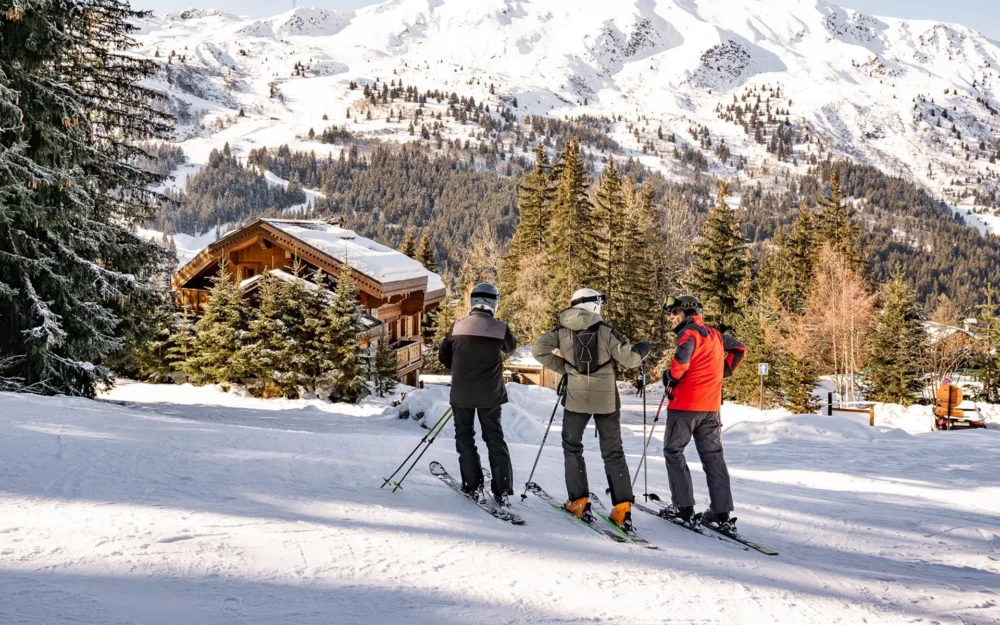
- Palace and 5★ Hotels – Cheval Blanc Courchevel, Les Airelles Val d’Isère, K2 in Courchevel, or Four Seasons Megève (Palace status from 2026). Ski-in/ski-out, private spa, drivers and chefs on request.
- Chalets with staff – entire residences with service: chef, butler, driver. Often more exclusive than a hotel, because you have the space all to yourself.
- Premium residences – serviced apartments in a hotel style, but with greater privacy.
Prices? Chalets during peak season range from €10,000 to €100,000+ per week. And the real estate market? Courchevel 1850 is around €14,000/m², with top chalets selling for €30 million+. This shows what kind of level we’re talking about.
Access
Most guests fly to Geneva or Chambéry, from there a heli-transfer ( the standard in the ultra-luxe segment) or limousine. Courchevel has an altiport, a landing site for small planes and helicopters, so you can literally land at the foot of the slope.
Season and budget
The season usually lasts from early December to the end of April. The glaciers in Tignes and Val d’Isère extend skiing even into the summer. Price peak? Christmas, New Year, and the February school holidays. That’s when prices soar and availability drops. If you can be flexible, January (after New Year) or March offer better deals with similar snow quality.
Splendor and sustainability
The truth is that today a luxury resort is no longer just about jacuzzis and Michelin stars. It’s about how much water you use for artificial snow and what you leave behind for local communities. The debates are gaining momentum, especially after the 2023 World Championships, when the impact of snowmaking on water resources was brought to light. Higher-altitude resorts (above 1800 m) have a natural advantage, but even there, modernization investments must be balanced with environmental protection.
On the other hand, you have real social problems:
- Apartment prices exclude local workers
- “Lits froids” (empty investment apartments) take space away from permanent residents
- Seasonality means job insecurity for half the year
New paradigm
The future? The 4-season model. Golf, hiking, and wellness are gaining momentum in the summer, as resorts realize that 12 months of operation generate more stable revenue than 4 months of frenzy. Add to that the automation of lifts, recycling, and biodiversity offsets. The 2030 Olympics in the Courchevel/Méribel region are expected to accelerate these changes, though they also raise the question of whether prestige will outweigh sustainability.
Luxury will endure if it finds balance. Otherwise, it will remain merely splendor without a future.
Close the loop of mountain luxury
French ski resorts create a world that balances exclusivity with the authentic character of the mountains. It’s precisely this balance, whether you’re in Courchevel or Val d’Isère, that makes the experience go beyond ordinary luxury. It’s not just about where you stay, but about the entire atmosphere of a place that can satisfy both the need for comfort and genuine Alpine thrills.
Choosing the right resort is a matter of personal priorities. Some seek tranquility in St. Moritz, while others look for energy in Méribel. The truth is, each of these places has something unique to offer, as long as you know what you’re truly looking for.
In the mountains, luxury takes on a whole new meaning.
Robby /


Leave a Comment