

The most famous diamond jewelry brands – icons and the 2026 market
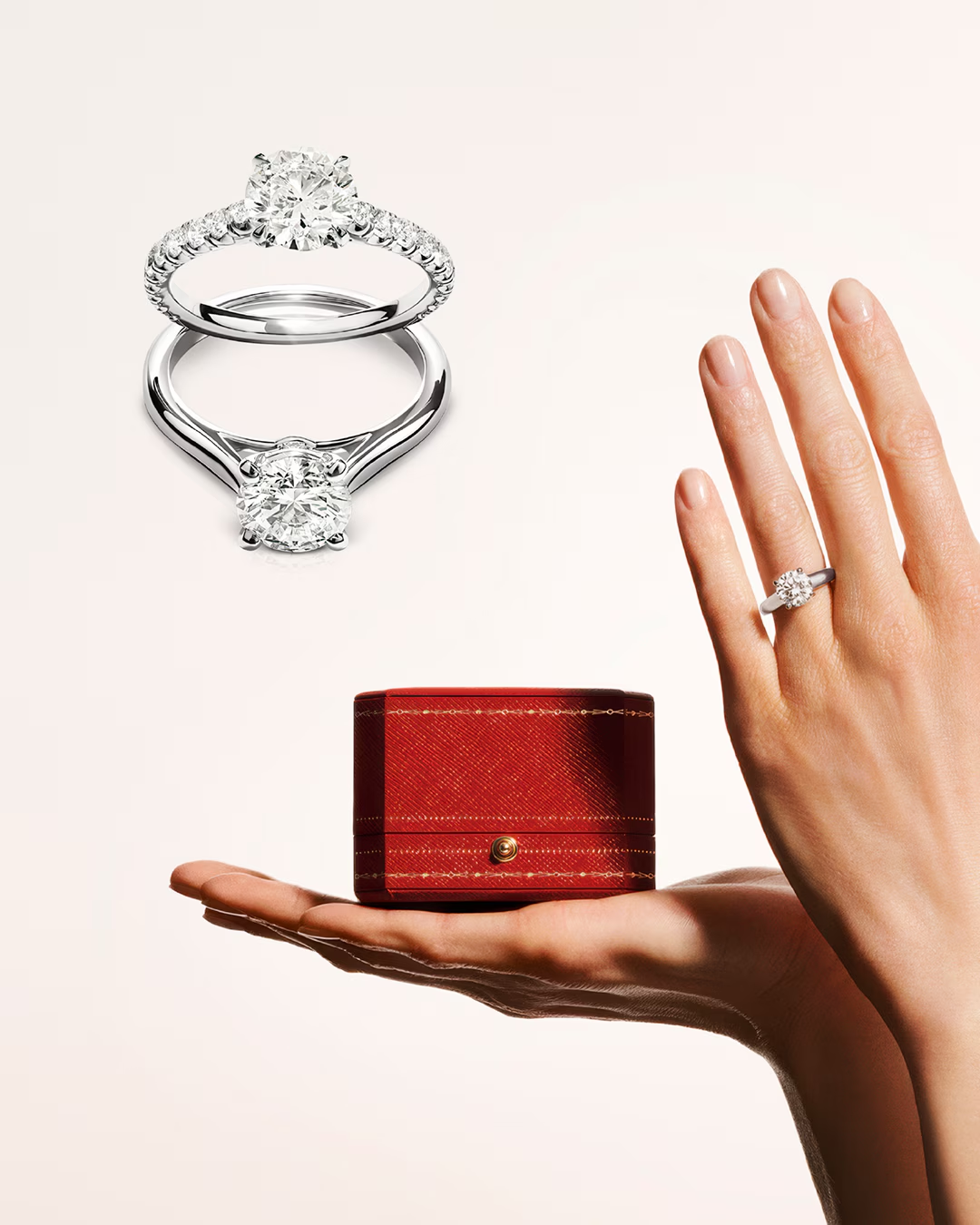
The global diamond jewelry market reached a value of approximately USD 44.1 billion in 2026, with forecasts indicating growth to USD 53.2 billion by 2033. These are impressive figures, but the prestige of icons like Cartier, Tiffany, or Van Cleef & Arpels is measured in more than just revenue. These names define what we call “high jewelry,” the highest level of jewelry craftsmanship.
Houses from Place Vendôme in Paris or from New York create collections that appear on red carpets and at Christie’s or Sotheby’s auctions. In the following part of the article, we will review the profiles of legendary brands, their breakthrough moments in history, understand the 4C standards and types of settings, and also examine what the market and ethics of gemstones look like in 2026. No slogans, just facts.
Houses that defined diamond luxury
In the world of high jewelry, a handful of houses have been setting the standards of luxury and quality for decades. Their creations grace red carpets, royal collections, and auctions at Christie’s or Sotheby’s, fetching staggering prices.
Icons and signature collections
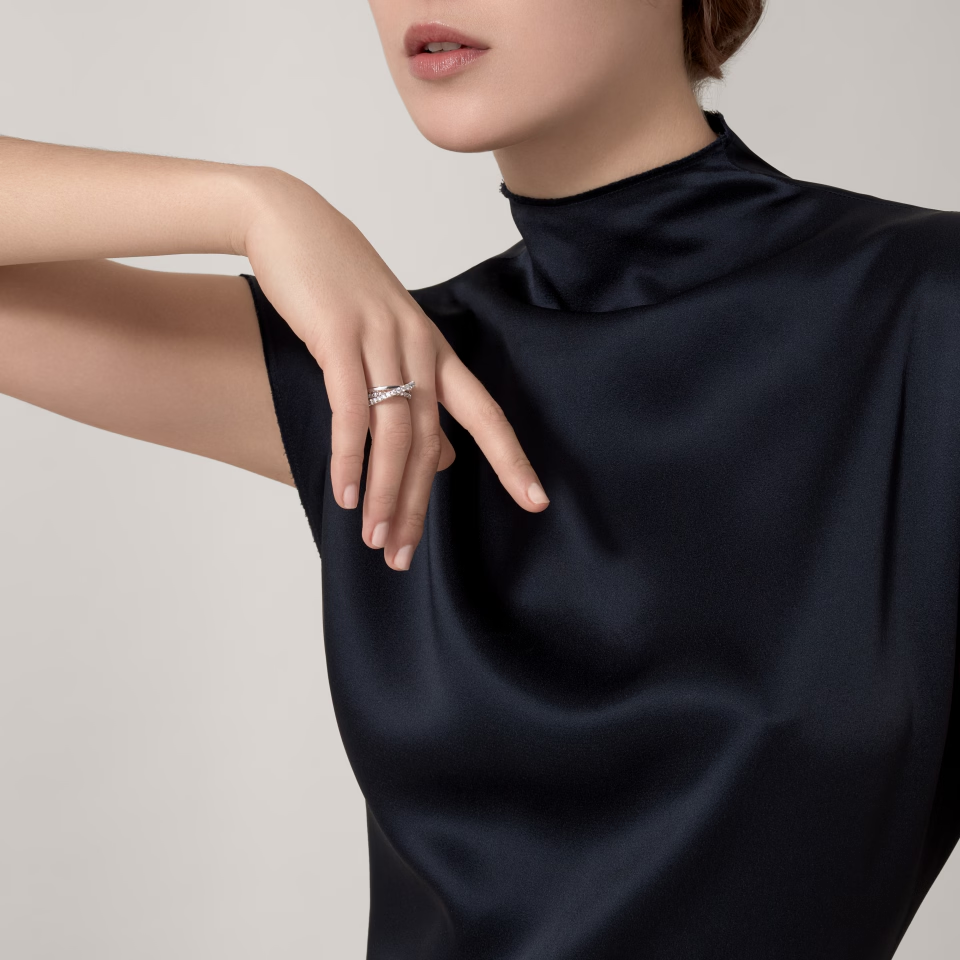
- Cartier – “jewelers of kings” known for the Panthère collection (the panther as a symbol), Love (famous bracelets with screws), Juste un Clou (nails as jewelry), and Trinity (three interlinked rings)
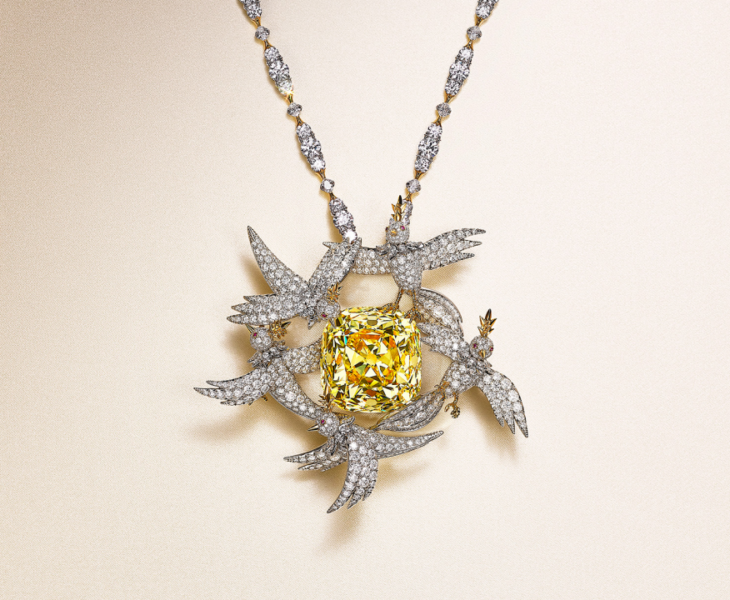
- Tiffany & Co. – since 1886, they have defined engagement ring classics with the Tiffany Setting (the distinctive raised diamond), and the legendary Tiffany Yellow Diamond (128.54 ct) remains a symbol of the brand
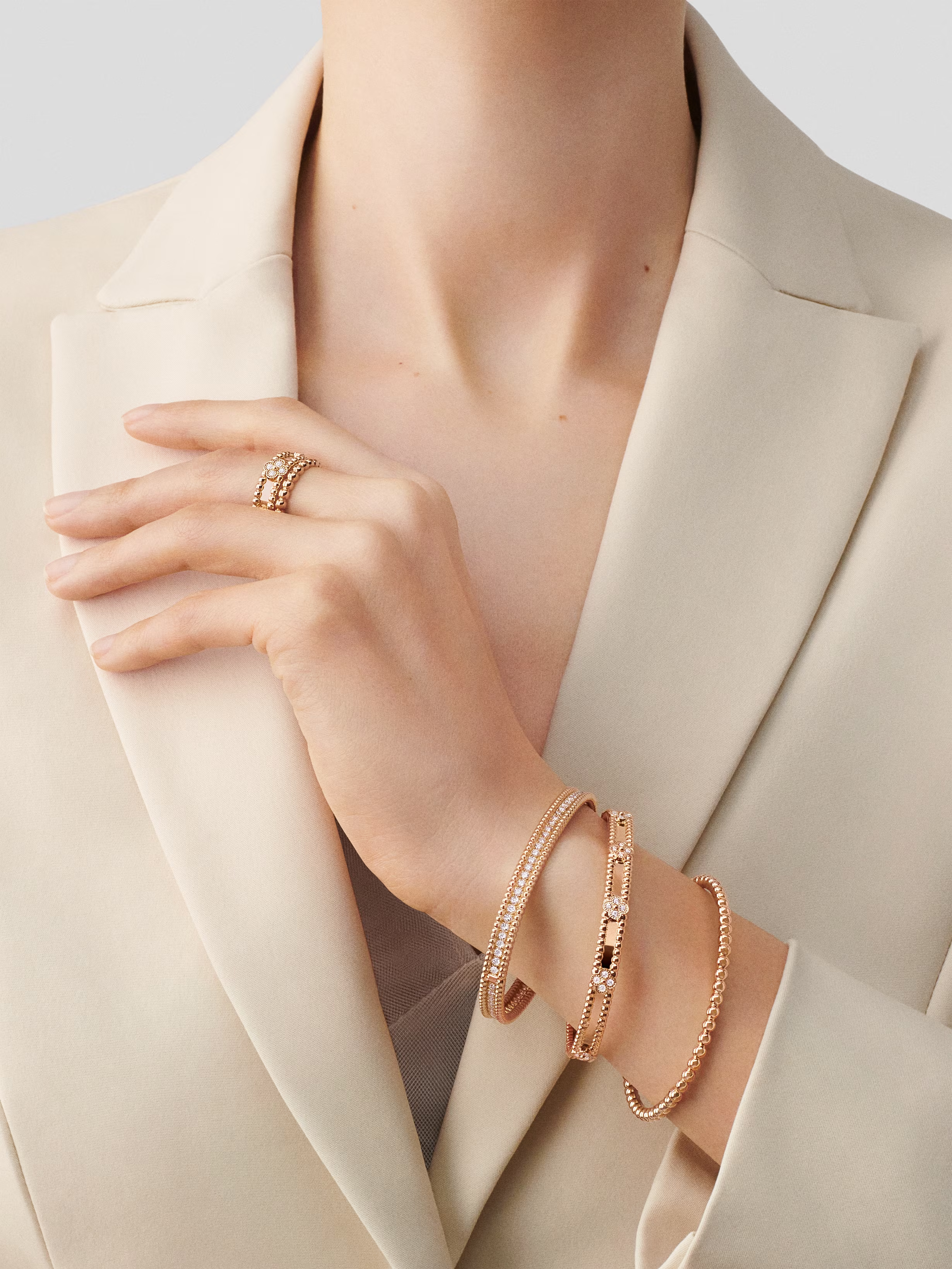
- Van Cleef & Arpels – known for Alhambra (four-leaf clovers) and the mysterious Mystery Set technique, where stones are set without visible settings
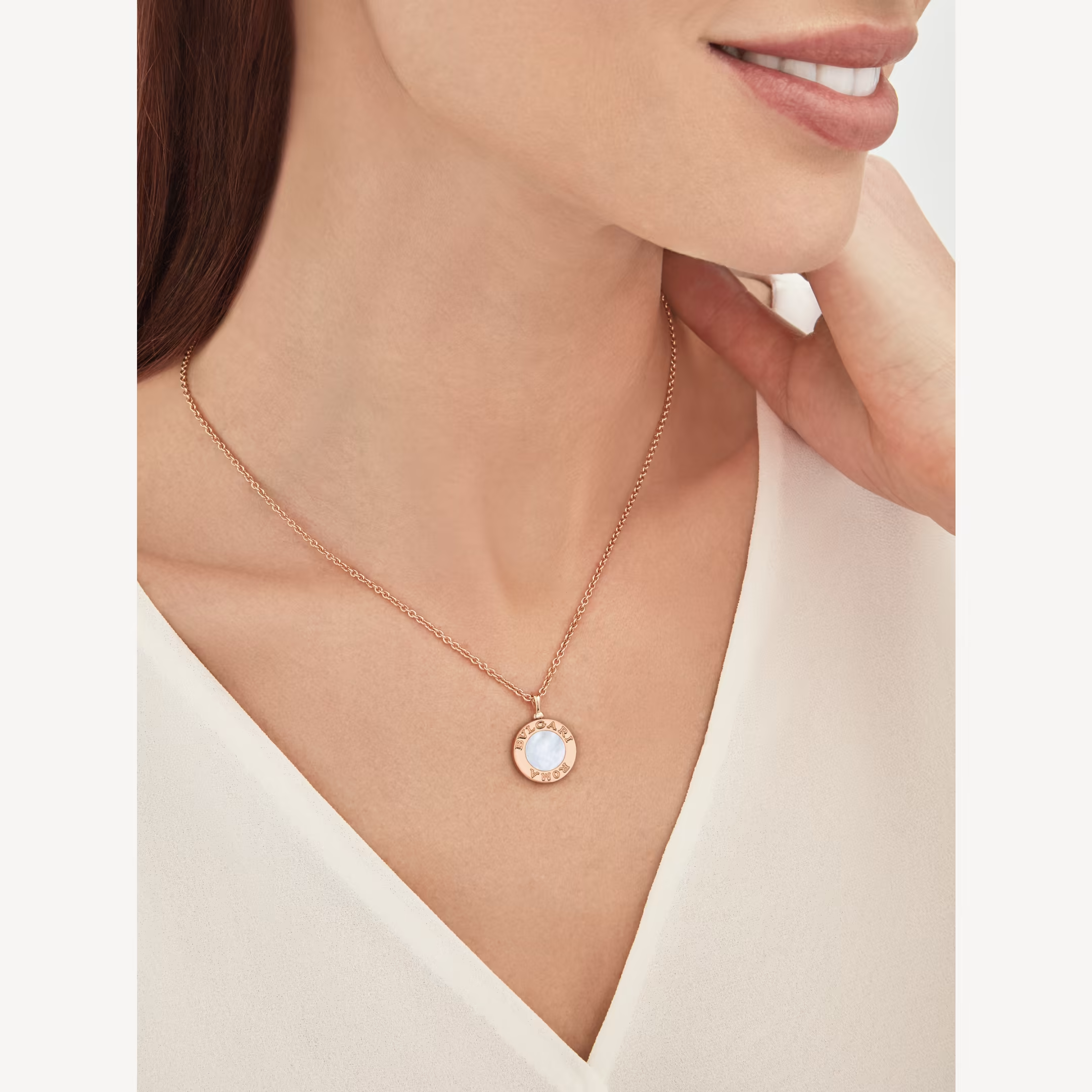
- Bulgari (Bvlgari) – the Italian style is above all about Serpenti (snakes) and the Tubogas technique
- Harry Winston – “the king of diamonds,” a pioneer of the cluster setting (compact stone compositions without dominant metal)
- Graff – specialization in extremely large stones, owners of Lesedi La Rona (302.37 ct emerald cut D-color), full vertical integration from mine to boutique
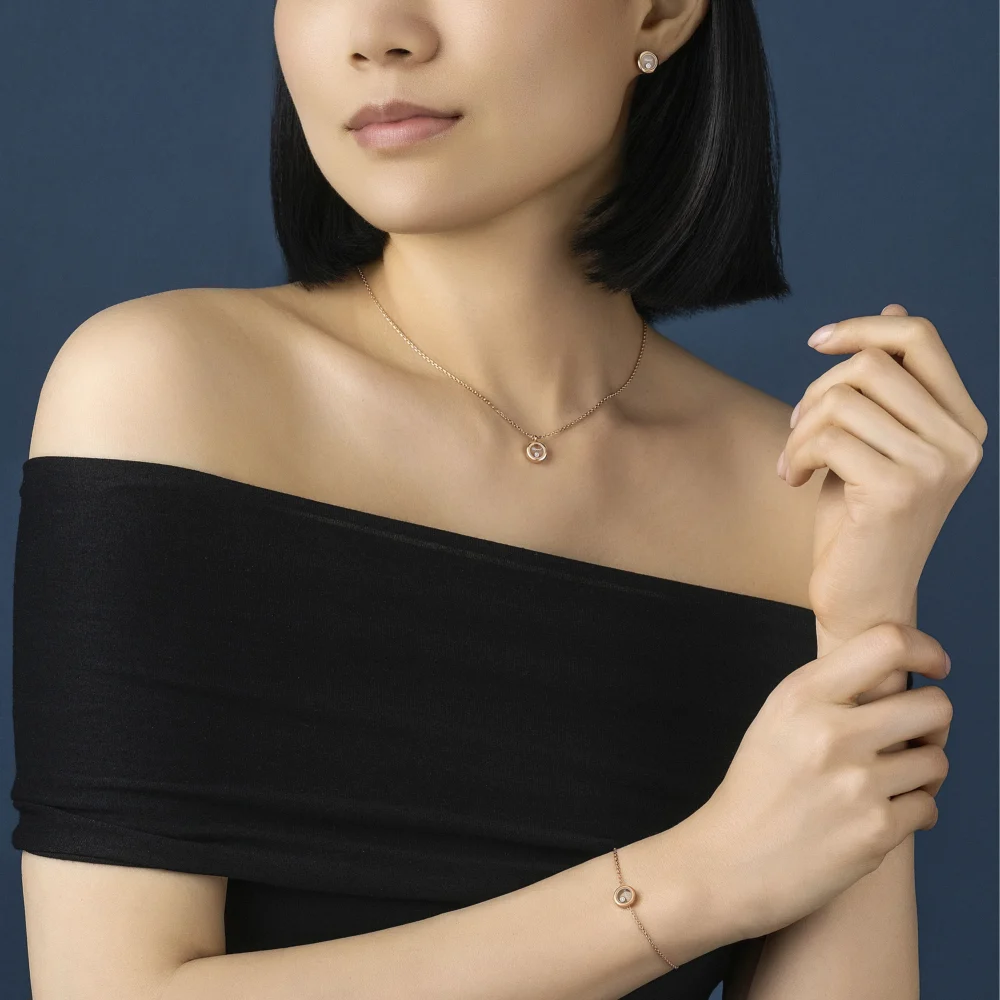
- Chopard – renowned for Happy Diamonds (freely moving stones under sapphire glass)
- Boucheron – Serpent Bohème and the legacy of Place Vendôme
- Chaumet – Parisian tradition and historic ties with the Bonaparte family
Who is behind them?
Most belong to powerful groups: Richemont controls Cartier, Van Cleef & Arpels, and Buccellati; LVMH owns Tiffany, Bulgari, and Chaumet; Kering manages Boucheron. Graff and Chopard remain independent family businesses, which is a rarity in today’s consolidated market.
The presence of these names in your jewelry box guarantees not only prestige but also stable resale value. These houses define what diamond luxury truly is.
From crown jewels to icons
The history of diamond jewelry is really a series of technical and artistic leaps that have changed the way we wear diamonds. It all began in 1837, when Charles Lewis Tiffany opened a store in New York and brought luxury into American everyday life. In 1878, Tiffany cut the Tiffany Yellow Diamond to 128.54 c t, showing the world that colored diamonds can be just as prestigious as white ones.
The technical breakthrough came in 1933, when Van Cleef & Arpels patented the Mystery Set, a method of setting stones without visible prongs. This changed the aesthetics of haute joaillerie forever. Then came 1948 and the birth of Bulgari Serpenti, which showed that jewelry could be sculpture. In 1951, Van Cleef created the Zip Necklace, which can be unzipped and reshaped—an innovation ahead of its time.
A pop culture moment? 1958, when Harry Winston donated the Hope Diamond to the Smithsonian and turned the gemstone into a media star. A decade later, in 1968, the Alhambra was created, the iconic four-leaf clover motif. In 1976, Chopard launched Happy Diamonds, movable stones between crystals—a playful twist in the world of rigid classics.
The latest milestone is 2015/2019, when Graff cut the Lesedi La Rona from a 1,109 ct rough into a 302.37 ct D-color emerald cut. The largest modern diamond in the purest category. This ongoing innovation today leads to transformable, bold designs that combine tradition with 21st-century technology.
Craftsmanship and technique
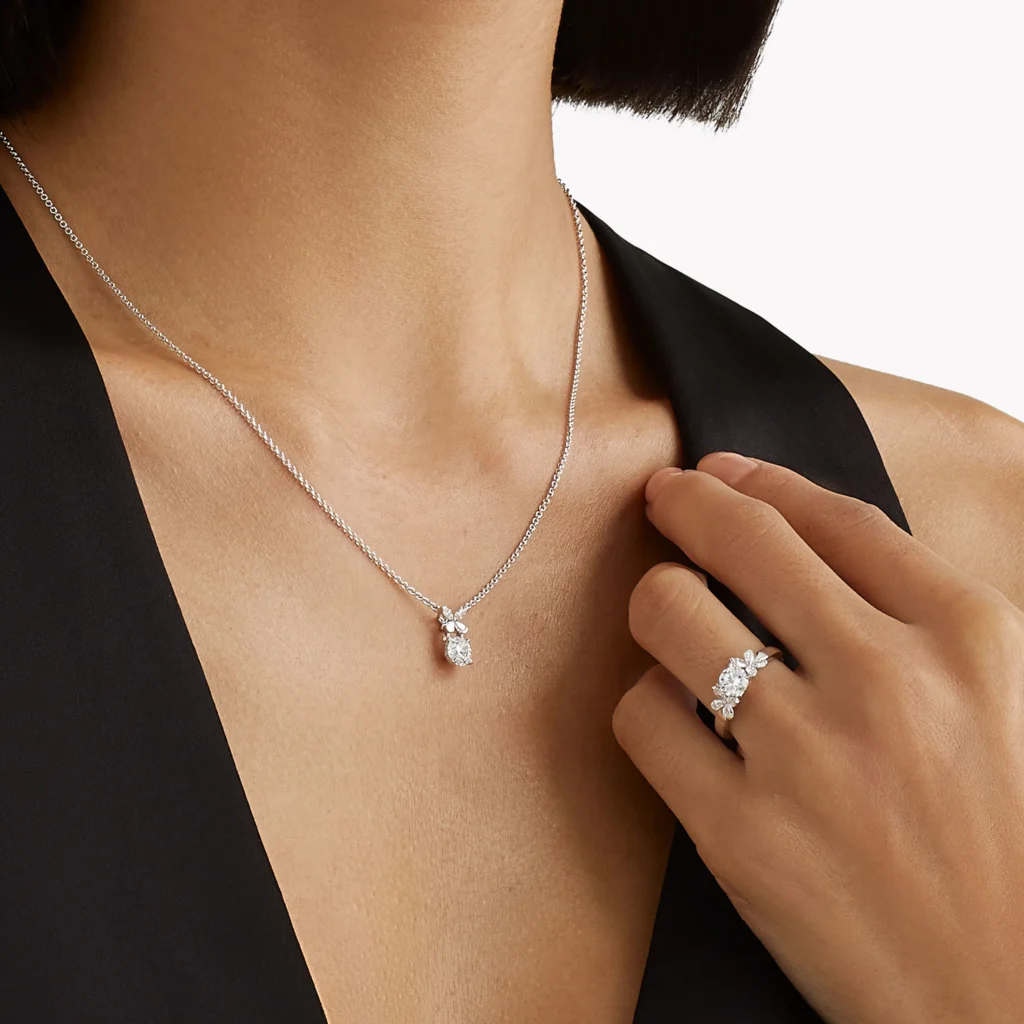
In Polish terminology, a “brylant” is not just any diamond, but a specific stone cut in the classic way. It refers to the brilliant cut (round brilliant cut), which has about 58 facets arranged so that light reflects from the lower parts of the stone and returns through the top. The result? Maximum brilliance. A raw diamond taken from the ground looks unimpressive; only precise cutting releases that characteristic fire and brilliance. Top jewelry houses use only stones with perfect proportions, because even the slightest deviation in depth or width kills the optical effect.
4C and quality certificates
Four characteristics determine the value of a diamond:
- Carat (weight) – in practice, top brands choose stones above 1.0 ct for main rings,
- Cut (cut quality) – an Excellent/Ideal grade indicates perfect symmetry and polishing,
- Color (color) – scale from D (colorless, most expensive) through E, F to Z (yellowish); luxury houses mainly use D-F,
- Clarity (clarity) – VVS (Very Very Slightly Included) and IF (Internally Flawless) are categories without visible inclusions.
Each stone requires a GIA, HRD, or IGI certificate. Increasingly, digital certificates include traceability, meaning a complete chain of origin, which is important in the context of ethics.
Frames that enhance the glow
The construction of a setting is not just about design—it’s optical engineering. The Tiffany Setting with six prongs lifts the stone above the band, allowing light in from below. M ystery Se t (Van Cleef & Arpels) hides the rails in invisible grooves, making the stones appear to float. Harry Winston favors the cluster setting, where stones set at different angles refract light like a kaleidoscope. Bulgari, on the other hand, uses Tubogas, a flexible construction of gold coils without soldering. Metals? Platinum or 18K gold (sometimes 14K), as they hold the stone for decades without deforming.
Market 2026 and ethics
The CEOWORLD ranking for 2026 places Cartier at the top among diamond jewelry brands. This probably comes as no surprise, as the dominance belongs to two giants: the Richemont group ( Cartier, Van Cleef & Arpels) and LVMH. The latter finalized its memorable acquisition of Tiffany & Co. in 2021, spending $15.8 billion on the deal. Quite a sum? It was the largest transaction in the luxury industry in recent years.
Market consolidation means that most of the best-known brands now belong to two capital groups.
The Jewellery Maisons segment of the Richemont group alone generated approximately EUR 16.5 billion in sales. The diamond jewelry market is expected to reach a value of around USD 44.1 billion in 2026, with a projected increase to USD 53.2 billion by 2033.
Key figures and demand
The USA accounts for about 53% of the demand for natural diamonds, making this market crucial for all players. Other regions (China, Europe, the Middle East) are growing, but Americans still spend the most on engagement rings and haute joaillerie collections.
The growth dynamic is not rapid, but stable: around 2.6% CAGR until 2033. It’s more of an evolution than a revolution.
Ethics, Kimberley Process and traceability
Kimberley Process is an international certification system that restricts the trade in so-called conflict diamonds (less than 1% of the market). The problem? Organizations such as Human Rights Watch criticize the definition of “conflict diamonds” as too narrow, overlooking human rights violations outside of wars.
More and more brands are focusing on full traceability: blockchain, certificates of origin, supply chain transparency. The natural vs. lab-grown issue is also gaining momentum, especially among younger consumers looking for ethical alternatives.
The brilliance of tradition and the future of diamond brands
Jewelry brands are more than just names on boxes. Cartier, Tiffany, Chopard have built their empires over decades, combining craftsmanship with vision, tradition with the courage to innovate. Today, these same companies must balance the heritage that defined them with the expectations of customers accustomed to transparency, sustainable sourcing of stones, and on-demand personalization.
The diamond market in 2026 no longer looks the same as it did five years ago. Synthetic diamonds are claiming an ever larger share of the market, younger generations are asking about the origin of every stone, and luxury is becoming less about ownership and more about the values a brand represents. Those big names that have survived wars and crises are now learning to speak the language of Gen Z without losing their identity.
Interestingly, it is these oldest houses that are best able to leverage their emotional capital. History sells just as well as innovation, provided it is told authentically.
Maja
Luxury Blog editorial team





Leave a Comment