

Mepra – Italian stainless steel that defines table style
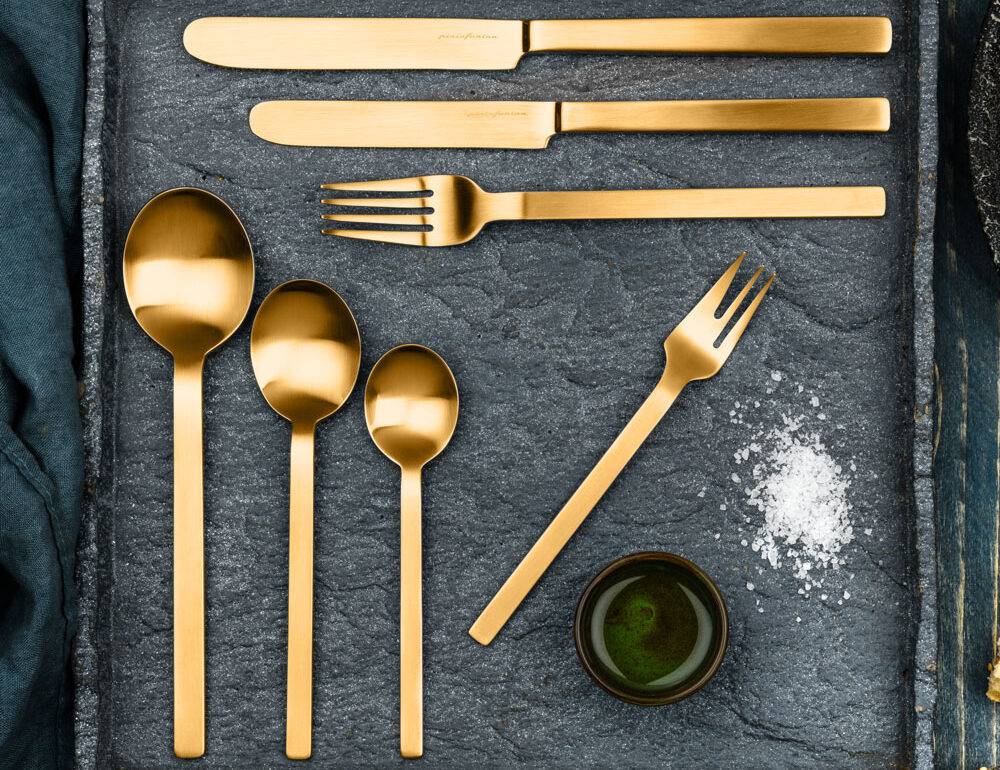
When it comes to the Italian lifestyle, we think of design, taste, and quality. And the same applies to cutlery. Mepra has been demonstrating since 1947 that 18/10 stainless steel is not just a material, but the foundation of an elegant table. Made in Italy here means more than just a certificate—it’s a family tradition carried on by successive generations in Lumezzane near Brescia.
The brand has focused on premium quality from the very beginning. Today, it can be found in the finest hotels, restaurants, and on the tables of people who value durability and appearance. HORECA and the retail market are two worlds where Mepra feels equally confident. 18/10 steel means resistance to corrosion and a shine that lasts for years. Additionally, the option for personalization makes every set truly unique.
Sounds simple, but the devil is in the details. How exactly did this family-owned company from a small town become a recognizable player? And what makes their cutlery look different from all the others? We’ll get to that in a moment.
From water mill to design icons
The story begins in 1901 in Lumezzane, where brothers Bortolo, Francesco, and Giovanbattista Prandelli started a workshop powered by a water mill. There, they made cutlery and metal goods. A family tradition, something like a small forge in the valley.
The real Mepra was founded in 1947, when the founders’ sons: Pietro, Felice, and Giacomo registered Metallurgica Prandelli. They started with aluminum and brass, and chose the wolf as their logo. The animal probably symbolized the wildness of the region, but that changed quickly.
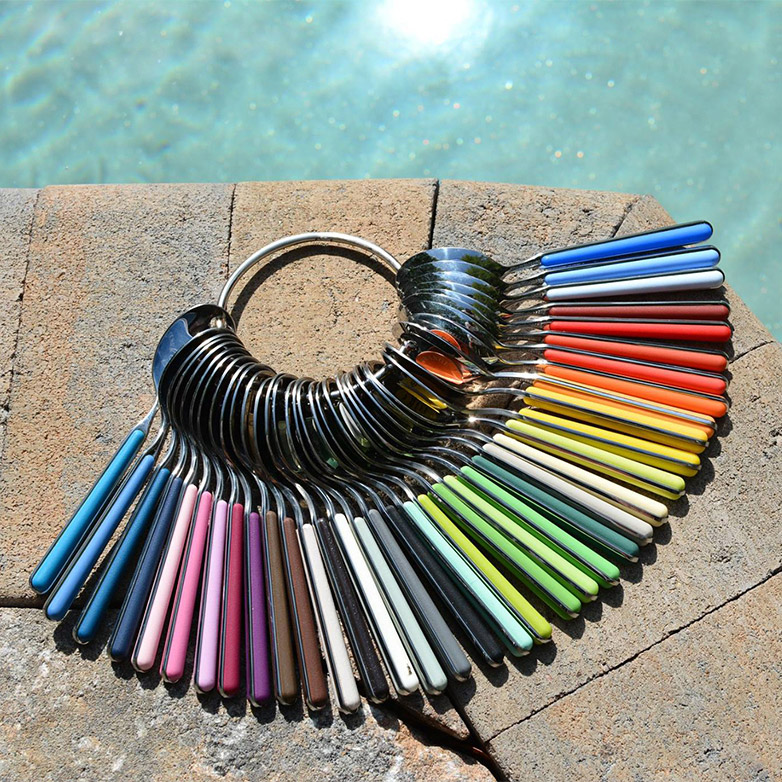
The breakthrough came between 1950 and 1953. The company switched to 18/10 stainless steel. And it was no small decision, because in 1953 the logo changed to an elephant, a symbol of the durability of the same steel that still defines the brand today. Brass? Discontinued.
Development under the guidance of family
In 1972, Gianni Prandelli joins the company, in 1977 he takes the helm as CEO, and in 1999 he becomes president. Eight years later, in 1985, Luigi returns to the company, taking charge of marketing, accounting, and product development.
The 1980s and 1990s saw an expansion of the product range: hollowware, pentolame, and in 1992, their own plastics plant. They began collaborating with designers, with Angelo Mangiarotti among the first. Apparently, they allocate about 8% of their turnover to R&D, which is quite a lot for a family-owned company.
In 2019, they take over Punto Soave, and a year later, they launch antibacterial coatings. Tradition meets innovation—only here, it’s not just a catchphrase.
Quality 18/10 and production in Lumezzane
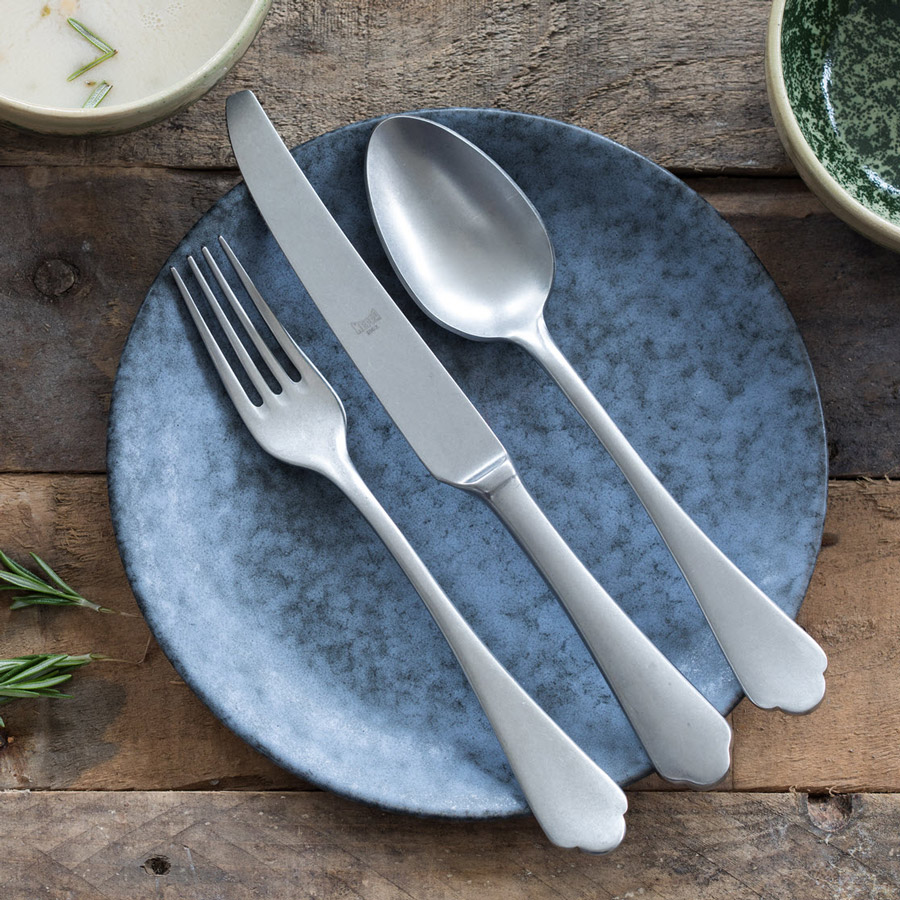
When I say “18/10 stainless steel,” I mean a specific composition: 18% chromium, 10% nickel. It’s not just a label on paper. Chromium forms a protective layer that ensures corrosion resistance and lasting shine even after years. Nickel adds smoothness and prevents the surface from reacting with acids in food. The result? Mepra cutlery can be safely put in the dishwasher (in practice, it withstands hundreds of cycles without losing its shine).
Production takes place 100% in Italy, at the factory on Via Montini, 176, 25067 Lumezzane S.A., Brescia. Everything happens under one roof, from stamping to final polishing. This ensures complete control over every stage.
Factory in Lumezzane and premium finishes
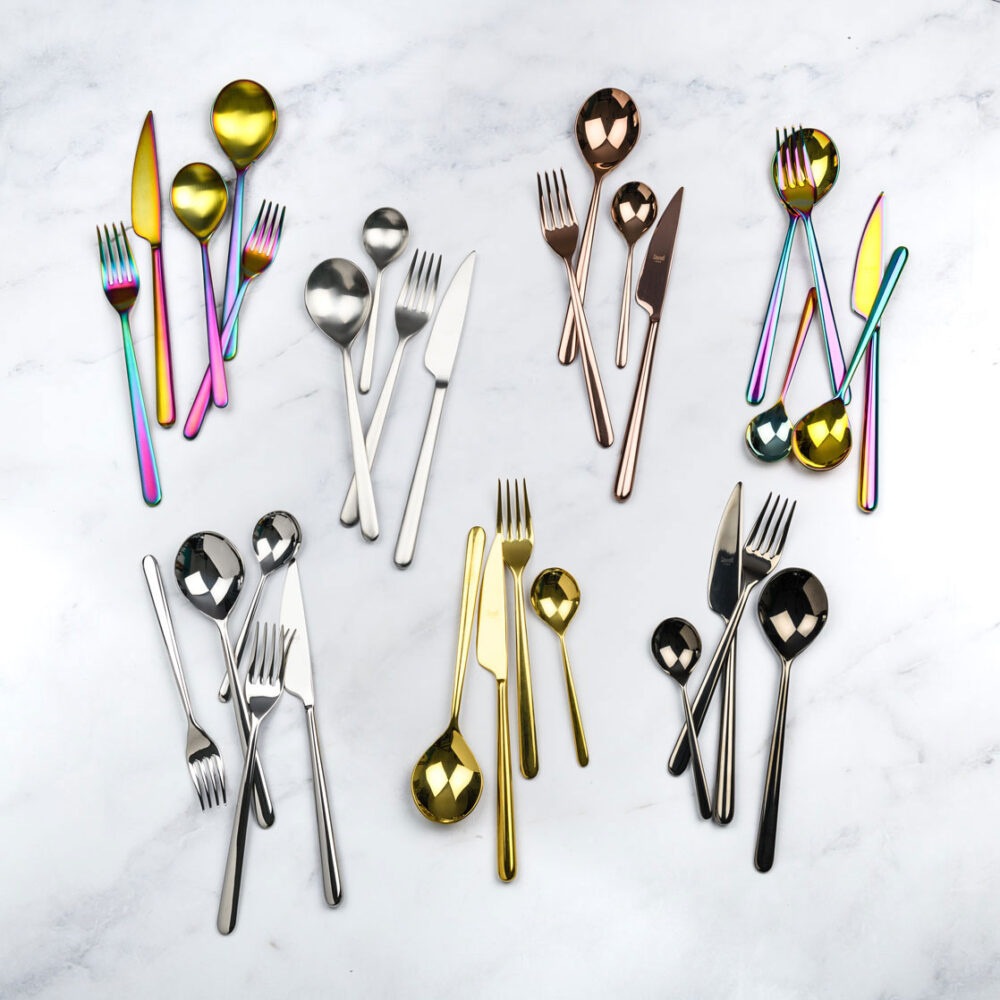
The process itself involves precise sheet metal stamping, followed by grinding and polishing in automatic polishers equipped with a dust extraction system (less metallic dust in the air, better working conditions). Mepra offers several types of finishes:
- high polish (classic mirror finish)
- satin Ice (matte, with a cool sheen)
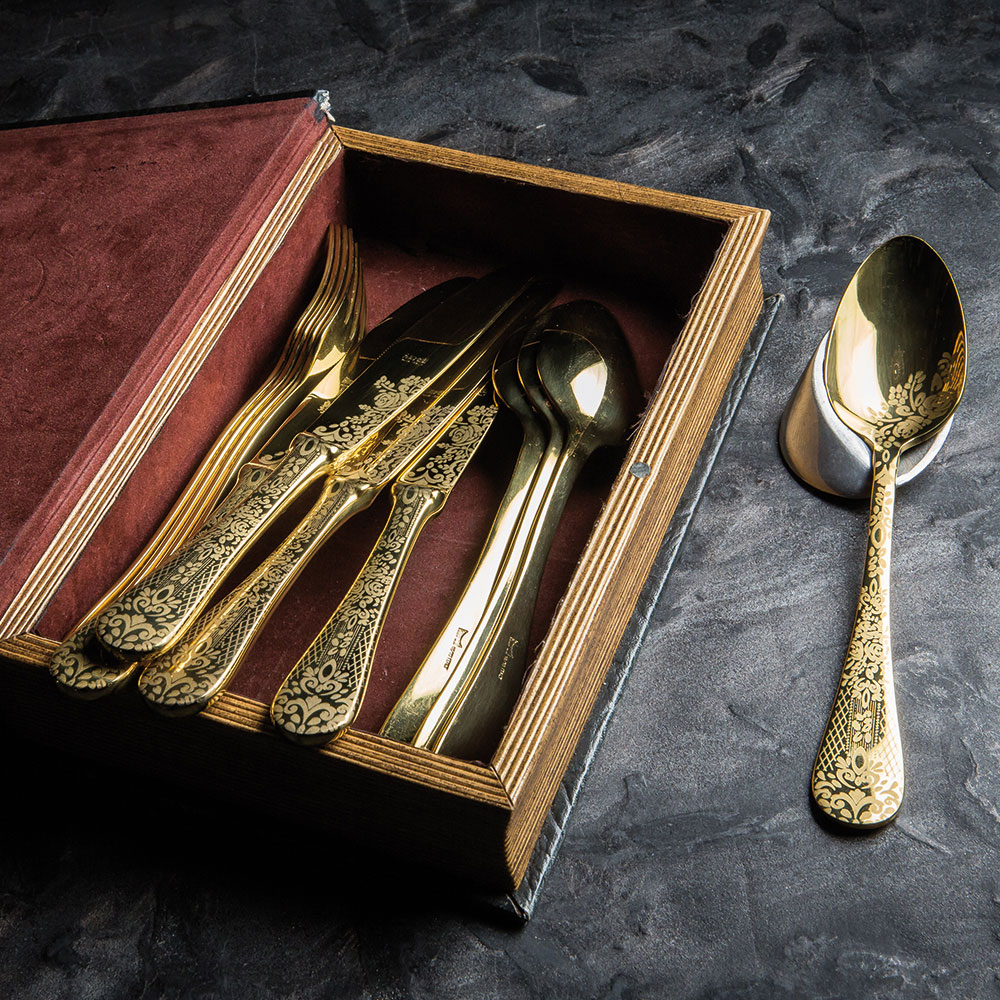
- PVD gold, black (Oro Nero), brown (vacuum-coated, abrasion-resistant)
In selected lines, the metal thickness reaches 4.0 mm, providing a truly substantial feel in the hand. Quality control checks not only the appearance but also the ergonomics and balance in the hand.
Since the 1980s, the company has switched to water-based cleaning instead of chlorinated solvents. In the 1990s, it introduced industrial wastewater recycling. In 1999, cogeneration was launched: a gas engine generates electricity, and the waste heat is used to heat buildings and technological processes. Lower emissions, reduced energy consumption.
All of this makes Mepra cutlery look good and last for years. Simple, yet thoughtfully designed from the ground up.
Design and collections
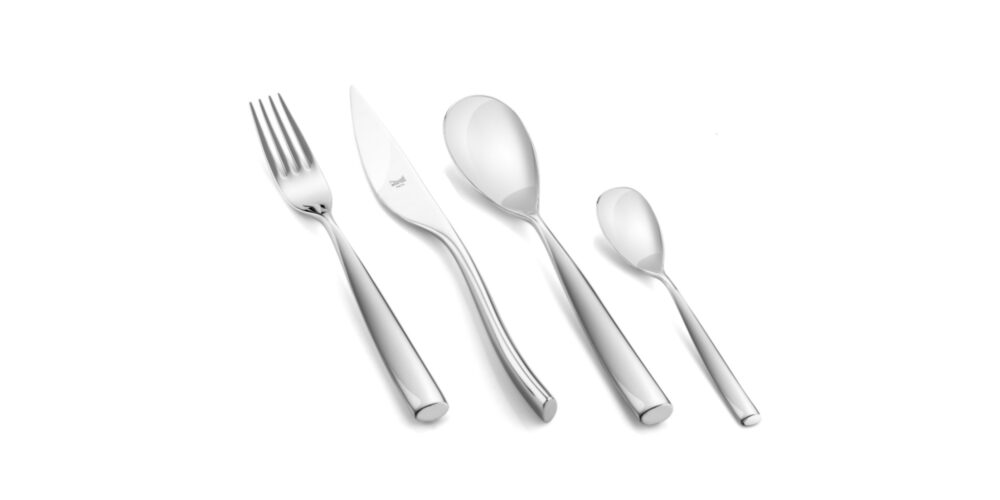
Design at Mepra is a bit like slow food: timeless elegance, functionality, and zero compromises for fleeting trends. For years, the brand has collaborated with renowned designers: Angelo Mangiarotti gave the collections a raw, minimalist elegance, Maurizio Duranti created “Mediterranea” with its organic shapes, and Luca Galbusera designed “Flora,” whose botanical ornamentation became part of the permanent collection at the Chicago Athenaeum. These are not random choices, but a consistent philosophy: form must work just as well as appearance.
Stile by Pininfarina
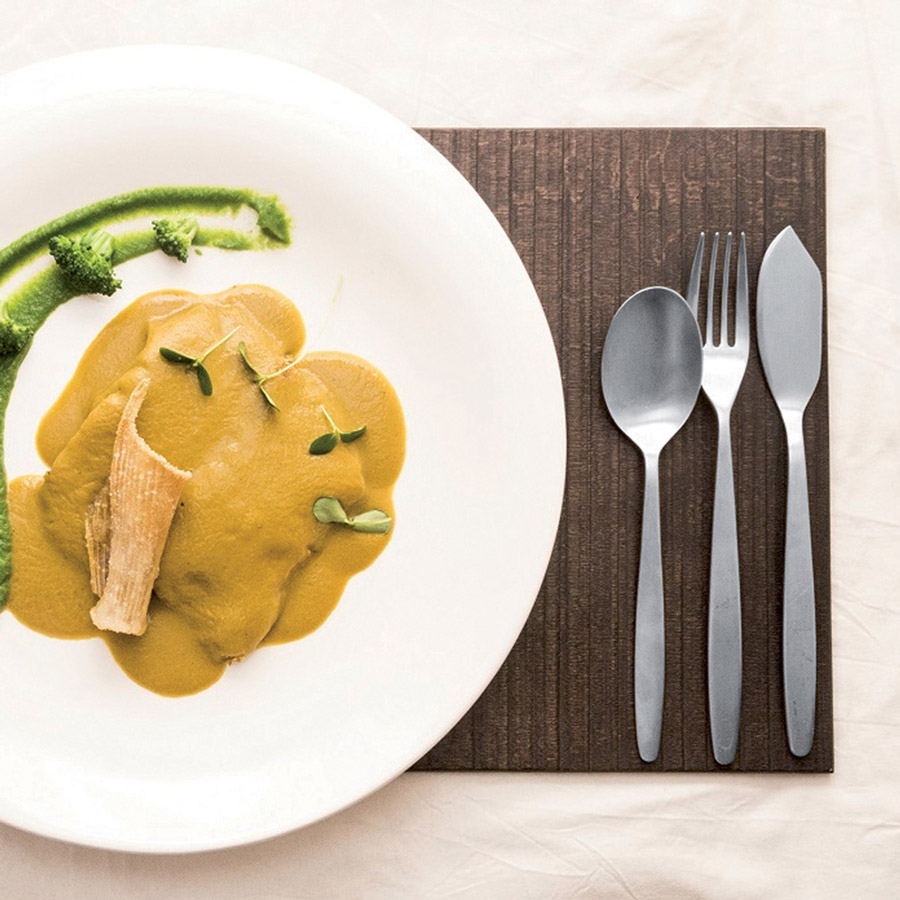
Here, Mepra took it a step further and invited the legendary Pininfarina studio to collaborate (yes, the same one behind Ferrari). “Stile by Pininfarina” is the brand’s showcase, built on the values of Beauty, Purity, Innovation. Available in polished and various PVD finishes (gold, black, brown—each creating a completely different table atmosphere), it even has its own catalog. The series won the Tableware International Awards of Excellence in the barware category. Finishes such as the satin “Ice” or PVD “Oro Nero” (black gold) allow you to create a cohesive or eclectic table aesthetic—depending on your preference.
The whole is complemented by awards from the years 1998-2009:
- Good Design Award (1998)
- Compasso d’Oro (1998)
- Design Plus (2008)
- Design Award of the Federal Republic of Germany (2009)
Museum recognition and industry awards show that beautiful cutlery can also be objects of design.
HORECA, personalization, and where to buy?
Mepra serves two worlds: individual customers looking for unique cutlery for the home, and the HORECA sector, where durability and the ability to match the venue’s vision matter.

HORECA and tailor-made personalization
For hotels and restaurants, the brand has created dedicated lines designed to withstand heavy use in industrial dishwashers. The most interesting part? Full customization, from engravings and monograms to bespoke designs. In 2019, Mepra acquired the Italian company Punto Soave, which increased customization options and opened new channels in the USA. After the acquisition, the number of American retailers exceeded 70, so the expansion really gained momentum.
Where to buy and in which markets?
In detail, Mepra is available in premium networks and online:
- USA: Williams Sonoma, Macy’s, Nordstrom, Bloomingdale’s, Quince, Amazon
- Europe: Luxury Products www.myluxuryproducts.com
- Other markets: South Africa, Egypt (active presence on Instagram)
For B2B projects, the brand offers an online configurator and direct contact with the sales department. If you run a restaurant and want cutlery with your logo, just send an inquiry. The process works quite efficiently, at least according to what is heard from the hospitality industry.
Italian craftsmanship that works every day
Mepra is exactly the kind of choice that looks elegant but doesn’t require special care. You can put the cutlery in the dishwasher without worrying about dullness or discoloration. The shape remains flawless, and the shine returns after every wash. It’s something you only appreciate after years, when other cutlery has long since lost its luster.
Italian stainless steel is perfect for everyday use because it was designed with real life in mind, not just Sunday dinners. The durability of the material means you don’t have to wonder whether today’s meal is “important enough” for the good cutlery. You simply use it.
And that’s exactly what creating a truly effective table setting is all about.
Ninna S
editorial team – Luxury Blog brands




Leave a Comment