

The best sushi in Berlin – trusted addresses and trends for 2026
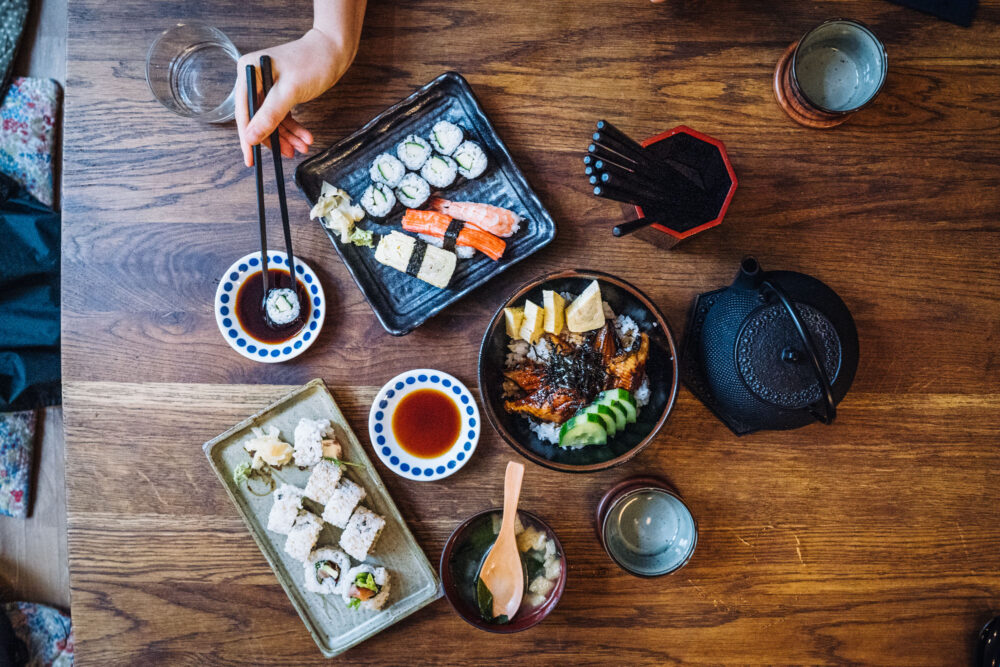
There are around 600 sushi bars operating in Berlin. That’s an impressive number, isn’t it? And when you add that in 2013, washoku (traditional Japanese cuisine) was added to the UNESCO Intangible Cultural Heritage list, it’s clear: sushi is now more than just a trend.
The spectrum of styles is vast. Classic nigiri and sashimi, maki in hundreds of variations, chirashi, hand rolls, multi-course omakase tastings. Then there are fusions: Nikkei (Peruvian-Japanese), Vietnamese influences, even vegan options with “fish” made from carrot or beetroot. Everyone will find something for themselves, from purist edomae to tradition-breaking experiments.
Why is the year 2026 interesting? The quality of available fish has improved, guests are more knowledgeable (they know the difference between sake and hamachi), and new formats are multiplying. Handroll bars, which launched in 2024, are still gaining popularity. Omakase is no longer just for connoisseurs; it has become an experience for the curious.
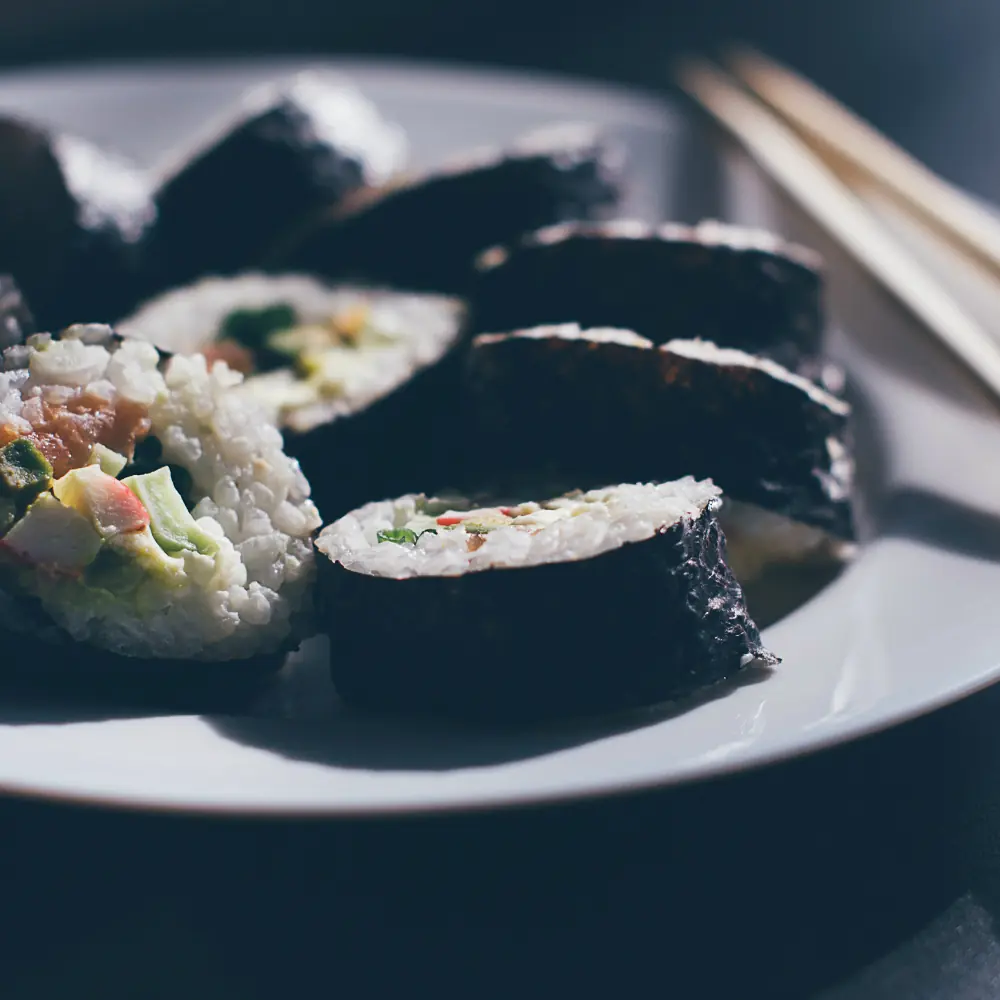
In this article, you’ll find specific addresses, a district map, price ranges, and booking tips. Plus, the latest trends worth following. We’ll go step by step, from legends to bold newcomers.
Where to eat the best sushi in Berlin?
Top places regularly receive ratings of 4.5-5.0 and fill up quickly, so making a reservation is a good idea.
Purist and omakase
Sasaya (Prenzlauer Berg) – minimalist rigor, 99 points from Falstaff, nigiri for ~80-120 €. Concrete in the menu and on the plates.
SAN (Mitte) – the duo Tomoya Sakashita and Takeshi Seto, traditional edomae, omakase €70–100+. Silence, wood, focus.
Otsuka – an intimate omakase hidden inside an Asian supermarket (yes, really). Only 8 seats, premium prices 90–130 €.
893 Ryōtei (Charlottenburg, Kantstraße) – Nikkei behind a graffiti-covered façade, Peruvian-Japanese fusion, average 40-60 €. Colorful, lively, delicious.
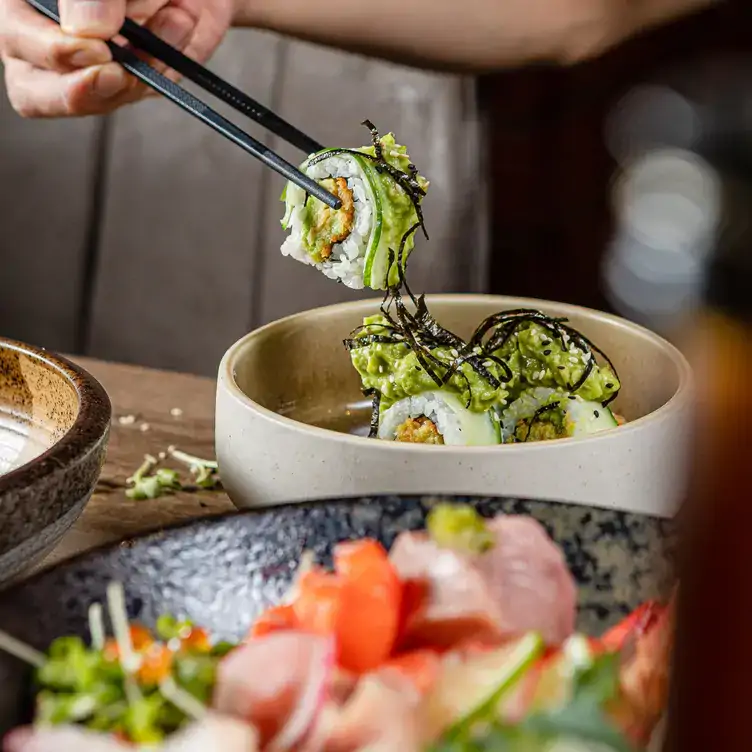
Fusion, Nikkei and veggie
Kuchi (Kantstraße, since 1999) – a well-deserved legend of the scene, this is where it all began. Classics and fusion, €25–45, always crowded.
Sticks’n’Sushi – Danish chain present since 2017, three locations in Berlin, ratings ~4.7. Lunch €15-30, comfortable and reliable.
mr hai Kabuki – a pioneer of kaiten from around 2000, the Ebi Spicy role is a local classic. Conveyor belt, budget €11–25.
Ishin (Mitte) – lunch value: chirashi bowl for €14–22, more expensive in the evening (€30–45), but still affordable.
Gingi’s Izakaya (Prenzlauer Berg) – Turkish sushi chef sushi (yes, it works!), bold fusion, €20–40.
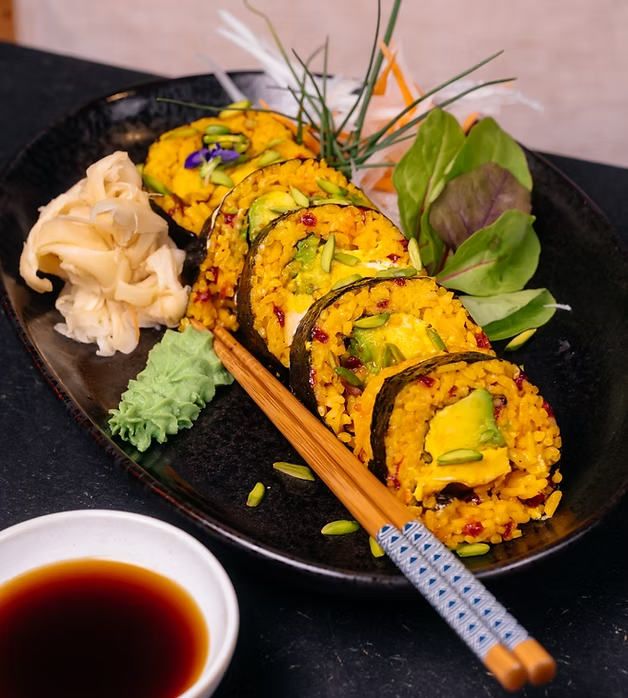
Secret Garden – completely vegan, black rice, soy “salmon” that will fool your senses. €18–35, for the curious and plant-eaters.
In the following sections, you will see how these places are distributed across the districts and how to plan a culinary journey through Berlin.
Districts and mapping the scene
Not every district in Berlin treats sushi the same way. The location says a lot about the approach to fish, the atmosphere, and how much you’ll pay.
Charlottenburg and Kantstraße
This is where it all began. Since 1923, the first Chinese restaurants appeared around Kantstraße, and over time, an entire Asian enclave emerged. Today, you’ll find the highest density of Japanese concepts in the city there, from classic sushi bars to modern fusion spots. The quality varies, but the selection is vast. Tradition blends with experimentation—sometimes it works, sometimes it doesn’t.
Prenzlauer Berg and the reputation of authenticity
If you’re looking for a purist approach, head east. Sasaya or Gingi’s Izakaya focus on simplicity and the quality of ingredients without gimmicks. Less fusion, more respect for the classics. The clientele knows their stuff and doesn’t settle for just anything.
Mitte and new formats
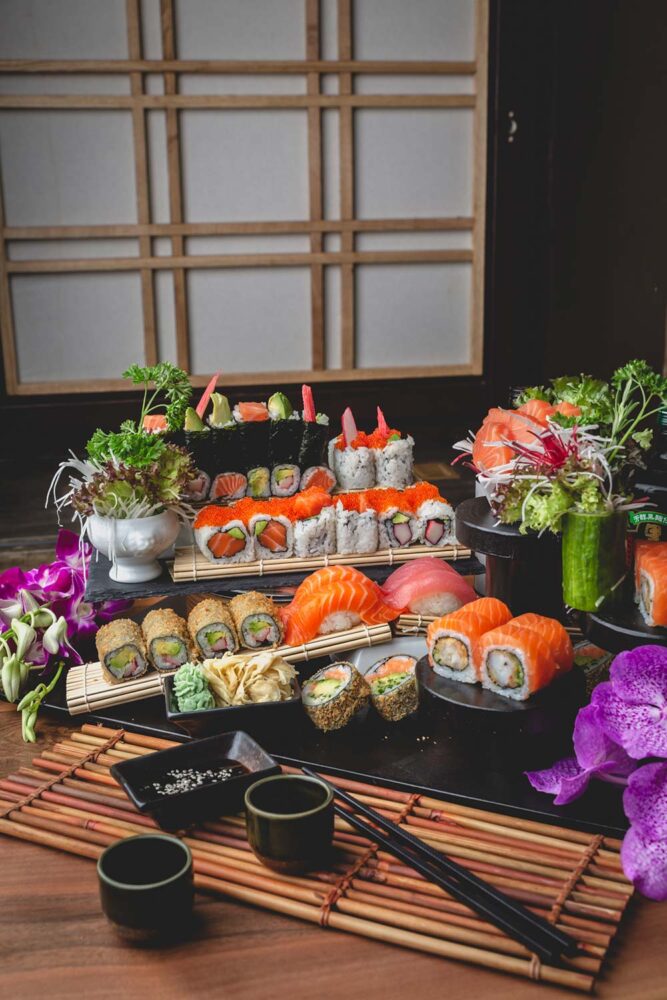
The center focuses on omakase and premium concepts. SAN, Ishin, SHINJU. Everything here exudes modernity and a higher price range. Popular among tourists and corporate professionals.
Kreuzberg and Neukölln
Younger formats, handroll bars, fusions without complexes. Less rigidity, more fun with ingredients and presentation. Prices usually more affordable.
Generally, the West sticks to tradition or makes a conscious fusion, while the East experiments more boldly. Choose according to your mood.
How to choose and plan?
Before you pick up your chopsticks, it’s worth knowing what to look for. Not all sushi is real sushi, and Berlin can surprise you both with its quality and its price.
What should you look for at the sushi counter?
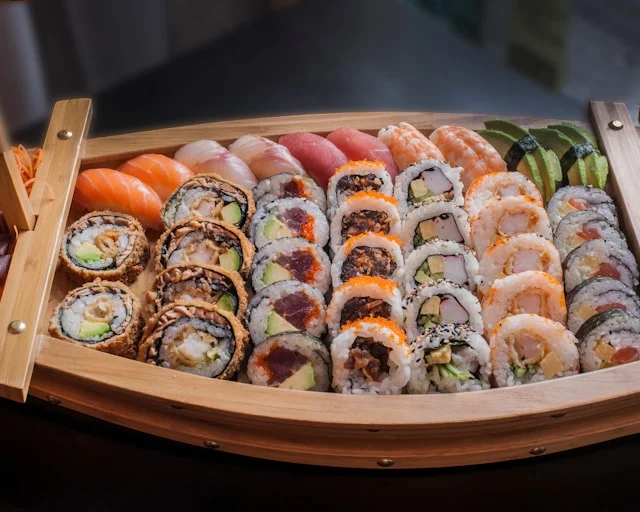
Rice (shari) is the foundation. Good rice should have a pleasant temperature (slightly warm, not cold), a delicate seasoning with rice vinegar, and a loose structure. It shouldn’t be overly sticky—the grains hold together, but don’t turn into cement. Fish? You can tell freshness by the color and sheen, and the cut matters. Tuna is divided into otoro and chutoro (different parts, each with its own taste and texture), and it should be sliced with a confident motion of the knife. If you have the chance to sit at the bar, take it. You’ll see the chef at work, the balance of flavors, and their technique. It’s a bit like live theater.
How much does it cost in Berlin?
You’ll spend around €11-30 per person on a budget, often in simple places with takeaway. The mid-range is €30-50, while premium (omakase, fine dining) starts at €50 and easily goes up to €100 or more. Lunch specials are a wallet-saver: chirashi or teishoku can cost €8-12 and are truly filling.
Reservations? Places rated 4.5-5.0 tend to have queues, especially on weekends. It’s better to book in advance. Some venues have strict cancellation policies, especially omakase. Delivery is widely available; both chains and independents are happy to deliver, but be mindful of transport quality. Rice and fish can suffer in transit.
The best sushi in Berlin
The Berlin sushi scene is no longer following Tokyo, but is beginning to develop its own language. What will remain of this? And what can we expect in 2026?
Return to craftsmanship
Omakase is no longer the exclusive domain of top restaurants. Otsuka demonstrates that intimate chef’s tastings work even in cozy venues, while SAN in Mitte adapts the format to the pace of the city center. Berlin Food Stories openly admits that there’s still a lack of “true edomae” here, but the quality is clearly on the rise. More and more chefs are opting for closer interaction with guests and a transparent display of technique. This isn’t a trend—it’s the maturation of the scene.
New formats
Kōji Handroll Bar (opened in 2024) brought something fresh to the city. Literally. Handrolls served on the spot, with an emphasis on perfect rice and hand-rolling right in front of the guest. Fast, without unnecessary fuss, but with attention to detail. At the same time, the plant-based offering is growing, Secret Garden serves black rice and soy-based “salmon,” and vegetarian items on the menu are no longer just an add-on, but are becoming an equal option.
Nikkei mergers and a sustainable rate
893 Ryōtei cements Nikkei for the long term, even weaving in Mexican accents. There are also hybrid concepts emerging, combining izakaya, ramen, yakitori, and even Danish-Japanese fusions. What’s next? Greater attention to sustainable fish sourcing (more and more places are asking suppliers about origins) and expansion beyond Mitte. Berlin is learning that premium and accessibility don’t have to be mutually exclusive.
A taste that lingers
Berlin showed that sushi is not just food, it’s an entire ecosystem of flavors and experiences. From traditional restaurants in Prenzlauer Berg to experimental fusions in Kreuzberg, the city has proven it can surprise even the most discerning palates. And although trends change (fermentation here, yuzu there), the best places share one thing in common: a genuine passion for what they do.
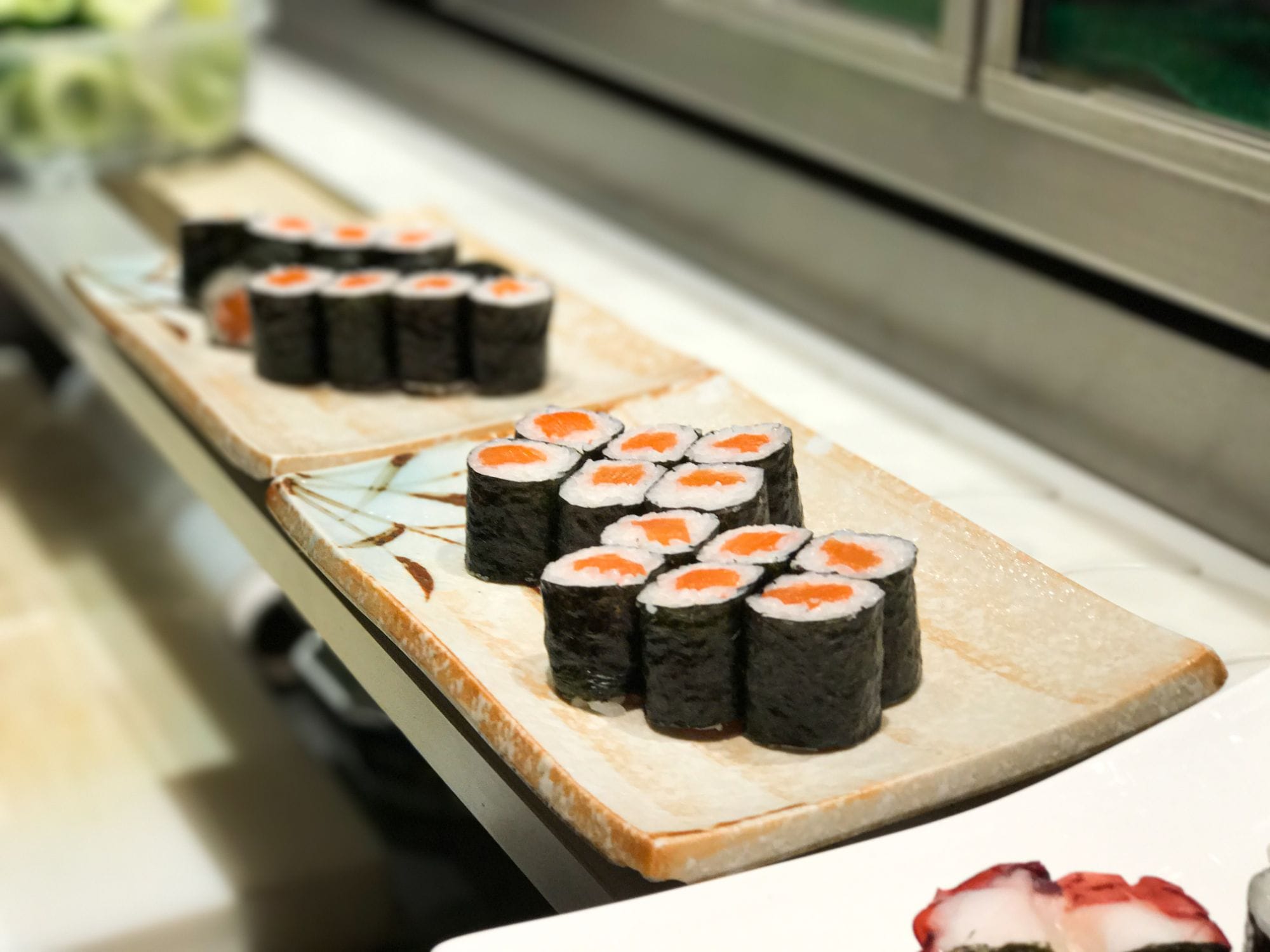
That’s exactly why it’s worth discovering Berlin’s sushi scene for yourself. Because no “top 10” list can replace that moment when you try something new and just know: this is it. The city is waiting, tables are filling up, and somewhere a perfect piece of salmon is landing on rice. The rest is up to you.
Nancy +
lifestyle editorial team
Luxury Blog






Leave a Comment