

Real estate in the Balearic Islands – 2026 prices in euros and what’s behind them
Let’s start with a number that says it all:
€5,317/m² – the average price of resale apartments in the Balearic Islands in the second quarter of 2026.
This is the highest level in all of Spain. Palma de Mallorca has surpassed €5,100/m², making it the most expensive major city in the country. Formentera? There, we’re talking about €9,973/m² – an absolute record at the municipal level.
I know, it sounds out of this world. But here we’re talking about the premium market on a European scale, not a national one. While the average for Spain hovers around €2,000-2,500/m ², the Balearic Islands are playing in a different league. Rates twice as high are the norm, not the exception.
What’s behind this? Mainly two factors. First: supply is physically limited. Landscape protection, restrictive building permits, few new projects. Second: demand from foreign buyers in the HNWI (high net worth individuals) segment, for whom price is not the main criterion.
In the following sections, you will see specific rates for individual islands, hidden transaction costs, and what you can expect in the coming months.
How much does a square meter cost in the Balearic Islands?
In the first quarter of 2026, the average price per square meter in the Balearic Islands is:
- Houses: €5,015/m² (January 2026)
- Apartments: €5,087/m² (January 2026)
- Regional record: 5,317 €/m² (February 2026)
Mallorca remains in the range of 4,630-4,669 €/m², but Palma has gone higher and reached 5,100 €/m², which is a record for the city. The Balearic Islands are the most expensive region in all of Spain, with prices here being roughly twice as high as the national average (2,000-2,500 €/m²). And this is not a margin, but a real gap.
Dynamics? In 2025-2026, prices increased by 3-9.8% year-on-year. The luxury segment in Mallorca recorded +9.8% in 2026, which shows that demand in the upper segments is not slowing down at all. Moreover, 6 out of the 10 most expensive districts in all of Spain are located in the Balearic Islands.
Market activity and leasing
Annually, there are around 15,000–18,000 transactions on the islands, with Mallorca accounting for about 10,500 of them. The share of foreigners? Depending on the island, it ranges from 35% to 75%, which shows just how international this market is.
If you are considering long-term rental, rents are 18-20 €/m²/month. Palma reaches 18.6 €/m²/month, while Ibiza sets records at 29 €/m²/month. Profitability is not sky-high at these purchase prices, but the stability of rentals (especially outside the season) attracts investors seeking security.
Map of the islands: Mallorca, Ibiza, Menorca, Formentera – price differences
Mallorca is the most diverse market among all the islands. The average ranges from €4,600 to €7,370/m², but that’s a rather shallow picture of the situation. In Palma, you’ll pay around €5,100/m² for a decent apartment, though surprises in both directions can be found in the city center. The southwest, especially around Andratx or Port d’Andratx, is already in the league above €7,000/m². Meanwhile, the island’s interior and traditional fincas (even renovated ones) remain within the €3,000–5,000/m² range. I’ve recently noticed that the north, specifically the area around Pollensa, is rapidly increasing in both price and popularity.
Ibiza and Formentera: where millionaires flock
Ibiza is premium without question. The average is around €7,333/m², but in prime locations (which is almost everywhere near the sea), we’re talking about €7,000–9,000/m² as a starting point. Villas with direct water views? Easily €10,000–17,000+ per m², often even higher. Formentera is a completely different story, with the average starting at €9,973/m² and really only going up from there. There are few listings, the island is small, and demand is huge. Ultra-exclusive category.
Menorca: calmer and cheaper
If you’re looking for something more affordable without giving up the archipelago, Menorca is a sensible choice. Here you’ll pay €2,300–3,000/m², which is roughly half of what you’d pay on Ibiza. Smaller towns sometimes offer real bargains, and the atmosphere is definitely more family-oriented than party-focused.
History and driving forces of the market
To understand today’s prices, it’s worth going back almost two decades. The Balearic real estate market has been through a real rollercoaster, and every twist explains something.
From Bubble to Records: 2007-2025
Peak before the crash? Around €3,500/m² in 2007. Then came the crisis and a brutal landing. In 2013, average prices fell to about €2,000/m², with some segments dropping even lower. Buyers disappeared, developers froze projects.
Since 2014, a gradual rebound began. Nothing spectacular, just a steady return of confidence. But the real breakthrough? That was 2020. Paradoxically, Covid boosted demand like never before. People were looking for space, sunshine, an alternative to city apartment blocks. Between 2020 and 2022, Mallorca’s prices rose by 32%, and Ibiza by almost as much. In 2024, another jump: +19% annually in some premium zones. Today, we are clearly above the pre-2007 peaks, and there are no signs of a slowdown in the luxury segment.
Why is the supply permanently limited
The land is gone. It sounds cliché, but it’s true. Over 40% of the Balearic Islands’ area consists of protected zones, natural parks, reserves, and landscape areas. Where construction is allowed, there are height restrictions (usually a maximum of two floors), distance requirements from the shoreline, and limits on plot development.
In addition, tourist licenses ( ETV) are almost impossible to obtain—the cities have frozen or drastically limited them. A villa with a license? That’s automatically +20-30% in value. The supply of new projects is growing only minimally, 2-3% per year, while demand continues to accelerate.
Who buys and why premium rules
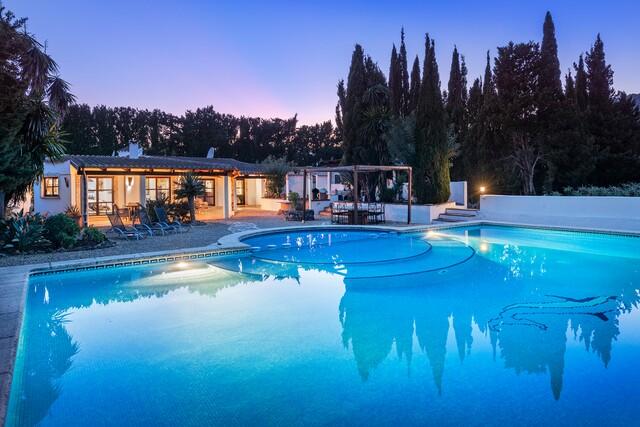
The data is clear: 35-75% of transactions (depending on the island) involve foreign buyers. In the villa segment above €2 million, cash purchases dominate — people treat this as a safe haven for capital, not speculation.
Luxury accounts for 70-80% of the total market value growth. Developers know this and are targeting exactly that segment. After the 2020-2025 boom, we’re seeing a certain slowdown in the mid-range segment (more supply, less pressure), but premium? Prices remain strong there, because demand still exceeds what can be built.
Purchase from A to Z
When buying a property in the Balearic Islands, you need to know not only where, but above all for how much and exactly what. The market is divided into several price segments, each with its own rules. Here are the specifics.
Segments and typical prices per meter
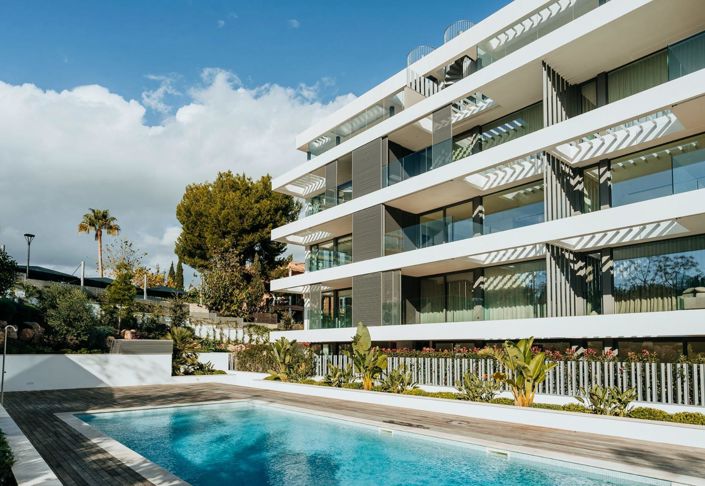
Luxury top (villas >2 million €) often means cash transactions, mainly in Ibiza and northern Mallorca. Frontline villa? Easily €10,000–17,000 per m², sometimes more. Mid-range (€500,000–2 million) includes apartments in prime locations and townhouses with a pool. Here, prices are more reasonable: apartment €4,000–7,000/m², inland fincas €3,000–5,000/m². Bargains under €300,000? Mostly in the Menorca interior or properties requiring complete renovation.
Property types most often include villas of 300-1,000 m² (pool, views, plot), fincas on plots of 1-5 ha (peace, space), apartments of 70-200 m², as well as new builds with energy efficiency certificates, sometimes with an ETV license already included in the price.
Taxes, licenses, and financing
When purchasing, you will pay ITP (transfer tax) of 8-11% of the value. Annually, there is IBI (equivalent of property tax) of about €1,000-5,000, and a wealth tax of up to 3.45% above €700,000. Non-residents? 24% of imputed income annually if you do not rent out the property.
Tourism: the ETV license for short-term rental is limited and affects the valuation (property with ETV = higher ticket). Ibiza gross profitability ~4.78%, Mallorca ~5.10%.
Financing 2026: residents get LTV ~60-70%, non-residents ~40-50%, rates 3-4%. Most foreign buyers use cash or very little leverage.
Forecasts for 2026-2027 and trends that will change the market
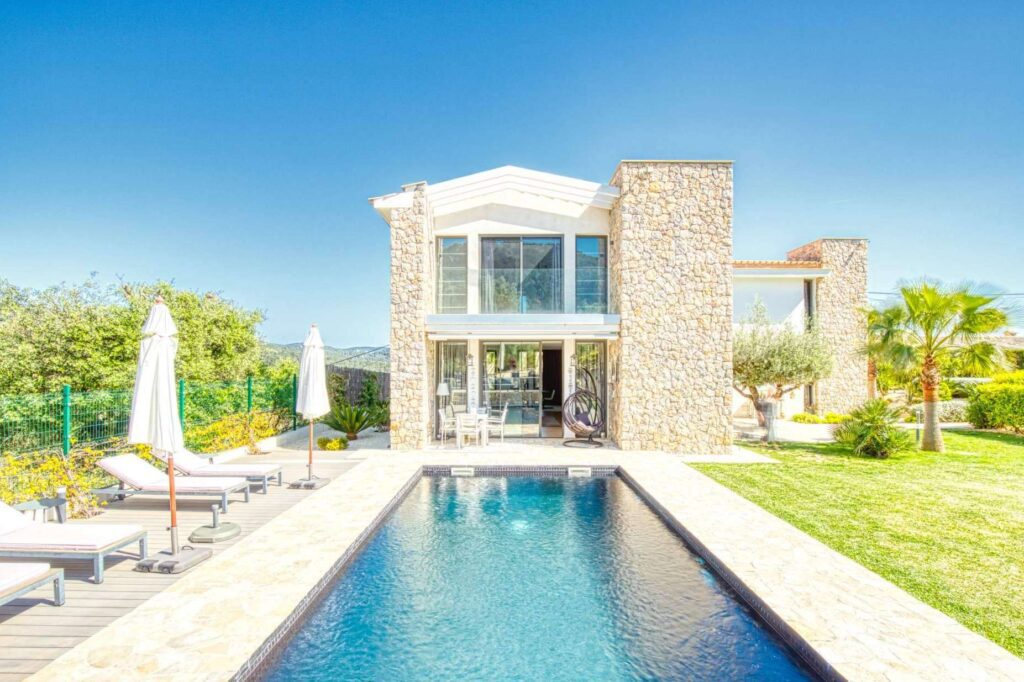
Forecasts for 2026 are fairly consistent, differing only in details. Most analysts predict price increases in the range of 3-10% per year, with the luxury segment likely to rise even higher. CRES and Steinbeis estimate up to a 9.8% increase in the upper segments for Mallorca, API Baleares ( Artiedy report) assumes an average of 7-8%, and Tasalia forecasts a cumulative 20.2% for 2025-2027. S&P Global predicts 7.4% for all of Spain in 2027. It is clear that luxury and selected locations (northern Mallorca, Ibiza’s coast) are growing faster than the rest.
Trends: permits, sustainability, and micro-locations
What supports these forecasts? First and foremost:
- More building permits – in 2024, 1,573 new permits were issued in Mallorca, so supply is increasing, but still more slowly than demand.
- Sustainable construction – energy certificates and eco-materials are becoming the standard, increasing the value of new projects.
- Co-ownership and fractional – the co-ownership model is gaining popularity, especially in the vacation segment.
- Stabilization of long-term rental – fewer restrictions than we previously feared, which reassures investors.
- Micro-locations – Pollensa, Alcúdia, the northern hills of Mallorca are gaining in importance.
Of course, interest rates and geopolitics may slow down growth, but for now, the supply shortage and the Balearic brand are keeping the market on a stable upward trend.
What are you really buying per meter?
When you buy property in the Balearic Islands, you’re not just paying for square meters. You’re paying for something more, something that’s hard to put a euro value on. It’s access to a lifestyle you can’t replicate anywhere else, even if you have more money in your pocket. Mediterranean climate all year round, proximity to beaches that look straight out of a catalog, infrastructure designed with comfort in mind. All of this together creates a value you won’t find in the technical specifications of an apartment.
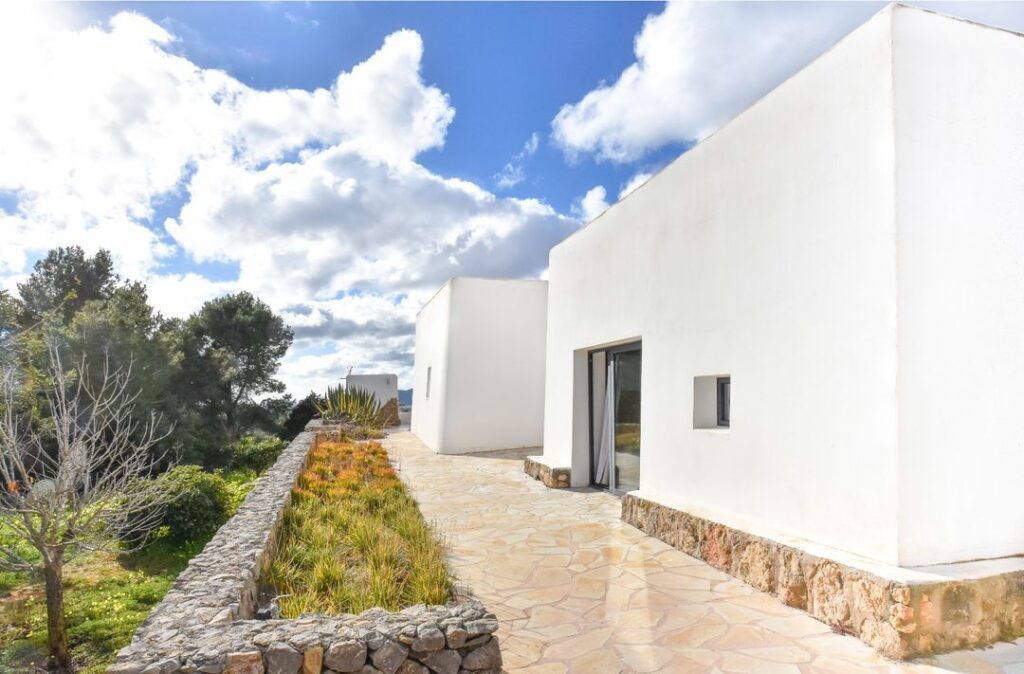
The most important question is: is this premium worth it? For someone seeking peace and quality of life, the answer is yes. For a speculator focused solely on return on investment, it might be different.
Baleries don’t deceive. You know exactly what you’re getting, and you pay fairly for every piece of this puzzle.
Snexx T



Leave a Comment