

Italian Wine Ranking – Top 10 Bottles You Should Know

Imagine the scene: you’re standing in front of a shelf in an exclusive wine shop, while two customers next to you are arguing whether the 2016 Barolo deserves a spot in the ” Top 10 Italian Wines “. One is waving a phone with an article by James Suckling, the other cites Wine Spectator. Suddenly, the price of that same wine jumps from 80 EUR to 450 EUR—just because it made it onto a prestigious list. Wine rankings today are not just a critic’s game, but a real market force.
Ranking of Italian Wines – According to James Suckling

photo: brand-innovators.com
Because the scale is simply immense. Italy is the second largest wine producer in the world—right after France —with production hovering around 44-50 million hectoliters annually (OIV data 2024/2025). We’re talking about a country with 20 wine regions and over 500 grape varieties, each with its own character. No other nation can match this level of diversity.
Now for the business side: Italian wine exports amount to around 22 billion EUR per year (2025). Rankings push the prices of top labels to over 1,000 EUR per bottle—Masseto, Sassicaia, Ornellaia are collected like works of art.
Ranking creators—James Suckling, Wine Spectator, Decanter, Wine-Searcher—have become the unofficial arbiters of taste. But how do they actually judge? Why these wines and not others? And what does it mean for the average enthusiast who just wants to spend 50 EUR wisely? More on that below.
From Falernum to Super Tuscan – the rise of Italy’s wine elite
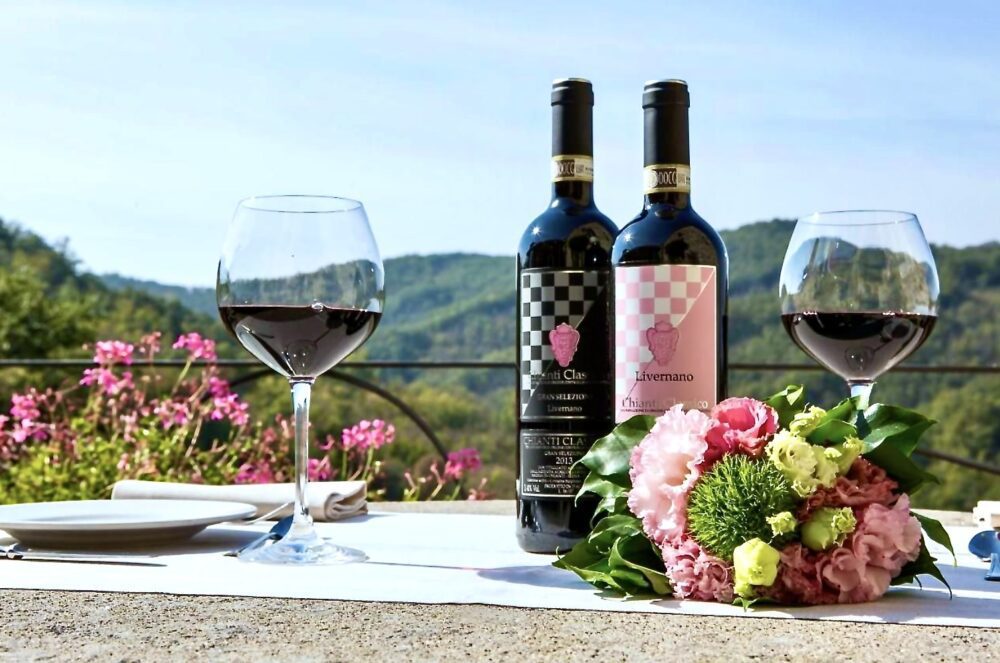
photo: flavorofitaly.com
Today’s Italian Top 10 is no coincidence—it’s the result of a history dating back to ancient times. The Romans drank Falernum from Campania, which Pliny the Elder described as the best wine in the world. Over the centuries, the myth of Italian prestige only grew.
From Falernum to Barolo – the origins of Italian prestige
In the 19th century in Piedmont, families like Gaja and Conterno shaped the style of Barolo and Barbaresco—the “kings of wines.” At the end of the century, phylloxera destroyed most of the vineyards, but post-World War II reconstruction brought a new quality. The 1960s and 1970s marked a revolution: the birth of the Super Tuscans (Sassicaia, Tignanello, Solaia), which broke the rigid DOC rules. Tuscany was no longer afraid of innovation.
Super Tuscans and the Birth of the Rankings Era
photo: winescholarguild.com
The appellation system has organized the market:
- 1963 – introduction of DOC
- 1980 – introduction of DOCG for the finest regions
- 2010 – the boom of Super Tuscans, which dominated global rankings
Since the 1970s, the “era of scoring” began: Wine Spectator (1979), the influence of Robert Parker, and in 2012 the first James Suckling “Top 100 Wines of Italy” lists. Today, attention is shifting not only to Barolo itself but also to white wines from Etna and natural wines.
Understanding this history helps you better interpret contemporary rankings—the reputation built over centuries still matters.
How modern rankings are created – criteria, scales, sources
When you see a “95 points” rating next to a bottle of Brunello, what does it really mean? And why does this particular bottle make it into the Top 10 instead of another? Modern wine rankings aren’t a lottery—each one has its own set of rules worth knowing.
photo: foodandwine.com
Who calls the shots: the most influential critics and platforms
There are two main types of rankings in the world of Italian wines:
| Ranking type | How it works | Examples |
|---|---|---|
| Critics’ rankings | Blind tastings, personal expert assessment | James Suckling, Wine Spectator, Decanter, Kerin O’Keefe |
| Market data portals | Rating aggregation + prices + demand | Wine-Searcher (global transaction monitoring) |
Critics like Suckling or Walter Salles taste hundreds of samples each year and rate them on a 100-point scale. On the other hand, there’s Wine-Searcher, which collects data on what collectors are actually buying and how much they’re paying for it.
What does 95-100 points really mean?
The 95+ range is the elite – we’re talking about wines that meet several key criteria:
- Technical quality – flawless, pure aromas
- Aging potential – the bottle will last a decade (or two)
- Harmony and balance – alcohol, acidity, and tannins work together
- Innovation – something that sets this wine apart from hundreds of others
In practice, a score of 100/100 in 2024 was awarded to, among others, Masseto 2021, Brunello di Montalcino Cerretalto 2019, Solaia 2021, and Sassicaia 2022. These are bottles that blend tradition with meticulous craftsmanship.
Interestingly, the rankings for December 2025 also highlight “softer” aspects: sustainable winemaking (about 40% of Italian vineyards are now organic), biodiversity, and even the influence of the producer’s brand. Tuscany dominates—accounting for roughly half of the Top 10, followed by Piedmont and Sicily.
Of course, rankings have their limitations. “Parkerization” (favoring powerful, mature wines) sparks debate between traditionalists and modernists. There are also issues with counterfeit expensive labels. But treat the scores as a compass, not a verdict—they help narrow down your choices, but the rest is up to your taste.
photo: kceadventures.com
Top 10 Italian Wines 2024/2025 – Profile of Each Bottle
It’s time to move from theory to the glass and take a look at the actual bottles that critics and collectors consider the pinnacle of Italian craftsmanship. This isn’t about learning rankings—my goal is simply to show you what’s truly at the top in 2024/2025.
Top 10 according to James Suckling – who’s at the top?
James Suckling’s “Top 100 Wines of Italy 2024” list is considered a bible by many wine geeks, and the top ten spots represent the absolute elite. Wine-Searcher 2025 often confirms these same names as the most expensive and sought-after, proving that critical prestige goes hand in hand with market demand.
| Position | Wine | Year / Manufacturer | Region | Points | Varieties | Average price (EUR, 2025) |
|---|---|---|---|---|---|---|
| 1 | Masseto | 2021 / Tenuta dell’Ornellaia | Bolgheri, Tuscany | 100 | 100% Merlot | ~850 |
| 2 | Brunello di Montalcino Cerretalto | 2019 / Casanova di Neri | Montalcino, Tuscany | 100 | Sangiovese Grosso | ~520 |
| 3 | Solaia | 2021 / Antinori | Bolgheri, Tuscany | 100 | Cabernet Sauvignon, Sangiovese | ~320 |
| 4 | Sassicaia | 2022 / Tenuta San Guido | Bolgheri, Tuscany | 99 | Cabernet Sauvignon, Cabernet Franc | ~280 |
| 5 | Tignanello | 2021 / Antinori | Chianti Classico, Tuscany | 99 | Sangiovese, Cabernet | ~145 |
| 6 | Brunello di Montalcino Riserva | 2018 / Poggio di Sotto | Montalcino, Tuscany | 99 | Sangiovese Grosso | ~400 |
| 7 | Ornellaia | 2022 / Tenuta dell’Ornellaia | Bolgheri, Tuscany | 98 | Cabernet Sauvignon, Merlot, Cabernet Franc | ~190 |
| 8 | Barolo Monvigliero | 2020 / Burlotto | Barolo, Piedmont | 98 | Nebbiolo | ~160 |
| 9 | Barbaresco Rabajà | 2020 / Giuseppe Cortese | Barbaresco, Piedmont | 98 | Nebbiolo | ~110 |
| 10 | Brunello di Montalcino | 2019 / Col d’Orcia | Montalcino, Tuscany | 98 | Sangiovese Grosso | ~95 |
Masseto 2021 is an icon – 100 points, 100% Merlot from Bolgheri, priced around 850 EUR, and a record-breaking Sotheby’s auction (Masseto 2021 fetched about 1.2 million USD in 2025). Experts say: “Masseto is the Petrus of Italy” – and it’s hard to disagree when you look at these numbers.
photo: tastingtable.com
Tuscany and Piedmont – the two powerhouses of the Italian elite
Brunello di Montalcino (Cerretalto 2019, Poggio di Sotto Riserva 2018, Col d’Orcia 2019) and Super Tuscans (Solaia 2021, Sassicaia 2022, Tignanello 2021, Ornellaia 2022) form the core of the list – Tuscany dominates. From Piedmont, we have Barolo Monvigliero 2020 and Barbaresco Rabajà 2020 – Nebbiolo at its finest.
Interestingly, the same names appear high in the Wine-Searcher 2025 ranking (Masseto, Cerretalto, Solaia, Sassicaia, Il Marroneto, Barolo Burlotto, Gaja Barbaresco, Castello di Ama, Tua Rita, Ornellaia). The alignment between critics’ ratings and
How to use the ranking in practice – purchasing, tasting, investing
photo: sommelierwinebox.com
Knowing the names is one thing, but how do you actually use this information when you’re standing in front of a store shelf or planning a dinner? Top 10 Italian wine rankings aren’t just a prestigious list—they’re a practical tool, if you know how to read them.
How to choose a bottle from the Top 10 list for a real dinner?
The key is to match your style to your budget and the dishes you’re serving. Planning on beef? Brunello di Montalcino or Barolo are natural choices. Mushroom risotto? Again, Barolo fits perfectly. But you don’t have to reach for Masseto at 800-850 EUR to experience Tuscan class. Often, “second wines” from the same producer, younger vintages, or lesser-known appellations deliver 80% of the flavor for 30% of the price. Focus on the scores (94-96) and the producer, not just the TOP 1-3 ranking.
Rankings and Wine Investment – When Does It Make Sense?
According to Liv-ex 2025 data, Sassicaia has grown by an average of around 20% per year—this is no coincidence. Wines at the top of the rankings regularly appear at auction, where they fetch record prices (for example: Masseto 2021). If you’re considering wine as an investment, the Top 10 list is a good starting point, though it requires patience and proper storage conditions.
photo: wantedinrome.com
Polish consumers have it much easier today—imports of Italian wine have increased by about 15% (AMBRA 2025), and Italian labels are now featured in top restaurants and wine lists.
A few rules of thumb:
- Check your own preferences, not just the points
- Compare several sources of reviews
- Treat the ranking as inspiration, not a dogma
- Budget always comes first
What could change this picture in the future?
What’s next for Italian wine – trends, forecasts, and your next steps
Today’s top 10 list is just a snapshot—the world of Italian wine is changing before our eyes, and faster than you might think. In the coming years, we’ll see shifts that will upend the current hierarchies.
Etna, Sicily, and the Northern Alps – the new faces of Italian wine
photo: vincarta.com
Tuscany and Piedmont? Still important, but the climate is reshuffling the deck. Research from Università di Milano shows a temperature rise of about +1°C per decade, pushing vineyards higher and further south. Etna is no longer an exotic outlier—Kerin O’Keefe predicts an “Etna future,” and Passopisciaro’s gold at the Decanter World Wine Awards confirms it: Nerello Mascalese is entering the mainstream. Expect Sicily and Alto Piemonte to appear more often in upcoming rankings.
At the same time, there’s a boom in white, orange, and natural wines—forecasts predict a +25% increase in orange wines by 2026+. The only white in Wine-Searcher’s top 25 is Terlano from Alto Adige, and around 40% of Italian vineyards are switching to organic. The EU wine package from December 2025 introduced the official “0.0% alcohol-free ” label—the segment is growing by +20%, with forecasts of +50% in five years.
Don’t wait for critics to announce the new list. Start building your own now.
Sony
lifestyle & investment editorial team
Luxury Blog




Leave a Comment