

How to Spot an Authentic Pinko Bag – 2025 Guide
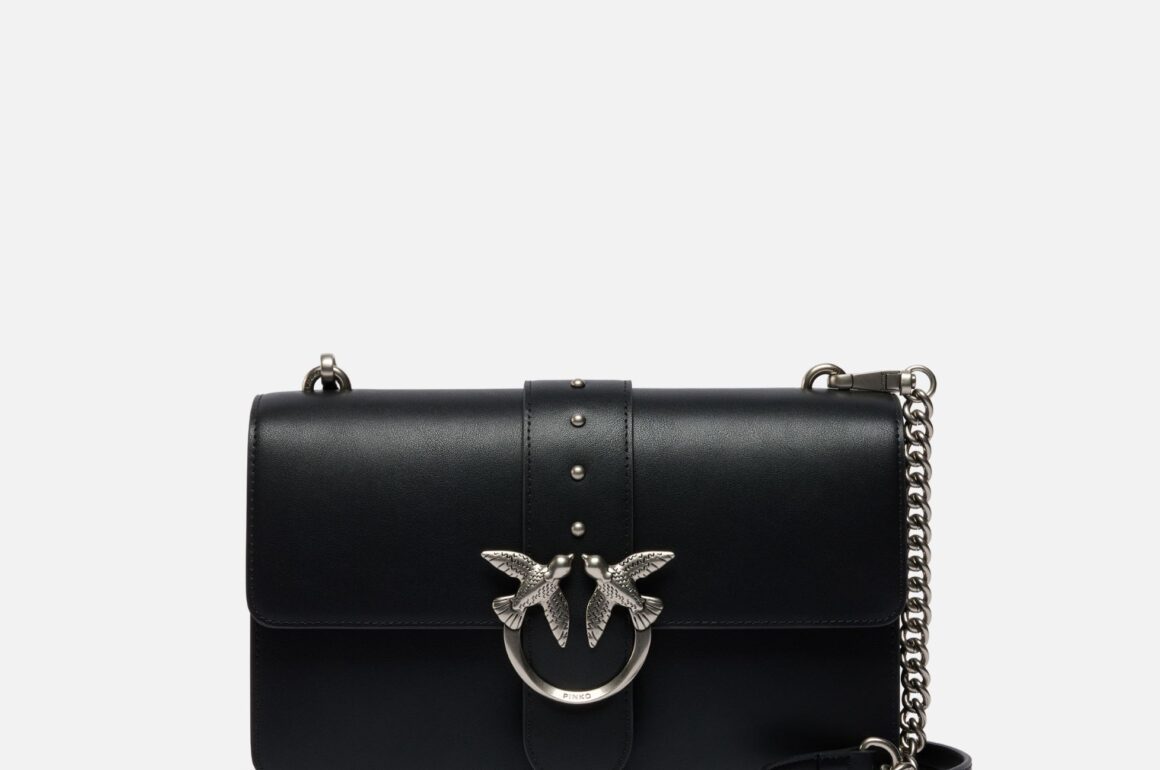
“Counterfeits account for up to 20% of the luxury handbag market in Europe”—this statistic may be shocking, but what’s even more concerning is that this number keeps rising every year. That’s why today I’ve decided to take a closer look at how to spot an authentic Pinko bag.
Imagine Kasia browsing online listings in search of her dream Pinko Love Bag. Suddenly, she comes across an offer for 400 PLN instead of the usual 1200. Her heart races—could this be the deal of a lifetime? But then doubt creeps in. Is it really possible for it to be genuine? The photos look great, the seller has positive reviews… Or is it just another counterfeit?
How to spot an authentic Pinko bag – between swallows and the chip
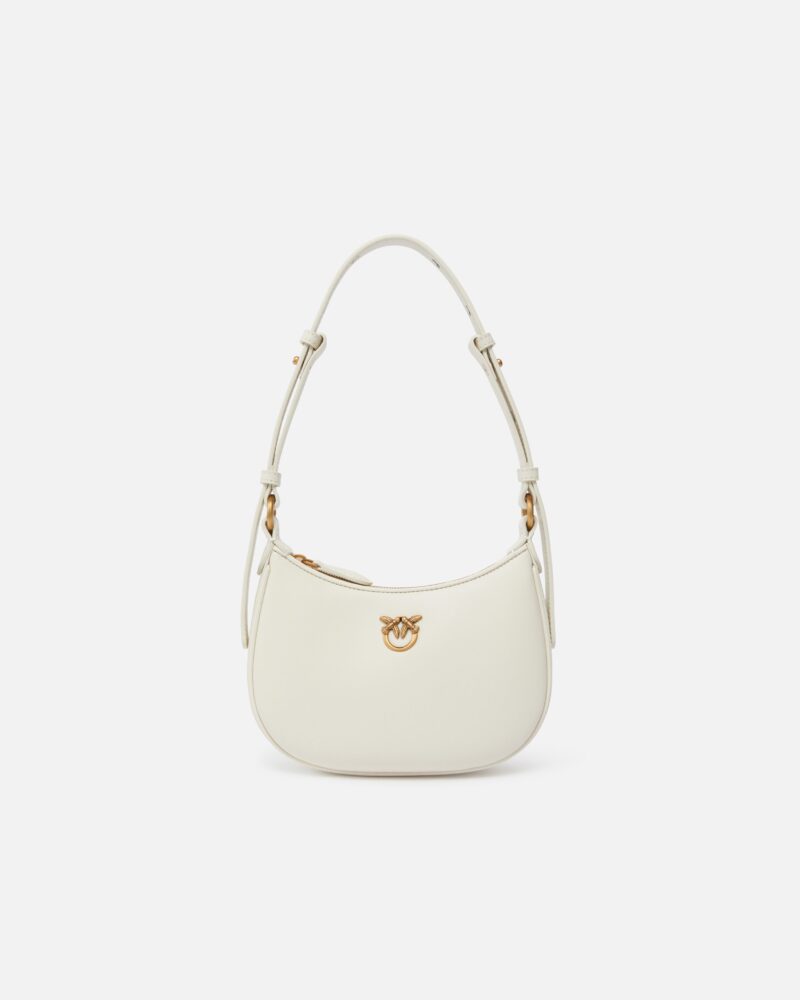
photo: pinko.com
This situation happens to thousands of women every day. And honestly, you can’t blame them—telling a real Pinko from a fake has become truly difficult.
2025 is a breakthrough year for several reasons. First, artificial intelligence is already helping counterfeiters create copies that could fool even a trained eye. Second, the European Union is introducing stricter regulations on counterfeit trade. Third—and perhaps most importantly—Pinko itself is modernizing its security systems by implementing RFID technology.
Proper authenticity verification today relies on three pillars:
- A meticulous inspection of physical details – from the quality of the leather to the precision of the metalwork
- The use of modern technology and verification applications
- A mindful approach to shopping and choosing trusted sources
Sometimes I think things used to be simpler. Fakes were obvious—you could spot them from a mile away. Now? It’s almost an art form.
But let’s start with the basics—what you can see and touch for yourself.
Anatomy of the original: step-by-step vision and touch test
Verifying the authenticity of a Pinko bag is truly an art in itself. Most women don’t realize just how much you can tell simply by touch and by carefully examining the details.
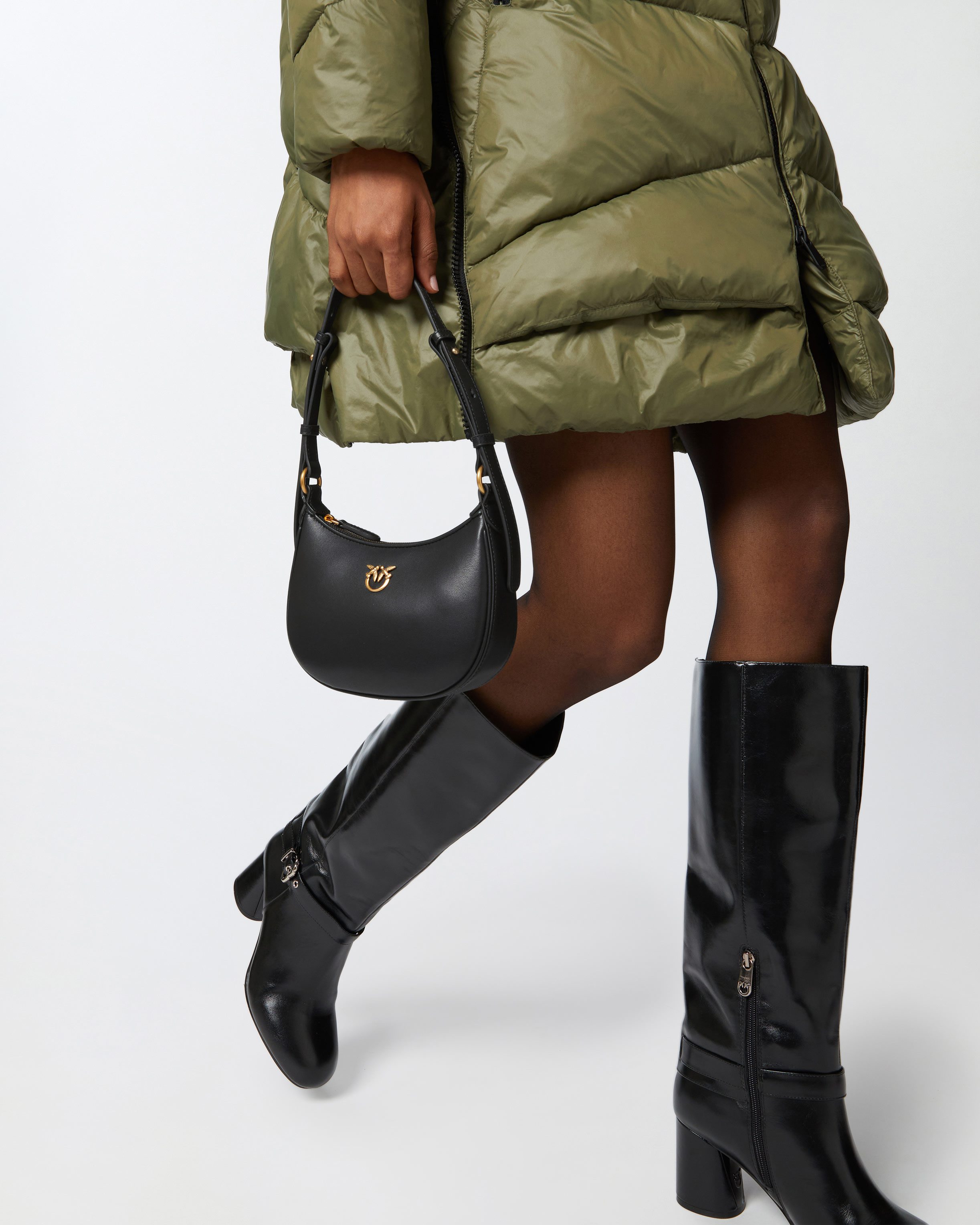
photo: pinko.com
Let’s start with what immediately catches the eye—the material should speak for itself.
- The calfskin used in original Pinko bags has a distinctive softness, yet remains resilient. When you gently press it, it should return to its original shape without leaving any marks. Counterfeits often use synthetic leather, which has a chemical smell—this is the first red flag.
- The weight of the bag is another important indicator. An authentic Pinko bag usually weighs between 0.5 and 1 kg, depending on the model. This weight is a result of the quality of the materials used and solid craftsmanship. Counterfeits are often suspiciously light.
- Seams require special attention. In authentic handbags, they are even, made with thread in the correct color, with no loose threads or uneven lines. Pay particular attention to areas exposed to the most stress—the handles and the bottom of the bag.
- The iconic Love Bag buckle in the shape of swallows is a true test of authenticity. The original buckle features sharp, precisely crafted edges, and the birds are symmetrically facing each other. The metal elements should show no signs of discoloration or uneven surfaces.
- You can usually find the serial number inside the bag, on a small leather tag. It consists of 12 to 16 digits and is embossed into the leather, not attached as a label. The digits should be evenly spaced and clearly legible.
- The original lining is made from high-quality material, often featuring the Pinko logo subtly woven into the pattern. The inner pockets have sturdy zippers engraved with the brand’s name.
- Packaging matters too. Authentic Pinko handbags come in sturdy boxes with the appropriate logo, often accompanied by a protective fabric pouch.
| Element | Original | Counterfeit |
|---|---|---|
| Skin | Soft calfskin leather, natural scent | Artificial, chemical scent |
| Seams | Even, sturdy, matching thread | Uneven, loose threads |
| Buckle | Sharp edges, symmetrical birds | Blurry details, asymmetry |
| Serial number | 12-16 digits, embossed | Stuck-on or illegible |
| Weight | 0.5-1 kg | Suspiciously light |
All these checks can be done at the time of purchase, with no special tools required. Just a few minutes of careful observation and touch are enough.
Of course, modern technologies offer even more precise verification methods that can confirm our initial impressions from physically inspecting the bag.
Digital Guardian: Certilogo, RFID and Blockchain in the Service of Truth
I remember standing in a store once, phone in hand, trying to check if that Pinko bag was a fake. Back then, I had no idea about all the digital tools we have at our disposal today.
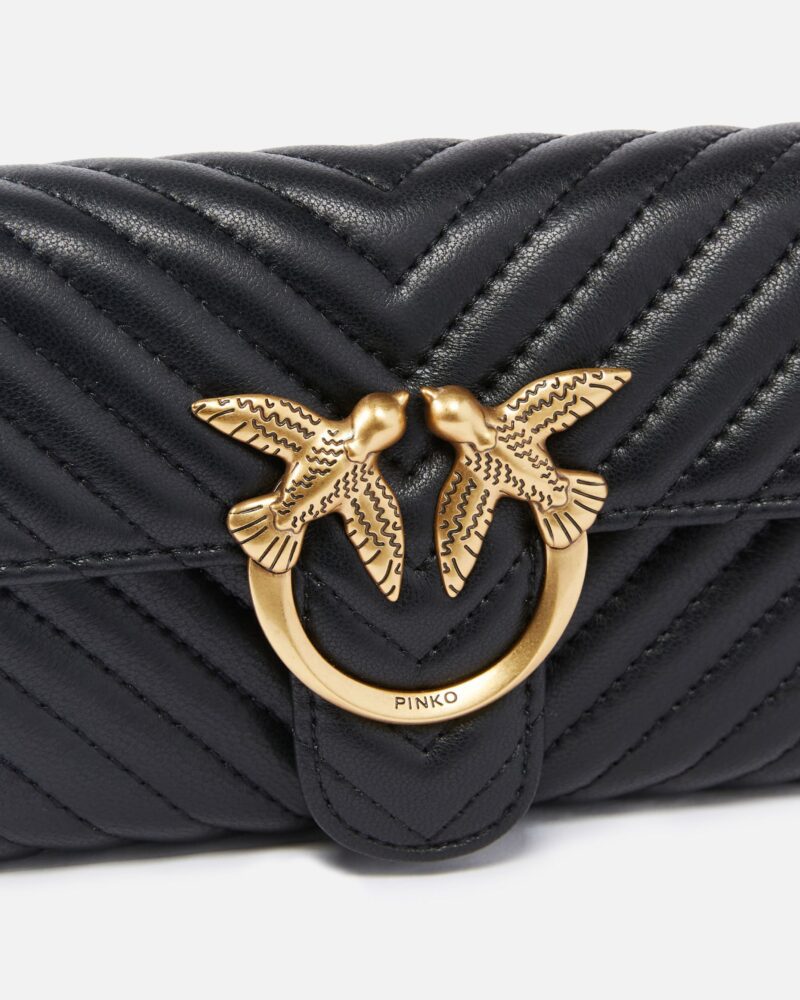
photo: pinko.com
2.1 Certilogo – a three-step verification system
Certilogo is essentially the first digital guardian that appeared in the world of luxury brands. For Pinko, it’s been in use since 2010 and has already verified over 10 million products from this brand. That’s quite a lot for a single tool.
The process is simple – you’ll find a QR code, usually on the tag or a special sticker. Scan it using the Certilogo app or a regular code reader. The system checks the product in its database and displays the result.
A green screen means the product is authentic. You’ll see basic information about the model and sometimes even a catalog photo. A red screen is a warning – the product doesn’t exist in the database or something’s wrong. Sometimes, you’ll get a yellow result, which means further verification is needed.
One thing I always wonder about – why do some genuine products not have these codes? It turns out Pinko introduced Certilogo gradually, so older collections might not have them.
2.2 RFID and NFC technology – invisible helpers
Since 2023, Pinko has started introducing RFID chips in selected products. These tiny devices are hidden in the tag or within the bag’s construction. You can’t see them with the naked eye.
NFC verification steps:
1. Enable NFC on your phone (Settings > Connections)
2. Hold your phone close to the product (5-10 cm)
3. Wait for the notification
4. Open the link in your browser
5. Check the product details
The chip contains encrypted product information. When you bring your phone with NFC enabled close to it, a page with the product data opens automatically. There you can see the model, production date, and sometimes even details about the store where the product was first sold.
The problem is, not all phones have NFC. And not all Pinko products have these chips—so far, it’s mainly the more expensive bags and accessories.
2.3 Blockchain – the future is already here
In 2025, Pinko launched a pilot blockchain program for its premium products. It sounds complicated, but in practice, it’s actually quite simple.
Every product included in the program has a unique identifier recorded on the blockchain. Through the Pinko app, you can check the entire product history—from production, through the warehouse, store, and all the way to the first owner.
The app displays truly detailed data. You see the exact date and place of production, the transport route, the date it arrived at the store, and even information about previous owners if the product was resold through authorized channels.
PINKO BLOCKCHAIN VERIFY
Product ID: PK2025-BG-4447721
Status: AUTHENTIC ✓
Manufactured: Milano, Italy
Date: 15.03.2025
Retail Location: Vitkac, Warsaw
First Sale: 22.03.2025
For now, the system operates only for the most expensive products, but Pinko has announced plans to expand it to the entire collection by 2026. Blockchain offers one major advantage—it can’t be easily forged or hacked like regular QR codes.
All these technologies together create a pretty robust protection system. But remember, counterfeiters are also learning and trying to imitate even these digital safeguards. That’s why it’s worth combining technological verification with traditional methods.
photo: pinko.com
Make the first move – Your daily strategy for safe shopping
Do you remember your first purchase of a designer handbag? That uncertainty—wondering if it’s truly authentic. You don’t have to feel that way anymore. All the verification methods we discussed—from checking physical details to scanning RFID—are your weapons against counterfeits.
Honestly, I think the most important thing is not to be afraid of all this. At first, it seems complicated, but it really isn’t.
Always check in the same order —start with RFID scanning when buying second-hand, then move on to physical details. This will save you time.
Take photos of suspicious elements —if something feels off, snap a photo and compare it with the brand’s official sources.
Save serial numbers on your phone—it’ll help you later if you want to resell or file a complaint.
Use premium brands’ mobile apps for verification—most of them already have one.
photo: pinko.com
Build your network of trusted sellers —it’s better to buy from someone reliable than to hunt for deals from random people.
It’s interesting how the industry is changing. By 2030, full integration of blockchain and AI is expected to reduce counterfeits by 50%—that’s the EUIPO’s forecast. This means that in a few years, it’ll be even easier for us.
It’s also worth following Pinko Journal—they regularly publish warnings about new counterfeits. EUIPO also sends alerts; you can sign up for their newsletter. Some Facebook groups keep lists of verified resellers—these are really helpful.
Sometimes I think people stress too much about all these checks. The truth is, the more you shop this way, the better your eye gets at spotting originals.
Trust yourself—your intuition combined with technical know-how is your best protection against counterfeits.
ANN MI
fashion editor
Luxury Blog






Leave a Comment