

How to recognize an original Lacoste?

Lacoste is one of the most frequently counterfeited brands in the world. That tiny embroidered crocodile, recognizable almost everywhere, has become both a blessing and a curse for the brand. The more iconic it is, the more fakes flood the market.
Just browse the internet to see a sea of Lacoste offers at attractive prices. The problem? A significant portion are counterfeits, sometimes really convincing. The secondary market has exploded in recent years, and at this scale, it’s hard to distinguish the original from a fake without specific knowledge.
Interestingly, the brand itself is aware of this and is taking action. In 2024, Lacoste introduced digital passports ( UNDW3 program) with QR codes on selected products. At the same time, they are testing AI tools to detect counterfeits, collaborating with companies like Vrai AI, which claims an effectiveness rate of 99.7%. Sounds impressive, doesn’t it?
But honestly, most of us don’t have access to these technologies on a daily basis. The brand does not officially provide a public serial number database for consumers (maybe this will change someday). Only authorized retailers can guarantee authenticity. But what if you want to buy a pre-owned polo? Then you need to know what to look for.
Characteristics of the crocodile logo
The crocodile logo is the first element that counterfeiters try to imitate, and at the same time, it’s where they most often make mistakes. You just need to know what to look for.

Orientation and colors of the crocodile
The original Lacoste crocodile always faces right (from your perspective as the viewer). The color is a deep, slightly olive green, not bright or flat. The inside of the mouth is red, with visible white teeth and claws. The eye? Narrow, almost slit-like. The tail is rounded, extended in line with the upper jaw. If something is off here (the crocodile faces left, the green is too neon, there are no white accents), you have a fake.
Density and purity of embroidery
The classic Lacoste polo contains about 1,400 stitches in the logo alone. Sounds like a lot? That’s what precision looks like. The outline is even, with no loose threads sticking out. Check the inside as well, on the underside of the fabric. There, the thread backing should be minimal and clean, with no clumps or messy tangles. If you see a printed logo on a model that features embroidery on lacoste.com, that’s a red flag.
Placement and proportions of the logo
The crocodile sits classically on the left chest, above the heart, usually roughly at the height of the second button on the polo. The proportions must be consistent: not too thick a tail, not too large an eye, even teeth. If the logo looks distorted or fades after the first wash, you know what you’re dealing with. Compare it with the product photos on the manufacturer’s website—it only takes a minute.
How to recognize an original Lacoste?
The iconic L.12.12 polo has its own distinctive character, which can be quite easily recognized in person. You just need to know a few specific checkpoints.

Petit piqué and the construction of the shirt
The original fabric is cotton in a “petit piqué” weave, which means a honeycomb-like, dense pattern. The material feels sturdy to the touch, holds its shape, and is not see-through (especially in classic colors). When you fold the shirt, you’ll notice it has weight—it’s not thin like a market knockoff. The L.12.12 model is precisely that reference point from which it all began in 1933.
Buttons and finishing details
Lacoste uses mother-of-pearl buttons. Try touching them—they feel cool, not warm like plastic. Each one has subtle, natural variations in texture (not perfectly smooth). Usually two holes, sewn with a vertical stitch. You’ll often find a spare button in the pocket near the seam or on an extra tag, which is also a good sign.
Labels, sizes, and country of origin
The sizing is numerical: 1-6 (with 4 being roughly M). The care label is multilingual, always stating “100% cotton”. You may come across markings such as “Devanlay”, ” Designed in France “, L1212 code, or a batch number. As for the country of origin, originals are made in Peru, Turkey, Morocco, Portugal, Bangladesh, and several other locations. “Made in France” is rare and does not guarantee authenticity by itself.
| Feature | Original | Sign of a counterfeit |
|---|---|---|
| Fabric | petit piqué, dense, opaque | thin, transparent |
| Buttons | mother-of-pearl, cool | plastic, warm to the touch |
| Sewing | even, narrow seams | protruding threads, crooked |
| Tag | multilingual, 100% cotton | language errors, vague |
Stitching should be even, with no loose threads. On the inside, where the logo is sewn, it should also be neat. It’s best to compare detailed photos from the official lacoste.com before making a purchase.
Lacoste shoes and accessories
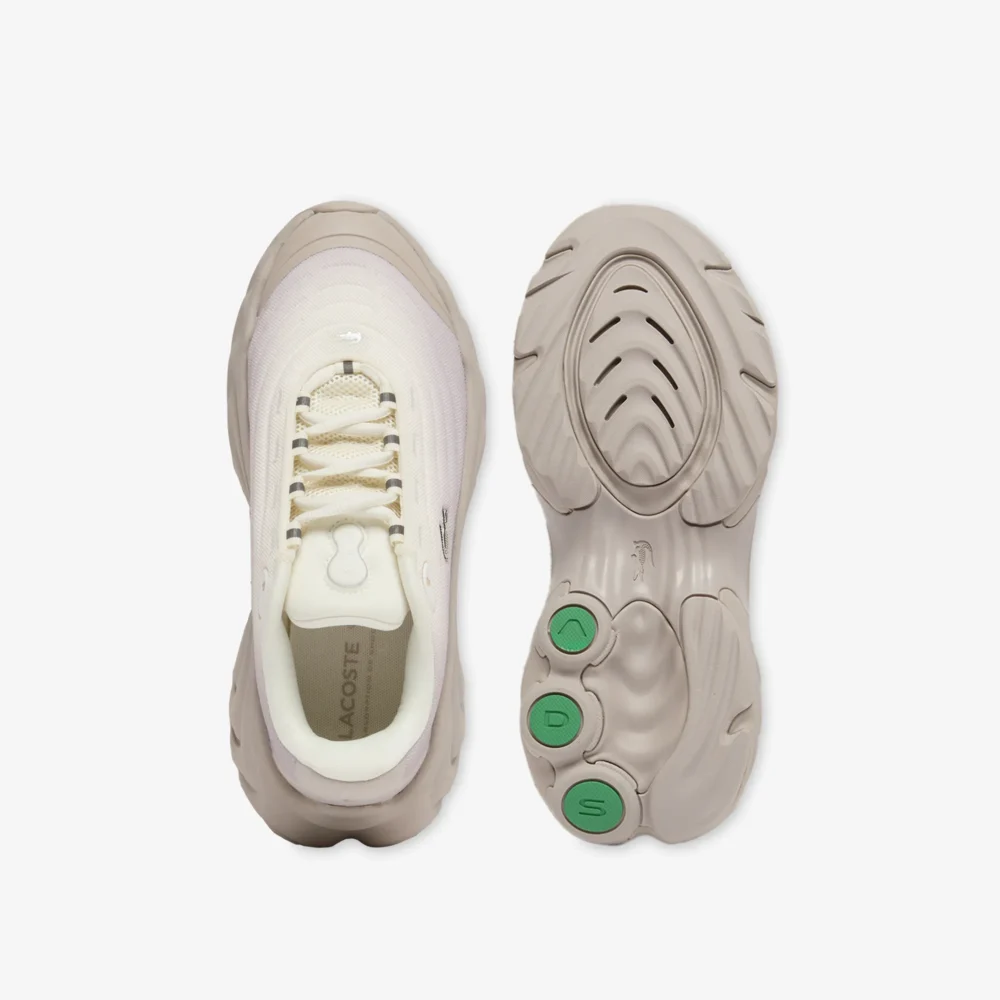
Shoes are a category where counterfeits can easily pass the test in photos, but not in your hands. You can recognize an original Lacoste by its flexible, grippy rubber sole, free of sharp edges or the smell of cheap plastic. The stitching inside and on the upper should be even, with no loose threads. The materials (leather, suede, textiles) feel pleasant to the touch and have no sharp edges.
Important matter: the label on the tongue. There you’ll find the SKU, which must match the code on the box. Color, model name, size: everything should be identical. Fakes often use excessive capitalization or typos in the colorway name. Also check if the logo on the side of the shoe matches the brand book, with no smudges or disproportionate details.
Perfume
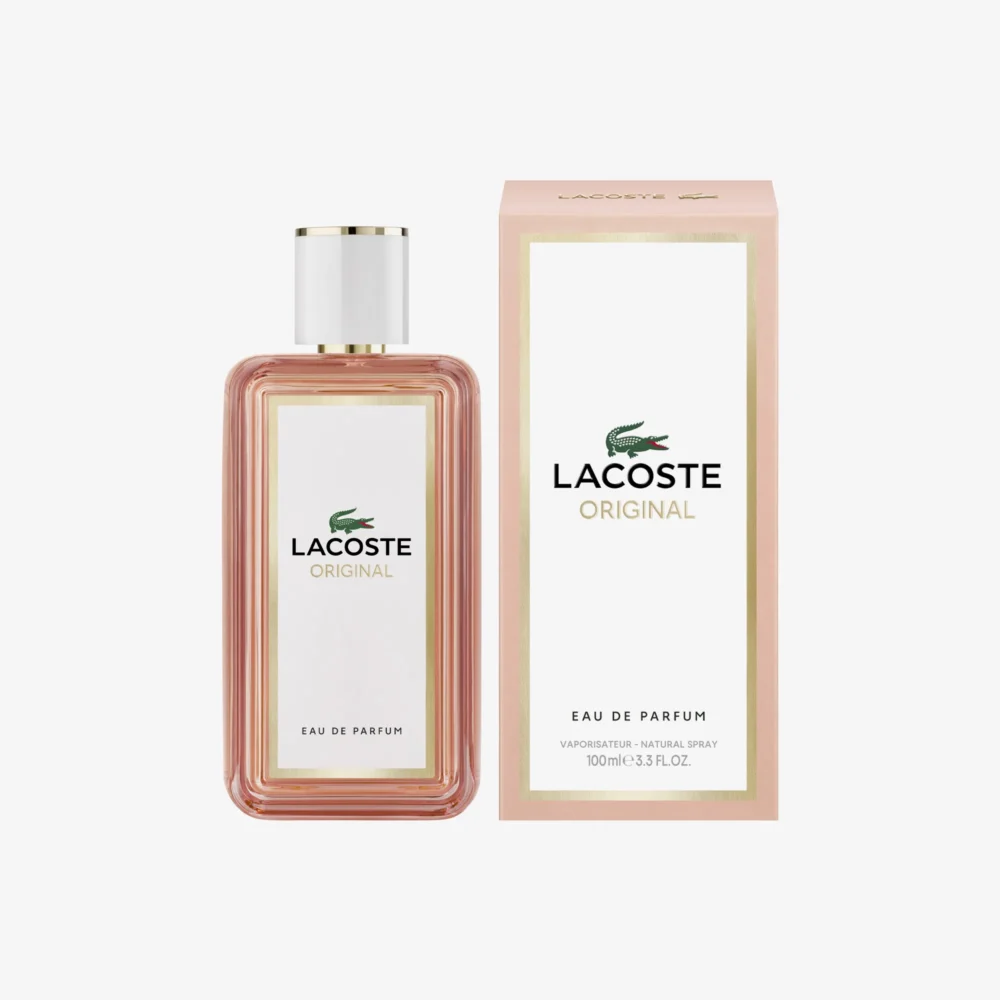
Start here with the bottle. Thick glass, free of air bubbles, precisely fitted atomizer. The box should be wrapped in tightly “sealed” cellophane, not loosely covered with foil. The original always has a batch code printed or embossed on the bottom of the bottle and on the box.
Counterfeits often include a paper ” certificate of authenticity ” inside. Lacoste does not do this. The absence of a certificate is actually a good sign—strange, isn’t it? The scent matters too. Open a tester in an official store to compare the notes if you have any doubts.
Accessories
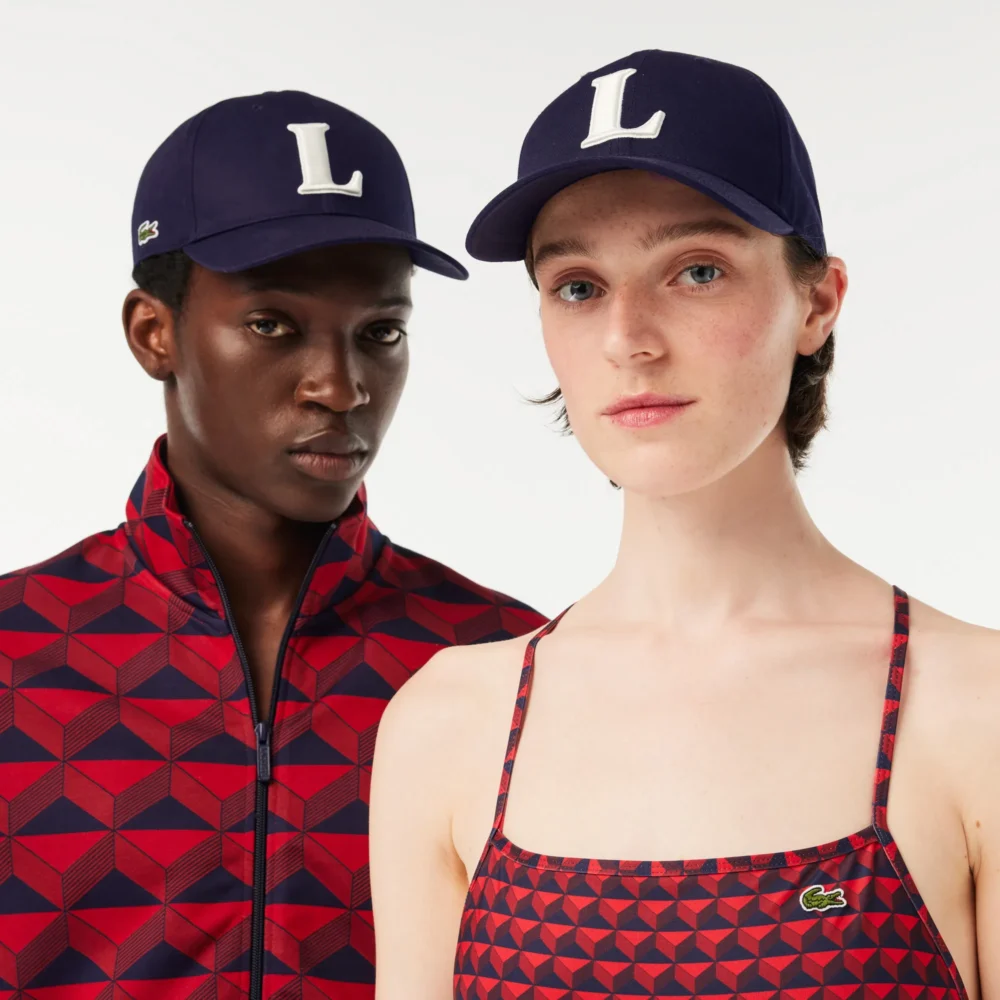
Belts, caps, wallets—here, precision matters. Even stitching, clean edges, logos without smudges. The fabric label and the cardboard tag must match the model name and product color. If the label says “navy blue” but you see something closer to black, that’s a problem.
Also check the quality of the finishing; the original has no loose threads or uneven seams on the edges. These are details you notice immediately when you hold the product in your hand.
Technology, tags, and source of purchase
Since 2024, some Lacoste products have small QR codes leading to a “digital passport” (UNDW3 standard). By scanning it, you get info about authenticity, the product’s journey, and sometimes some benefits from the brand. Sounds great, but note: not all items have a QR code. The absence of a code does not mean it’s fake.
If there is a QR code, check whether the website you are directed to looks official (domain lacoste.*) and whether the information matches the label. Counterfeits increasingly have their own codes that lead nowhere or to fake websites.
AI helps, but it is not an oracle
Lacoste is testing the Vrai AI tool, which reportedly achieves 99.7% accuracy in detecting counterfeits based on photos of the logo or crocodile. It’s a cool solution for stores and warehouses, but the average consumer doesn’t have access to it.
In general, AI alone is not enough. A single signal ( even a QR code or a nice logo) is not sufficient. Combine several indicators: source, price, finish, tags.

Authorized channels and price signals
Lacoste officially states clearly: there is no public database of serial numbers or verification service for customers. The safest purchases? Brand boutiques, lacoste.com, or authorized retailers (check on the brand’s website).
Prices are another red flag. A classic polo usually costs €80-150. Offers that are much cheaper should raise your concerns. As for production in Morocco, Tunisia, or Egypt? That’s normal—Lacoste manufactures in many countries.
Common sense prevails: look for a trusted source, compare several details, and don’t be fooled by a single “perfect” feature.
Trust in the crocodile
The authenticity of Lacoste products is not a matter of a single artificial detail that can be quickly checked and ticked off. Instead, it is a picture composed of many elements that together create a coherent whole. The quality of the material, the precision of the embroidery, the finishing details, authenticity certificates, and the place of purchase. Each of these aspects confirms the others.

When you know these rules, buying Lacoste stops being a lottery. You no longer have to rely on luck or intuition. You have specific reference points that allow you to distinguish the original from a fake in just a few minutes. It’s simply a matter of knowledge, which you now possess.
And the crocodile? It remains what it has always been. A symbol of quality that needs no explanation.
Tom W.
editorial fashion






Leave a Comment