

Who owns Miu Miu – facts, structure, and context
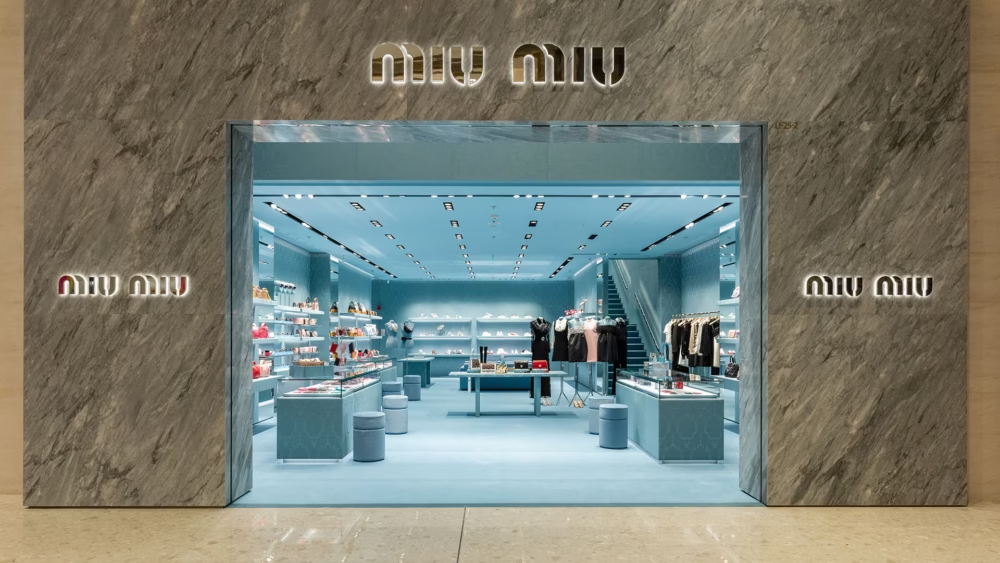
Miu Miu has a single corporate owner, which is not the norm in the world of fashion conglomerates. And that’s exactly why this question is coming up more and more often.
When a luxury brand has a transparent ownership structure, it means specific things for you as a customer. First, you know who is responsible for the quality of what you buy. Second, you can follow the long-term vision of the brand, not just the seasonal collections. Third, ownership transparency is linked to greater accountability, including in matters of sustainability and production ethics.
Miu Miu has reached the peak of fashion media attention in recent years. Described as “the hottest brand” among younger consumers (Gen Z and millennials), it sparks curiosity not only with its designs but also with its business position. Who is really behind this brand? Who makes the decisions about its direction of development?
In the next section, you will find the solid ownership structure and specific figures showing the scale of Miu Miu’s operations. No speculation, just facts.
Who formally owns Miu Miu
Miu Miu is 100% owned by Prada S.p.A, the Italian Prada Group. There are no external shareholders here, no joint ventures. The brand is a subsidiary operating under the full corporate control of its parent company.
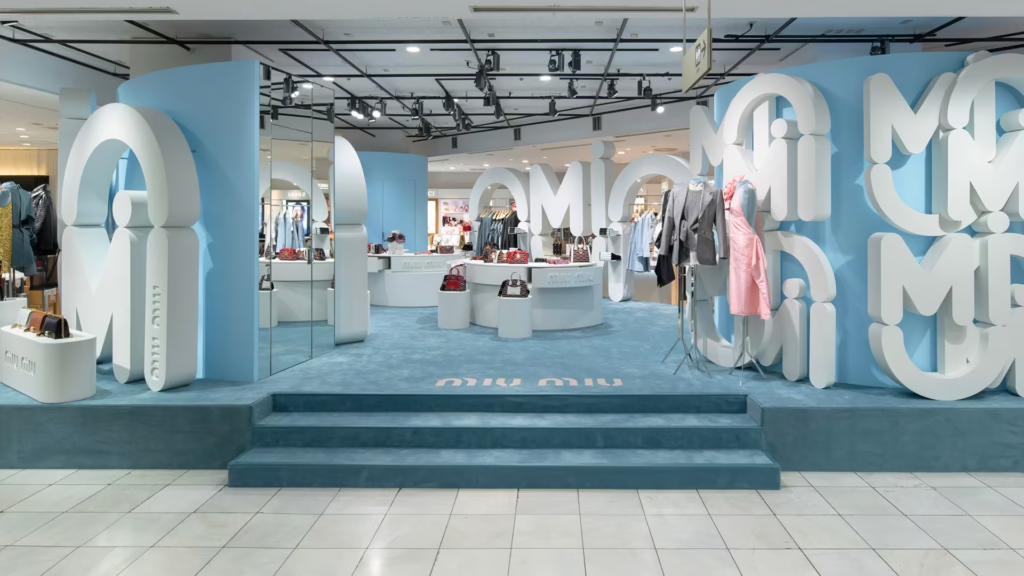
Who controls Prada Group
Prada S.p.A. is approximately 80% owned by Prada Holding S.p.A., which is the company of the Bertelli and Prada families. The remaining ~ 20% of shares are publicly traded on the Hong Kong Stock Exchange (HKEX). In practice, this means that the family retains full strategic control over the entire Group, and consequently, over Miu Miu.
Key individuals in the ownership and management structure:
- Patrizio Bertelli – Chairman of the Prada Group Board
- Miuccia Prada – founder and creative director of Miu Miu (her vision shapes the brand)
- Andrea Guerra – CEO of the entire Prada Group (since 2023)
- Silvia Onofri – CEO of Miu Miu (from February-March 2025, reporting directly to Guerra)
- Lorenzo Bertelli – board member, responsible among other things for sustainability
Operationally, Miu Miu utilizes the Group’s infrastructure: production chains, distribution, technologies, and resources. Creatively? It maintains its own identity and autonomy under the supervision of Miuccia. This is a model typical for large luxury groups.
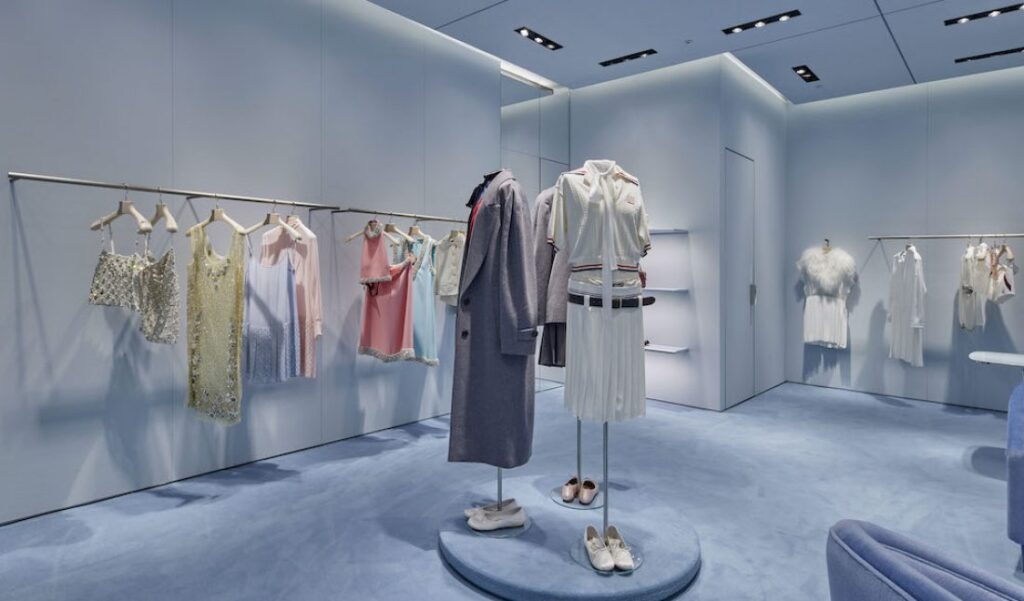
Today’s scale of the brand
The numbers speak for themselves, so here’s how Miu Miu is growing. In 2023, the brand generated around €753 million. The following year saw a real leap: retail sales jumped by 93-105% (depending on the quarter, e.g., Q3 delivered +105%, and the first 9 months +97%). 2025 brought retail growth of +35% year-on-year, with Q4 at +20% and the first 9 months as much as +41%. In Q1 2026, growth slowed to +2.4% year-on-year, which makes sense after such strong bases.
For context: the entire Prada Group achieved €5,718 million in net revenue in 2025. Miu Miu, according to some reports, generated around €1.19 billion in net sales at that time, making the brand the second most profitable in the Group’s portfolio. Quite impressive, isn’t it?
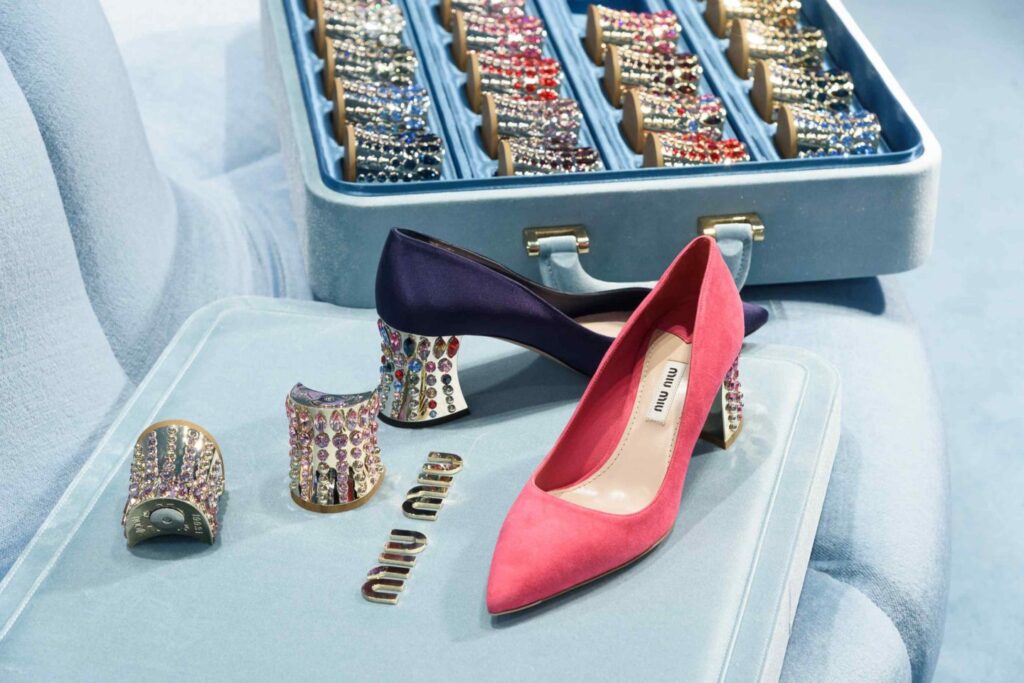
Retail reach and flagships
End of 2025: Miu Miu has around 162 own boutiques + 6 franchised stores. The entire Group operates approximately 843 stores globally, employing about 17,901 people. In 2025, the London flagship was opened at 150 New Bond Street, with 7,500 square feet of space.
Oh, and on December 2, 2025, Versace joined the Prada Group (for approx. €1.25-1.38 billion). Miu Miu still reigns as the “hottest brand” in the Lyst ranking, maintaining a balance between product categories and geographies. It’s not just stores, it’s a cultural position.
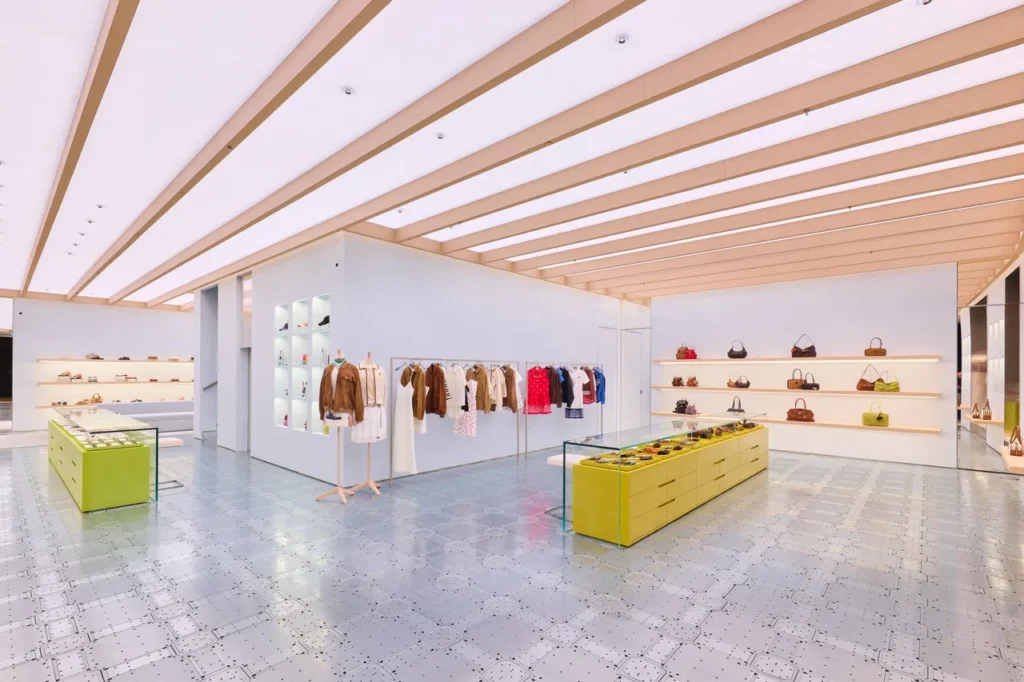
Ownership and identity
When you reach for a Miu Miu bag, you’re buying a piece of the Prada family brand’s history, but that doesn’t diminish its value in any way. This is where all the magic begins—this particular brand was created to establish a distinct identity within a larger structure. It’s not a “younger sister,” but an autonomous voice with its own character.
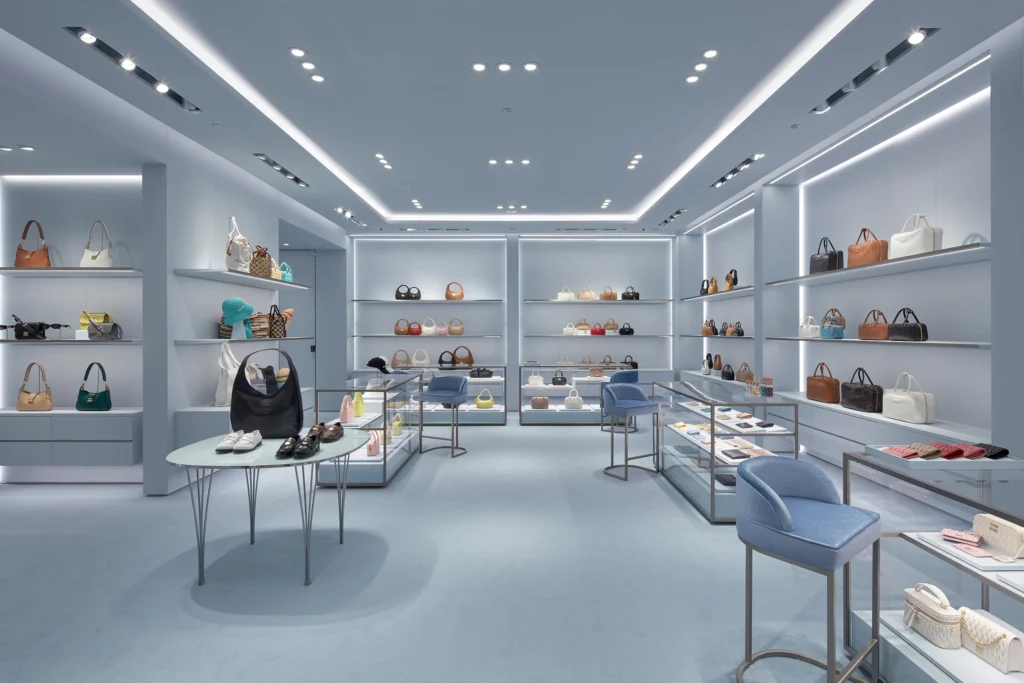
What should you really take away from this? Your bag is built on the solid foundations of an Italian luxury group, yet it remains true to its rebellious, experimental spirit. The ownership structure gives Miu Miu financial stability, access to the finest artisans, and a global distribution network. At the same time, the brand maintains creative freedom, which allows it to keep surprising us.
So you’re buying quality backed by decades of experience, but in packaging that refuses to be predictable.
Stenia
lifestyle editorial
Luxury Blogf




Leave a Comment