

What is the most luxurious cruise ship?
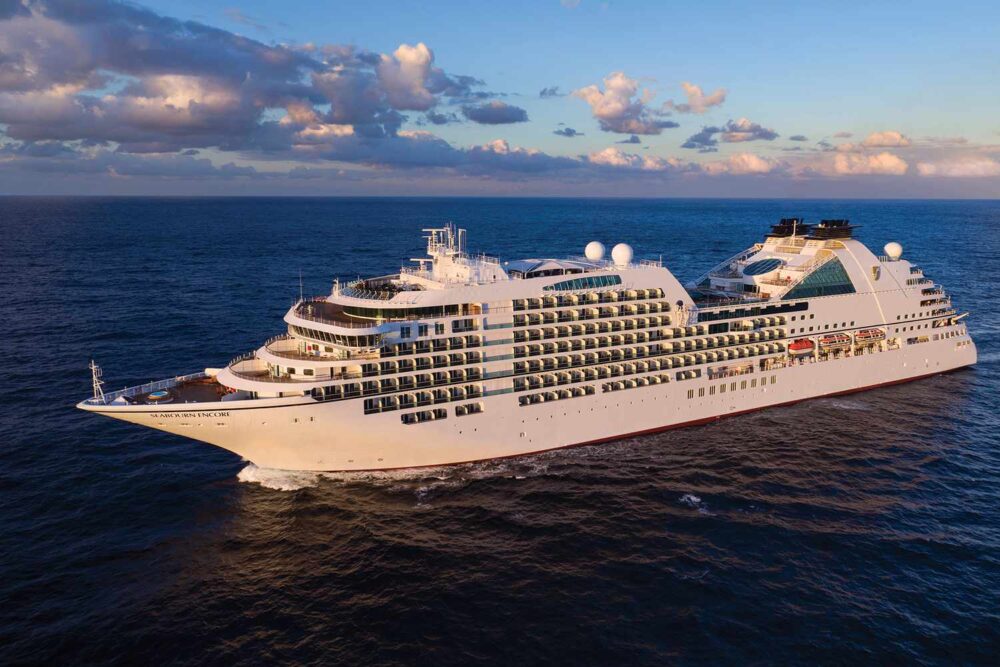
“There is no single ‘most luxurious’ cruise ship. It all depends on the criteria.”
It sounds like an excuse, but in 2026 it’s simply the truth. The ultra-luxury segment is booming, and guests’ expectations have diverged in many directions. For some, luxury means an intimate atmosphere on a yacht with 200 passengers, where the staff knows your name. For others, it’s a ship for 700 people with plenty of space, an uncrowded pool, and a cabin larger than their Warsaw apartment.
Why is there no single winner?
Because the criteria overlap and conflict. Take design: minimalist Scandinavian style versus baroque elegance. Or inclusions: one ship packs everything (alcohol, excursions, tips), another charges extra but offers choice. Some want Antarctica and a zodiac ride at dawn, others prefer a stress-free trip to the Caribbean. On top of that comes sustainability, which even those with the deepest pockets are suddenly asking about.
This year, new vessels from hotel brands are hitting the water, and bookings for high-budget cruises are breaking records. So the question “which is the best?” has become “the best for what?”. In the following sections, I will break down the criteria and show who is truly competing for the crown.
What does the most luxurious at sea mean?
So let’s take a look at what really determines this title: it’s not just about the size or the ticket price, but about very specific things that together create the impression of an ultra-luxurious cruise.
Intimacy, service, and space
The first issue is the number of passengers. In the luxury segment, we’re usually talking about 200–900 guests on board, which is incomparably fewer than the 4,000+ on mass-market giants. Why does this matter? Because the space per person increases dramatically, and the crew-to-guest ratio reaches levels of 1:1 to 1.25:1. In practice, this means that each passenger is attended by at least one crew member, often with a dedicated butler in the suites. You can feel the difference when no one has to wait for service and everything happens almost before you even ask.
The apartments themselves? The smallest room has a balcony or a veranda (a standard in ultra-lux), and the flagship suites can offer around 4,443 sq ft with a private spa, sauna, and sometimes even an outdoor jacuzzi. That’s the size of a small house, not a cabin.
Cuisine, art, wellness, and sustainability
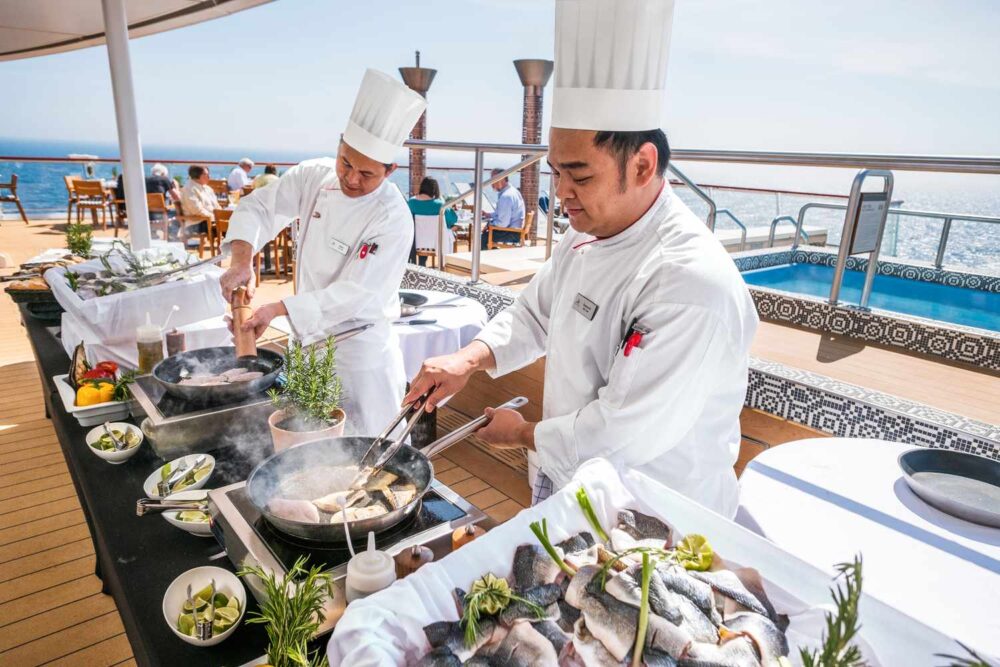
Gastronomy is another highlight: 5-11+ restaurants, often overseen by Michelin-starred chefs, all included. Plus art collections ( Picasso, Miró, Fabergé eggs), turning the ship into a floating gallery. Spa and fitness facilities as extensive as those in a five-star land hotel.
Inclusions also matter: premium drinks, Wi-Fi, tips, and sometimes even excursions and flights are included in the price. Less commonly, helicopter expeditions or dives in a bathyscaphe, but if the ship has such toys ( plus Zodiacs, dynamic positionin g), it raises the bar. Finally, technology and ecology: LNG propulsion on newer vessels from 2026 shows that luxury is beginning to combine comfort with responsibility. This is not yet the standard, but the direction is clear.
The strongest contenders 2025-2026
If anyone is expecting me to point to a single ship and settle the matter, I have to disappoint you. There is no one “most luxurious” ship. The market has split into several distinct visions of luxury, each with its own approach.
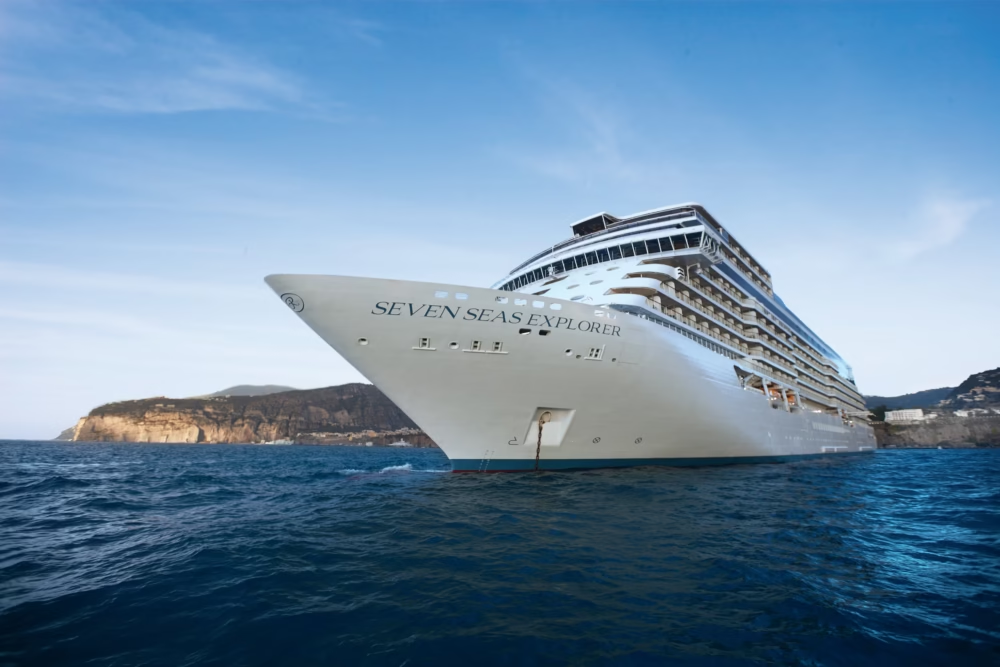
Regent Seven Seas remains the classic leader. Seven Seas Splendor, Explorer, and Grandeur are all-veranda ships (every cabin has a balcony), and on board you’ll find works by Picasso, Miró, and even a Fabergé egg on the Grandeur. The Regent Suite offers ~4,443 square feet and its own spa with a sauna. This is no longer a cabin—it’s a hotel suite. The upcoming Prestige ( 2026) is set to raise the bar even higher.
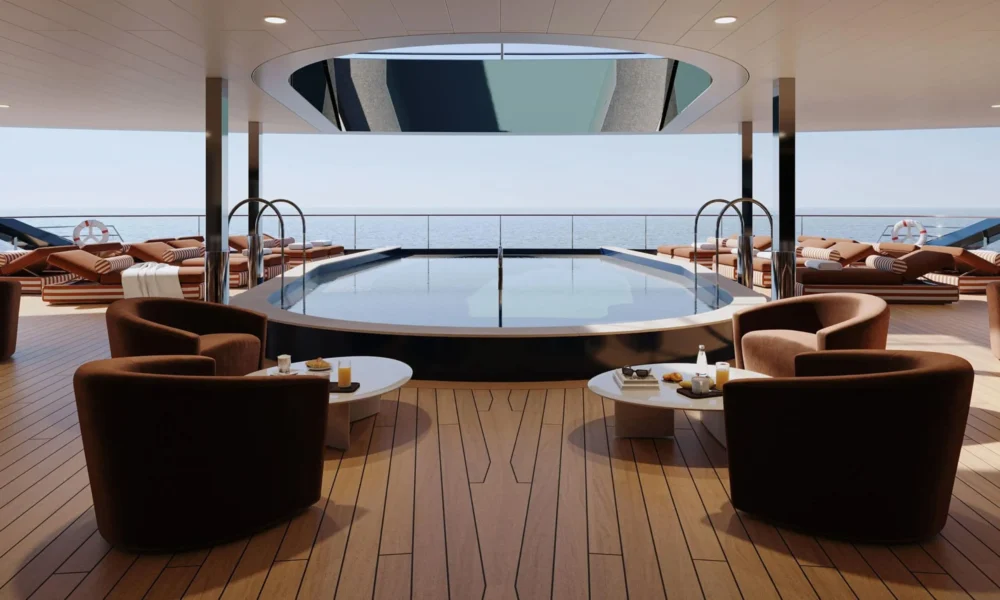
Ritz-Carlton Yacht Collection is playing the superyachting card. Evrima carries around 298 guests, Ilma about 448, and Luminara about 452. All suites have terraces, and Ilma is the first ship in history to receive a five-star rating from Forbes Travel Guide. The aft marina and intimate atmosphere are their strengths.
Four Seasons I (2026) will bring a residential style for just ~222 guests in 95 suites, 11 dining venues, and top layouts reaching up to ~10,000 square feet. A large aft pool and marina make this the least “cruise ship-like” of the entire lineup.
Explora Journeys (I-III) targets around 900 guests, but with terraces in every suite, several pools (including a conservatory), and 6-7+ restaurants. Explora III runs on LNG and features a second Owner’s Residence—this is a new definition of “premium for the masses.”
Scenic Eclipse (~228 guests) is a luxury expedition ship: Polar Class 6, helicopters, submersible, butler service, and 9-10 restaurants. If you want luxury plus adventure, this is your destination.
It is also worth mentioning Silversea (Silver Nova/Ray; Endeavour), Seabourn, or Crystal with Nobu on board. Each leader has its own niche and definition of excellence.
The intimacy of a yacht or a range of attractions
Choosing between an intimate yacht and a larger ship is a bit like deciding between a private club and a multifunctional resort. Both worlds have their merits, so it’s worth understanding exactly what you gain and what you give up.
Yacht intimacy in practice
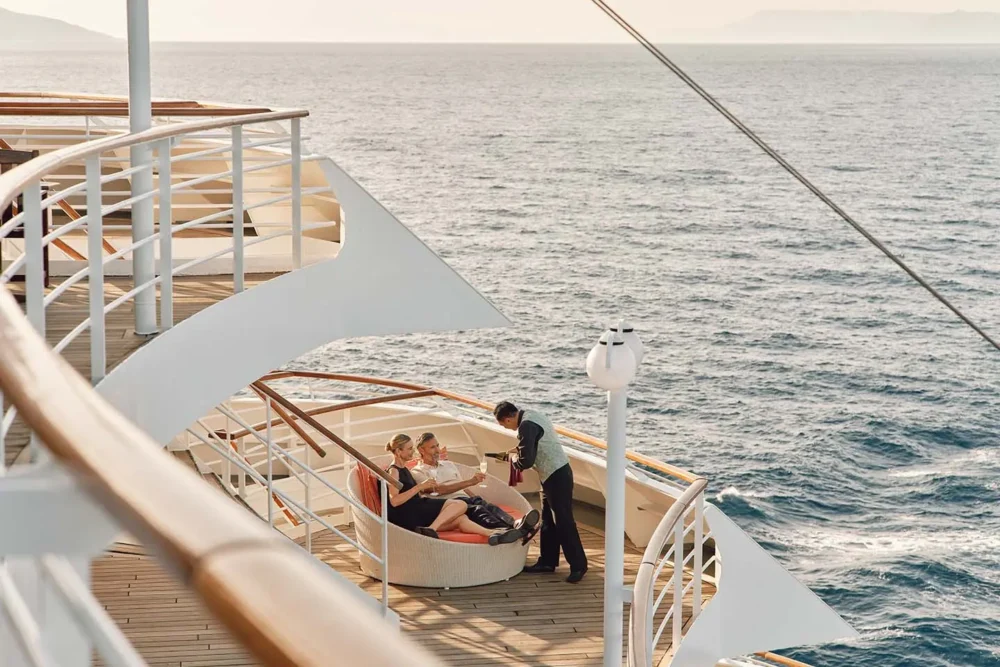
Small vessels (about 200-300 passengers) create the atmosphere of an exclusive club, where after a few days you already know the bartenders by name. They have a marina with water sports equipment available directly from the deck, and they enter ports that larger ships can only dream of (I’m thinking here of Greek islets or Norwegian fjords). Some luxury expedition yachts add helicopters, submersibles, or Zodiacs if you’re planning to visit polar regions or remote archipelagos. This is a format for people who value privacy and unusual routes more than a tenth restaurant.
Lots of attractions on larger vessels
Ultra-lux ships with 700-900 guests are practically floating cities of art. Here you get 6-11 (or more) culinary venues, several pools on different decks, theaters, galleries, and spas stretching across an entire floor. Art programs, live concerts, a culture concierge planning opera evenings in ports. Every day can look completely different, even if you spend most of it on board. This is the choice for those who expect variety and enjoy long days at sea surrounded by haute cuisine and design.
Mini-fit checklist:
- Intimacy and club-like atmosphere vs a wealth of culinary options
- Access to small, niche ports vs extensive onboard infrastructure
- Expedition activities (Zodiac, diving) vs relaxing cruise with artistic program
- Fewer people, closer relationships vs anonymity and a wider range of activities
No solution is objectively better. Just different travel philosophies.
The price of luxury
Price lists for ultra-luxury cruises can surprise even experienced clients. An entry-level cabin costs around $700–$2,000 per person per night, flagship suites reach $10,000–$25,000, and year-long around-the-world cruises start at $100,000 and can even exceed $800,000 per person. With such amounts, the key question becomes: what exactly do I get for this price?
What is actually included in the price?
The best all-inclusive lines (Regent, Silversea, Seabourn) really pack a lot these days. Your base fare includes fine dining in every restaurant, unlimited premium drinks, Wi-Fi, gratuities, and full butler service. Many cruise lines also offer a wide selection of shore excursions, and sometimes even business class flights. Sounds great, doesn’t it?
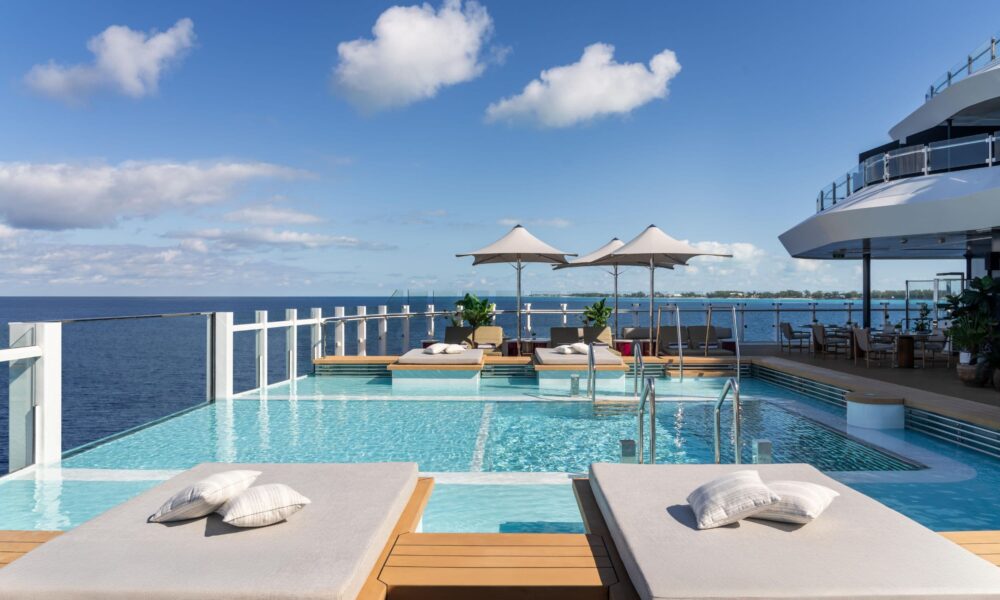
The hotel model looks different. Ritz-Carlton Yacht Collection or Four Seasons charge “per suite/night”, breakfast included, but lunch and dinner are often optional. Spa, premium alcohol, shorex. Each item is an extra charge. On one hand, you pay more cash, but on the other, you have greater control over your expenses and don’t pay upfront for things you won’t use.
How to compare the value of two offers?
I recommend a simple framework. Make a two-column list:
Included in the base price:
- Meals (what kind and how many)
- Drinks (brand range)
- Wi-Fi, tips, butler
- Trips (how many, what kind)
For an additional fee:
- Premium shore excursions
- Spa and wellness
- Alcohol not included in the package
- Flights, transfers
Summarize everything first and only then compare. Sometimes a “more expensive” all-inclusive offer turns out to be cheaper than the hotel model once you add shorex and restaurants. Other times, it’s the opposite, especially if you plan to spend more time relaxing on board than sightseeing.
One sea, many definitions of luxury
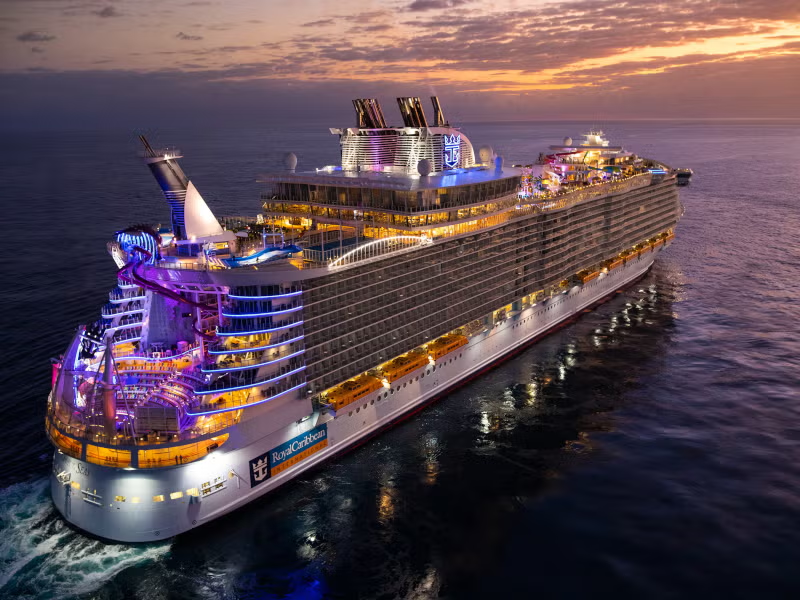
Each cruise line has its own vision of what luxury at sea means. For some, it’s crystal chandeliers and golden railings; for others, it’s minimalist design and spaciousness. Symphony of the Seas focuses on the wow factor of gigantic attractions, while Regent spreads its arms and says: peace, quiet, all-inclusive. Both of these visions have their fans—and both are… expensive.
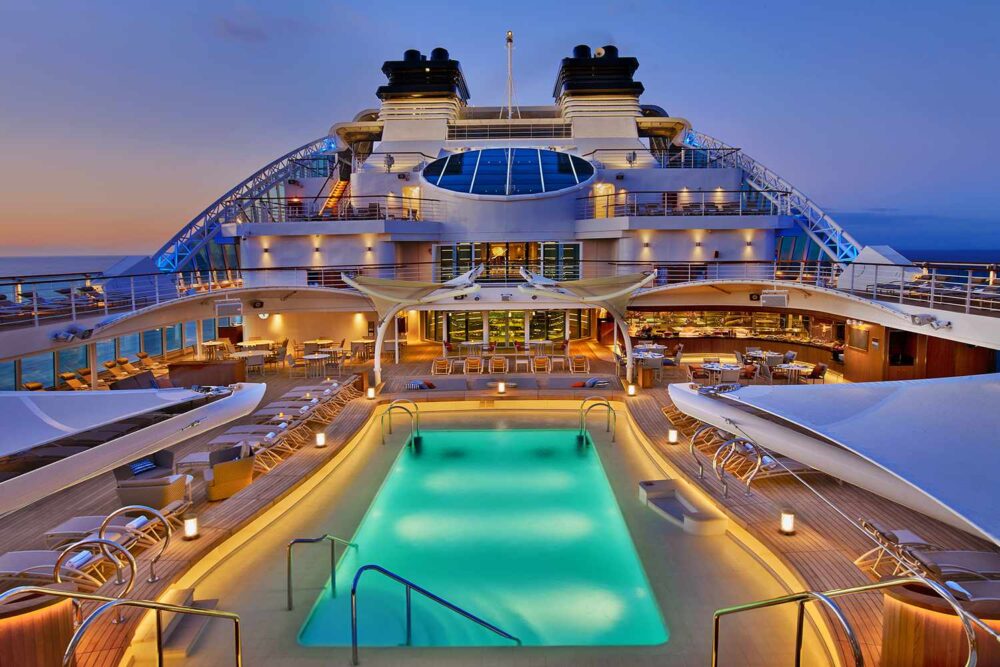
Actually, trying to choose a clear winner somewhat misses the point. Luxury is too personal to be confined to a single definition. Some people feel luxurious in a crowd, with a wave pool and ice shows. Others need silence, service that remembers their name, and champagne without asking about the price.
The question “which ship is the most luxurious” is really a question of “what kind of luxury is yours.” And honestly? That’s actually good news for the industry.
Miki Z/.
lifestyle & travel editorial team





Leave a Comment