

US Polo Assn vs Polo Ralph Lauren – key differences
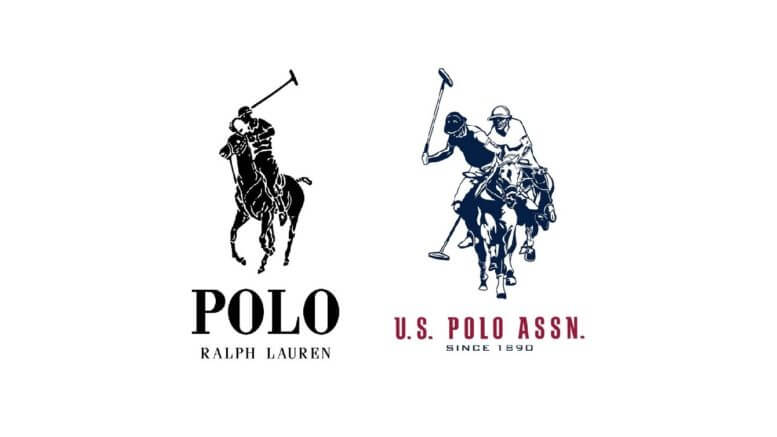
Have you ever wondered why you see people on the street wearing polo shirts that look almost identical, yet one costs 50 zlotys and the other 500? That’s no coincidence—it’s the result of one of the most tangled stories in the fashion world.
Here are some numbers that might surprise you: U.S. Polo Assn. has over 1,100 stores in 190 countries, while Polo Ralph Lauren has around 500 boutiques worldwide. Paradoxical? The brand you hear less about actually has twice as many retail locations.
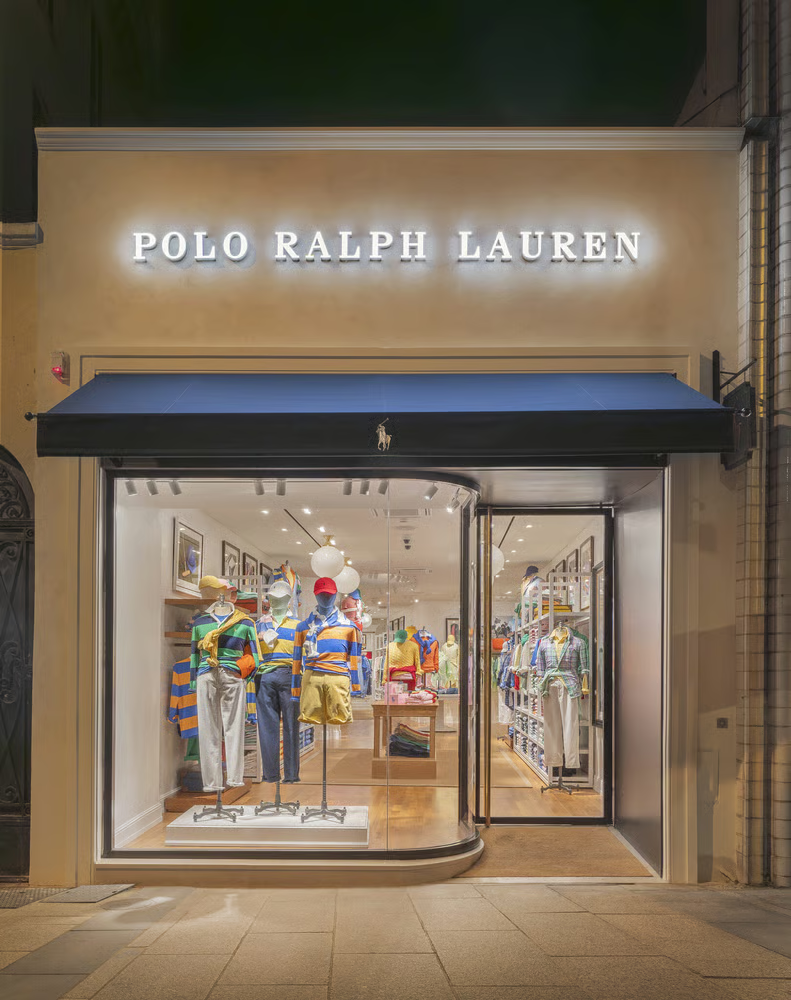
What is the difference between US Polo Assn and Polo Ralph Lauren?
Why does this comparison still make sense in 2025? Because right now, with online shopping dominating and consumers more aware of their choices, the difference between these brands is becoming even more confusing. Algorithms show us both products side by side, influencers wear them interchangeably, and we’re left making a choice without fully understanding what we’re actually buying.
The common denominator is, of course, polo – a sport that originated in the 6th century BC and has spent centuries cultivating its prestigious image. It’s a discipline associated with the elite, an exclusive lifestyle, and… well, that’s where the problem begins. Both brands draw inspiration from the same source, but they do so in completely different ways.
To bring order to this chaos, we will analyze three key axes:
• Brand origins and DNA – where they come from and what they truly represent
• Practical shopping differences – what you’re actually buying when you choose one or the other
• Takeaways for the conscious consumer – how not to be fooled by appearances
It might sound theoretical, but trust me—understanding these differences can save you a lot of money and frustration. Especially if, like I once did, you bought “that Ralph Lauren at a great price,” only to later discover it wasn’t the Ralph Lauren you thought it was.
So let’s start at the very beginning—with a story that explains how two brands with seemingly identical DNA could take such different paths.
Genesis, identity and logo – the roots that define clothing
Have you ever wondered why two brands with a horse in their logo can be so different? This story actually began at the end — with legal disputes that lasted for years.
To understand all the fuss, you have to go back to the beginning. Ralph Lauren founded his brand in 1967, when he was just 28 years old. He was a designer from the Bronx who dreamed of the elegance of high society. In contrast, US Polo Assn. appeared much later—in 1981—as the official brand of the United States Polo Association, an organization that has overseen polo in America since 1890.
| US Polo Assn | Polo Ralph Lauren |
|---|---|
| Launch year: | Launch year: |
| Connection to sports: | Inspired by sports, with no direct organizational affiliation |
| Logo icon: | One rider with a polo mallet |
The symbol plays a crucial role in this story. Lauren chose the polo player because it evoked associations with aristocracy and an exclusive lifestyle. It was a deliberate marketing move—polo is a sport of the wealthy, so clothes bearing this logo instantly gained prestige. The real polo organization watched this for a long time before finally deciding to take action.
US Polo Association chose a logo featuring two riders. This was no coincidence. They wanted to convey authenticity—a real moment from the game, the sport’s dynamic energy. One rider suggests stillness; two mean movement, the battle for the ball.
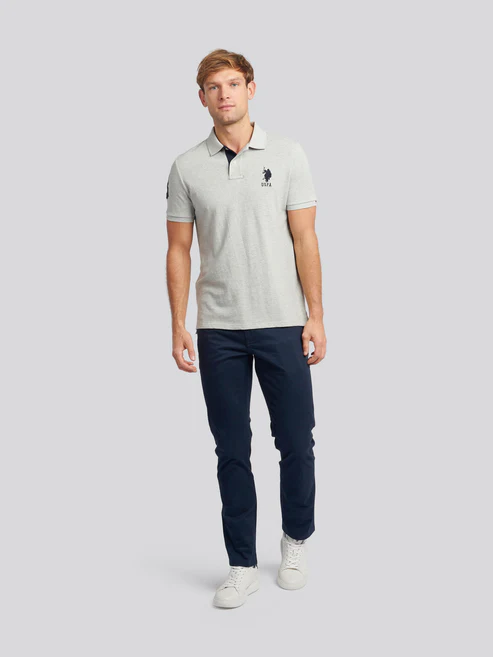
The legal dispute between the brands lasted from 2010 to 2013 and concerned precisely these symbols.
Ralph Lauren argued that his trademark was older and more recognizable. US Polo Association, on the other hand, claimed that it had the right to use symbols of its own sport. Ultimately, the courts allowed both brands to operate, but with certain restrictions on the use of the name “polo.”
This whole situation highlights a fundamental difference in brand philosophy. Lauren has always built aspirational luxury—selling a dream of a lifestyle that most people can’t afford, but at least want to look like they can. It’s marketing rooted in imagination and desire.
US Polo Assn. took a completely different path. They have genuine sports heritage, real roots in polo. They don’t have to pretend—they are the sport. But paradoxically, this might be their marketing weakness. The truth doesn’t always sell better than a beautiful illusion.
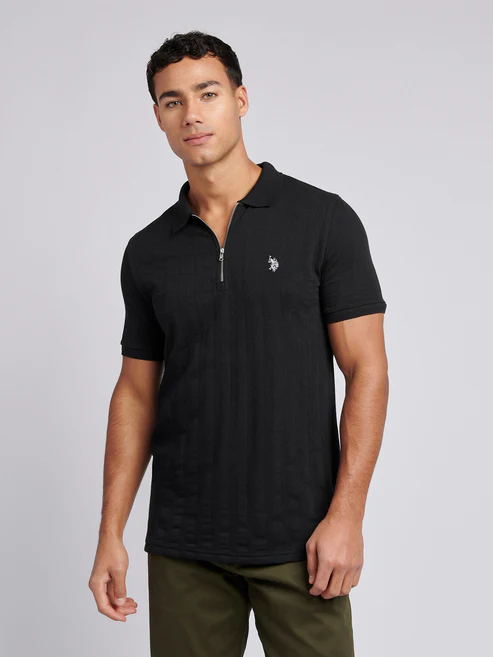
Today, these differences in origin influence everything else—from how brands position themselves to who buys them and why.
Price, quality, and style in practice – a shopping guide
You’re probably wondering how much a good quality polo shirt really costs and whether it’s worth paying extra for a “better” brand. After checking current prices in Polish stores, the differences are truly significant.
Comparison of product prices on the Polish market in 2025:
| Product | U.S. Polo Assn. | Polo Ralph Lauren | Price difference |
|---|---|---|---|
| Men’s polo shirt | 149.99 PLN | 399.99 PLN | +250.00 PLN |
| Women’s polo shirt | 139.99 PLN | 349.99 PLN | +210.00 PLN |
| Men’s sneakers | 299.99 PLN | 699.99 PLN | +400.00 PLN |
| Women’s sneakers | 279.99 PLN | 649.99 PLN | +370.00 PLN |
Prices may vary depending on the store, but the proportions remain similar. Ralph Lauren is consistently about 2-3 times more expensive.
Material and finish – where do the differences lie
Fabric weight is the first indicator of quality. U.S. Polo Assn. typically uses cotton with a weight of 180-200 g/m², while Ralph Lauren opts for 220-240 g/m². You can feel the difference—the shirt is thicker and less transparent.
The number of buttons also matters. USPA often sticks to two, while RL typically uses three. The embroidery details are noticeably different—Ralph Lauren features denser stitching and a raised logo. Competitors often have flatter, more sparsely stitched logos.
Country of production is an interesting topic. Both mainly manufacture in Asia, but RL has higher quality control standards. The production cost of a single USPA shirt is around 25-30 PLN, while for RL it reaches 45-55 PLN. The profit margin is significant in both cases.
How not to get fooled – spotting counterfeits
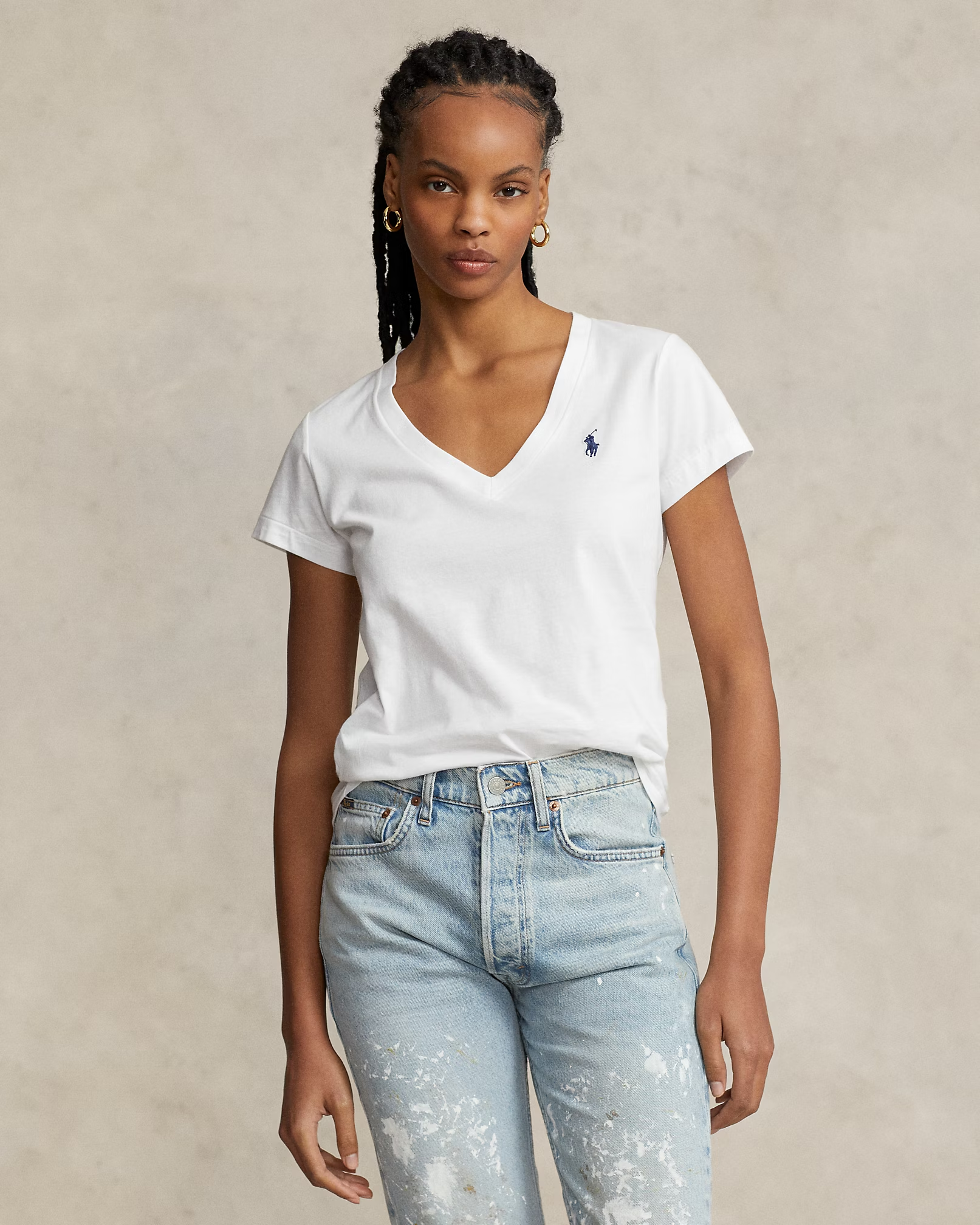
✅ Original Ralph Lauren:
- Logo perfectly centered, the horse has proportionate legs
- Tag with barcode and hologram
- Dense embroidery, no loose threads
- Buttons with engraved logo
❌ Suspicious characters:
- The horse is “limping” or has strange proportions
- Paper tag or without security features
- Loose embroidery, protruding threads
- Plain plastic buttons
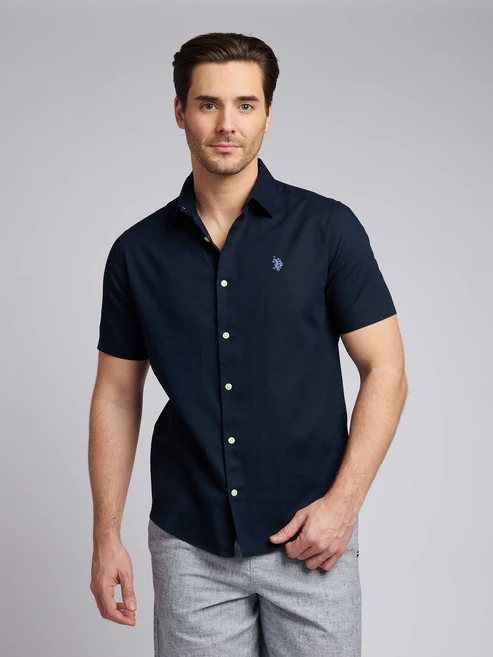
U.S. Polo Assn. also has its counterfeits, though they’re less common. Always check the official logo—it should be clear, with no typos in the brand name.
Availability in Poland
Online you have the widest selection. Zalando, About You, official brand stores – that’s where you’ll find complete collections. Ralph Lauren has had its own e-shop for Poland since 2024. USPA sells through its Polish website and marketplaces.
The situation in shopping malls is improving. Reserved often carries USPA collections, and some TK Maxx stores offer RL at discounted prices. It’s a bit of a lottery—you have to check regularly.
Promotions are predictable. USPA holds sales every quarter, while RL mainly at the end of the season. Black Friday and January sales are the best times to shop for both brands.
Sustainability is a new trend that both brands are trying to leverage. RL has a recycling program, while USPA is introducing organic cotton. However, this is mostly marketing—the actual impact on the environment remains minimal.
Choosing between these brands ultimately comes down to your budget and priorities. The quality does differ, but is it three times better? That’s something you’ll have to judge for yourself when you hold both products in your hands.
Sometimes I wonder if it’s even worth thinking so deeply about clothes. But then I remember how many times I’ve regretted impulsive choices.
Are you truly ready to commit to a brand that will stay with you for years to come?
Monii
fashion editor
Luxury Blog





Leave a Comment