

The best outlets in Italy – where to hunt for designer bargains
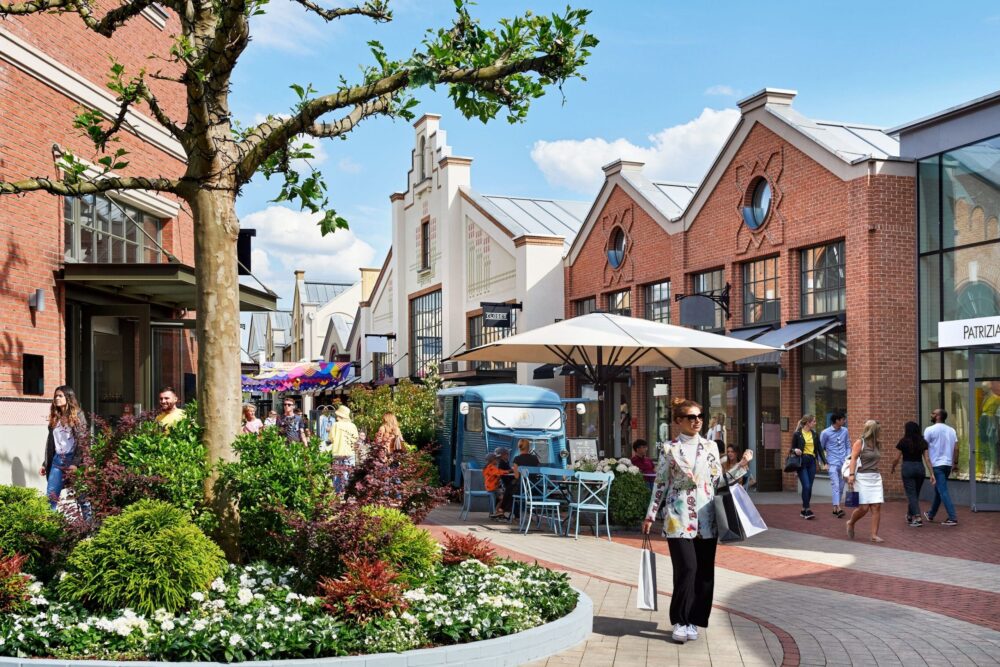
Imagine discounts from 30% to 70% all year round on Gucci, Prada, or Armani. Sounds good? That’s exactly what Italian designer outlet villages offer, and Italy is the second largest outlet market in Europe with around 33 centers. Importantly, these are not ordinary shopping malls with sales.
Why do the best clothing outlets in Italy attract crowds?
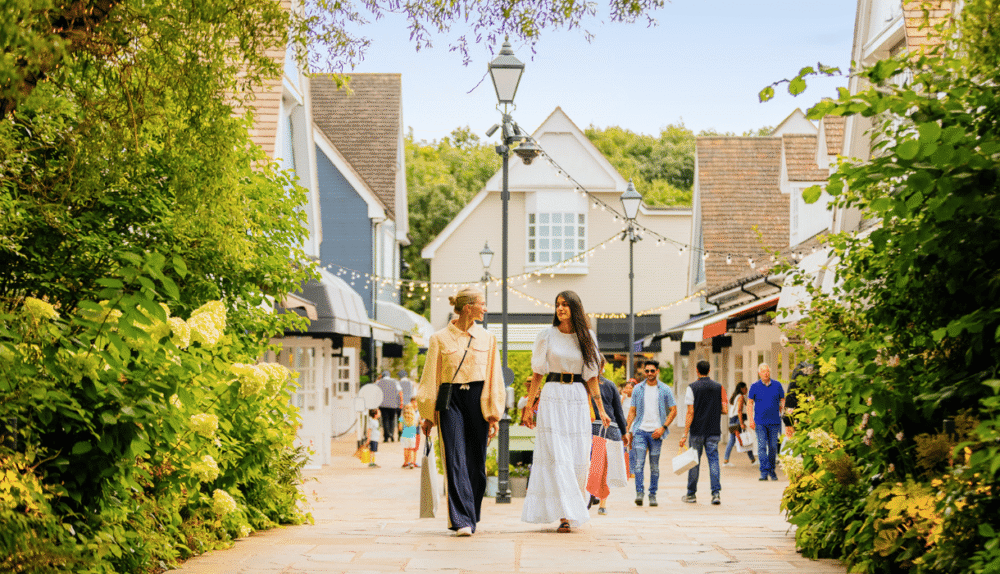
Each such village is an open layout reminiscent of a small Italian town: squares, fountains, cafés where you can relax with an espresso between shopping. The architecture imitates the local style, so in Tuscany you’ll see stone facades, while near Milan you’ll find modern lines. There are also services such as shuttle buses from city centers, tax-free service for tourists and a concierge who will help transport your shopping to your hotel.
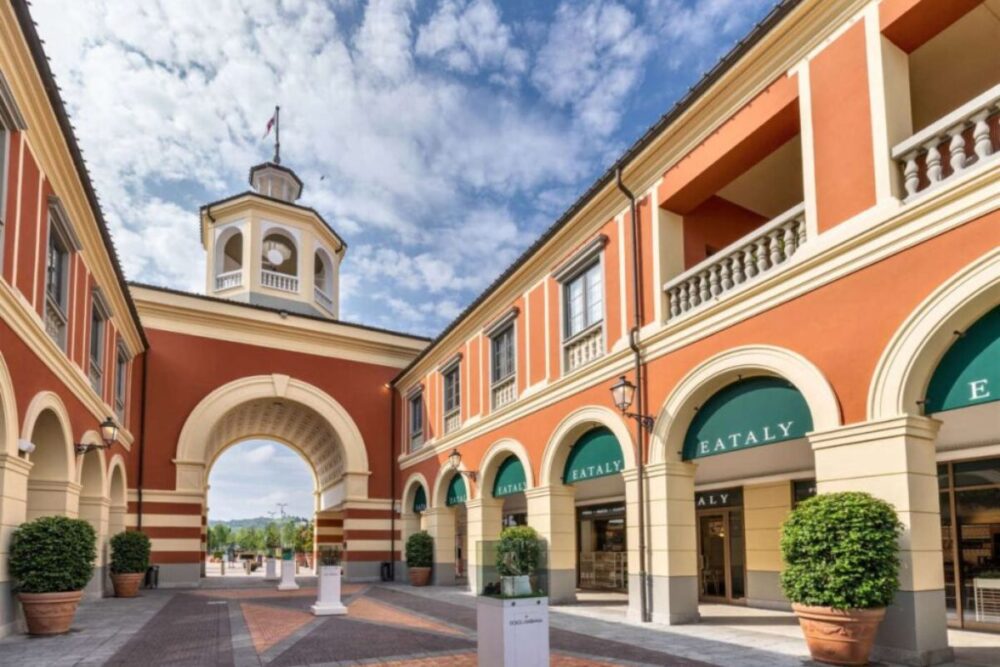
This explains the boom in shopping tourism. International visitors are returning after the pandemic, and the 50-65 age group (the so-called Re-stylers) is particularly active, skillfully combining sightseeing with bargain hunting. In the following sections, you’ll learn how this trend has developed, where exactly to go, the hard numbers on savings, and how to shop smart.
From company outlets to “designer villages”
The first Italian outlets, or spacci aziendali, were simply factory stores of brands. Nothing fancy, just a place where you could buy last season’s collection at a lower price. The true outlet format only arrived in Europe in 1995, when McArthurGlen (founded in 1993) opened Cheshire Oaks in England and a center in Troyes in France.
Milestones from 1998 to 2010
McArthurGlen entered the Italian market around 1998 through a joint venture with Fingen. And here begins the interesting part:
- 2000 – Serravalle Designer Outlet in Piedmont. Today, it is the largest outlet in Europe, with over 51,500 m².
- 2001 – The Mall near Florence, a paradise for luxury brand hunters.
- 2003 – Castel Romano (near Rome) and Fidenza Village (between Milan and Parma). Both places changed the rules of the game.
- 2006 – Barberino Designer Outlet, another Tuscan hit.
- 2008 – Noventa di Piave near Venice.
- 2010 – La Reggia near Naples.
From factory stores to lifestyle destinations
What has actually changed? Everything. They have transformed from clearance outlets into places where you spend the entire afternoon. Lokalna architektura (La Reggia looks like a miniature Caserta Palace), great cuisine, seasonal events, even sustainable development projects.
After the pandemic, the tourism boom and tax-free shopping returned. In 2025, McArthurGlen centers in Italy were visited by around 20 million people, a record number. The market has matured, and the format has proven successful.
How do Italian outlets work?
Italian outlets operate on the basis of year-round discounts, usually ranging from 30% to 70% off retail prices. During the saldi periods (January, February, and July, August), discounts can go even deeper, sometimes even up to 80%. Importantly, these are not defective goods, but collections from previous seasons or surplus stock from brands.
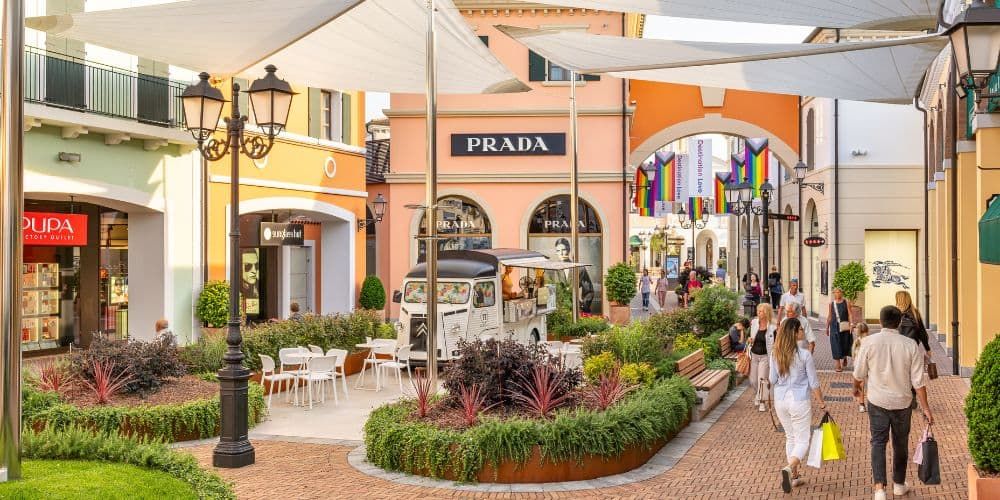
Discounts and assortment
The range of brands in designer outlets is truly extensive. Here you will find luxurious Italian names:
- Gucci, Prada, Armani, Versace
- Valentino, Fendi, Dolce & Gabbana
- Saint Laurent, Burberry
Next to them are premium boutiques (Boss, Etro, Missoni, Furla, Pinko, Patrizia Pepe) and popular accessible brands like Nike, Adidas, Tommy Hilfiger, Calvin Klein, or Levi’s. Thanks to this, everyone can find something for themselves, regardless of their budget.
Services and on-site experience
Most outlets are not ordinary malls. The architecture often reflects the local style (Tuscan towns, Piedmontese villas), and on site you will find:
- shuttle buses from nearby cities
- tax free service (important for tourists)
- concierge and hands-free shopping with delivery of purchases
- decent restaurants, cafes, parking lots
- programs VIP and loyalty cards
- zones for families with children

Hours and authenticity
Standard outlet hours are 10:00 AM to 8:00 PM or 9:00 PM (seasonal variations may occur). They are mainly closed on selected holidays, so always check the center’s website before your visit. As for authenticity, in official brand outlets the risk of counterfeits is minimal. The problem usually arises when shopping online from random sellers or at street stalls.
Where to go?
If you’re starting from Milan, you have the best selection in all of Italy. Serravalle Designer Outlet is a must-visit—about 1–1.5 hours north of the city, with a shuttle costing around €22 round trip. Importantly, it’s the largest outlet in Europe (over 51,000 m²), so plan to spend the whole day there. You’ll find a strong focus on luxury: Prada, Gucci, Valentino, all in one place. Closer to the center is Scalo Milano, which you can reach by metro or train—a cool mix of fashion and design. If you have time, it’s also worth checking out Vicolungo or Franciacorta, though those are more for fans of laid-back excursions.
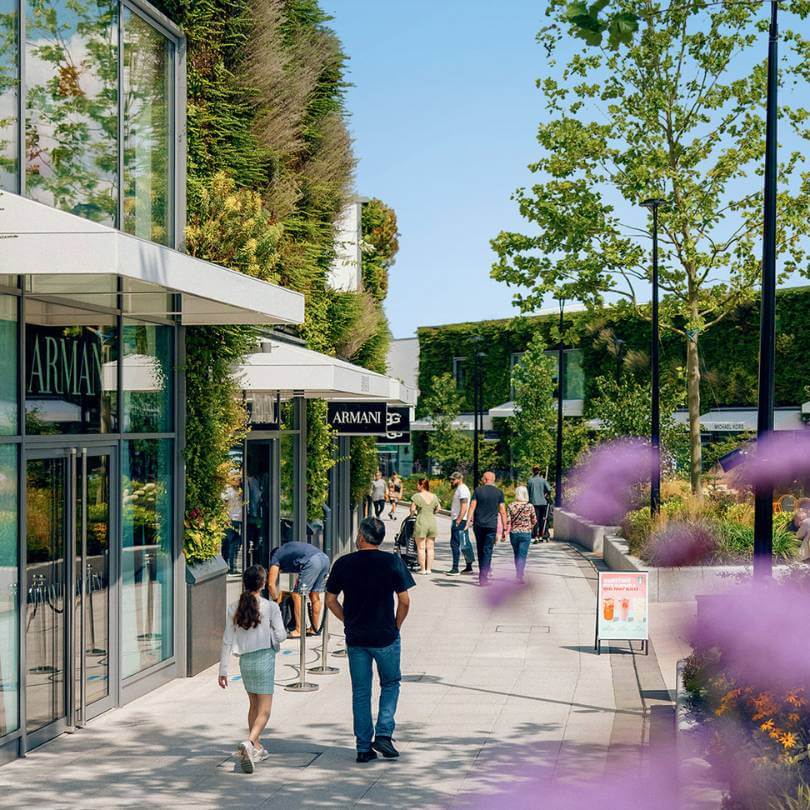
From Florence and Tuscany
Here reigns The Mall Firenze, about 30-40 minutes from the city. The biggest luxury players, and Gucci has the largest outlet in Europe there (well, Tuscany is their cradle). An alternative? Barberino Designer Outlet, which you can reach by shuttle from Florence. Less luxury, more premium, but a bit more intimate.
From Rome and Venice
Rome offers the Castel Romano Designer Outlet, about half an hour from Termini station, with a shuttle running regularly. A mix of premium and selected luxury brands, a solid base. From Venice, head to Noventa di Piave (40-60 minutes), an outlet architecturally styled after Venice, which is quite a charming touch. Premium plus luxury.
Additionally, it’s worth mentioning Fidenza Village between Milan and Bologna (Bicester Collection style, architecture inspired by Verdi) as well as La Reggia Designer Outlet near Naples, if you’re visiting the south. Match your choice to where you already plan to be—this will be the cheapest and most convenient option.
Market leaders and numbers worth knowing
There are currently about 33 outlet centers operating throughout Italy. Together, they offer roughly 750,000 m² of retail space, which means an average of about 22,700 m² per location. Each center typically has 98 stores and around 2.4 million visitors annually. Quite a lot, isn’t it?
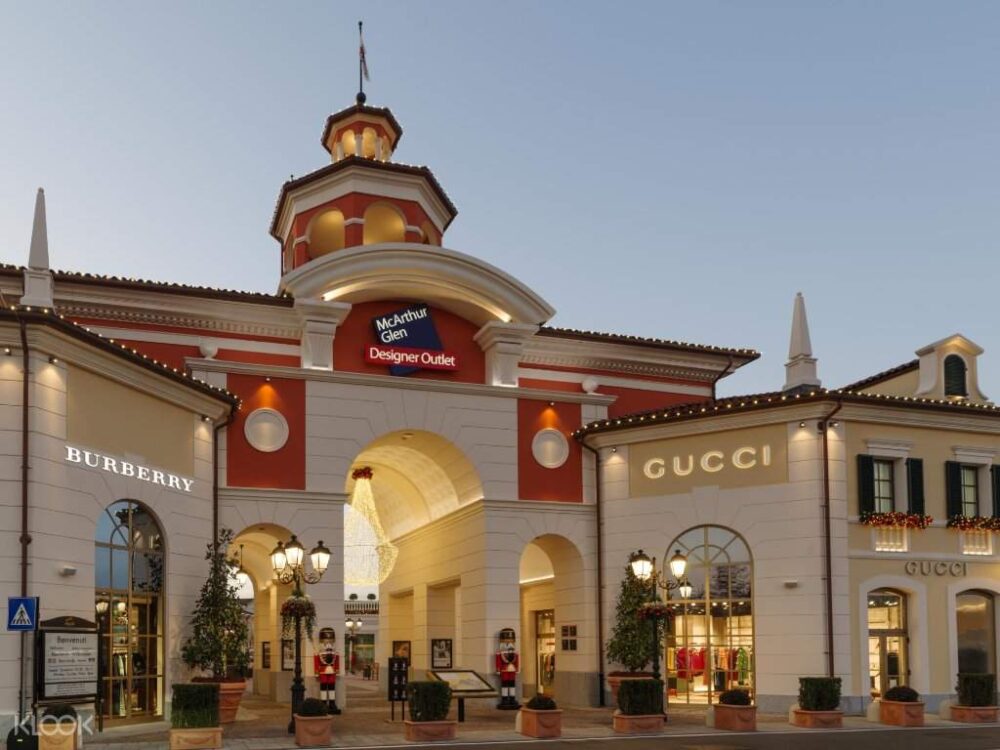
The clear leader is McArthurGlen. They manage four key centers (Serravalle, Castel Romano, Noventa di Piave, La Reggia) and control about 35.4% of the industry’s turnover and 20% of the total area. In 2025, their Italian locations attracted nearly 20 million visitors. The other players? The Bicester Collection with Fidenza, The Mall Simon Luxury Outlets, Promos, and Via Outlets. But McArthurGlen truly dominates this market.
Latest figures and investments
Interestingly, forecasts for 2025 for the whole of Europe show a 7% increase in turnover. The Italians are not sitting idle. Serravalle has just received 20 million euros for expansion in 2024-2025. Noventa, La Reggia, and Castel Romano are also expanding.
Concrete size examples? Serravalle is a giant with about 51,500 m², Valmontone has 46,000 m², and Scalo Milano 44,000 m². Noventa was visited by 3.6 million people in 2025, while Scalo Milano broke the record and attracted over 4 million. In my opinion, these numbers show that the outlet market in Italy is not slowing down at all.
When to go and how to save?
When planning a trip to an Italian outlet, timing really makes a difference. Not only when it comes to crowds, but most importantly for your wallet.

Sales calendar
The official sale periods in Italy are January–February (winter) and July–August (summer). During these times, discounts can reach 50–70%, which is more than the standard 30–40% offered during the rest of the year. The problem is that everyone comes for the saldi. If you can, come at the beginning of the sale season — the selection will be better and the crowds still manageable.
Tax-free in practice
If you live outside the EU, VAT refund is a concrete benefit. At Serravalle, as much as 46% of sales go to customers using tax-free shopping (an increase of 47% vs 2019). Scalo Milano recorded a 66-70% jump in tax-free transactions in the first half of 2025. It’s worth carrying your passport, checking the minimum purchase threshold (often EUR 154.94), and comparing refund partners. Some centers have their own service points, which speeds up the process.
My Italian outlet travels
Italian outlet travels mean more to me than just bargain hunting; they are part of an experience that combines fashion, beautiful places, and the distinctive Italian lifestyle. Every trip shows that behind famous brands there are not only labels, but also history, craftsmanship, and a unique aesthetic. Outlets allow you to see luxury from a slightly different perspective and to find things that truly bring joy for years.
What I love most about these trips is precisely the combination of shopping with discovering new regions, flavors, and the local atmosphere. Italy has something about it that makes even an ordinary shopping day feel like a little adventure. And I think that’s why I always come back from there not only with new things, but also with another story to tell.
Kris 77
lifestyle & brands editorial team
Luxury Blog




Leave a Comment