

Luxury bathrobes – top 5 premium brands you should know
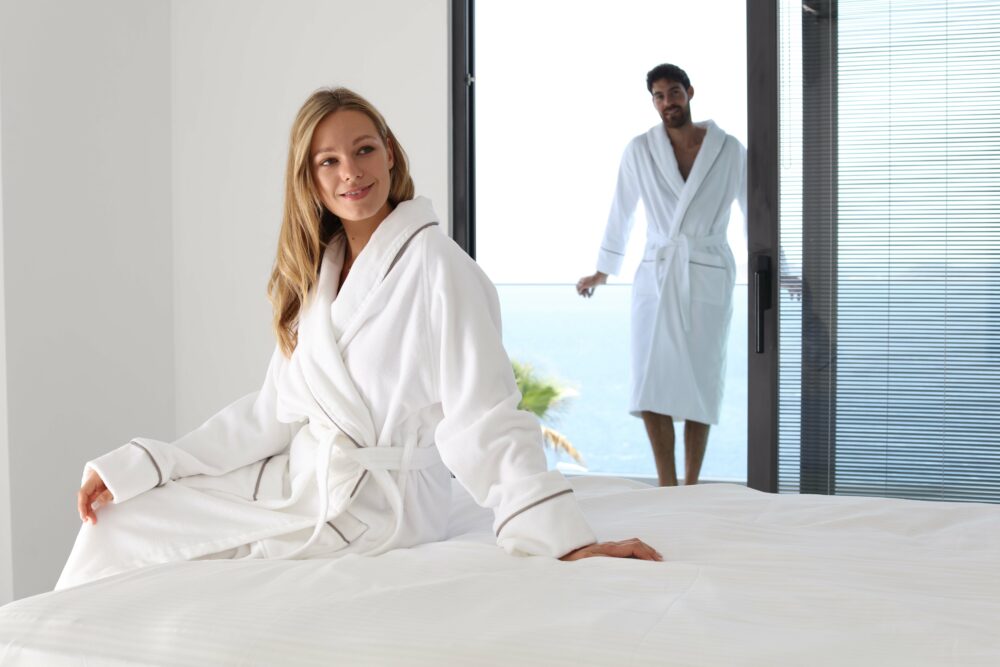
The global bathrobe market was worth around $4.2 billion in 2025. Forecasts predict $6.5 billion by 2034 (an annual growth of 4.89%). The premium segment alone? $3.6 billion now, $5.5 billion in a decade. What’s driving this boom? The “hotel at home” trend and the growing popularity of home wellness mean more and more people are looking not just for soft fabric, but for a true experience.
Luxury bathrobes: a home spa experience just like in a hotel
Hotels like Four Seasons or Ritz-Carlton have relied on brands such as Frette for years precisely because of these standards. Now we want the same at home. Interestingly, tests from 2026 show a preference for lightweight blends of polyester and plush, mainly due to easy care.
And below, we will take a look at five brands that define this segment, analyze materials and trends, and offer tips on how to choose the perfect model.
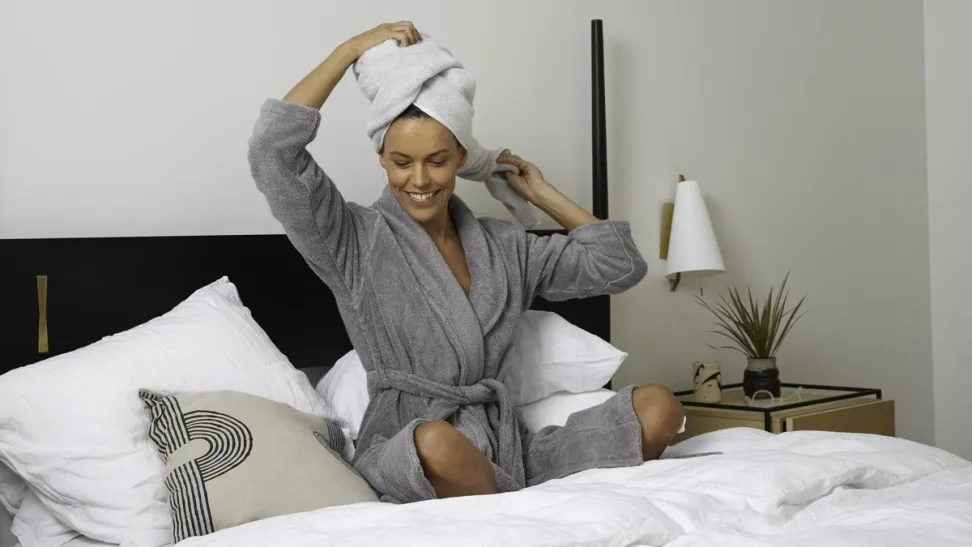
Top 5 premium brands
There is no single “perfect” list of premium brands. I chose these five because they combine proven quality with availability in the EU.
Frette – Italian standard for hotels of the Ritz class. They use 100% terry cotton or velour, with a signature shawl collar. What surprised me? Their ultra-absorbent finish means the bathrobe truly “drinks” up water instead of just spreading it around. It feels luxurious, but without that excessive fluffiness.
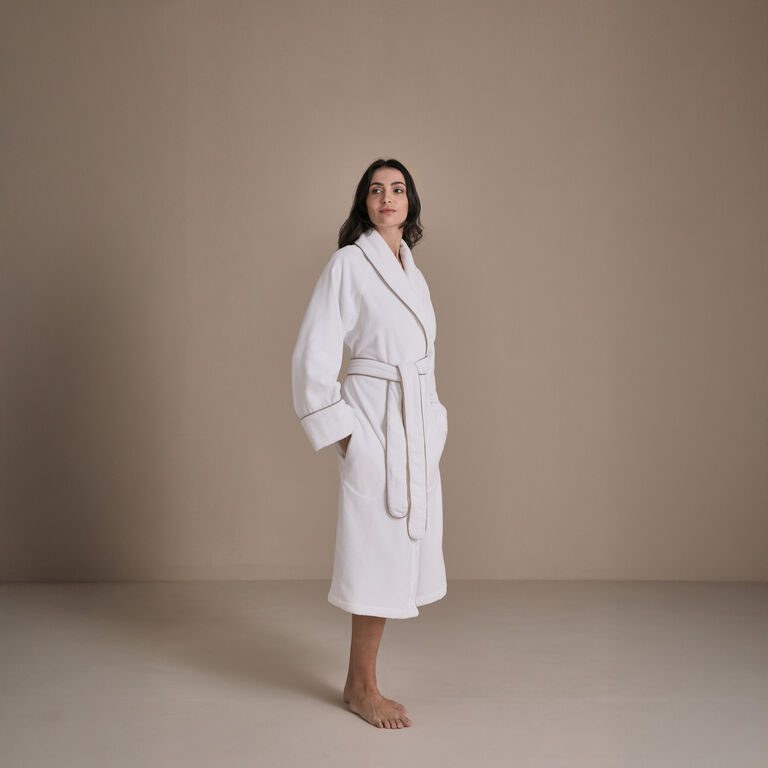
Graccioza – the Portuguese pearl. Egyptian cotton in double-loop terry technique, pre-washed before first use. The result? Instantly soft, none of that stiff “brand new” feel. It brings a home spa vibe.
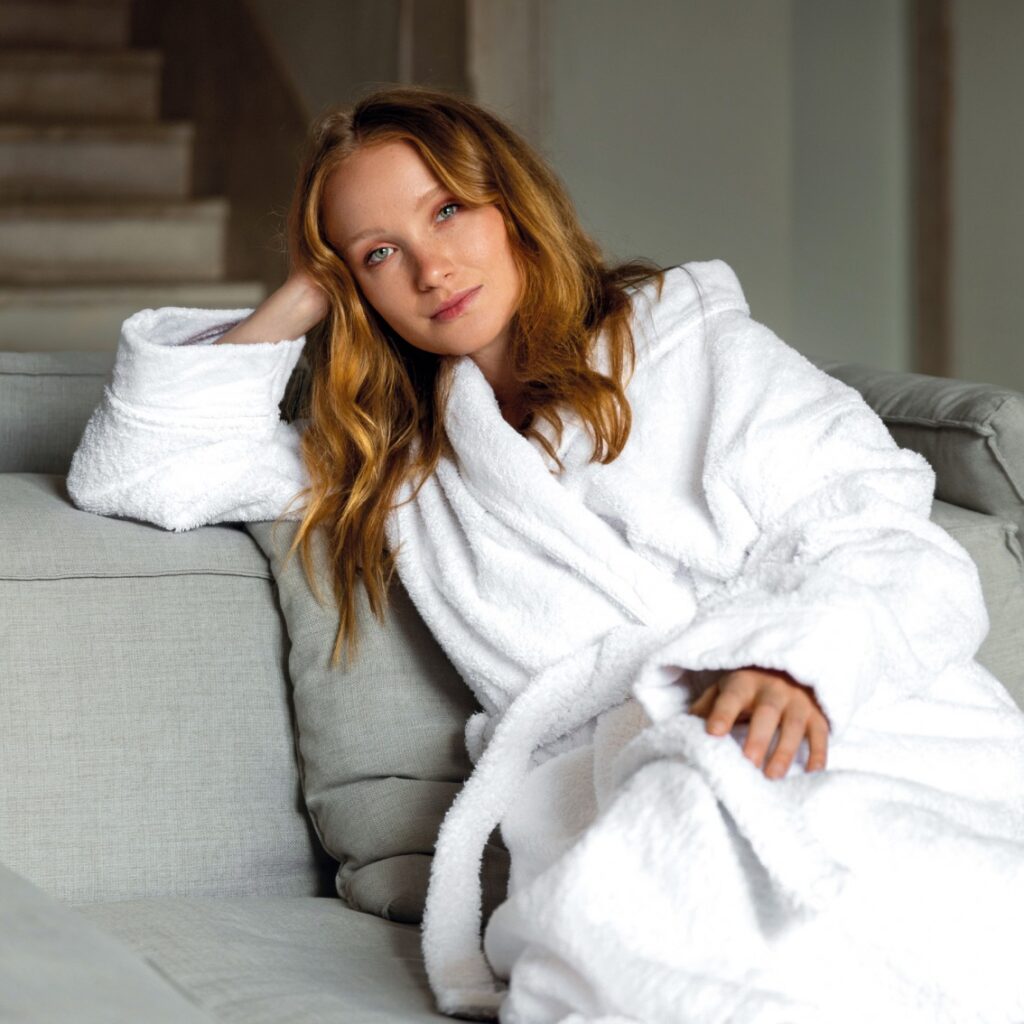
Abyss & Habidecor – their Super Pile made from Egyptian cotton is probably the fluffiest thing I’ve ever touched. Big plus: the option to personalize your order. If you like to stand out, you’ll find something for yourself here.
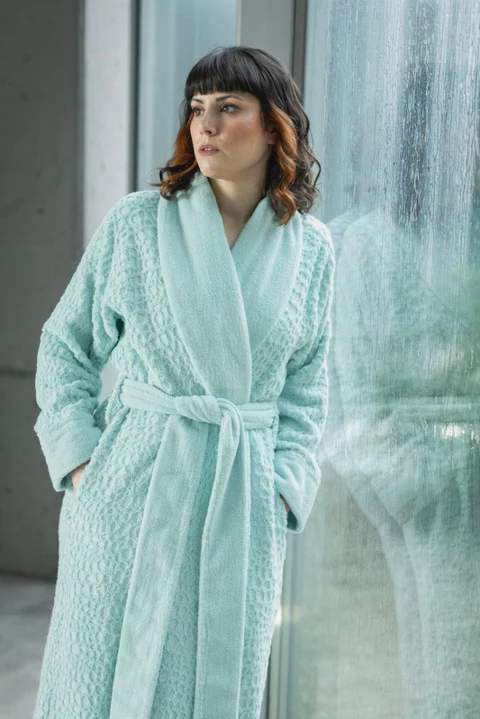
Restoration Hardware (RH) – 100% polyester plush, monogram option available. Wirecutter wrote about them:
“RH is decadently soft… a real treat.”
And indeed, this softness is something different from classic cotton. A matter of taste.
Vossen – German precision in a bathrobe. Velour or cotton blends, elegant cut, and durability that justifies the price. After three years, it still looks like new.
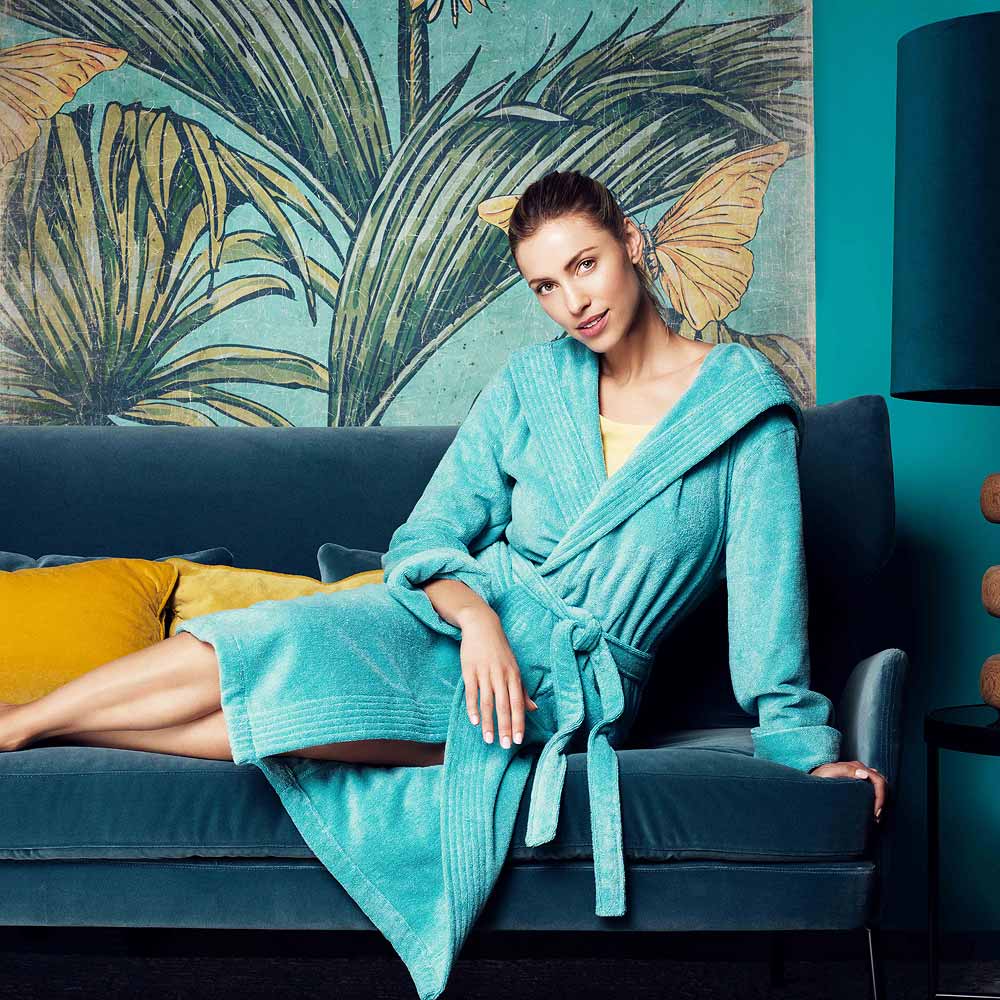
Each brand has its own character. The question is: what do you value more—hotel-like absorbency, home-like softness, or perhaps durability?
Premium materials and details
Let’s start with what really determines whether a bathrobe is just “okay” or truly “wow”: the fabric’s weight and structure. GSM (grams per square meter) is essentially the material’s weight. Premium starts at around 380 GSM, but true luxury is 500-700 GSM. The higher the value, the thicker and fluffier the robe. But beware, GSM alone isn’t everything—the loop structure also matters.
Terry cloth has classic loops on both sides, which provides excellent absorbency. Velour is terry with the outer loops cut off, resulting in a velvet-like surface (less absorbent, but more visually elegant). Waffle fabric, that distinctive “grid” pattern, is a breathable alternative that dries faster, making it perfect for warmer months.
When it comes to materials, Egyptian and Turkish cotton are the standard for the high-end range (long fibers = less pilling). Modal and bamboo? Super soft, dry in a flash, but some people find them “too synthetic” to the touch. Silk looks stunning, but traditionally it’s not worn after bathing—it’s too delicate, slippery, and doesn’t absorb water. Linen, on the other hand, is a summer option: airy, cool, though a bit rough at first.
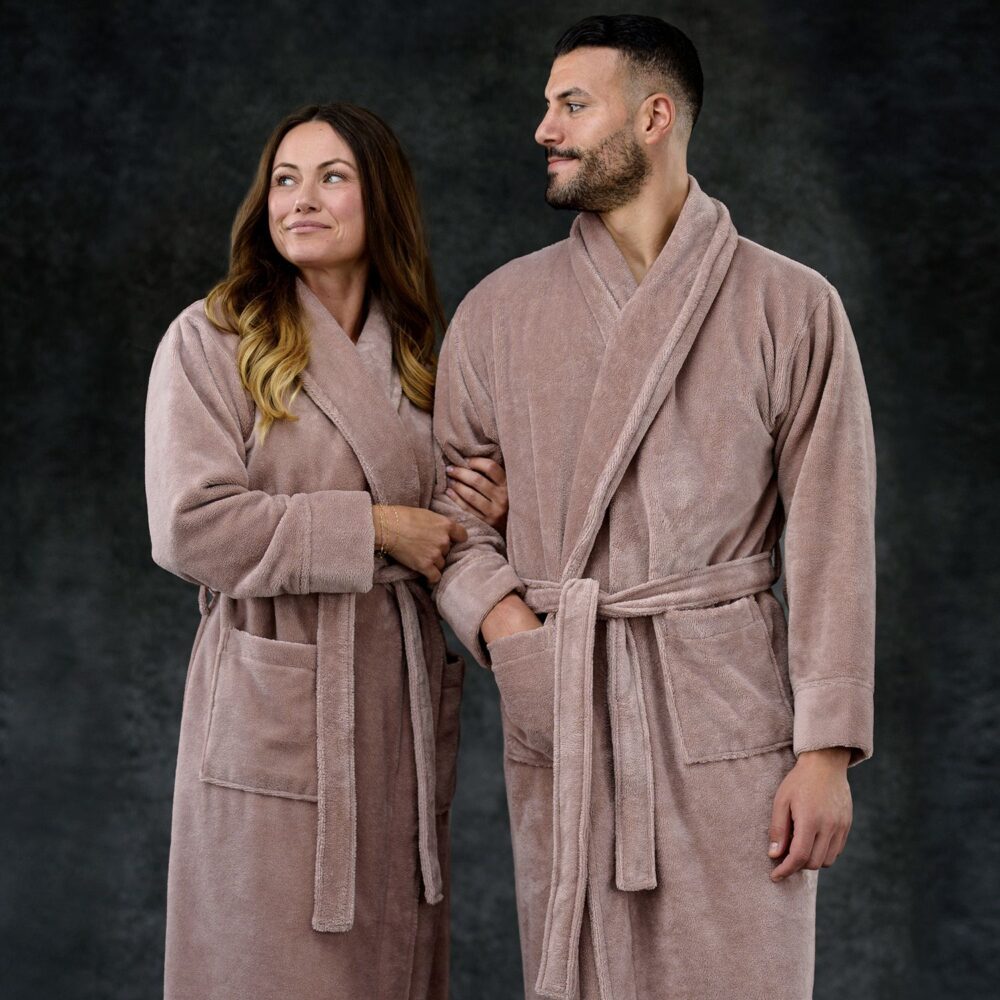
Details that create a hotel-like effect
Certificates are not a whim; OEKO-TEX Standard 100 guarantees the absence of toxic dyes, and GOTS confirms the organic origin of the cotton. Pre-washed and pre-shrunk? That means the bathrobe won’t shrink by two sizes after the first wash (it happens more often than you think).
Now the cut. Shawl collar (the soft, wide one) vs. kimono (simple, flat), it’s a matter of taste, but the shawl gives more of a “spa vibe.” Welt pockets look elegant, patch pockets are more functional (your phone won’t fall out). Length? Mid-calf is classic, ankle is an option for taller people or those who like a dramatic look. The belt should be double-stitched—it’s a small detail, but it makes a difference in durability.
Market and Trends 2026 – From Hotels to Your Bathroom
The luxury bathrobe market is growing faster than I expected. In 2025, the global sector was valued at around USD 4.2 billion, and forecasts for 2034 indicate USD 6.5 billion (CAGR 4.89%). The premium segment, meaning the most expensive categories, is also accelerating — from USD 3.6 billion (2025) it is expected to grow to USD 5.5 billion by 2035.
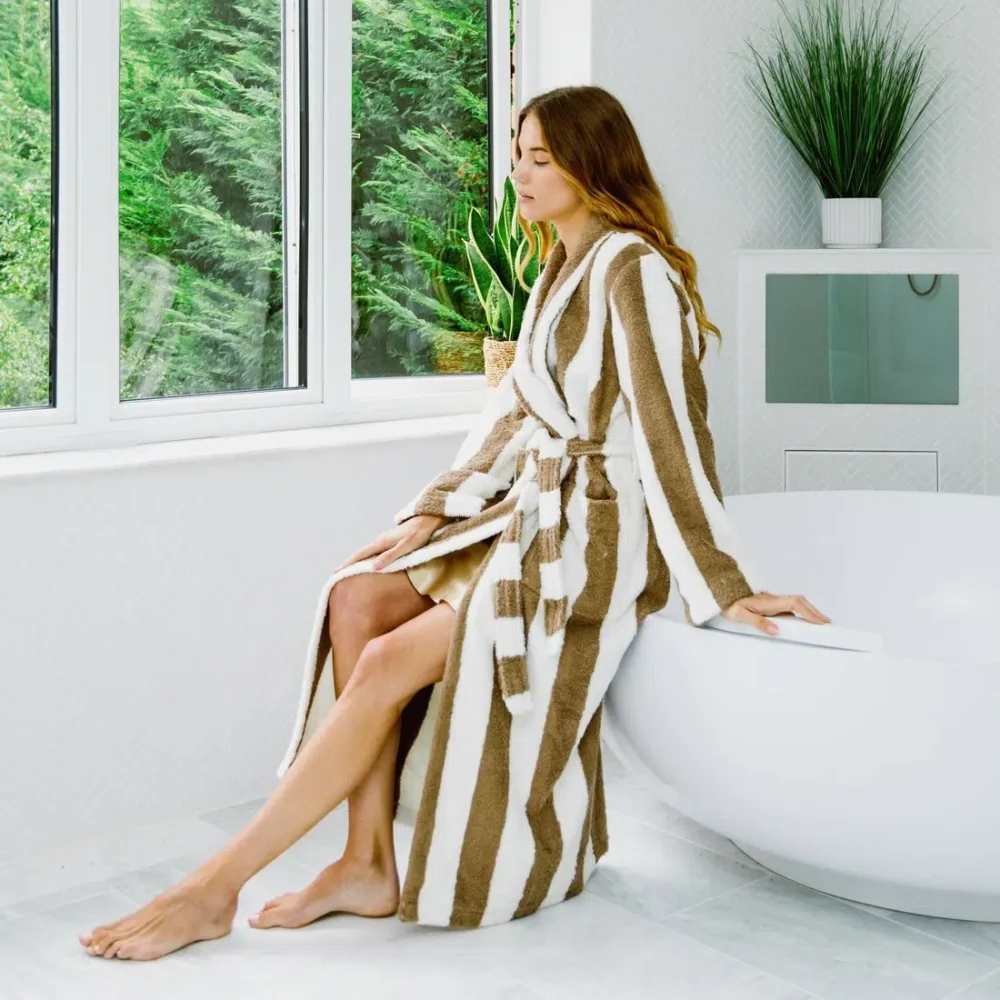
What’s driving this boom? First, the trend of “hotelizing the home.” I’ve noticed this even in Polish homes: white, fluffy bathrobes (the exact ones from hotels) are becoming a household standard. Clients ask for the same brands they know from stays at quality places. Terrycloth and plush are no longer just for “special occasions”—now they’re an everyday luxury and a part of mental health hygiene.
What’s trending now?
Two opposing vectors intersect here in an interesting way:
- Natural materials – cashmere and silk are experiencing the fastest growth in premium subcategories (especially among brands like Loro Piana).
- Polyester plush – at the same time, both Wirecutter and Byrdie tests from 2026 highlight plush and cotton-polyester hybrids for their easy washing and durability.
How to choose the perfect premium bathrobe?
Luxury in a bathrobe is not just about the price; it’s about fitting your lifestyle. Do you use it every morning after a shower, or rather spend entire evenings in it with a book? That difference changes everything.
The ritual decides: bath, relaxation, summer
Terry cloth with a weight of 500-700 GSM is perfect after a bath, as it truly absorbs moisture and wraps you in warmth. If you’re looking for a robe to lounge in for half the day, choose something lighter, like velour or a hybrid in the 380-500 GSM range—cozy, but not too warm. For summer? Waffle or linen is a sensible choice; they breathe and don’t feel stifling. Silk looks elegant in the evening, just don’t put it on with wet hair—it’s not a post-shower material.
Softness that lingers
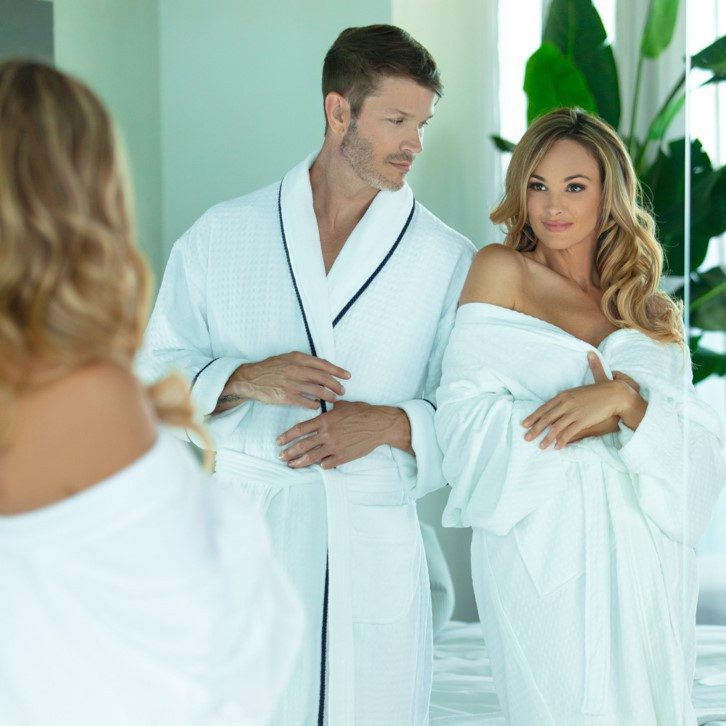
A luxury bathrobe is really a simple thing that captures the essence of self-care. It’s not about throwing money around, but about choosing something that truly lasts longer than just a season. High-quality fibers, meticulous finishing, a cut that doesn’t lose its shape after the third wash. All of this together creates something that cheaper alternatives simply can’t offer.
And here lies the crux of the matter: the softness that lasts. With cheap bathrobes, you might get a week or two before the fabric starts to scratch or loses its fluffiness. A premium bathrobe maintains that same pleasant touch even after a year or two of use. This durability is exactly what justifies the price, because in the end, you’re paying for something you won’t have to replace every now and then.
By choosing something of good quality, you’re buying peace of mind and comfort for years to come. It’s a simple calculation when you think about it. I love the softer ones, but that’s just a matter of taste!
Mimi
lover of good cuisine and fashion
Luxury Pr




Leave a Comment