

How to design a luxurious nursery step by step
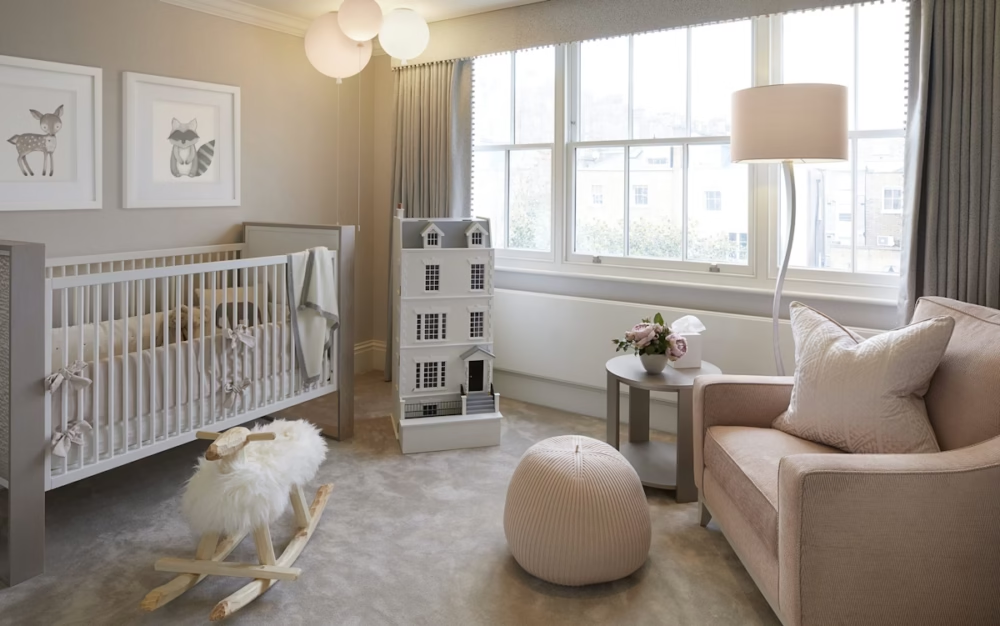
The global nursery decor market reached a value of approximately $1.92 billion in 2024, with forecasts predicting $3.36 billion by 2033. An increasing number of European parents are viewing the nursery not as a temporary “starter” space, but as a thoughtful investment in the comfort of the entire family.
Luxury today
I can see it clearly on Polish Instagram and Pinterest. We are moving away from themed nurseries with plush teddy bears on every wall. Parents now want sophisticated, timeless arrangements that grow with the child. Scandinavian influences (light wood, muted colors) blend with the idea of ” quiet luxury,” meaning luxury without ostentation.
For me, true luxury is the quality of materials, ergonomics tailored to the realities of nightly feedings, and personalization without compromising on safety. It’s not about the most expensive furniture in the world, but about making conscious choices.
Next, I’ll show you how to plan functional zones, choose safe materials and furniture, which trends are worth following in 2026, and how to ensure a safe sleep.
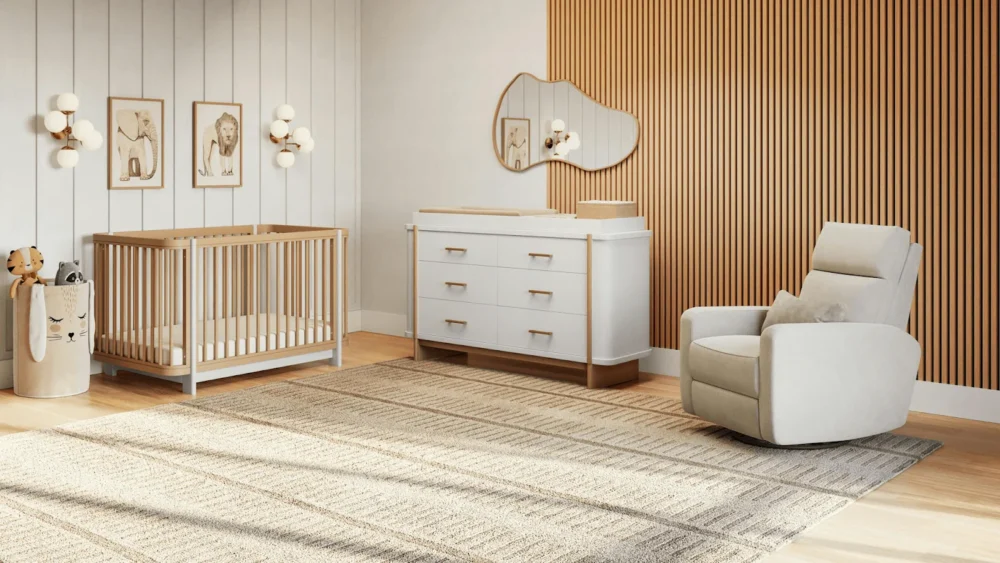
How to design a luxurious nursery
Before you buy your first night lamp or crib, you need something less Instagrammable, but much more important: a clear plan. Sounds boring? Maybe a little. But it’s this stage that determines whether in a year you’ll be delighted with the result, or redoing half the interior because “something’s off.”
Brief and vision
Start with questions that really make sense. Not “what color should the walls be,” but rather:
- What emotions do I want to feel when I come in here at three in the morning? (Calm? Warmth? Coziness?)
- Which features are must-haves in the first months, and which will be needed a year from now?
- How long is this room supposed to serve without a makeover? (A year? Three years? Until kindergarten?)
- How much can I realistically invest in long-lasting elements?
Create a simple moodboard (Pinterest or just a sheet of paper with cutouts), but don’t get carried away. Gather a maximum of 6-8 inspirations that really go well together. The nursery furniture market is growing like crazy (approx. $10.9 billion in 2025, with forecasts reaching $20 billion by 2035, CAGR at 6.2%), so the temptation to buy will be huge. Stick to your vision.
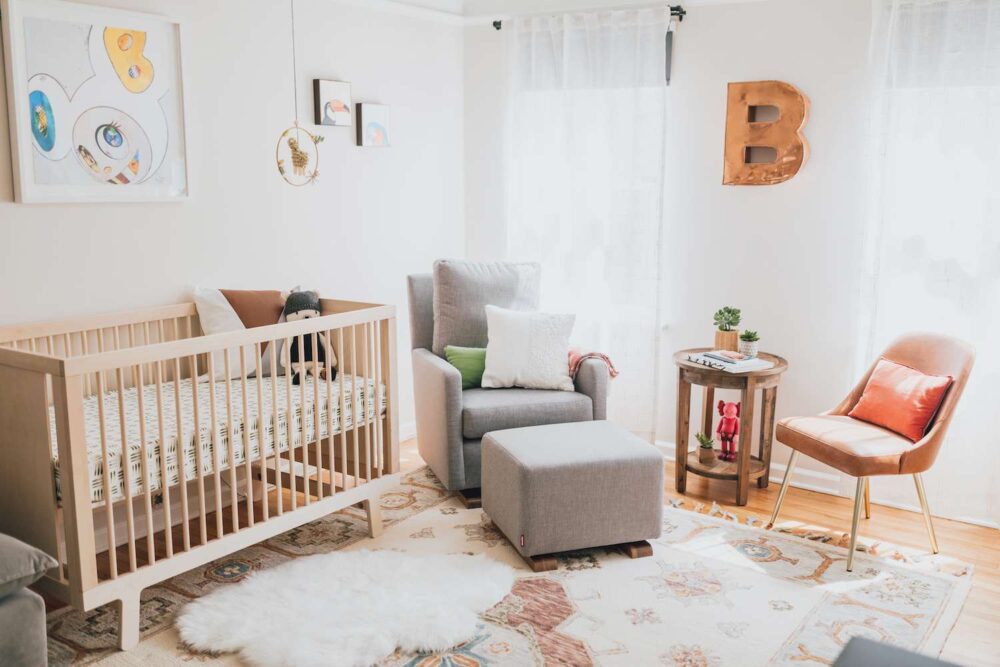
Timelessness and plan
Less is more isn’t just a phrase, it’s a way to save your nerves and your wallet. Instead of panda wallpaper, choose a neutral background and accents you can swap out effortlessly. Invest in convertible furniture (a 60×120 cm crib with an attachable side, a dresser with a removable changing table) that grows with your child.
Room layout
Before you start setting up the crib or looking for the perfect armchair, it’s worth taking a preliminary step and sketching out (even just mentally) four basic zones. Sounds formal? In practice, it’s simply about knowing where everything will go, so you don’t end up running across half the room at night with a wet diaper.
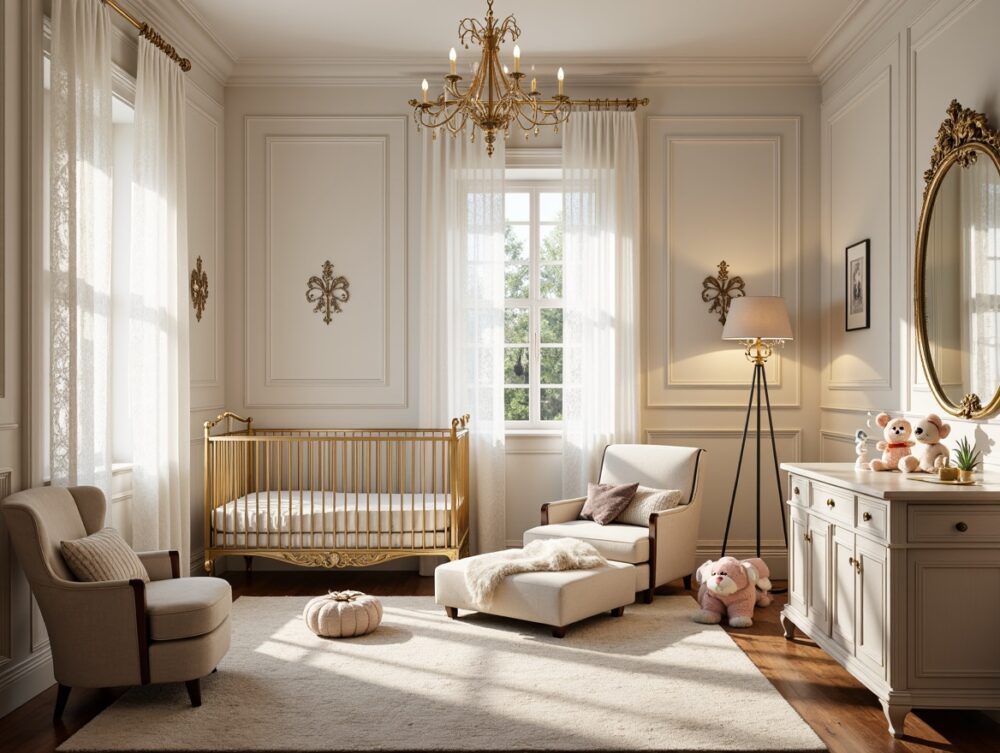
Four zones that organize the day
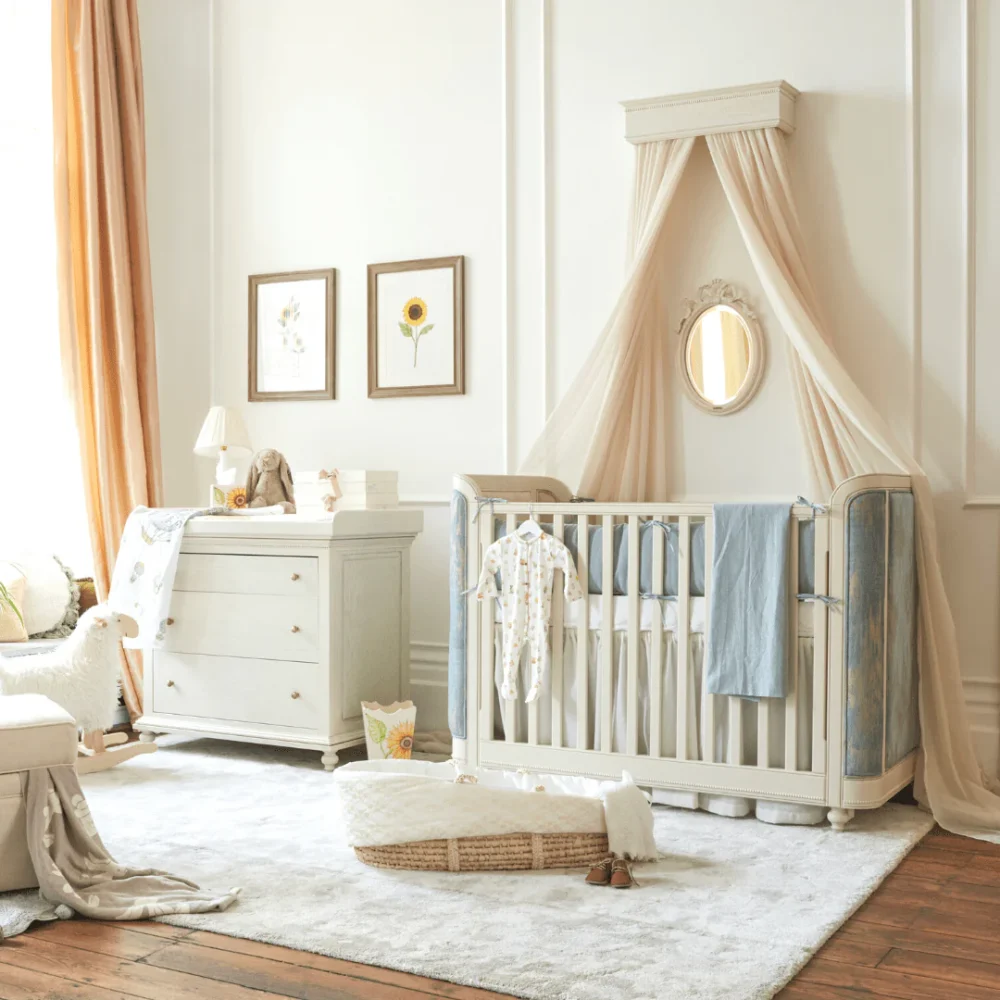
Sleeping area is the quietest corner, ideally away from the door and window. Place the crib where there’s the least noise and drafts. Feeding area needs a comfortable chair (glider or rocking) plus a side table within reach and a lamp with a dimmer, since nighttime feedings aren’t the time for a ceiling chandelier. Changing area works best by a dresser with a changing pad; keep the diaper bin and wipes within reach so you’re not searching with one hand. And, t play area means a soft mat and a low shelf, so you (not the baby) can grab a toy without a workout.
Layers of light
One central light is not enough. You need three layers: ceiling light (ambient, warm LED), spotlights or wall lamps for reading by the armchair, and a gentle night light by the crib. Dimmers are not a luxury, but a lifesaver when the child is sleeping, and you need to see something. Warm color temperature (below 3000K) helps calm before sleep.
Quieter and softer
Wood or vinyl panels with a soundproofing underlay make a solid base. You can reduce echo by adding textiles: curtains, a rug (only outside the crib area for safety). The floor also needs to withstand nighttime wanderings without creaking—test it when you inspect the apartment, if possible.
Materials, premium furniture and accessories
In a luxury nursery, materials and furniture are more than just decoration. These are items that will last for years, grow with your child, and simply wear well. And 2026 brings some truly interesting trends that combine aesthetics with practicality.
Style 2026
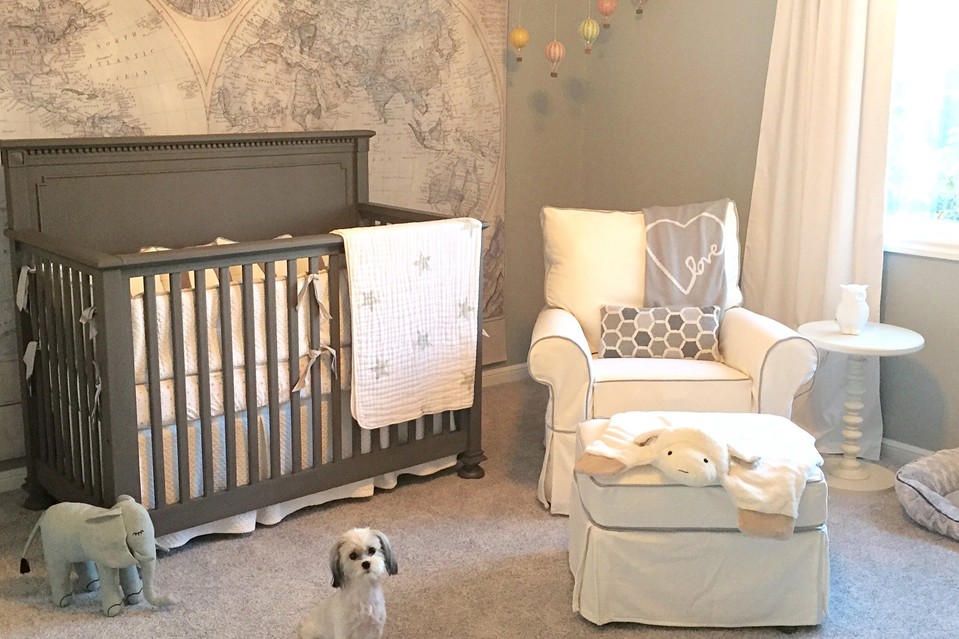
I see four palettes that dominate in premium designs:
- Warm Boho – terracotta, rust, dusty pink; warmth and coziness without overdoing it
- Celestial – lavender, blue-grey, gold accents; a calm, slightly mystical atmosphere
- Biophilic Botanical – sage, cocoa, nut; nature brought indoors (Terrapin Bright Green calls this the “14 patterns” supporting well-being)
- Japandi – greige, light oak, linen; minimalism meets hygge
None of these palettes are flashy. They all focus on natural materials and what will remain beautiful in three years, not just now.
Furniture and materials that grow with your child
Here we focus on solid wood (beech, pine) with non-toxic finishes. A convertible crib that you can turn into a toddler bed? An absolute essential. A dresser with a changing table, a rocking chair (or a glider, if you have space), open shelves.
Textiles? Linen and organic cotton. Paper or vinyl wallpapers. Biophilic accents, meaning plants (safe for children), natural light, wood textures.
Premium detail and personalization
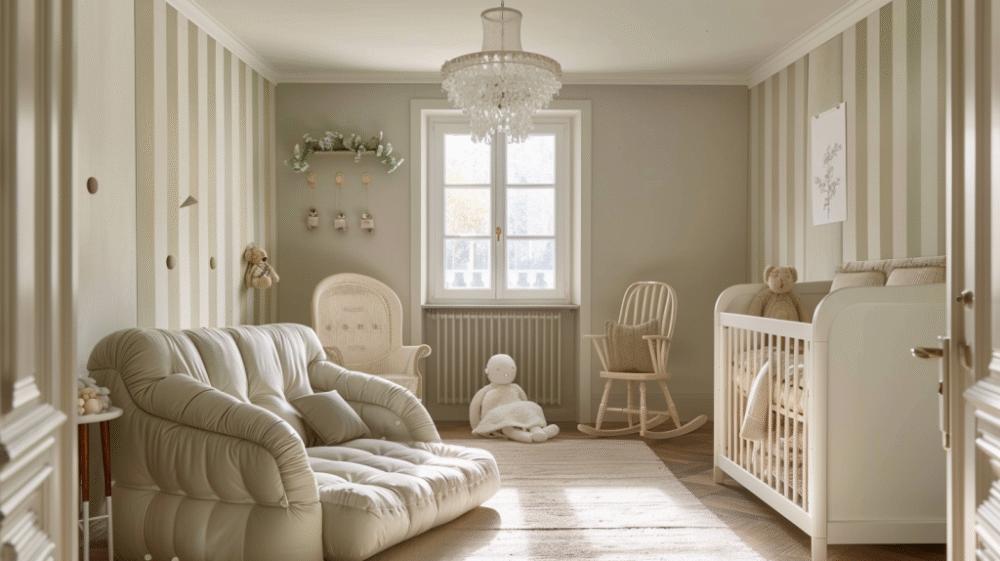
This is where the magic happens: handmade elements, personalized plaques, thoughtfully chosen wall art. You can find Polish artisans who will create something unique, or opt for trusted brands like Pottery Barn Kids. It’s all about the details that make the room feel less like a showroom and more like a space with soul.
Safe sleep and standards
Alright, let’s start with what is truly non-negotiable. You can have the most beautiful nursery in the world, but if it doesn’t meet basic safety standards, it simply doesn’t work.
Safe crib and sleep
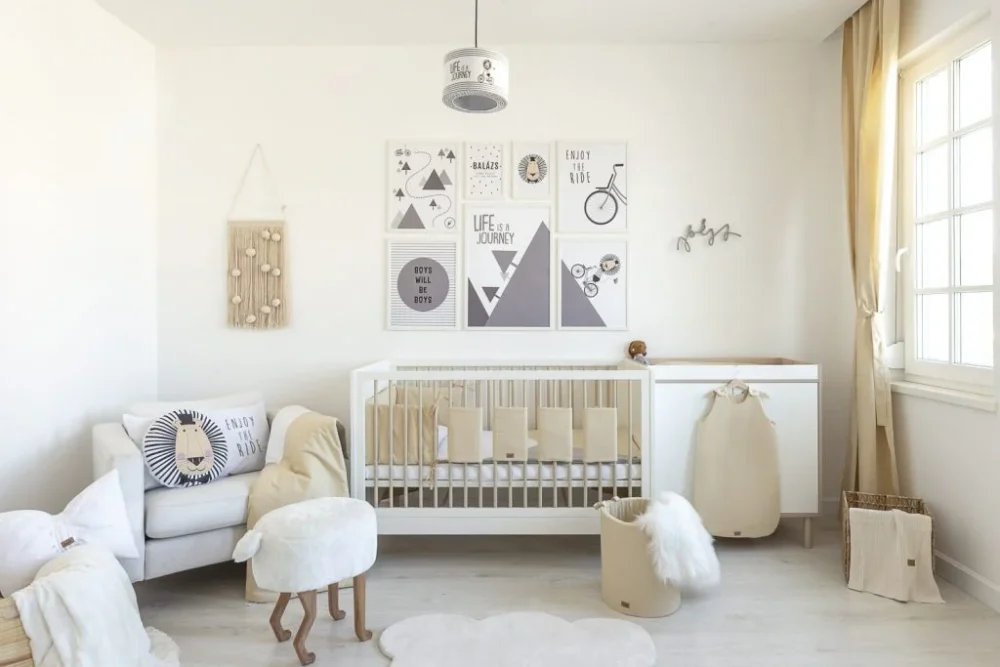
AAP/CPSC: no bumpers in the crib. Period. I know they look cute, but the risk of suffocation is real. The same goes for canopies hanging over the crib, pillows, stuffed animals, and loose blankets. Your baby sleeps safely on a firm mattress with a fitted sheet, and that’s it.
Check the slats: < 6 cm (EU/EN standards). If a soda can can fit through, they’re too wide. Buy only new cribs manufactured after 2011, when the current CPSC standards were introduced. Old drop-side models? Avoid them like the plague, even if grandma offers “pretty antiques.”
“In the USA, there is a recall of children’s products approximately every two weeks.”
Stability, electrics, and certifications
Anchor all furniture to the wall. Every dresser, every shelf. Children can climb sooner than you think. Outlets secured, blinds with no loose cords, cables hidden out of reach. No compromises.
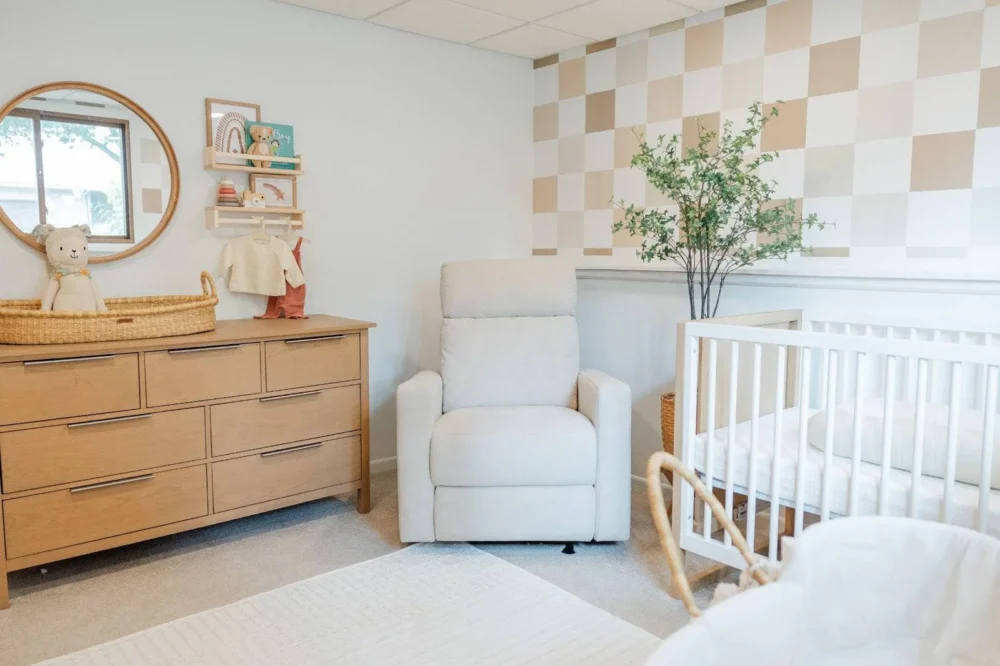
Finishes and furniture should have non-toxic certificates (low VOC emissions). The mattress must fit the crib frame perfectly, with no gaps. And yes, I regularly check lists of recalled products, because it happens more often than I’d like to know.
Elegance that grows with your child
When designing a nursery in a luxurious style, you’re actually creating a space that will last for years, not just the first few months. Good furniture grows with your child, and classic colors never lose their charm, even as your little one starts to develop their own opinions. It’s an investment in peace of mind, since you won’t have to replace everything every two years. And you’ll find high-quality furnishings at the Luxury Products store, where the selection is truly vast.
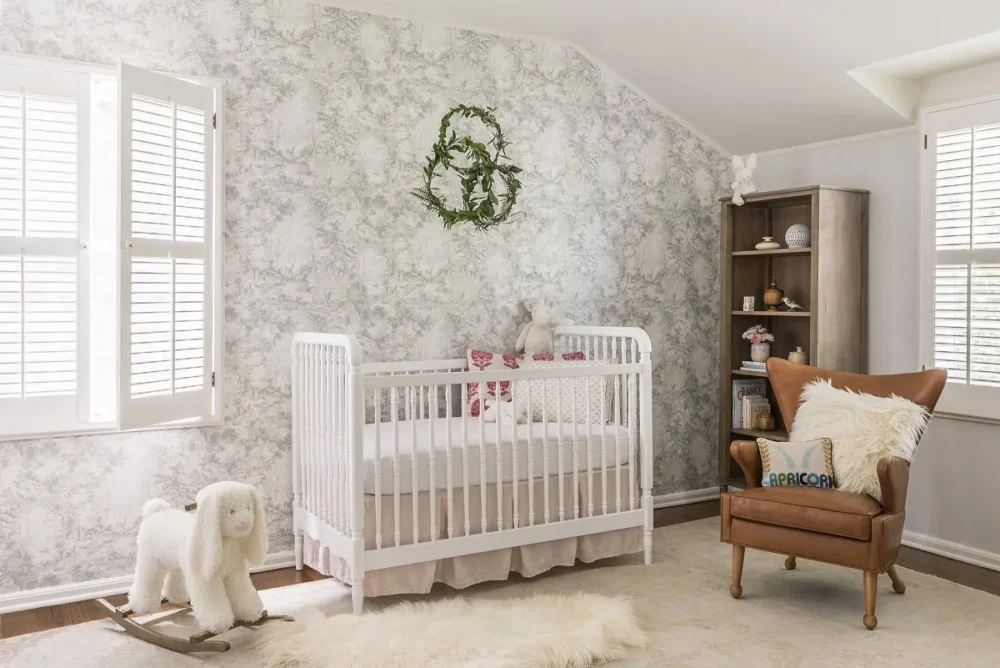
This is exactly what distinguishes a truly well-thought-out interior from one that just looks nice in a photo. A crib that transforms into a daybed, an elegant dresser that later serves as a desk, a neutral color palette that allows the decor to evolve. All of this ensures that the room grows up naturally, without sudden makeovers.
At the end of the day, it’s about creating a space where your child will feel comfortable for a long time. And so that parents don’t have to redo everything from scratch once the diapers are gone.
Mariia 78
lifestyle editorial team






Leave a Comment