

How much are Stradivarius violins worth – prices, facts, and myths
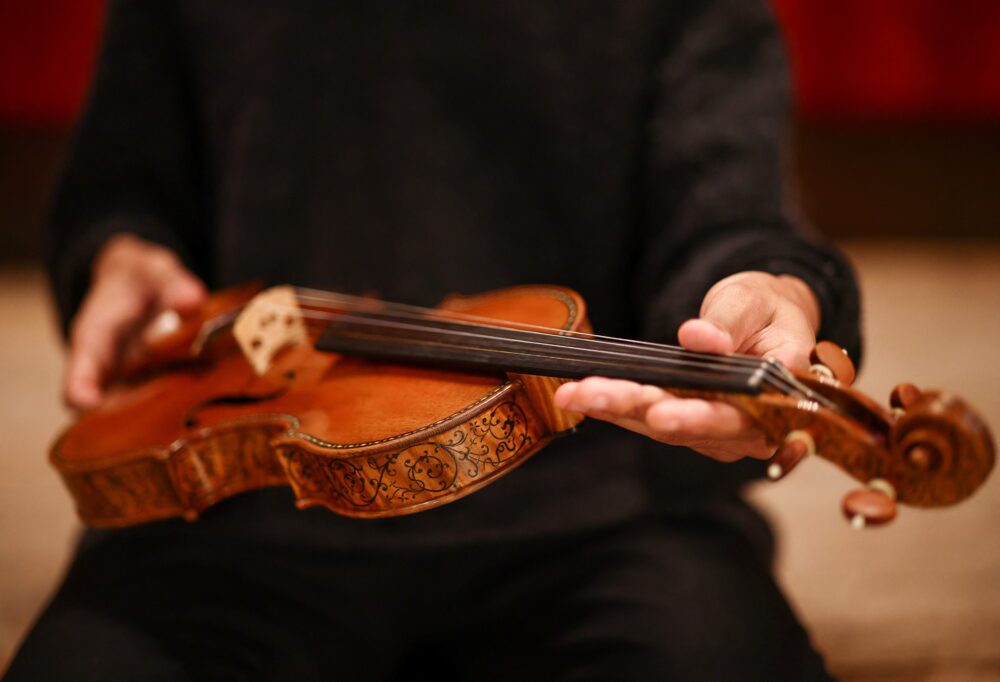
Today I decided to tell you how much are these Stradivarius violins worth? Since out of Antonio Stradivari’s entire production, about 650 instruments have survived, it’s worth discussing! But the very name “Stradivarius” has grown so much that today it’s associated with absolute perfection. The problem is, there are thousands of replicas and forgeries on the market.
Price range? Huge. Originals? Here’s where it gets wild: starting from around 2 million USD and up, with the upper limit exceeding 20 million USD. The range depends on age, condition, the history of the owners, and authenticity, which we’ll talk about further.
How much are Stradivarius violins worth?
Interestingly, auctions in 2025 have shown that demand is not weakening at all. On the contrary. The latest transactions are breaking records, and investors treat Stradivarius instruments like works of art, sometimes even more important than paintings by old masters. It’s not just an instrument; it’s a status symbol and history combined. The question is: how do you distinguish real value from myth in all this? Because myth is a powerful thing.
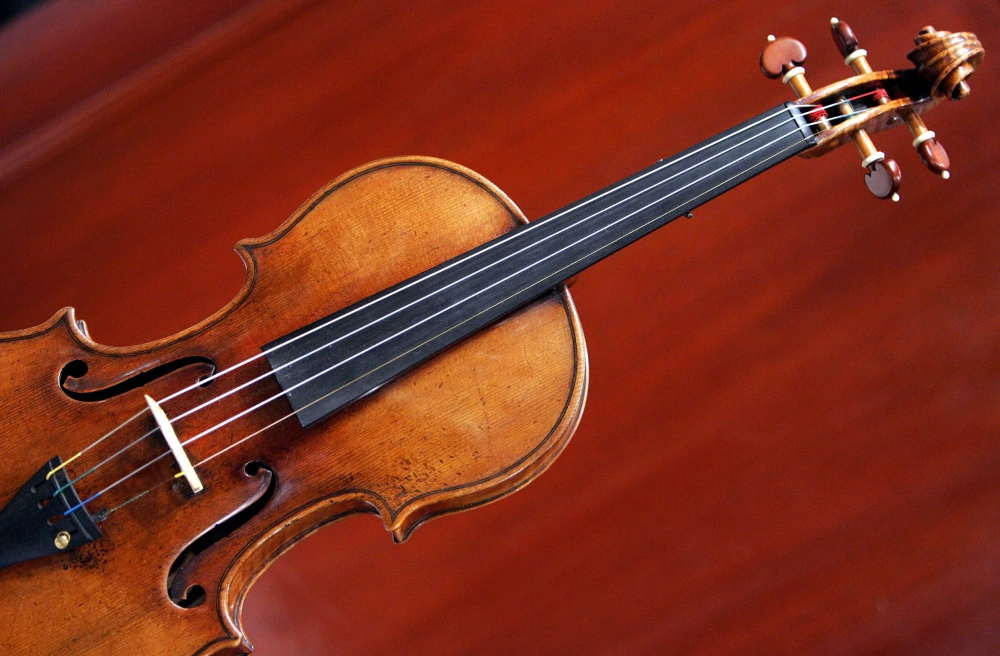
photo: nbcnews.com
Where did the uniqueness come from?
Antonio Stradivari was born around 1644 in Cremona, a city that at the time was alive with the art of violin making. He joined the workshop of Nicolo Amati, a master who was already setting the standards. The first instruments signed by Stradivari are dated to 1666, but that was only the beginning of his journey.
Periods of Stradivari’s work
Luthiers divide his work into four phases, each with a different character:
- Amatisé (1660-1690) – instruments modeled after the teacher’s school, more slender, with a distinct influence of Amati
- Long Pattern (1690-1700) – experiments with an elongated soundbox, sometimes up to 36 cm
- The Golden Age (1700-1720/1725) – this is where the magic happened. Wider models, flat arches, that distinctive reddish varnish. Spruce for the top, maple for the back and sides
- Late period (1720-1737) – a return to more classical proportions, while maintaining the refined mastery

photo: sothebys.com
Why the Golden Age became a model
It is from these two decades that most of the instruments breaking records today originate. Stradivari developed proportions that simply worked. I don’t know if it was intuition or hundreds of experiments, but the result speaks for itself.
Out of approximately 1,116 instruments (including 960 violins), about 650 have survived to this day, of which perhaps 450-512 are violins. The “Messiah” from 1716 and the “Lady Blunt” from 1721 are probably the most famous examples, although every preserved instrument has its own story. Stradivari died in 1737 at over 90 years old. He left a legacy whose value—both financial and musical—no one has precisely measured to this day.
How much does it cost?
Originals are a different world. The typical price range for an authentic Stradivarius instrument is between 2 and 20 million USD, although everything depends on its condition and ownership history (I’ll return to this in detail in the next section). Interestingly, the lowest amounts don’t necessarily mean poor-quality violins—these are simply instruments with less documented provenance, which tend to be appraised more cautiously.

photo: forbes.com
Records that set the ceiling
A few sales truly set the bar high:
| Instrument | Price | Year of sale |
|---|---|---|
| Lady Blunt (1721) | 15.9 million USD | 2011 |
| Joachim-Ma (1714) | 11.25–11.3 million USD | February 2025 |
| Baron Knoop (1715) | 23 million USD | March 2025 |
Baron Knoop is probably the most spectacular example of recent months. It’s worth remembering that copies serve a practical purpose for musicians, while originals combine artistic value with iconic status and historical significance. It’s not just an instrument; it’s a legend that someone is actually buying.
What really affects the valuation?
Provenance is everything. Not just the date of production, but the documented history of ownership. If a violin has an unbroken line from the Stradivari workshop through renowned concertmasters, registered dealers, and galleries, its value increases dramatically. Gaps in documentation? That’s a red flag for any serious buyer.
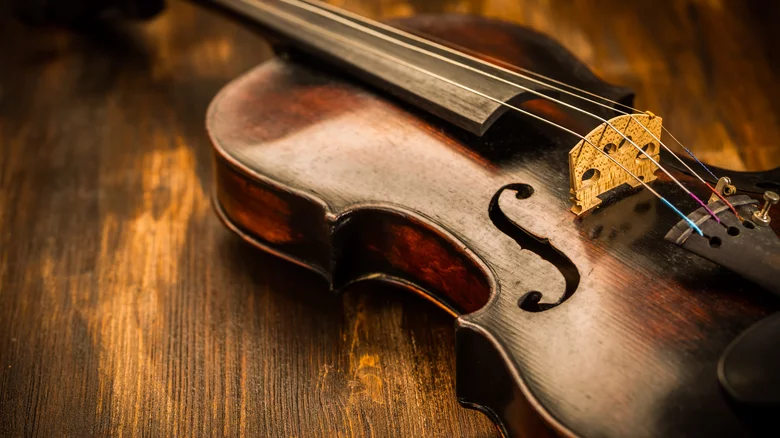
photo: grunge.com
The most important valuation criteria
The Golden Period (1700-1720/25) commands a price premium, but the year on the label alone is not enough. Condition is another key factor: original parts (especially the top plate, “f-holes,” neck) matter more than perfect aesthetics after restoration. Three instruments from the same year can have valuations that differ threefold precisely because of their repair history.
Documentation from recognized experts ( workshops such as Florian Leonhard, J&A Beare) is virtually decisive for the possibility of sale. Without certificates, most auction houses will not accept the instrument.
Methods and red flags
Dendrochronology compares the pattern of wood rings with databases (trees from the 17th century have characteristic sequences). Varnish analysis, especially chemical, looks for traces of borax, zinc, copper, aluminum, and calcium, typical of the original recipe. The geometry of the body and the shape of the “f-holes” are additional layers of verification.
“Thousands of replicas and counterfeits bear false labels Antonius Stradivarius Cremonensis Faciebat Anno… The label alone is not proof.”
The case of the Messiah (1716) shows how dendrochronology confirmed the attribution after decades of disputes over authenticity. Without solid expertise, even an instrument with perfect sound remains suspect.
Market and investments
The Stradivarius market is growing at an absolutely staggering pace. Take February 2025: the Joachim-Ma (1714) sold at Sotheby’s auction for $11.25–11.3 million. But that’s not all. A month later, the Baron Knoop (1715) set a new record, reaching a price of $23 million. These are no longer musical instruments in the traditional sense—they are investment assets appreciating faster than premium real estate (Forbes aptly compares them to blue-chip stocks).
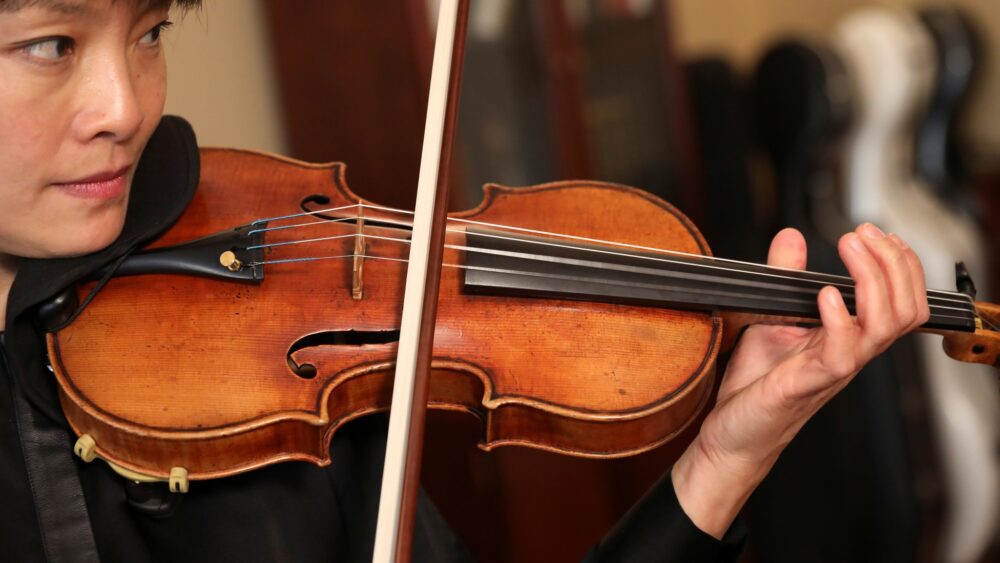
photo: theatlantic.com
Records 2025 worth knowing
Concrete numbers say it all:
- Joachim-Ma (1714): 11.25–11.3 million USD, Sotheby’s, February 2025
- Baron Knoop (1715): 23 million USD, absolute record, March 2025
- Kiesewetter (1724): estimated value approx. 16 million USD during a concert performance this year
You can see more than just rising prices here. You can see an ecosystem.
Who holds the Stradas and where are they sold
Most of the most valuable specimens will never reach the open market. Nippon Music Foundation itself owns 19 Stradivariuses and lends them to virtuosos (yes, that’s standard in this industry). The Messiah rests in the Ashmolean Museum. If something does come up for sale, it goes to Sotheby’s, Tarisio, or Christie’s. Trading is limited but fluid, because foundations and collectors know what they’re doing.
Artistry, science, and blind tests
The debate over the “magical sound” of Stradivarius violins has been ongoing for years, but blind musical tests have yielded surprising results. In studies conducted in 2012 and 2017, soloists more often chose modern violins over Stradivariuses, without knowing which instrument they were playing. Interestingly, in concert hall conditions, it was the contemporary instruments that were preferred for their sound projection. Of course, not every musician agrees with these findings. Many virtuosos emphasize that it’s about the carrying power in the concert space and the unique character of the sound, which cannot be measured in a laboratory.

photo: amorimfineviolins.com
Wood and lacquer chemistry
Scientists are trying to unravel the mystery from a material perspective. Chemical analyses of the wood used by Stradivarius have revealed the presence of components such as borax, zinc, copper, aluminum, and lime. Perhaps the wood was intentionally impregnated, which altered its structure and acoustics. Varnish also plays a role, although its composition remains a secret. Then there’s the geometry: the Stradivarius body is wider, has flatter arches, and distinctive resonance holes (f-holes).
The debate about sound is one thing; market value is another. Instruments are appraised according to completely different criteria—rarity, provenance, history. Even if scientific tests do not unequivocally confirm superiority, attachment to the legend and the experience of musicians remain just as important. Not everything can be measured.
Where does true value lie?
The price of a Stradivarius is the sum of what is audible and what is unique. On one hand, we have an instrument that sounds different from modern violins (though not always better, as blind tests have shown). On the other hand, it is an object with three centuries of history, having survived wars, changes of ownership, and trends for different sounds. This rarity in itself creates value, regardless of whether the listener can recognize the sound in the dark.
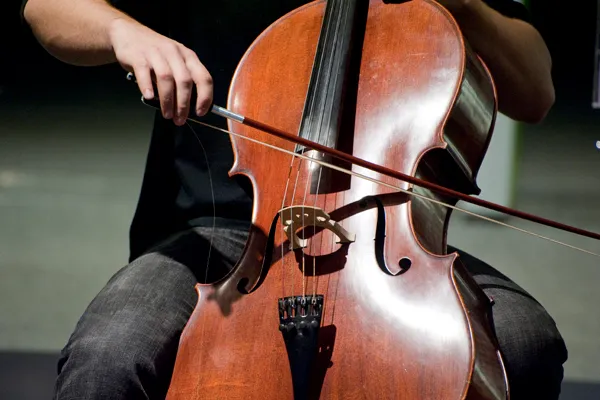
photo: newsfeed.time.com
Today, when you buy a Stradivarius, you are buying status and an investment rather than just a working tool. Yes, virtuosos do play them in concerts, but if it were only about the sound, they could find equally good alternatives for a fraction of the price. The problem is, the audience wants to see a legend on stage, and collectors want to own something no one else can have.
The true value? It lies somewhere in between, where emotions, prestige, and real craftsmanship meet.
Adam
hobby & editorial team




Leave a Comment