

Couture Week SS23: a feast of fashion sensations
Another Paris Fashion Week has come to an end, but the excitement is still in the air. The fashion world finally had the chance to see the spring collections for the upcoming year. From the controversial Schiaparelli show on Monday to the Fendi presentation on Thursday evening, the Paris runway was full of action. Over the course of 29 couture shows in just four days, we witnessed countless breathtaking creations and designer, handcrafted accessories.
Nevertheless, attention was also drawn to the overwhelming impact of social media on matters that once took place behind closed doors. Couture Fashion Weeks, already shrouded in controversy due to their exclusivity, this time sparked outrage that extended to the show of the French avant-garde fashion house Schiaparelli. Undoubtedly, this year’s event reached far beyond the circle of celebrities and influential industry insiders.
Couture as a niche market
Couture Fashion Week is one of the most important events in the fashion industry. Held twice a year, it showcases the most exclusive fashion—handcrafted garments sold for staggering amounts. In fact, the very term couture refers to clothing made exclusively to order and stands in contrast to so-called “ready to go” fashion, which is widely available to everyone.
It is often said that couture shows are also an opportunity to expand the client base among stars and celebrities. Regardless of the reason driving this exclusive event, let’s take a look at some intriguing collections that drew crowds to Paris.
An animal accent in the Schiaparelli collection
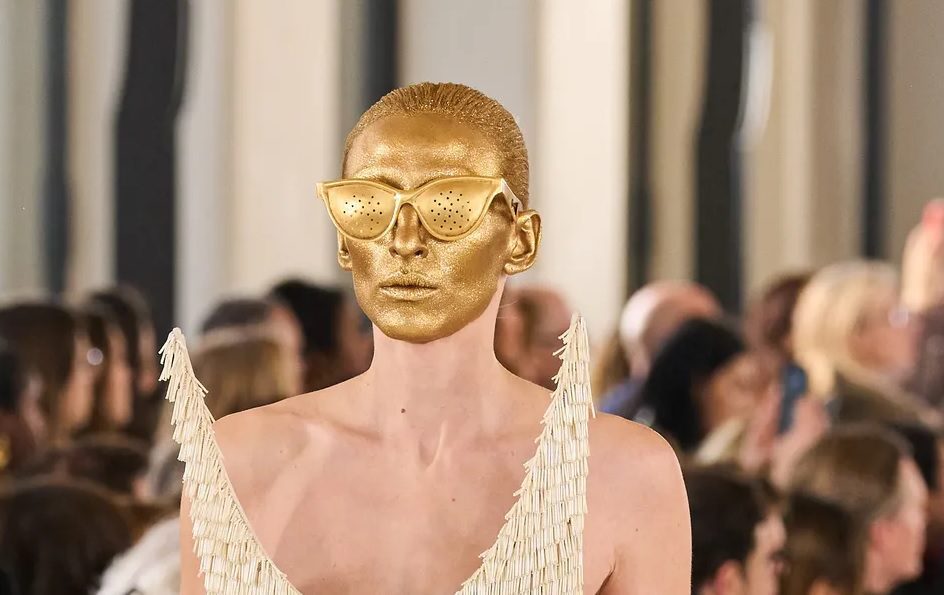
Undoubtedly, the collection presented by the Schiaparelli fashion house attracted the most media attention. The brand’s creative director, Roseberry, decided to showcase his innovative approach by adorning the models’ gowns with animal heads. The attached lions, panthers, and wolves were crafted from hand-sculpted foam, wool, and silk faux fur. All of this gave the animal replicas an extraordinary sense of realism.
In addition to being filled with surreal accents, the silhouettes also referenced the symbolism of hell from Dante’s “Divine Comedy.” The runway featured oversized jewelry forms and masks, creations with extremely accentuated waists, and intriguing takes on the classic suit. One thing is certain: Schiaparelli’s fashion didn’t just brush against art—it became art itself.
Nevertheless, the show received a highly varied response. Words of admiration and praise were mixed with scandal, related to the use of animal symbolism as a fashion element. However, the words of Benjamin Simmenauer, a professor at the Institut Français de la Mode, are significant:
“Couture is usually not about reflecting society. That’s the role of ready-to-wear. Couture is more about celebrating craftsmanship, which is why couture rarely makes waves. The Schiaparelli scandal felt like something new for couture.”
Stunning stage designs
Couture Fashion Week is about more than just clothes.
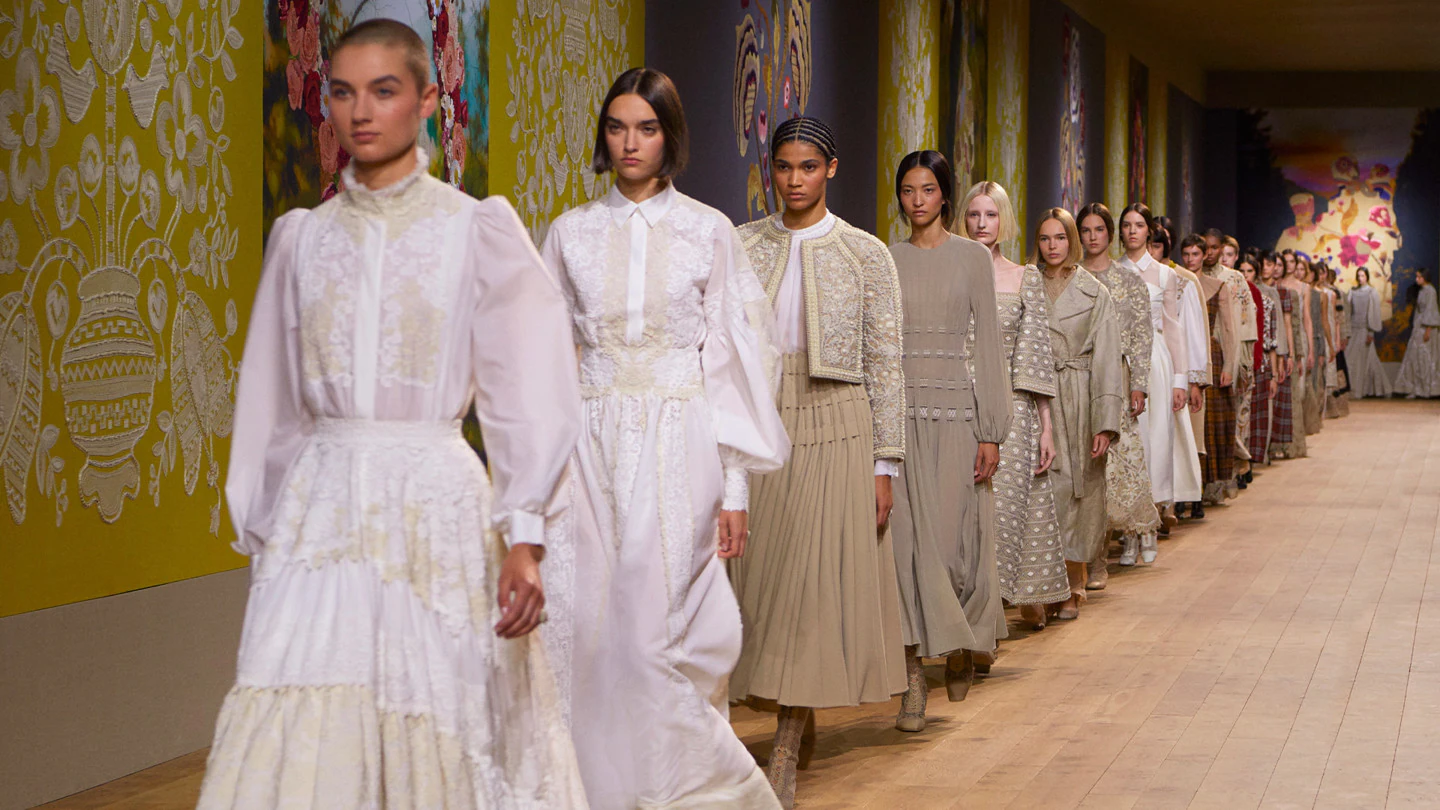
Black and white, fitted silhouettes paired with oversized shapes, soft sensual dresses alongside looks borrowed straight from the men’s wardrobe. All of this was complemented by a remarkable set design created by artist Mickalene Thomas, featuring gigantic portraits of African American women, “symbolizing a new pantheon of women.”
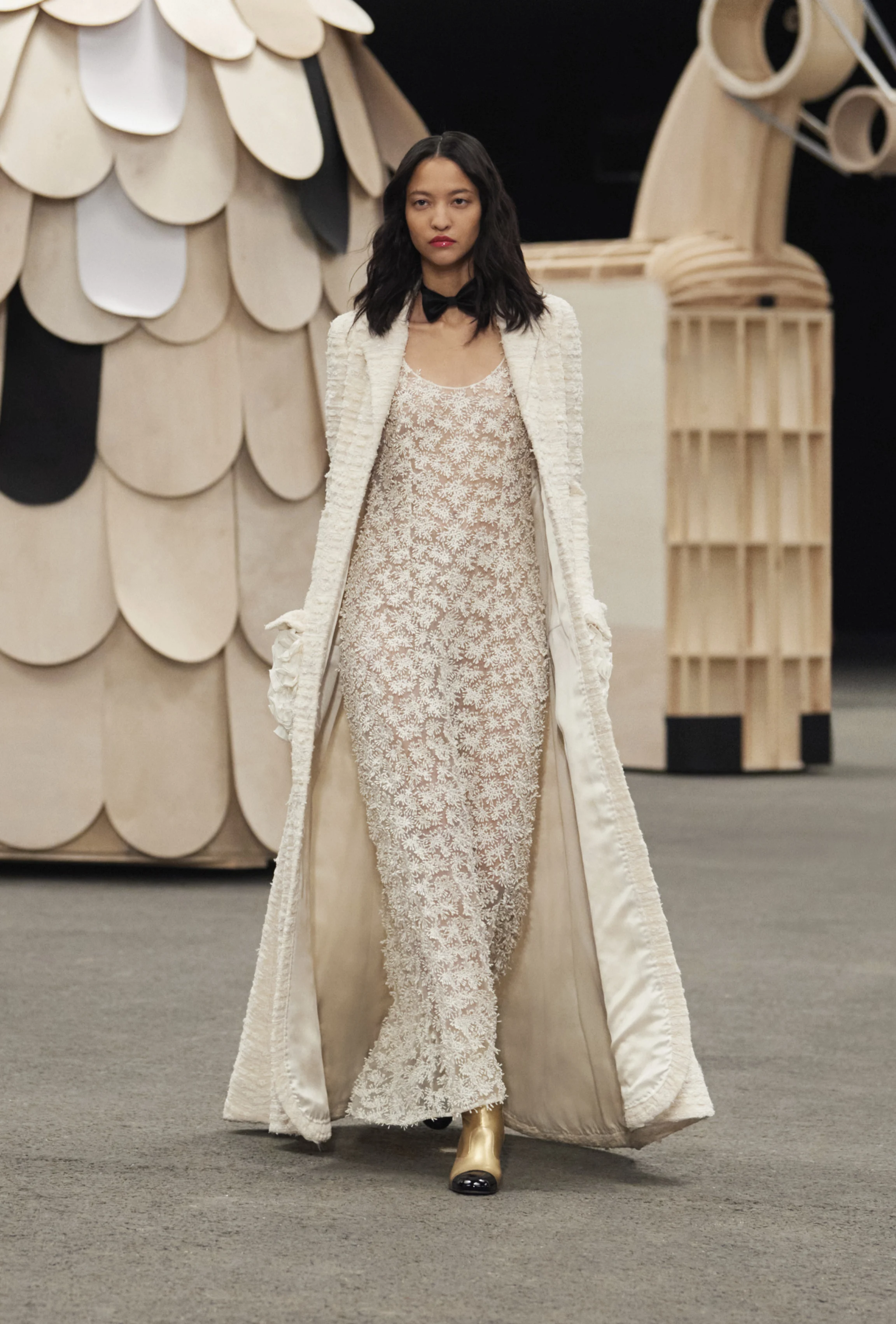
In contrast, for Chanel, the set design featured large movable sculptures by French artist Xavier Veilhan, crafted from cardboard, wood, and paper, inspired by the feminine costumes of majorettes in parades. Meanwhile, the models wore spectacular hats, bow ties, satin capes, pleated skirts, sequins, and petticoats.


Leave a Comment