

Why is Louis Vuitton so expensive?
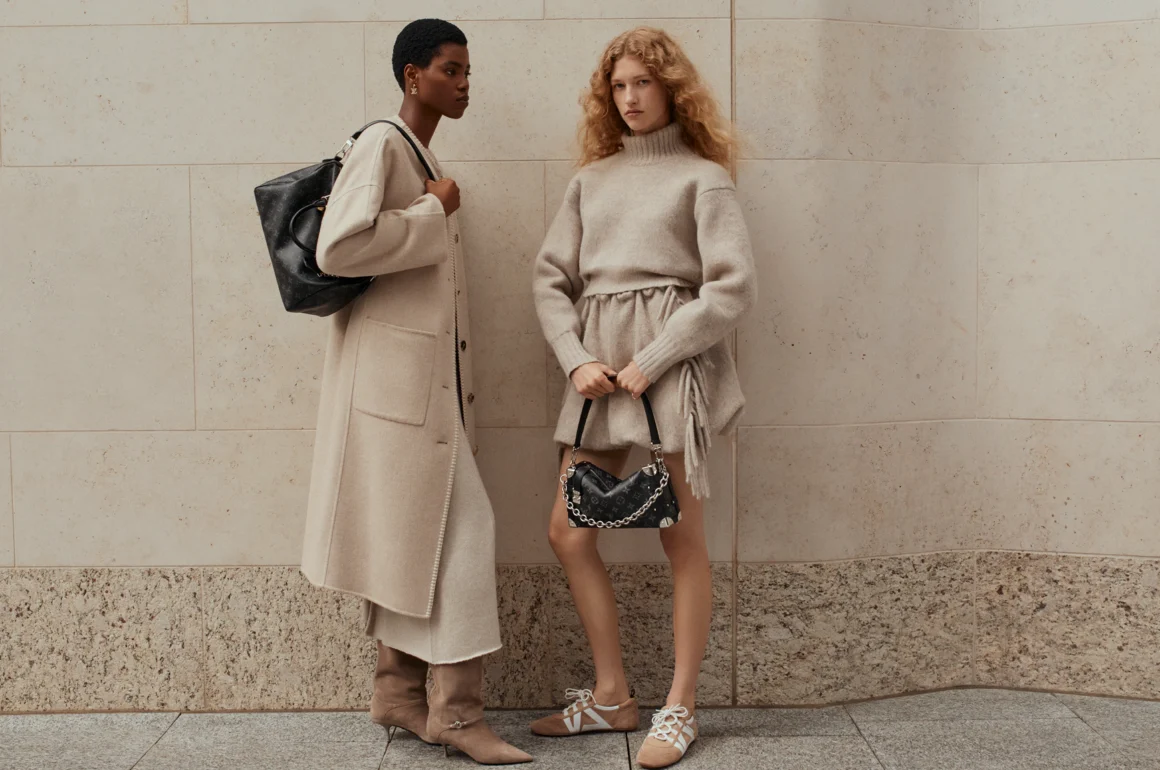
Why does a Louis Vuitton bag cost more than a used car?
A classic Speedy 30 will set you back around $1,500. A limited edition of the same bag? It can easily top $50,000. That’s the difference between a bicycle and a BMW.
It might sound crazy, but behind these prices lies a story that began with a 13-year-old boy walking 400 kilometers to Paris. Back then, Louis Vuitton had nothing but dreams and strong legs. Today, his name stands for an empire worth $124 billion—a 45% increase in just the last three years.
Why is Louis Vuitton so expensive?
It turns out the issue has three layers. The first is craftsmanship—every bag passes through the hands of masters who have spent years perfecting their skills. There’s no assembly line here like in ordinary factories.
The second layer is brand strategy. Louis Vuitton doesn’t want to be accessible to everyone. “Exclusivity is half the value”—that’s what people in the industry say. The harder something is to buy, the more we want it.
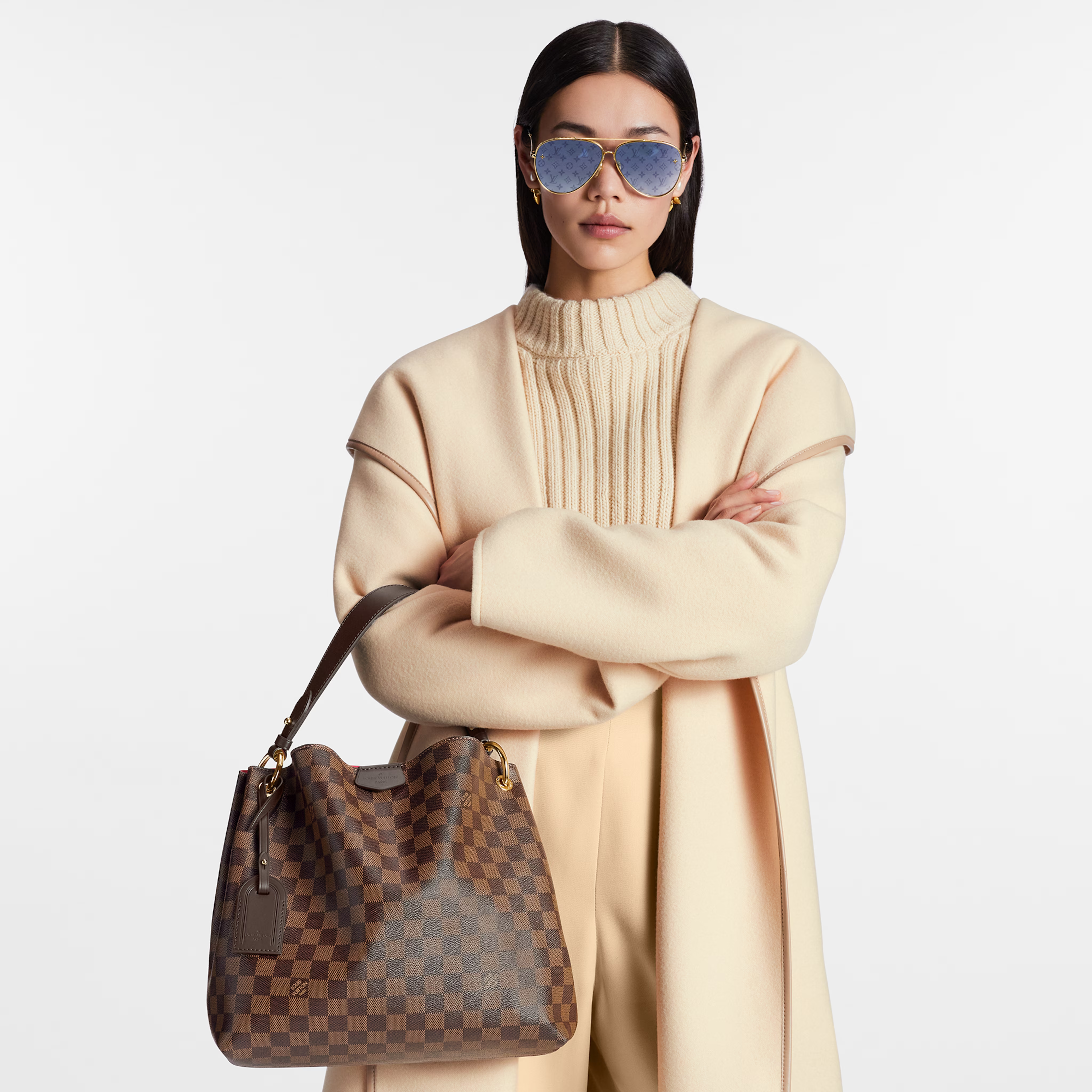
photo: us.louisvuitton.com
The third layer is psychological. People don’t buy expensive things just because they’re better. They buy them precisely because they’re expensive. It sounds strange, but that’s how we work.
Before we peek inside the Parisian atelier, it’s worth understanding that behind every Louis Vuitton price tag are real production costs.
Craftsmanship and premium materials: the real cost of production
Do you see that woman in the white coat? She’s sitting at a table in the Asnières atelier, under a lamp. In front of her is a piece of leather and a needle. She’s in no rush. Every stitch is made calmly, measured. Six stitches per inch—that’s the standard for a Capucines bag. It might not sound impressive, but try doing that for eight hours a day.
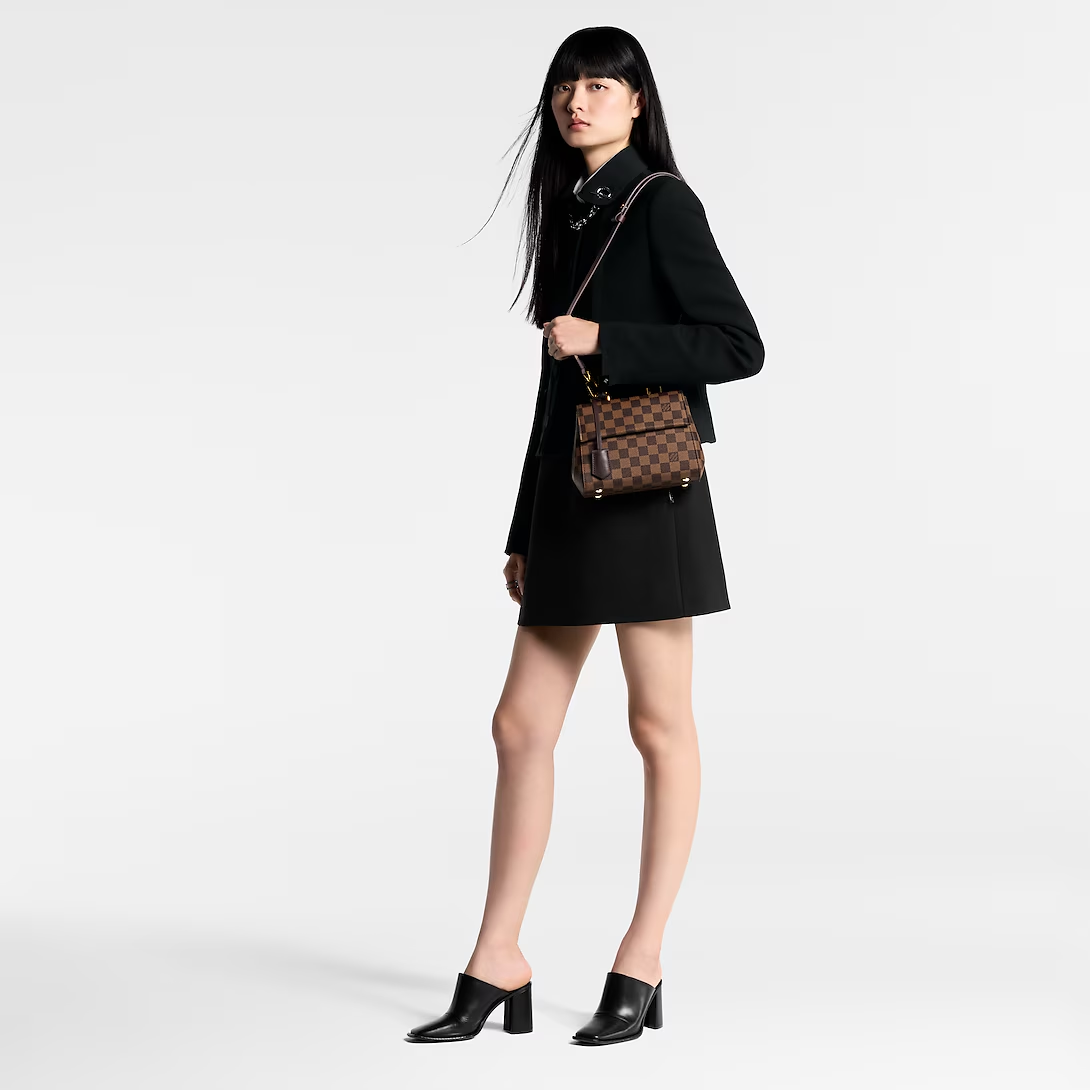
photo: us.louisvuitton.com
That’s exactly how these expensive pieces are made. Not in factories where machines churn out hundreds of bags a day. Here, one person might make one or two pieces a week. It depends on the model.
Before this woman even starts sewing, someone else has to select the leather. And here’s where it gets interesting—since 2021, every leather used for Capucines comes with a Leather Working Group certificate. That means someone has checked the entire journey of that leather. Where it came from, how it was tanned, whether the tannery polluted the river. It sounds nice in theory, but in practice it means tons of paperwork and higher prices.
“Luxury is not just the final product, but above all the process of its creation”—that’s what they say in the industry. And indeed, when you look at the numbers, it becomes clear why the prices are what they are.
Take the Soleils necklace, for example. 1,600 hours of work. That’s almost a year of full-time labor for one person. One piece of jewelry. It might sound absurd, but every element of that necklace is made separately, by hand. Polishing, assembling, checking. And checking again.
In Italy, in a small workshop near Florence, I met a craftsman who makes belt buckles. He showed me his work—one buckle takes three days to make. Three days for a single belt element. But when you hold that buckle in your hand, you feel the difference. It has weight, it has quality.
The problem with small batches is that you can’t spread the costs over thousands of pieces. If you make twenty bags a month, each one has to cover the costs of the atelier, salaries, materials. In France, Spain, or Italy, those salaries aren’t low. A good craftsman earns more than a civil servant.

photo: us.louisvuitton.com
Here are the three main techniques that drive up the costs:
- Hand stitching with a precise number of stitches per inch
- Selection and certification of each leather batch individually
- Multi-stage quality control processes at every step
Sometimes I wonder if it really makes sense. Does it truly take that much time to make a single handbag? But then I see the final result and it all becomes clear. These pieces are crafted to last for decades—not to be bought, worn for a year, and thrown away.
Around 200 people work at the atelier in Asnières. Each has their own specialty—one makes only the handles, another just the locks, a third assembles the entire piece. This isn’t a production line. It’s more like a team of artists, each working at their own pace.
Now that we know the price of craftsmanship, it’s time to see how much the aura of luxury itself costs…
Exclusivity, marketing, and the Veblen effect: the psychology of price
Have you ever seen the line outside Louis Vuitton? In 2023, when the limited-edition GO-14 bag dropped, people waited for hours. Not because they couldn’t afford to buy it right away. They just wanted to be part of the frenzy.
That’s the classic Veblen effect —the higher the price, the more desirable it becomes. Thorstein Veblen noticed back in the 19th century that some goods gain value precisely because of their price. Louis Vuitton is a master of this game.
Think about that Monogram from 1896. Georges Vuitton originally created it to fight counterfeits. Today? It’s a status symbol you can spot from afar. Every bag with that pattern screams “I can afford this.” And that’s the point—it’s not about functionality, but about the social message.
Limited editions are another level of manipulation. Remember the Supreme collaboration in 2017? Prices skyrocketed, and people bought everything—even bricks with the logo for thousands of dollars. Absurd? Maybe. But it works.
Louis Vuitton does this systematically. Trunks for the Ballon d’Or since 2019, LV Dream exhibitions in 2025—every event fuels demand. They’re not selling bags, they’re selling dreams.
| Strategy | Effect on price |
|---|---|
| Limited editions | An increase of 30-50% |
| Collaborations with celebrities | Doubling of demand |
| Boutiques in premium locations | Justification of high margins |
| Exhibitions and cultural events | Building brand prestige |
Celebrities play their part too. When you see a star wearing LV on the red carpet, you subconsciously associate the brand with success. That’s no accident—every such appearance is carefully planned and paid for.
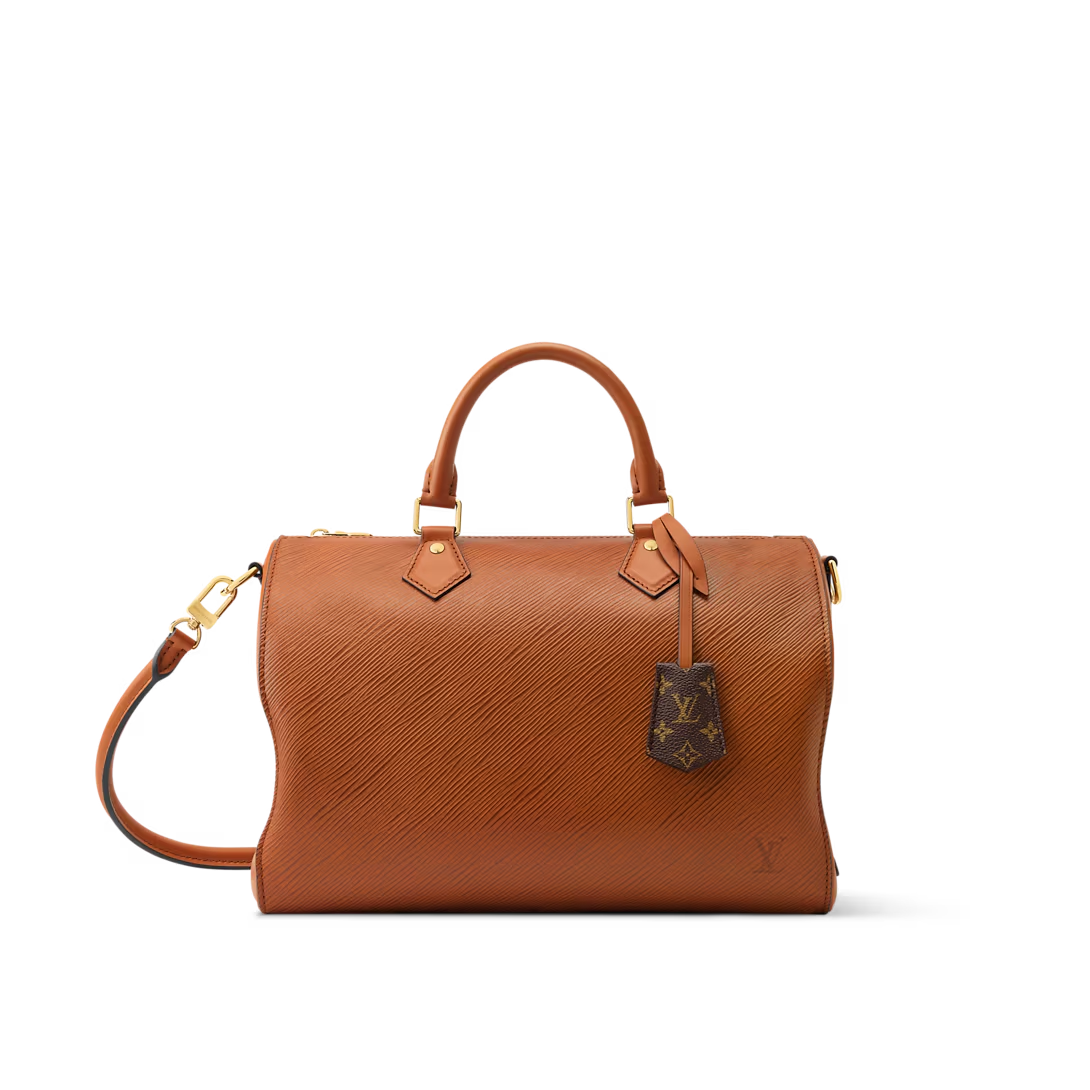
photo: us.louisvuitton.com
But there are also hard costs to this game. Louis Vuitton boutiques are located on the world’s most expensive streets—Champs-Élysées, Fifth Avenue, Ginza. Rent per square meter reaches astronomical sums. The factory in Texas, recently opened, cost hundreds of millions. Employees had to be trained according to French standards. All of this affects the final price.
Sometimes I wonder if they’re not overdoing the exclusivity. But the numbers don’t lie—the more unattainable, the more desirable.
Psychology works here on several levels. First, the brain automatically links a high price with quality. Second, owning LV gives you a sense of belonging to an exclusive group. It’s like membership in a millionaire’s club.
Louis Vuitton marketing is a lesson in behavioral economics. They’re not selling a product—they’re selling an identity. Every ad campaign isn’t about showing a bag, but about the lifestyle you want to be part of.
How does this mix of hard and soft factors influence your buying decisions? Probably more than you think.
What’s next for luxury? Insights and forecasts for buyers
I’ve been wondering lately if buying luxury bags even makes sense these days. And I’ve come to the conclusion that it actually does—but you have to be smart about it.
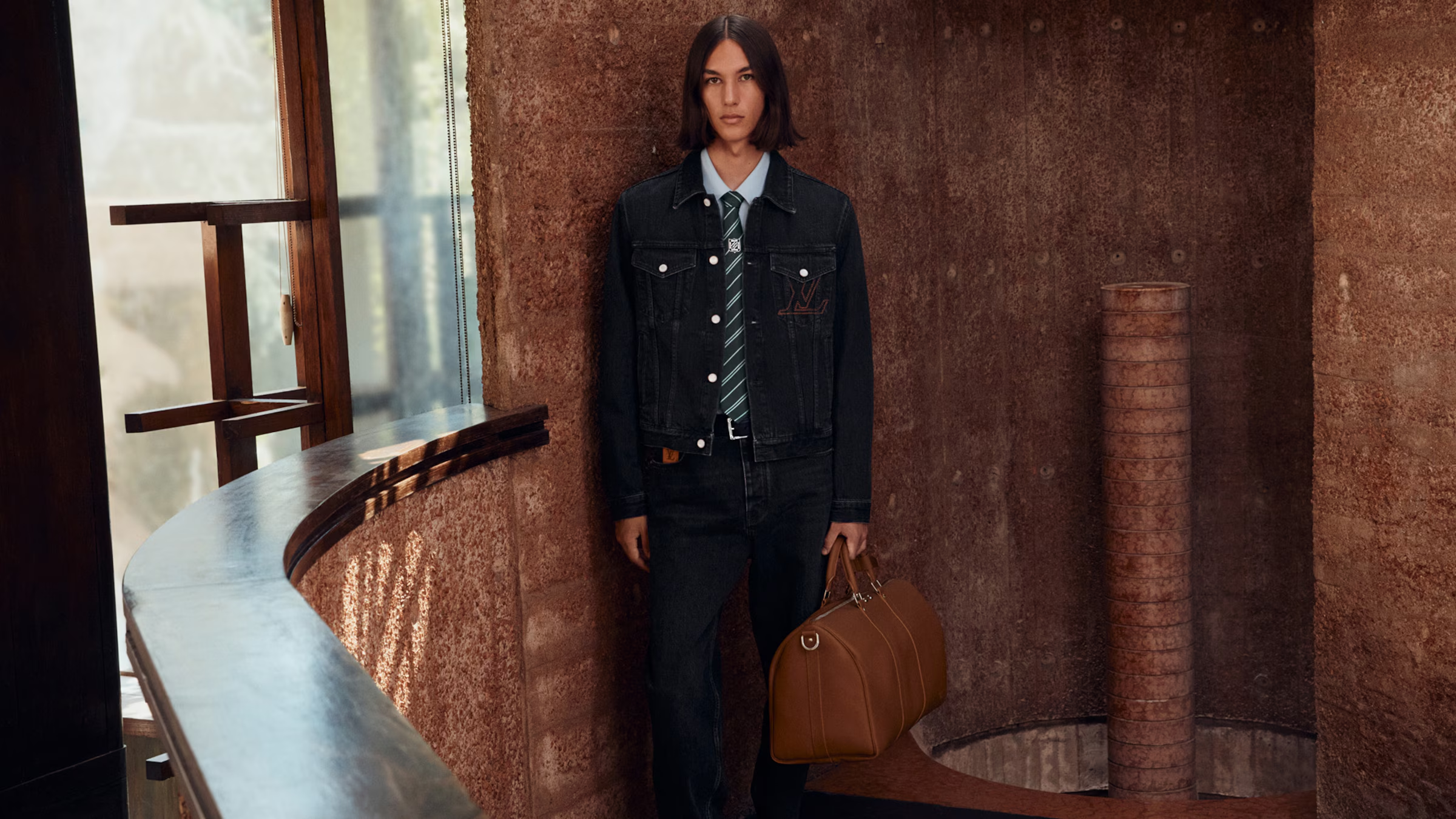
photo: us.louisvuitton.com
Key takeaways? First, craftsmanship still matters, but it’s really the psychology of pricing that rules this market. People are buying status, not just a bag. Second, a vintage Louis Vuitton Monogram is practically an investment—it gains 10–20% a year, outperforming some investment funds.
The world of luxury is changing, and fast. By 2030, Asia could account for half the entire market. That means brands will adapt to their tastes, not ours. I can already see European fashion houses introducing colors and patterns they once would have considered too extravagant.
Sustainability is no longer just a buzzword—it’s becoming a necessity. Younger generations won’t buy from brands that harm the environment. And those NFTs… it sounds abstract, but digital bags are already a reality.
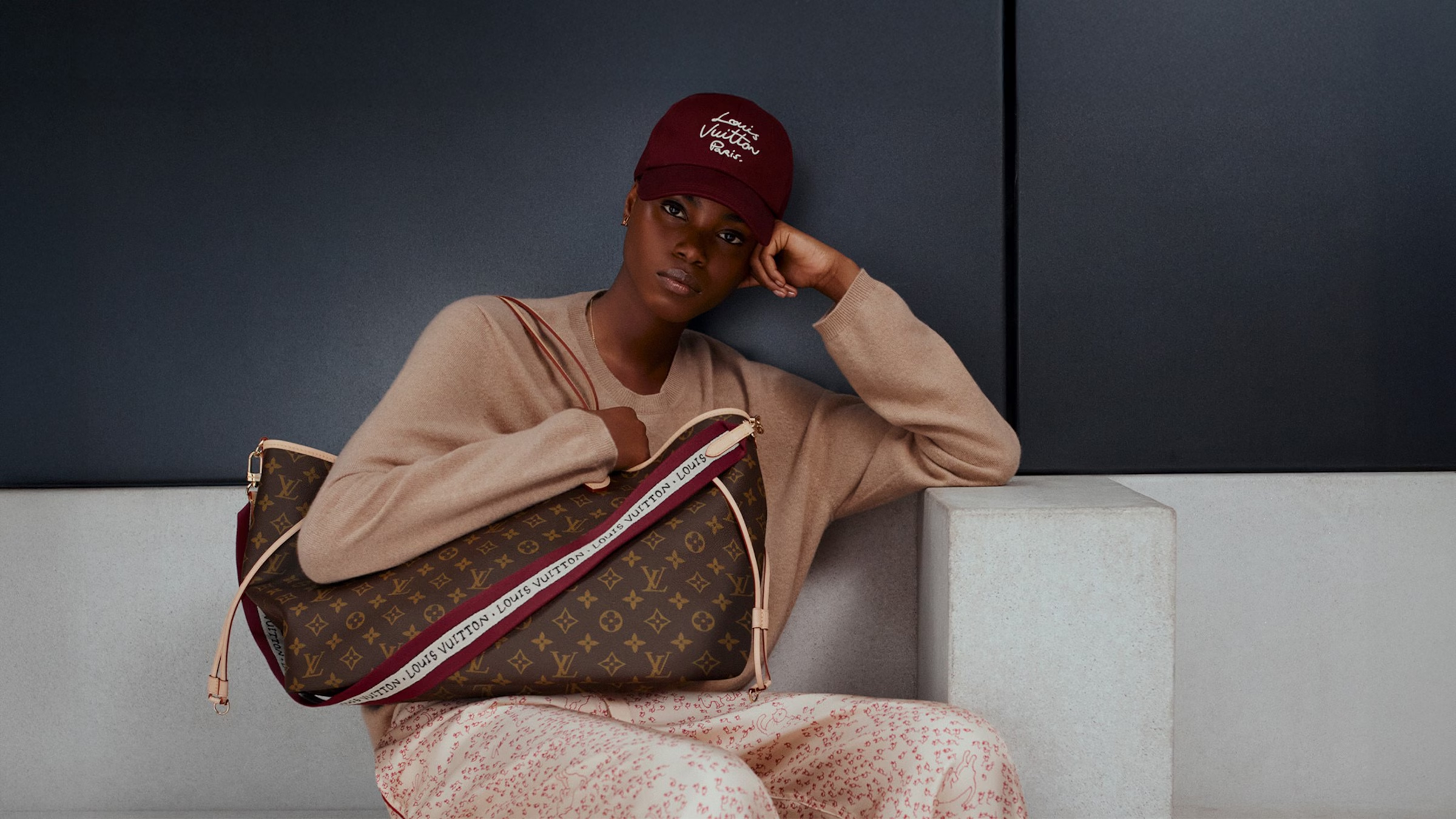
photo: us.louisvuitton.com
Practical tips for the future:
- You verify authenticity through the details – thread quality, even stitching, and serial numbering. Fakes may look good from a distance, but the devil is in the details.
- Calculate cost-per-wear, not the purchase price. A bag that costs 3000 PLN and is used for 10 years comes down to 300 PLN per year. Sometimes it’s worth spending more upfront.
- The second-hand market is your friend—buy your first luxury items there and sell the ones you’ve grown tired of. Vestiaire Collective and local Facebook groups are real goldmines.
Actually, it’s strange that in the era of fast fashion, people are once again starting to appreciate things that last. Maybe it’s a natural reaction to the flood of cheap junk?
The luxury of the future will be more conscious, digital, and Asian—but the need to stand out will remain as old as humanity itself.
Maria LOU
fashion editor
Luxuryblog


Leave a Comment