

What is the tallest building in Europe?
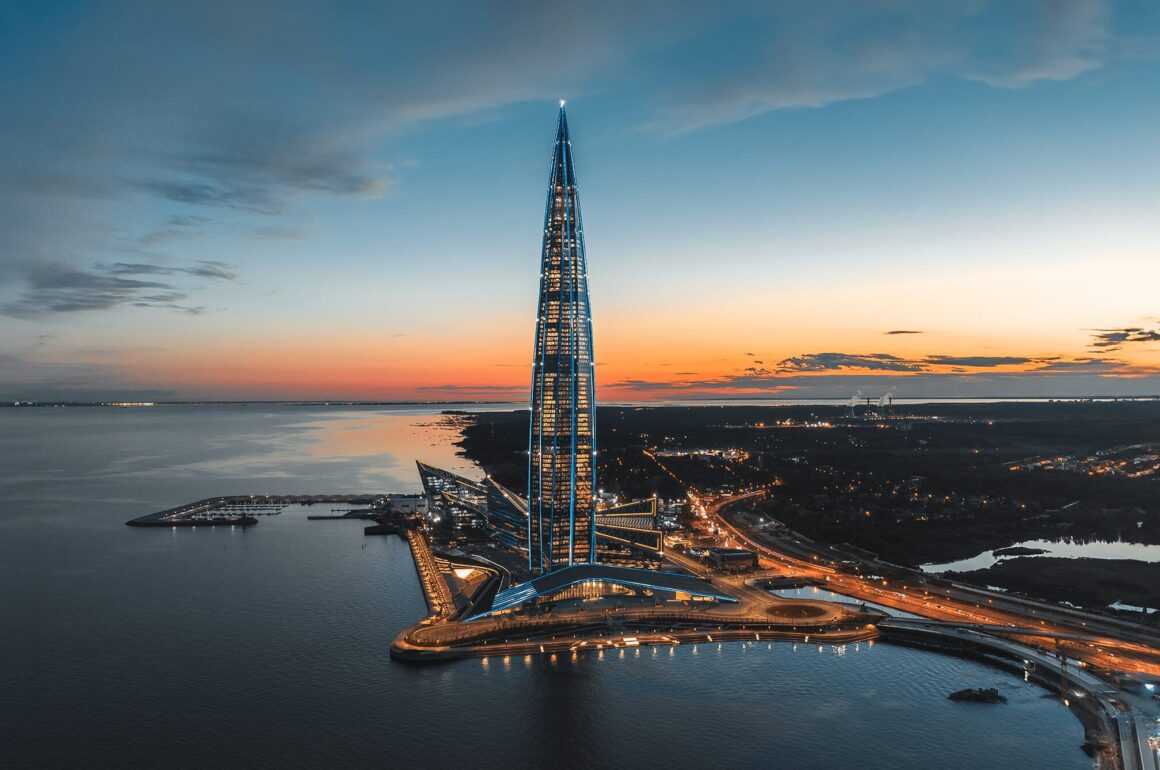
Contemporary architecture is constantly evolving, with engineers and designers around the world competing to create ever-taller structures. While Europe may lag behind Asia and North America in terms of skyscraper heights, it still boasts some truly impressive high-rises. What is the tallest building in Europe? Among them, one stands out clearly above the rest—Lakhta Center in St. Petersburg. This is not only the tallest building in Europe, but also a symbol of cutting-edge technology and innovative construction solutions. In this article, we’ll take a closer look at this remarkable skyscraper, its history, architecture, and its significance for the city and the region.
What is the tallest building in Europe?
The tallest building in Europe is the Lakhta Center, located in St. Petersburg, Russia. This building reaches 462 meters, making it not only the tallest skyscraper in Europe but also one of the tallest office buildings in the world. For comparison, the tallest building in the European Union, Varso Tower in Warsaw, stands at “only” 310 meters including its spire.
Lakhta Center primarily serves as the headquarters of the Russian energy giant Gazprom, but it also houses numerous office, retail, and recreational spaces. The construction of this impressive structure lasted from 2012 to 2019, and the project was designed to meet the highest ecological and technological standards.
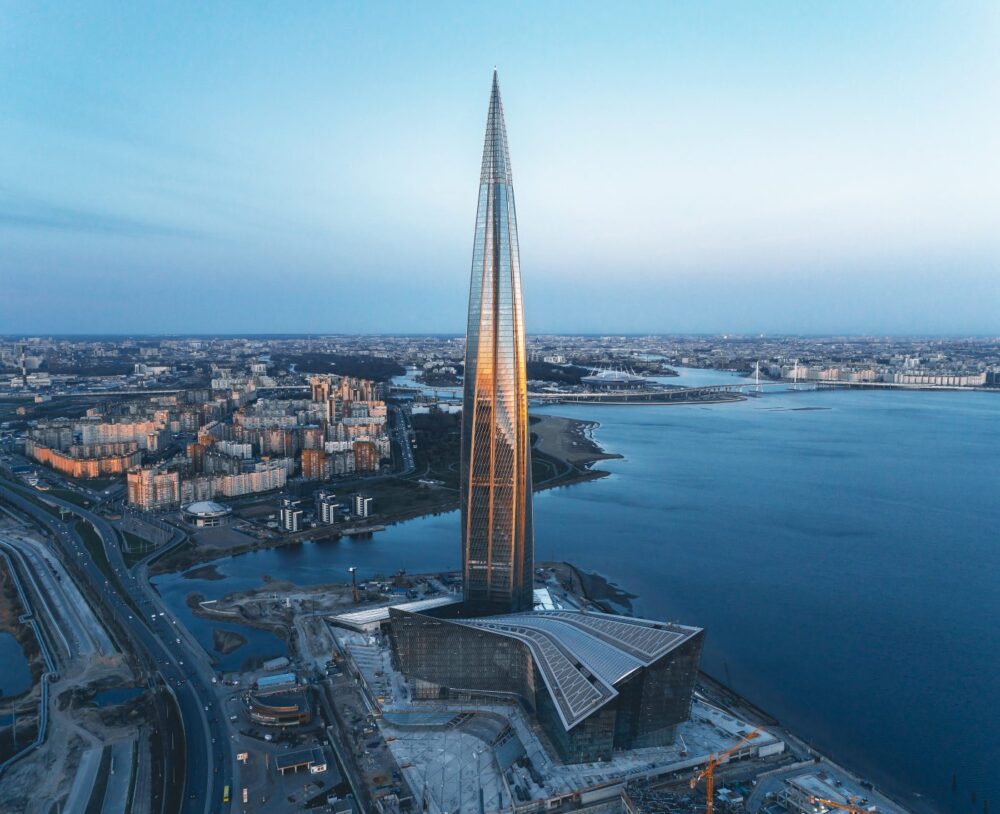
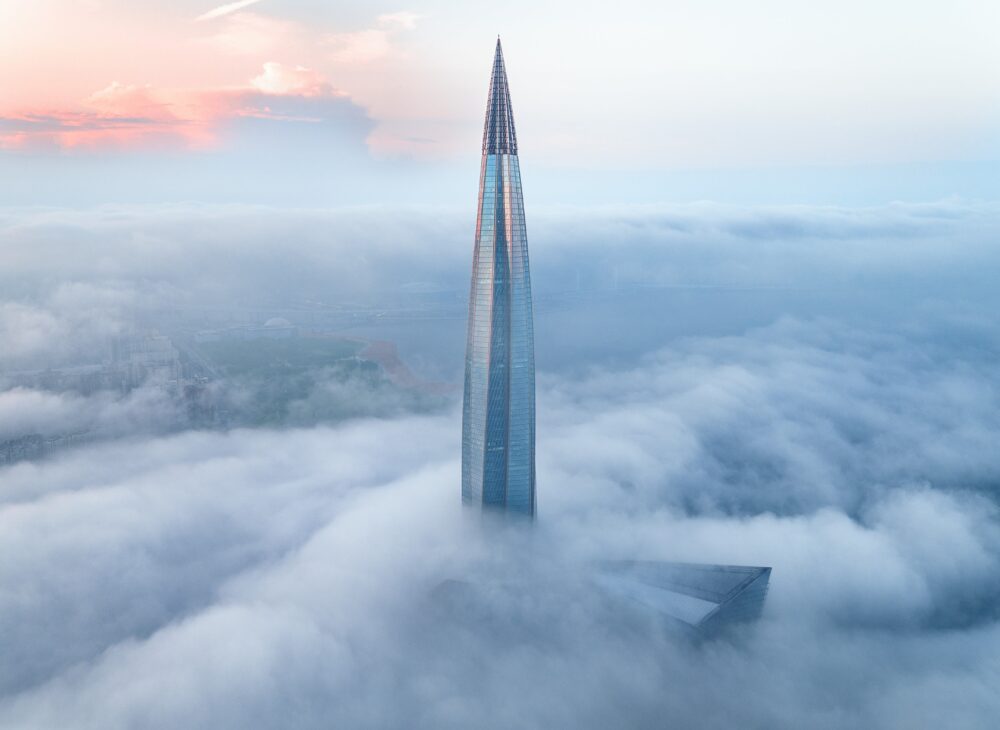
Interestingly, the skyscraper was not built in the center of St. Petersburg, but in the Lakhta district, on the northwestern outskirts of the city. This location was a strategic choice, as the very center of St. Petersburg is under strict monument protection, which would have made the construction of such a tall structure impossible. With its slender silhouette and gleaming glass façade, the skyscraper has become a new symbol of the city, visible from as far as 40 kilometers away.
The story behind the construction of Lakhta Center – how was the tallest building in Europe created?
The construction of Lakhta Center was a massive engineering challenge. In 2006, Gazprom announced plans to build a new headquarters, which was originally intended to be located closer to the historic center of St. Petersburg. However, this sparked protests from conservationists and residents, who feared that a modern skyscraper would disrupt the city’s classic skyline. As a result, the project was relocated to the Lakhta district.
The initial construction work began in 2012, with the biggest challenge being the creation of foundations on marshy ground. Engineers had to reinforce the soil using advanced geotechnical technologies. The building’s structure consists of special glass panels that reflect light and change their shade depending on the time of day.
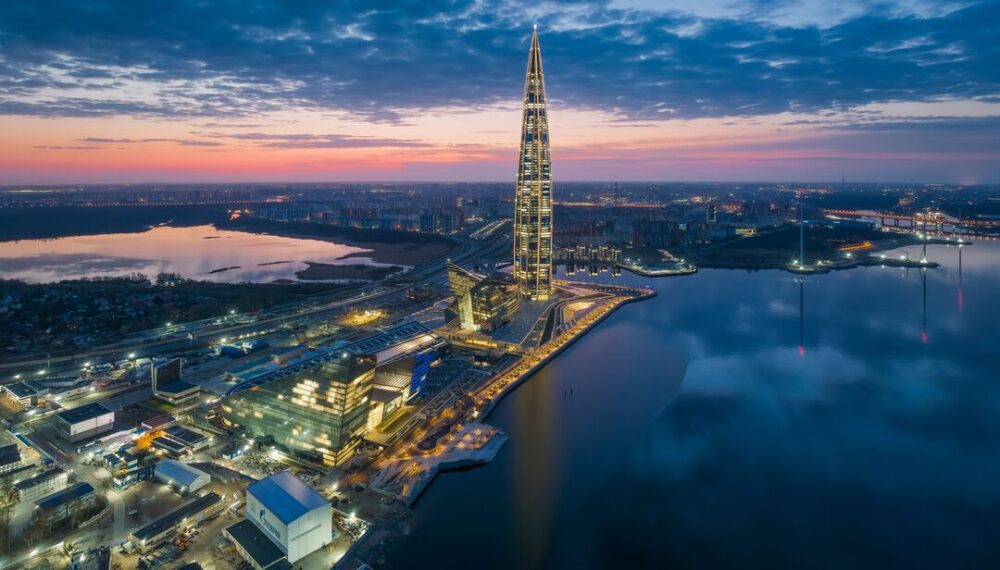
The skyscraper was designed by the British architectural studio RMJM, and its shape is inspired by a gas flame—a reference to Gazprom’s core business. The construction of the entire complex cost around $1.77 billion, making it one of the most expensive building projects in Russia.
Architecture and design – what makes Lakhta Center stand out?
Lakhta Center is an architecturally remarkable building, distinguished by its streamlined, spiraling silhouette. The skyscraper consists of 87 floors, with its pinnacle twisted by 90 degrees, giving it a dynamic appearance. The design was inspired by a gas flame, referencing the core business of its main investor, Gazprom. The entire facade is made of special high-resistance glass that minimizes light reflection and reduces the greenhouse effect. The tower’s shape means it looks different from every angle, and its slender, soaring form adds a sense of lightness despite its impressive scale.
One of the key aspects of this structure is its energy efficiency. Lakhta Center is one of the few skyscrapers in Europe to have received the LEED Platinum certification, which means it meets the highest ecological standards. The building uses intelligent light management, and its LED lighting system adapts to external conditions, significantly reducing energy consumption. Innovative solutions also include a cooling system that uses water from the nearby Gulf of Finland, lowering the demand for air conditioning energy. Additionally, double glazing has been used to improve thermal and acoustic insulation, providing greater comfort for the building’s occupants.
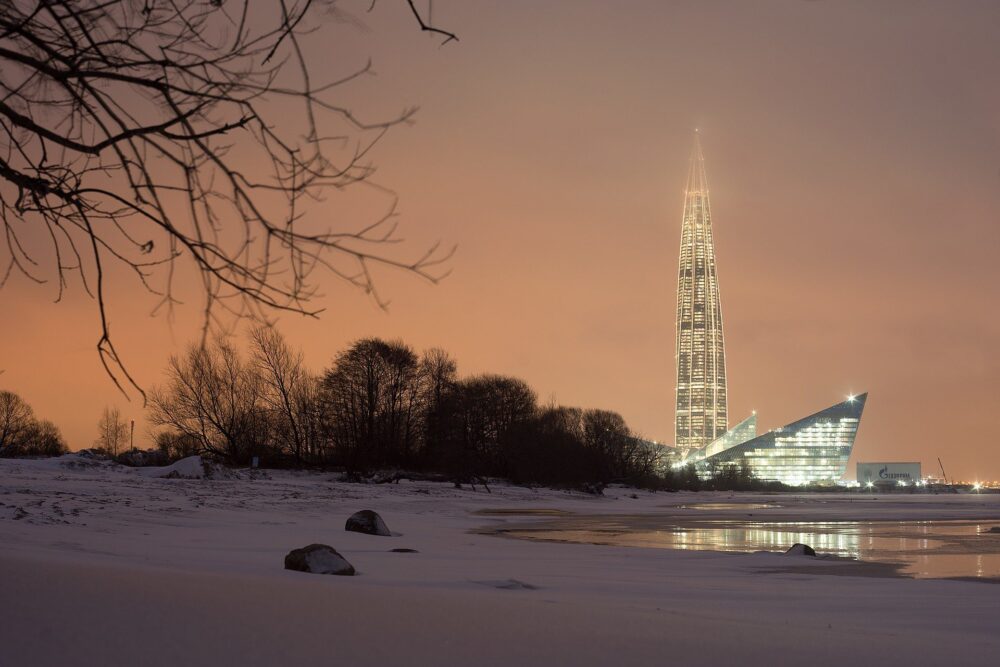
It’s impossible not to mention the panoramic observation deck, located at a height of 357 meters, offering breathtaking views of the entire city. This is the highest observation point in Russia, attracting both tourists and residents of St. Petersburg. Interestingly, the building also features relaxation areas, including green terraces and recreational zones, providing employees with a place to unwind surrounded by greenery. Lakhta Center is not just a skyscraper, but an example of modern, sustainable architecture that combines futuristic design with environmentally friendly solutions.
The Importance of Lakhta Center for St. Petersburg and Russia
The building has not only transformed the skyline of St. Petersburg but has also become one of the most important business centers in Russia. Thanks to its impressive height and modern design, Lakhta Center has become the city’s new landmark, symbolizing its growth and openness to innovation. It is also one of St. Petersburg’s main landmarks, visible from as far as 40 kilometers away. Its unique appearance has made it a popular subject for photography and one of the city’s top tourist attractions.
It is a symbol of the country’s modernity and economic strength, attracting investors and tourists from around the world. With the presence of Gazprom and other international companies, Lakhta Center has become a key hub for business and commerce in the region. This investment has also had a positive impact on the development of infrastructure in the Lakhta district, improving access to public transportation and road networks. New apartment buildings, hotels, and recreational spaces have sprung up around the complex, enhancing the appeal of this part of the city.
Lakhta Center also serves social functions—the complex houses a conference center, exhibition spaces, art galleries, and restaurants. In the future, there are plans to open an interactive museum of science and technology aimed at promoting knowledge about innovation and eco-friendly solutions. Additionally, the building hosts cultural events, concerts, and business meetings that attract people from various industries.
The tallest buildings in Europe – how does Lakhta Center compare to the competition?
Here is a comparison of the Lakhta Center with other tallest buildings in Europe:
- Lakhta Center (Saint Petersburg, Russia)
- Federation Tower (East Tower)
- OKO (South Tower) – Moscow, Russia
- Neva Towers 1 – Moscow, Russia
- Mercury City Tower – Moscow, Russia
As you can see, Russia dominates the ranking of the tallest buildings in Europe, with Moscow standing out as the true capital of European skyscrapers. Lakhta Center not only surpasses other Russian high-rises but also significantly exceeds the tallest buildings in the European Union, including Varso Tower in Warsaw (310 m).
Interestingly, Lakhta Center is not only the tallest building in Europe, but also one of the slimmest skyscrapers in the world. Its height-to-width ratio is significantly greater than that of most skyscrapers of similar height. This makes the building look even more impressive, especially when compared to other structures.
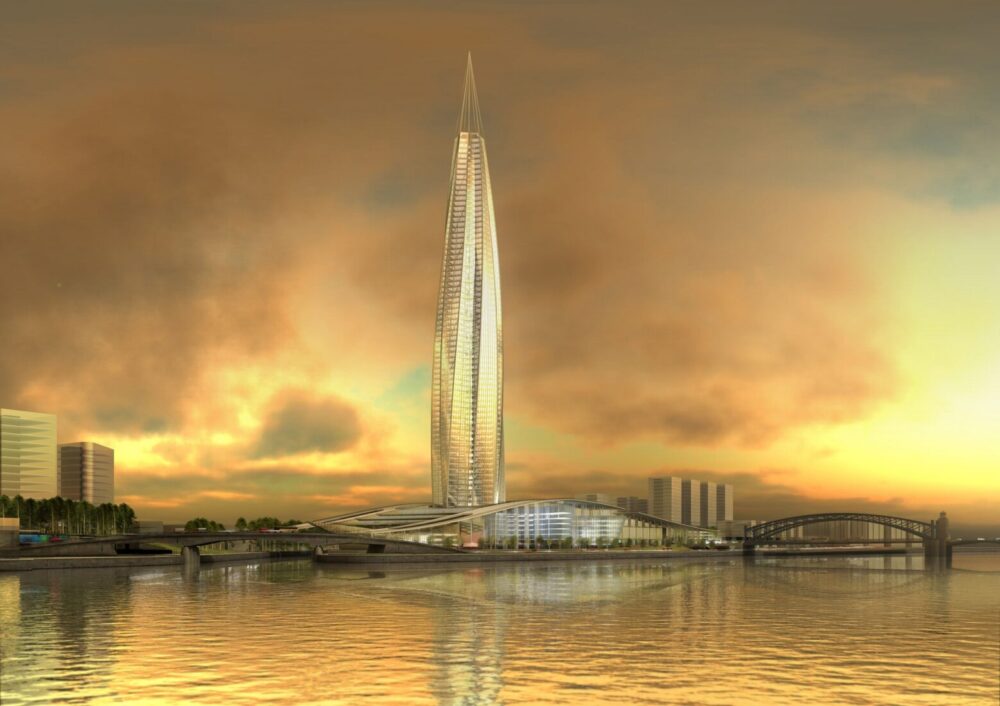
One of the greatest advantages of Lakhta Center is its unique location. Most European skyscrapers are situated in city centers, which makes their surroundings quite crowded. In contrast, Lakhta Center is located on the outskirts of St. Petersburg. It offers more space, and its surroundings are carefully designed with user comfort and aesthetics in mind. As a result, it has become not only a symbol of modern architecture but also a testament to thoughtful urban planning.
Lakhta Center not only set a new height record in Europe, but also revolutionized the approach to skyscraper design and construction. Its advanced technologies, eco-friendly solutions, and modern design make it one of the most impressive properties in the world.


Leave a Comment