

What is the difference between a diamond and a brilliant?
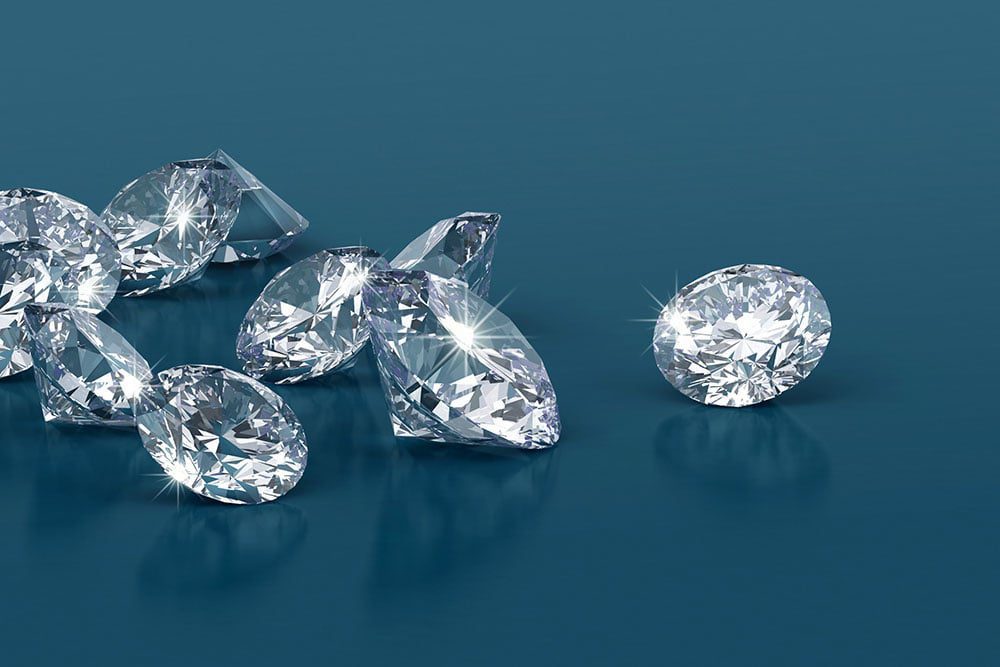
Did you know that the diamond market is worth around $90 billion a year? And despite this enormous value, most people still confuse a diamond with a brilliant. For a long time, I myself thought they were two different stones.
The truth is simple, though marketing has cleverly blurred it. A diamond is a mineral —a raw stone mined from the earth. A brilliant is simply a diamond that has been cut and polished to feature the characteristic shape with at least 58 facets. It’s like confusing an apple with an apple sliced into pieces.
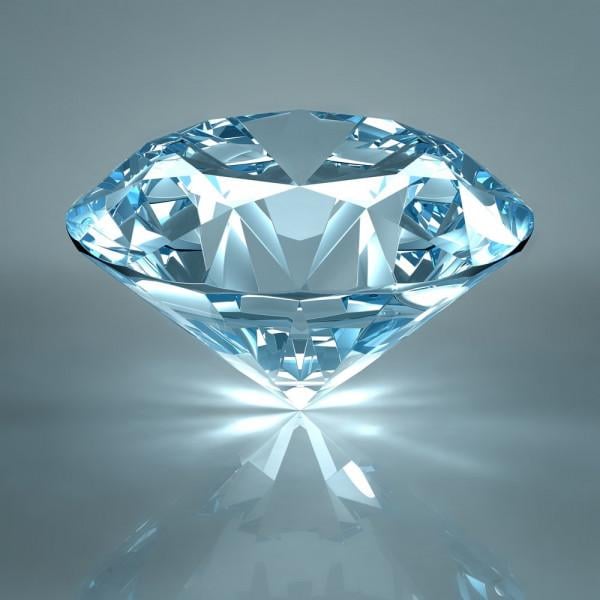
photo: baunat.com
Remember the “A Diamond is Forever” campaign from 1947? De Beers did something brilliant. In just a few decades, they convinced the world that a diamond is the symbol of eternal love. Before that, hardly anyone cared about them in engagement rings. Marketing not only promoted the diamond as a symbol, but also created conceptual confusion that persists to this day.
What is the difference between a diamond and a brilliant? – from raw stone to dazzling shine
Actually, I understand the confusion. In jewelry stores, no one says, “I’ll sell you a diamond in a brilliant cut.” They just say “brilliant,” as if it were a separate gemstone. I’ve heard it hundreds of times.
To get to the bottom of this, it’s worth taking a closer look at three key areas:
– the scientific properties and structure of a diamond
– the cutting process and various finishing styles.
The entire industry faces some fascinating challenges. Laboratories are now producing diamonds that are indistinguishable from natural ones. Younger generations are asking questions about the ethics of mining. And society still falls for marketing tricks from decades ago.
So let’s start with the scientific basics—what a diamond really is at the atomic level, and why its structure makes it such a unique material.
Diamond under the magnifying glass – chemistry, hardness, and rarity
I’ve always been fascinated by the fact that diamond and graphite are practically the same material. Both are made of pure carbon, but the difference in how their atoms are arranged means one can write on paper, while the other can cut glass.
In diamond, each carbon atom bonds with four neighbors, forming a cubic network. It’s like a perfectly organized city, where everyone has their own place.
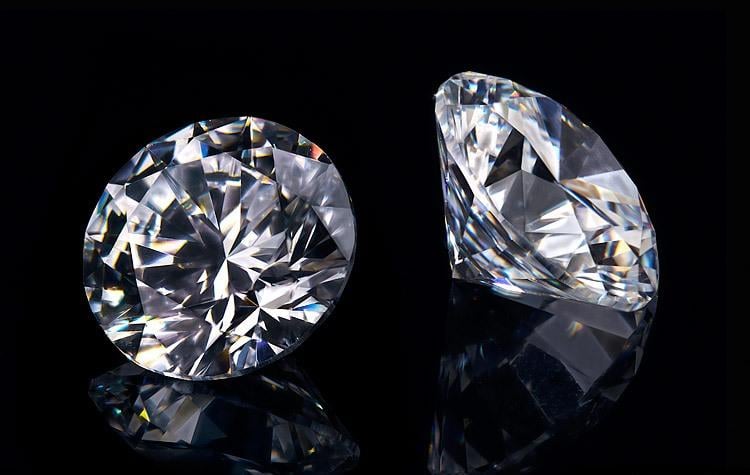
photo: baunat.com
Graphite has a layered structure—the atoms form flat sheets that easily slide over each other.
| Property | Diamond | Graphite |
|---|---|---|
| Hardness (Mohs) | 10 | 1-2 |
| Thermal conductivity | 2,000 W/m·K | 25-470 W/m·K |
| Melting point | approx. 3,500 °C | approx. 3,650 °C |
These numbers are impressive. Diamond conducts heat better than most metals, but doesn’t conduct electricity at all. Quite the paradox, isn’t it?
Natural diamond forms deep underground, under pressures of 45,000–60,000 atmospheres and temperatures above 1,000 degrees. The process takes millions of years. No wonder only 142 million carats are mined annually—it sounds like a lot, but that’s just about 28 tons for the entire world.
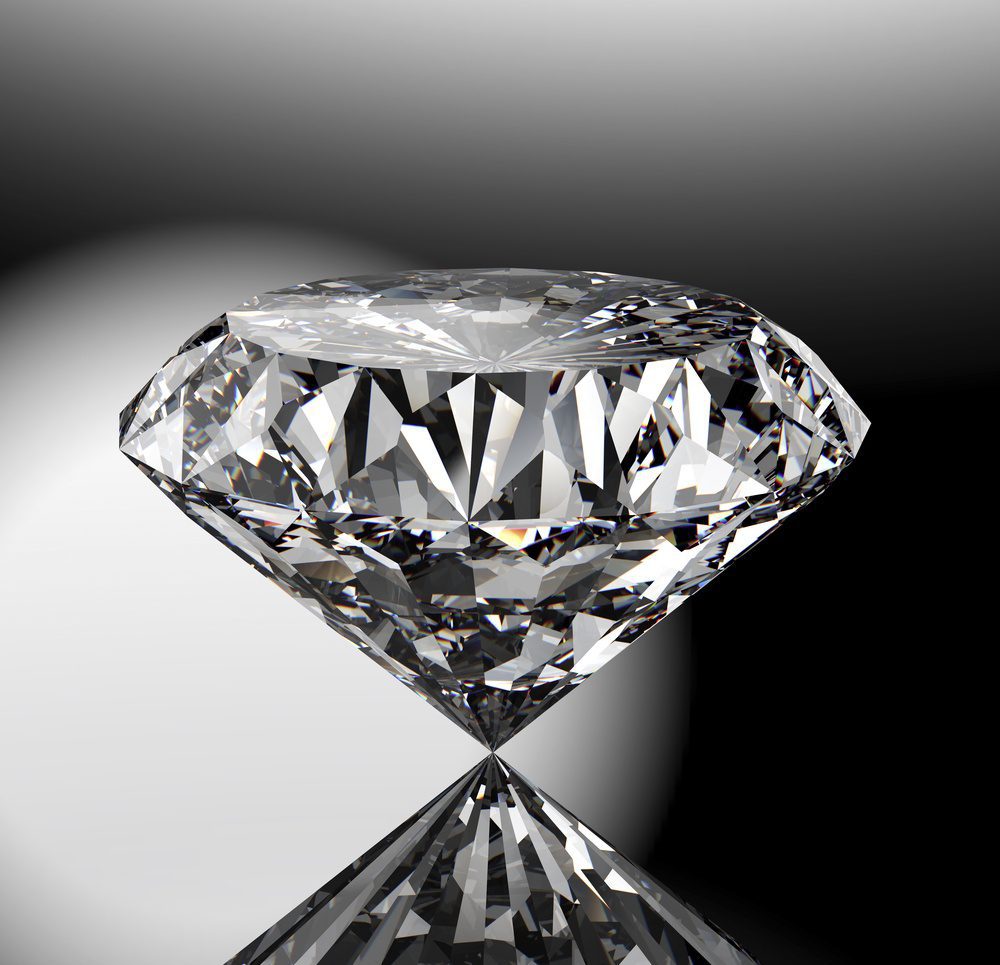
photo: blog.brilliance.com
Synthetic diamonds are changing the game entirely. In the lab, they can be produced in just a few weeks. Two methods are used—HPHT (high pressure and temperature) or CVD (chemical vapor deposition). Physical properties? Identical. Chemically, you can’t tell them apart.
The statistics speak for themselves. In 2025, synthetics will make up 30% of the market. That’s a leap from just a few percent a decade ago. For industry, it’s a revolution—you can have a material with a hardness of 10 on the Mohs scale without waiting for geological luck.
The truth is, nature needed billions of years to create something humans mastered in just a few decades.
A fun fact to finish—one carat is 200 milligrams. The average diamond wedding band weighs about half a carat. A microscopic amount of carbon that’s undergone a hellish transformation.
Now that we know the raw material, let’s see what the right cut can do.
The secret of 58 facets – the power of the brilliant cut
I sometimes wonder if people realize the scale of this price gap. A rough diamond costs $100–500 per carat, but once it’s cut into a brilliant? That’s already around $6,000 per carat. This isn’t just an ordinary markup—it’s the magic of geometry.
Actually, it all began with Vincent Peruzzi in the 17th century. He came up with the basics, but the real revolution was brought by Marcel Tolkowsky in 1919. His mathematical model was a breakthrough. He calculated the ideal proportions to maximize light reflection.
The anatomy of a cut is truly a precise art —33 facets in the crown, 24 in the pavilion, and one tiny culet at the bottom. The crown angle is exactly 34.5 degrees. It sounds technical, but every degree matters.
The cutting process involves three main stages:
- Initial shaping – establishing basic proportions
- Crown faceting – these 33 upper facets
- Pavilion finish – lower 24 facets plus culet
Why exactly 58 facets? It’s all about the physics of light. Each facet acts like a tiny mirror. Light enters through the crown, bounces off the pavilion, and returns to our eye. This dance of rays creates brilliance—the fundamental reflection of white light.
Then there’s “fire”—those rainbow flashes. That’s light dispersion into its component colors. And finally, scintillation—the sparkle you see when you move the diamond. Together, these three effects create that mesmerizing look.
I remember the first time I saw a comparison between a brilliant cut and a diamond cut in another shape. The difference was striking. The brilliant simply came alive, sparkling and drawing the eye.
Fun fact—not all 58 facets are equally important. Those on the crown are crucial for brilliance, while the pavilion is mainly responsible for “fire.” The culet at the bottom? Almost invisible, but it stabilizes the entire structure.
Now that we know what gives brilliants their sparkle, let’s consider how to buy them wisely.
Your conscious choice – the future of diamonds and next steps
Over the past few months, I’ve been watching the diamond market change. It’s fascinating, but also a bit unsettling.
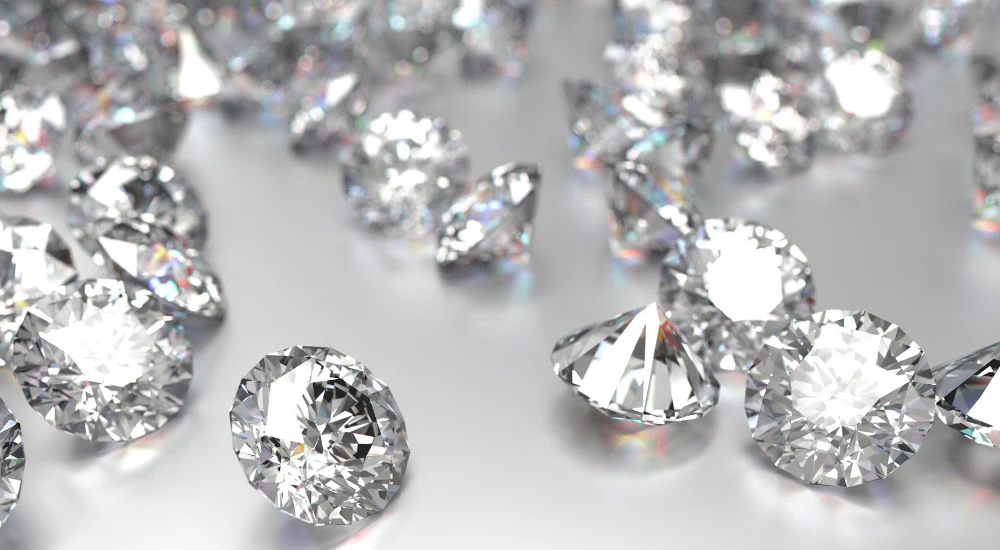
photo: koserjewelers.com
Analysts predict that lab-grown diamonds could make up half the entire market as soon as 2030. It sounds like science fiction, but technology is advancing that quickly. I remember just five years ago, synthetics were easy to spot—now? Without specialized equipment, it’s practically impossible.
“The synthetic revolution will transform the face of jewelry in the next decade—the question is, are we ready for it.”
That’s exactly why certification is becoming crucial. The Kimberley Process of 2003 eliminated most blood diamonds from the market, but today we need more. A GIA certificate is now a standard, not an option.
Specifically—what should you do before buying?
• Set a realistic budget and stick to it (it’s easy to get carried away in the showroom)
• Choose a reputable seller with certified stones
• Ask specific questions about origin and documentation
I’m not ashamed to ask about everything. It’s a major investment.
The future belongs to transparency—every stone will have its own digital history, from the mine to the ring.
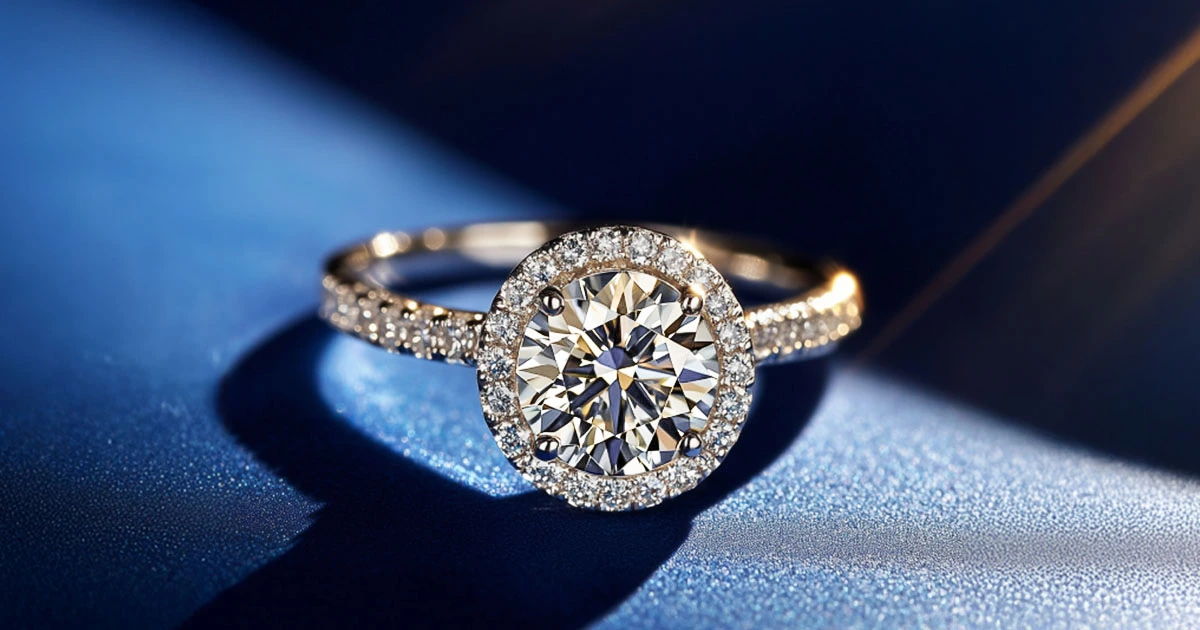
photo: brilliance.com
Blockchain is already tracking some diamonds. In a few years, we’ll probably be scanning a QR code to see the entire journey of our stone. Ethical sourcing will stop being a marketing slogan and become a requirement.
Synthetic detection technologies are also advancing. Labs are investing millions in new identification methods. It’s an arms race between synthetic producers and experts.
Sometimes I think this whole revolution is a good thing. More options, lower prices, fewer ethical issues. But on the other hand—should millennia of tradition just disappear?
Making an informed choice means more today than ever before. Don’t buy blindly—ask questions, check certificates, choose according to your values.
Michael
investments & lifestyle editor
Luxury Blog






Leave a Comment