

What does Balenciaga mean?
“Can a shoe that looks worn-out really cost 3,000 PLN?” That’s the question I first asked myself back in 2022. What does Balenciaga mean? Hmm—for me, it means a lot!
I was standing in the mud at the Balenciaga show in Paris. Rain was pouring down, models walked across the wet ground in bizarre silhouettes, and I kept thinking—what am I doing here? People around me were snapping photos with their phones, some looked just as confused as I was. Yet there was something utterly fascinating about it.
That moment changed the way I think about fashion. Balenciaga isn’t just any brand. It’s a phenomenon that, even in 2025, still divides people into two camps—those who adore it, and those who simply don’t get it. There’s nothing in between.
What does Balenciaga mean? – from haute couture to memes
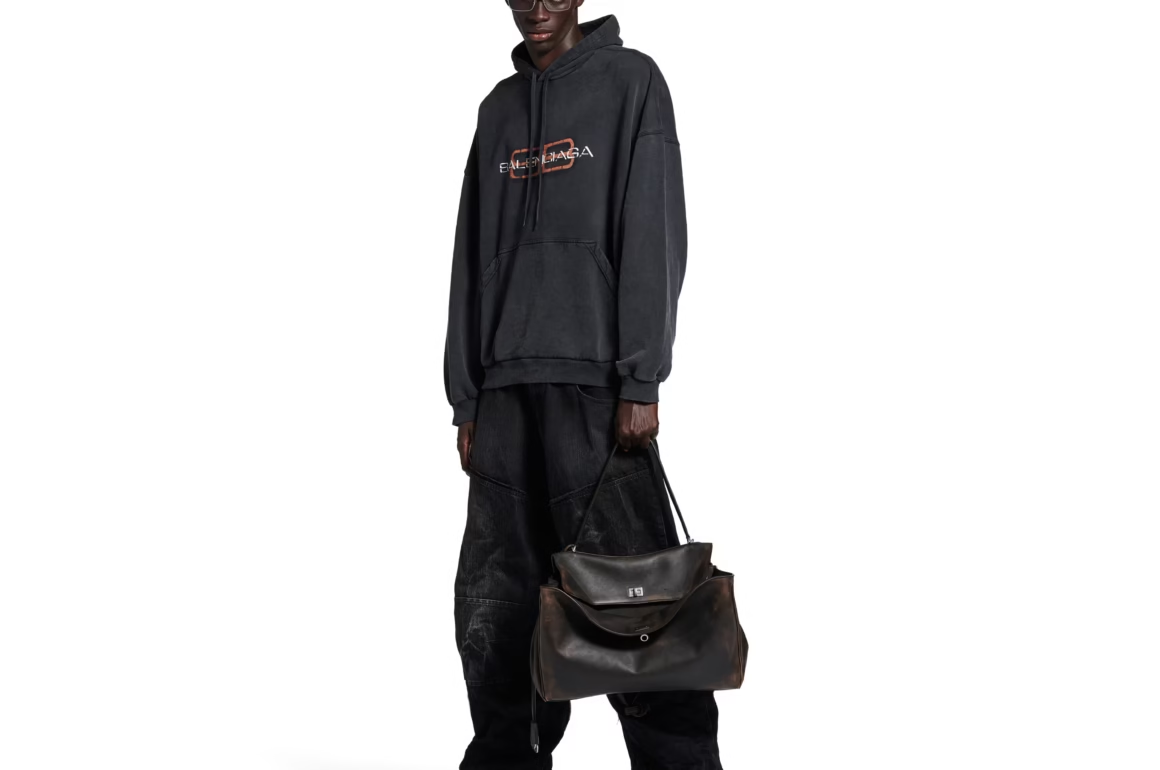
The world of luxury is changing. What was once elegant and predictable is now provocative and bizarre. Balenciaga is leading this revolution. Their shoes look like worn-out sneakers from a thrift shop, their bags resemble garbage sacks, and their dresses—well, sometimes it’s hard to even call them dresses.
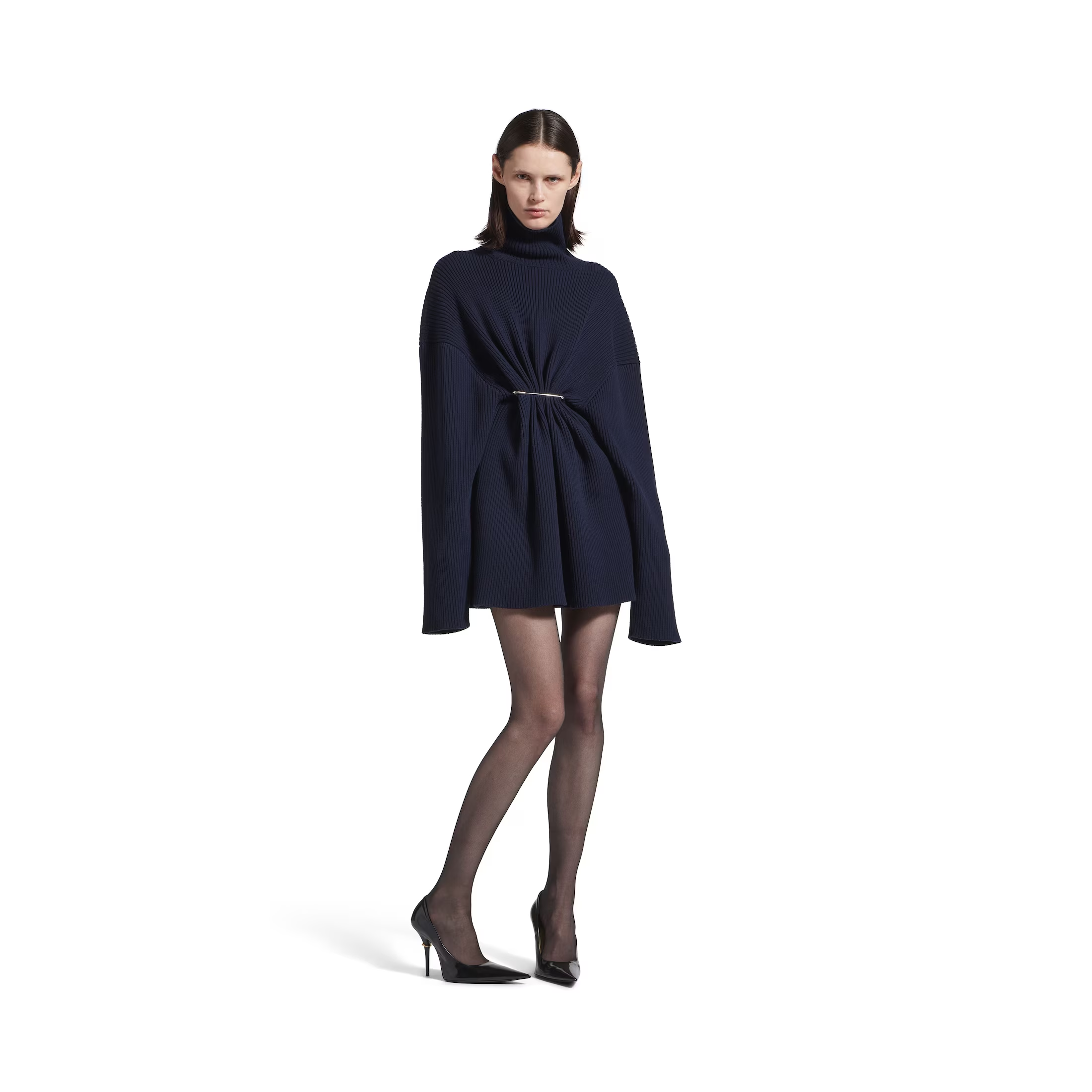
photo: balenciaga.com
But that’s exactly why we talk about them. That’s exactly why they become memes. That’s exactly why we buy them.
In this article, I’ll show you how the brand journeyed from classic elegance to internet jokes and back to the top of the popularity charts. I’ll cover four key topics:
- How Balenciaga’s style has evolved over the decades
- Why their “ugly” designs became status symbols
- How the brand leveraged meme culture to build its image
- Do controversies really harm luxury brands
I’m not going to tell you fairy tales about everything being beautiful. I’ll be honest—some things from Balenciaga look strange. But maybe that’s exactly where their genius lies.
To understand this, we need to go back in time and see how this Spanish brand became one of the most influential fashion houses in the world.
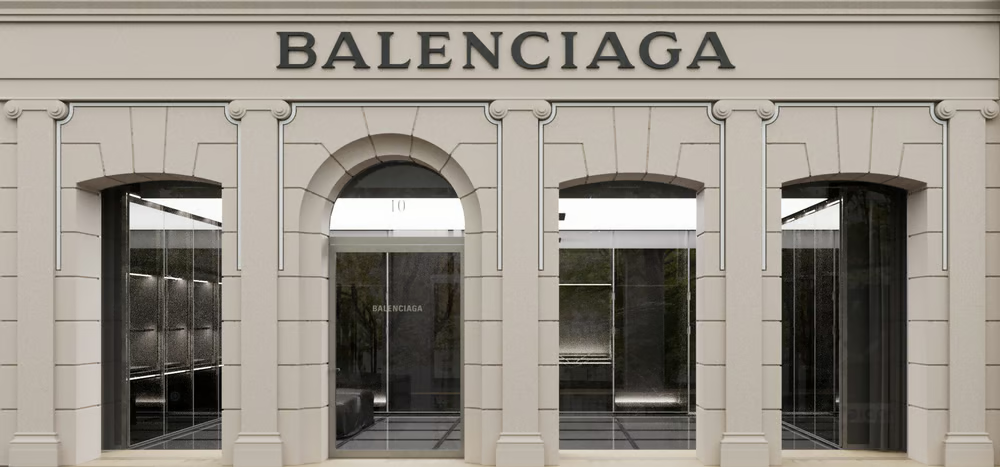
photo: fashionnetwork.com
A century of tailoring revolution – the evolution of Balenciaga’s style
Balenciaga is essentially a case study in how a single brand can endure for decades and still surprise us. I’ve always been fascinated by this evolution—from refined couture to wild streetwear.
The Cristóbal Balenciaga era ( 1937-1968) is the foundation of it all. The master from the Basque Country created a fashion language that still feels fresh today. His balloon dress from the 1950s was revolutionary— women could finally breathe, and the silhouette gained an entirely new dimension. I remember the first time I saw a photo of that dress in the archives—I thought it was from the ’90s, it was so ahead of its time.
The barrel line from 1950 was another breakthrough. Cristóbal completely abandoned fitted shapes in favor of geometry. It was like looking into the future of fashion.
“True elegance means being noticed for the right reasons” – this note from the fashion house’s archives perfectly captures the philosophy of that era.
After the founder’s death, the following years were tough. The house nearly faded away until Nicolas Ghesquière arrived in 1997. His renaissance lasted until 2012 and was truly fascinating—the young designer didn’t try to copy Cristóbal, but instead engaged in a dialogue with his archives. Those futuristic takes on vintage were brilliant. Ghesquière took shapes from the ’60s and launched them into outer space.
But the real revolution began in 2015 with Demna Gvasalia. That’s when things got truly wild. Streetwear in a haute couture house? Deconstructing everything sacred? People were shouting it was the end of the world. I felt the same way for the first year.
Then came 2017 and the debut of the Triple S. Those chunky sneakers marked the moment I understood Demna’s vision. He’s not destroying Balenciaga—he’s rewriting it for a new generation.
Now, in 2024-2025, I see another evolution. Eco-friendly shows, a collaboration with Adidas —all of this proves the brand still knows how to surprise. Demna has learned to balance provocation with commercial appeal.
| Year | Director | Key silhouette |
|---|---|---|
| 1950 | Cristóbal Balenciaga | Barrel line – a geometric revolution |
| 1955 | Cristóbal Balenciaga | Balloon dress – new femininity |
| 2001 | Nicolas Ghesquière | Futuristic interpretations of archives |
| 2017 | Demna Gvasalia | Triple S – streetwear meets luxury |
| 2024 | Demna Gvasalia | Sustainable fashion revolution |
This timeline shows just how varied the interpretations of a single brand can be. Each creative director brought their own language, yet somehow it all holds together.
It’s this continuity within change that keeps Balenciaga relevant. Now, let’s take a look at the specific design elements that have created this magic over the years.
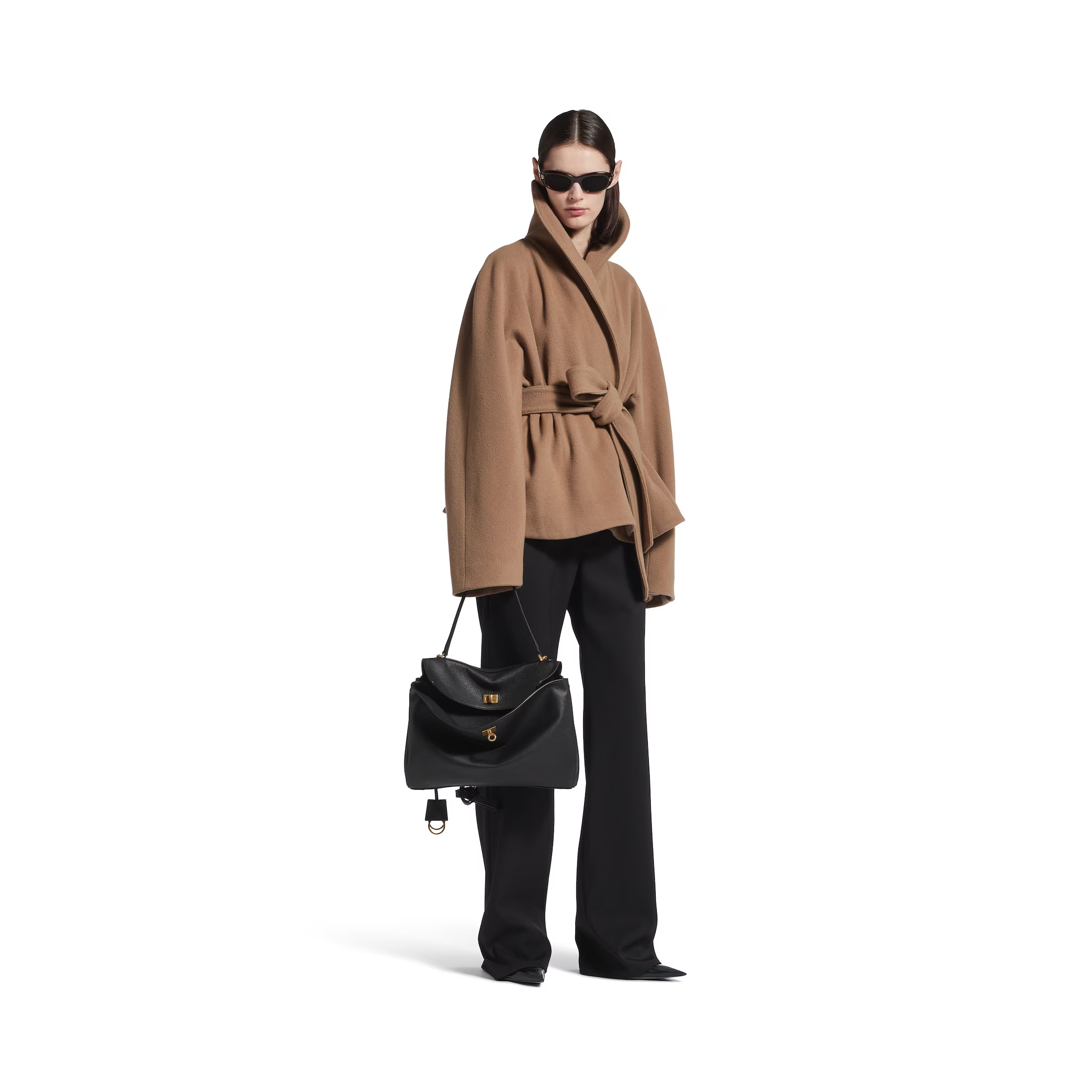
photo: balenciaga.com
Oversize, deconstruction, logo: the hallmarks of the collection
Backstage at the Balenciaga show is filled with a distinctive kind of chaos. Models in oversized blazers look as if they’ve borrowed them from an older brother, but that’s exactly the point.
Oversize isn’t an accident—it’s a precise calculation. The shoulders are 20–30% wider than standard, and the sleeves fall naturally below the wrist. The whole look gives the impression that the garment has a life of its own. This isn’t just about making things bigger—every element has its proportions thoughtfully reimagined.
| Element | Parameter |
|---|---|
| Shoulder width | +20-30% above standard |
| Sleeve length | Below the wrist |
| Silhouette | Deliberately “oversized” |
Deconstruction goes even further. Seams are asymmetrical, edges remain unfinished, layers overlap in a chaotic way. Demna Gvasalia says: ” I don’t want everything to be perfect—perfection is boring.” And indeed, this imperfection becomes the new perfection.
I remember the first time I saw the Triple S sneakers in person. That 5–7 cm sole really makes an impression. The shoes weigh almost a kilogram, yet paradoxically add lightness to the entire look. The Hourglass bag, on the other hand, is a masterclass in minimalism—embossed logo, clean lines, a form that is a statement in itself.
How to spot the original:
- The Balenciaga logo is always perfectly centered
- The materials have a distinctive texture
- The finishes, though “imperfect,” are crafted with precision
Materials are a chapter of their own in this story. In 2024, the brand is focusing on neoprene, regenerated leather, and recycled textiles. This isn’t just marketing—the craftsmanship is genuinely impressive. The neoprene used by Balenciaga has a different structure than the one known from swimsuits. It’s thicker, more architectural.
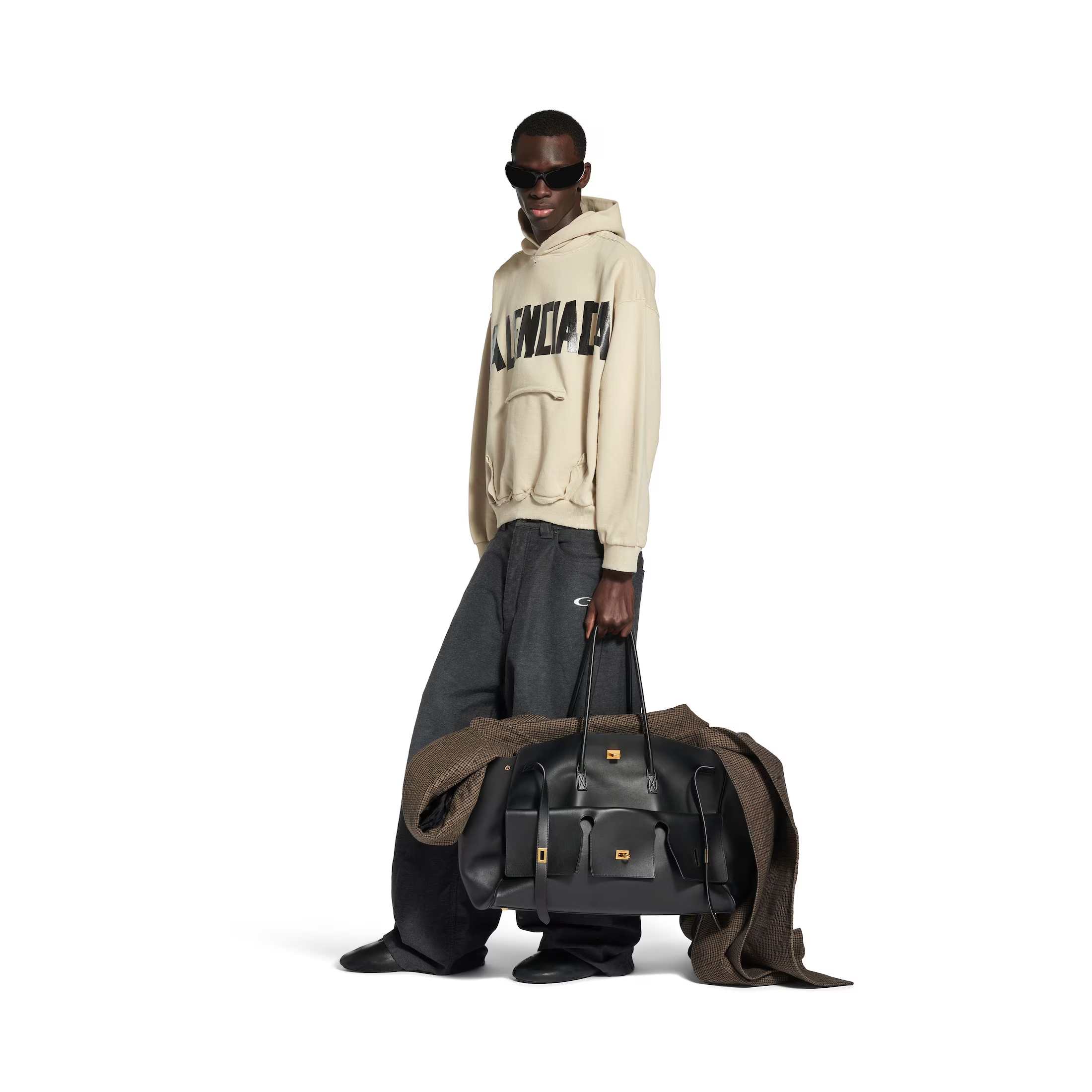
photo: balenciaga.com
Regenerated leather might sound less luxurious, but in reality it looks and feels like a top-tier material. Sometimes I wonder if it’s even better than traditional leather—it has more character and a bolder texture.
All these elements—oversized silhouettes, deconstruction, iconic accessories, and innovative materials—create a cohesive visual language for the brand. A language that moves from the runway to the streets, to social media, and into pop culture.
When fashion meets pop culture – Balenciaga’s impact on the collective imagination
I remember that moment from the 2021 Met Gala when Kim Kardashian showed up in a completely black Balenciaga outfit—even her face was covered. Back then, I thought it was just too much. But that was exactly the point.
It was pure pop culture in action. Kim became a meme within hours in that look. And Balenciaga? It got more attention than from all its ad campaigns combined.
Kanye West also played a part in this madness. Since 2015, he practically lived in Balenciaga shoes. Those chunky Triple S sneakers of his? Suddenly, everyone wanted them. Rihanna, on the other hand, wore those huge over-the-knee boots to the Fenty show in 2017—and boom, sold out in a week.
But Balenciaga’s real marketing genius lies in campaigns that look like a joke. That $2,000 bag that looks just like a 99-cent IKEA tote? I thought someone in the design department had made a mistake. Turns out, it was the best ad ever.
Same with the DHL-inspired collection. $1,200 t-shirts that look like courier uniforms. Sounds absurd? That’s exactly why everyone was talking about it.
TikTok trend: #BalenciagaChallenge – 1.4 billion views
- People comparing IKEA bags to Balenciaga
- Parodies of fashion shows in the mud
- “Normal vs designer” outfits
And that show in 2022, where the models trudged through mud? I thought I was watching some kind of performance art, not a fashion show. But that was exactly the point—everyone was writing about it, sharing it, commenting on it. Social media went wild.
You see it in music too. Travis Scott wore Balenciaga in the “SICKO MODE” video. Justin Bieber practically lives in their clothes on stage. And in the movie “House of Gucci”—those iconic shoes make an appearance there as well.
Video games? Fortnite had a collection of skins inspired by Balenciaga. Suddenly, young gamers knew what high fashion was. It wasn’t just style for the rich anymore—it became part of internet culture.
Sometimes I think Balenciaga doesn’t design clothes at all. They design moments that are destined to go viral. Every look is a potential meme, every show is content for thousands of posts.
As Vogue wrote in 2022: “Balenciaga doesn’t follow trends—it creates them in real time, watching social media reactions.”
This isn’t just an ordinary fashion brand anymore. It’s a factory of pop culture moments. And that’s exactly why, despite all the controversies, people keep talking about them.
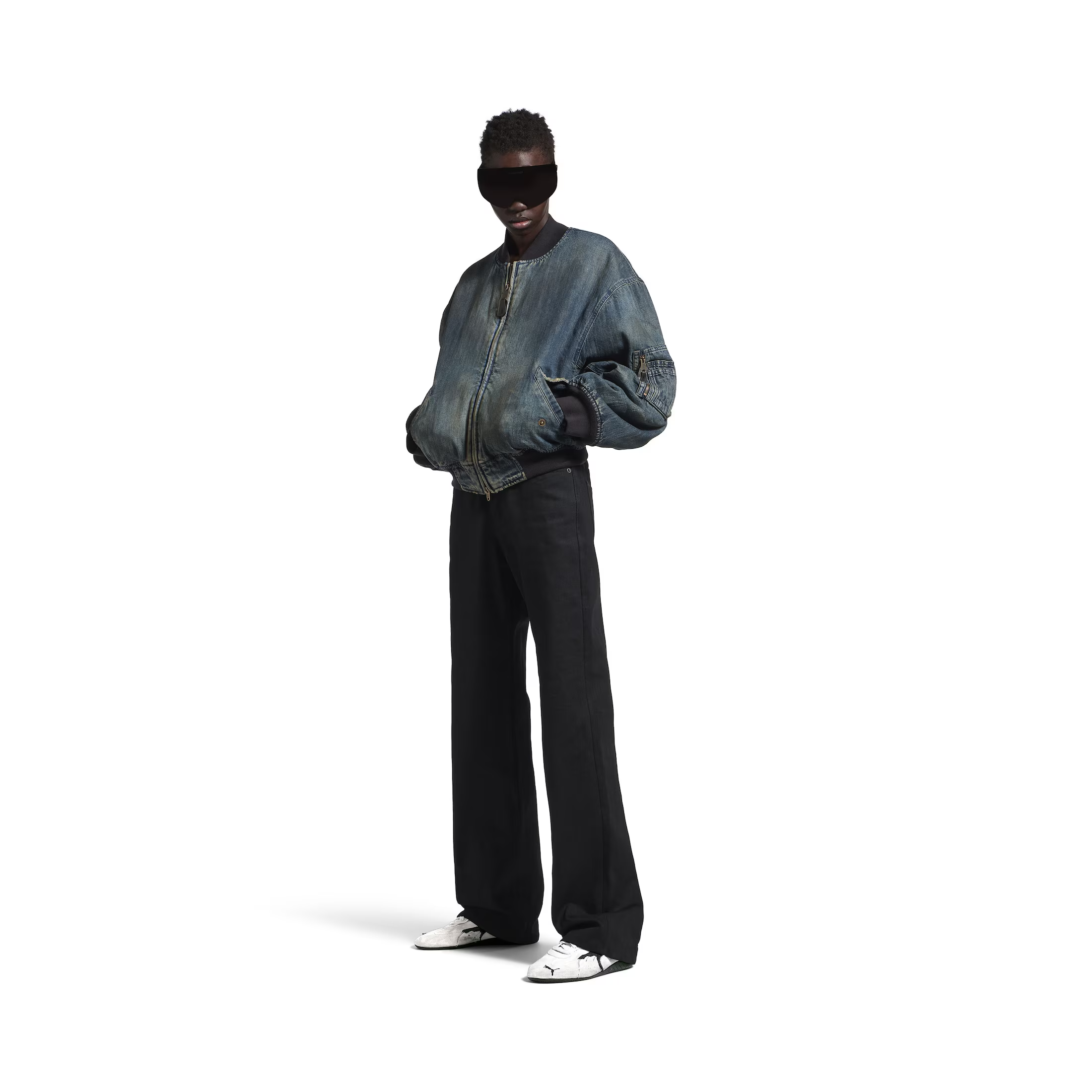
photo: balenciaga.com
The limits of provocation – controversy and reputation management
I remember exactly the moment I saw those photos. The Balenciaga Gift Shop campaign from November 2022 was supposed to be a holiday shoot featuring children. The problem was, the kids were holding bags with strings resembling BDSM handcuffs. In the background, there were court documents—among them, excerpts from the United States v. Williams files concerning child pornography.
I have no idea what the people responsible for this shoot were thinking. Maybe it was meant as provocation, maybe it was a communication error. But the consequences were immediate.
The first reactions appeared as early as 20.11.2022, when Instagram users started pointing out the strange details.
@concerned_parent_2022: "Is this normal?
Why are these kids holding those things?
#WhatIsHappening"
By November 22, 2022, the hashtag #CancelBalenciaga was already trending. Influencers were mass deleting photos featuring the brand’s products. Kim Kardashian, who was the face of Balenciaga, stayed silent for several days—only fueling the controversy.
The brand tried to put out the fire. On the first day, they deleted all posts from the campaign. Then came the apologies—first vague, then more detailed. But it wasn’t enough.
On November 25, 2022, Balenciaga filed a $25 million lawsuit against the North Six agency, which was responsible for production. They claimed they weren’t the ones who decided on the props. North Six responded with their own lawsuit—accusing the brand of trying to shift all the blame onto them.
The numbers speak for themselves. According to a Lyst report, the brand’s desirability ranking dropped by 20-30% within a month. Some celebrities, like Bella Hadid, stopped wearing Balenciaga in public. Sales in December 2022 were the worst in years.
It was only in 2023 that the brand began real corrective actions. They introduced a social auditing program—now every campaign goes through several levels of review. They hired child protection specialists as consultants. They launched ESG initiatives focused on the safety of minors.
But is it enough? In my opinion, this story shows just how thin the line is between provocation and a PR disaster. In the world of social media, one mistake can cost decades of reputation building.
All of this has an economic dimension as well—because ultimately, a PR crisis always translates into concrete numbers on the balance sheet.
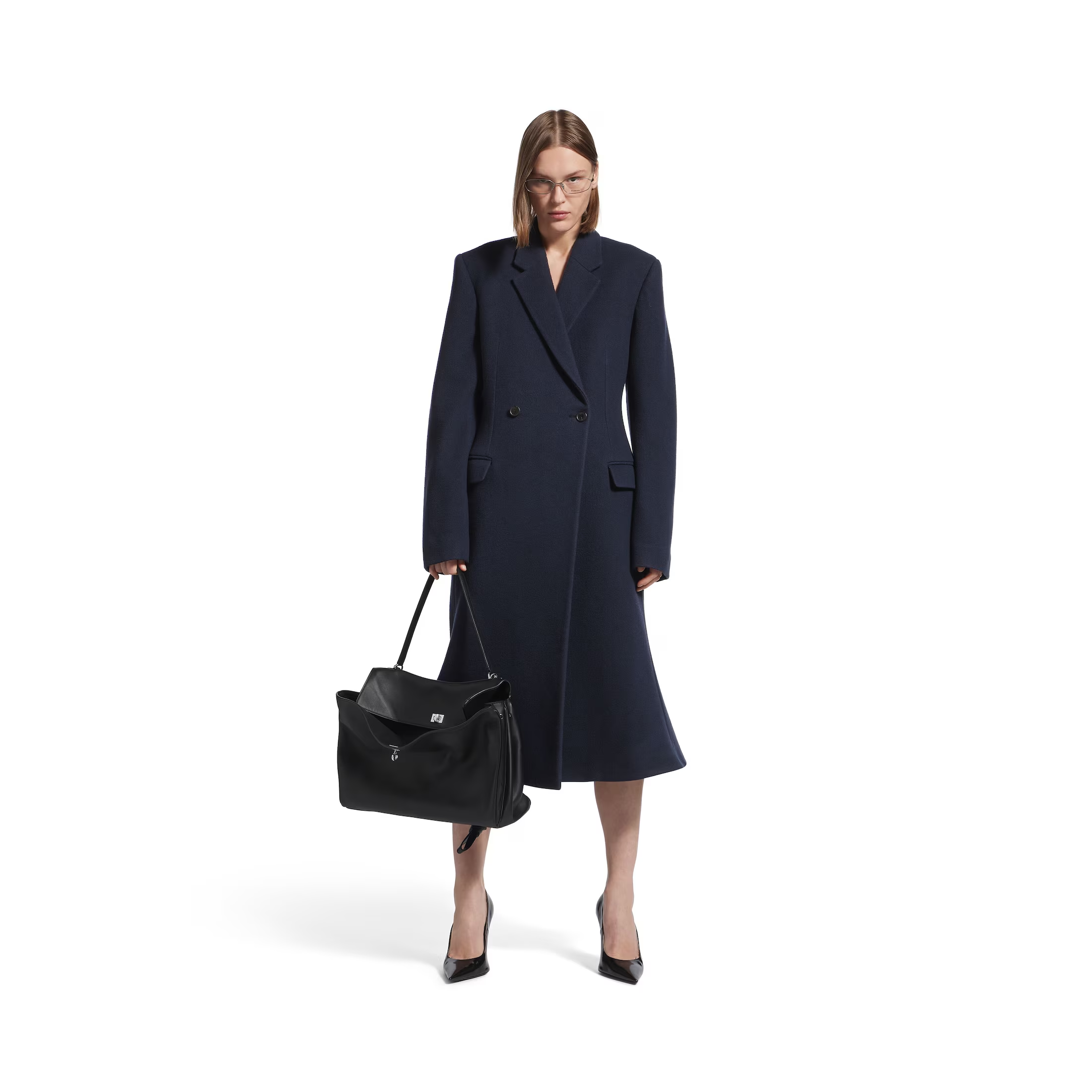
photo: balenciaga.com
Luxury in the Streetwear Era – Positioning and Financial Performance
I was recently talking with a friend about how Balenciaga is doing financially after all the recent turmoil. The numbers are actually quite surprising — it’s estimated that revenues in 2023 ranged between 1 and 2 billion euros. That’s not bad at all for a brand that faced serious image problems.
What surprises me most is that as much as 60% of their revenue comes from accessories. Bags, shoes, accessories — all of these are selling better than clothing. Maybe it’s because it’s easier to buy a bag for a few thousand than to invest in an entire wardrobe?
Balenciaga revenue (bn EUR)
2021: ████████████████ 1.8
2022: ████████████ 1.2
2023: ██████████████ 1.4
2024: ███████████████ 1.6
When it comes to markets, Asia is still driving this business. The US isn’t complaining either, although there was more criticism there. I recently checked the Lyst Index and Balenciaga is still in the top 10 most sought-after brands. People complain online, but wallets tell a different story.
The Kering group probably hasn’t had much peace of mind for a while. Compared to Gucci or YSL, Balenciaga has always been more niche, but with higher margins. Now it has to rebuild its position, while other brands in the portfolio are growing steadily.
| Brand | Average price of sneakers | Accessories % of revenue |
|---|---|---|
| Balenciaga | €890 | 60% |
| Off-White | €650 | 45% |
| Dior | €1,200 | 55% |
Interestingly, in the street-luxury segment, Balenciaga still maintains some of the highest prices. Sneakers costing almost 900 euros are no joke. Off-White is cheaper, but Dior is even more expensive. This shows where the brand positions itself—it doesn’t want to be accessible to everyone.
Demand remains strong nonetheless. Maybe it’s because streetwear has become so deeply rooted in luxury that it’s hard to separate the two. Or maybe consumers just have short memories—I’m not sure.
Time will tell whether this pricing strategy proves successful in the long run.
What’s next? Sustainable luxury and Balenciaga’s digital fashion 2025+
I think by 2027, Balenciaga will look completely different than it does today. Not just visually, but holistically—as a brand that has truly reinvented itself.
Forecast for 2027
• Return to the Lyst Index top 10 thanks to a consistent rebuilding strategy
• 80% of collections made from sustainable and recycled materials
• Presence in 5 new countries across Africa and Asia
The recycling program launching this year is, to me, the most promising direction. The 2024 collection is set to include 60% recycled textiles—it sounds ambitious, but is it enough? Watching other luxury brands, I see customers are increasingly asking about material origins. This is no longer just a trend; it’s a necessity.
It’ll be interesting to see NFTs and virtual shows in 2025. I still remember those early metaverse attempts—most were just tacky. But Balenciaga has a chance to do it right, without going overboard.
“We forecast that Balenciaga will regain its top ten position by the end of 2027, mainly thanks to innovations in sustainability and digital expansion,” says an analyst from F5 Fashion Futures. Sounds optimistic.
Geographic expansion is the second pillar of this strategy. India and Africa are markets just opening up to premium luxury. But caution is needed here—you can’t just copy what works in Europe or the US. Consumer culture is different, and so are expectations.
I see a certain risk in this strategy. Is a brand that recently went through a reputational crisis ready for such a rapid pace of change? On the other hand, maybe this is exactly its opportunity—a radical transformation instead of cautious steps.
Digital fashion will be key. I’m not just talking about online sales, but the entire ecosystem—from virtual fitting rooms to AI-powered personalization. This is an area where Balenciaga can truly stand out.
This vision of the future shows a brand that doesn’t run from its problems, but uses them as a turning point.
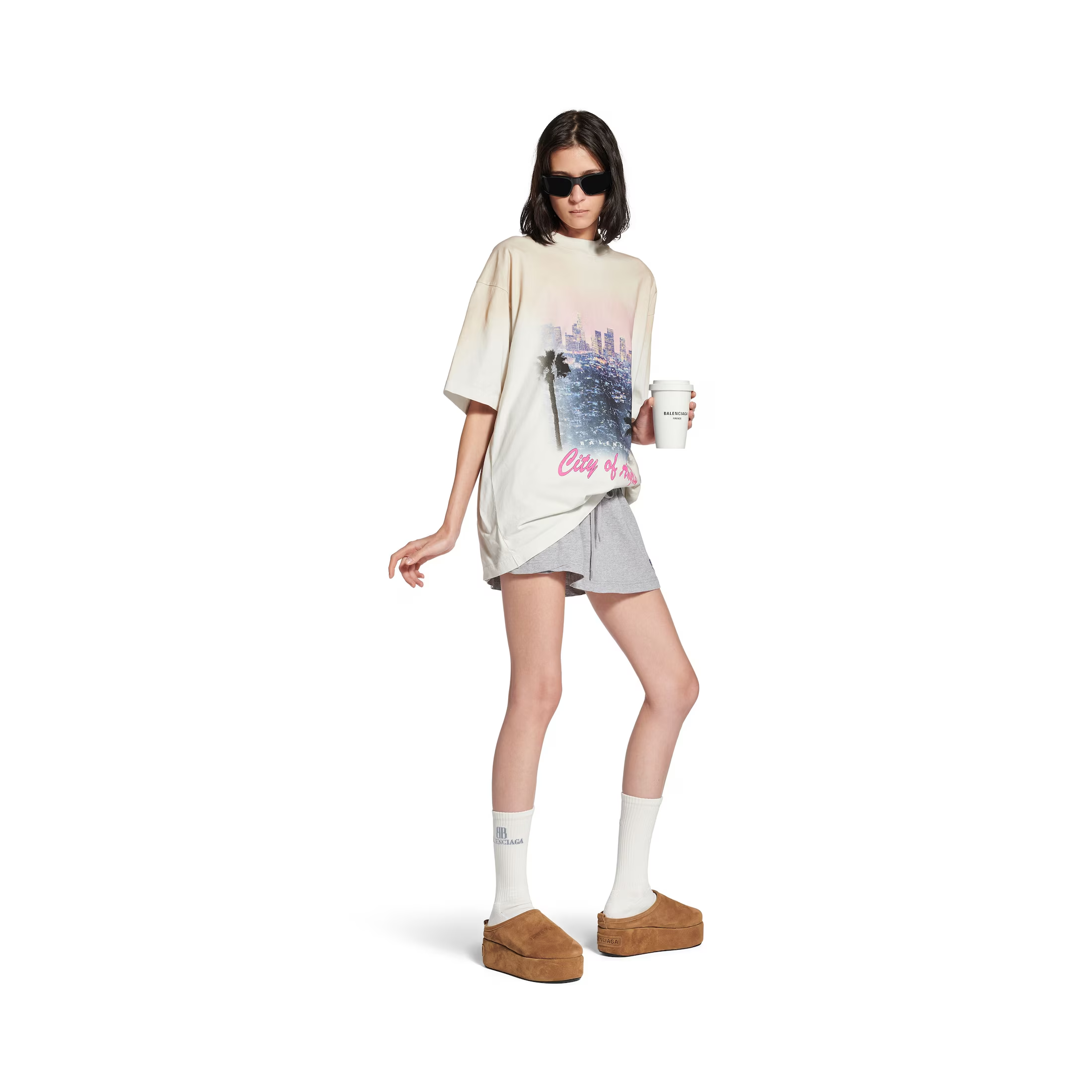
photo: balenciaga.com
Dare to wear the future – my conclusions and next steps
I remember the moment I first saw those huge bags in the display window. Back then, I wondered—is this still fashion, or already a statement? Now I know, that was exactly the point.
After everything I’ve been through with Balenciaga, I’ve learned three key lessons:
- Provocation without substance is emptiness – but provocation with a profound message can change the way we think about the entire industry.
- Luxury doesn’t have to mean aesthetic comfort — sometimes its true value lies in making us think.
- You recognize a brand’s authenticity not by what it says about itself, but by how consistently it pursues its vision despite criticism.
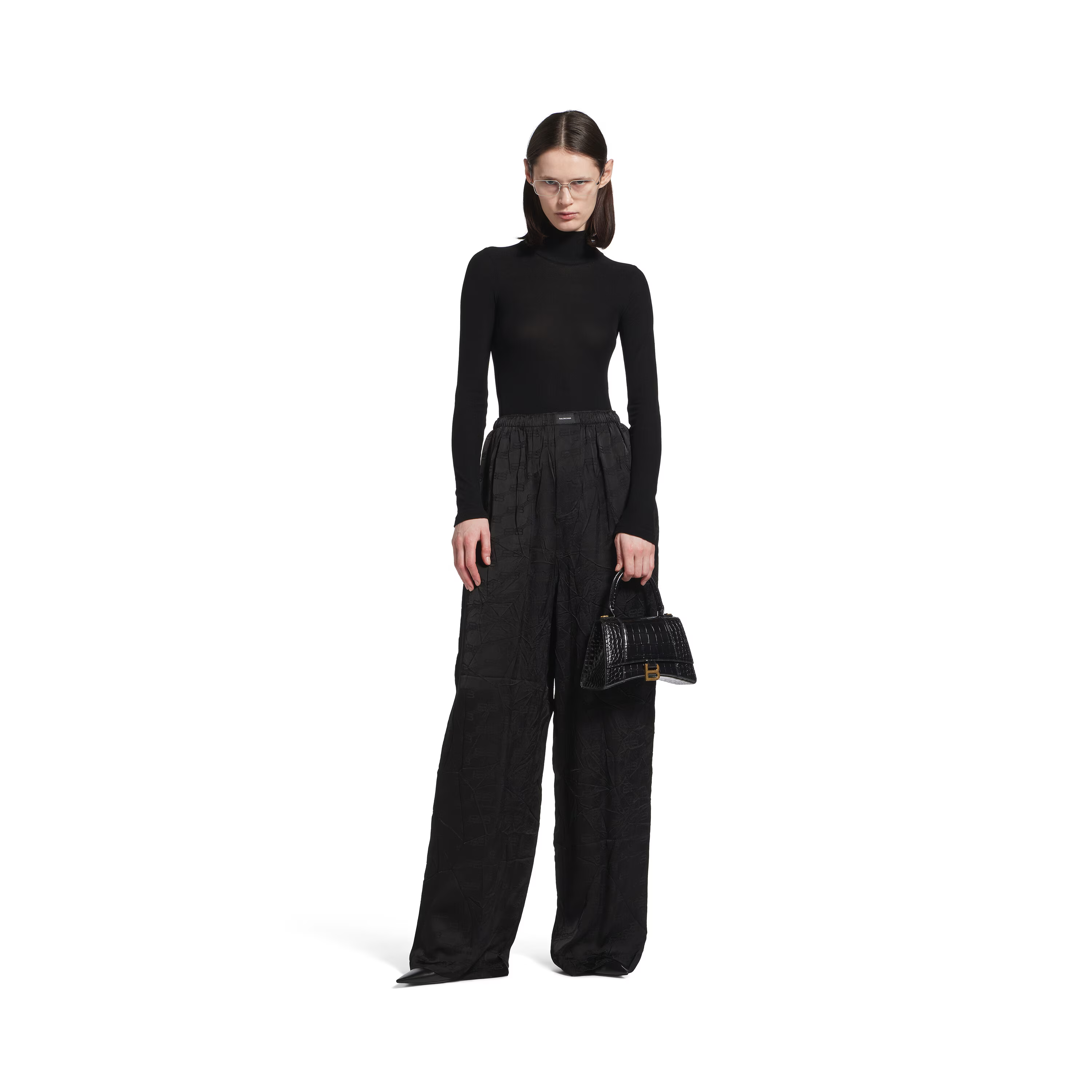
photo: balenciaga.com
If you’re questioning your relationship with this brand, start with the basics. Explore the archive collections—you’ll see an evolution of thought, not just trends. Ask yourself whether a particular piece truly speaks to you, or if you’re buying it just for the logo. And remember—responsible shopping isn’t just about ecology, but also about being aware of what the brand you choose actually represents.
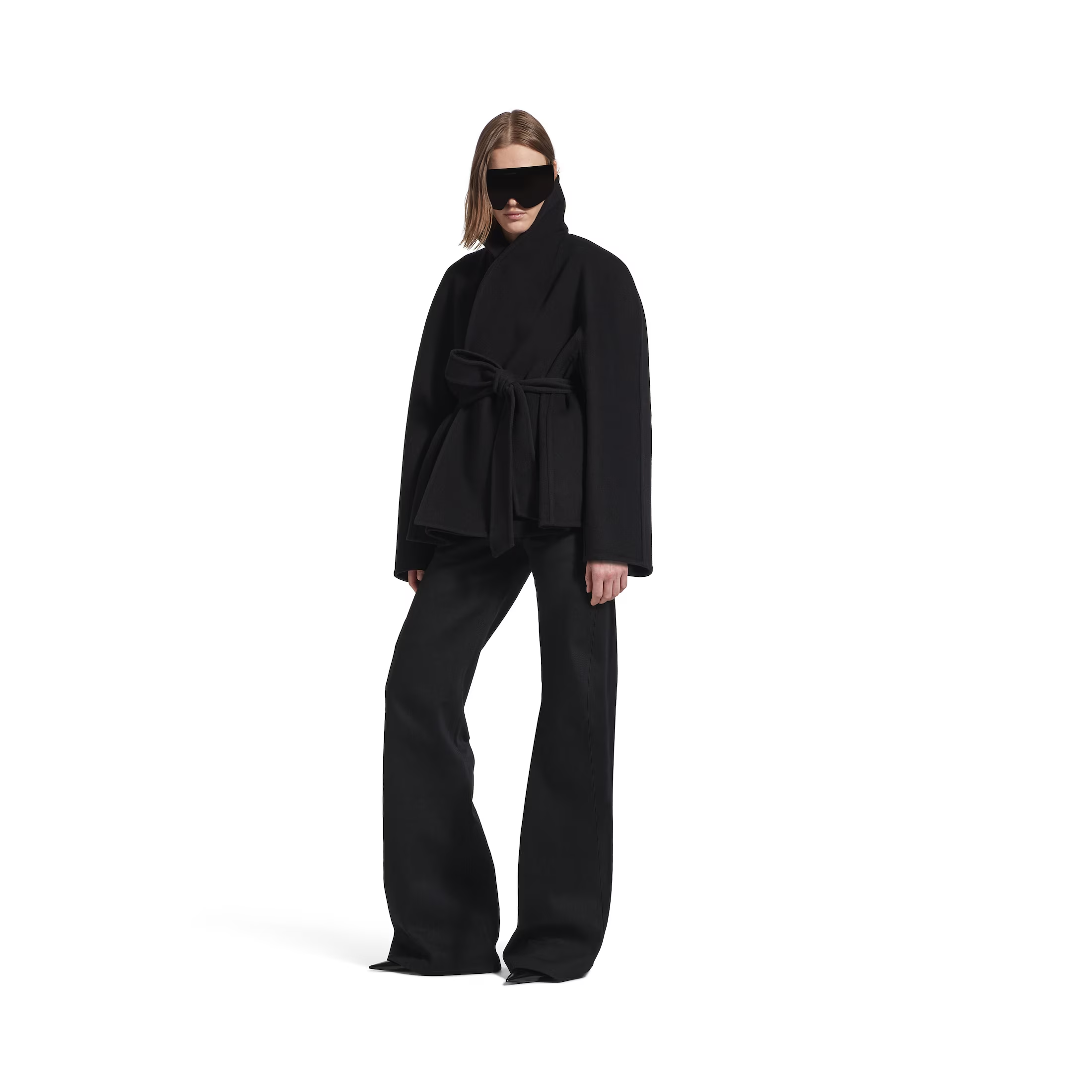
photo: balenciaga.com
Demna once said something that really stuck with me: “Fashion is a mirror, not a decoration”. That line explains it all—why his designs sometimes sting, why they spark debate, why not everyone gets them.
Honestly, I don’t always understand them myself. But maybe that’s the point? For fashion to stop being just pretty and safe?
Are you ready to see more in the mirror than just your own reflection?
MUNA SI
fashion editor
Luxury Blog



Leave a Comment