

The “Turn Your Back on Fur” campaign in a new edition

The “Turn Your Back on Fur” campaign is an initiative led by PETA. Its goal is to raise awareness about the ethical and environmental issues of the fur industry and encourage people to stop wearing clothing made from real animal fur. It was first introduced to the world by models from Boss Models Worldwide on a “live billboard” on October 30, 1996. Recently, PETA has also aimed to make other animal-derived materials, such as wool, leather, and down, just as unacceptable as fur. The organization is reviving this campaign to once again draw attention to the conditions in which animals are raised and slaughtered.
Humanitarianism and fashion
“People for the Ethical Treatment of Animals” is the full name of an international non-governmental organization whose main goal is to protect animal rights. The organization is known for its provocative and controversial actions aimed at drawing public attention and highlighting existing issues related to the exploitation of animals. In 1980, the year it was founded, fur was still a status symbol. “Everyone wanted to own fur,” recalls Ingrid Newkirk, the organization’s co-founder. “But now that’s a thing of the past.”
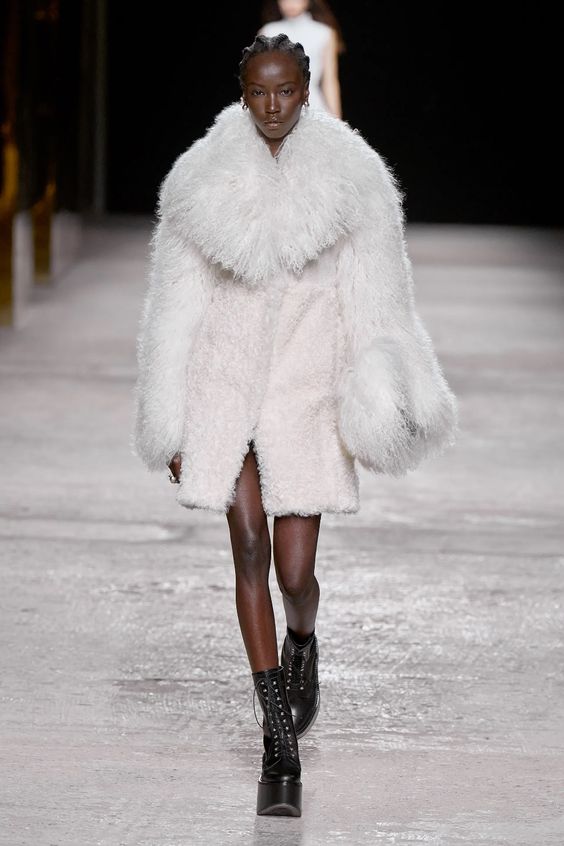
source: vogue.com
Calvin Klein was one of the first major fashion brands to give up fur. It all happened after PETA stormed its New York office in 1994. That same year, it published content promoting the “Turn Your Back on Fur” campaign, where supermodels claimed they’d rather go naked than wear fur. Social media and a broader cultural conversation about ethical consumption pushed this even further. Gucci declared fur passé in 2017. And in 2021, its parent company Kering completely phased out fur, joining the ranks of luxury brands from Chanel to Versace.
Although brands still use fur, its sale is increasingly seen as inappropriate. In some countries, such as California and Israel, it is even illegal. However, while fur was a minor part of most companies’ business, leather goods are the driving force behind sales in the industry. It seems, then, that this time PETA faces an even bigger challenge.
“Turn your back on fur. And on wool, leather, down…”
In recent years, we have seen growing awareness and interest in animal protection within the fashion industry. Many companies and designers are taking steps to reduce or completely eliminate leather, wool, and down products from their collections. And yet, for the vast majority of brands, giving up leather or wool is not a good idea. Several exclusive companies that have pledged to stop using fur have ignored activists’ calls to do the same with exotic skins such as crocodile, snake, and ostrich—not to mention cowhide.
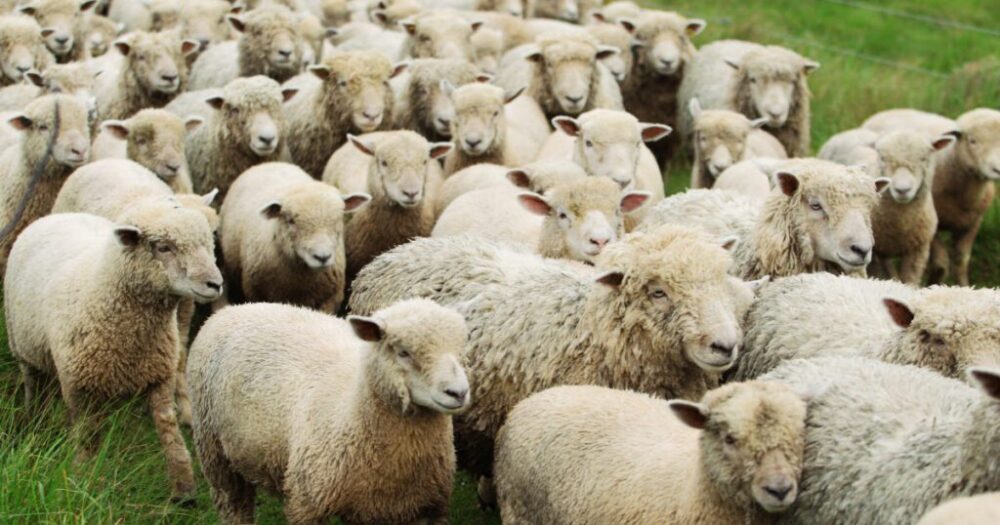
source: raisingsheep.net
For many consumers, the use of wool and leather seems less controversial than fur or exotic skins. Many people believe that leather from cows and sheep is not a product for which animals are bred solely for their skins, unlike animals such as minks or crocodiles. However, PETA argues that this industry is just as cruel and threatens the welfare of the animals involved.
Despite the development of alternative synthetic materials, it is ultimately consumers who have a significant impact on the decisions made by fashion brands. Through conscious purchasing choices, voicing their opinions, and supporting brands that take pro-animal actions, they can help drive the transformation of the fashion industry. “We work hard to wake people up,” said Newkirk. “Fur is now obvious, leather is getting there… wool is the hardest.” The “Turn Your Back on Fur” campaign serves as a reminder that since fur has faded into oblivion, other materials also have a chance.




Leave a Comment