

The history of the Moncler brand – from an Alpine workshop to a luxury icon
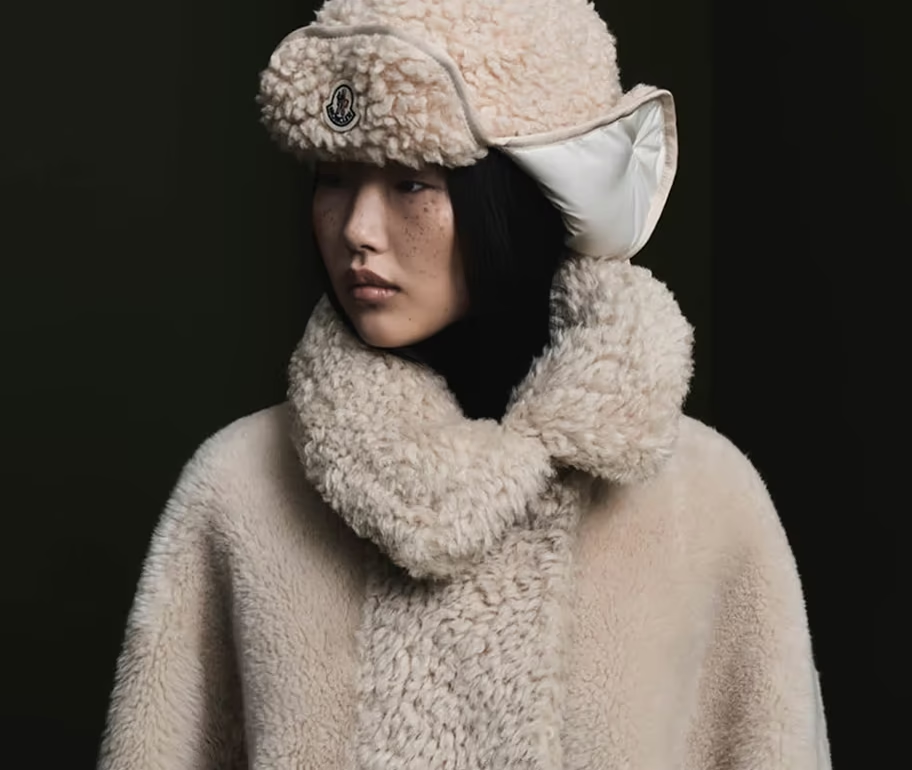
In 1952, a workshop producing down vests for lumberjacks opened in a small Alpine village. Today, Moncler is a publicly traded company in Milan, generating annual revenues exceeding EUR 3 billion. How did a manufactory from the Savoy mountains become one of the world’s fastest-growing luxury brands?
The history of the Moncler brand – from an Alpine village to a global icon
Moncler – short for Monestier-de-Clermont – is an Italian company based in Milan, but with French Alpine roots. The brand’s motto, “Born in the mountains, living in the city,” perfectly captures its transformation: from technical equipment for mountaineers to a coveted item among streetwear youth and high fashion collectors.
Today, it’s a global player present in over 70 countries, specializing in luxury outerwear – above all, its iconic down jackets. But to get here, Moncler went through a spectacular renaissance after the crisis of the 1990s, which – paradoxically – turned the brand into a symbol of luxury accessible only to a select few.
In the following sections, we’ll walk through this entire story: from the first mountain expeditions and technical innovations, through difficult years and near bankruptcy, to the takeover by Remo Ruffini and the strategy that not only brought Moncler back into the game, but redefined luxury in the outerwear category.
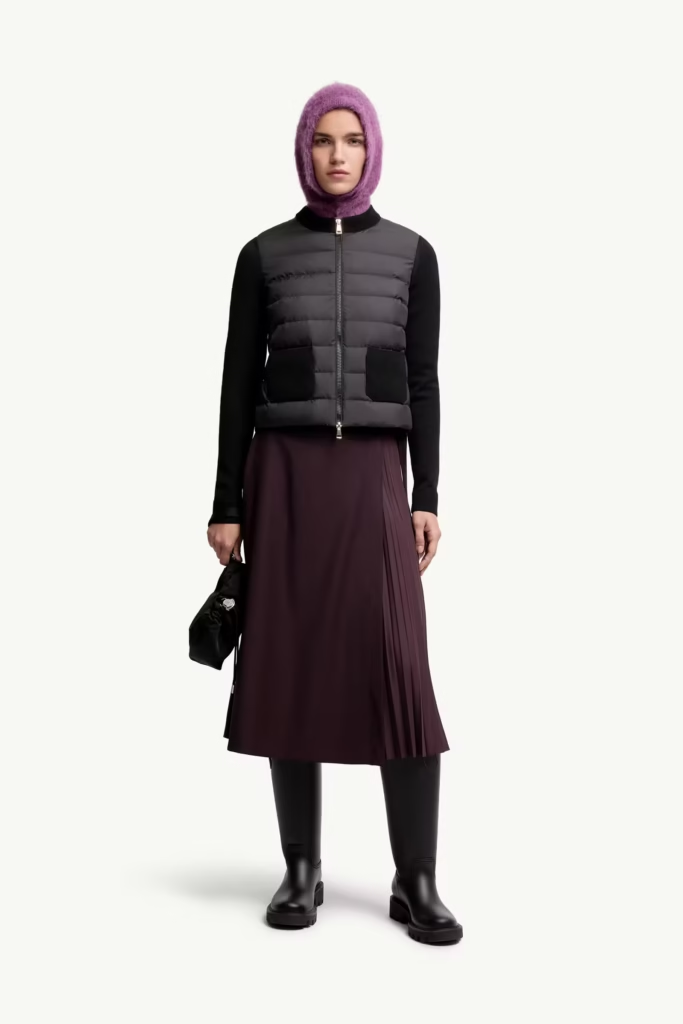
photo: moncler.com
The birth of Moncler: from K2 to the Olympic Games
The years just after World War II — Alpine villages are still more industrial centers than ski resorts. In 1952, René Ramillon and André Vincent establish a small workshop in Monestier-de-Clermont near Grenoble. Their goal? To sew down jackets and sleeping bags for local workers, climbers, and skiers who need something truly warm. No one is thinking about fashion at that time — survival in extreme cold is what matters.

photo: moncler.com
From K2 to the Olympics: How a Legend Was Born
The breakthrough comes two years later. In 1954, an Italian expedition to K2 (8,611 m above sea level) takes Moncler jackets with them. This is no ordinary test—the mountain is one of the toughest challenges in mountaineering. The gear returns with confirmation: it works, even when the temperature drops below -40°C.
“Moncler jackets withstood conditions in which standard clothing simply fails” – report from the K2 expedition, 1954.
The next milestones line up in a straight line:
- 1968 – the iconic Maya jacket lands on the backs of French Olympians in Grenoble
- 1972 – sponsoring the Everest expedition cements its position as a leader in high-altitude technology
- 1980 – introduction of Loden nylon, a lightweight and waterproof material that makes a difference on long expeditions
Moncler becomes synonymous with innovation: from importing nylon from the USA in the 1950s to developing its own refined fabrics a decade later. Pushing the limits through testing—this is what builds the reputation that will allow the brand to withstand future upheavals.
From Near Bankruptcy to Stock Market Triumph
At the end of the 1990s, the brand that once outfitted Himalayan explorers was on the verge of collapse. It passed from hand to hand—a French owner, an Italian distributor, more mergers. No coherent vision, fragmented distribution, a blurred identity. Sales were falling, jackets ended up in outlets. Close to bankruptcy.
Remo Ruffini and the playbook of the luxury renaissance
In 2003, Italian entrepreneur Remo Ruffini bought Moncler for around 1 million euros. It sounds like the deal of the century—and that’s exactly what it turned out to be. He moved the headquarters to Milan, reset everything, and made a radical bet: Moncler would stop being an outdoor brand and become a luxury brand. No more collections, no cheaper models for the masses—quite the opposite. Less, better, more expensive. A consistent identity, prestigious boutiques, zero compromises.
Numbers that speak for themselves
The results? An average annual growth of 21% over two decades. Revenues in 2021 amounted to around 1.5 billion euros. In 2013, the company went public in Milan, and its market capitalization in 2025 is around 20 billion euros.
| Year | Milestone |
|---|---|
| 2003 | Acquisition by Ruffini (approx. 1 million EUR) |
| 2013 | IPO on the Milan Stock Exchange |
| 2021 | Revenues approx. 1.5 billion EUR |
| 2025 | Market capitalization approx. 20 billion EUR |
Ruffini still holds about 20% of the shares – commentators call him the “father of the Moncler renaissance.” A visionary, not a flipper.
How did Moncler become the uniform of urban luxury?
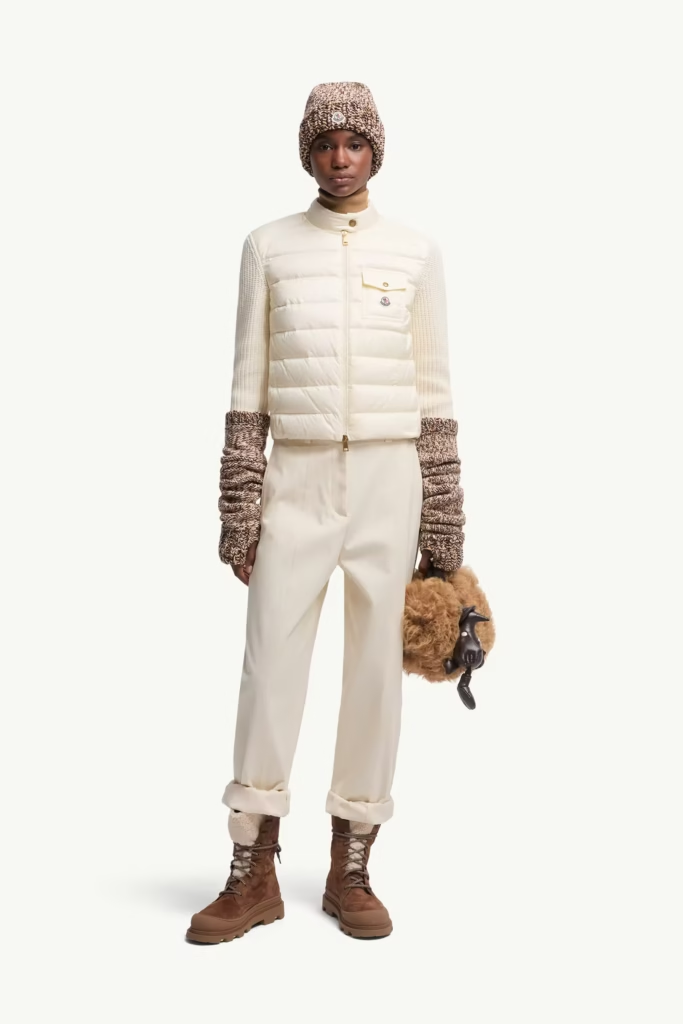
photo: moncler.com
All it takes is a winter stroll through New York, Milan, or Shanghai to notice a recurring pattern: shiny down jackets with the distinctive rooster logo on the sleeve. Moncler has ceased to be just functional mountain gear—it has become a recognizable uniform of urban luxury.
From a functional puffer jacket to a status symbol
Turning point? The slogan “Born in the mountains, living in the city.” The brand began designing with the streets of major metropolises in mind, while still preserving its Alpine DNA—down, technical fabrics, resistance to frost. But it was Mary J. Blige in 1994—when she bought a jacket for about 100 USD—who was the forerunner of the boom that arrived a decade later. Today, that same jacket costs 1,500-2,000 EUR, which says a lot about the transformation of its image.
After 2008, Moncler became a permanent fixture in premium streetwear. The brand’s signature code is:
- Rooster logo on the shoulder – instant recognition
- The distinctive sheen of quilted down jackets
- “Moncler” patch with the collection name
- Oversized silhouette, yet refined
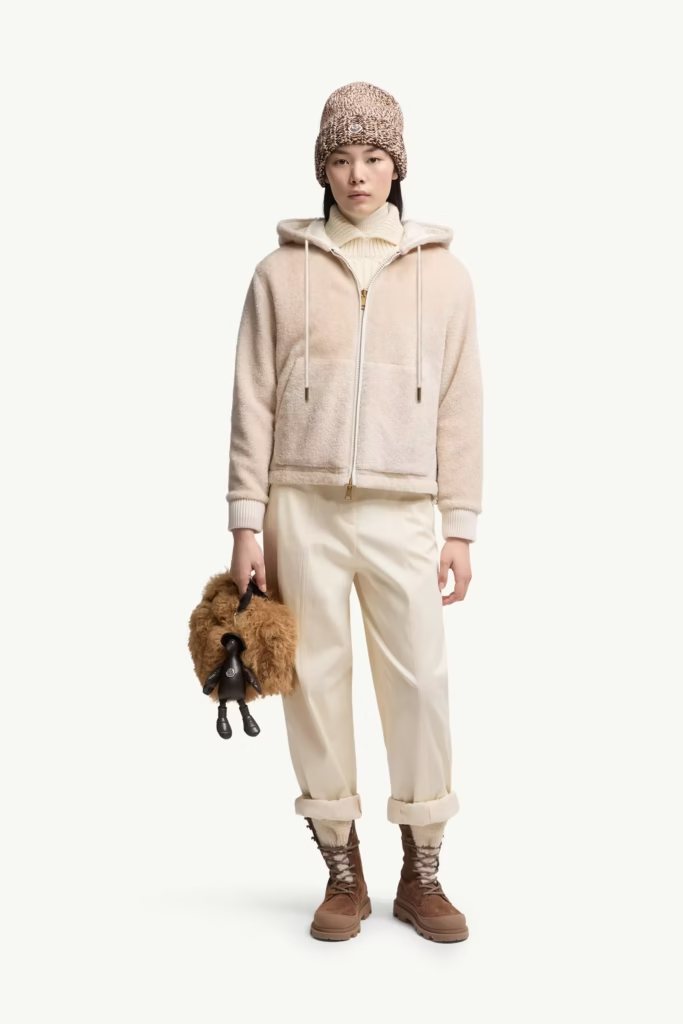
photo: moncler.com
Genius, celebrities, and hypebeast culture
The “Moncler Genius” platform (since 2018) is a collaboration with designers such as Riccardo Tisci and Pierpaolo Piccioli—each creates their own mini-collection. Ambassadors? Wang Yibo in China, Yeonjun from TXT in Korea—the brand understands that today, luxury is built through culture, not just advertising. The result: Moncler is not just a jacket, but a symbol of belonging to a world where style meets function.
Business model, figures, and global expansion
Moncler is now one of the fastest-growing players in the luxury market—a group that, over two decades, has evolved from a narrowly specialized down clothing manufacturer into a global corporation valued at over EUR 15 billion. This is growth that rivals giants like LVMH and Kering, but built on a much narrower, more focused offering.
Where do Moncler’s revenues come from
Ok. 90% of revenue comes from outerwear, mainly down jackets with a 90/10 fill ratio (90% down, 10% feathers). This focus on a single category—rare in the world of luxury—has proven to be an advantage, not a limitation. The numbers? Impressive:
- 2021: revenues ~1.5 billion EUR
- 2024: over EUR 3 billion (+7% y/y)
- Forecast for 2025: growth of 5-10%
- CAGR 2003-2023: 21% (that is, stable double-digit growth over two decades)
For comparison – most luxury brands fight for 3-5% annually. Moncler maintains the pace of a start-up, even though it is already an established brand.
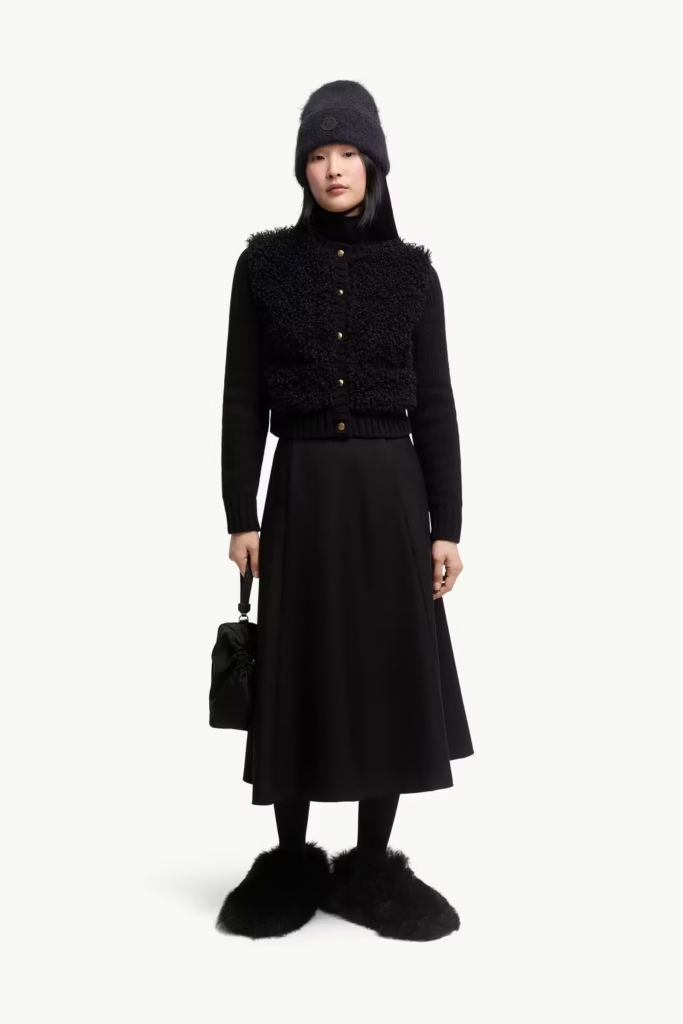
photo: moncler.com
Stone Island, Asia and the race with luxury giants
In 2020, Moncler Group acquired the Italian brand Stone Island for approximately EUR 1.15 billion—a move that strengthened its position in streetwear and functional apparel, complementing its portfolio profile. Today, the group has stores in over 30 countries, but the real engine of growth is Asia: China is recording double-digit year-on-year growth, and the City of Genius event in Shanghai or Tokyo draws huge crowds. This is the region where LVMH and Kering are also making their biggest bets—and Moncler is competing with them for the loyalty of the same young, digital-savvy clientele.
Material innovations and responsible luxury
What makes a down jacket costing 5000 PLN keep you warmer than one for 500? Moncler doesn’t build its reputation solely on its logo—inside, there’s advanced technology that has been tested in Alpine conditions.
What’s inside a Moncler down jacket
A classic jacket from the brand is defined by a set of specific features:
- Filling: down 90/10 (90% down, 10% feather) with 700+ fill power
- Water resistance: fabrics with a parameter of around 20,000 mm water column
- Temperature range: tests conducted in conditions down to -40°C
- Material: nylon (including Loden nylon) – lightweight, durable, developed during alpine expeditions
It is precisely material innovations since the 1950s—when René Ramillon tested fabrics on the slopes of Mont Blanc—that have become the brand’s DNA. Nylo Loden? It may not sound luxurious, but it works.
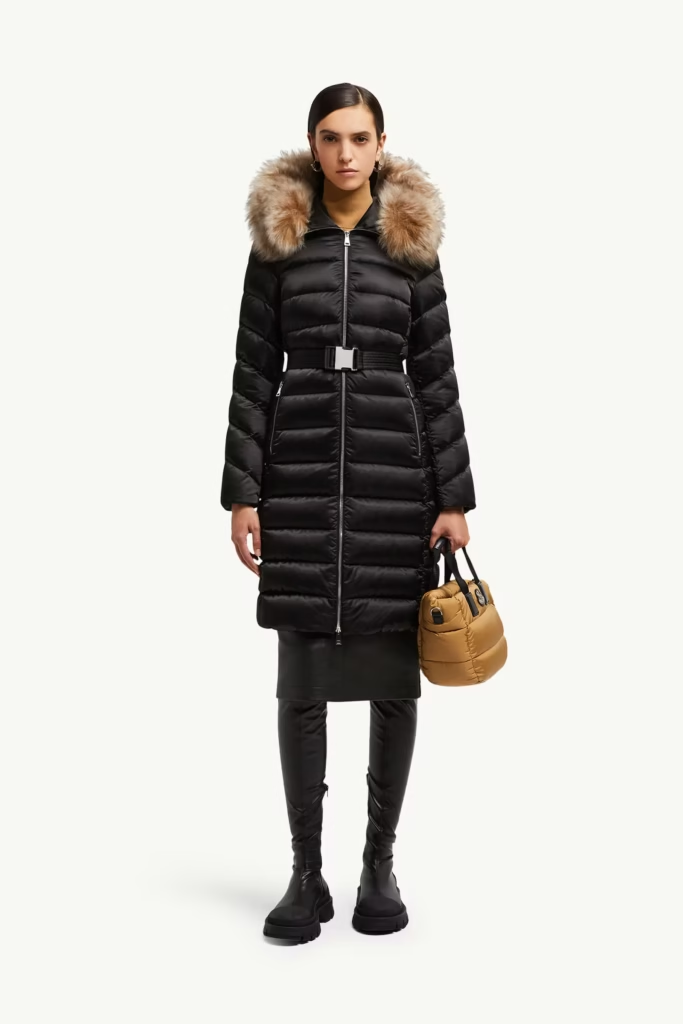
photo: moncler.com
RDS, no fur, and a new face of luxury
Recent years have brought a shift towards responsibility. Moncler has adopted the certified Responsible Down Standard (RDS), which guarantees ethically sourced down. The brand is also gradually moving away from both natural and artificial fur, focusing instead on synthetic alternatives.
Importantly, around 80% of production takes place in Italy, allowing for supply chain control and a reduced carbon footprint. And the latest innovations? Collaboration with Jony Ive and the LoveFrom studio on the “reinvented button” and hardware—a fusion of fashion, design, and technology in a single button.
Sounds like a detail? Maybe. But it’s precisely such details that distinguish luxury from an ordinary expensive jacket.
Where is the Moncler brand headed? Challenges, controversies, and the future
From a small workshop sewing jackets for mountaineers to a global powerhouse valued at billions of euros – Moncler has come an incredible way. But does seven decades of success guarantee continued dominance in the years to come? Not necessarily. The brand now faces questions that could define its future in a changing world of luxury.
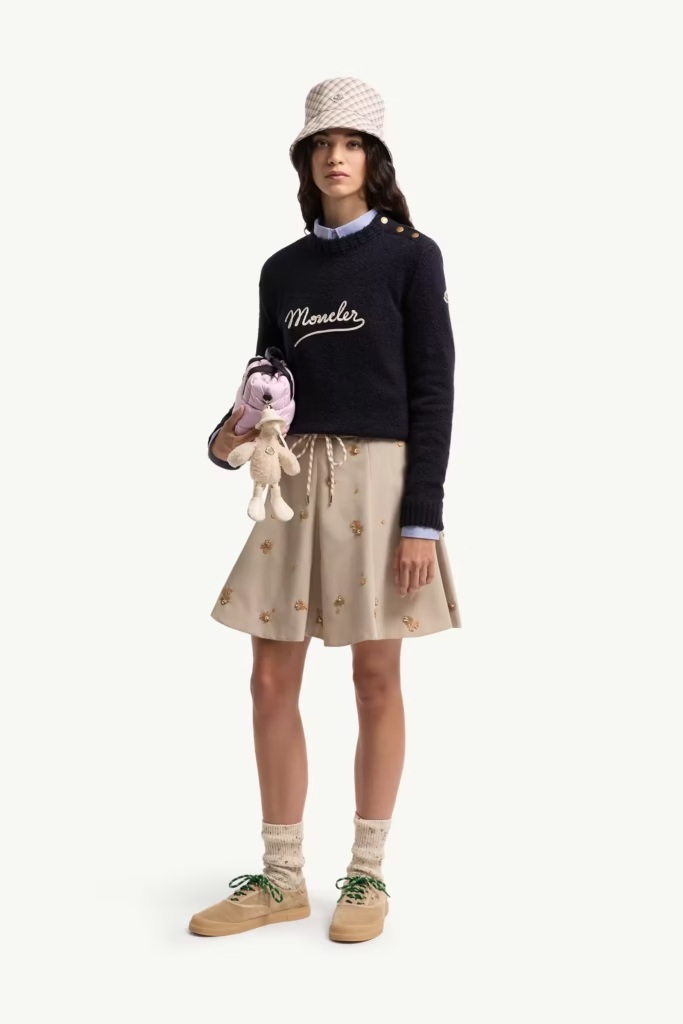
photo: moncler.com
Between mountain legend and luxury for $1,500+
The criticism is getting louder: a jacket that cost around $100 in the 1990s now comes with a price tag of $1,500+. For some, this is a natural evolution of a premium brand; for others, it’s the “gentrification” of outdoor gear, distancing Moncler from its Alpine roots. Was a company that once made equipment for Walter Bonatti meant to become a status symbol on the streets of Milan and Hong Kong? There’s no simple answer to that question.
Challenges ahead:
- Seasonality – will it be possible to reduce dependence on winter thanks to new lines?
- Price vs. authenticity – how to reconcile a luxury price tag with outdoor DNA?
- Sustainability – RDS and the end of fur is a good start, but expectations are rising
Scenarios for 2026 and beyond
Analysts predict revenue growth of 10%+ annually, mainly thanks to expansion in Asia and investments in technology (including AI for personalization). Moncler Genius has shown that the brand knows how to reinvent itself — the question is whether this will be enough to maintain its position at a time when luxury must be not only beautiful but also responsible. It’s worth following this case as a study of how a heritage brand balances tradition and the future.
Stassi S
fashion & beauty editorial team
Luxury Blog

Leave a Comment