

The Balenciaga Phenomenon – from Haute Couture to Meme Culture
The fashion house founded in 1919 turned sneakers into coveted items worth 3,000 PLN. The same brand that once tailored for Spanish aristocracy now inspires meme creators on TikTok. Balenciaga is probably the strangest transformation story in the world of luxury.
Actually, I’m not sure anyone could have predicted things would turn out this way. Cristóbal Balenciaga designed dresses like an architect—every seam had a purpose, every line was intentional. And now his name is on bags that look like they’re from IKEA and cost a fortune.
The Balenciaga Phenomenon
“The Balenciaga phenomenon” is the way one brand has mastered being both serious and ironic, luxurious and meme-worthy, controversial and highly coveted. It’s a balancing act on the edge of what’s acceptable and what sells like crazy.
Why bring this up now? Because after the scandals of 2022, the brand is making a comeback. Sales have rebounded by about 5 percent this year—not much, but enough to show that people are still buying. Balenciaga is experimenting with building an “edgy, yet safe” narrative. I’m watching this with interest, as it could become a playbook for other brands that have made mistakes.
In this text, I’ll look at three things. First, where this strange journey from haute couture to streetwear began—how the brand evolved over the decades to reach a point where it creates collections inspired by… garbage bags.
Then I’ll take a look at Balenciaga’s modern “playbook.” How their marketing works, why controversies don’t hurt them—and sometimes even help. And what the numbers say—because behind all those memes are some very real profits.
Finally, I’ll consider what all this means for us, women, who browse the shops and wonder whether it’s worth spending half a paycheck on shoes that might be out of style next year. Or whether buying this brand means supporting something meaningful, or just paying for provocation.
The story begins in Spain, over a hundred years ago.
Where did the phenomenon come from – the brand’s heritage and evolution
Cristóbal Balenciaga was called “the master of all masters” by none other than Coco Chanel, and for good reason—his architectural approach to tailoring forever changed the definition of luxury.
But to understand how today’s phenomenon came to be, I need to go back to the beginning. The story of this brand is actually a collection of different tales that somehow became intertwined.
Timeline – key milestones:
- 1937 – Opening of the salon in Paris, Cristóbal introduces revolutionary silhouettes
- 1957 – Sack dress – a loose-fitting dress that redefined the concept of femininity
- 1968 – Closure of the fashion house after the founder’s death
- 1986 – Acquisition by the Jacques Bogart group, first attempt at revival
- 1997 – Nicolas Ghesquière becomes creative director
- 2001 – Acquisition by Gucci Group (later Kering)
- 2015 – Demna Gvasalia takes the helm of the brand
What fascinates me about this story is how different each stage was. Cristóbal designed for a very exclusive circle—aristocrats, film stars. His creations were like sculptures, incredibly sophisticated from a technical standpoint. I remember the first time I saw photos of his work from the 1950s—it was pure architecture on the body.
Then came a long hiatus. For almost 20 years, the brand was practically absent. And maybe that was a mistake, or maybe a blessing. Because when Ghesquière arrived in the ’90s, he could almost start from scratch. He didn’t have the pressure of continuity—only the inspiration of a legend.
Ghesquière did something brilliant—he took the brand’s DNA, that architectural quality and precision, and translated it into a contemporary language. His Balenciaga remained highly technical, yet became more mentally accessible. Those were the years when fashion started to become more democratic, at least in terms of communication.
During his brief tenure, Wang tried to steer the brand in an even more commercial direction. But it seemed he wasn’t quite sure what to do with that legacy. Or maybe they just replaced him too quickly.
And that’s where Demna comes in. It was a revolution, not an evolution. Suddenly, Balenciaga started speaking the language of the street, but with the same DNA—precision, bold proportions, and experimentation with form. Only now, instead of designing for aristocrats, it was doing it for influencers and streetwear fans.
The context has also changed dramatically. Cristóbal created in an era when fashion was highly hierarchical. Today, everything is fluid—luxury blends with mass market, high fashion with internet memes. Social media has changed everything. Now, it’s not enough to make a beautiful dress; you have to create a viral moment.
What remains of the original DNA? Above all, it’s that obsession with proportion and form. Whether it was Cristóbal’s sack dress or Demna’s oversized hoodies, it was always about redefining how clothing fits the body. And that certain irony, a distance from convention. After all, Cristóbal also provoked—just in a more subtle way.
I think the biggest change was the shift from craftsmanship to cultural commentary. Balenciaga stopped being a fashion house and became a lifestyle brand that uses clothing to communicate something bigger.
Now the question is—how exactly does it do that? What is this modern playbook that makes every collection spark conversation?
How the phenomenon works today – design, marketing, data, and controversies
Balenciaga is now a culture-making machine. They don’t just sell clothes—they set the trends before anyone else even notices.
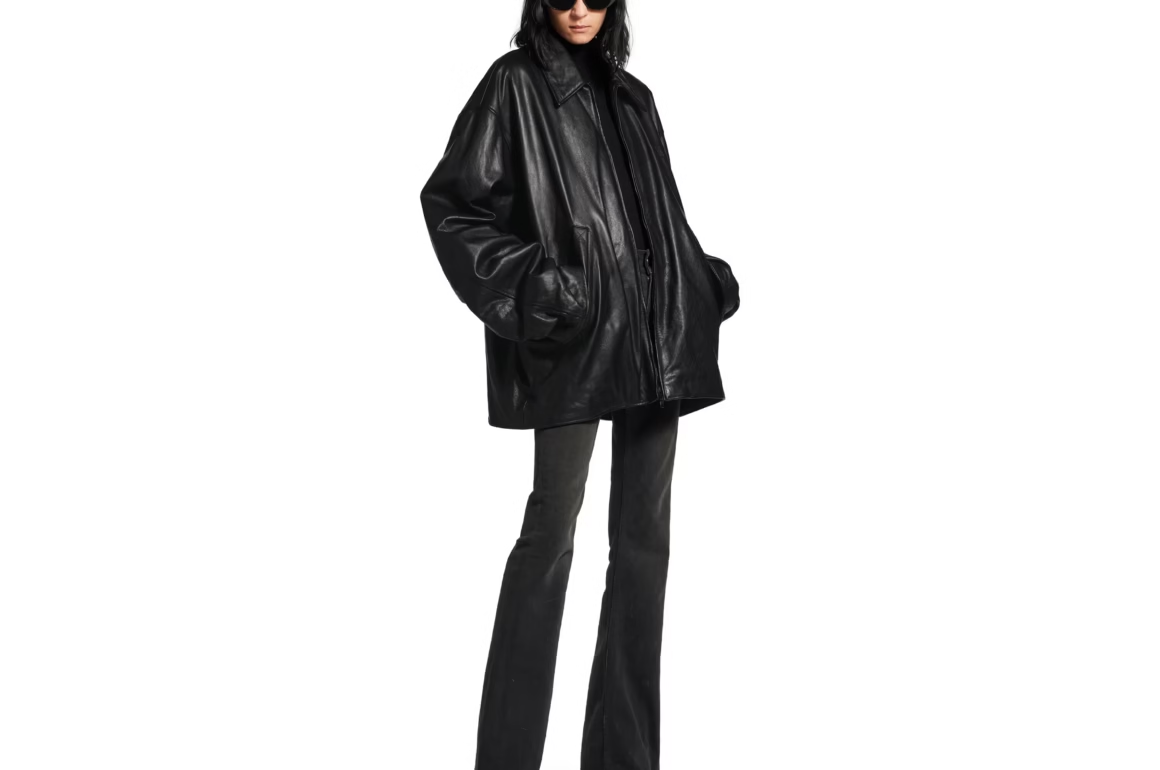
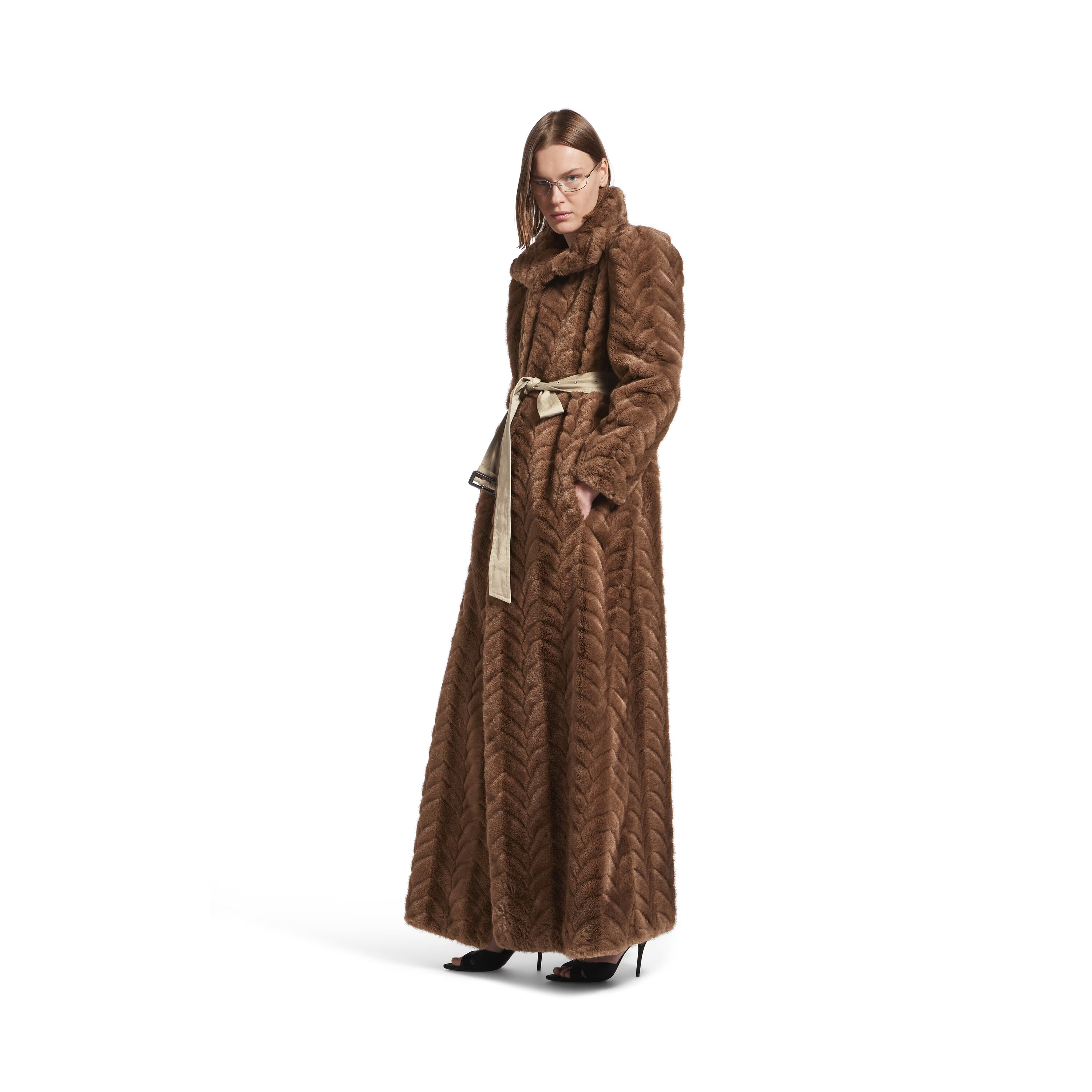
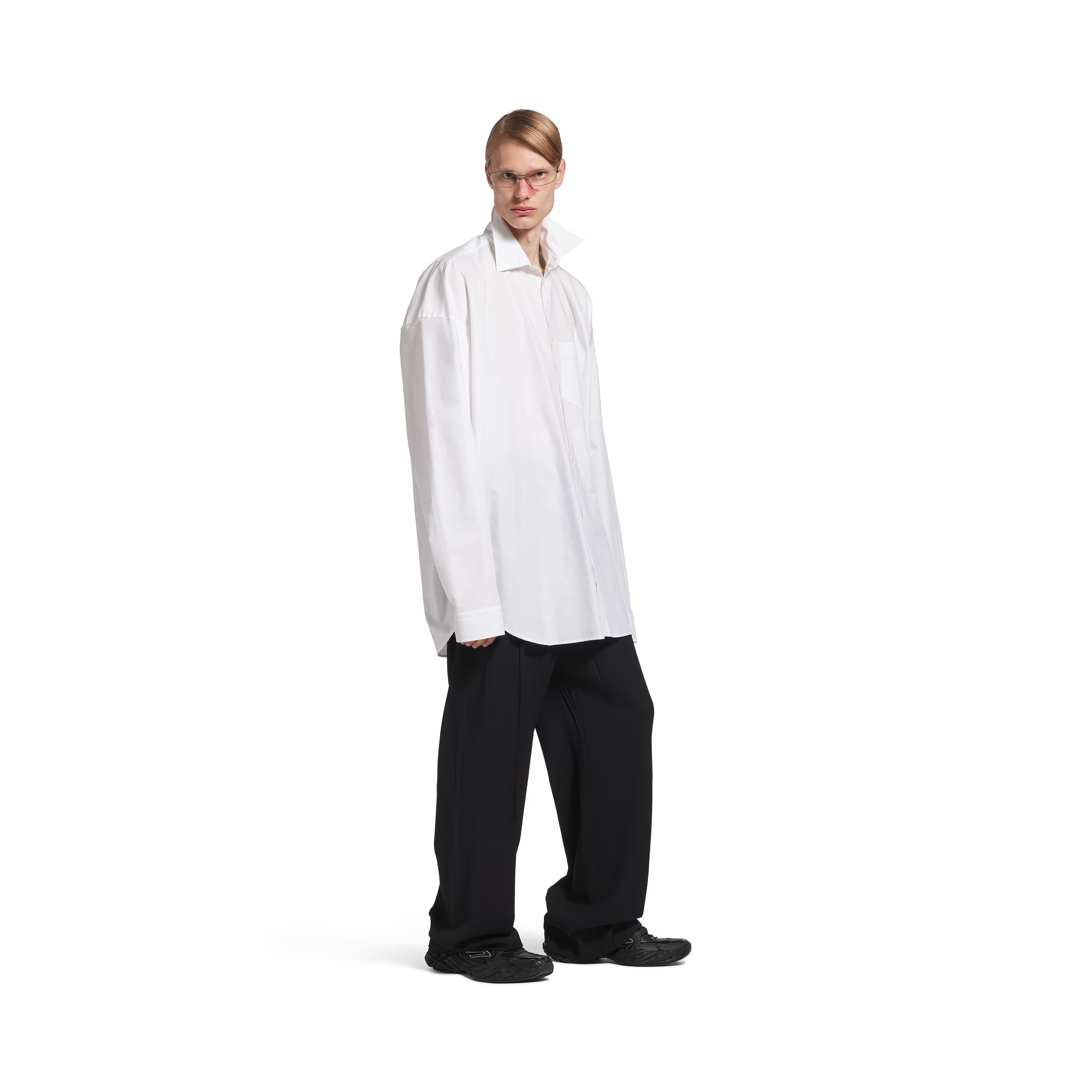
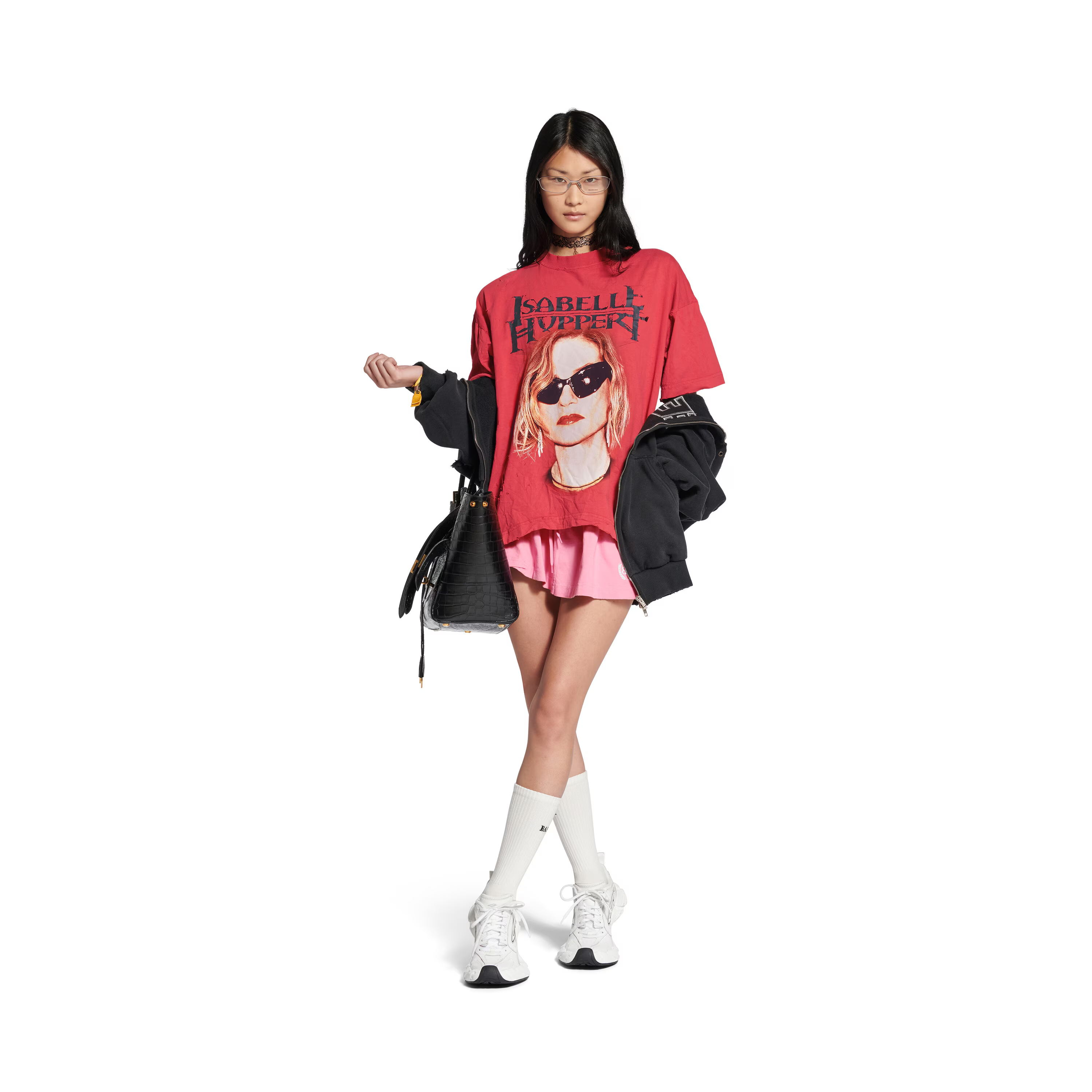
Their design language is unmistakable. Oversized
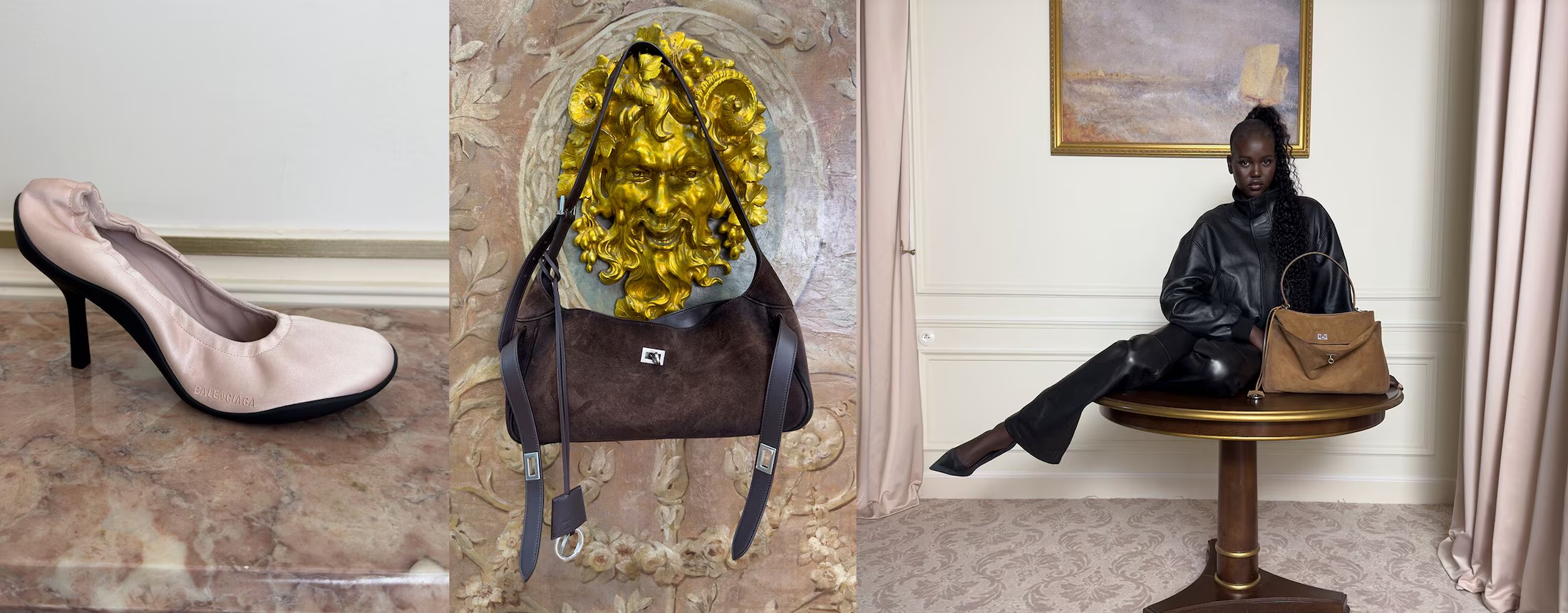
Examples? The Triple S from 2017—those chunky sneakers that look straight out of the ’90s but cost a fortune. Or the City Bag, which they brought back—now every influencer has to have it. And in 2022, they released a “trash pouch” for $2,145. Literally a bag that looks like a garbage sack. And people are buying it.
- Oversized silhouettes with distinct deconstruction
- Distressed materials and “intentional” damage
- Ironic accessories inspired by everyday objects
- Controversial colors and unconventional proportions
But the real magic happens in culture.
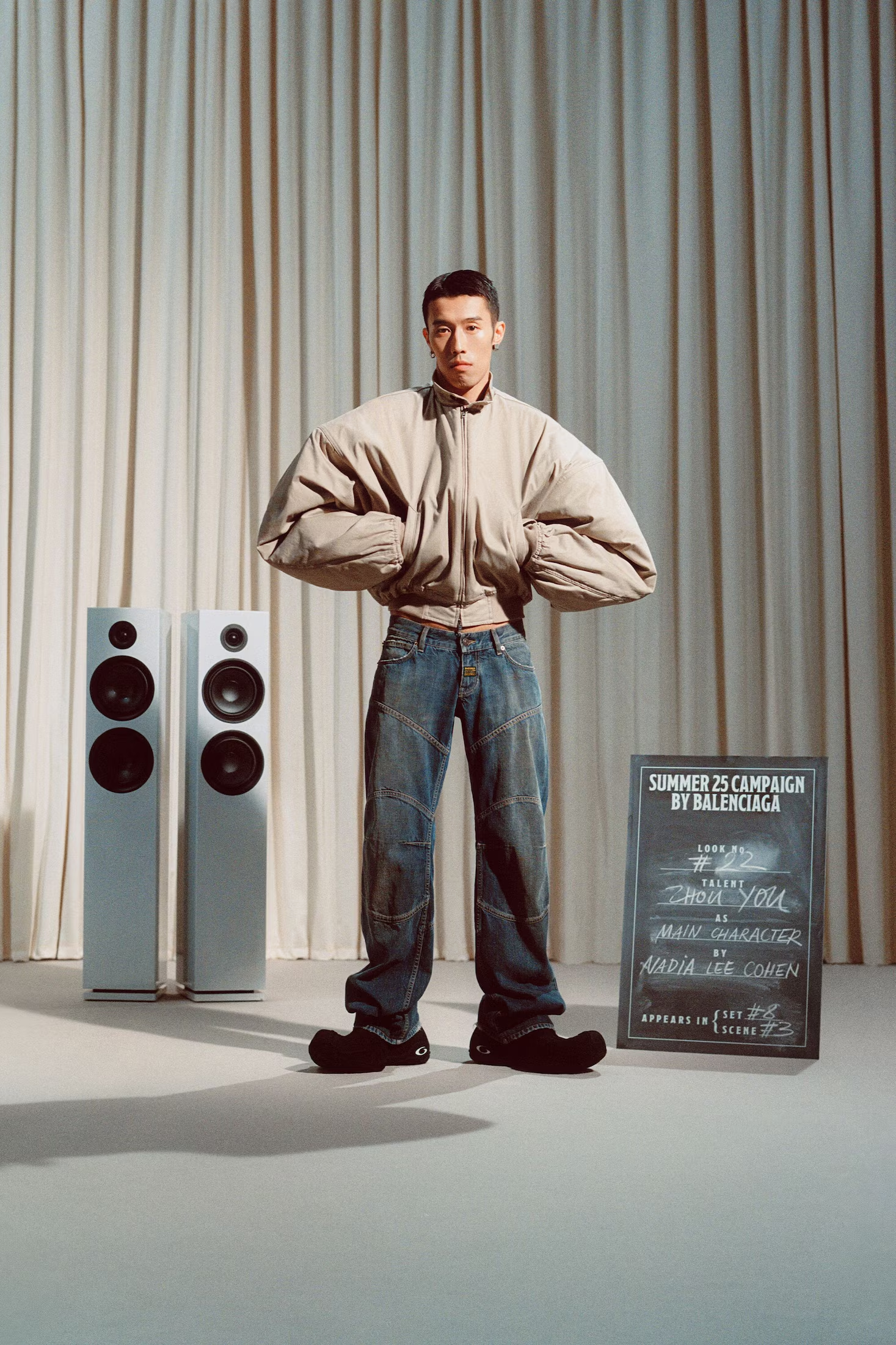
They have over 10 million followers on social media. They collaborate with Crocs—and suddenly plastic shoes cost $850. They stage shows in the metaverse and experiment with NFTs. Every move they make instantly becomes a meme, and those memes drive sales.
Kim Kardashian wears their pieces to the Met Gala. Kanye West has designed with them for years. This is no coincidence—it’s a deliberate strategy. They know that a single celebrity post is worth more than a million-dollar ad campaign.
In the first quarter of 2022, they ranked number one in the Lyst Index—which means they were the most searched fashion brand in the world. Accessories and footwear account for about 70% of their sales. Asia generates around 30% of their revenue.
- Lyst Index Q1 2022: ranked No. 1 among fashion brands
- Share of accessories and footwear: approximately 70% of total sales
- Asian market: approximately 30% of global revenue
- A decline of 10-15% in 2023, followed by a 5% rebound in 2024
But in 2022, everything fell apart. That advertising campaign with children… I won’t go into details, but it was a real scandal. The reactions were immediate and harsh. Apologies, a $25 million lawsuit, mass boycotts.
Now they’re trying to redeem themselves. They’re still doing “gritty” things, but in a safer way. They talk about sustainability—the goal is 100% sustainable materials by 2025. A 20% reduction in carbon footprint since 2020. Sounds good on paper.
Sometimes I wonder if they even care about what people think. Or maybe that’s the point—to always give people something to talk about. Controversy is part of the brand, too.
This shows just how complex this phenomenon is today. On one hand, there’s marketing genius; on the other, questions about boundaries. But one thing is certain—you simply can’t ignore them.
What’s next for the Balenciaga phenomenon – what should I do?
Balenciaga is a brand that has taught us one thing – that in fashion, anything can happen. After years of observing this phenomenon, I believe the most important thing now is how we, as consumers, can make use of this knowledge.
If you’re wondering how to approach this brand mindfully, I have a few specific steps:
- Check the materials and craftsmanship – don’t just buy the logo, but the actual value.
- Track the brand’s communication after 2022—observe how it responds to criticism and whether it maintains transparency in its actions.
- Assess whether a given product has long-term potential or if it’s just a passing trend.
- Verify your carbon footprint – Balenciaga has started publishing sustainability reports.
- Look at advertising campaigns – do they promote values you identify with?
And what’s next? I think we’re in for an exciting transformation. AI in design is already happening—algorithms are helping to predict trends. Virtual showrooms and digital fashion are no longer just science fiction.
Perhaps the most interesting aspect will be this transition from “hype” to something more timeless. Balenciaga may start building on durability rather than shock value.
As for the controversies—they are already part of the brand’s history. What matters now is how the brand moves forward and whether it can act responsibly. It’s worth watching to see if actions match the words.
I believe that each of us can take something away from this phenomenon. The courage to experiment with style, but also an awareness of our own boundaries and values. Balenciaga has shown that fashion is a powerful tool for communication.
The phenomenon of this brand is essentially a laboratory of modern consumption—it’s worth drawing conclusions from it, but never forget your own voice.
Kate Miu
fashion editor
Luxury Blog




Leave a Comment