

Roulette rules – step by step
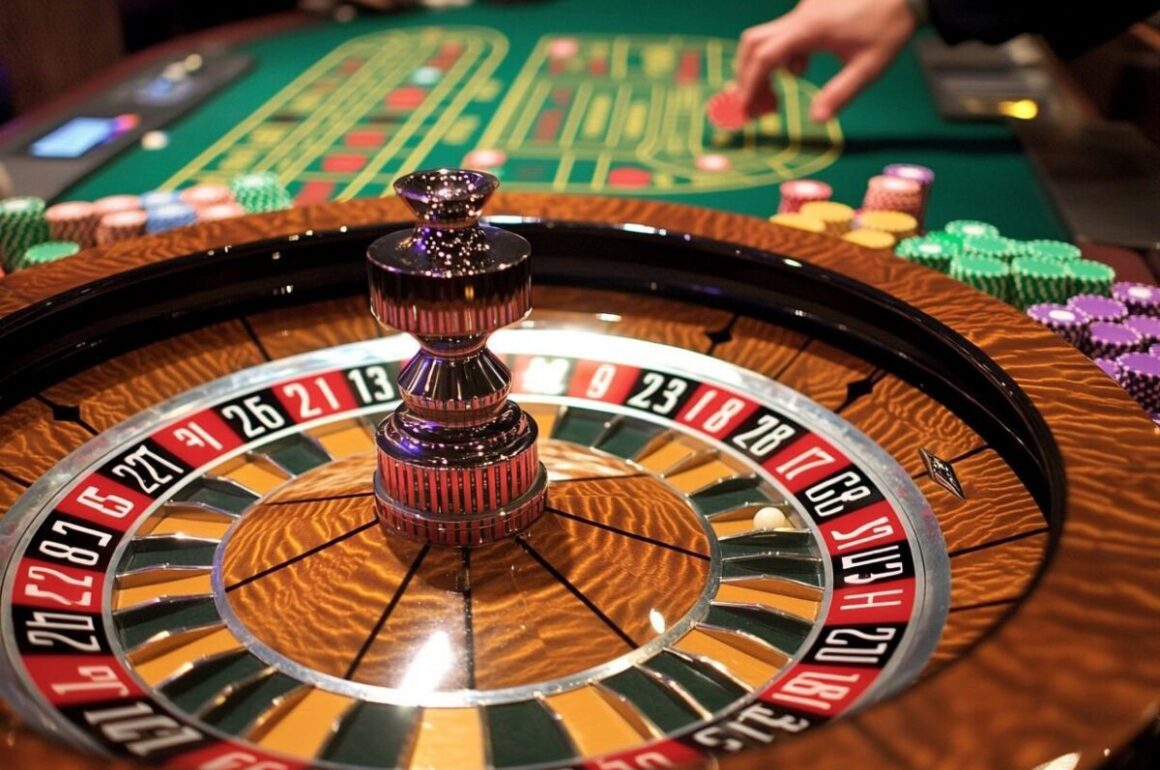
“Did you know that the total sum of the numbers on a roulette wheel is 666?” That number alone commands respect. But that’s just the beginning of the fascinating story behind a game that has captivated people around the world for centuries. If you want to learn the rules of roulette, see what we know about it!
Roulette was born in 18th-century France from a blend of various games of chance. The Blanc brothers later introduced it to Germany, and then to Monte Carlo. Since then, it has become a symbol of casinos—elegant, dangerous, and unpredictable.
Roulette rules – from the ball to fortune
In 2025, the world of gambling is undergoing a true revolution. The global online gambling market is expected to reach a value of $100 billion. That’s an enormous amount of money. Roulette is one of the key slices of this pie. People play it on their phones, tablets, and in live online casinos.
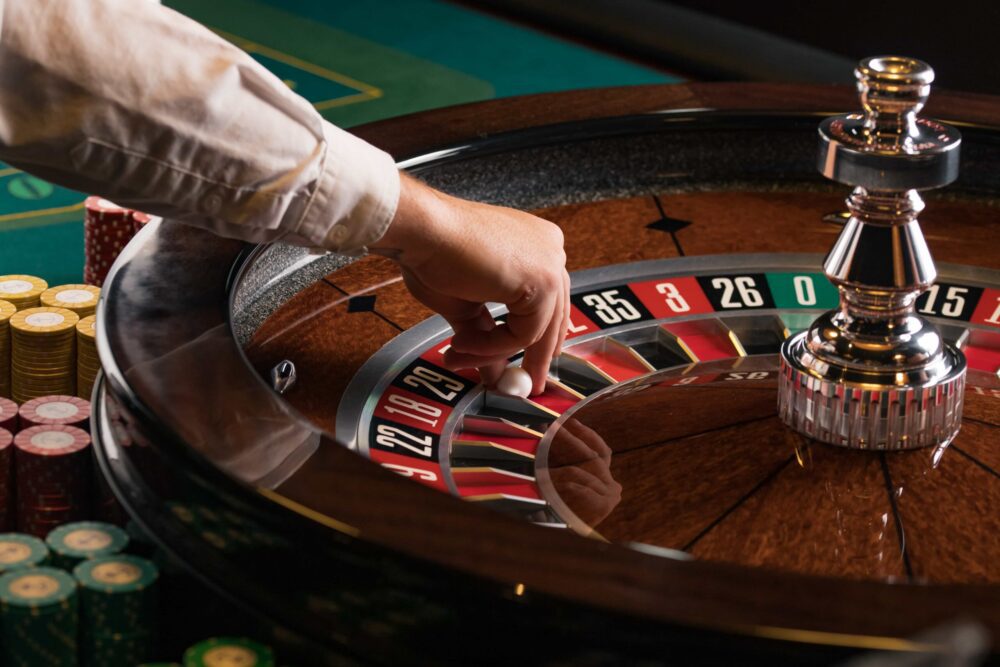
photo: napoleons-casinos.co.uk
Why does roulette still reign supreme even though the house always has the edge? That’s a question many people ponder. The math is clear—the house always wins in the long run. But emotions tell a different story. The adrenaline rush as the ball bounces around the numbers. The hope that this time, things will be different. This battle between logic and feeling is at the heart of roulette’s enduring appeal.
Today, we can choose between different variants. French, European, American—each has its own secrets. Some players have developed entire betting systems. Martingale, Fibonacci, d’Alembert. The names sound serious, but do they really work?
In this article, you’ll discover:
- Detailed game rules and the course of each round
- Probability of winning with different types of bets
- Main roulette variants and their differences
- The most popular strategies and their effectiveness
Roulette is more than just a game. It’s a blend of culture, mathematics, and psychology, all encapsulated in a single wheel. It’s time to take a closer look and understand the mechanisms behind this fascinating pastime.
Wheel, table, and bets – step-by-step game rules
The gleam of a mahogany table, the shine of the wheel, and the clatter of chips—this is the sight that catches the eye of everyone entering a casino.
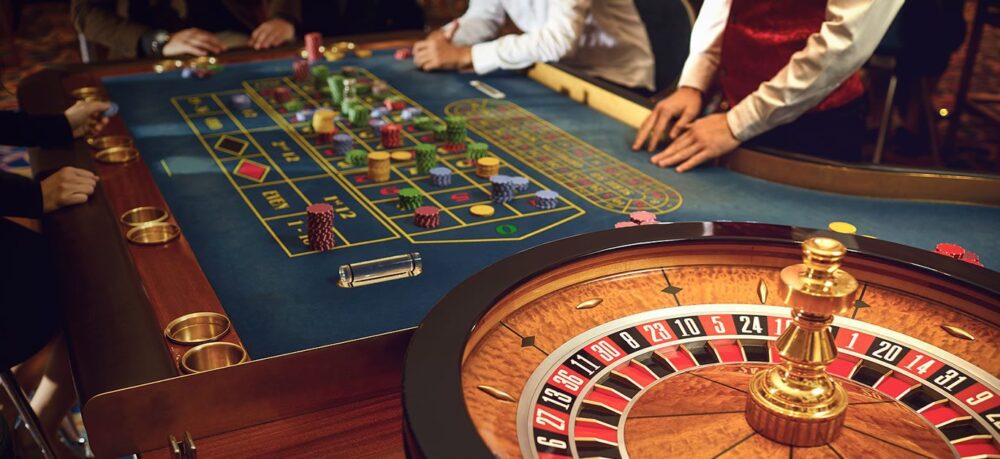
photo: luxurylifestylemag.co.uk
Gaming equipment
The European wheel has 37 pockets (numbers 0-36), while the American version features an additional 00 slot, making a total of 38 possibilities. These hefty constructions usually weigh 50-60 kilograms and measure up to 80-90 centimeters in diameter. The table is covered with green felt marked with a betting grid, and next to the wheel sits the croupier with the distinctive chip rake.
Each player’s chips come in different colors—an important detail, as otherwise chaos would reign at the table. The ball itself is made of plastic, though in the past ivory was used.
Types of bets
| Type of establishment | Payout |
|---|---|
| Straight up (one number) | 35:1 |
| Split (two adjacent) | 17:1 |
| Street (three in a row) | 11:1 |
| Corner (four corners) | 8:1 |
| Six line (six numbers) | 5:1 |
| Column/dozen | 2:1 |
| Red/black, even/odd | 1:1 |
Inside bets are wagers placed on specific numbers or small groups of numbers, positioned in the central area of the table. Outside bets cover larger groups—such as colors, evenness, or broad number sections.
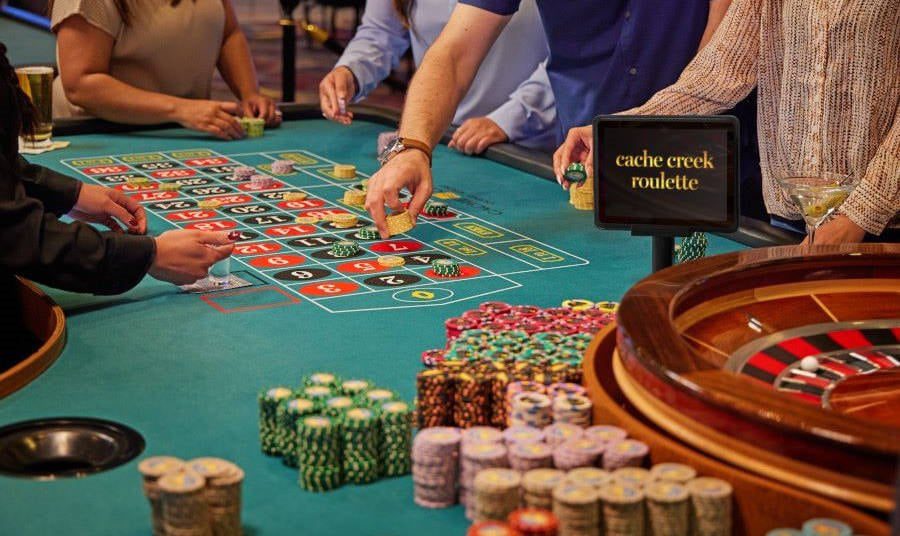
photo: cachecreek.com
Round sequence
The game begins with the command “Place your bets.” Players then have time to put their chips on the chosen spots. The dealer spins the wheel in one direction and throws the ball in the opposite.
For a moment, bets can still be added until the firm “No more bets” is announced. From that point on, no one is allowed to touch the chips. The ball bounces between pockets before finally landing in one of them.
The dealer marks the winning number with a special marker, then removes the losing chips and pays out the winnings. The entire process takes about 2-3 minutes, though some dealers can do it even faster.
Now that you know the procedure, it’s time to see what your real odds are.
Odds vs. strategies – the mathematics and systems of the game
Probability in roulette is a fairly straightforward concept—every ball has an equal chance of landing in any slot. But the devil is in the mathematical details.
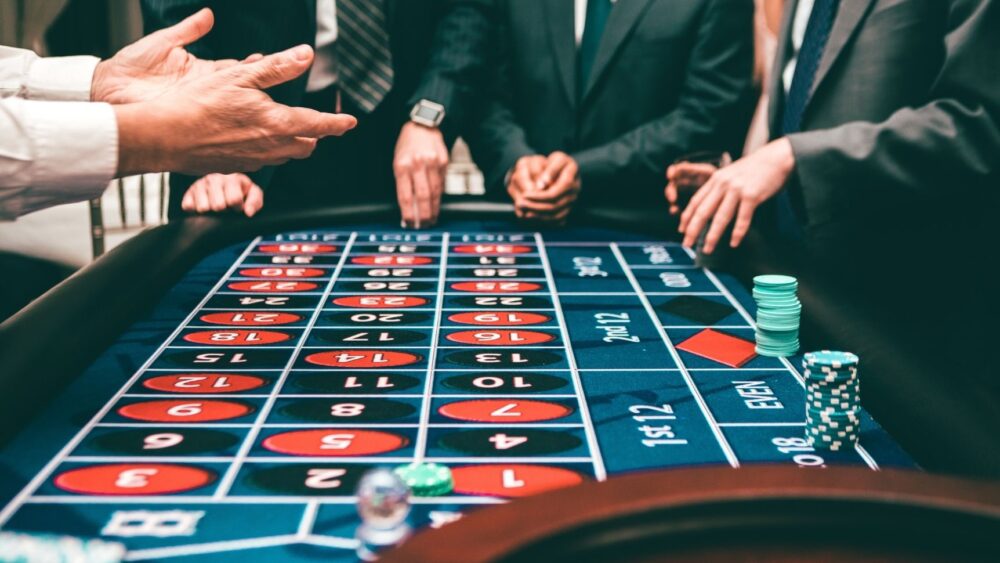
photo: thecontentpanel.com
The house edge is the casino’s advantage, and it’s worth memorizing. In European roulette, it’s 2.7%; in American roulette, it’s as high as 5.26%; and in French roulette with the “La Partage” rule, it drops to just 1.35%. These numbers represent the percentage of every bet that theoretically stays with the casino.
Most players try to outsmart the math with various systems. Martingale is probably the most famous—you double your bet after every loss. Sounds logical, right? The problem arises when you lose ten times in a row. Starting with 10 złoty, after the tenth loss, you’d need 5,120 złoty for the next bet. Total capital? Over 10,000 złoty. Most people simply don’t have that kind of money.
The Fibonacci system seems safer—you increase your bets according to the famous sequence (1, 1, 2, 3, 5, 8…). D’Alembert, on the other hand, means gently increasing by one unit after a loss. All these methods share one common problem.
| System | Required capital | Risk of bankruptcy |
|---|---|---|
| Martingale | Very high | Extreme |
| Fibonacci | Medium | High |
| D’Alembert | Low | Moderate |
No strategy can beat the house edge in the long run – that’s a mathematical fact, not an opinion.
I used to think I was smarter than the casino. I had my own “foolproof” system based on tracking previous outcomes. Of course, it ended in losses. The ball doesn’t remember what happened before.
Every spin of the wheel is an independent event. If red has come up ten times in a row, the odds of black on the next spin are still about 48.6% (in European roulette). The zero throws off all calculations and gives the casino its edge.
Systems can work in the short term – that’s true. Sometimes you can even win quite a lot of money. The problem is, the longer you play, the more the house edge reveals itself. It’s not about luck or skill, just pure math.
And does the version of the game matter? Let’s check the variants…
Roulette Variants and Modern Innovations
Roulette has evolved significantly since the Blanc brothers added the zero in 1842. That move changed everything—the house edge in European roulette dropped compared to earlier versions, but at the same time, it set a standard that remains in place to this day.
| Variant | Fields 0/00 | House edge |
|---|---|---|
| European | 1 (zero) | 2.70% |
| American | 2 (0 and 00) | 5.26% |
| French | 1 (zero) | 1.35%* |
*for even-money bets thanks to the “en prison” rule
The breakthrough came in 1996, when the first online casinos appeared. Suddenly, you could play roulette at any time of day or night. But the real revolution arrived with live dealers around 2010. Evolution Gaming showed how it’s done—studios resembling real casinos, professional croupiers, HD cameras.
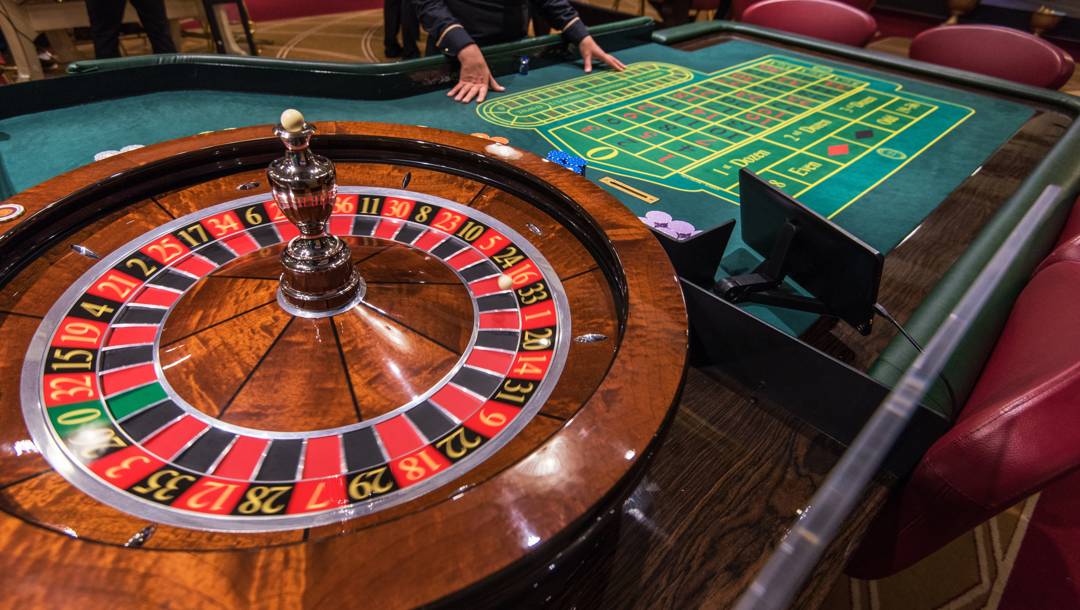
photo: casino.betmgm.ca
Now, in 2025, we have artificial intelligence that detects suspicious patterns and automatically adjusts limits for responsible gaming. The system analyzes betting speed, wager size, and time spent at the table. This isn’t science fiction—it’s already in use.
Forecasts suggest that by 2030, VR and AR will account for 30% of the online roulette market. Imagine—putting on a headset and standing at a real table in Monte Carlo, while actually being at home. Some platforms are already testing these solutions.
Multi-wheel roulette lets you play on several wheels at once. Blockchain brings transparency—every spin can be verified. Lightning roulette adds random multipliers to regular numbers.
The timeline looks like this:
- 1842: The Blanc brothers add a zero
- 1996: The first online casinos
- 2025: AI in pattern detection
- 2030: VR/AR dominates online
Technology is a game changer, but the math stays the same. The house edge in European roulette remains 2.70%, whether you’re playing in VR or at a physical table.
With this knowledge, it’s easier to make informed decisions—let’s see how to put it into practice.
Play consciously – key takeaways and next steps
Everything I’ve written so far only makes sense if you play responsibly. Theory is one thing, but practice requires concrete safety measures.
photo: fruityking.co.uk
Imagine Marcin, who ignores the house edge in roulette. On the first day, he loses 500 PLN but thinks it’s just bad luck. The next day, he adds another 800 because he “has to win back his losses.” After a week, he’s down 3,000 PLN. After a month… better not to ask. Math is ruthless—every spin has the same casino advantage, no matter what happened before.
Don’t make Marcin’s mistake. The house edge is always at work, even if it feels like you’re winning for a moment.
What’s next? Education is your best investment. Check out free probability courses on Khan Academy or Coursera. Try demo games with no financial risk—most platforms offer this option. Read “Beating the Odds” by James Walsh or the Polish classic “Matematyka hazardu” by Tomasz Kowalski.
Also, remember player discussion forums—you’ll find real experiences there, not just marketing promises.
“Knowledge is the only edge the casino can’t take from you.”
photo: riverscasino.com
Play smart, play consciously. And if you feel you’re losing control—seek help from professionals. It’s not shame, it’s common sense.
Infinity Andy
lifestyle & sport editor
Luxury Blog






Leave a Comment