

Roma Tower – a new skyscraper on a church-owned plot in the city center
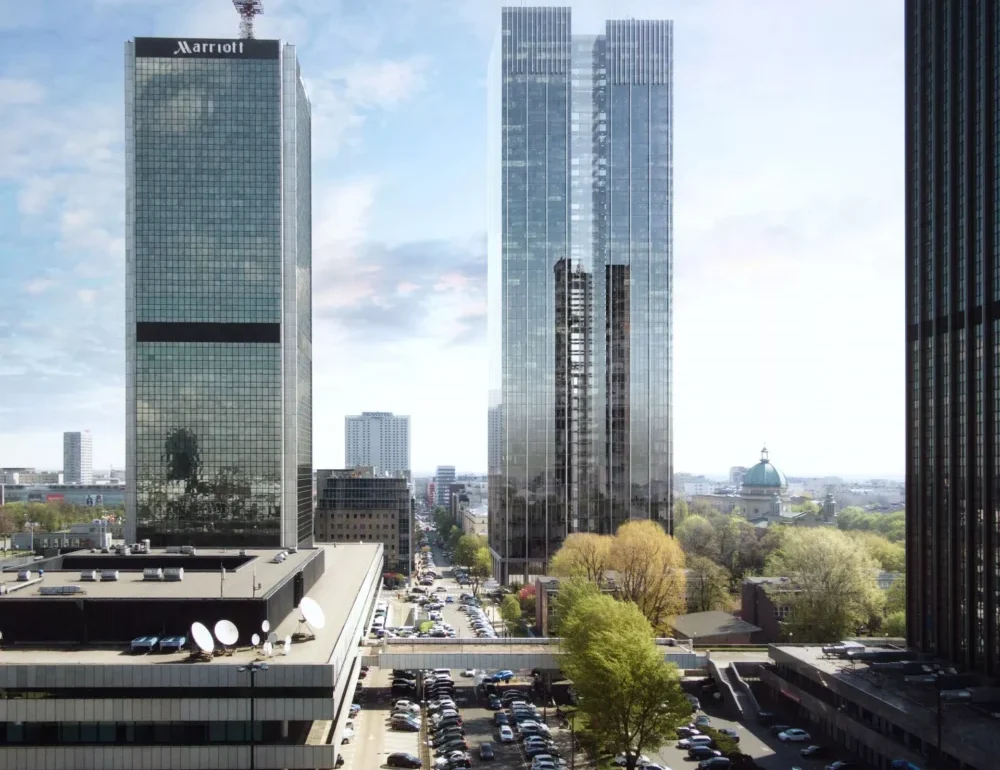
In the center of Warsaw, on a plot owned by the Archdiocese of Warsaw, a new residential skyscraper—Roma Tower—is set to be built. The building, approximately 170-180 meters tall with 48 floors, will rise at the intersection of Emilii Plater and Nowogrodzka streets, literally in the shadow of the Palace of Culture. On November 7, 2025, the city hall issued a building permit, ending a years-long procedural dispute and paving the way for construction to begin.
Key facts:
- Location: Emilii Plater / Nowogrodzka, city center
- Function: luxury apartments + ground floor services
- Investor: BBI Development (in cooperation with the Archdiocese of Warsaw)
- Designer: Juvenes-Projekt studio
- Media nickname “Nycz Tower”, “Archdiocese skyscraper”
Roma Tower in the heart of Warsaw

photo: bbidevelopment.pl
The name “Nycz Tower”—a reference to Cardinal Kazimierz Nycz—quickly became part of the vocabulary of Warsaw residents and the media, highlighting the ecclesiastical origins of the land. The project prompts questions like: “Why does the Church need a skyscraper?”
Years of delays, changes in concept (from office building to residential tower), and procedural disputes have fueled controversy. The permit issued in November 2025 has reignited the debate—the construction may finally begin, but questions about the purpose of the investment remain.
From office building to apartment complex – the story of Roma Tower
First office building plans for the church-owned plot
The plot on Twarda Street, owned by the Archdiocese of Warsaw, waited a long time for development. Before 2022, the idea of an A-class office building emerged—the Juvenes-Projekt studio prepared the first visualizations, which quickly made their way into the media. And that’s when the problems began. Comments in the press and on Twitter were… harsh. “Another glass block in the city center” was one of the milder remarks.
In 2024, the project received its environmental decision: about 170 meters tall, with conference rooms, a fitness center, retail spaces, and 245 parking spots. It sounds standard, but the City Conservator of Monuments had reservations—and made them known. The objection was formal, though it did not completely block the project.
Environmental decisions and a shift towards residential development
And then came the breakthrough. On January 30, 2025, a new environmental decision transformed the office building into a residential tower—48 floors, no conference rooms. The new renderings (February 4, 2025) revealed that we were now looking at a completely different project. The reason? The pandemic changed the market—demand for offices dropped, and developers preferred not to take risks.
Politics got involved as well: Rafał Trzaskowski announced he would “take a close look at the case.” August brought procedural issues, but on November 7, 2025, the building permit was granted—with the investor required to renovate six premises and part of the municipal apartments. Evolution complete.
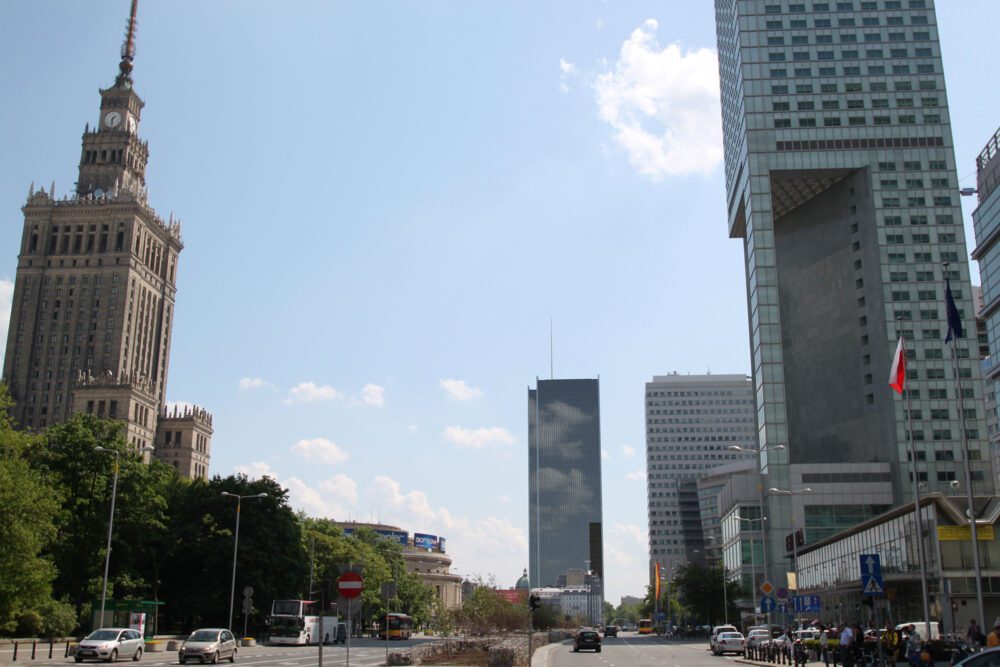
photo: bbidevelopment.pl
The tower, the pedestal, and the city – how Roma Tower will transform the city center
After years of disputes and administrative procedures, we finally know exactly what Roma Tower will look like and what it will bring to the center of Warsaw. The design by Juvenes-Projekt studio is not only a symbolic return of development to the plot at Powstańców Square—it is, above all, a real change in the skyline and functions of the city center.
The tower’s form and the green plinth
The skyscraper will be slender, set slightly askew in relation to the street grid—about 170-180 meters tall with 48 above-ground floors. At its base, there will be a low plinth with arcades for pedestrians and a green rooftop terrace designed to enliven the public space. The building fits into the “skyscraper canyon” along Emilii Plater, yet maintains its own distinct character.
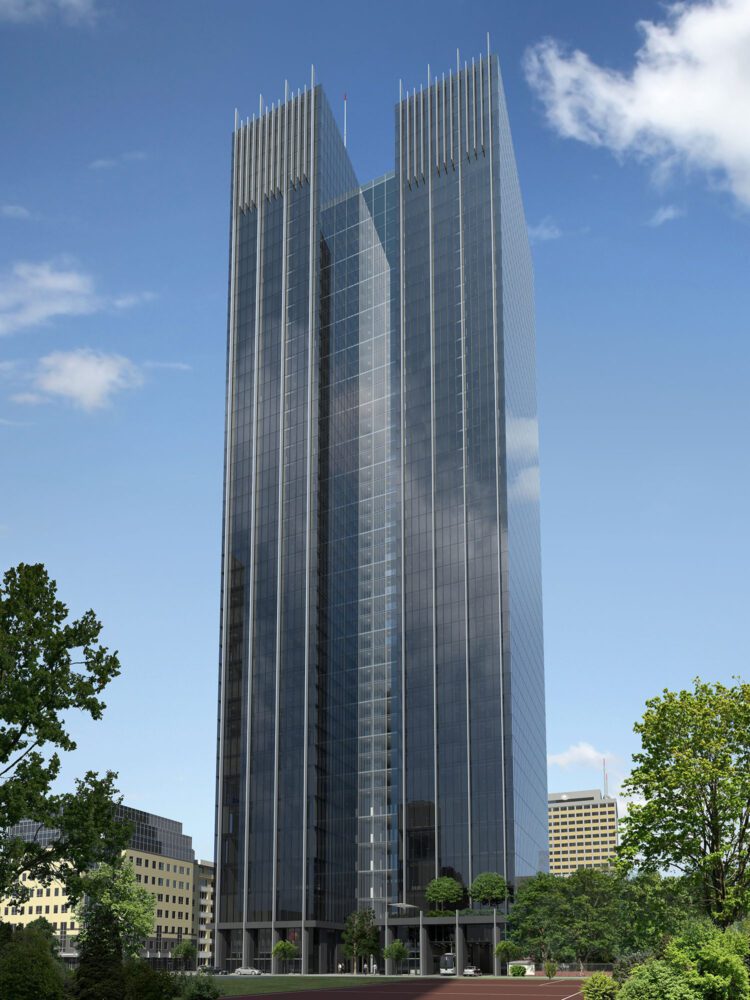
photo: bbidevelopment.pl
| Parameter | Value |
|---|---|
| Height | approx. 170-180 m |
| Above-ground floors | 48 |
| Usable area | approx. 62,000 m² |
| Parking spaces | 413 |
Functions, parking lots, and place in the city skyline
Inside, you will find:
- luxury apartments (main function of the building)
- service premises on the ground floor – retail, fitness, everyday services
- 6-level underground parking plus above-ground garages (a total of 413 spaces, significantly more than the original 245 for offices)
The steel-concrete structure meets current environmental standards. Its location—right next to the Palace of Culture and Science, Złote Tarasy, and the Centrum metro station—means that Roma Tower will increase the supply of apartments in a strictly business-oriented area. This is a concrete step toward mixing urban functions, although questions about the future of this space remain open.
What’s next for Roma Tower – scenarios and implications for Warsaw
A building permit is one thing, but the real question is: when exactly will the bulldozers start rolling, and how will this skyscraper actually change Warsaw—not just on paper, but in the daily life of the city? The story of Roma Tower is entering a phase where forecasts matter more than declarations.
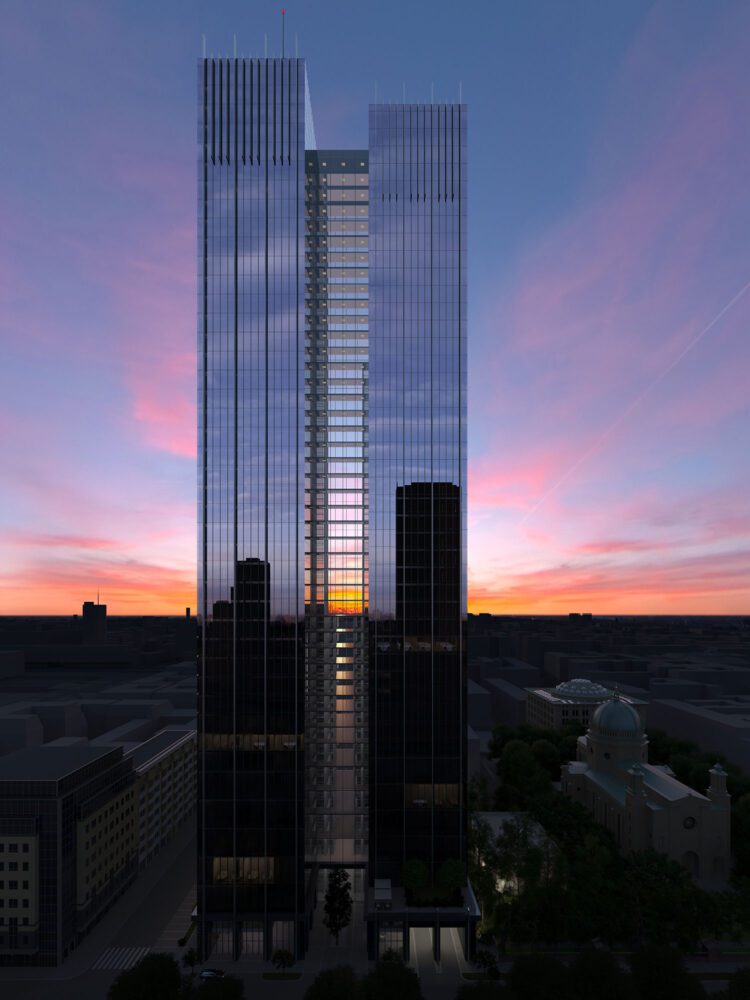
photo: bbidevelopment.pl
Realistic schedule: when will the tower rise above the city?
According to current estimates, preparatory work (safeguarding, demolitions) could begin around 2026, although this depends on final agreements with contractors and—let’s be honest—the state of the financial market. The optimistic scenario assumes the building will be ready by 2028-2030, but anyone following Warsaw’s developments knows: delays are the rule, not the exception. Possible scenarios include:
- On-time completion (2028-2029) – if everything goes smoothly, which is rare for a project of this scale
- Prolonged procedures – even minor complaints can add 6–12 months
- Project revisions – possible changes in the technology or functionality of the apartments
Regardless of the pace, the result will be noticeable: another landmark on the skyline visible from the Palace of Culture and Science, a further strengthening of the “skyscraper canyon” along Emilii Plater, and several hundred luxury apartments in the very heart of the city.
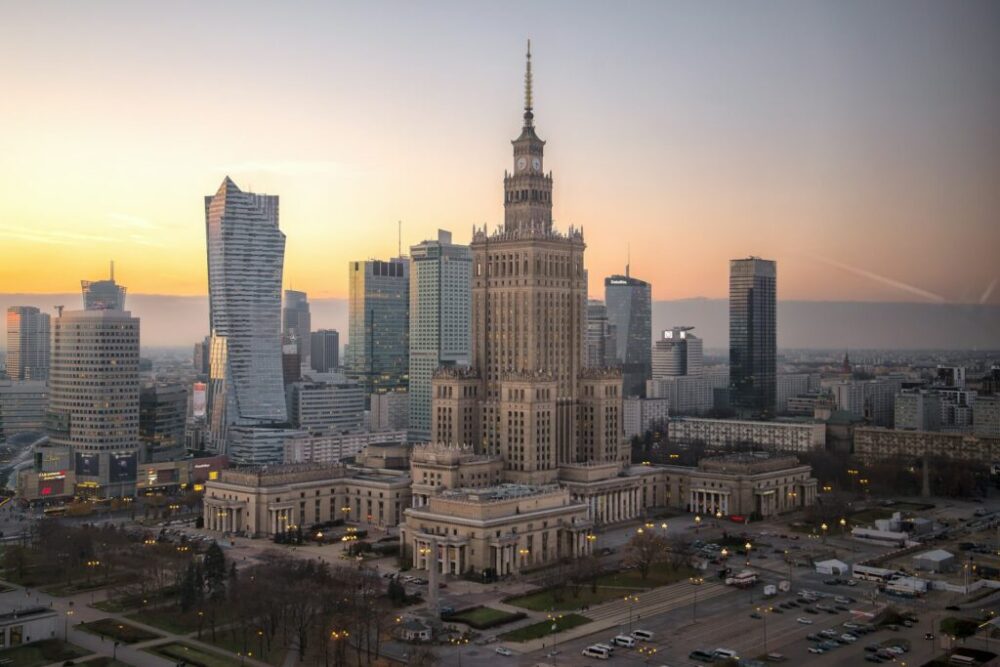
photo: ekai.pl
How to track the impact of Roma Tower on Warsaw?
To realistically assess what this investment brings to the city, it’s worth regularly checking updates from BBI Development, the Archdiocese of Warsaw, and the city’s urban planners. Local industry media— Architektura‑Murator, TVN Warszawa, NowaWarszawa.pl —report on progress and public reactions as they happen. Because Roma Tower is more than just a building; it’s a test of how Warsaw handles the YIMBY vs NIMBY debate, questions about housing accessibility (the luxury segment dominates), and—again—the role of the Church as a commercial investor. It’s worth watching to see whether the discussion remains substantive.
MON KI


Leave a Comment