

Premium ski helmet ranking – top 5 models for 2025/2026
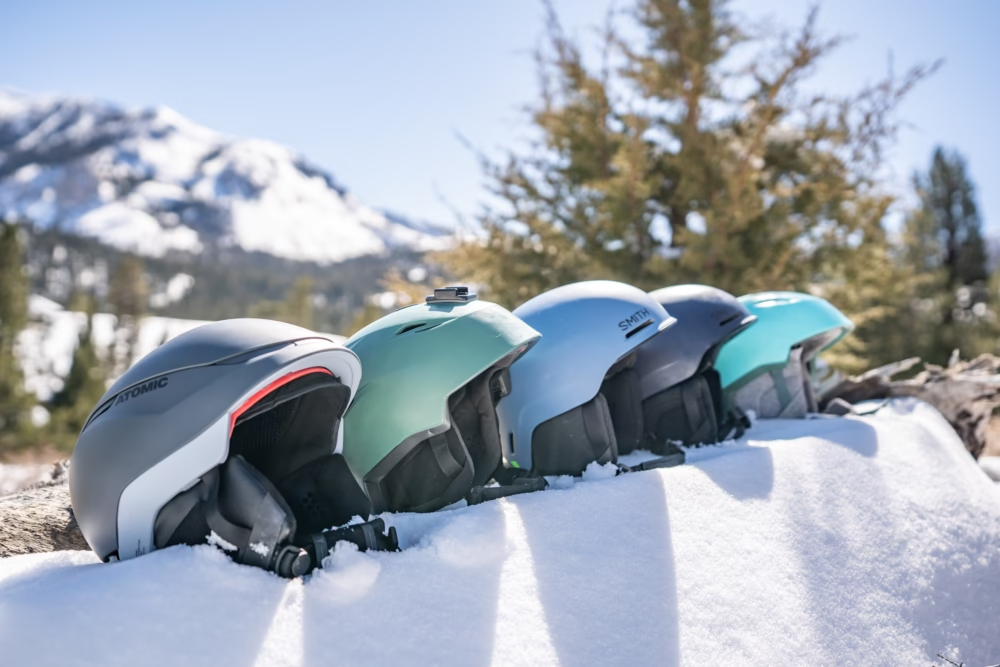
Today I decided to share with you my fascination with winter sports equipment by creating a ranking of premium ski helmets. I took into account many different aspects that I know from personal experience.
The statistics are harsh: without a helmet, the risk of serious head injury increases by 60%, and in the premium segment, we’re talking about constructions tested in extreme conditions, with technologies that absorb multidirectional impacts, so that percentage drops even further. On the slope, a skier can reach speeds of up to 80 km/h; one mistake, one collision, and the difference between a €100 helmet and a €500 model can be… well, crucial!
Premium ski helmet ranking: safety in a premium version
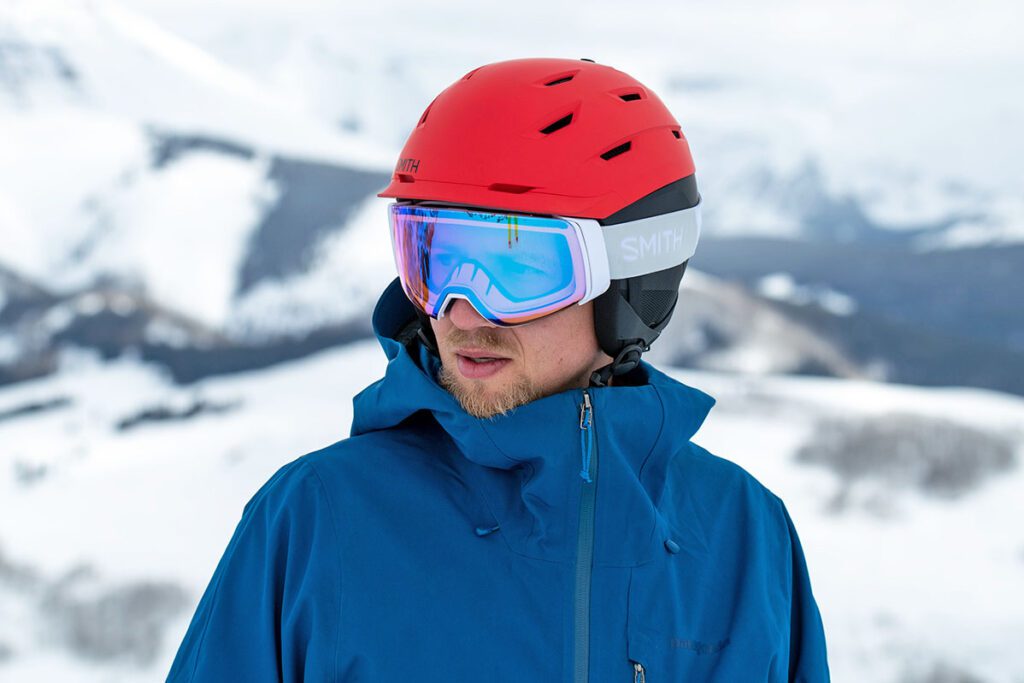
photo: switchbacktravel.com
” Premium ” sounds like marketing, but in practice it means specific things:
- Higher level of protection – certificates, rotational tests, multi-layer shells
- All-day comfort – ventilation, fit, weight under 500 g
- Top-tier technologies (more on that in a moment)
- Price usually 200 – 500 euros, while budget options are 60 – 100 euros
Globally, the ski helmet market is growing by 6-7% annually, but the premium segment is expanding at a double-digit rate. Why? It’s quite simple: you don’t cut corners on safety. Especially in winter sports, where the risks are very high.
Brands like POC, Salomon, and Smith dominate sales because people have realized you only have one head.
In a moment, you’ll discover the exact evaluation criteria, from MIPS and Koroyd to ASTM tests, plus a ranking of the top five models for the 2025 /2026 season. Because knowing why to spend more is one thing. Knowing what on is another.
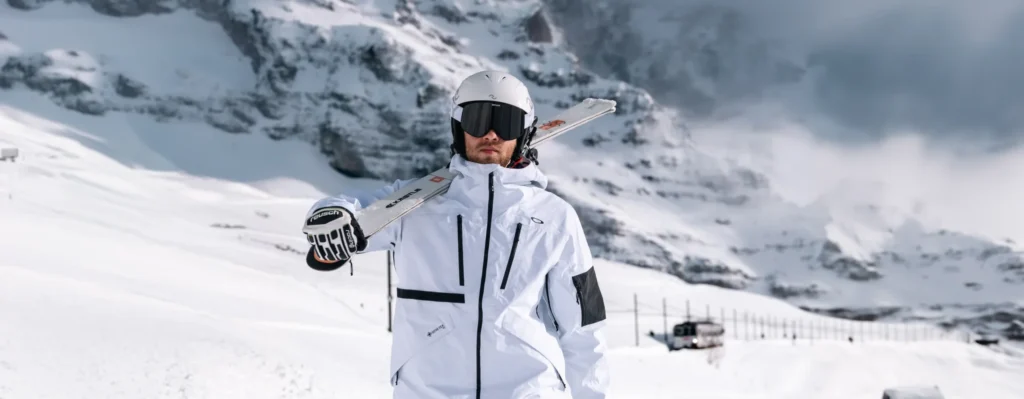
photo: zerokaysports.com
Technologies and standards
Premium is not just about the price and the brand logo on the label. Above all, it’s about specific technologies that, in the event of an accident, can save your health or even your life. The difference between a helmet for 50 and 450 euros? It’s not just “marketing.” It’s about construction, materials, certifications, and comfort that makes you actually want to wear the helmet all day long. After all, as you know, we don’t go to the slope for just an hour—we spend a good part of the day there.
Safety technologies: MIPS, SPIN, Koroyd and more
In the event of a fall, the head may rotate unnaturally—these are rotational impacts, the most dangerous ones. Premium helmets feature dedicated protection systems:
- MIPS (Multi-directional Impact Protection System) – an additional slip layer inside the helmet that allows the shell to rotate independently of the head, reducing rotational forces by 10–40%
- SPIN (Shearing Pad INside) – special gel pads from POC, working similarly to MIPS
- Koroyd – tubular honeycomb structure that absorbs energy at a lower weight than traditional foam
- Multi-density EPS/HI-EPS foams – varying density in different zones, providing better impact energy distribution
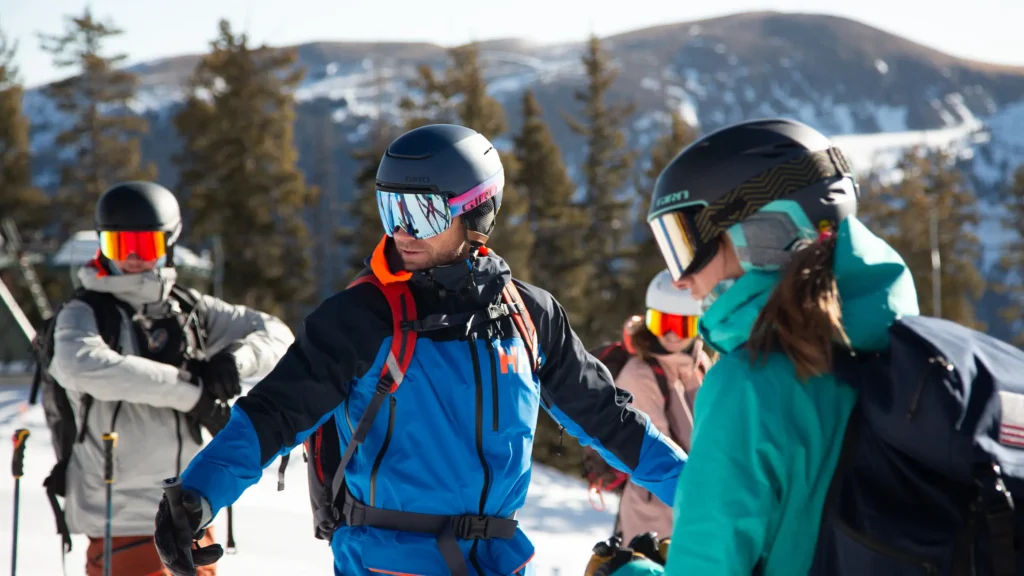
photo: skimag.com
Safety standards are fundamental. CE EN 1077 (European) and ASTM F2040 (American) define the minimum requirements, but the best models also undergo independent testing, for example, the Virginia Tech Helmet Lab publishes rankings that take into account both linear and rotational impacts.
Weight, ventilation, and fit — parameters you can feel
A premium helmet typically weighs 380-450 g (race models even under 350 g). Lighter doesn’t mean worse—it’s all about the precise selection of materials. Ventilation? 15-25 adjustable vents, often with internal channels directing airflow. Fit is ensured by BOA systems (micrometric dial), 360° adjusters, and interchangeable padding. Premium features include Fidlock magnetic buckles, Bluetooth audio integration, and NFC with medical data. As you can see, there are plenty of innovations and nuances here that ultimately make a difference to your safety.
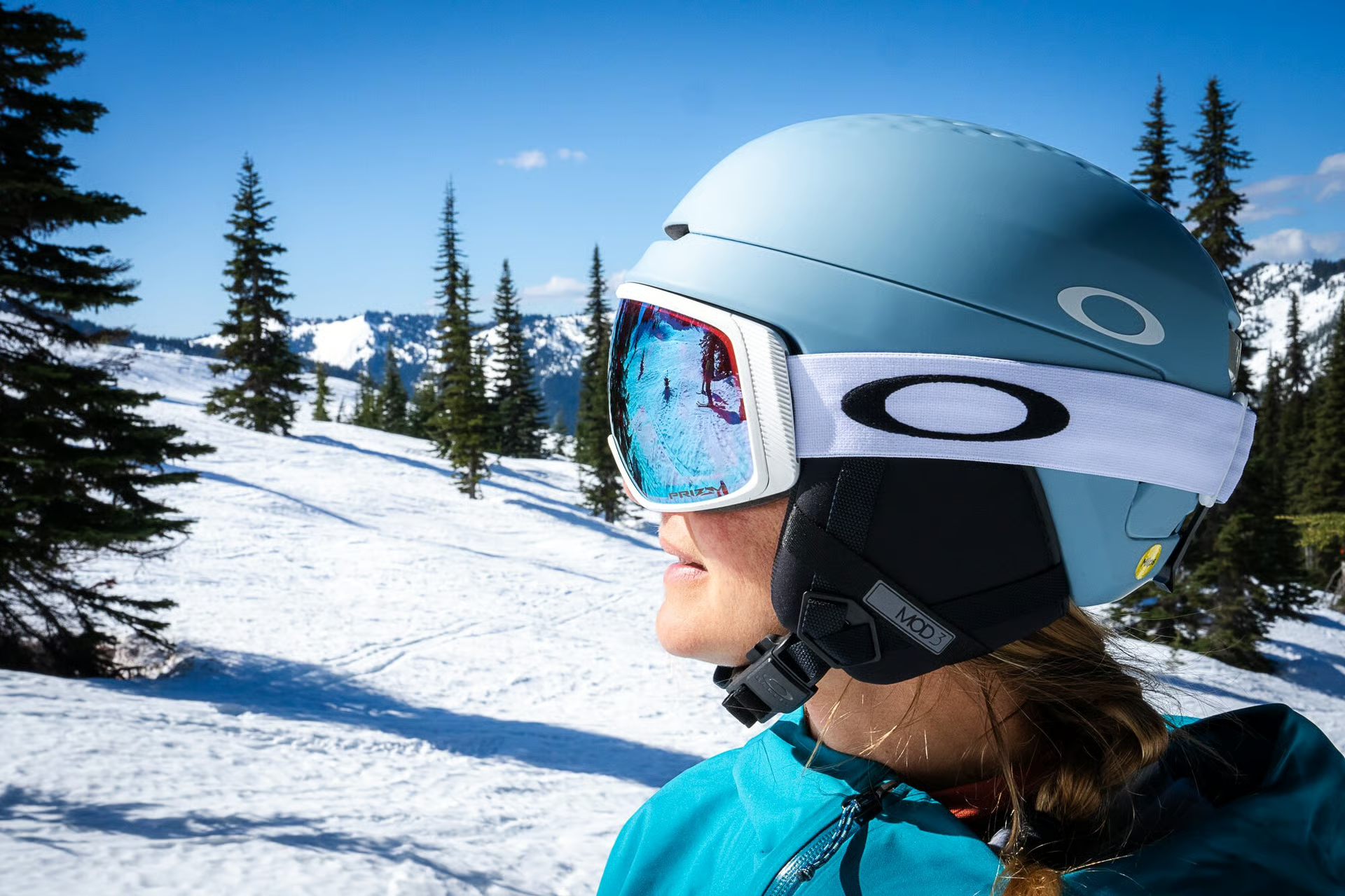
photo: bettertrail.com
Top 5 Premium Ski Helmets Ranking for 2025/2026
The following ranking concerns the premium helmet segment above approximately 400 euros. We focused on models available in the 2025/2026 season that stand out for their advanced safety technologies, low weight, and high-quality craftsmanship.
| Brand | Model | Weight | Technology | Ventilation | Sizes | Price | Key advantages |
|---|---|---|---|---|---|---|---|
| POC | Obex MIPS | 410 g | MIPS Integra | 17 holes | XS-XXL | 500-650 € | The highest level of safety, BOA adjustment |
| Salomon | Ranger² MIPS | 395 g | MIPS Air | 14 holes | S-XL | 420-550 € | Ultralight, excellent ventilation, all-mountain |
| HEAD | Rebels MIPS | 425 g | MIPS + Multi-Impact | 12 holes | M-L | 480-600 € | Resistance to repeated impacts, race-oriented |
| Sweet Protection | Switcher MIPS | 440 g | MIPS + In-Mold Hybrid | 16 holes | S-XXL | 550-700 € | Eco-friendly, premium comfort, freeride |
| Alpina | Grand Lavalan MIPS | 430 g | MIPS + Run System | 15 holes | M-XL | 400-520 € | The best value for money in the segment |
POC Obex MIPS is a safety icon for the demanding
POC Obex MIPS is a model for those who put safety first. The MIPS Integra system integrated into the helmet’s construction provides protection against rotational impacts, while the BOA adjustment allows for precise fitting even with thick gloves. Its all-mountain character makes it suitable both on and off the slopes, although in the race segment it may be slightly heavier than the competition.
Salomon, HEAD, and Sweet Protection offer models for different needs: Salomon Ranger² impresses with its lightness (ideal for touring and long days on the slopes), HEAD Rebels appeals to sporty skiers looking for construction durability, and Sweet Protection Switcher is aimed at eco-conscious freeriders who value long-lasting comfort. Alpina Grand Lavalan, on the other hand, is a proposition for those who want to enter the premium world without a significant dent in their wallet — a solid helmet without any revelations, but also without weak points.
Which premium helmet suits your riding style
Before you click on a helmet with the coolest design or the lowest price in the “premium” section, ask yourself: how do you really ride?
If you’re into speed, giant slalom, carving – your priority should be aerodynamics and maximum ventilation. The POC Obex BC SPIN is a great choice here: low profile, quick-drying material, perfect integration with goggles. On the other hand, all-mountain and freeriders should focus on construction durability and protection systems. The Salomon MTN Lab is a hybrid design, weighs under 400 g, but with full MIPS protection it’s the pick when you want to stay mobile without compromising on safety. Family on the slope? Here, all-day comfort and easy handling matter most – the Alpina Parsena offers solid basics at a more accessible price.

photo: switchbacktravel.com
Eco, design or budget — find out how to set your priorities
Environmentally conscious? Sweet Protection Igniter II MIPS made from recycled materials and Koroyd is your go-to. Looking for a balance between premium quality and a reasonable price? Alpina gives you 80% of the features of more expensive models for less. And if design and performance have to go hand in hand, POC or Smith combine both without compromise.
Fit, size, and usage
Even the best premium helmet won’t protect your head if you buy it too big or wear it loosely. Sounds obvious? Yet on the slopes, every third skier has a poorly fitted helmet—and often doesn’t even realize it.
Typical ranges are 52-65 cm, divided into sizes S/M/L or 54-56 / 58-60, etc. Note: the “universal” helmet is a myth—it really fits well only within a narrow range of head circumferences. If you’re between two sizes, choose the smaller one—the padding will compress slightly, but the helmet shouldn’t move when you try to turn your head.

photo: gearjunkie.com
Fit systems and comfort on the slope
A well-fitted helmet sits securely, without any looseness, and does not slide onto your forehead or the back of your head when you nod. BOA or 360° fit systems allow you to adjust the rear-lateral pressure with a single dial—turn it until you feel gentle pressure, without squeezing your temples. Replace the padding (thicker in winter, thinner in spring) and use the ear pads, which block cold gusts.
Compatibility with goggles? The frame should fit under the lower edge of the helmet without a gap—otherwise, snow and cold will get in.
What does the market think?
The premium market is growing globally by about 8% year-on-year, and in Europe even faster, which means a greater selection, better service availability, and more reasonable prices.

photo: treelinereview.com
So head down to the basement, take out your current helmet, and ask yourself honestly: how old is it? Is the certificate still valid (no more than five seasons from the date of manufacture)? After your last fall, are there any scratches or dents? If even one answer is “I don’t know” or “probably not,” then you should definitely plan to replace it with a model from the current or upcoming generation. Your head is worth it.
I go for the best standards and trusted brands, which I’ve listed here.
Jordan
enthusiast of winter sports
sports & lifestyle editorial team
Luxury Blog




Leave a Comment