

Microscopic Louis Vuitton bag
More and more often, we see brands in the fashion industry experimenting with their products. We hear, among other things, about the record-breaking sales of the now-famous Balenciaga “Full Destroyed” model—essentially just a pair of dirty, worn-out sneakers. We are witnessing the constant shifting of the boundaries of what fashion really is. One such innovation we’ve recently had the chance to experience is the microscopic Louis Vuitton handbag, measuring less than 0.03 inches wide. Although controversial in its format, the handbag was sold at auction for over $60,000. This has once again sparked a debate in the media about what still qualifies as a fascinating novelty, and what is merely a clever marketing ploy.
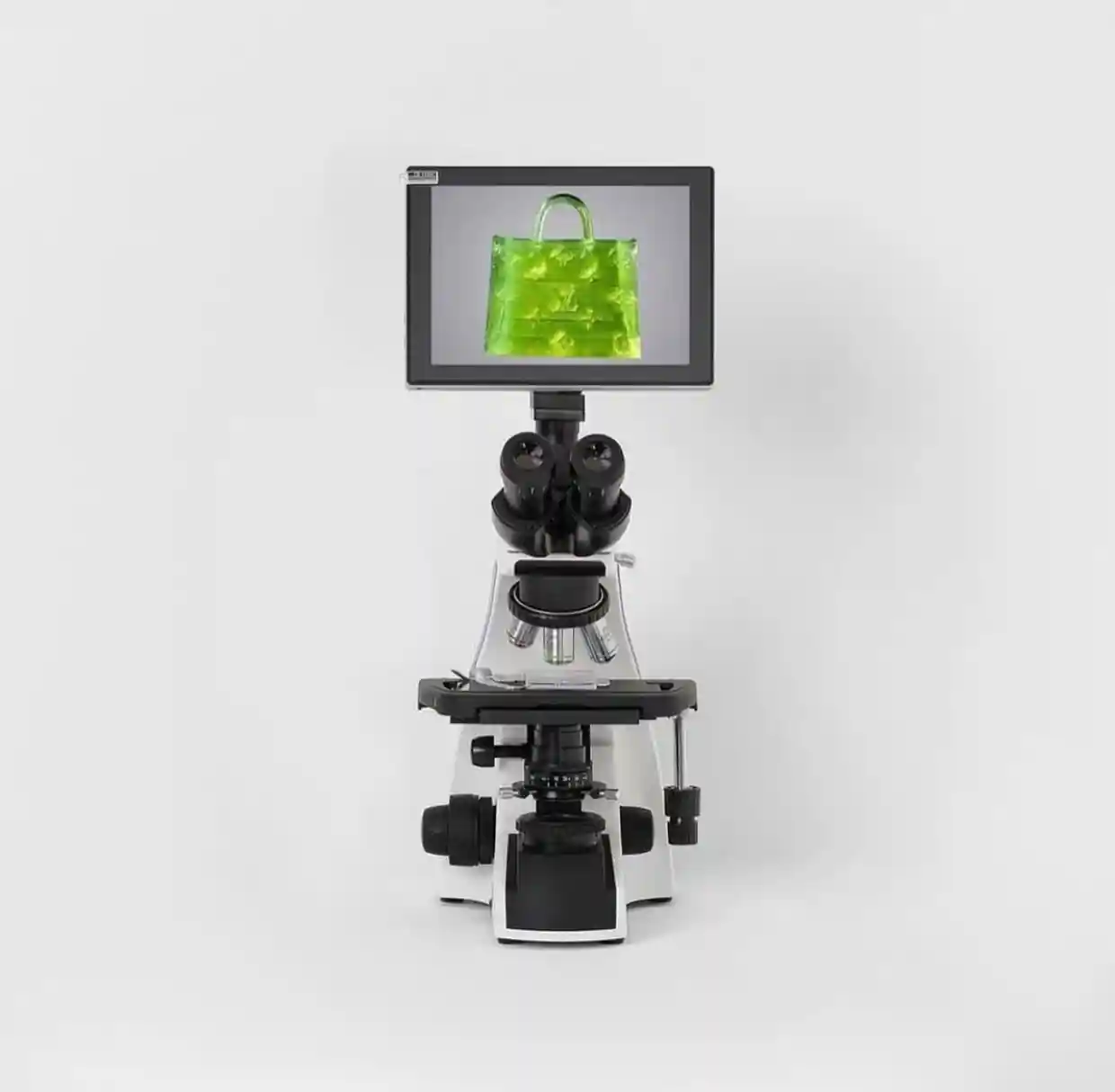
source: theguardian.com
Creative experiment
Louis Vuitton, aiming to create a product unlike anything seen before, partnered with an American creative company renowned for its unconventional and innovative projects. MSCHF, as the company is known, blends elements of art, fashion, pop culture, and technological innovation in its work. Their projects are often provocative and spark discussion in the media world. One of their most famous was the “The Holy Bible” project. For this, the group created a limited edition of Nike Air Max 97 sneakers. The only difference from the classic model was that pages from the Bible were embedded in the soles.
The choice of this artistic collective is undoubtedly an intriguing move by the luxury fashion house. Kevin Wiesner, the creative director of MSCHF, himself stated that he considers the “bag” “a funny object, because it originates from something strictly functional”. The brand explains that it wanted to transform the traditional concept of a handbag and reduce it to the function of jewelry. Indeed, the microscopically small Louis Vuitton bag does resemble a piece of jewelry, but what about its functionality?
Louis Vuitton microscopic handbag – what did the creation process look like?
The MSCHF group named their creation “Microscopic Handbag” (a microscopic Luis Vuitton bag), claiming it is narrow enough to pass through the eye of a needle and smaller than a grain of sea salt. Barely visible to the naked eye, the fluorescent yellow-green bag is based on the popular Louis Vuitton design, the iconic OnTheGo bag. It was made using two-photon polymerization, a manufacturing technology used for 3D printing microscale plastic parts. It was specially sold together with a microscope equipped with a digital display, through which the bag could be viewed in a slightly larger format. Only then did the distinctive “LV” monogram become visible on its surface.
The “OnTheGo” bag model features a tote bag structure, meaning it’s a large bag designed to be carried on the shoulder. It is characterized by a rectangular shape and is crafted from high-quality leather or Louis Vuitton’s signature monogrammed material. The bag offers a spacious main compartment secured with a zipper and often includes interior pockets to help organize your belongings. It’s popular for its roomy capacity, stylish design, and the iconic Louis Vuitton details, such as distinctive monograms, Damier patterns, or natural leather accents.
Small bag, big price
Currently, the “OnTheGo” bag sells in its full size for between $3,100 and $4,300. Meanwhile, its microscopic version, auctioned by
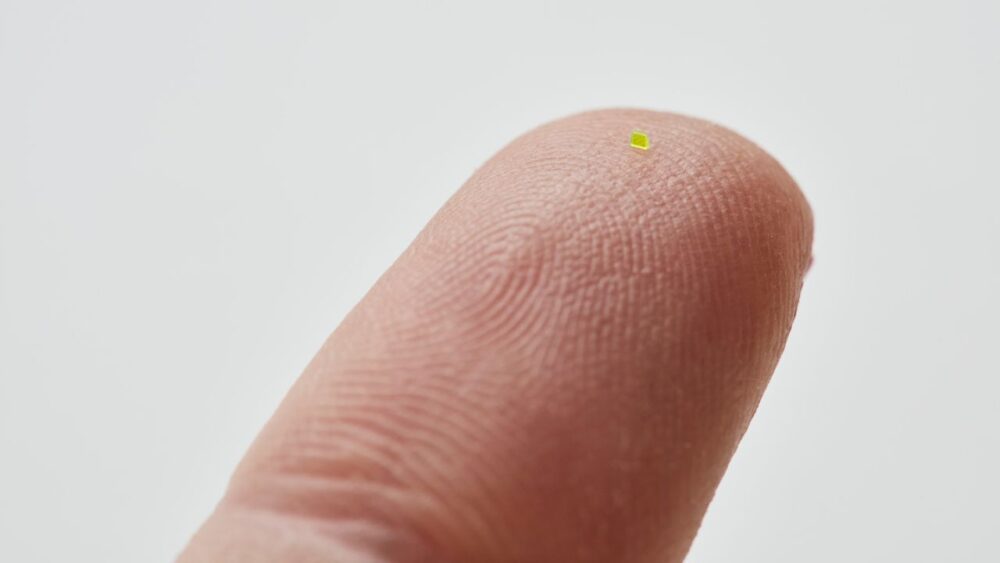
source: edition.cnn.com
When a once-functional object, such as a handbag, becomes increasingly smaller, its status as an object grows ever more abstract, until it exists solely as a brand signifier. Previous small leather handbags still required a hand to carry them—they became dysfunctional, inconvenient for their “user”. The Microscopic Handbag takes this to its logical conclusion. The practical item is reduced to jewelry, and all its supposed function evaporates; when it comes to luxury objects, utility is the privilege of angels”, the brand wrote in response to any negative comments about the new product.
It seems, then, that the microscopic handbag is a nod to innovation and technological novelty. It has certainly also become the subject of a lively debate about the functionality of fashion, a discussion that has been ongoing for quite some time. Perhaps Louis Vuitton wants to show with this product that the boundary of what is fashionable shifts along with consumer preferences. After all, someone did buy this tiny handbag and paid a considerable sum for it.





Leave a Comment