

Kering shares – will the owner of Gucci shine on the stock market again?
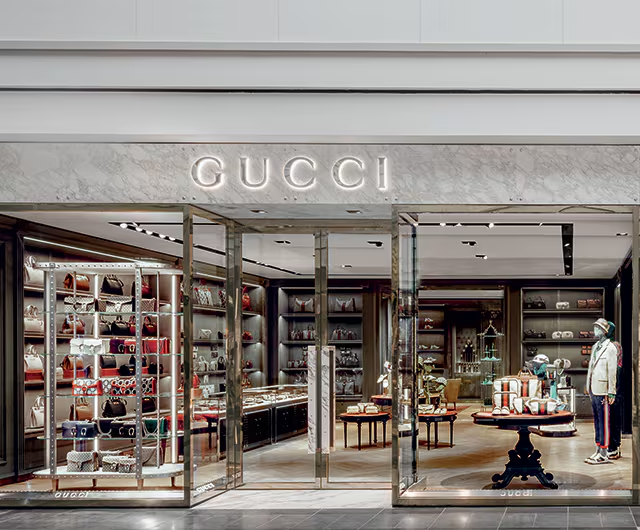
Is it possible to lose a fortune on luxury that never goes out of style?
Kering shares are probably one of the wildest examples of just how unpredictable the market can be. The company behind Gucci, Saint Laurent, and Bottega Veneta—brands synonymous with absolute luxury and stability.
Yet its stock price looks more like a roller coaster ride. From a record high of €750, it plunged to just €220, only to rebound to €284. These aren’t the swings of some random tech company on the Warsaw Stock Exchange. This is a fashion giant with boutiques in every capital city around the world.
Luxury on the dance floor: first look
Interestingly, all this volatility largely depends on a single brand. Gucci generates about 50-60% of Kering’s total revenue. When Gucci has a good season, the whole group shines. If not—well, we see it reflected in the charts.
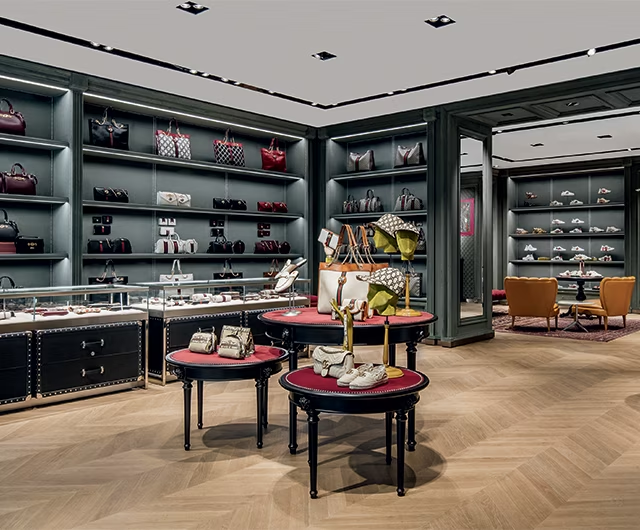
photo: gucci.com
Recently, investors have regained some optimism. A 64% increase since June has been called “the biggest quarterly rally” in the company’s history. It sounds impressive, but is it really a reason to celebrate, or just a temporary rebound?
To understand this, it’s worth looking at a few key things:
• How the long-term share price has evolved and what has driven it
• What the group’s real financial fundamentals are
• Why dependence on Gucci is both a strength and a weakness
• What lies ahead for the luxury segment in the coming years
The history of Kering’s stock is a fascinating lesson in how fashion and finance intertwine in ways that are impossible to predict.
Listing history and key milestones
The history of Kering is essentially a story of complete business transformation. Few people remember that today’s luxury giant began as a timber company in Brittany.
| Date | Event | Price reaction |
|---|---|---|
| 1963 | Establishment of Pinault S.A. – timber trade | No listings |
| 12/06/1988 | Stock market debut in Paris | ~25 francs |
| 1999-2001 | The battle for Gucci with LVMH | An increase of 180% |
| 2004 | Completion of the Gucci acquisition for €8.8 billion | Consolidation ~45€ |
| 22/06/2013 | Rebranding to Kering | Rebound from €140 to €200 |
| 2021 | Pandemic peak – record €750 | The culmination of the trend |
| 2024 | Dip at €220 | Correction by 70% |
The real breakthrough came during the Gucci war. I remember those headlines from the late ’90s—Pinault and Arnault battling it out like a TV drama. Each new bid pushed the share price higher, investors speculated who would come out on top. No one realized back then that this would mark the beginning of an empire.
Two periods deserve special attention. The first is 2013-2021, when the stock price increased fivefold after the rebranding to Kering. Alessandro Michele took the helm at Gucci in 2015 and completely transformed the brand’s DNA—those colorful collections that divided the fashion world turned out to be a financial masterstroke.
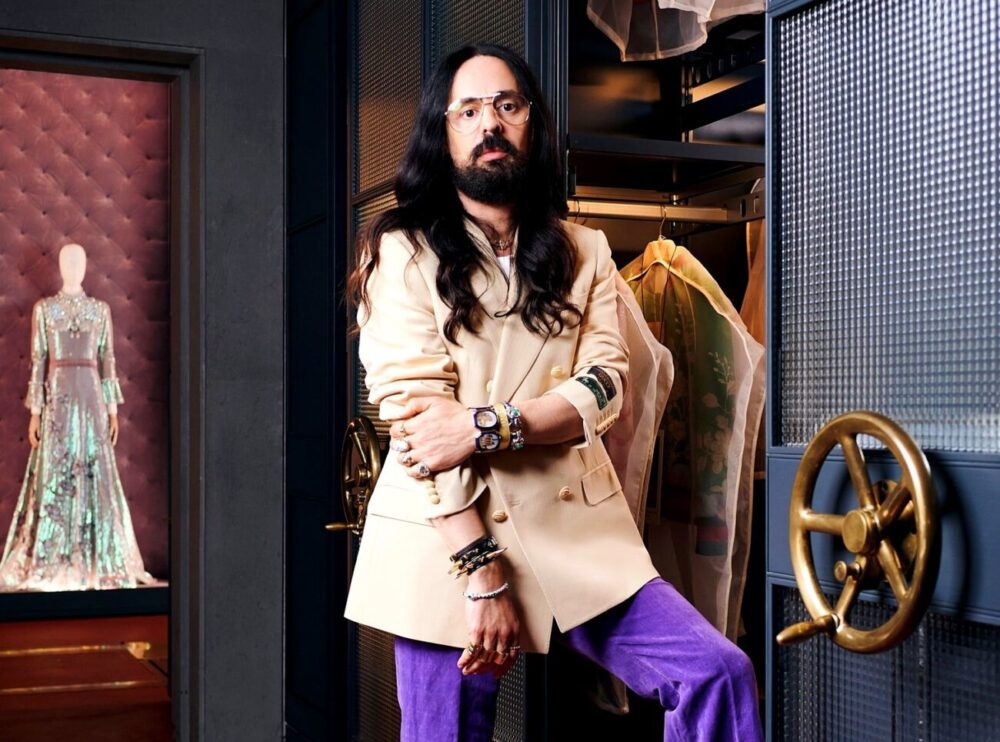
photo: fashionbiznes.pl
The second period is the dramatic decline from 2022 to 2024. The peak at €750 felt like a champagne bubble—everyone thought luxury would keep soaring after the pandemic. But China slowed down, younger consumers turned away from ostentation, and Gucci lost Michele’s magic after his departure.
These fluctuations show just how much Kering depends on cultural trends. This isn’t just any company—here, the zeitgeist, social moods, and even politics in Asia matter.
Today, we stand at a crossroads where history meets the present. All these ups and downs have shaped the current valuation.
What’s driving the rate today: analysis of the current situation
Luca de Meo as CEO from September 15th, 2025 —this is the very change driving Kering’s stock price today. Shares have soared by 64% since June, when rumors about his candidacy began circulating in the market. Previously, no one expected it, but now everyone says it was obvious.

photo: worldluxurychamber.com
To understand the current valuation of around €284–290, you need to look at the numbers:
| Metrics | Value |
|---|---|
| P/E | 12-15 |
| Beta | 1,2 |
| Dividend yield | 4.2% |
| Debt | 7.1 bn € |
These indicators don’t look bad, though the debt level could be lower. A P/E in this range is quite a reasonable valuation for luxury goods.
The Gucci problem is still dragging on – sales dropped by 4-25% year-on-year in the 2024-25 period. That hurts, since Gucci is the group’s flagship brand. But there’s one bright spot – Japan is growing by 12-18%. It’s interesting that exactly where other brands are struggling, Kering is doing great. China is a completely different story – there, they’re still battling weakened demand for luxury.
photo: vitkac.com
Milan Fashion Week 2025 generated a positive buzz on social media. On X, you could see comments like “Kering is back in the game, these collections are on a whole new level” or “De Meo knows what he’s doing – you can already see it”. After the shows, shares jumped 10-15% in a single session, showing just how much the market reacts to sentiment.
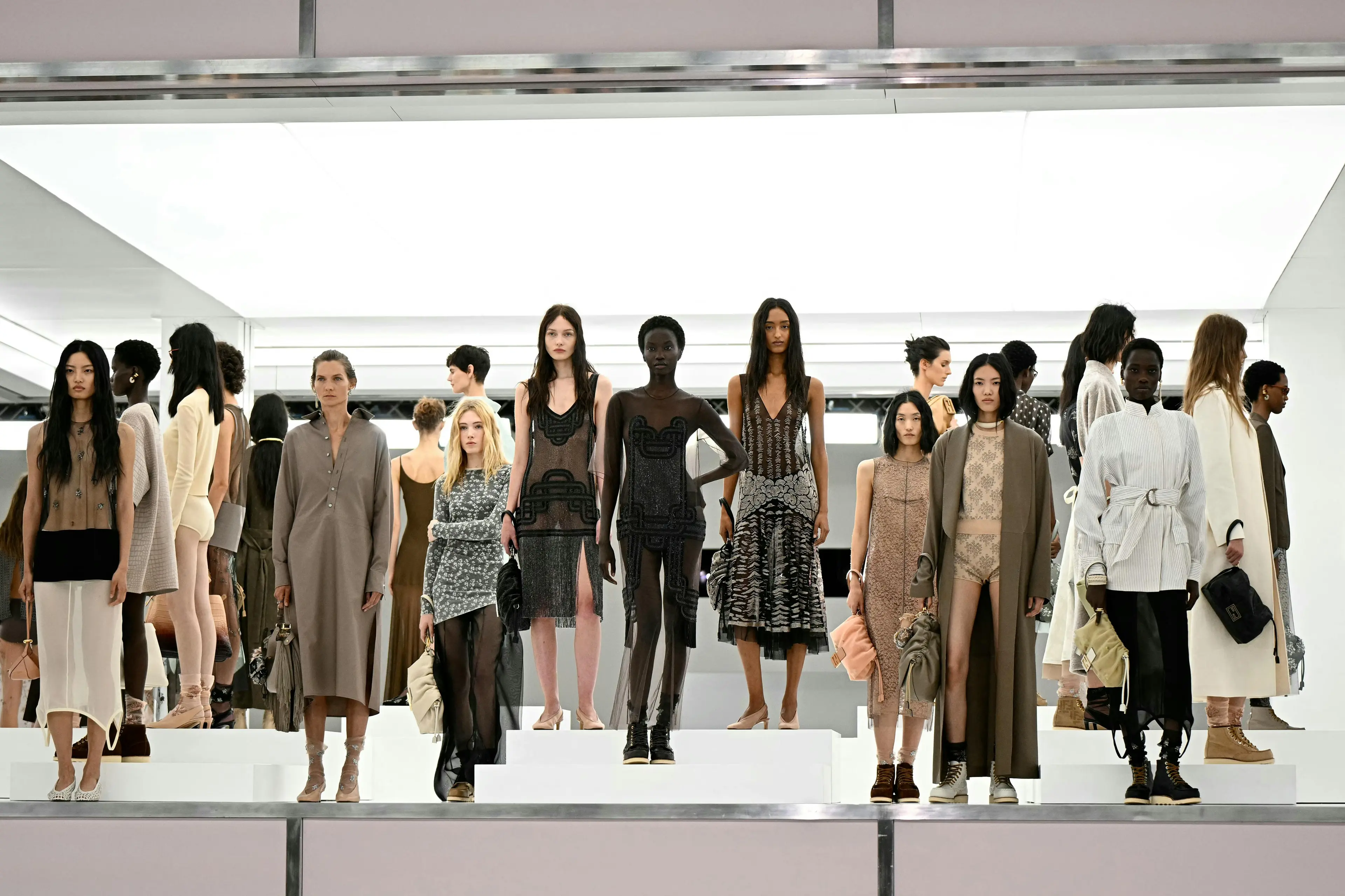
photo: lofficielibiza.com
Trading volume rose significantly – it’s clear that institutional investors are coming back to the stock. Not everyone is convinced, but most analysts admit that a change at the top was needed. De Meo has experience in automotive, but luxury is a completely different world.
A dividend yield of 4.2% is a decent cushion for those willing to wait for the effects of restructuring. A beta of 1.2 means the stock reacts a bit more strongly than the overall market – which was evident during the recent rally.
What’s next for all this?
Investor outlook and moves: what’s next for Kering shares?
Is it still worth keeping an eye on Kering? After recent share price fluctuations, many investors are wondering. The truth is, luxury brands always stir emotions on the stock market, but now we have concrete forecasts and data.
Bullish scenario
UBS sees the stock at 310 euros, and in the best-case scenario even 350 euros by the end of 2026. That’s a fairly optimistic assumption, especially considering current prices. The key will be a rebound in China and further growth in online sales. Gucci still has potential, but it needs to adapt to new trends.
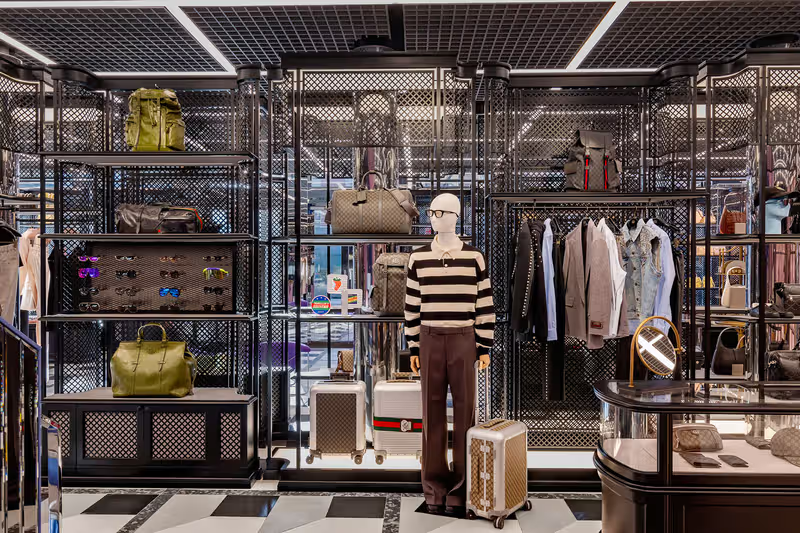
photo: hypebeast.com
Cautious scenario
On the other hand, there’s debt at 7.1 billion euros. That’s a lot, given current market conditions. A beta of 1.2 also means greater volatility than the overall market. If demand in Asia continues to weaken, things could get tough.
For Polish investors, it’s important to know where to track these quotes. Reliable sources include:
- Bankier.pl – they have good price alerts
- Money.pl – useful technical analyses
- XTB – if you’re already trading with them
- Set alerts at 280 euros (support) and 320 euros (resistance)
Megatrends for the coming years are primarily sustainable luxury and digitalization. Young customers want brands that care about the environment. Kering has an edge over the competition here, but needs to leverage it wisely.
Don’t forget about portfolio diversification. Shares of luxury brands are just one element. Perhaps it’s worth considering sector ETFs instead of individual companies?
Monitor key indicators, diversify your risk, and always consult your decisions with a financial advisor.
Tomek D.
business editor
Luxury Blog




Leave a Comment