

How to tell if cutlery is silver – quick test and hallmarks
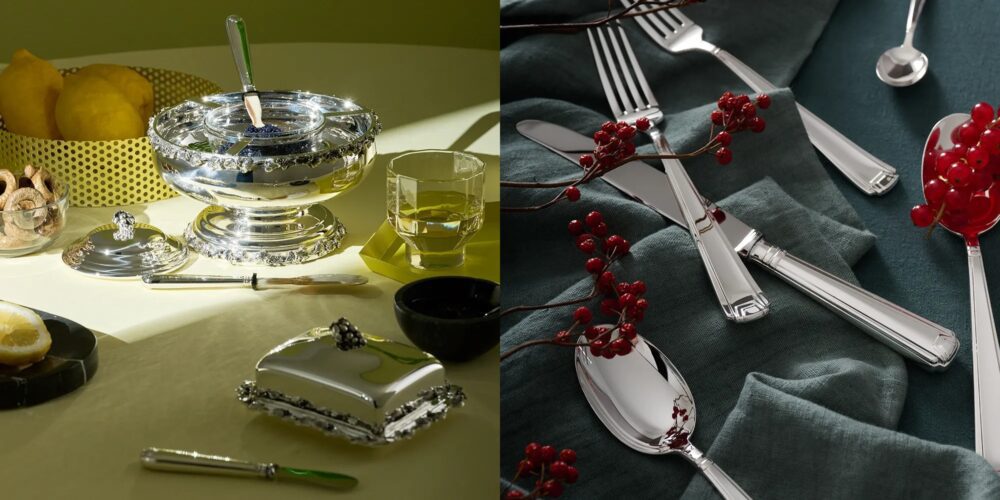
Silver is getting more expensive. Between 2024 and 2026, raw material prices have risen sharply, causing the market to fill with counterfeits, especially in online listings. EPNS (nickel-silver plated) cutlery looks convincing, and sellers often “forget” to mention that it’s just a coating. If you buy something for recycling or collection purposes, a mistake can be costly.
When we say ” silver cutlery “, we usually mean 925 grade (92.5% pure silver), although in older sets you may also find 875, 830, or 800. Real silver is non-magnetic (diamagnetic), heavier than sheet metal, and develops a patina, forming a characteristic Ag₂S tarnish. But don’t worry, you don’t have to be a chemist.
How to tell if cutlery is silver? – quick tips
Next, we will take a closer look at the three pillars of diagnosis:
- Hallmarks and assay marks (official warranty stamps)
- Home tests (magnet, ice, sound)
- Plater marks (EPNS, numbers “90”, “100” indicating plating)
We start with hallmarks, as this is the most reliable verification method.
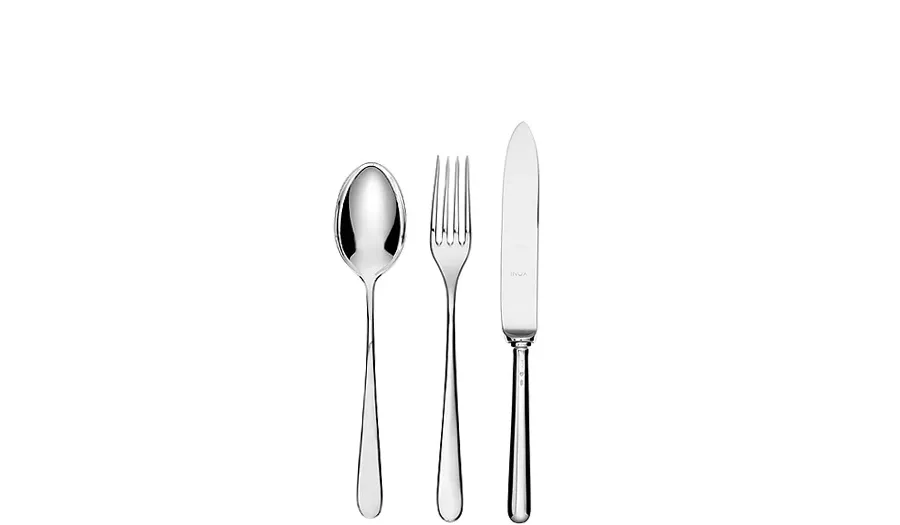
Hallmarks and assay marks: how to read stamps on cutlery
The first thing you should do is turn the cutlery over and look for small marks. Most often, you’ll find them on the handle of the fork, on the underside of the spoon’s bowl, or on the reverse side of the knife, right next to the blade. If there’s no official assay mark, it’s almost certain that you’re dealing with plated cutlery.
| Test | % silver | What does it mean |
|---|---|---|
| 999 | 99.9% | almost pure silver |
| 925 | 92.5% | the most popular grade |
| 875 | 87.5% | the standard of antique cutlery |
| 830 | 83.0% | old German products |
| 800 | 80.0% | typical of the 19th/20th century |
| 500 | 50.0% | minimum legal fineness |
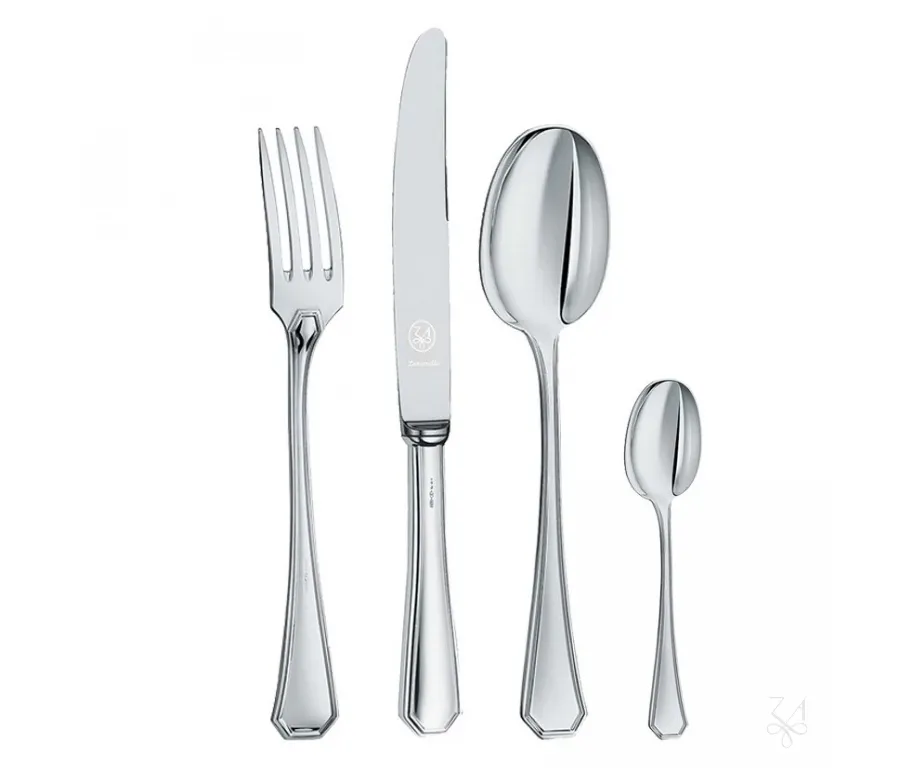
Older cutlery may feature city marks, such as the Warsaw mermaid, the silversmith’s initials, or the mysterious “12” (these are loths, meaning 75% silver). Anything above 5 grams is subject to mandatory hallmarking according to the Assay Act of 2011.
Platers’ marks – what to look out for
Plated cutlery has its own codes:
- EPNS (Electro Plated Nickel Silver), the most common
- 90 or 100, indicate the thickness of the silver layer in grams
- BM (white metal), meaning an alloy without silver
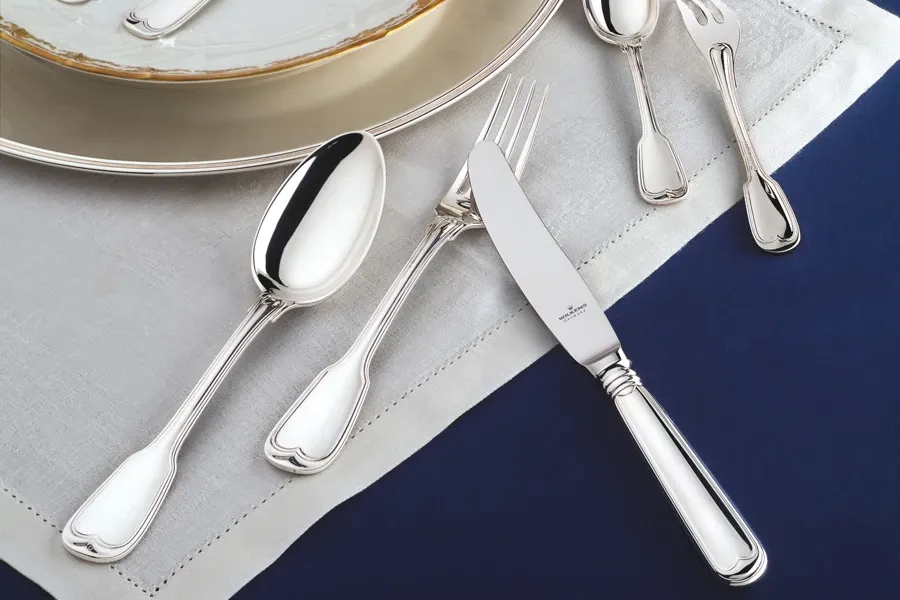
Counterfeits with fake hallmarks are rare, but if you have doubts, the Assay Office can verify them. Sometimes the hallmark is original but difficult to read after years of use.
Home and professional tests: confirming authenticity
When the hallmarks are illegible or missing altogether, practical tests remain. Most of them you can do yourself, but a few require equipment or leaving the house.
Home tests step by step
The magnet is the starting point. Silver is diamagnetic, so a strong neodymium magnet does not attract it at all. If the cutlery “sticks,” it’s a sign that there’s iron or nickel inside.
Another thing is the weight. The density of silver is about 10.49 g/cm³, so silver cutlery is noticeably heavier than silver-plated or steel cutlery of the same size. Pick it up, compare, and you’ll feel the difference.
Sound? Gently tap the edge. Silver produces a clear, resonant tone, almost like a bell. A dull sound is a warning sign.
Patina (tarnishing) is a natural effect of the reaction Ag + S → Ag₂S. On silver-plated items, wear on the edges reveals a different metal underneath, while on pure silver the layer is uniform.
Professional verification: Office and XRF
Chemical tests (chromic solution, nitric acid) are effective, but they leave a mark and require caution. Test in a hidden spot and observe safety precautions.
A more reliable way? The Assay Office or a jeweler with an XRF analyzer, a non-invasive method. Remember, items over 5 grams are subject to mandatory hallmarking, so the absence of a hallmark on heavy cutlery raises questions.
Confidence in your hand – can you recognize silver without hesitation?
Authentic silver has its own weight, temperature, and shine that can’t be faked by a cheap imitation. If you use a few simple tests together ( magnet, heat, hallmark, sound), real silver cutlery will reveal itself. You don’t have to be a jeweler to tell valuable silver from silver-plated sheet metal.
For many people, checking old family sets is the first encounter with how much of a difference quality makes. Silver not only holds up and looks better, but it also has its own history. In times when most things are mass-produced from plastic and cheap steel, real silver cutlery reminds us that objects used to be made with generations in mind. There’s something to that, isn’t there?
Now you know. Next time you come across an interesting set at a flea market or rummage through your grandma’s drawers, you’ll know exactly what to look for.
John
Luxury Blog editorial team



Leave a Comment