

How to Recognize an Original The North Face – A Practical Guide

The North Face is one of the most frequently counterfeited brands in the outdoor and streetwear market. Just browse the listings on popular online marketplaces to see how many suspicious jackets appear there every day. Unauthorized online stores are also full of fakes, often sold as “outlet goods” or “end-of-season collections.”
Why is TNF so often counterfeited?
The popularity of models like the Nuptse 1996 Retro or Denali fleeces means that counterfeiters have a ready market. These iconic items are quite expensive in official stores, so buyers look for deals on the secondary market. And this is where the problem starts, because fakes can look really convincing in photos.

There is no single sure sign that will immediately reveal a fake. You need to check several things at once: the logo embroidery, tags and holograms, zipper quality, material, stitching precision, and even the seller’s credibility. It may sound complicated, but the following sections will show you exactly what to look for. With new jackets, the best protection is still buying from an authorized retailer, but if you’re looking for a used or vintage piece, this guide will help you minimize the risk.
Logo and embroidery
The North Face logo is actually the first checkpoint worth checking. It’s not about being paranoid, but simply that the original has a few features that counterfeits rarely achieve.
Half Dome and typography
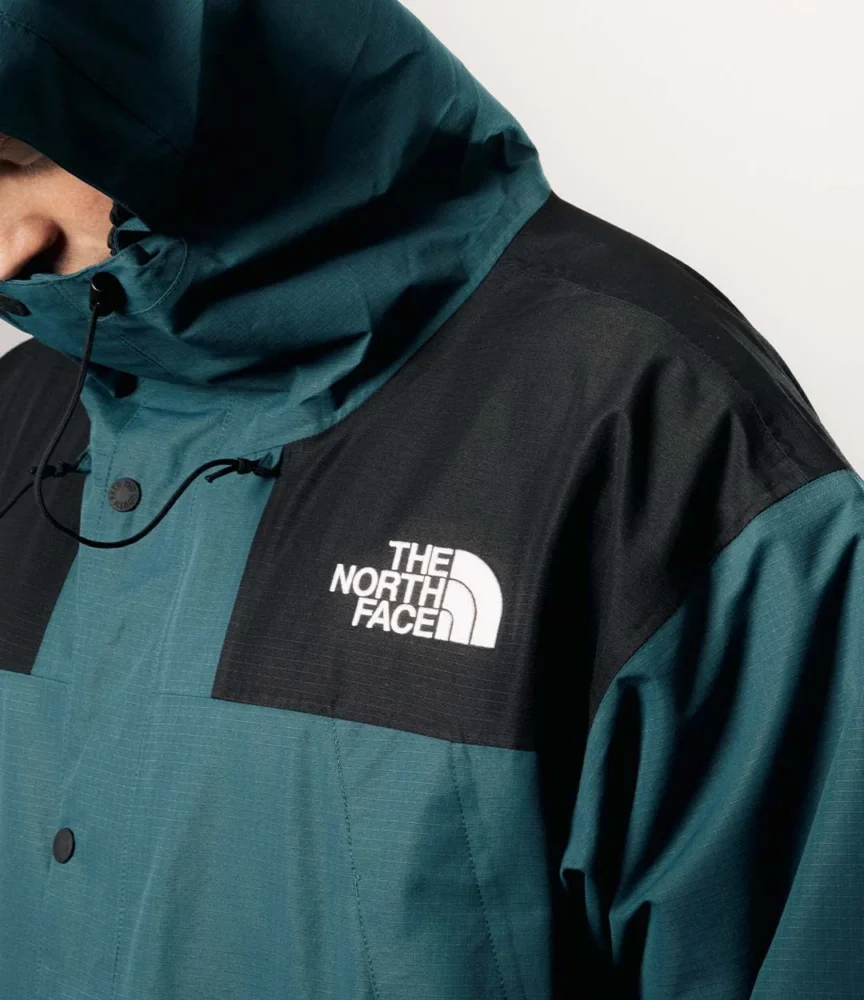
Let’s start with the stylized Half Dome, that distinctive “mound” with three arches. In the original, the arches are of equal thickness, do not diverge, and create a clear pattern. Then there’s the inscription ” THE NORTH FACE “, where the letters should be uniformly thick, without distortions. Especially “FACE” looks more “boxy,” with sharp angles.
Authentic embroidery is:
- dense stitches, without visible gaps
- sharp contour without blurring
- no “bridges” between the letters (counterfeits often connect the letters with leftover threads)
- even shape of the letters “C” and “O”, without serifs
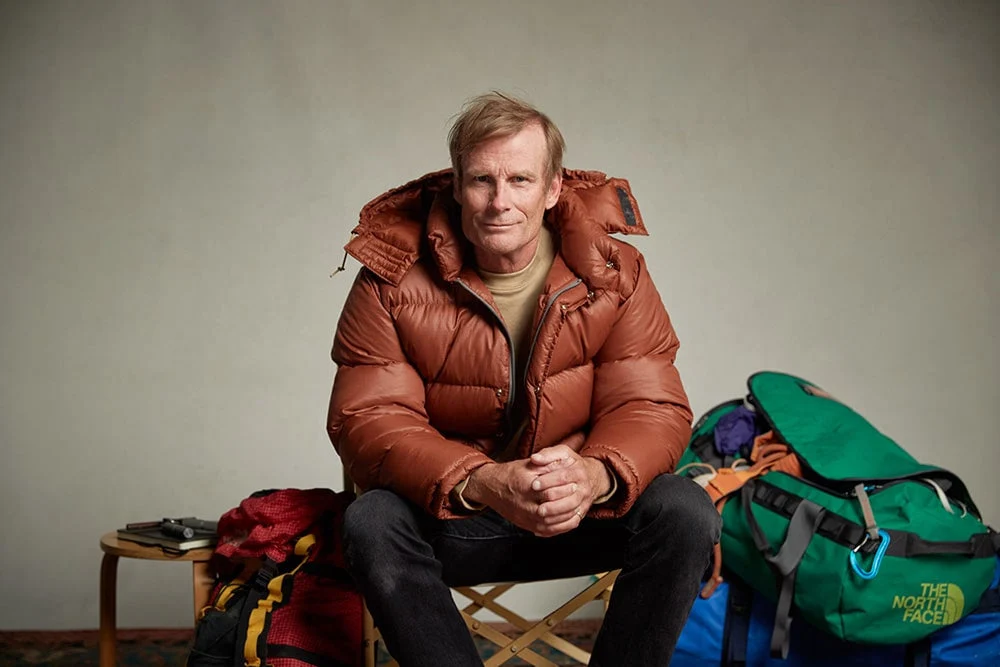
The most common mistakes in counterfeits
This is where the fun begins. Counterfeits most often have:
- uneven letter thickness (one thinner, the other thicker)
- blurred edges of the embroidery, as if someone had done it hastily
- incorrect proportions of the Half Dome arches (too flat or distorted)
- typos like “NORD FACE” (yes, I saw it in person)
Pro tip: go to the official The North Face website, find your exact model, and compare the logo 1:1 with the photos. Pay attention to the placement and scale, as different models have the logo in different locations and sizes. If something seems off, even slightly, think twice.
Labels, style numbers, and holograms
Tags and holograms seem like tangible proof of authenticity, right? After all, it’s something physical, something you can photograph and compare. The problem is, counterfeits also have tags. And holograms. And style numbers. So what can you really learn from them?
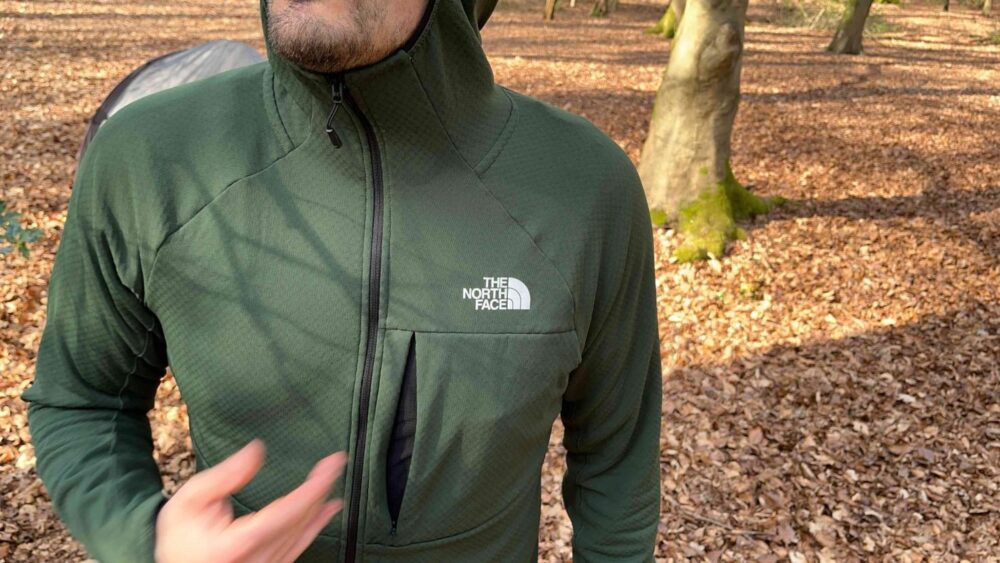
Style number and RN
Each TNF jacket has a style number, usually starting with “NF0A” followed by four alphanumeric characters. For example, “NF0A3C8D” is the classic 1996 Retro Nuptse. This code identifies the model, not a specific item—think of it as the product name in the company’s system. You can enter it into Google and check if the description and photos from the official website match what you have in front of you. Not matching? Red flag.
RN (Registered Number) is an American manufacturer registration number. VF Corporation, the owner of TNF, uses several RN numbers, so the number itself won’t tell you much without comparing it to a database. Similarly, the country of manufacture (Vietnam, China, Bangladesh) — original TNF jackets have been made there for years, so “made in China” does not disqualify the product.
Holograms
Since around 2010, TNF has been adding multicolored holographic stickers, usually next to the care label. A genuine hologram changes colors at different angles, has beveled corners, and a distinct optical depth. A fake one? Often flat, without that “layered” effect.
But beware: counterfeits can copy holograms quite well. Some even have QR codes. The problem? The North Face does not have a public verification system by serial number or QR. If you scan the code, you’ll end up on the TNF homepage or a generic product description. You won’t get a confirmation like “yes, this is original no. 487392.” Counterfeits use the same system, copying working codes.
Warning signs on labels:
- Typos in the text (especially in the composition)
- Missing space: “NYLONLAMINATED” instead of “NYLON LAMINATED”
- Blurred, faded print
- Linguistic inconsistencies (e.g., English text with Polish grammatical errors)
- Loose tag, poorly sewn
- No hologram on the product from recent years
Labels are a starting point, not a final verdict. Check them, but don’t stop there.
Materials, filling, and workmanship details
Counterfeit manufacturers can replicate the label or logo, but they have a huge problem with the quality of materials and craftsmanship. Here, the original The North Face mercilessly reveals the difference.
Fabric, seams, and down chambers
Touch the original Nuptse or Baltoro jacket. The fabric is dense, slightly matte, with a visible ripstop structure (those characteristic small squares). It has a DWR coating, so water beads up and rolls off instead of soaking in. A fake? Usually thin, suspiciously shiny, almost plastic-like.
Take a look at the seams inside. In the original, they are even, precise, and often glued or taped in technical models. The down chambers (those stitches creating “pillows”) have identical width along their entire length. Fakes reveal themselves with crooked seams and uneven chambers.
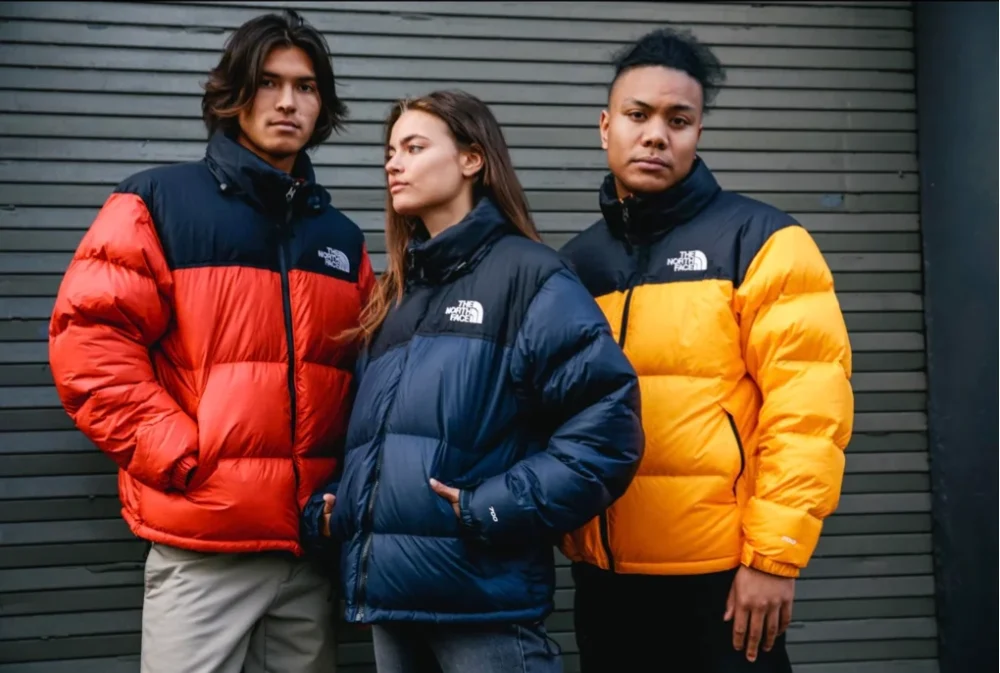
YKK zippers and accessories
Check the zipper. The North Face mainly uses YKK or VISLON-type zippers with a clear marking on the slider. The movement should be smooth, without snagging. The pullers (those tabs for pulling) are sturdy, often with engraving. Buttons and snaps feature clear branding.
On counterfeits, the zippers either have no markings at all or feature illegible “YKX” or something similar. They move roughly and sometimes get stuck. The placket by the zipper is often too narrow, and the hood has odd proportions (the brim is too short). The down loft in an original Nuptse is even, with sleeves that feel “full” and springy. A fake? It’s flat, uneven, and heavy. You can clearly feel the difference when you bend it.
Seller context
Half the battle is choosing where to buy. When you purchase from the official The North Face store ( thenorthface.com) or from an authorized retailer, you can be almost certain you’re getting the real thing. Problems start on the secondary market: that is, online trading platforms. Counterfeits are common there, and you need to keep your eyes wide open.
Safe channels and the secondary market
Authorized retailers (check the list on the brand’s website) guarantee authenticity. On classified ad platforms, you’re relying on your own vigilance. This doesn’t mean fakes are lurking everywhere, but statistically, the risk is much higher. Thrift stores? It depends on the owner’s knowledge and honesty. Some don’t even realize they have a counterfeit hanging on the rack.
What photos should the seller send?
If you are buying online, ask for specific close-ups. A seller who has the original will have no problem taking extra photos. Ask for:
- Logo on the front and back of the jacket (embroidery details, quality)
- Label at the neck and care label with hologram or QR code
- Zippers (main and in the pockets) with YKK or Vislon markings
- Close-ups of seams and down chambers (uniformity, finish)
Red flags include: a price 40% lower than the market rate, only catalog photos, avoiding photos of tags, typos in the description (“Nort Face”), no receipt or purchase history.
Remember that The North Face (nor VF Corporation) does not offer public verification of serial numbers or QR codes. The country of manufacture (Vietnam, Bangladesh, China) does not determine authenticity. For more expensive purchases, consider paid authentication services, expert apps, or local collector groups.
Certainty instead of chance
The authenticity of a The North Face jacket isn’t determined by a single “magic code,” but rather by a combination of clues. The logo and its embroidery, the tags (even though their versions change), the quality of stitching, materials, and zippers. No single element offers absolute certainty, but together they form a complete picture. In a market flooded with counterfeits, a methodical approach is what brings peace of mind and protects you from mistakes. TNF is an icon of outdoor and streetwear, so fakes are everywhere, and you need to stay vigilant.
When buying, connect the dots—don’t look for miracles. Check several things at once: embroidery, YKK on zippers, fabric thickness, label consistency. If something feels off (price too low, seller with no history), trust your instincts.
The most important thing? Don’t let yourself be caught off guard. Counterfeits are improving in quality, but your vigilance can improve too.
Svenn
editorial fashion + Luxury Blog



Leave a Comment