

Faux fur – the future of cruelty-free fashion

Have you ever wondered why luxury boutiques are increasingly replacing their fur collections with artificial alternatives? The answer lies in numbers that are truly staggering.
“The value of the faux fur market reached USD 500 million in 2023, with forecasts indicating it will hit USD 1 billion by 2030.”
At the same time, sales of traditional fur in the European Union have dropped by 92% over the past decade. These figures are no coincidence—they reflect a fundamental shift in consumers’ approach to fashion.
Faux fur unveiled – your first encounter with alternative fur
What does this mean for the entire industry? A revolution that has already begun.
In 2025, the topic of faux fur is no longer a matter of choosing between ethics and aesthetics. It’s about the future of the fashion industry. Regulatory pressure is mounting—California has introduced a fur sales ban, and similar regulations are planned in Poland. Brands that not long ago relied on real fur are now investing millions in developing synthetic alternatives.

photo: asos.com
But faux fur isn’t just a response to social trends. It’s a fascinating story of technological innovation that began much earlier than you might think. A history full of trials, errors, and breakthroughs.
In this article, we’ll explore:
- The evolution of artificial fur production technology from the first experiments to the latest advancements
- The diversity of materials and techniques that define today’s market
- The practical aspects of choosing, caring for, and styling
- The future of the industry and its impact on fashion
However, this won’t be your typical shopping guide. I want to present faux fur as something much broader—a perfect example of how the industry can respond to changing social expectations without giving up on luxury and beauty.
Let’s start at the very beginning—the moment when someone first imagined creating something as beautiful as natural fur, but without the ethical dilemmas.
From synthetic fabrics to biotextiles – the evolution of materials
The history of faux fur is essentially a story of technology catching up with conscience. Sometimes I wonder if the early inventors ever imagined where it would all lead.
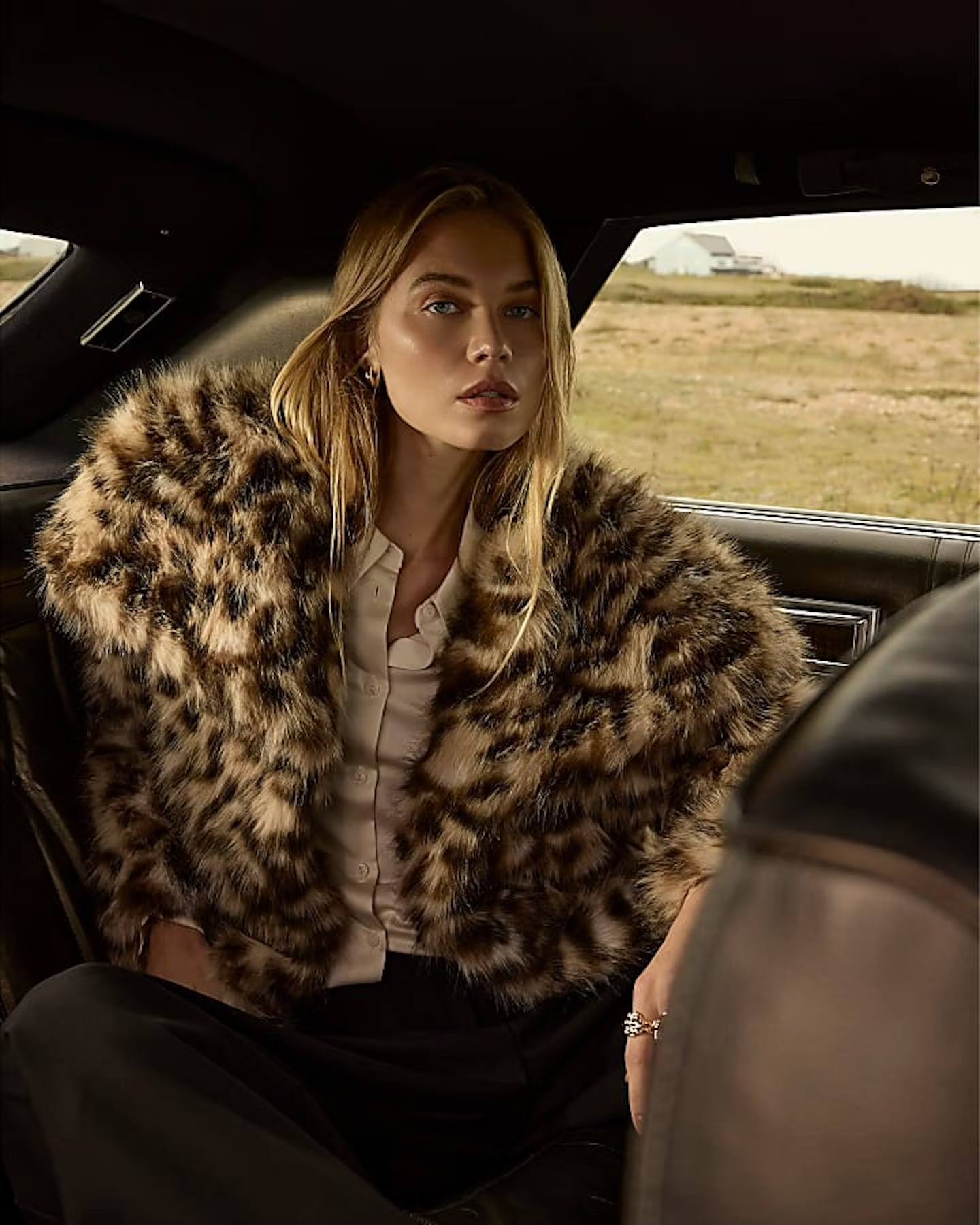
photo: graziadaily.co.uk
The main milestones look like this:
| Year | Milestone |
|---|---|
| 1929 | The first patent for artificial fur – a breakthrough in replicating natural textures |
| 1950s | Commercialization of acrylic fibers – mass production has become profitable |
| 1990 | PETA’s “I’d Rather Go Naked Than Wear Fur” campaign – ethics have entered the mainstream |
| 2019 | California bans fur sales – the law has caught up with social trends |
| 2025+ | AI implementation in production optimization – a new era of precision |
The 1929 patent may seem harmless today, but back then it was revolutionary. Someone finally thought, “What if we could make something similar, but without animals?” The first attempts were rather pitiful—stiff, unpleasant to the touch. But the idea was already there.
The real breakthrough came in the 1950s. Acrylic fibers changed everything. Suddenly, faux fur was no longer just a curiosity—it became a real alternative. It didn’t look perfect yet, but it was affordable. And that’s where the whole story of democratizing luxury began.
The 1990 PETA campaign? That was a turning point. Suddenly, wearing fur was no longer just about style—it became a statement of beliefs. People started to question what they were really wearing. The industry had to respond—and it did, with better technologies.
The ban in California showed that this was no longer just about fashion, but politics. When the law enters your wardrobe, you know something serious is happening. And now we have artificial intelligence optimizing every stage of production. Algorithms design textures that don’t exist in nature.
Today’s biotextiles are on a whole new level. Lab-grown materials that mimic not just the look, but the structure at a cellular level. It sounds like science fiction, but it’s happening right before our eyes.
Every stage of this evolution has changed not only availability, but also the perception of the entire segment. From a technological curiosity, through an economic alternative, to an ethical statement. Now we’re entering a phase where artificial can be better than natural in every way. The only question left is the environmental cost of this entire revolution.
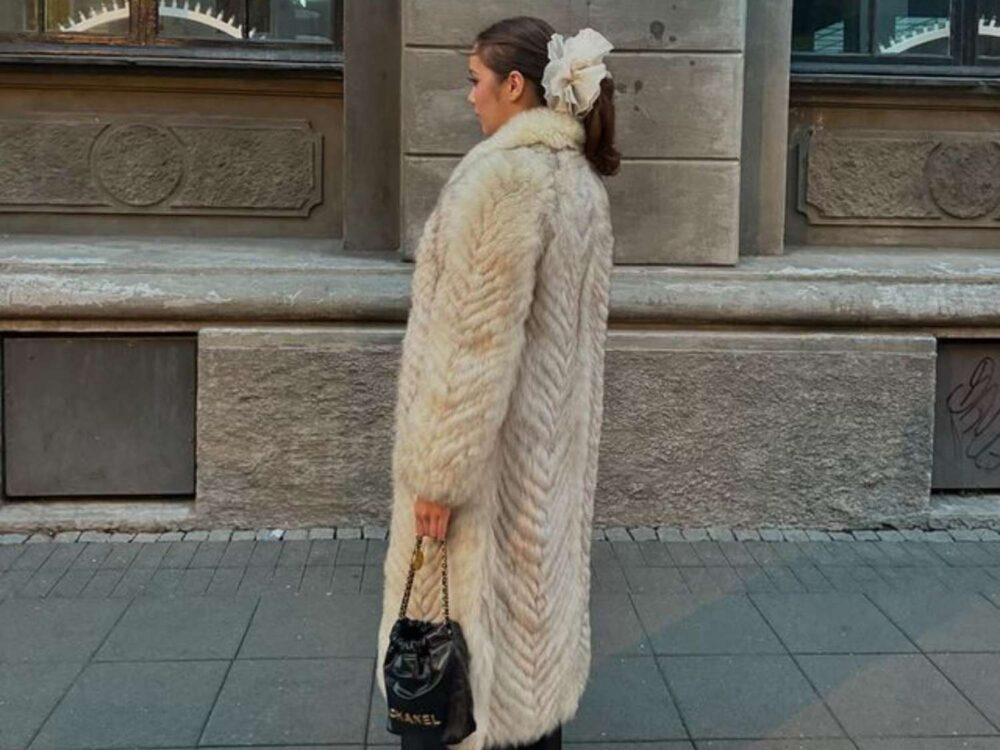
photo: byrdie.com
Ecological pros and cons – plastic, microplastics, and the bio-revolution
It may seem that ecology is a simple equation—synthetics or nature. But when you look at the actual numbers, things get much more complicated.
| Criterion | Animal fur | Faux/Bio |
|---|---|---|
| CO2 emissions | 110.0 kg per 1 kg | 22.0 kg per 1 kg |
| Degradation | 10-40 years | 200-1000 years |
| Cruelty-free | ➖ No | ➕ Yes |
Those 110 kilograms of carbon dioxide per kilogram of animal fur is a staggering amount. Five times more than artificial alternatives. But here’s where the real issue begins—one most people don’t consider while shopping.
Every wash of synthetic fur releases microplastics. Tiny particles that end up in groundwater and oceans. A single jacket can shed up to 700,000 fibers in just one laundry cycle. These microscopic fragments of polyester or acrylic accumulate throughout the food chain.
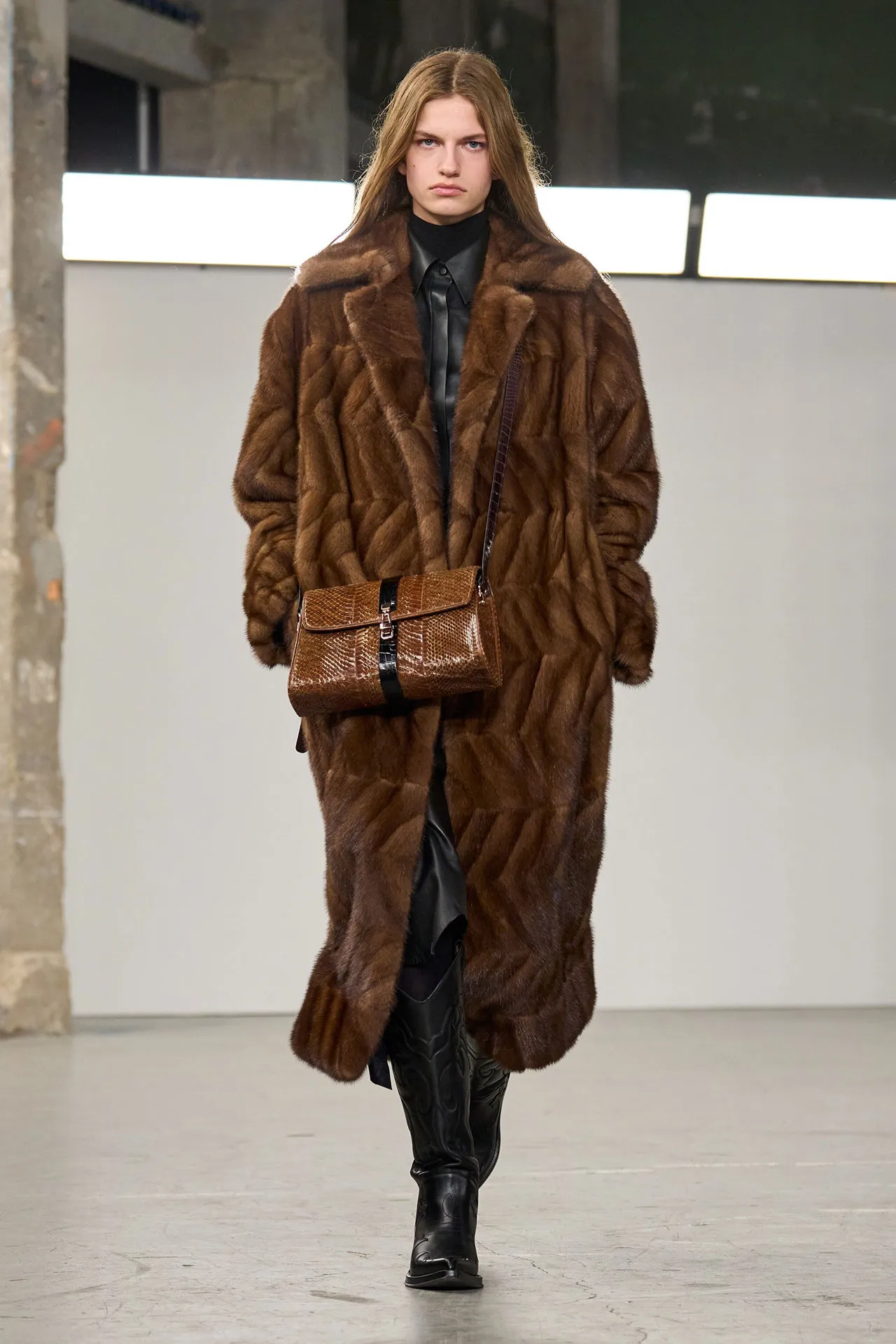
photo: voguebusiness.com
It’s actually an interesting story—we spent years focusing on plastic packaging, while our clothes quietly polluted the environment every time they touched water.
But now, solutions are emerging that sound like science fiction. Biofabrication uses mycelium, yeast, or plant cells to create materials that mimic fur. The process works like this: mycelium is grown on special substrates, then dried and processed into fibers.
➕ Yeast-based insulation is 20% warmer than natural
➕ Biodegradable within 2–5 years
➖ Still expensive to produce
Bolt Threads is already making “Mylo”—a mycelium-based leather. Biofab Science is working on fur from animal cells grown in vitro. It may sound strange, but these materials can be molecularly identical to the real thing.
The problem is, every solution has its dark side. Animal fur means suffering and a massive carbon footprint. Synthetics—microplastics and endless degradation. Bio-alternatives still require a lot of energy and remain costly.
Maybe the most important question isn’t “which fur to choose,” but “do I need fur at all?” Because the most eco-friendly material is the one that was never produced.
What’s next for fur? Development trends and conscious choices
The fur industry is undergoing a true revolution. What’s happening now in laboratories and ateliers will transform our wardrobes in just a few years.
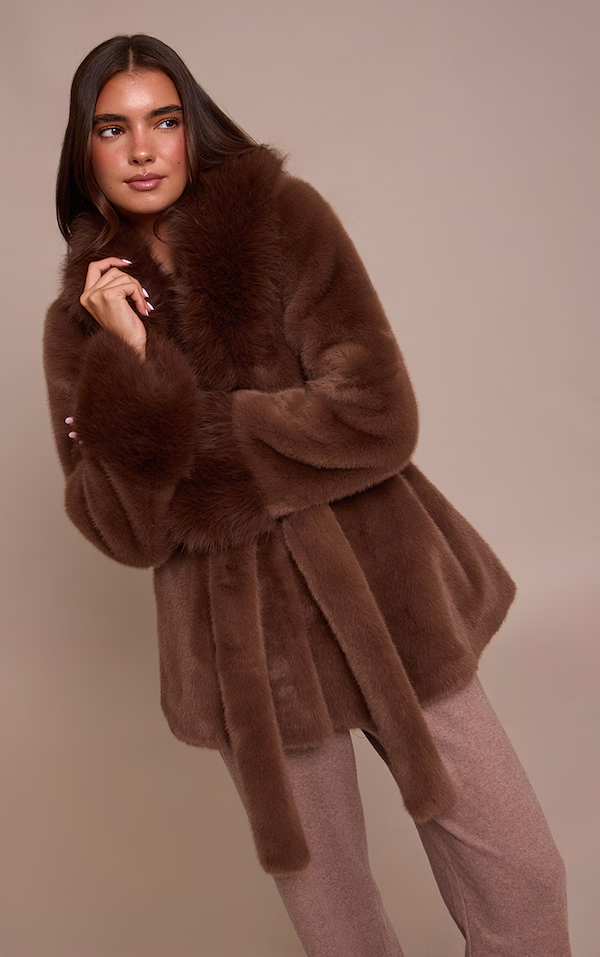
photo: prettylittlething.com
McKinsey’s forecasts for 2025 are clear—by 2030, half of all alternative fur will come from biofabrication. This isn’t science fiction; it’s reality. Companies like Biofabricate and Modern Meadow are already producing leathers from mushrooms and bacterial collagen. Supply chains will have to be completely restructured.
AI is transforming fashion design. Algorithms can predict exactly how much material is needed for a specific model, eliminating waste down to the last centimeter. Personalization goes even further—artificial intelligence analyzes our preferences and creates clothing literally tailored to us. Less waste, better fit.
Trend on the horizon: By 2028, most premium brands will offer “fur on demand”—real-time design and production, no warehousing.
Designers have to think differently now. Creating a beautiful design isn’t enough. You have to consider the entire product lifecycle—from raw material to recycling. Those who don’t will be left behind.
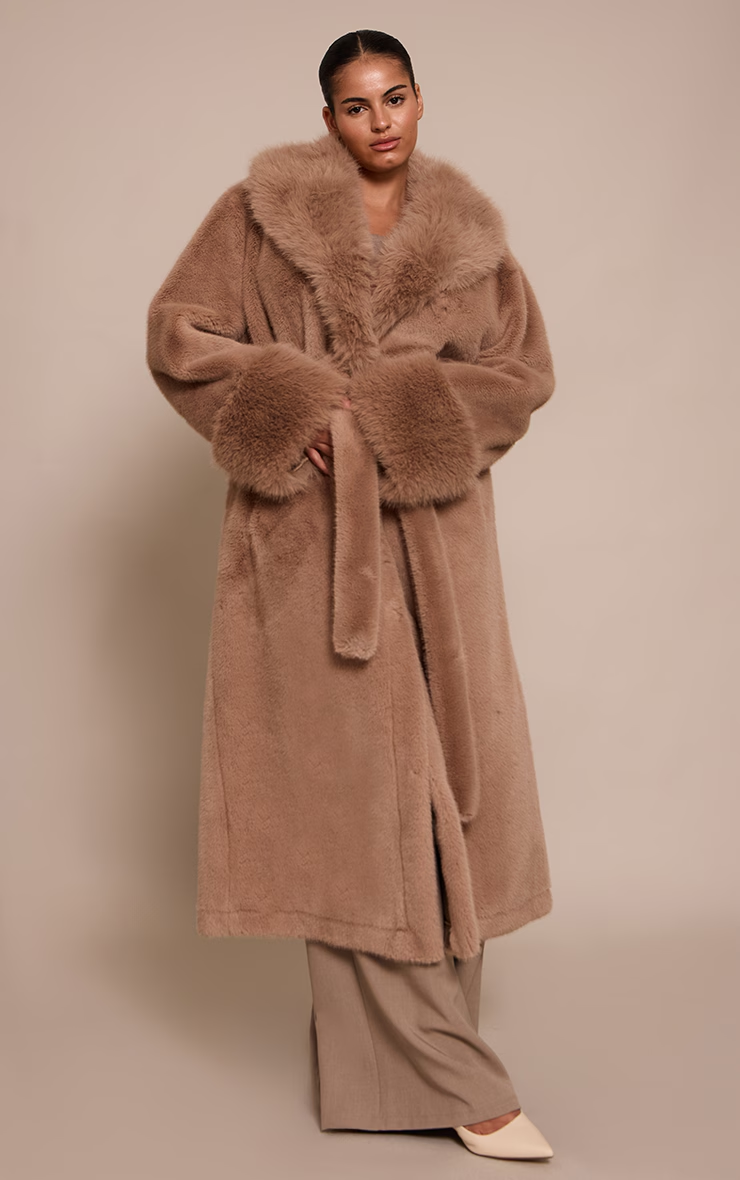
photo: prettylittlething.com
And us, the consumers? We have more power today than ever before. Our choices shape the market.
We don’t have to sacrifice beauty for sustainability. Those days are over. Now we can have both—but it requires awareness and commitment with every purchase we make.
Anna
fashion editor
Luxury Blog




Leave a Comment