

Are Moon Boots Waterproof? – Your Reliable Winter Guide
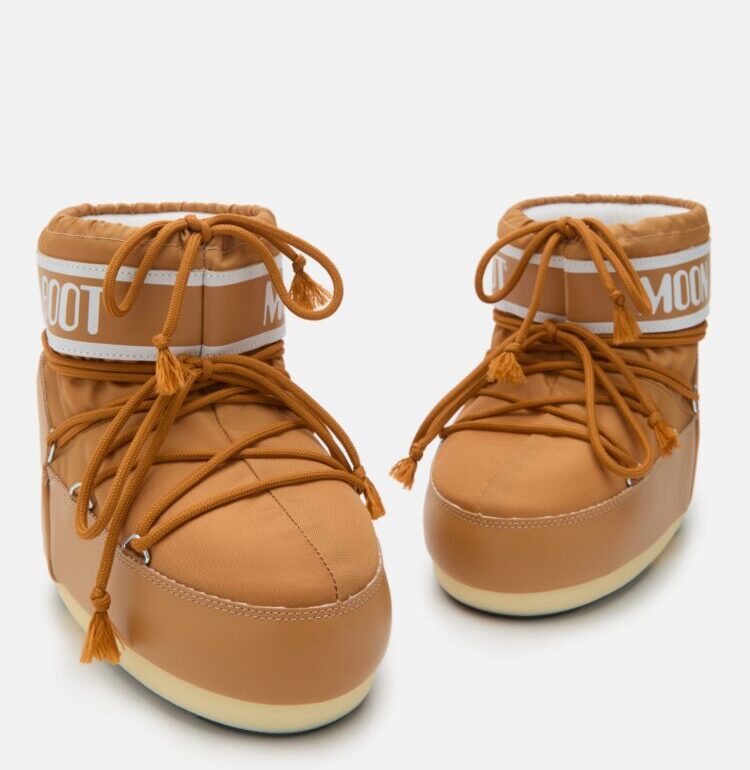
A February afternoon in Warsaw—half a meter of slushy snow by the crosswalk, and you’re standing in front of a shop window displaying the iconic Moon Boots, asking yourself the key question: will these boots really keep my feet dry? Hundreds of thousands of Polish women ask themselves the same thing every year, because Moon Boots have been at the very top of winter boot rankings for a decade. Après-ski fashion has made a powerful comeback, but practicality always wins over aesthetics when it’s -5°C outside and the snow is wet.
Are Moon Boots waterproof and why does waterproofing matter?

photo: moonboot.com
This is where the confusion begins. Many people mistake water resistance for full waterproofing, like in trekking boots with Gore-Tex. In practice, winter “waterproofness” means protection against:
- Snow piling up on the sidewalk
- With slush at the metro exit
- A light sleet during a walk with the dog
- Flooding of the pavement during a transfer at the stop
But that no longer means testing them in deep puddles or wading through melting snow.
Simple answer: most Moon Boots perform excellently in typical urban winter scenarios — in 9 out of 10 cases, you’ll get by without wet socks. However, their effectiveness depends on the specific model, how well you care for the boots, and how intensively you use them. In the following sections of the article, we’ll break down what makes them waterproof, how different versions of Moon Boots behave in real-life conditions, and how to choose the right model for your needs.
What makes Moon Boots waterproof – materials and construction
The waterproof quality of Moon Boots is no coincidence—it’s the result of carefully selected materials and thoughtful design. It’s worth taking a closer look to understand why these boots keep water away from your feet.
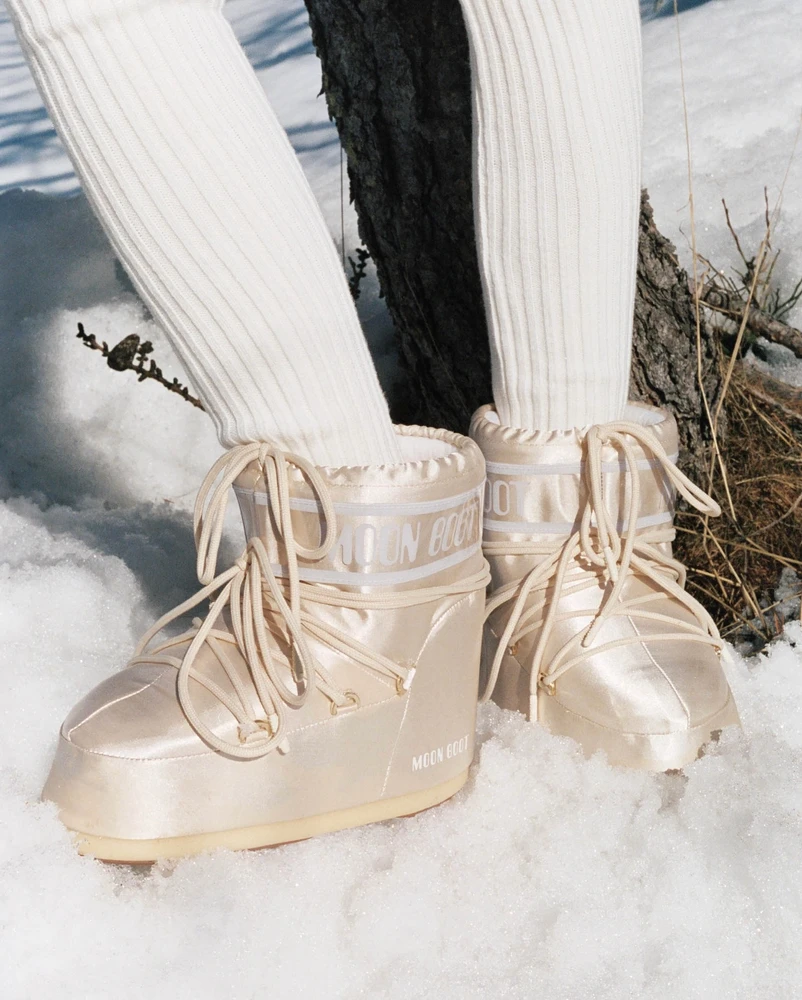
photo: moonboot.com
Materials that keep Moon Boots from absorbing water
The upper is usually ballistic nylon or its variants, plus PVC overlays—both materials absorb virtually no water (less than 1% of their weight). The manufacturer explicitly states: “the outer material guarantees complete waterproofness”. Inside, you’ll find EVA or polyurethane foam and synthetic fur —these insulate heat and also don’t absorb moisture. A rubber sole with a 5-7 mm tread completes the picture.
Construction and models of Moon Boots and their level of water resistance
The key is how everything is put together: welded or bonded seams instead of stitched eyelets, a high upper with an elastic cuff (no classic laces with perforations). The result? Water has far fewer ways to get inside.
| Feature | Typical value |
|---|---|
| Breathability | 2,000–3,000 g/m²/24 h |
| Effectiveness (snow/rain) | 80-90% |
| Temperature range | -20°C to +5°C |
| Lifespan | 2-5 years |
The level of protection varies between lines:
| Model | Water resistance level |
|---|---|
| Hyper | Highest (membrane + waterproof zipper) |
| Icon | Tall |
| Selene | High (rPET + DWR) |
| Explorer Light | Medium-high |
| Mini | Medium |
Now it’s time to see how these parameters perform in real life—because what’s on paper is one thing, and slush is something else entirely.
photo: moonboot.com
In practice: when Moon Boots will keep your feet dry, and when they might let you down
A walk around Warsaw in December, wet snow has been falling for an hour—your feet stay dry. Perfect. But then you come back in the evening under pouring rain and suddenly feel something leaking around your toes. So what’s really going on with the waterproofing of Moon Boots?
How do Moon Boots perform in snow, mud, and rain?
Tests show that most models can withstand about an hour of precipitation—rain or wet snow—without soaking through; in 95% of cases, your feet stay dry. Brief immersion up to 10 cm for 30 minutes? Here, the effectiveness is 70-80%, depending on the model and age of the shoes. Problems arise with longer and deeper water exposure—heavy rain for 2 hours or puddles above the ankle increase the risk of leakage, especially around the seams.
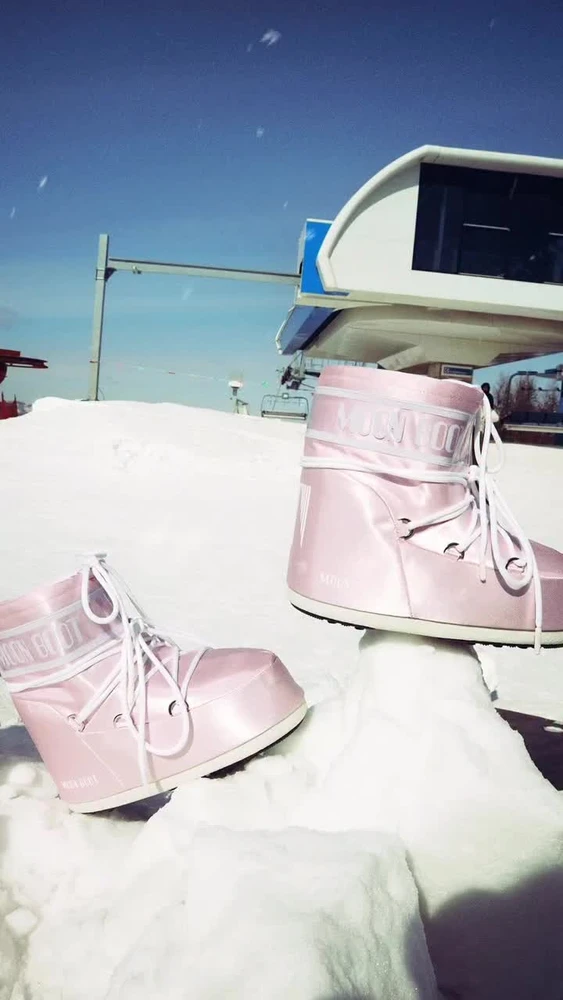
photo: moonboot.com
“OK for Moon Boots” scenarios:
- Wet snow in the city, brief walks through slush
- Après-ski in the Alps (sidewalk, terrace, bar)
- Winter family getaways, playgrounds in the snow
Better to avoid:
- Deep puddles (over 15 cm)
- Wading through a river or thick mud
- Hours-long march in pouring rain
Users? About 80% of reviews say: “waterproof in snow, dry feet after a 2-hour walk”, “better than UGG, because the nylon doesn’t soak through”. But 20% complain: “after heavy rain, wet at the seams”, “fine for mud, but not for puddles”.
Who will find the waterproofing of Moon Boots sufficient?
| Group | Advantages | Limitations |
|---|---|---|
| City | Snow, slush, brief showers | Heavy rain for over 2 hours, deep puddles |
| Skiing/après-ski | Dry on the slope, warm by the steelworks, stylish | Not for freeriding, not for wet grass |
| Parents (children) | Playground in the snow, short outdoor activities | Kids love jumping in puddles – the risk |
So? For most winter situations—they’re great. But if you plan to wade through streams or spend half a day in pouring rain, Moon Boots might let you down.
How to Choose and Care for Moon Boots to Ensure They’re Truly Waterproof
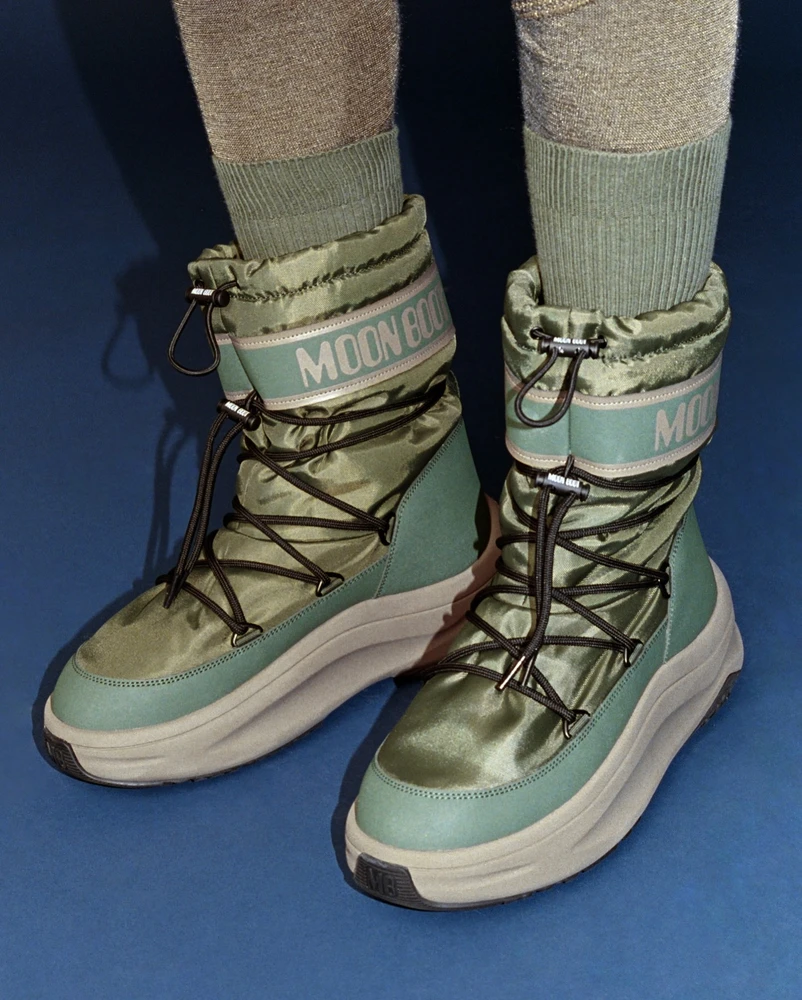
photo: moonboot.com
The Moon Boot logo on a shoe alone doesn’t guarantee you’ll come home with dry feet — what matters is the specific model and how you care for it. And since the market is flooded with counterfeits that are about as waterproof as a leaky umbrella, it’s worth knowing what to look for.
Which Moon Boots model should you choose for your winter plans?
If you mainly wear them around the city—for coffee, work, or picking up the kids—the Icon or Explorer Light models will be more than enough. They cost around 450-600 PLN and are perfect for light snow or drizzle. Planning a weekend on the slopes or longer walks on mountain trails? Then go for the Hyper or Selene with DWR finish—prices start at 700 PLN, but they really keep water out. For the youngest, the Mini line (about 350-400 PLN) features a similar construction to the adult versions, just in a smaller size.
Impregnation, drying, and avoiding counterfeits – a practical action plan
A good silicone spray (e.g., Nikwax) can extend water resistance effectiveness by up to 50%. Apply it before the season and after every few intense outings—spray the shoe evenly, then wait 24 hours. Dry at 20-30°C, away from radiators, otherwise the glue in the seams may come loose.
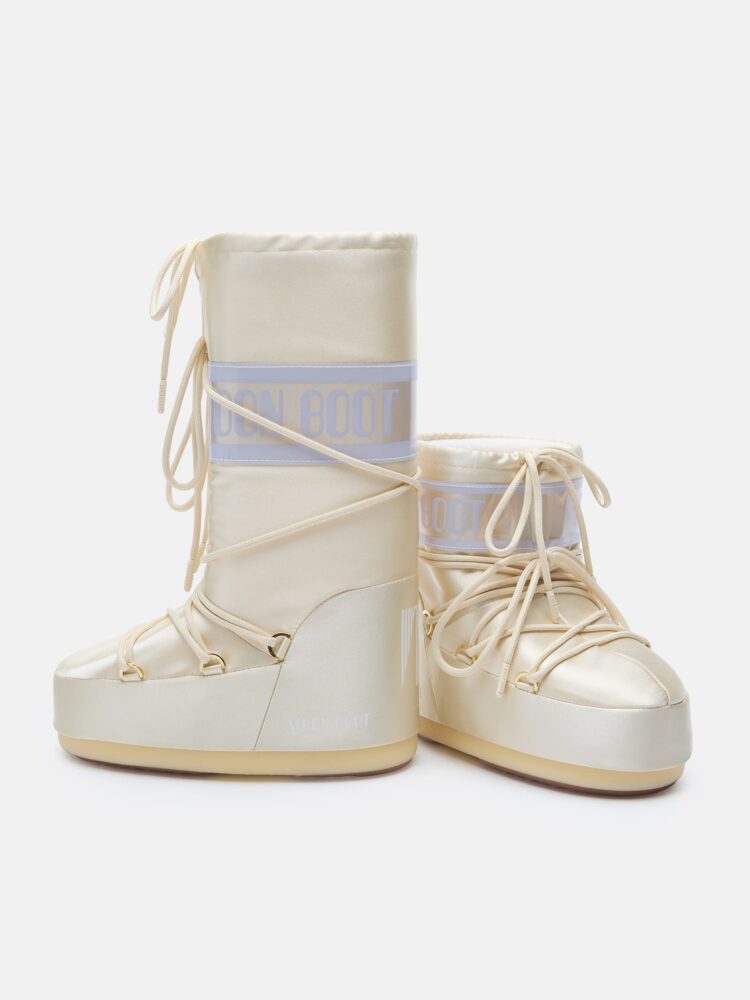
photo: moonboot.com
Beware of counterfeits:
- Estimates suggest that 30-40% of items on Allegro/OLX are counterfeits
- Check the quality of the stitching – originals feature even, double topstitching
- A fake often smells like PVC, while genuine nylon has a neutral scent.
- The label should be clearly embossed, with no typos
Forecasts for 2026+ point to Gore‑Tex membranes in premium lines, smart impregnating agents, and moisture sensors in smartwool—worth keeping on your radar for future purchases.
Diana
fashion & lifestyle editor
Luxury Blog






Leave a Comment